
How to Turn on the Heat in a Nissan Altima

Turning on the heat in your Nissan Altima is simple once you know the right steps. Whether you’re driving a newer model with digital controls or an older one with manual knobs, this guide walks you through everything you need to know to get warm fast—without wasting fuel or overheating your engine.
Key Takeaways
- Wait for the engine to warm up: The heater only works effectively once the engine reaches operating temperature, so give it a few minutes after starting.
- Use the correct climate control settings: Set the temperature dial to warm or hot and ensure the airflow is directed where you want it (e.g., feet, windshield, or face).
- Check the A/C button wisely: You don’t need to turn on the A/C for heat, but in humid conditions, using it briefly can help dehumidify the air for clearer windows.
- Ensure the recirculation mode is off initially: Fresh air helps clear foggy windows faster; switch to recirculation once the cabin is warm.
- Inspect coolant levels regularly: Low coolant can prevent the heater core from getting hot, so check and top off as needed.
- Know your model year differences: Older Altimas (pre-2013) use manual controls, while newer models feature touchscreens and automatic climate systems.
- Address cold air issues promptly: If heat still doesn’t work after troubleshooting, it may indicate a deeper issue like a stuck thermostat or clogged heater core.
📑 Table of Contents
- Introduction: Staying Warm in Your Nissan Altima
- How the Heating System Works in a Nissan Altima
- Step-by-Step Guide: Turning On the Heat in a Nissan Altima
- Troubleshooting Common Heating Issues
- Maintenance Tips to Keep Your Heater Working
- Model Year Differences: What to Expect
- Conclusion: Stay Warm and Drive Safe
Introduction: Staying Warm in Your Nissan Altima
Winter mornings can be brutal—especially when you hop into your Nissan Altima and realize the cabin feels more like a freezer than a cozy ride. You turn the key, press the gas, and wait… but nothing happens. No warm air, no comforting blast of heat. Sound familiar? Don’t worry—you’re not alone. Many drivers, especially new Altima owners or those transitioning from other vehicle brands, struggle with understanding how the heating system works.
The good news? Turning on the heat in a Nissan Altima isn’t complicated. Once you understand how the system operates and what settings to adjust, you’ll be cruising in comfort in no time. Unlike some cars that offer instant heat, the Altima—like most modern vehicles—relies on engine coolant to generate warmth. That means you’ll need to let the engine warm up before the heater kicks in. But beyond that, there are a few key steps and settings that make all the difference.
Whether you drive a 2005 Altima with manual climate controls or a 2023 model with a sleek touchscreen interface, this guide will walk you through everything you need to know. We’ll cover the basics of how car heaters work, step-by-step instructions for different model years, common troubleshooting tips, and even maintenance advice to keep your system running smoothly all season long.
How the Heating System Works in a Nissan Altima
Visual guide about How to Turn on the Heat in a Nissan Altima
Image source: i.ebayimg.com
Before diving into the “how-to,” it helps to understand the science behind your Altima’s heating system. Unlike home furnaces that burn fuel to create heat, your car’s heater uses waste heat from the engine. Here’s how it works: as the engine runs, it produces heat—a lot of it. Coolant circulates through the engine block, absorbing that heat, and then flows into a small radiator-like component called the heater core, located inside the dashboard.
When you turn on the heat, a blend door inside the HVAC (heating, ventilation, and air conditioning) system opens, allowing hot coolant to flow into the heater core. A fan then blows air over the warm heater core and into the cabin. The result? Warm, toasty air that keeps you comfortable on chilly days.
This system is efficient because it repurposes energy that would otherwise be wasted. However, it also means the heater won’t produce warm air until the engine has had time to warm up. If you’ve ever turned on the heat immediately after starting your car and gotten cold air, this is why. The engine—and therefore the coolant—is still cold.
Another important component is the thermostat. This small but crucial part regulates coolant flow, ensuring the engine reaches and maintains its optimal operating temperature (usually around 195°F). If the thermostat is stuck open, the engine may take longer to warm up, delaying heat production. If it’s stuck closed, the engine could overheat—another issue altogether.
Understanding this process helps you avoid common mistakes, like cranking the heat immediately after startup or assuming the heater is broken when it’s just waiting for the engine to warm. It also highlights the importance of regular maintenance, such as checking coolant levels and ensuring the thermostat is functioning properly.
Step-by-Step Guide: Turning On the Heat in a Nissan Altima
Visual guide about How to Turn on the Heat in a Nissan Altima
Image source: motortrend.com
Now that you know how the system works, let’s get practical. The steps to turn on the heat vary slightly depending on your Altima’s model year and climate control type. Below, we’ll break it down for both older models with manual controls and newer ones with automatic or touchscreen systems.
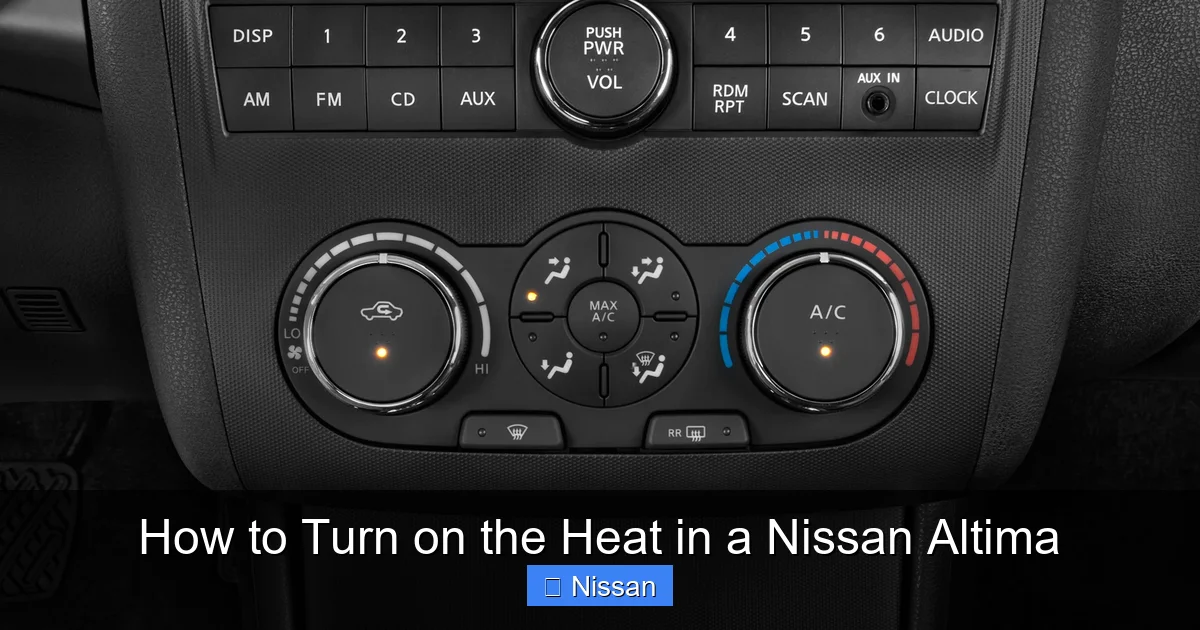
For Older Nissan Altimas (2007–2012, Manual Controls)
If you drive an older Altima with physical knobs and buttons, here’s how to get the heat going:
1. **Start your car and let it idle for 2–3 minutes.** This allows the engine to begin warming up. Don’t rev the engine aggressively—just let it idle gently.
2. **Turn the temperature dial to the red (warm/hot) zone.** You’ll usually see a blue-to-red gradient on the control panel. Rotate the dial fully toward red.
3. **Set the fan speed.** Use the fan control knob to select your desired airflow level. Start with a medium setting.
4. **Choose your air direction.** Use the mode selector (often labeled with icons like a person, feet, or windshield) to direct air where you want it. For quick cabin warming, select “feet and face” or “defrost and feet.”
5. **Turn off recirculation (if needed).** If your windows are foggy, keep the recirculation button off so fresh air can help clear them. Once the cabin warms up, you can switch to recirculation for faster heating.
6. **Wait patiently.** It may take 5–10 minutes for the air to become noticeably warm, especially on very cold days.
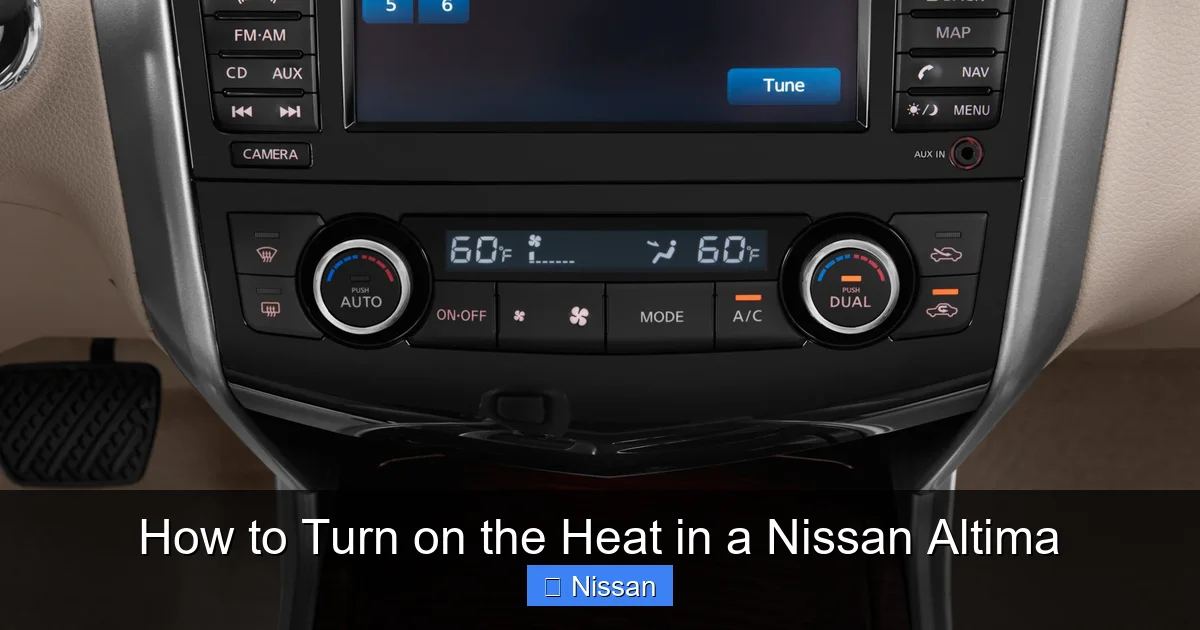
For Newer Nissan Altimas (2013–Present, Automatic or Touchscreen)
Newer Altimas come equipped with advanced climate control systems, often with dual-zone automatic temperature control. Here’s how to use them:
1. **Start the engine and allow it to warm up.** Again, 2–3 minutes of idling is sufficient.
2. **Press the “AUTO” button (if available).** This enables the automatic climate control system, which will adjust fan speed and air distribution based on your temperature setting.
3. **Set your desired temperature.** Use the touchscreen or temperature buttons to select a warm setting (e.g., 72°F or higher). The system will automatically blend hot and cold air to reach that temperature.
4. **Adjust airflow direction if needed.** Most systems allow you to choose between face, feet, windshield, or a combination. Use the “Mode” button or touchscreen menu to select.
5. **Use the “Defrost” button for foggy windows.** This directs warm, dry air to the windshield and often activates the A/C to dehumidify the air.
6. **Toggle recirculation as needed.** Start with fresh air to clear fog, then switch to recirculation once the cabin is warm.
Pro Tips for Faster Heating
– **Park in the sun or use a block heater.** If you live in a cold climate, parking in direct sunlight or using an engine block heater can help the engine warm up faster.
– **Avoid high fan speeds initially.** Cranking the fan to maximum right away can blow cold air harder, making you feel colder. Start low and increase as the air warms.
– **Use seat heaters (if equipped).** Many Altimas come with heated seats, which provide instant warmth to your body while the cabin heats up.
Troubleshooting Common Heating Issues
Visual guide about How to Turn on the Heat in a Nissan Altima
Image source: motortrend.com
Even with the right steps, you might encounter problems. Here are some common issues and how to fix them.
No Heat Coming Out
If you’ve followed the steps and still feel cold air, check these potential causes:
– **Low coolant level:** Open the hood and inspect the coolant reservoir. If it’s below the “MIN” line, top it off with the correct type of coolant (usually a 50/50 mix of antifreeze and water). Low coolant means less heat is transferred to the heater core.
– **Air in the cooling system:** Sometimes, air pockets can get trapped in the coolant lines, blocking flow to the heater core. This often happens after a coolant change. To fix it, you may need to “burp” the system by running the engine with the radiator cap off (when cool) and adding coolant as needed.
– **Faulty thermostat:** If the engine takes too long to warm up, the thermostat might be stuck open. A mechanic can test and replace it if necessary.
– **Clogged heater core:** Over time, the heater core can become clogged with debris or corrosion, restricting coolant flow. Symptoms include weak heat or a sweet smell inside the car. Flushing the heater core or replacing it may be required.
Blowing Cold Air Intermittently
If the heat comes and goes, it could be due to:
– **Blend door malfunction:** The blend door controls how much hot or cold air enters the cabin. If it’s stuck or broken, you may get inconsistent temperatures. This often requires professional diagnosis and repair.
– **Electrical issues:** In newer models, sensors or control modules may fail, causing the system to behave erratically. A diagnostic scan at a Nissan dealership can pinpoint the issue.
Windows Fogging Up Despite Heat
Foggy windows are a common winter annoyance. To clear them:
– **Turn on the defrost mode.** This directs warm air to the windshield.
– **Activate the A/C button.** Even in winter, turning on the A/C helps remove moisture from the air, preventing fog. You don’t need cold air—just dehumidified air.
– **Use fresh air mode initially.** Recirculation traps moisture inside the cabin. Switch to fresh air until the windows clear, then return to recirculation.
Maintenance Tips to Keep Your Heater Working
Prevention is better than repair. Regular maintenance ensures your heating system stays reliable all winter.
Check Coolant Levels Monthly
Coolant is the lifeblood of your heating system. Check the reservoir regularly and top off if needed. Use only the coolant recommended in your owner’s manual (usually Nissan-approved green or orange antifreeze).
Flush the Cooling System Every 30,000–50,000 Miles
Over time, coolant breaks down and can become acidic, leading to corrosion. A professional flush removes old coolant and replaces it with fresh fluid, protecting the engine and heater core.
Inspect Hoses and Belts
Cracked or leaking hoses can cause coolant loss. Check the heater hoses (usually two small hoses near the firewall) for signs of wear. Also, ensure the serpentine belt is in good condition—it drives the water pump, which circulates coolant.
Test the Heater Core
If you suspect a clogged heater core, feel both heater hoses when the engine is warm. They should be equally hot. If one is cold, the core may be blocked.
Replace the Cabin Air Filter
A dirty cabin air filter restricts airflow, reducing heating efficiency. Replace it every 12,000–15,000 miles or as recommended.
Model Year Differences: What to Expect
Nissan has made several updates to the Altima’s climate control system over the years. Here’s a quick overview:
– **2007–2012:** Manual controls with physical knobs. Simple and reliable, but less precise.
– **2013–2018:** Introduction of automatic climate control and touchscreen interfaces in higher trims. Dual-zone climate control available.
– **2019–Present:** Fully digital displays, smartphone integration (Apple CarPlay/Android Auto), and advanced HVAC systems with multiple airflow modes.
Knowing your model year helps you understand which controls to use. If you’re unsure, consult your owner’s manual or look for labels on the dashboard.
Conclusion: Stay Warm and Drive Safe
Turning on the heat in your Nissan Altima doesn’t have to be a mystery. With a little patience and the right settings, you can enjoy a warm, comfortable cabin all winter long. Remember: the heater relies on engine heat, so give it time to warm up. Use the correct temperature and airflow settings, and don’t forget to maintain your cooling system.
Whether you’re driving an older model with manual knobs or a sleek new Altima with a touchscreen, the principles remain the same. Stay proactive with maintenance, troubleshoot issues early, and you’ll avoid cold surprises on chilly mornings.
Now that you know how to turn on the heat in your Nissan Altima, you can focus on what really matters—enjoying the drive.
Frequently Asked Questions
Why is my Nissan Altima blowing cold air even with the heat on?
This usually happens because the engine hasn’t warmed up yet. The heater only works once the coolant is hot, so wait 5–10 minutes after starting. If it persists, check coolant levels or suspect a faulty thermostat.
Can I use the A/C with the heat on in my Altima?
Yes, and it’s actually helpful in humid or foggy conditions. The A/C removes moisture from the air, helping to clear windows faster. You don’t need cold air—just the dehumidifying effect.
How long should I let my Altima idle to get heat?
2–3 minutes is enough to start the warming process. Avoid extended idling, as it wastes fuel and doesn’t significantly speed up heating. Drive gently after startup to warm the engine faster.
What if my heater works but takes a long time to get warm?
This could indicate low coolant, a stuck-open thermostat, or a clogged heater core. Check coolant levels first, then consider a professional inspection if the problem continues.
Do I need to turn on recirculation for heat?
Not at first. Start with fresh air to clear foggy windows, then switch to recirculation once the cabin is warm. Recirculation helps heat the interior faster by reusing already-warmed air.
Can a dirty cabin air filter affect heating?
Yes. A clogged filter restricts airflow, reducing the effectiveness of both heating and cooling. Replace it every 12,000–15,000 miles for optimal performance.
