How to Turn on All-wheel Drive in a Subaru Crosstrek

Contents
- 1 Key Takeaways
- 2 📑 Table of Contents
- 3 Understanding Subaru’s All-Wheel Drive System
- 4 Is There a Way to “Turn On” AWD in the Crosstrek?
- 5 Using X-MODE to Enhance AWD Performance
- 6 Maintaining Your Crosstrek’s AWD System
- 7 Real-World Performance: AWD in Action
- 8 Fuel Efficiency and AWD: Debunking Myths
- 9 Conclusion: Confidence in Every Drive
- 10 Frequently Asked Questions




Turning on all-wheel drive in a Subaru Crosstrek is simple—because it’s always on. Unlike vehicles with part-time AWD systems, the Crosstrek uses a full-time, always-active Symmetrical All-Wheel Drive system. This means you don’t need to manually activate it—just drive confidently in any weather or terrain.
Key Takeaways
- All-wheel drive is always active: The Subaru Crosstrek comes with a full-time AWD system that works automatically without driver input.
- No manual switch or button: There’s no need to press a button or flip a switch—AWD is engaged from the moment you start the engine.
- Symmetrical AWD design: Subaru’s layout places the engine and drivetrain in a balanced, low-center-of-gravity configuration for better stability.
- X-MODE enhances traction: For slippery or off-road conditions, activate X-MODE to optimize AWD performance and hill descent control.
- Regular maintenance matters: Keep your AWD system in top shape with scheduled servicing, tire rotations, and fluid checks.
- Fuel efficiency is maintained: Modern AWD systems in the Crosstrek are designed to minimize fuel consumption while maximizing grip.
- Know your driving conditions: Understanding when and how your AWD system works helps you drive safer in rain, snow, or mud.
📑 Table of Contents
Understanding Subaru’s All-Wheel Drive System
When you slide into the driver’s seat of a Subaru Crosstrek, you’re not just getting behind the wheel of a compact SUV—you’re stepping into a vehicle engineered for confidence in all conditions. One of the standout features that sets the Crosstrek apart from many competitors is its standard all-wheel drive (AWD) system. But here’s the thing: unlike some vehicles where you have to press a button or shift into a special mode, the Crosstrek’s AWD is always working—silently, efficiently, and effectively.
Subaru has long been known for its commitment to all-wheel drive across nearly its entire lineup, and the Crosstrek is no exception. In fact, every new Crosstrek sold in the U.S. comes with AWD as standard equipment. This isn’t just a marketing gimmick—it’s a core part of Subaru’s identity and engineering philosophy. The system is designed to give you better traction, improved handling, and greater peace of mind, whether you’re navigating a snowy mountain pass, a rain-soaked highway, or a muddy trail.
So, what does “always on” really mean? It means that from the moment you turn the key or press the start button, power is being sent to all four wheels. The system continuously monitors wheel speed, throttle input, steering angle, and other factors to determine how much power should go to the front and rear axles—and even side to side. This happens in real time, often before you even notice a loss of traction.
How Subaru’s AWD Differs from Other Systems
Not all all-wheel drive systems are created equal. Some vehicles use part-time AWD, which only engages when the front wheels slip. Others use front-wheel drive as the default and send power to the rear only when needed. These systems can be effective, but they often react after traction is already lost.
Subaru’s Symmetrical All-Wheel Drive, on the other hand, is a full-time system. It’s always active, always distributing power. This proactive approach means better stability and control from the start. The “symmetrical” part of the name refers to the layout of the drivetrain—engine, transmission, and axles are aligned in a straight line from front to back. This balanced design lowers the vehicle’s center of gravity and improves handling, especially during cornering or sudden maneuvers.
Another key difference is the use of a center differential. In the Crosstrek, this component allows the front and rear wheels to rotate at different speeds when needed—like when turning—while still maintaining power delivery to both axles. Some systems use a viscous coupling or electronic clutches, but Subaru’s design is known for its simplicity, durability, and responsiveness.
The Role of the Continuously Variable Transmission (CVT)
The Crosstrek’s AWD system works hand-in-hand with its Continuously Variable Transmission (CVT). Unlike traditional automatic transmissions with fixed gear ratios, a CVT uses a belt and pulley system to provide an infinite range of gear ratios. This allows the engine to operate at its most efficient RPM for any given speed, improving both fuel economy and performance.
But how does this affect AWD? The CVT communicates with the AWD system to ensure power is delivered smoothly and efficiently. For example, if the system detects that the front wheels are starting to slip, it can adjust the torque split almost instantly. This integration between transmission and drivetrain is one of the reasons the Crosstrek feels so composed in slippery conditions.
It’s also worth noting that the CVT in the Crosstrek is designed to handle the demands of AWD. It’s built to manage the constant power flow to all four wheels without overheating or wearing out prematurely. Regular maintenance—like changing the CVT fluid at recommended intervals—is essential to keep this system running smoothly.
Is There a Way to “Turn On” AWD in the Crosstrek?

Visual guide about How to Turn on All-wheel Drive in a Subaru Crosstrek
Image source: drivewaycanada.ca
Now for the million-dollar question: Can you turn on all-wheel drive in a Subaru Crosstrek? The short answer is no—because it’s already on. There’s no button, no lever, no secret menu. The AWD system is always active, always working.
This might come as a surprise if you’re used to vehicles with part-time AWD or four-wheel drive systems that require manual engagement. For example, some trucks or SUVs have a 4WD switch that you flip when heading off-road. But the Crosstrek isn’t designed that way. Its AWD is meant to be seamless and automatic—part of the driving experience, not a feature you toggle on and off.
So, if you’re looking for a dashboard light that says “AWD ON” or a switch labeled “4WD,” you won’t find one. Instead, you’ll see indicators related to other systems, like X-MODE or Hill Descent Control, which enhance AWD performance in specific conditions. These are optional aids, not the core AWD system itself.
Why Subaru Chose a Full-Time AWD Design
Subaru’s decision to make AWD standard and always active wasn’t arbitrary. It’s rooted in the brand’s heritage and target market. Subaru vehicles are popular in regions with harsh winters, mountainous terrain, and unpredictable weather—think the Pacific Northwest, New England, or the Rocky Mountains. In these areas, having AWD that’s always ready can make a real difference in safety and confidence.
Additionally, Subaru’s customer base often includes outdoor enthusiasts, families, and commuters who value reliability and versatility. A full-time AWD system aligns with these priorities. It’s not just about off-roading—it’s about everyday driving in conditions that might challenge other vehicles.
From an engineering standpoint, a full-time system is also more efficient than part-time setups. Because power is always flowing to all wheels, there’s no delay in engagement. This reduces the risk of getting stuck or losing control when traction is suddenly lost. It also means the system is constantly learning and adapting to road conditions, which improves overall performance over time.
What Happens If You Try to “Turn It Off”?
Some drivers wonder if they can disable AWD to save fuel or reduce wear. While it’s technically possible to disconnect parts of the drivetrain in some vehicles (usually for towing or service), the Crosstrek isn’t designed for that. There’s no user-accessible way to turn off AWD, and attempting to do so could damage the system.
Subaru engineers have optimized the AWD system to minimize parasitic loss—the energy wasted by sending power to wheels that don’t need it. Thanks to advancements in technology, modern AWD systems like the one in the Crosstrek have a minimal impact on fuel economy. In fact, the difference between AWD and front-wheel drive in real-world driving is often just 1–2 miles per gallon.
So, while you might be tempted to “turn off” AWD to save gas, it’s not necessary—and not possible without professional intervention. The system is designed to be efficient and unobtrusive, giving you the benefits of AWD without the drawbacks.
Using X-MODE to Enhance AWD Performance

Visual guide about How to Turn on All-wheel Drive in a Subaru Crosstrek
Image source: drivewaycanada.ca
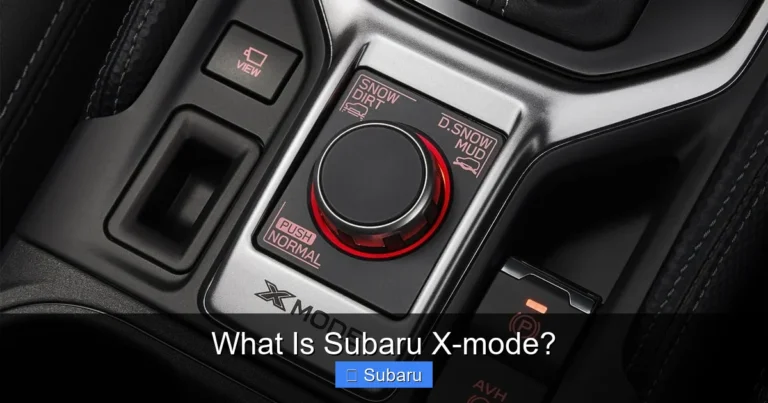
While the base AWD system in the Crosstrek is always active, Subaru offers an optional feature called X-MODE that enhances traction in challenging conditions. Think of X-MODE as a “turbo boost” for your AWD system—it doesn’t turn AWD on or off, but it optimizes how it works.
X-MODE is available on most Crosstrek trims and is especially useful in snow, mud, or steep terrain. When activated, it adjusts the engine response, transmission behavior, and AWD torque distribution to maximize grip. It also includes Hill Descent Control, which automatically manages speed when going down steep hills—no need to ride the brakes.
How to Activate X-MODE
Using X-MODE is simple. Here’s how:
1. Come to a complete stop or drive at low speed (under 12 mph).
2. Press the X-MODE button on the center console. It’s usually located near the climate controls or gear shifter.
3. The X-MODE indicator light will illuminate on the dashboard.
4. The system is now active and will remain on until you turn it off or exceed the speed limit (typically around 25 mph).
Some higher trims, like the Crosstrek Wilderness, feature dual-mode X-MODE. This allows you to choose between “Snow/Dirt” and “Deep Snow/Mud” settings, depending on the terrain. The system will automatically adjust parameters like throttle sensitivity and braking intervention to match the selected mode.
When to Use X-MODE
X-MODE isn’t something you’ll use every day—but when you need it, it’s a game-changer. Here are some common scenarios:
– **Driving in deep snow or slush:** X-MODE helps prevent wheel spin and keeps you moving forward.
– **Navigating muddy trails:** The system reduces wheel slip and improves traction on soft ground.
– **Descending steep hills:** Hill Descent Control takes over, allowing you to focus on steering.
– **Crossing streams or wet rocks:** Enhanced AWD response helps maintain stability on slippery surfaces.
It’s important to note that X-MODE is not a substitute for proper tires or safe driving practices. Always adjust your speed to match conditions, and avoid taking unnecessary risks—even with AWD and X-MODE engaged.
Tips for Getting the Most Out of X-MODE
– **Use it early:** Don’t wait until you’re stuck. Activate X-MODE as soon as you encounter slippery or uneven terrain.
– **Don’t exceed the speed limit:** X-MODE disengages above a certain speed (usually 25 mph). If you need to go faster, the base AWD system will still work—just without the enhanced settings.
– **Turn it off when not needed:** Running X-MODE on dry pavement can increase wear on components and reduce fuel efficiency.
– **Pair with all-weather tires:** For best results, use tires rated for snow and mud (look for the 3PMSF symbol).
Maintaining Your Crosstrek’s AWD System

Visual guide about How to Turn on All-wheel Drive in a Subaru Crosstrek
Image source: 2024subaru.com
Even though the AWD system in your Crosstrek is designed to be low-maintenance, it still requires care to perform at its best. Regular maintenance ensures that all components—from the differentials to the transfer case—are in good working order.
Scheduled Maintenance Checklist
Here’s what you should do to keep your AWD system healthy:
– **Check and change differential fluid:** The front and rear differentials transfer power to the wheels. Over time, the fluid can degrade. Subaru recommends changing it every 30,000 to 60,000 miles, depending on driving conditions.
– **Inspect the transfer case:** This component sends power from the transmission to the front and rear axles. Have it checked during routine service.
– **Rotate tires regularly:** Uneven tire wear can affect AWD performance. Rotate tires every 5,000 to 7,500 miles to ensure even tread wear.
– **Use the correct tire size and type:** Mismatched tires can confuse the AWD system and cause damage. Always replace tires in sets of four, and use the same brand, model, and size.
– **Monitor dashboard warnings:** If you see a warning light related to the AWD system (like a flashing “AWD” icon), have it inspected immediately.
Driving Habits That Protect Your AWD System
Your driving style can also impact the longevity of your AWD system:
– **Avoid “flat towing” or “dinghy towing”:** If you need to tow your Crosstrek, use a flatbed trailer. Towing with wheels on the ground can damage the AWD components.
– **Don’t spin the wheels excessively:** While AWD helps in slippery conditions, prolonged wheel spin can overheat the system. Ease off the throttle if you’re stuck.
– **Warm up the vehicle in cold weather:** In freezing temperatures, let the engine idle for a few minutes before driving. This allows fluids to circulate and reduces strain on the drivetrain.
Signs of AWD System Issues
While AWD problems are rare, they can happen. Watch for these warning signs:
– **Unusual noises:** Grinding, whining, or clunking sounds from underneath the vehicle.
– **Vibration or shuddering:** Especially during acceleration or turning.
– **Dashboard warning lights:** Such as the AWD or Check Engine light.
– **Reduced traction:** Feeling like the vehicle is slipping more than usual.
If you notice any of these symptoms, schedule a service appointment with a Subaru dealer or certified mechanic. Early detection can prevent costly repairs.
Real-World Performance: AWD in Action
To truly appreciate how the Crosstrek’s AWD system works, it helps to see it in action. Let’s walk through a few real-world scenarios.
Scenario 1: Winter Driving in the Mountains
Imagine you’re driving up a snowy mountain road in December. The roads are icy, visibility is low, and other cars are struggling to gain traction. In your Crosstrek, you feel confident. The AWD system is constantly adjusting power to the wheels with the most grip. When one wheel starts to slip, power is instantly redirected to the others. You don’t need to do anything—just steer and brake as usual.
If the snow gets deeper, you activate X-MODE. The system now prioritizes low-speed torque and uses Hill Descent Control to manage your speed on steep downhill sections. You arrive at your destination safely, without drama.
Scenario 2: Off-Road Adventure
You decide to take your Crosstrek on a weekend camping trip. The trail is muddy, with loose rocks and steep inclines. As you navigate the terrain, the AWD system keeps you moving. X-MODE in “Deep Snow/Mud” mode helps prevent wheel spin, and the high ground clearance (8.7 inches) lets you clear obstacles.
Even when one wheel lifts off the ground, the system continues to send power to the others. You make it to the campsite without getting stuck—thanks to the seamless integration of AWD, X-MODE, and Subaru’s rugged design.
Scenario 3: Daily Commute in the Rain
On a typical weekday, you’re driving to work in heavy rain. The roads are slick, and hydroplaning is a concern. In your Crosstrek, you feel planted. The AWD system helps maintain stability during lane changes and braking. You don’t think about it—you just drive. That’s the beauty of a full-time AWD system: it’s always there, working behind the scenes.
Fuel Efficiency and AWD: Debunking Myths
One common misconception about AWD vehicles is that they’re gas guzzlers. While it’s true that older AWD systems could reduce fuel economy by 2–3 mpg, modern systems like the one in the Crosstrek are much more efficient.
Thanks to lightweight components, advanced electronics, and optimized drivetrain design, the Crosstrek achieves impressive fuel economy for an AWD vehicle. The 2024 Crosstrek, for example, gets up to 28 mpg city and 33 mpg highway with the CVT—comparable to many front-wheel-drive compact SUVs.
How Subaru Achieves Efficiency
Several factors contribute to the Crosstrek’s fuel efficiency:
– **Symmetrical AWD design:** The balanced layout reduces mechanical resistance.
– **CVT optimization:** The transmission keeps the engine in its most efficient range.
– **Active Torque Split:** The system sends power only where it’s needed, minimizing waste.
– **Lightweight materials:** Subaru uses high-strength steel and aluminum to reduce overall weight.
So, while you might expect AWD to cost you at the pump, the reality is more nuanced. The Crosstrek proves that you can have both traction and efficiency.
Conclusion: Confidence in Every Drive
The Subaru Crosstrek’s all-wheel drive system is a testament to thoughtful engineering and real-world practicality. You don’t need to turn it on because it’s always on—working silently to keep you safe and in control. Whether you’re facing snow, rain, mud, or just a winding country road, the Crosstrek’s AWD system is there for you.
With features like X-MODE, Symmetrical AWD, and a well-integrated CVT, the Crosstrek delivers performance that’s both capable and efficient. And with proper maintenance, it will continue to do so for years to come.
So the next time someone asks, “How do you turn on all-wheel drive in a Subaru Crosstrek?” you can smile and say, “You don’t—it’s already on.” Just get in, start the engine, and drive with confidence.
Frequently Asked Questions
Do I need to turn on AWD in my Subaru Crosstrek?
No, you don’t need to turn on AWD—it’s always active. The Crosstrek comes with a full-time all-wheel drive system that works automatically from the moment you start the engine.
Is there a button to activate AWD in the Crosstrek?
There is no button to turn on AWD because it’s always engaged. However, you can press the X-MODE button to enhance traction in slippery or off-road conditions.
Can I turn off AWD to save fuel?
No, you cannot manually turn off AWD in the Crosstrek. The system is designed to be efficient, and the fuel economy impact is minimal—typically just 1–2 mpg less than front-wheel drive.
What does X-MODE do in the Crosstrek?
X-MODE optimizes the AWD system for low-traction conditions like snow, mud, or steep hills. It adjusts engine response, torque distribution, and includes Hill Descent Control for safer descents.
How often should I service the AWD system?
Follow Subaru’s maintenance schedule: change differential fluid every 30,000–60,000 miles, rotate tires regularly, and inspect the transfer case during routine service.
Can I tow my Crosstrek with AWD engaged?
No, never flat-tow a Crosstrek with wheels on the ground. Always use a flatbed trailer to avoid damaging the AWD components.