How to Turn Off the Master Warning Light on a Nissan Altima

Contents
- 1 Key Takeaways
- 2 📑 Table of Contents
- 3 Understanding the Master Warning Light on Your Nissan Altima
- 4 Step-by-Step Guide to Turning Off the Master Warning Light
- 5 Preventing Future Master Warning Light Issues
- 6 When to Take Your Altima to a Professional
- 7 Real-Life Examples and Tips from Nissan Altima Owners
- 8 Conclusion
- 9 Frequently Asked Questions


The master warning light on your Nissan Altima is designed to alert you to potential issues—but it doesn’t always mean something serious. Understanding what triggers it and how to safely reset it can save you time, stress, and unnecessary repair costs.
Key Takeaways
- Don’t panic: The master warning light is a general alert, not always indicating a critical problem.
- Check the dashboard first: Look for specific warning lights (like oil, battery, or brake) that may be causing the master light to illuminate.
- Use the reset procedure: Many Altima models allow you to reset the master warning light using the trip odometer button.
- Scan for trouble codes: If the light persists, use an OBD2 scanner to identify underlying issues.
- Maintain regular service: Prevent future warnings by following your Altima’s maintenance schedule.
- Visit a technician if needed: Some problems require professional diagnosis and repair.
- Stay informed: Know the difference between temporary glitches and real mechanical concerns.
📑 Table of Contents
Understanding the Master Warning Light on Your Nissan Altima
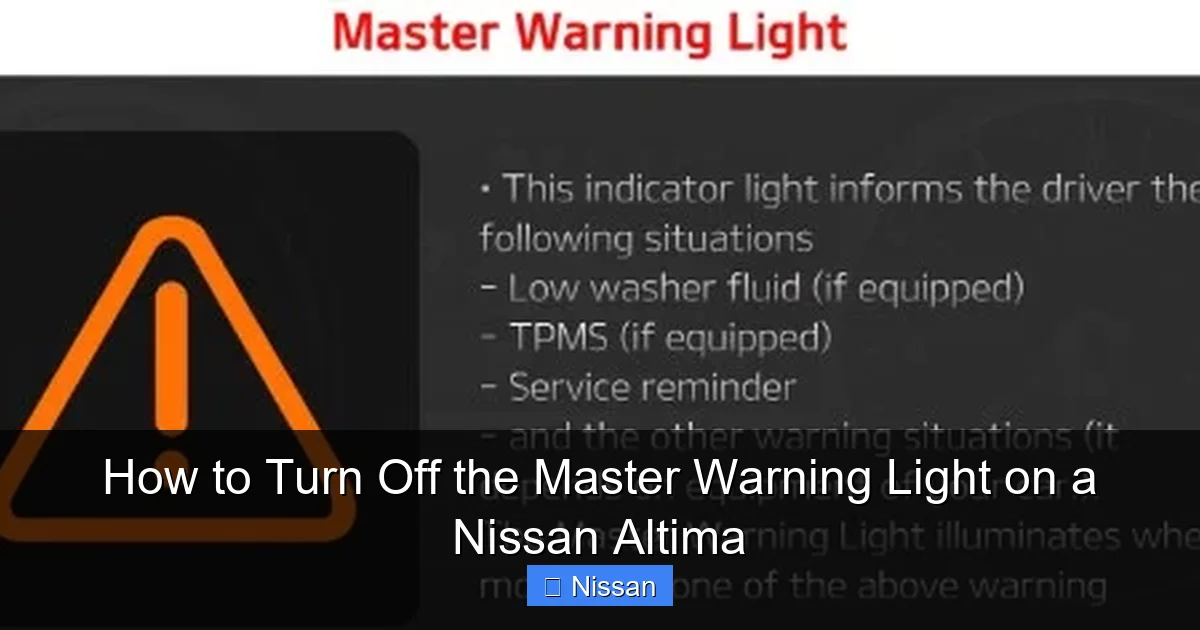
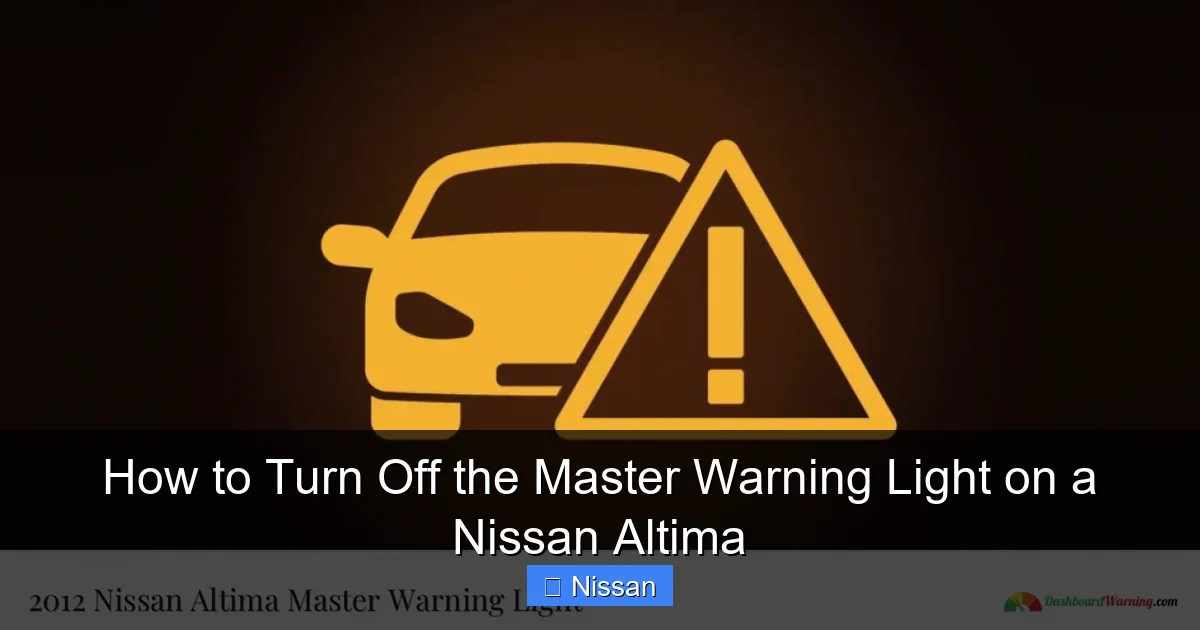
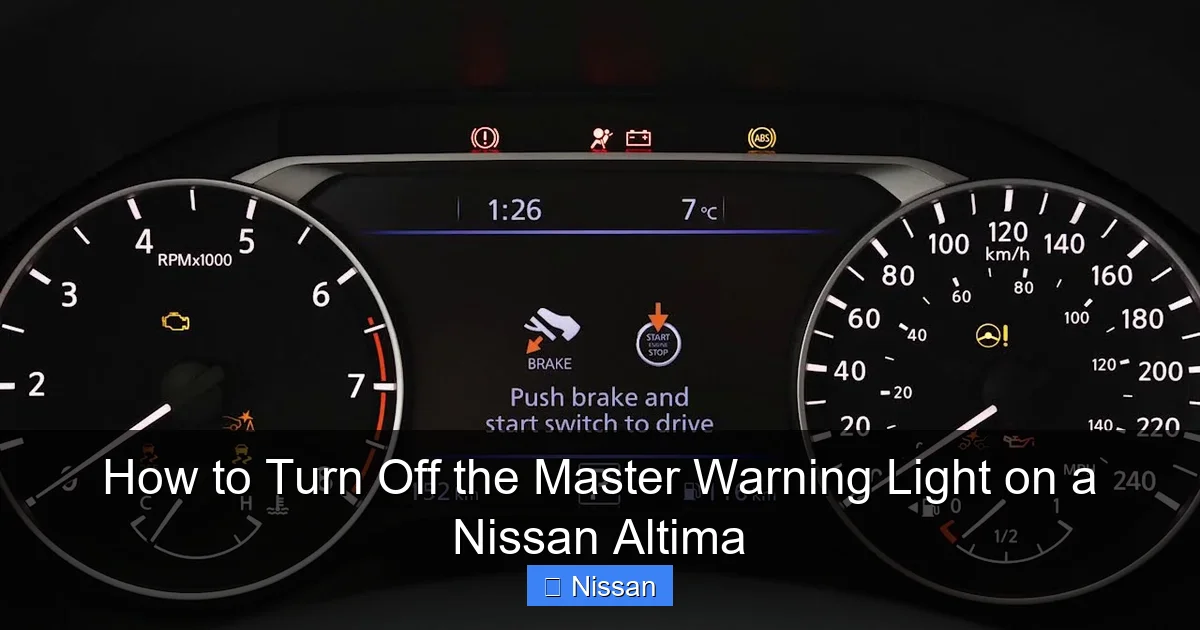
If you’ve ever been driving your Nissan Altima and suddenly noticed a red or yellow warning light flashing on the dashboard, you’re not alone. One of the most common—and sometimes confusing—lights drivers encounter is the master warning light. It often appears as a yellow triangle with an exclamation point inside, and it can show up alongside other indicators like the check engine light, ABS light, or battery warning.
Unlike specific warning lights that tell you exactly what’s wrong (like low oil pressure or a failing alternator), the master warning light is more of a general alert. Think of it as your car’s way of saying, “Hey, something needs your attention—now.” It doesn’t always mean your engine is about to explode or your brakes have failed. In many cases, it’s triggered by minor issues like a loose gas cap, a low tire pressure, or even a temporary sensor glitch. But ignoring it isn’t a good idea either. The key is knowing how to respond—and how to turn it off safely.
What Does the Master Warning Light Mean?
The master warning light on a Nissan Altima is part of the vehicle’s onboard diagnostic system. It acts as a central alert that activates when one or more systems report a fault. This could be related to the engine, transmission, brakes, electrical system, or even safety features like airbags or traction control. Because it’s a catch-all signal, it’s important not to assume the worst. Instead, use it as a prompt to investigate further.
For example, if your tire pressure monitoring system (TPMS) detects that one of your tires is underinflated, the TPMS light may come on—and so might the master warning light. Similarly, if your brake fluid level drops below the recommended threshold, both the brake warning light and the master light could illuminate. In these cases, the master light is simply drawing your attention to the fact that something important needs fixing.
Common Triggers for the Master Warning Light
Several everyday issues can cause the master warning light to appear on your Altima. Here are some of the most frequent culprits:
- Loose or missing gas cap: A faulty gas cap can cause fuel vapors to escape, triggering the check engine light and, in turn, the master warning light.
- Low tire pressure: The TPMS monitors tire pressure and will alert you if one or more tires drop below the recommended PSI.
- Battery or charging system issues: A weak battery, failing alternator, or loose connection can cause electrical faults that trigger the master light.
- Brake system problems: Low brake fluid, worn brake pads, or ABS sensor issues can activate the warning.
- Engine or emissions faults: Problems like a misfiring engine, faulty oxygen sensor, or clogged catalytic converter may set off the light.
- Transmission issues: In some models, transmission temperature warnings or shift problems can trigger the master alert.
- Airbag or SRS faults: If the supplemental restraint system detects a problem, it may activate the master warning light.
Understanding these triggers helps you narrow down the cause without jumping to conclusions. For instance, if you just filled up your gas tank and the light came on shortly after, the gas cap is a likely suspect. If the light appears during cold weather, it could be related to battery performance.
Step-by-Step Guide to Turning Off the Master Warning Light
Now that you know what the master warning light means and what might be causing it, let’s talk about how to turn it off. The good news is that in many cases, you can reset the light yourself—especially if the underlying issue has been resolved. However, it’s crucial to address the root cause first. Resetting the light without fixing the problem is like turning off a smoke alarm while your kitchen is still on fire. It might make you feel better temporarily, but the danger remains.
Visual guide about How to Turn Off the Master Warning Light on a Nissan Altima
Image source: dashboardwarning.com
Step 1: Identify and Fix the Underlying Issue
Before attempting to reset the master warning light, take a moment to inspect your vehicle. Start with the basics:
- Check your gas cap—make sure it’s tight and not cracked or missing.
- Inspect your tires—use a tire pressure gauge to ensure all four are inflated to the recommended PSI (usually found on the driver’s door jamb).
- Look at other warning lights—if the check engine light, battery light, or brake light is on, investigate those first.
- Listen for unusual sounds—squealing, grinding, or knocking could indicate mechanical problems.
- Check fluid levels—engine oil, brake fluid, coolant, and transmission fluid should all be at proper levels.
For example, if you notice the TPMS light is on, inflate your tires to the correct pressure. After driving for a few miles, the TPMS light—and possibly the master warning light—should turn off on its own. Similarly, tightening a loose gas cap often resolves the issue within a day or two of normal driving.
Step 2: Use the Trip Odometer Reset Method (For Most Altima Models)
If the issue has been fixed but the master warning light remains on, you can try resetting it using the trip odometer button. This method works on most Nissan Altima models from 2007 to 2023. Here’s how to do it:
- Turn the ignition to the “ON” position (but don’t start the engine).
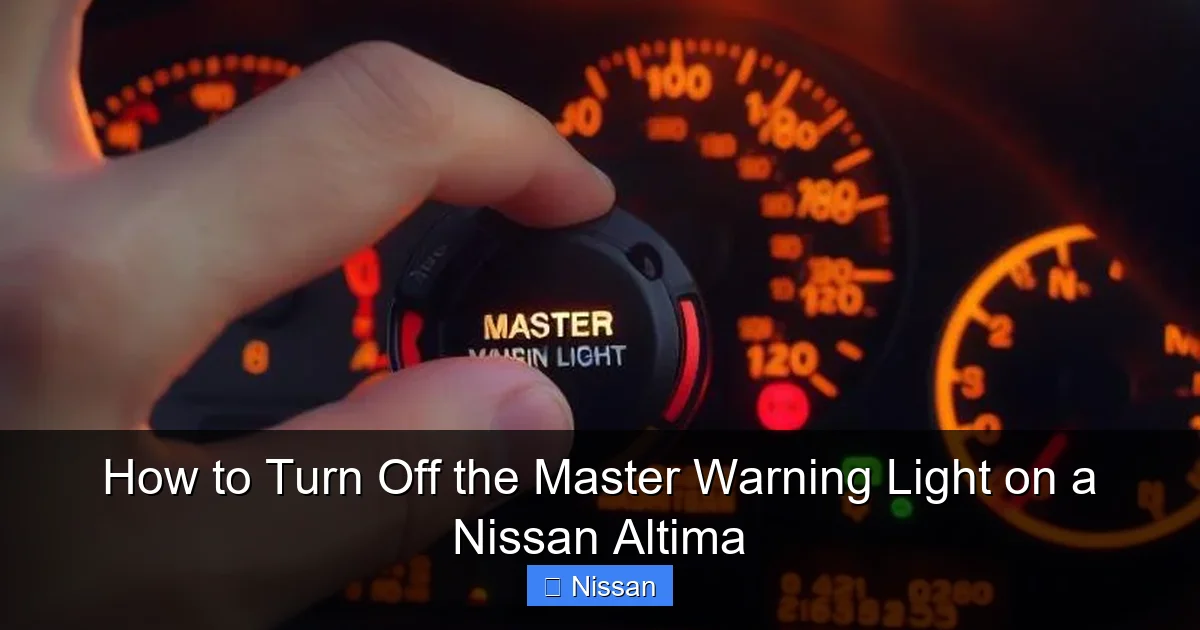
- Press and hold the trip odometer button (usually located on the instrument cluster or steering column).
- While holding the button, turn the ignition to the “OFF” position.
- Continue holding the button for about 10–15 seconds.
- Turn the ignition back to “ON” while still holding the button.
- Release the button when the master warning light begins to flash or turns off.
This process essentially resets the warning system and clears any stored error codes related to minor faults. It’s a simple trick that many Nissan owners swear by. However, it won’t work if there’s an active, unresolved problem. In that case, the light will come back on after a short drive.
Step 3: Use an OBD2 Scanner for Persistent Lights
If the master warning light keeps returning—or if you’re unsure what’s causing it—it’s time to use an OBD2 (On-Board Diagnostics) scanner. These devices plug into your Altima’s OBD2 port, usually located under the dashboard near the driver’s knee, and read diagnostic trouble codes (DTCs) stored in the vehicle’s computer.
Here’s how to use one:
- Turn off the ignition and locate the OBD2 port.
- Plug in the scanner and turn the ignition to “ON.”
- Follow the scanner’s instructions to read the codes.
- Note the code(s) displayed (e.g., P0455 for a large EVAP leak).
- Look up the code online or in the scanner’s manual to understand the issue.
- Fix the problem, then use the scanner to clear the codes.
Many auto parts stores offer free code reading services, so you don’t necessarily need to buy a scanner. Once the codes are cleared and the issue is resolved, the master warning light should stay off.
Step 4: Visit a Nissan Dealer or Mechanic
If you’ve tried the above steps and the master warning light still won’t turn off, it’s time to seek professional help. Some issues—like transmission faults, airbag system errors, or complex electrical problems—require specialized tools and expertise to diagnose and repair.
A certified Nissan technician can perform a full system scan, inspect wiring and sensors, and ensure all components are functioning correctly. They may also update your vehicle’s software if a recall or technical service bulletin (TSB) applies to your Altima model.
Don’t ignore persistent warning lights. Even if your car seems to be running fine, underlying problems can worsen over time and lead to costly repairs or safety risks.
Preventing Future Master Warning Light Issues
The best way to deal with the master warning light is to avoid it altogether. While you can’t prevent every sensor glitch or mechanical fault, regular maintenance and proactive care can significantly reduce the chances of unexpected alerts.
Visual guide about How to Turn Off the Master Warning Light on a Nissan Altima
Image source: i.ytimg.com
Follow the Maintenance Schedule
Your Nissan Altima comes with a recommended maintenance schedule outlined in the owner’s manual. Stick to it. Regular oil changes, tire rotations, brake inspections, and fluid top-offs keep your car running smoothly and help prevent issues that trigger warning lights.
For example, changing your engine oil every 5,000 to 7,500 miles (depending on driving conditions) prevents sludge buildup and engine wear. Similarly, rotating your tires every 6,000 to 8,000 miles ensures even wear and helps the TPMS function accurately.
Check Tire Pressure Monthly
Tire pressure can drop due to temperature changes, punctures, or slow leaks. Use a reliable tire pressure gauge to check all four tires (plus the spare, if applicable) at least once a month. Inflate them to the PSI listed on the driver’s door jamb sticker—not the maximum pressure printed on the tire sidewall.
Many newer Altima models come with a tire pressure monitoring system that displays individual tire pressures on the dashboard. If yours doesn’t, consider installing a set of aftermarket TPMS sensors for added peace of mind.
Inspect the Gas Cap Regularly
A cracked, loose, or missing gas cap is one of the easiest fixes—and one of the most common causes of the check engine light (and by extension, the master warning light). After every fill-up, make sure the cap clicks tightly into place. If it’s damaged, replace it with an OEM or high-quality aftermarket cap.
Keep the Battery in Good Condition
The battery powers your Altima’s electrical systems, including sensors and warning lights. A weak or dying battery can cause erratic behavior and false alerts. Have your battery tested annually, especially if it’s more than three years old. Clean the terminals to prevent corrosion, and ensure the connections are tight.
Use Quality Fuel and Fluids
Using low-quality gasoline or the wrong type of engine oil can lead to engine problems and emissions faults. Always use the fuel grade recommended by Nissan (usually regular unleaded for most Altimas) and stick to the specified oil viscosity (e.g., 0W-20 or 5W-30).
Similarly, use only Nissan-approved brake fluid, coolant, and transmission fluid. Mixing incompatible fluids can damage seals and sensors, leading to warning light activations.
When to Take Your Altima to a Professional
While many master warning light issues can be resolved at home, some situations require expert attention. Here are signs it’s time to visit a mechanic or Nissan dealership:
Visual guide about How to Turn Off the Master Warning Light on a Nissan Altima
Image source: turbochaos.com
- The master warning light is red (indicating a serious issue).
- The light flashes or pulses instead of staying steady.
- Other warning lights (like check engine, brake, or battery) are also on.
- You notice performance issues—rough idling, loss of power, strange noises, or difficulty shifting.
- The light returns immediately after being reset.
- You’re uncomfortable diagnosing or repairing the problem yourself.
For example, if the master warning light comes on while driving and your car starts to shake or lose power, pull over safely and call for assistance. This could indicate a serious engine or transmission problem that needs immediate attention.
Similarly, if the airbag light is on, don’t ignore it. The airbag system is critical for safety, and a fault could mean the airbags won’t deploy in a crash. Have it inspected by a professional as soon as possible.
What to Expect at the Shop
When you take your Altima to a technician, they’ll typically start with a full diagnostic scan using advanced tools. They’ll check for stored trouble codes, inspect wiring and sensors, and test system functions. Depending on the findings, they may recommend repairs such as replacing a faulty oxygen sensor, repairing a vacuum leak, or updating the vehicle’s software.
Many dealerships offer loaner cars or shuttle services, so you’re not left stranded. Some also provide detailed reports explaining the issue and the repair process, so you know exactly what’s being done to your vehicle.
Real-Life Examples and Tips from Nissan Altima Owners
To give you a better sense of how the master warning light behaves in real-world scenarios, here are a few common experiences shared by Altima drivers:
Example 1: The Gas Cap Mystery
Sarah, a 2018 Altima owner, noticed the master warning light come on after filling up at a gas station. She checked the gas cap, tightened it, and drove home. The light was still on the next day. She used the trip odometer reset method, but it came back. Finally, she visited a mechanic who discovered the gas cap was cracked. Replacing it solved the problem, and the light stayed off.
Example 2: Cold Weather Battery Woes
Mike, who lives in Minnesota, had his master warning light activate during a winter cold snap. The battery light was also on. He jumped the car, but the light returned. A battery test revealed it was failing. After replacing the battery, both lights turned off and haven’t returned.
Example 3: TPMS Glitch
Lisa’s 2020 Altima showed the master warning light and TPMS alert after a long road trip. She checked the tires—all were properly inflated. She reset the TPMS using the dashboard menu, but the light persisted. A visit to the dealer revealed a faulty TPMS sensor in one wheel. Replacing it fixed the issue.
These stories highlight the importance of not assuming the worst—but also not ignoring the warning. Simple fixes often work, but when in doubt, get it checked.
Conclusion
The master warning light on your Nissan Altima doesn’t have to be a source of anxiety. With a little knowledge and the right approach, you can often identify and resolve the issue yourself—or know when it’s time to call in the pros. Start by checking for obvious problems like a loose gas cap or low tire pressure. Use the trip odometer reset method if the issue is minor. For persistent or complex problems, an OBD2 scanner or professional diagnosis is the way to go.
Remember, the master warning light is there to protect you and your vehicle. It’s not a punishment—it’s a helpful alert. By staying proactive with maintenance and responding calmly to warnings, you’ll keep your Altima running smoothly for years to come. And the next time that little triangle lights up, you’ll know exactly what to do.
Frequently Asked Questions
Can I drive my Nissan Altima with the master warning light on?
It depends on the cause. If the light is yellow and no other warning lights are on, you may be able to drive short distances cautiously. However, if the light is red or flashing, or if you notice performance issues, stop driving and seek help immediately.
Will the master warning light turn off on its own?
Sometimes. If the issue was temporary—like a loose gas cap or minor sensor glitch—the light may reset after a few drive cycles. However, if the problem persists, the light will likely stay on until it’s manually reset or the underlying issue is fixed.
How much does it cost to fix a master warning light issue?
Costs vary widely. Simple fixes like tightening a gas cap or inflating tires are free. Replacing a gas cap or TPMS sensor may cost $20–$100. More complex repairs, like fixing an engine or transmission fault, can range from $200 to over $1,000.
Can a dead battery cause the master warning light to come on?
Yes. A weak or failing battery can cause electrical irregularities that trigger the master warning light. If the battery light is also on, have your battery and charging system tested.
Do I need a special tool to reset the master warning light?
Not always. Many Altima models allow you to reset the light using the trip odometer button. For more complex issues, an OBD2 scanner is recommended to read and clear trouble codes.
Is the master warning light the same as the check engine light?
No. The check engine light is specific to engine and emissions issues. The master warning light is a general alert that can be triggered by various systems, including the check engine light. It often appears alongside other warning indicators.