How to Turn Off Security Indicator Light on a Subaru

Contents

OBD2 Scanner Tool

Microfiber Car Cleaning Cloth

Bluetooth FM Transmitter

Car Windshield Wiper Blades
Is your Subaru’s security indicator light blinking or staying on? This common issue can be annoying and confusing. The good news? It’s usually easy to fix with a few simple steps—no mechanic required.
Key Takeaways
- Understand the security system: The security indicator light is part of Subaru’s anti-theft system and signals whether the system is armed or detecting a fault.
- Check the key fob battery: A weak or dead key fob battery is one of the most common reasons the security light stays on or blinks.
- Try the manual reset method: Turning the ignition on and off in a specific sequence can reset the security system and turn off the light.
- Ensure doors are fully closed: Even a slightly ajar door or trunk can trigger the security system and cause the light to remain active.
- Inspect the hood sensor: A faulty or misaligned hood switch can trick the car into thinking the hood is open, activating the security light.
- Use the valet mode (if equipped): Some Subaru models allow you to disable the security system temporarily using valet mode.
- Consult a professional if needed: If basic troubleshooting fails, a certified Subaru technician can diagnose deeper electrical or immobilizer issues.
📑 Table of Contents
Why Is My Subaru’s Security Light On?
If you’ve ever parked your Subaru, locked the doors, and noticed a small red or orange light blinking on the dashboard—or worse, staying on continuously—you’re not alone. That little light is the security indicator, and it’s part of Subaru’s built-in anti-theft system. While it’s designed to protect your vehicle, it can sometimes act up for reasons that have nothing to do with theft.
The security indicator light serves as a visual signal that your car’s immobilizer and alarm system are active. When everything is working correctly, the light should blink briefly when you lock the car and then continue blinking slowly while the vehicle is parked and secured. However, if the light stays solid, flashes rapidly, or won’t turn off at all, it’s usually a sign that something is triggering the system incorrectly.
Common causes include a weak key fob battery, a door not fully closed, a faulty hood sensor, or even a glitch in the system’s electronics. In most cases, these issues are easy to resolve at home with a few simple steps. But before you start troubleshooting, it’s important to understand how Subaru’s security system works and what the different light behaviors mean.
How Subaru’s Security System Works
Subaru vehicles come equipped with a passive anti-theft system known as the immobilizer. This system prevents the engine from starting unless the correct key—with a programmed transponder chip—is used. When you insert the key into the ignition or press the start button (on push-button models), the car communicates with the key fob to verify its authenticity. If the key is recognized, the engine will start. If not, the immobilizer kicks in, and the security light may stay on or flash rapidly.
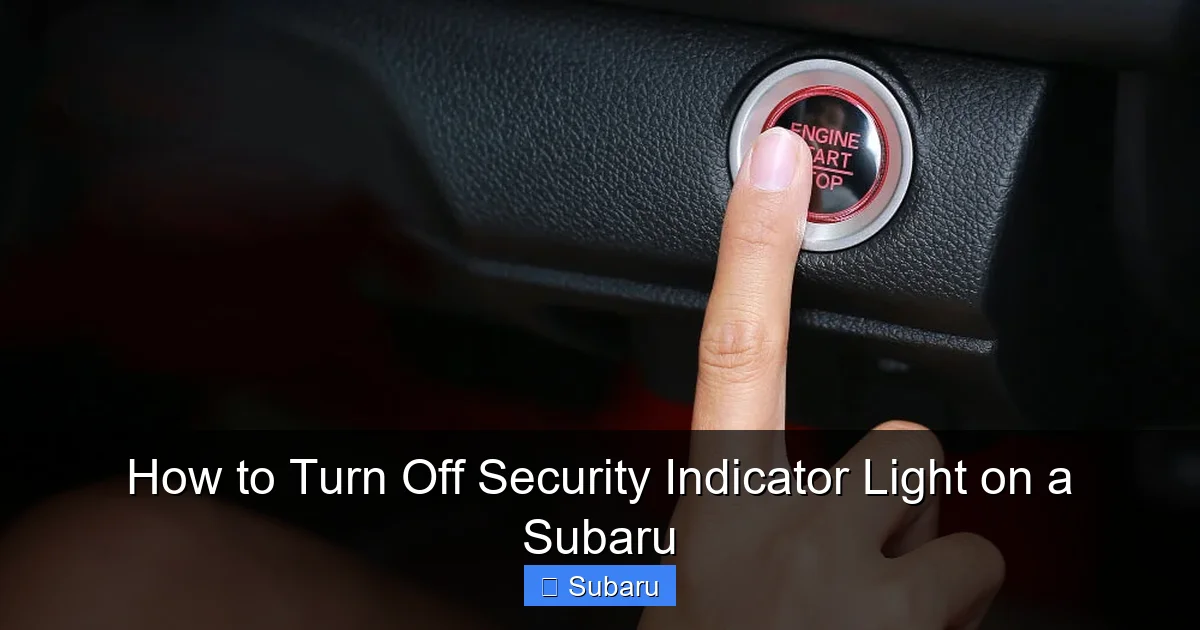
The security indicator light itself is usually located near the instrument cluster or on the center console. It’s typically red or orange and may be labeled “SECURITY” or simply appear as a small icon of a car with a lock. The light’s behavior gives you clues about the system’s status:
– Slow blinking (once every 2–3 seconds): Normal—system is armed and functioning properly.
– Rapid blinking or flashing: Indicates a fault or that the system is trying to arm but can’t.
– Solid (non-blinking) light: Often means the system is disarmed or there’s an issue with the key or sensor.
– Light won’t turn off after starting the car: Could signal a malfunction in the immobilizer or a communication error.
Understanding these patterns helps you diagnose the problem faster. For example, if the light blinks rapidly when you try to start the car, it might mean the key isn’t being recognized. If it stays on after driving, a sensor might be stuck or damaged.
Common Reasons the Security Light Stays On
Let’s break down the most frequent causes of a persistent security light. While it’s tempting to assume the worst—like a broken immobilizer or wiring issue—many of these problems are surprisingly simple.
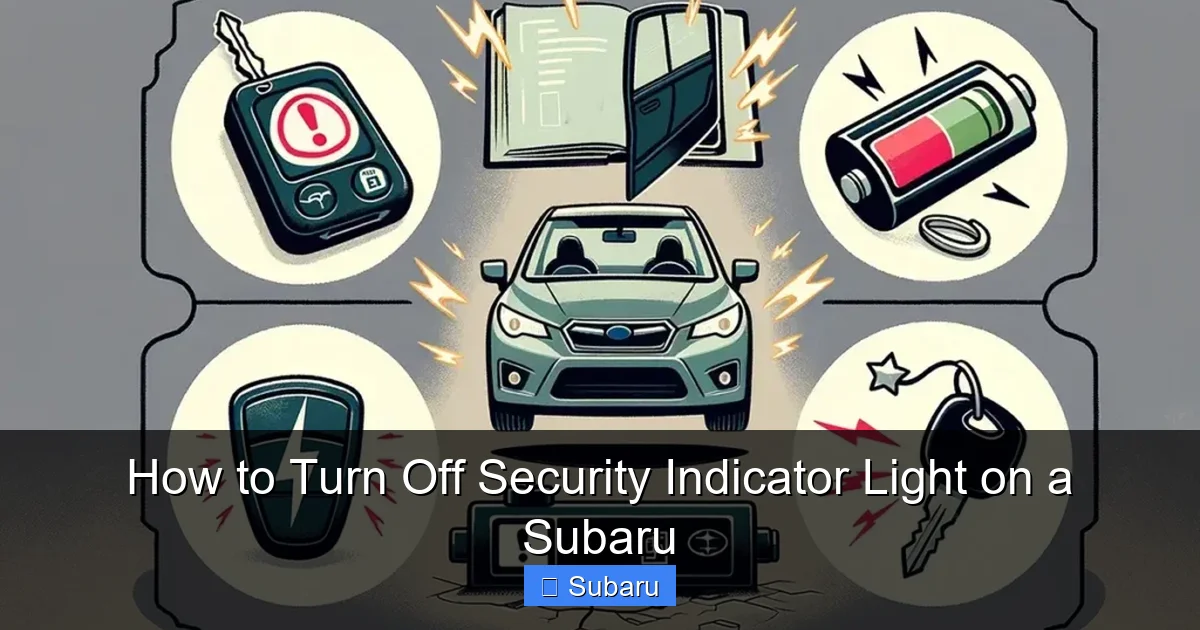
One of the top culprits is a weak or dead key fob battery. The key fob sends a signal to the car to disarm the security system when you press the unlock button. If the battery is low, the signal may be too weak to register, leaving the system in an armed state. This can cause the light to blink rapidly or stay on even after you’ve entered the car.
Another common issue is a door, trunk, or hood that isn’t fully closed. Subaru’s security system monitors all entry points. If the driver’s door, passenger door, rear hatch, or hood isn’t latched properly, the system thinks the car is being accessed and keeps the security light active. This is especially common in winter when snow or ice can prevent doors from sealing completely.
The hood sensor is another frequent offender. Located near the latch under the hood, this small switch tells the car whether the hood is open or closed. If it’s misaligned, dirty, or damaged, it can send a false “hood open” signal, triggering the security light. This is particularly common after windshield replacements or front-end repairs, where the sensor may have been disturbed.
In some cases, the issue is purely electronic. A glitch in the body control module (BCM)—the computer that manages the car’s electrical systems—can cause the security light to behave erratically. This might happen after a power surge, a dead battery, or even a software hiccup. Fortunately, these glitches are often resolved with a simple reset.
Finally, if you’ve recently replaced the key fob, had the car serviced, or installed an aftermarket alarm, the system may need to be reprogrammed. Subaru’s immobilizer is very specific about which keys it accepts, and unauthorized changes can confuse the system.
Step-by-Step Guide to Turn Off the Security Indicator Light

Visual guide about How to Turn Off Security Indicator Light on a Subaru
Image source: lightcheckup.com
Now that you know what might be causing the problem, let’s walk through the most effective ways to turn off the security indicator light on your Subaru. These methods are safe, don’t require special tools, and can be done in under 10 minutes.
Method 1: Replace the Key Fob Battery
Start with the simplest fix: checking the key fob battery. This is one of the most common—and overlooked—causes of a persistent security light.
First, locate the battery compartment on your key fob. Most Subaru fobs have a small notch or button on the side that allows you to pry open the casing. Use a flathead screwdriver or a coin to gently twist and open it. Inside, you’ll find a small coin-cell battery—usually a CR2032.
Remove the old battery and check its voltage with a multimeter if you have one. A healthy battery should read around 3 volts. If it’s below 2.5 volts, it’s likely too weak to send a strong signal.
Insert a new CR2032 battery, making sure the positive side (the side with the “+” symbol) is facing up. Snap the fob back together and test it by pressing the unlock button near your car. The security light should stop blinking rapidly and return to a slow, steady blink.
Pro tip: Keep a spare key fob battery in your glove box. They’re inexpensive and can save you a trip to the dealership.
Method 2: Manually Reset the Security System
If replacing the battery doesn’t work, try resetting the security system manually. This method forces the car to re-recognize the key and reinitialize the immobilizer.
Here’s how to do it:
1. Sit in the driver’s seat and close all doors.
2. Insert the key into the ignition (or press the start button without your foot on the brake).
3. Turn the key to the “ON” position (dashboard lights will come on, but the engine won’t start).
4. Wait 10 seconds.
5. Turn the key back to the “OFF” position.
6. Remove the key.
7. Wait another 10 seconds.
8. Repeat this cycle three times (ON → wait 10 sec → OFF → wait 10 sec = one cycle).
9. On the third cycle, leave the key in the “ON” position and wait up to 30 seconds.
10. The security light should stop blinking and turn off.
This process essentially reboots the immobilizer system and often resolves communication errors between the key and the car.
Note: On push-button start models, press the start button once (without brake) to turn the ignition on, then press it again to turn it off. Repeat the cycle as described.
Method 3: Check All Doors, Trunk, and Hood
A door that’s not fully closed is one of the sneakiest causes of a security light issue. Even if the door feels closed, a misaligned latch or weather stripping can prevent it from fully engaging the sensor.
Start by checking each door individually. Open and close them firmly, listening for a solid “click.” Pay special attention to the driver’s door, as it’s often used most frequently and can wear out over time.
Next, check the trunk or rear hatch. Lift it fully and close it with steady pressure. If your Subaru has a power liftgate, make sure it completes its full closing cycle.
Finally, inspect the hood. Open it and look at the latch mechanism. The hood sensor is usually a small plunger switch near the latch. Make sure it’s clean and not stuck. If it’s depressed when the hood is closed, it may be faulty.
Tip: Try locking the car with the key fob after ensuring all doors and the hood are fully closed. The security light should blink normally.
Method 4: Inspect and Clean the Hood Sensor
If the security light comes on only when the hood is closed, the hood sensor is likely the culprit. This small switch tells the car whether the hood is open or closed. If it’s dirty, misaligned, or damaged, it can send a false signal.
To access the sensor, open the hood and locate the latch mechanism on the driver’s side. The sensor is usually a small black or gray switch with a wire connected to it. It has a plunger that should be depressed when the hood is closed.
Gently clean the area around the sensor with a dry cloth. If there’s dirt or grease, use a bit of rubbing alcohol on a cotton swab to clean it. Make sure the plunger moves freely—it should click when pressed and release when the hood is opened.
If the sensor appears damaged or the plunger is stuck, it may need to be replaced. Replacement sensors are available at Subaru dealerships or online auto parts stores and typically cost under $20.
Warning: Never drive with the hood sensor disconnected or bypassed. It’s a safety feature that prevents the hood from flying open while driving.
Method 5: Use Valet Mode (If Equipped)
Some newer Subaru models—especially those with push-button start—come with a valet mode that temporarily disables the security system. This can be useful if you’re parking in a secure garage or handing the car to a valet.
To activate valet mode:
1. Make sure the car is off and all doors are closed.
2. Press and hold the “LOCK” button on the key fob for 5–10 seconds.
3. The security light should turn off or stop blinking.
4. The car will now start without requiring the key fob to be present (though the fob must still be inside the vehicle).
To deactivate valet mode, press and hold the “UNLOCK” button for 5–10 seconds. The security light should return to normal operation.
Note: Valet mode doesn’t disable the immobilizer—it only disables the alarm and some convenience features. Check your owner’s manual to confirm if your model supports this feature.
When to See a Mechanic or Dealership
Visual guide about How to Turn Off Security Indicator Light on a Subaru
Image source: lightcheckup.com
While most security light issues can be resolved at home, there are times when professional help is needed. If you’ve tried all the steps above and the light still won’t turn off, it could indicate a deeper problem.
One possibility is a faulty immobilizer control module. This is the brain of the security system and communicates with the key, ignition, and body control module. If it fails, the car may not recognize any key, and the security light will stay on. Replacing this module requires specialized diagnostic tools and programming, which only a Subaru dealership or certified mechanic can perform.
Another potential issue is a wiring fault or short circuit. Over time, wires under the dashboard or near the door jambs can fray or corrode, causing erratic signals. This is more common in older vehicles or those exposed to moisture.
If your Subaru has recently had electrical work—such as an alarm installation, stereo upgrade, or battery replacement—the issue might be related to improper wiring or grounding. Aftermarket accessories can sometimes interfere with the factory security system.
Finally, if the security light is accompanied by other symptoms—like the engine not starting, warning lights on the dashboard, or the car going into “limp mode”—it’s best to have it checked immediately. These could indicate a more serious electrical or engine management problem.
When visiting a dealership or mechanic, bring your owner’s manual, key fob, and any notes about when the issue started. This will help them diagnose the problem faster.
Preventing Future Security Light Issues
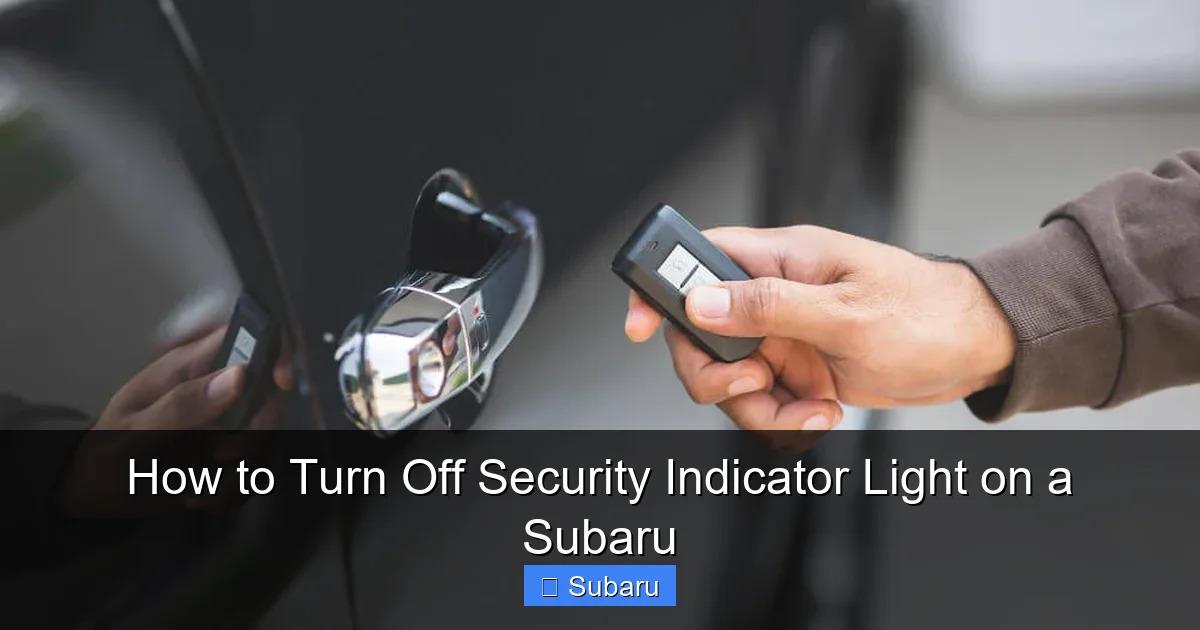
Visual guide about How to Turn Off Security Indicator Light on a Subaru
Image source: lightcheckup.com
Once you’ve turned off the security indicator light, you’ll want to keep it that way. A few simple habits can prevent the problem from returning.
First, replace your key fob battery every 1–2 years, even if it seems to be working. Batteries lose power gradually, and a weak signal can cause intermittent issues.
Second, inspect door and hood latches regularly. Clean them with a silicone-based lubricant to prevent sticking, especially in cold or humid climates.
Third, avoid aftermarket alarms or remote starters unless they’re specifically designed for Subaru vehicles. Many third-party systems aren’t compatible with the factory immobilizer and can cause conflicts.
Finally, keep your owner’s manual handy. It contains model-specific instructions for your security system and can save you time and frustration.
Conclusion
The security indicator light on your Subaru is there to protect your vehicle, but it doesn’t have to be a source of stress. In most cases, a blinking or solid security light is caused by something simple—like a weak key fob battery, a door that’s not fully closed, or a dirty hood sensor. With the right troubleshooting steps, you can turn off the light and get back to driving with peace of mind.
Start with the basics: check the key fob battery, ensure all doors and the hood are closed, and try a manual reset. If those don’t work, inspect the hood sensor or try valet mode. And if all else fails, don’t hesitate to consult a professional.
Remember, your Subaru’s security system is designed to keep you safe. A little maintenance goes a long way in keeping it working smoothly.
Frequently Asked Questions
Why is my Subaru security light blinking rapidly?
A rapidly blinking security light usually means the system can’t arm properly. This is often due to a weak key fob battery, a door not fully closed, or a faulty hood sensor. Try replacing the battery or checking all latches.
Can I drive my Subaru if the security light is on?
Yes, you can usually drive the car even if the security light is on. However, if the light is solid or flashing rapidly and the engine won’t start, there may be an immobilizer issue that needs attention.
How do I reset the security system on a Subaru with push-button start?
Press the start button once (without your foot on the brake) to turn the ignition on. Wait 10 seconds, then press it again to turn it off. Repeat this cycle three times, leaving it on the third time for up to 30 seconds.
Does the security light drain the battery?
No, the security light itself uses very little power. However, if the system is malfunctioning and constantly trying to communicate with the key fob, it could contribute to a slow battery drain over time.
Can a dead car battery cause the security light to stay on?
Yes, a dead or weak car battery can cause electrical glitches, including issues with the security system. Replacing or recharging the battery and performing a reset often resolves the problem.
Is it safe to disconnect the hood sensor to turn off the light?
No, it’s not safe to disconnect or bypass the hood sensor. It’s a critical safety feature that prevents the hood from opening while driving. If the sensor is faulty, replace it instead.