
How to Tilt a Subaru Headrest Back

Adjusting your Subaru headrest backward can improve comfort, especially on long drives. This guide walks you through the simple process, model-specific tips, and common mistakes to avoid—ensuring you get the perfect angle every time.
Key Takeaways
- Most Subaru headrests tilt using a side button or lever. Press or slide it to release the locking mechanism and gently push the headrest backward.
- Not all Subaru models have tiltable headrests. Older models or base trims may only allow height adjustment.
- Always check your owner’s manual first. It provides model-specific instructions and safety warnings.
- Never force the headrest. If it doesn’t move easily, double-check the release mechanism or look for obstructions.
- Tilting improves comfort but shouldn’t compromise safety. Keep the headrest high enough to support your head in case of a collision.
- Clean and maintain the headrest hinges. Dust and debris can stiffen the tilt function over time.
- Use the tilt feature responsibly. Avoid extreme angles that could reduce protection during sudden stops.
📑 Table of Contents
Why Tilt Your Subaru Headrest Back?
You’re cruising down the highway, the sun’s setting, and your neck starts to ache. Sound familiar? If you’ve ever felt that stiff, upright position of your car seat becoming uncomfortable after just 30 minutes, you’re not alone. Many Subaru drivers don’t realize that their headrests can actually tilt backward—offering a more relaxed, natural posture without sacrificing safety. Tilting your Subaru headrest back isn’t just about comfort; it’s about aligning your spine, reducing fatigue, and making every drive—whether it’s a quick errand or a cross-country road trip—a little more enjoyable.
Subaru has long been praised for its ergonomic design and driver-focused interiors. From the Outback to the Forester, Impreza, and Crosstrek, the brand integrates thoughtful features that enhance both safety and comfort. One such feature is the adjustable headrest, which on many newer models includes a tilt function. This allows you to angle the headrest slightly backward, cradling your head in a more natural position. Unlike simply lowering the headrest—which can be unsafe—tilting maintains proper support while reducing pressure on your neck and upper back. It’s a small change that makes a big difference, especially if you spend a lot of time behind the wheel.
Understanding Subaru Headrest Design
Types of Subaru Headrests
Before you attempt to tilt your headrest, it’s important to understand the different types found in Subaru vehicles. Not all headrests are created equal, and knowing what you’re working with can save you frustration. Most modern Subarus (2015 and newer) come equipped with active headrests—a safety feature designed to move forward slightly in a rear-end collision to reduce whiplash. These headrests often include both height and tilt adjustments. However, older models or base trim levels may only offer vertical movement.

Visual guide about How to Tilt a Subaru Headrest Back
Image source: carnewsbox.com
There are generally two styles of tilt mechanisms in Subaru headrests: the side-button release and the lever-style tilt. The side-button type is the most common and is typically located on the left or right side of the headrest post. When pressed, it unlocks the headrest, allowing you to tilt it forward or backward. The lever-style mechanism is less common but can be found in some higher-trim models like the Legacy or Ascent. It usually involves a small lever near the base of the headrest that you pull or push to release the tilt function.
Safety First: The Role of Headrests in Protection
It’s easy to think of headrests as purely comfort features, but they play a critical role in vehicle safety. In the event of a rear-end collision, your head can snap backward violently, causing whiplash or more serious spinal injuries. A properly positioned headrest limits this movement by supporting the head and neck. That’s why Subaru engineers design their headrests to be both adjustable and responsive. The tilt function is not meant to let you recline like you’re in a lounge chair—it’s meant to provide a slight, supportive angle that keeps your head aligned with your spine.
According to the Insurance Institute for Highway Safety (IIHS), head restraints that are too low or too far back can increase the risk of neck injury by up to 30%. That’s why it’s essential to tilt your headrest correctly. The ideal position is when the top of the headrest is level with the top of your head, and the back of your head is no more than 2–3 inches away from the headrest. Tilting it slightly backward can help achieve this alignment without compromising safety. Remember: comfort and safety aren’t mutually exclusive—they work best when balanced.
Step-by-Step Guide to Tilt a Subaru Headrest Back
Step 1: Locate the Tilt Release Mechanism
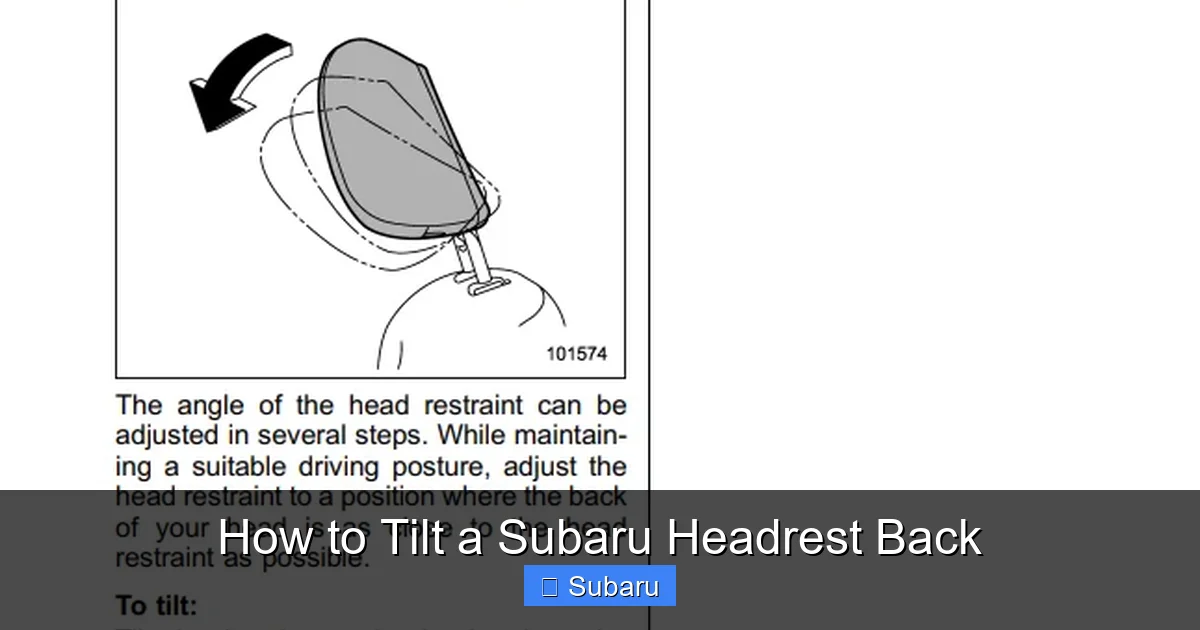
The first step in tilting your Subaru headrest back is finding the release mechanism. On most models, this is a small button or switch on the side of the headrest post—usually on the left side when facing the seat. It’s often black or gray and may have a subtle texture or indentation to help you locate it by touch. Some models, like the 2020+ Outback or Forester, have a more pronounced button, while others, like the Impreza, may have a flush-mounted switch that’s harder to see.
Visual guide about How to Tilt a Subaru Headrest Back
Image source: community.cartalk.com
If you’re having trouble finding it, try running your fingers along the side of the headrest post. The button is typically about halfway up, near where the headrest connects to the seat. In some cases, especially in higher-trim models, the release might be a small lever that you pull outward. Don’t confuse this with the height adjustment lever, which is usually larger and located at the base of the seatback. Take a moment to familiarize yourself with the mechanism before applying pressure.
Step 2: Press and Hold the Release Button
Once you’ve located the tilt release button, press it firmly and hold it down. You should feel a slight click or give as the locking mechanism disengages. This is your signal that the headrest is now free to move. It’s important to keep the button pressed throughout the entire adjustment process—if you let go too soon, the headrest may snap back into its original position.
Some drivers report that the button requires a bit of force, especially if the headrest hasn’t been adjusted in a while. If it feels stiff, don’t panic. Try pressing it with your thumb while using your other hand to gently support the headrest. Avoid using excessive force, as this could damage the internal mechanism. If the button doesn’t respond at all, check your owner’s manual to confirm that your model supports tilt adjustment. Not all Subarus do—especially older or base models.
Step 3: Gently Tilt the Headrest Backward
With the release button still pressed, use your other hand to gently push the top of the headrest backward. You’ll notice it pivots smoothly on a hinge near the base. The range of motion is usually limited to about 15–20 degrees—just enough to provide a more relaxed angle without compromising support. Don’t try to force it beyond this range. The mechanism is designed to stop at a safe point, and pushing too hard could damage the hinges or internal components.
As you tilt, pay attention to how it feels. The headrest should move with minimal resistance. If it feels jerky or catches at certain points, there may be debris or wear in the hinge. In that case, consider cleaning the area or consulting a Subaru service center. Once you’ve found a comfortable angle, slowly release the button. The headrest should lock into place with a soft click. Give it a gentle tug to confirm it’s secure.
Step 4: Test the Position and Adjust if Needed
After tilting the headrest back, take a moment to test the position. Sit in the driver’s seat (or have a passenger test it if you’re adjusting a rear seat) and lean back naturally. Your head should rest comfortably against the headrest, with your neck in a neutral, relaxed position. If it feels too far back or too upright, simply repeat the process to fine-tune the angle.
Remember, the goal isn’t to recline like you’re in a La-Z-Boy—it’s to reduce strain on your neck and upper back. A slight backward tilt is usually all you need. If you’re sharing the car with others, consider marking the preferred position with a small piece of tape or a removable label so you can easily return to it.
Model-Specific Tips for Tilting Subaru Headrests
Outback and Legacy (2015–Present)
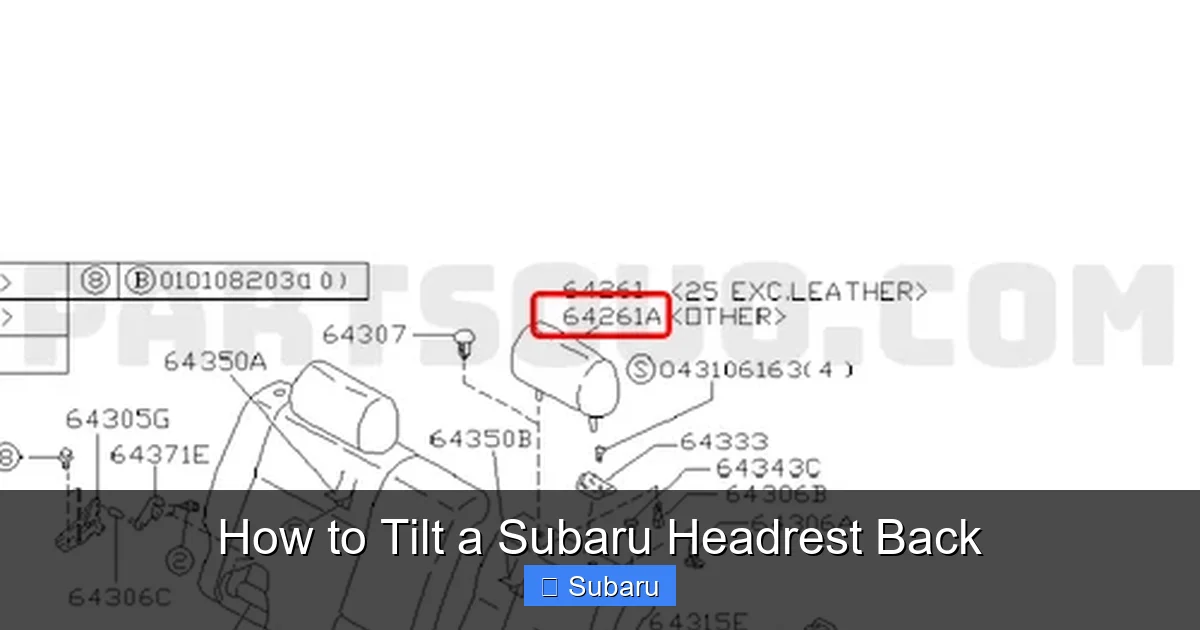
The Subaru Outback and Legacy are among the brand’s most popular models, and they come with some of the most user-friendly headrest designs. Starting in 2015, both vehicles feature tilt-adjustable headrests with a side-button release. The button is typically located on the left side of the headrest post and is easy to access from the driver’s seat. These models also include active headrest technology, which means the headrest will move slightly forward in a collision to reduce whiplash risk.
Visual guide about How to Tilt a Subaru Headrest Back
Image source: partsouq.com
One tip for Outback and Legacy owners: if you’re adjusting the rear headrests, note that some trims have fixed rear headrests that don’t tilt. Only the front seats usually offer full adjustability. Also, the rear headrests in these models are often split-folding, so be careful not to confuse the tilt button with the fold-release lever. The tilt button is smaller and located higher up on the post.
Forester and Crosstrek (2019–Present)
The Forester and Crosstrek received a major redesign in 2019, including updated seating and headrest systems. Both models now feature tilt-adjustable front headrests with a side-button release. The button is well-placed and responsive, making adjustments quick and easy. These models also emphasize passenger comfort, so the rear headrests on higher trims (like the Forester Limited or Crosstrek Premium) may offer limited tilt functionality.
A common issue with these models is that the headrests can feel a bit stiff when new. This usually improves after a few adjustments. If you’re still having trouble, try cleaning the hinge area with a soft brush and a bit of silicone-based lubricant (avoid oil-based products, as they can attract dirt). Also, note that the headrest height and tilt are independent—adjust them separately for the best fit.
Impreza and WRX (2017–Present)
The Impreza and WRX have a slightly different headrest design compared to Subaru’s SUVs. While they do offer tilt adjustment, the release button is often smaller and more flush with the post, making it harder to locate by touch. On some trims, the button is on the right side instead of the left—so check both sides if you can’t find it.
Another thing to note: the WRX, being a performance-oriented model, has more aggressively bolstered seats. This can make headrest adjustment feel tighter, especially if you have a larger head or wear a hat. Be patient and use steady pressure. If the headrest still won’t tilt, it’s possible your model doesn’t support it—double-check the owner’s manual.
Ascent (2019–Present)
The Subaru Ascent, being a three-row SUV, has more seating options and headrest variations. The front and second-row seats typically feature full tilt and height adjustment, while the third-row headrests are often fixed or only height-adjustable. The tilt mechanism in the Ascent is similar to the Outback’s—side-button release with smooth pivoting action.
One unique feature in the Ascent is the available power-adjustable headrests on higher trims. These allow you to tilt the headrest using a button on the seat control panel, eliminating the need to manually press a release. If you have this feature, consult your manual for the correct procedure—it’s usually as simple as pressing a “tilt back” button while seated.
Troubleshooting Common Issues
Headrest Won’t Tilt: What to Do
If your Subaru headrest won’t tilt, don’t assume it’s broken. Start by checking the basics: Is the release button being pressed correctly? Are you holding it long enough? Sometimes, especially in cold weather, the mechanism can stiffen up. Try warming up the car or using a hairdryer on a low setting to gently heat the area around the hinge.
Another possibility is that your model simply doesn’t have a tilt function. Older Subarus (pre-2015) or base trims often only allow height adjustment. Check your owner’s manual or look up your VIN on Subaru’s website to confirm your seat specifications. If you’re still unsure, visit a Subaru dealership—they can quickly verify whether your headrest is designed to tilt.
Stiff or Stuck Headrest Mechanism
Over time, dust, dirt, and moisture can build up in the headrest hinges, causing stiffness or sticking. This is especially common in vehicles driven in humid or dusty environments. To fix it, use a soft-bristled brush (like an old toothbrush) to clean around the hinge and post. You can also apply a small amount of silicone spray or dry lubricant to the moving parts. Avoid using WD-40 or oil-based lubricants, as they can attract more dirt and degrade plastic components.
If cleaning doesn’t help, the internal spring or locking mechanism may be worn. This is rare but possible, especially in high-mileage vehicles. In that case, consider replacing the headrest or having it serviced by a professional. Subaru offers genuine replacement parts that are designed to match your vehicle’s specifications.
Headrest Tilts Too Far or Not Enough
Some drivers find that their headrest tilts too far back, making it feel unstable, while others wish it could tilt more. Unfortunately, the range of motion is fixed by design for safety reasons. You can’t modify it without risking damage or voiding your warranty. However, you can improve comfort by adjusting your seatback angle. Reclining the seat slightly can complement a backward-tilted headrest, creating a more relaxed posture.
If the headrest feels too loose after tilting, it may not be locking properly. Make sure you’re fully releasing the button after adjustment and that the headrest clicks into place. If it still feels wobbly, have it inspected—there could be an issue with the internal latch.
Maintenance and Care for Your Subaru Headrest
Regular Cleaning Tips
Keeping your headrest clean not only improves appearance but also helps maintain smooth operation. Use a mild upholstery cleaner and a soft cloth to wipe down the headrest surface. For fabric headrests, a vacuum with a brush attachment can remove dust and crumbs. Avoid soaking the material, as excess moisture can seep into the hinges and cause rust or stiffness.
For leather or synthetic leather headrests, use a cleaner specifically designed for automotive interiors. Apply it sparingly and buff with a dry cloth to prevent streaks. Regular cleaning every few months will keep your headrest looking and functioning like new.
Lubricating the Tilt Mechanism
To keep the tilt function smooth, lubricate the hinge area once or twice a year. Use a silicone-based spray or dry lubricant—never oil or grease. Apply a small amount to the pivot point and work the headrest back and forth a few times to distribute it. Wipe away any excess to prevent buildup.
If you live in a cold climate, consider doing this before winter. Cold temperatures can cause plastic and rubber components to stiffen, making adjustments more difficult.
Conclusion
Tilting your Subaru headrest back is a simple yet powerful way to enhance comfort and reduce fatigue on the road. With just a press of a button and a gentle push, you can transform your driving experience—especially on long trips or daily commutes. Whether you drive an Outback, Forester, Impreza, or Ascent, most modern Subarus are designed to support this adjustment, helping you maintain proper posture without sacrificing safety.
Remember, the key is balance. A slight backward tilt can make a big difference, but don’t overdo it. Always prioritize safety by keeping the headrest high enough to support your head in an emergency. And if you ever run into issues—like a stiff mechanism or a non-responsive button—don’t force it. Consult your owner’s manual, clean the components, or visit a Subaru service center for help. With a little care and attention, your headrest will serve you well for years to come.
Frequently Asked Questions
Can all Subaru models tilt their headrests back?
No, not all Subaru models have tiltable headrests. Most vehicles from 2015 onward do, but older models or base trims may only allow height adjustment. Always check your owner’s manual to confirm.
Is it safe to tilt the headrest backward?
Yes, as long as it’s done correctly. The headrest should still support your head in a collision. Keep the top of the headrest level with the top of your head and no more than 2–3 inches away.
Why won’t my Subaru headrest tilt even when I press the button?
It could be stiff due to dirt, cold weather, or lack of use. Try cleaning the hinge or using a silicone lubricant. If it still won’t move, your model may not support tilt adjustment.
Can I tilt the rear headrests in my Subaru?
Most rear headrests in Subaru vehicles are only height-adjustable. Some higher-trim models may offer limited tilt, but it’s less common than in front seats.
How often should I clean my headrest?
Clean your headrest every 2–3 months to remove dust and maintain smooth operation. Use a mild cleaner and avoid soaking the material.
What should I do if the headrest feels loose after tilting?
Make sure it’s fully locked by pressing the release button and listening for a click. If it still feels wobbly, have it inspected by a Subaru technician.