
How to Change the Time on a 2018 Subaru Forester

Changing the time on your 2018 Subaru Forester is simple and takes just a few minutes. Whether you’re adjusting for daylight saving time or syncing with your phone, this guide walks you through the process clearly and confidently.
Key Takeaways
- Access the clock settings through the infotainment system: The time is adjusted via the central display, not a physical button.
- Use the “Settings” menu to find time options: Navigate to Settings > Clock to begin the adjustment process.
- Manually set the time or enable automatic sync: You can choose between manual input or letting the car sync with GPS or your smartphone.
- Daylight saving time requires manual updates: The system doesn’t auto-adjust for DST, so you’ll need to change it twice a year.
- Keep your firmware updated for best performance: Software updates can improve clock accuracy and system responsiveness.
- Reset the clock after a battery disconnect: If your battery dies or is replaced, the time may reset and need reconfiguration.
- Consult your owner’s manual for model-specific details: While most 2018 Foresters follow the same steps, trim levels may vary slightly.
📑 Table of Contents
- Why Keeping the Clock Accurate Matters in Your 2018 Subaru Forester
- Understanding the 2018 Subaru Forester’s Clock System
- Step-by-Step Guide: How to Change the Time Manually
- How to Enable Automatic Time Sync
- Troubleshooting Common Clock Issues
- Tips for Maintaining Clock Accuracy Long-Term
- When to Visit a Subaru Dealer
- Conclusion: Stay on Time, Every Time
Why Keeping the Clock Accurate Matters in Your 2018 Subaru Forester
Imagine you’re running late for an important meeting. You glance at the clock on your dashboard, only to realize it’s still showing the time from last week—before daylight saving time ended. Suddenly, you’re not just late; you’re confused, frustrated, and questioning every time check since you got in the car. Sound familiar? It’s a small thing, but an inaccurate clock can throw off your entire day.
The 2018 Subaru Forester is a reliable, practical SUV loved for its safety features, all-wheel drive, and user-friendly technology. But like any vehicle, it’s not immune to minor quirks—like a clock that won’t stay synced. Whether you’ve just bought a used Forester, replaced the battery, or simply forgot to adjust for daylight saving time, knowing how to change the time on a 2018 Subaru Forester is a handy skill. It’s not complicated, but it’s not always obvious either—especially if you’re used to older cars with physical clock buttons.
In this guide, we’ll walk you through the entire process, step by step. We’ll cover everything from basic manual adjustments to enabling automatic time sync, troubleshooting common issues, and even tips to keep your clock accurate long-term. By the end, you’ll feel confident adjusting the time whenever needed—no dealership visit required.
Understanding the 2018 Subaru Forester’s Clock System
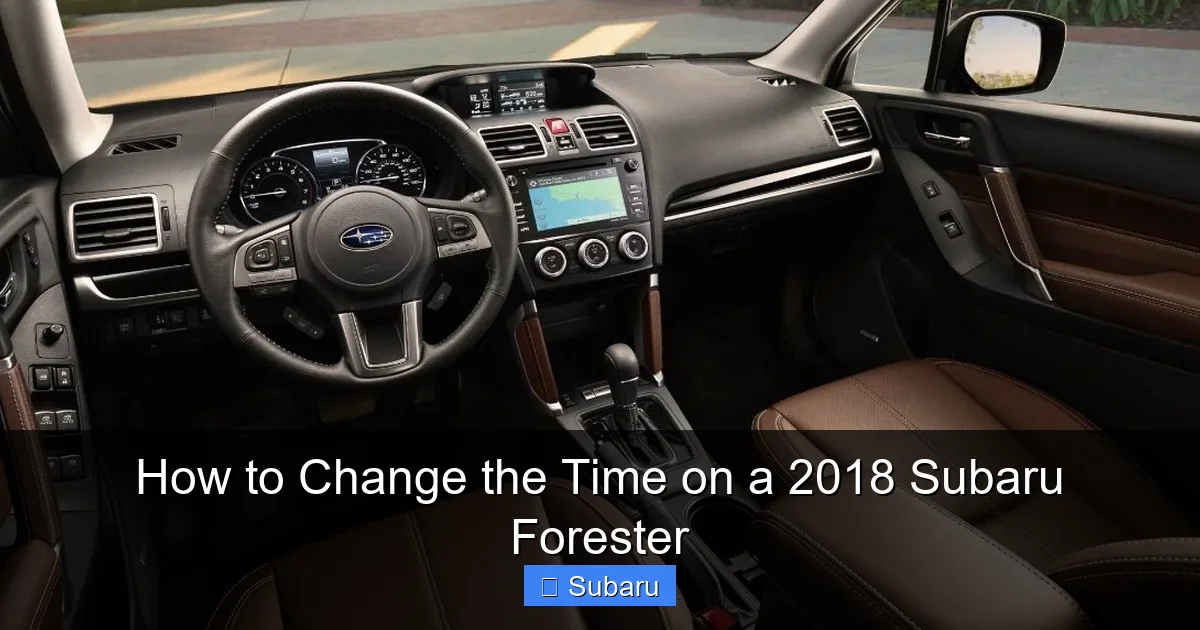
Before diving into the steps, it’s helpful to understand how the clock system works in the 2018 Forester. Unlike older vehicles with standalone digital clocks or analog dials, the 2018 model integrates the clock into its infotainment system. That means the time display is part of the central touchscreen or instrument cluster, and it’s controlled through software—not a physical dial or button.
Visual guide about How to Change the Time on a 2018 Subaru Forester
Image source: carttraction.com
Where Is the Clock Displayed?
The time appears in two main places: the center infotainment screen (usually at the top) and the instrument cluster behind the steering wheel. Both displays pull from the same internal clock, so changing it in one place updates both. The infotainment screen is the primary interface for adjustments, so that’s where we’ll focus.
Infotainment System Overview
The 2018 Forester typically comes with a 6.5-inch or 7-inch touchscreen, depending on the trim level. Higher trims may include Starlink connectivity, which allows for smartphone integration (Apple CarPlay and Android Auto), navigation, and over-the-air updates. Even without these features, the base system includes a functional clock that can be manually set or synced automatically.
Manual vs. Automatic Time Setting
You have two options: manual time entry or automatic synchronization. Manual setting requires you to input the hour and minute yourself—ideal if you’re in an area with poor GPS signal or don’t want the car relying on external data. Automatic sync uses GPS or your connected smartphone to pull the correct time, which is convenient but not always instant.
Why the Clock Might Reset
There are a few common reasons your Forester’s clock might lose time or reset completely:
- Battery disconnect or replacement: If the 12-volt battery is disconnected or dies, the clock may reset to 12:00.
- Power loss during maintenance: Jump-starting or working on the electrical system can interrupt power to the infotainment system.
- Software glitches: Rare, but possible—especially if the system hasn’t been updated in a while.
- Daylight saving time: The system doesn’t auto-adjust, so you’ll need to change it manually each spring and fall.
Understanding these factors helps you anticipate when you might need to reset the clock and avoid frustration.
Step-by-Step Guide: How to Change the Time Manually
Now for the main event: changing the time on your 2018 Subaru Forester. The process is straightforward, but it requires navigating the infotainment menu. Here’s how to do it, step by step.

Visual guide about How to Change the Time on a 2018 Subaru Forester
Image source: paulstravelpictures.com
Step 1: Turn On the Ignition
You don’t need to start the engine, but the car must be in “Accessory” or “On” mode. Turn the key to the second position (or press the start button without pressing the brake) so the dashboard and infotainment screen light up. This gives the system power without draining the battery unnecessarily.
Step 2: Access the Main Menu
On the home screen of your infotainment system, look for the “Settings” icon. It usually looks like a gear or wrench and is located in the bottom row of icons. Tap it to open the settings menu.
Step 3: Navigate to Clock Settings
In the settings menu, scroll or swipe to find the “Clock” option. It may be listed under “General,” “System,” or “Display,” depending on your trim. Tap “Clock” to enter the time adjustment screen.
Step 4: Choose Manual Time Setting
You’ll see two options: “Automatic” and “Manual.” Tap “Manual” to disable automatic sync and allow you to input the time yourself. If “Automatic” is already selected, toggle it off first.
Step 5: Adjust the Hour and Minute
Once in manual mode, you’ll see fields for “Hour” and “Minute.” Use the “+” and “-” buttons (or on-screen arrows) to set the correct time. Some systems allow you to tap the number directly and type it in using a virtual keypad. Be sure to select AM or PM if your system uses a 12-hour format.
Step 6: Confirm and Exit
After setting the time, tap “OK” or “Save” to confirm. The clock should update immediately on both the infotainment screen and the instrument cluster. Exit the menu by pressing the home button or back arrow.
Pro Tip: Double-Check the Time Zone
If you’ve recently traveled or moved, make sure your time zone is correct. An incorrect time zone setting can throw off both manual and automatic time adjustments. You can usually find time zone settings in the same Clock menu or under “Navigation” if your Forester has GPS.
How to Enable Automatic Time Sync
If you prefer a “set it and forget it” approach, enabling automatic time sync is the way to go. This feature uses GPS signals or your connected smartphone to keep the clock accurate without manual input. Here’s how to turn it on.

Visual guide about How to Change the Time on a 2018 Subaru Forester
Image source: transmissioncar.com
Step 1: Open the Clock Settings
Follow the same steps as above: go to Settings > Clock. Make sure you’re in the clock adjustment screen.
Step 2: Select “Automatic” Mode
Toggle the setting from “Manual” to “Automatic.” The system will now attempt to sync with GPS or your phone.
Step 3: Ensure GPS or Phone Connectivity
For GPS sync, your Forester needs a clear view of the sky—so it works best when you’re driving outdoors. If you’re parked in a garage or underground lot, it may take a few minutes after you start driving for the signal to lock.
If you use Apple CarPlay or Android Auto, the system may pull time from your phone instead. Make sure your phone is connected via USB and that the correct time is set on your device.
Step 4: Wait for Sync
The clock should update within a minute or two. If it doesn’t, try driving around for a few minutes to improve GPS reception. You can also restart the infotainment system by turning the car off and on again.
Benefits of Automatic Sync
- No manual adjustments needed: Ideal for people who travel across time zones or forget to change the clock.
- Always accurate: As long as GPS or phone signal is available, the time stays correct.
- Convenient for daylight saving: While the system doesn’t auto-adjust for DST, it will reflect the correct time once your phone or GPS updates.
Limitations to Keep in Mind
- Signal dependency: In remote areas or tunnels, GPS may not work, causing delays in syncing.
- Phone time must be correct: If your phone’s clock is wrong, the car’s clock will be too.
- Not instant: It can take a few minutes after startup for the system to sync.
Troubleshooting Common Clock Issues
Even with clear instructions, things don’t always go smoothly. Here are some common problems you might encounter when changing the time on your 2018 Forester—and how to fix them.
The Clock Won’t Change
If the time won’t update after following the steps, try these fixes:
- Restart the system: Turn the car off, wait 30 seconds, then turn it back on. This resets the infotainment system.
- Check for software updates: Outdated firmware can cause glitches. Visit a Subaru dealer or check the Starlink app for updates.
- Ensure you’re in manual mode: If “Automatic” is enabled, the system may override your manual input. Toggle it off first.
The Time Resets After Turning Off the Car
This usually indicates a power issue:
- Weak or dying battery: If the 12-volt battery can’t hold a charge, the clock may reset. Have the battery tested.
- Loose connections: Check the battery terminals and ground connections. Corrosion or looseness can interrupt power.
- Faulty infotainment system: In rare cases, the head unit itself may need repair or replacement.
Daylight Saving Time Isn’t Adjusted
Remember: the 2018 Forester does not automatically adjust for daylight saving time. You must change it manually each spring and fall. Set a calendar reminder to avoid being an hour off twice a year.
The Clock Is Off by Several Minutes
If the time is consistently inaccurate, even with automatic sync:
- Check your phone’s time: If using phone sync, ensure your device is set to automatic time and time zone.
- Verify GPS signal: Drive in an open area to allow the system to lock onto satellites.
- Reset the system: Perform a full infotainment reset (see your owner’s manual for instructions).
Touchscreen Is Unresponsive
If the screen freezes or doesn’t respond:
- Clean the screen: Dust or fingerprints can interfere with touch sensitivity.
- Perform a soft reset: Turn the car off, wait 2 minutes, then restart.
- Consult a dealer: Persistent issues may require professional diagnosis.
Tips for Maintaining Clock Accuracy Long-Term
Changing the time once is easy—keeping it accurate over time is the real challenge. Here are some practical tips to ensure your Forester’s clock stays on track.
Set Calendar Reminders for Daylight Saving Time
Twice a year, when clocks “spring forward” or “fall back,” add a reminder to your phone or calendar. This simple habit prevents the frustration of being an hour off.
Keep Your Phone’s Time Accurate
If you rely on phone sync, make sure your smartphone is set to “Automatic Date & Time.” This ensures the car pulls the correct time every time you connect.
Update Your Infotainment System
Subaru occasionally releases software updates that improve system performance, including clock accuracy. Check for updates through the Starlink app or visit a dealership.
Avoid Frequent Battery Disconnects
If you’re working on your car’s electrical system, try to minimize how often you disconnect the battery. Each time you do, the clock resets. If you must disconnect it, note the current time so you can reset it quickly afterward.
Use a Portable Charger for Long Parking
If you leave your Forester parked for days (like at an airport), consider using a portable battery maintainer. This keeps the system powered and prevents clock resets.
Teach Family Members How to Adjust the Time
If others drive your Forester, make sure they know how to change the clock. A quick demo or printed instructions can save everyone hassle.
When to Visit a Subaru Dealer
Most clock issues can be resolved at home, but there are times when professional help is needed. Consider visiting a Subaru dealership if:
- The clock resets every time you turn the car off, despite a healthy battery.
- The infotainment screen is frozen, unresponsive, or displaying errors.
- You suspect a software bug or hardware failure.
- You’ve tried all troubleshooting steps and the problem persists.
Dealers have diagnostic tools to check the infotainment system and can perform firmware updates or repairs if necessary. While it’s not common, some 2018 Foresters may have had clock-related recalls or service bulletins—so it’s worth asking.
Conclusion: Stay on Time, Every Time
Changing the time on a 2018 Subaru Forester might seem like a small task, but it’s one that affects your daily routine, punctuality, and peace of mind. Whether you’re adjusting for daylight saving time, resetting after a battery change, or just syncing with your phone, knowing how to do it quickly and correctly is a valuable skill.
The process is simple: access the settings menu, choose manual or automatic mode, and input or sync the time. With a few taps, your dashboard clock will be accurate and reliable. And by following our tips—like setting reminders and keeping your system updated—you can avoid future frustrations.
Your Forester is designed to make life easier, and that includes keeping accurate time. So the next time you glance at the clock and wonder if it’s right, you’ll know exactly what to do. No guesswork. No stress. Just confidence behind the wheel.
Frequently Asked Questions
Can I change the time on my 2018 Subaru Forester without starting the engine?
Yes, you can. Turn the ignition to the “Accessory” or “On” position (without starting the engine) to power the infotainment system. This allows you to adjust the clock without draining the battery.
Why does my Forester’s clock keep resetting to 12:00?
This usually happens after a battery disconnect or power loss. The infotainment system loses power and resets the clock. Simply follow the manual time-setting steps to correct it.
Does the 2018 Subaru Forester automatically adjust for daylight saving time?
No, it does not. You must manually change the time twice a year when daylight saving time begins and ends. Set a reminder to avoid being an hour off.
Can I sync the clock with my smartphone?
Yes, if your phone is connected via Apple CarPlay or Android Auto, the system may pull the time from your device. Make sure your phone’s clock is set to automatic for best results.
What if the touchscreen is frozen and I can’t access the settings?
Try turning the car off, waiting 2–3 minutes, then restarting it. This often resets the infotainment system. If the problem persists, visit a Subaru dealer for diagnosis.
How often should I check or update the clock?
Check it after battery work, long trips, or when daylight saving time changes. Otherwise, if you use automatic sync, the clock should stay accurate with minimal intervention.
