How to Tell the Size of a Tire

Knowing how to tell the size of a tire is essential for safety, performance, and compatibility. This guide breaks down tire sidewall codes, explains key measurements like width and diameter, and helps you choose the right tires for your vehicle.
In This Article
- 1 Key Takeaways
- 2 📑 Table of Contents
- 3 Why Knowing Your Tire Size Matters
- 4 Where to Find the Tire Size on Your Vehicle
- 5 Breaking Down the Tire Size Code
- 6 How to Measure a Tire Manually
- 7 Common Mistakes When Reading Tire Sizes
- 8 How to Choose the Right Tire Size
- 9 Conclusion
- 10 Frequently Asked Questions
Key Takeaways
- Tire size is printed on the sidewall: Look for a code like P225/60R16 to find all key dimensions.
- Width matters: The first number (e.g., 225) is the tire width in millimeters from sidewall to sidewall.
- Aspect ratio affects ride comfort: The second number (e.g., 60) is the height of the sidewall as a percentage of the width.
- Construction type is important: “R” means radial construction, which is standard on most modern vehicles.
- Wheel diameter must match: The last number (e.g., 16) is the wheel diameter in inches the tire fits.
- Load and speed ratings ensure safety: These indicate how much weight the tire can carry and its maximum safe speed.
- Use a tire size calculator for upgrades: Changing sizes? Use online tools to avoid speedometer errors and clearance issues.
📑 Table of Contents
Why Knowing Your Tire Size Matters
Imagine you’re driving down the highway, and suddenly, your car starts to feel a little off—maybe it’s vibrating, or the steering feels loose. You pull over and check your tires. One looks a little flatter than the others. You head to the nearest gas station, but when you ask for a replacement, the attendant asks, “What size are your tires?” And just like that, you’re stuck. You have no idea.
This scenario plays out more often than you’d think. Many drivers can identify a flat tire but can’t read the numbers on the sidewall. Yet, knowing how to tell the size of a tire isn’t just about convenience—it’s about safety, performance, and saving money. The right tire size ensures your vehicle handles properly, maintains accurate speedometer readings, and wears evenly. Using the wrong size can lead to poor fuel efficiency, reduced braking performance, and even damage to your car’s suspension or transmission.
Whether you’re buying new tires, rotating them, or simply checking air pressure, understanding tire size is a fundamental skill every driver should have. It’s not as complicated as it looks. Once you learn to decode the numbers and letters stamped on your tire’s sidewall, you’ll be able to make informed decisions about your vehicle’s maintenance and upgrades. In this guide, we’ll walk you through everything you need to know—from reading the basic size code to understanding load ratings and speed symbols. By the end, you’ll be able to confidently tell the size of any tire and choose the best one for your ride.
Where to Find the Tire Size on Your Vehicle
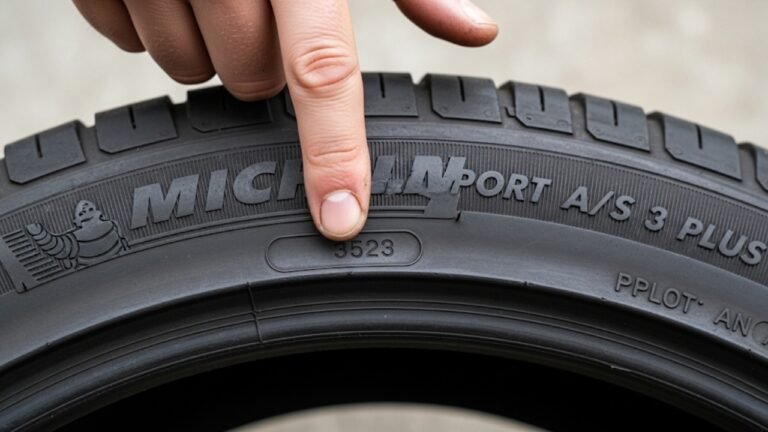
The first step in learning how to tell the size of a tire is knowing where to look. Fortunately, tire size information is always printed directly on the tire itself—no guessing required. You’ll find it on the sidewall, which is the outer side of the tire between the tread and the wheel rim. This area is usually flat and textured, making it easy to spot the alphanumeric code.

Visual guide about How to Tell the Size of a Tire
Image source: d3qqlmv4he5rj8.cloudfront.net
Reading the Sidewall Code
Look closely at the sidewall, and you’ll see a long string of numbers and letters. It might look like this: P225/60R16 98H. At first glance, it seems like a random code, but each part has a specific meaning. Let’s break it down:
- P: Stands for “P-metric,” which means the tire is designed for passenger vehicles like cars, SUVs, and light trucks. If you see “LT” instead, it’s a light truck tire.
- 225: This is the tire width in millimeters, measured from one sidewall to the other. A wider tire generally provides better grip and stability.
- 60: This is the aspect ratio—the height of the tire’s sidewall as a percentage of its width. In this case, the sidewall is 60% of 225mm, or about 135mm tall.
- R: Indicates the tire’s construction type. “R” stands for radial, which means the layers of fabric in the tire run radially across from bead to bead. This is the most common type today.
- 16: This is the wheel diameter in inches. It tells you what size rim the tire fits. In this example, it’s a 16-inch wheel.
- 98: This is the load index, which tells you how much weight the tire can safely carry. A higher number means a higher load capacity.
- H: This is the speed rating, indicating the maximum speed the tire can sustain under its recommended load. “H” means up to 130 mph.
Other Places to Check
If you can’t easily access your tires—maybe they’re dirty or hard to reach—don’t worry. There are other places where your tire size might be listed:
- Driver’s side door jamb: Open your driver’s door and look at the sticker on the door frame. It often lists the recommended tire size, along with pressure and load information.
- Owner’s manual: Your vehicle’s manual will have a section on tires, including the correct size and type for your model.
- Glove compartment or fuel door: Some manufacturers include tire information in these locations as well.
It’s always best to double-check the sidewall code, though, because some vehicles come with optional tire sizes depending on trim level or aftermarket upgrades.
Breaking Down the Tire Size Code
Now that you know where to find the tire size, let’s dive deeper into what each part of the code means. Understanding these components will help you make smarter choices when buying or replacing tires.

Visual guide about How to Tell the Size of a Tire
Image source: inchcalculator.com
Tire Width (Section Width)
The first number in the sequence—like the “225” in P225/60R16—is the tire’s width in millimeters. This measurement is taken from the widest point of the tire’s outer sidewall to the inner sidewall, not including any raised lettering or decorations. A wider tire generally offers better traction and stability, especially during cornering or wet conditions. However, it can also increase rolling resistance, which may reduce fuel economy.
For example, a 205mm tire is narrower than a 245mm tire. If you’re considering upgrading to wider tires for better performance, make sure your wheel wells have enough clearance. Installing tires that are too wide can cause rubbing against the fenders or suspension components.
Aspect Ratio (Sidewall Height)
The second number—“60” in our example—is the aspect ratio. It represents the height of the tire’s sidewall as a percentage of the tire’s width. So, a 60 aspect ratio means the sidewall is 60% as tall as the tire is wide. In the P225/60R16 tire, the sidewall height is 60% of 225mm, which equals 135mm.
A lower aspect ratio (like 40 or 35) means a shorter, stiffer sidewall. These are common on performance or sports cars because they improve handling and responsiveness. However, they can also make the ride feel harsher, especially on rough roads. Higher aspect ratios (like 70 or 75) offer a more comfortable ride but may reduce precision in steering.
It’s important to note that changing the aspect ratio can affect your speedometer accuracy and overall vehicle dynamics. If you’re considering a different aspect ratio, use a tire size calculator to ensure the overall diameter stays close to the original.
Construction Type (Radial vs. Bias)
The letter after the aspect ratio—usually “R”—tells you about the tire’s internal construction. “R” stands for radial, which means the layers of fabric (called plies) run radially across the tire from bead to bead. This design allows the sidewall and tread to function independently, improving ride comfort, fuel efficiency, and tread life. Radial tires are used on nearly all modern passenger vehicles.
You might occasionally see “D” for diagonal or bias-ply construction, which was common on older vehicles and some trailers. Bias-ply tires have crisscrossing plies, making them stiffer and less flexible. They’re rarely used today due to inferior performance and comfort.
There’s also “B” for belted bias, which combines features of both radial and bias-ply designs. But again, radial is the standard for most cars and light trucks.
Wheel Diameter
The number after the construction type—“16” in our example—is the diameter of the wheel (or rim) that the tire is designed to fit, measured in inches. This is a critical measurement because a tire must match the wheel size exactly. You can’t put a 16-inch tire on a 17-inch rim, and vice versa.
Wheel diameter affects not only fit but also performance. Larger wheels (like 18 or 20 inches) often look more stylish and can improve handling due to shorter sidewalls. But they may also make the ride rougher and increase the risk of damage from potholes. Smaller wheels (14 or 15 inches) are typically more durable and comfortable but may not offer the same visual appeal or cornering precision.
When shopping for new wheels or tires, always confirm the diameter matches your current setup unless you’re intentionally upgrading with compatible components.
Load Index and Speed Rating
The final two parts of the code—like “98H”—are the load index and speed rating. These are often overlooked but are crucial for safety and performance.
The load index (98 in this case) is a numerical code that corresponds to the maximum weight the tire can carry when properly inflated. You can find a load index chart online or in your owner’s manual. For example, a load index of 98 means the tire can support up to 1,653 pounds. If your vehicle carries heavy loads—like passengers, cargo, or towing—you’ll want tires with a higher load index.
The speed rating (H in this example) indicates the maximum speed the tire can safely sustain under its recommended load. Speed ratings range from L (75 mph) to Y (186 mph). Here’s a quick reference:
- L: 75 mph
- M: 81 mph
- N: 87 mph
- P: 93 mph
- Q: 99 mph
- R: 106 mph
- S: 112 mph
- T: 118 mph
- U: 124 mph
- H: 130 mph
- V: 149 mph
- W: 168 mph
- Y: 186 mph
It’s important to match or exceed the original speed rating when replacing tires. Using a lower-rated tire can compromise safety, especially at highway speeds.
How to Measure a Tire Manually
While the sidewall code gives you all the information you need, there may be times when you want to double-check or measure a tire manually—especially if the markings are worn off or you’re inspecting a used tire. Here’s how to do it safely and accurately.

Visual guide about How to Tell the Size of a Tire
Image source: tiresafety.com
Measuring Tire Width
To measure the width, you’ll need a flexible tape measure or a ruler. Place the tire on a flat surface and measure from the outermost point of one sidewall to the outermost point of the other. Make sure the tire is inflated to the recommended pressure, as underinflation can distort the shape. Record the measurement in millimeters for consistency with standard tire codes.
For example, if you measure 225mm, that matches the “225” in P225/60R16. If it’s slightly off—say 223mm or 227mm—that’s normal due to manufacturing tolerances.
Measuring Sidewall Height
To find the sidewall height, measure from the wheel rim to the top of the tread. This gives you the actual height in millimeters. To calculate the aspect ratio, divide the sidewall height by the tire width and multiply by 100.
For instance, if your tire is 225mm wide and the sidewall is 135mm tall, the aspect ratio is (135 ÷ 225) × 100 = 60%. This confirms the “60” in the tire code.
Measuring Overall Diameter
The overall diameter is the total height of the tire from the ground to the top. You can measure this by placing the tire upright and measuring from the bottom to the top. Alternatively, you can calculate it using the formula:
Overall Diameter = (Sidewall Height × 2) + Wheel Diameter
Using our example: (135mm × 2) + 16 inches. First, convert 16 inches to millimeters (16 × 25.4 = 406.4mm). Then add: (135 × 2) + 406.4 = 270 + 406.4 = 676.4mm. Convert back to inches: 676.4 ÷ 25.4 ≈ 26.6 inches.
This measurement is useful when comparing different tire sizes. Even small changes in diameter can affect your speedometer, odometer, and transmission shift points.
Tips for Accurate Measurement
- Always measure when the tire is cold—driving heats up the tire and can expand it slightly.
- Use a high-quality tape measure or digital caliper for precision.
- Take multiple measurements and average them for the best result.
- If the tire is mounted on a wheel, ensure it’s properly seated and inflated.
Common Mistakes When Reading Tire Sizes
Even with clear markings, it’s easy to misread or misunderstand tire sizes—especially if you’re new to car maintenance. Here are some common mistakes and how to avoid them.
Confusing Width with Diameter
One of the most frequent errors is mixing up tire width and wheel diameter. Remember: the first number is width in millimeters, and the last number is wheel diameter in inches. Don’t assume they’re both in the same unit.
For example, P225/60R16 does not mean a 225-inch wide tire on a 16-inch wheel. That would be absurdly large! Always keep the units straight.
Ignoring Load and Speed Ratings
Some drivers focus only on the size numbers and forget about the load index and speed rating. This can be dangerous. A tire that’s the right size but has a lower load or speed rating than recommended may fail under stress.
Always check your owner’s manual or door jamb sticker for the correct ratings. When in doubt, choose a tire that matches or exceeds the original specifications.
Assuming All Tires Are Interchangeable
Just because two tires have the same width and diameter doesn’t mean they’re compatible. Aspect ratio, construction, and ratings all matter. For example, a P225/60R16 and a P225/50R16 have the same width and wheel size, but the second tire has a shorter sidewall. This changes the overall diameter and can affect your speedometer.
Use a tire size calculator to compare options and ensure the overall diameter stays within 3% of the original.
Overlooking Tire Type (P-Metric vs. LT)
Passenger tires (P-metric) and light truck tires (LT) are not interchangeable, even if the size looks similar. LT tires are built to handle heavier loads and rougher conditions but may provide a stiffer ride. Using the wrong type can lead to poor performance or premature wear.
Check your vehicle’s requirements before making a purchase.
How to Choose the Right Tire Size
Now that you know how to tell the size of a tire, the next step is choosing the right one for your vehicle and driving needs. Here’s what to consider.
Stick to Manufacturer Recommendations
The safest choice is to use the tire size recommended by your vehicle’s manufacturer. This ensures optimal performance, safety, and warranty compliance. You can find this information in the owner’s manual or on the door jamb sticker.
Consider Your Driving Conditions
If you drive mostly in the city, a standard all-season tire with a comfortable ride may be best. For off-roading or heavy towing, consider LT tires with higher load ratings. Winter drivers should look for tires with the Three-Peak Mountain Snowflake symbol for better traction in snow and ice.
Think About Performance vs. Comfort
Lower aspect ratios (like 40 or 35) offer sharper handling but a firmer ride. Higher aspect ratios (65 or 70) provide more cushioning but less precision. Choose based on your priorities.
Use a Tire Size Calculator for Upgrades
If you’re upgrading to larger wheels or different tire sizes, use an online tire size calculator. These tools compare the overall diameter, width, and revolutions per mile to help you avoid speedometer errors and clearance issues.
Consult a Professional
When in doubt, talk to a tire specialist. They can recommend the best size and type for your vehicle, driving habits, and budget.
Conclusion
Learning how to tell the size of a tire is a simple but powerful skill that every driver should master. It empowers you to make informed decisions about maintenance, replacements, and upgrades. By understanding the numbers on your tire’s sidewall—width, aspect ratio, construction, diameter, load index, and speed rating—you can ensure your vehicle performs safely and efficiently.
Whether you’re checking air pressure, buying new tires, or just curious, this knowledge puts you in control. Remember to always refer to your vehicle’s specifications, measure carefully when needed, and consult professionals for complex changes. With the right tires, you’ll enjoy a smoother, safer, and more reliable driving experience.
Frequently Asked Questions
Where is the tire size located on a tire?
The tire size is printed on the sidewall, usually between the tread and the wheel rim. Look for a code like P225/60R16, which contains all the key measurements.
What does the number 225 mean on a tire?
The number 225 represents the tire’s width in millimeters, measured from one sidewall to the other. It’s the first number in the tire size code.
Can I put a different size tire on my car?
You can change tire sizes, but the overall diameter should stay within 3% of the original to avoid speedometer errors and mechanical issues. Use a tire size calculator to check compatibility.
What does the “R” in tire size mean?
The “R” stands for radial construction, which means the tire’s internal layers run radially across from bead to bead. This is the standard for most modern vehicles.
How do I find the correct load index for my tires?
Check your vehicle’s owner’s manual or the door jamb sticker for the recommended load index. It’s a number that corresponds to the maximum weight the tire can safely carry.
Is it safe to drive with a lower speed rating tire?
No, it’s not safe. Always use tires with a speed rating that matches or exceeds the original. A lower rating can lead to tire failure at high speeds.