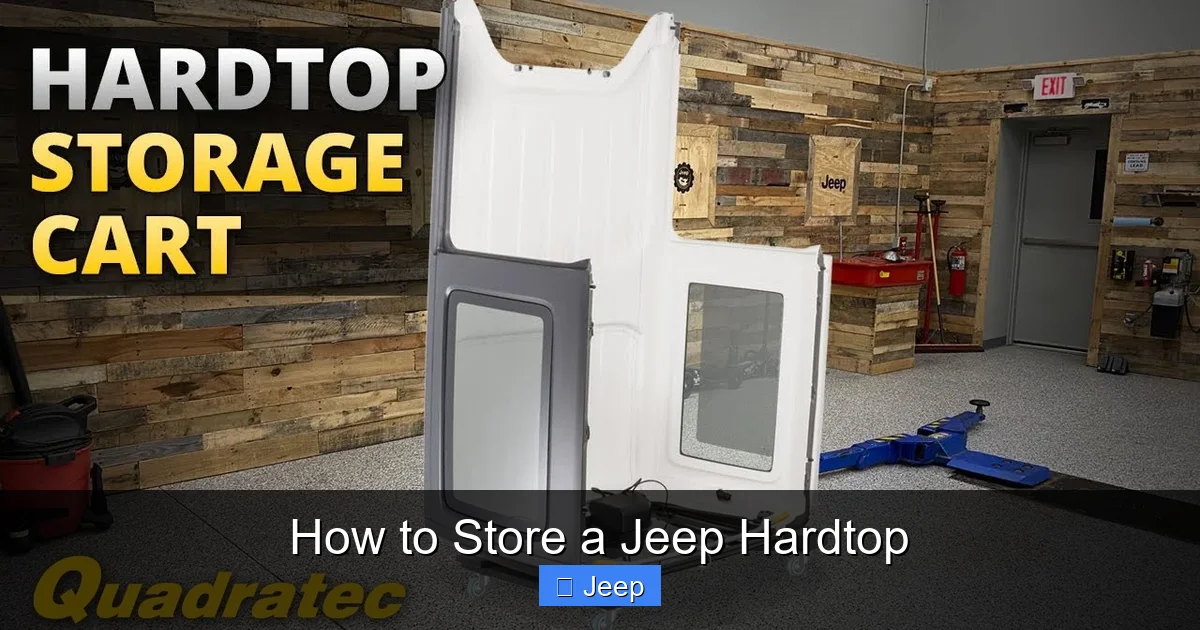
How to Store a Jeep Hardtop

Contents
- 1 Key Takeaways
- 2 📑 Table of Contents
- 3 Introduction: Why Your Jeep Hardtop Deserves a Proper Winter Home (or Summer Vacation)
- 4 Why Proper Storage Isn’t Optional: The High Cost of Cutting Corners
- 5 Phase One: Pre-Storage Preparation – The Foundation of Protection
- 6 Phase Two: Choosing the Perfect Storage Location – Where Dreams (and Hardtops) Are Preserved
- 7 Phase Three: The Art of Support and Covering – No Pressure, All Protection
- 8 Phase Four: Long-Term Maintenance and Monitoring – The Set-It-and-Forget-It Trap
- 9 Conclusion: Ready for the Next Adventure
- 10 Frequently Asked Questions


Storing your Jeep hardtop correctly is crucial to prevent costly damage from weather, scratches, and warping. This guide walks you through every step, from a thorough pre-storage cleaning to choosing the ideal location and using the right protective cover. Proper support, avoiding weight on the surface, and regular inspections are non-negotiable for preserving your hardtop’s finish and structural integrity. Follow these proven methods to ensure your hardtop is ready for a seamless remount when Jeep season returns.
Key Takeaways
- Clean Thoroughly Before Storage: Remove all dirt, salt, and debris to prevent corrosive damage and scratches while stored.
- Choose a Climate-Controlled, Dry Location: A garage or dedicated indoor space is ideal to avoid UV rays, temperature extremes, and moisture.
- Support the Hardtop Correctly: Never lay it flat on a hard surface; use padded supports or store it on its side/end to avoid sagging and stress points.
- Use a Breathable, Properly Fitted Cover: Avoid plastic tarps that trap moisture; use a soft, breathable cover designed for vehicle tops.
- Never Place Items on Top: The hardtop’s fiberglass or aluminum skin is easily dented; ensure the storage area is clear of other objects.
- Perform Regular Check-Ups: Inspect the stored hardtop every few months for signs of moisture, pest activity, or cover issues.
- Label and Organize Hardware: Store all bolts, nuts, and wiring harnesses in labeled bags to ensure a frustration-free reinstallation.
📑 Table of Contents
- Introduction: Why Your Jeep Hardtop Deserves a Proper Winter Home (or Summer Vacation)
- Why Proper Storage Isn’t Optional: The High Cost of Cutting Corners
- Phase One: Pre-Storage Preparation – The Foundation of Protection
- Phase Two: Choosing the Perfect Storage Location – Where Dreams (and Hardtops) Are Preserved
- Phase Three: The Art of Support and Covering – No Pressure, All Protection
- Phase Four: Long-Term Maintenance and Monitoring – The Set-It-and-Forget-It Trap
- Conclusion: Ready for the Next Adventure
Introduction: Why Your Jeep Hardtop Deserves a Proper Winter Home (or Summer Vacation)
So, you’ve decided to take the doors off, drop the top, and feel the wind in your hair. Welcome to the glorious world of Jeep ownership! But when the season changes, or you need that cargo space, that big, beautiful hardtop has to go somewhere. And “somewhere” isn’t just a corner of the driveway or a precarious stack in the garage. Improper storage is a silent killer of Jeep hardtops, leading to faded paint, warped panels, cracked seals, and a mountain of frustration when you try to put it back on.
Storing a Jeep hardtop is a specific skill. It’s not like tossing a spare tire in the corner. These tops are large, relatively lightweight but awkward composite structures (fiberglass or aluminum) that require respect and careful planning. The goal is simple: return it to your Jeep in the exact same condition you removed it. This means protecting it from the elements, physical damage, and its own weight over time. Whether you’re a new JK/JL owner or a seasoned TJ veteran, this guide will transform how you think about hardtop storage. We’ll break down the process into clear, actionable steps, so you can store your top with confidence, knowing it will be ready for action whenever you are.
Why Proper Storage Isn’t Optional: The High Cost of Cutting Corners
Before we dive into the “how,” let’s establish the “why.” Understanding the risks makes every step in this guide make sense. A Jeep hardtop is an investment, both financially and in terms of your vehicle’s capability. Letting it deteriorate in storage means you’re throwing that investment away.
Visual guide about How to Store a Jeep Hardtop
Image source: jeepfixes.com
The Triple Threat: Sun, Moisture, and Weight
The three biggest enemies of a stored hardtop are UV radiation, moisture, and improper weight distribution.
- UV Radiation (The Fader): Even indoors, sunlight through a window can bake your hardtop’s paint and gel coat. Outdoors, it’s relentless. UV rays break down polymers, causing color to fade, chalk, and become dull. The clear coat can crack and peel. A faded hardtop looks terrible and reduces your Jeep’s resale value.
- Moisture (The Warper and Rust Maker): Humidity, rain, and even ground moisture are catastrophic. Water can seep into microscopic scratches or seams. For fiberglass tops, this can lead to delamination (the layers separating) or a musty, water-stained interior. For aluminum tops, trapped moisture leads to corrosion, especially around hardware inserts. Mold and mildew can grow on the headliner and sound-deadening foam, creating odors that are nearly impossible to remove.
- Weight and Pressure (The Deformer): This is the most common mistake. People lay their hardtop flat on the floor, often with the interior side up, and then stack other items on it or simply let its own weight create a permanent sag in the center over months. Fiberglass and composite panels have a memory; a constant, uneven load will cause them to warp. This warping makes the top impossible to seat properly on the Jeep’s frame, leading to leaks, wind noise, and alignment nightmares. You might need to consider professional repair or even replacement if the warp is severe, which ties into potential costs you can explore in our articles about Jeep repainting costs or painting a Wrangler specifically to fix damage from poor storage.
The Hidden Dangers: Pests and Physical Scratches
Your garage or shed isn’t a fortress. Rodents love to nest in cozy, quiet spaces. A stored hardtop, especially if it has any food debris or organic material left on it, can attract mice, squirrels, or insects. They’ll chew on wiring harnesses, nest in the headliner, and leave behind a mess of droppings and gnaw marks that is a health hazard and a detailer’s nightmare. Furthermore, an improperly stored top is a scratch magnet. Bumping into tools, other vehicle parts, or even a concrete wall can create deep, permanent scars in the finish.
Phase One: Pre-Storage Preparation – The Foundation of Protection
You cannot store a dirty vehicle part. Think of this as giving your hardtop a spa day before its long nap. Rushing this phase guarantees problems later.
Visual guide about How to Store a Jeep Hardtop
Image source: jeepfixes.com
Step 1: The Meticulous Exterior Wash
Do not just hose it off. You must perform a full wash as if you were preparing it for a show.
- Rinse: Use a low-pressure hose to remove loose dirt and grit. High pressure can force water into seals and seams you don’t want saturated.
- Wash: Use a dedicated car wash soap and a soft microfiber mitt or sponge. Pay special attention to the channels where the top meets the Jeep’s body. This is where road grime, salt, and sand accumulate and can hold moisture against the paint.
- Rinse Again: Ensure all soap residue is gone. Soap left on the surface can attract dirt and cause spotting.
- Dry: This is critical. Use a large, clean, plush microfiber drying towel. Chamois are good, but a big towel lets you absorb more water at once. Dry every surface, including the underside and all channels. Any remaining water droplets can leave mineral deposits as they evaporate.
Step 2: Interior Detailing – Don’t Forget the Attic
The inside of your hardtop is just as important. It’s often made of a fabric or vinyl headliner with sound-deadening foam backing.
- Vacuum: Thoroughly vacuum the headliner, pillars, and rear window area. Remove all dust, hair, and crumbs that could feed pests or cause odors.
- Spot Clean: Use an appropriate interior cleaner for the headliner material. Test in an inconspicuous area first. Gently clean any stains or marks. Avoid soaking the material; a damp microfiber cloth with cleaner is sufficient.
- Inspect Seals: Check the rubber seals around the windshield, rear window, and side openings. Clean off any old adhesive or debris. If a seal is cracked or brittle, now is the time to consider replacement. Storing a top with a failing seal will only make the problem worse.
Step 3: The Final Inspection and Touch-Up
With the top clean and dry, do a full inspection under good light.
- Look for Damage: Check for chips, scratches, or cracks in the paint/gel coat. Small chips can be touched up with Jeep-specific paint to prevent rust (on steel components) or further delamination. If the damage is extensive, this might be the time to research the cost to have your Jeep or hardtop professionally painted to restore its perfection before storage.
- Check Hardware: Inspect all bolts, nuts, and the wiring harness connector. Clean any dirt or old thread locker. Apply a tiny drop of light machine oil or a dedicated anti-seize compound to the threads to prevent them from seizing in place during storage. This will make reinstallation a breeze.
- Consider a Protective Wax/Sealant: Apply a high-quality synthetic paint sealant or wax to the exterior. This adds a sacrificial layer against dust and minor scratches while in storage and makes the eventual post-storage wash even easier. Do not use a wax on a matte finish unless it is specifically designed for it.
Phase Two: Choosing the Perfect Storage Location – Where Dreams (and Hardtops) Are Preserved
Location is everything. The best preparation is useless if the storage environment is hostile.
Visual guide about How to Store a Jeep Hardtop
Image source: jeepfixes.com
The Gold Standard: Climate-Controlled Indoor Storage
A dedicated garage, pole barn, or storage unit that is dry and maintains a relatively stable temperature is the absolute best option.
- Why It Wins: It protects from all weather (rain, snow, hail, sun), minimizes temperature cycling that can cause condensation, and keeps pests out (mostly). It’s secure from theft and accidental bumps.
- The Setup: You’ll still need to address how you support the top (more on that next), but the environment itself is perfect. Ensure the space is clean and free of dripping water pipes or leaks.
The Good Option: Dry, Well-Ventilated Outdoor Storage
If you must store outside, you are entering a battle against the elements.
- Under a Solid Roof: A carport or permanent awning is the minimum. It blocks direct rain and sunlight. A simple canvas canopy is not sufficient; it will flap, hold moisture, and eventually fail.
- The Ground is Key: Store the hardtop on a raised, level surface. Never put it directly on soil or grass, which draws moisture. Use a pallet, a piece of treated plywood, or a dedicated storage rack. This creates an air gap and prevents ground moisture wicking.
- Ventilation is Crucial: You must use a breathable cover (see next section). A non-breathable tarp will create a greenhouse effect, trapping heat and humidity inside, which is worse than no cover at all.
The Risky Option: Basement or Shed Storage
These are common but come with major caveats.
- Basements: Often damp and prone to flooding. If your basement is truly dry and finished, it can work. However, concrete floors are cold and can draw moisture. Always use a raised platform and a vapor barrier between the top and the floor. Watch for low ceilings and support structures.
- Sheds/Outbuildings: These are essentially uninsulated outdoor spaces. They experience huge temperature swings and high humidity. They are also pest havens. Only use if you can verify it’s exceptionally dry, you seal all entry points, and you use a high-quality breathable cover. Expect to check on it more frequently.
Pro Tip: If you’re storing your Jeep itself for an extended period with the hardtop removed, you might also be considering other modifications or costs. It’s a great time to research things like how much a lift kit installation costs for future plans, as the hardtop is off and the mechanics are more accessible.
Phase Three: The Art of Support and Covering – No Pressure, All Protection
This is where most people fail. How you support and cover the hardtop is the single most important factor in preventing warping and surface damage.
Support: Never, Ever Lay It Flat on a Hard Surface
Let’s be unequivocal: placing your hardtop on the ground or a concrete floor, interior side up, is a guarantee of future problems. The center will sag under its own weight, especially for longer tops like the 4-door models. The pressure points at the ends will also stress the material.
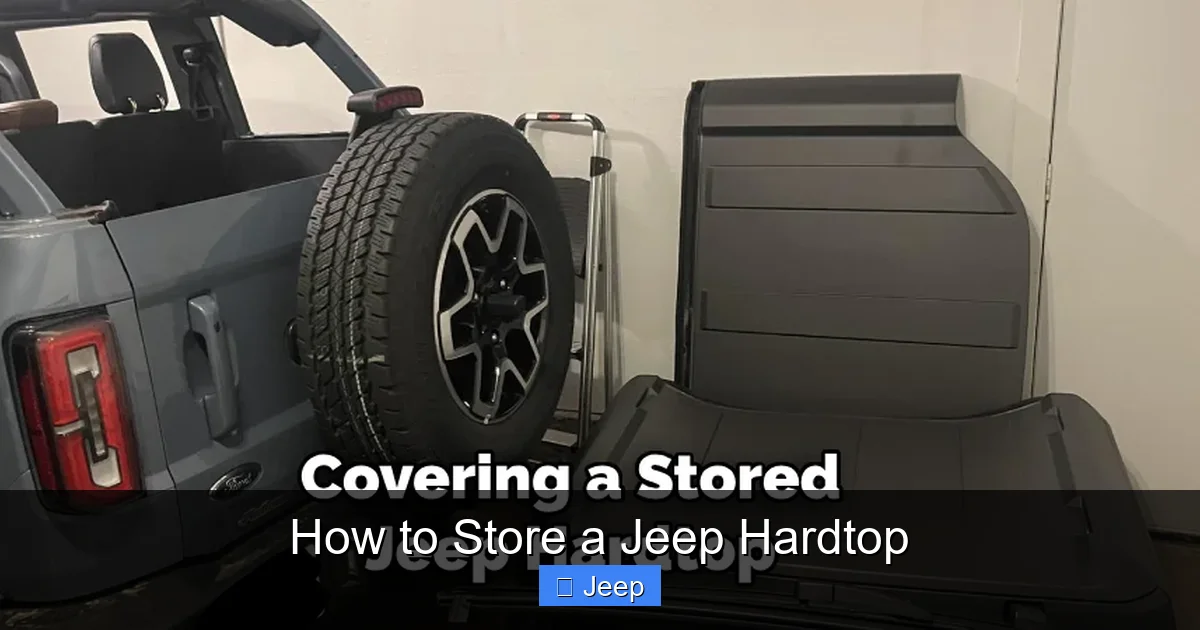
- Method A: On Its End (The “Lean”)
- This is the most space-efficient and often safest method for long-term storage.
- Prop the hardtop vertically against a sturdy wall. The front (windshield) edge should be down, with the rear slightly elevated if possible, to encourage any potential condensation to run off, not pool.
- CRITICAL: You must pad the contact points. Use moving blankets, foam pipe insulation, or old comforters between the hardtop and the wall, and at the floor contact point. Never let bare fiberglass or paint hit concrete or wood.
- Use a strap or bungee cord (with care not to overtighten) to secure it to a wall anchor or heavy object to prevent accidental tip-overs.
- Method B: On Padded Sawhorses or a Rack
- This is the professional method. Place the hardtop upside down (exterior side up) on two padded supports (sawhorses with foam covers) or a dedicated hardtop storage rack.
- The supports should be positioned under the main structural ribs or the side rails, NOT in the center of a large, unsupported span. For a 4-door, you might need a third center support. The goal is to mimic how it’s supported on the Jeep.
- Again, padding is non-negotiable. Use thick foam pads, multiple folded blankets, or purpose-made protective caps.
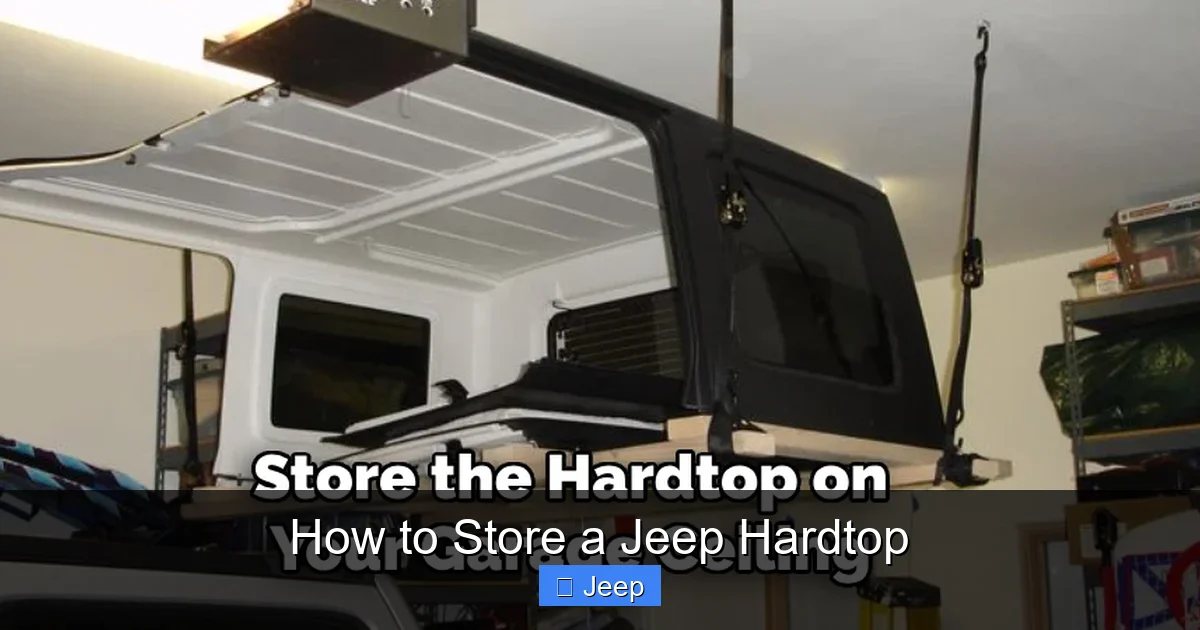
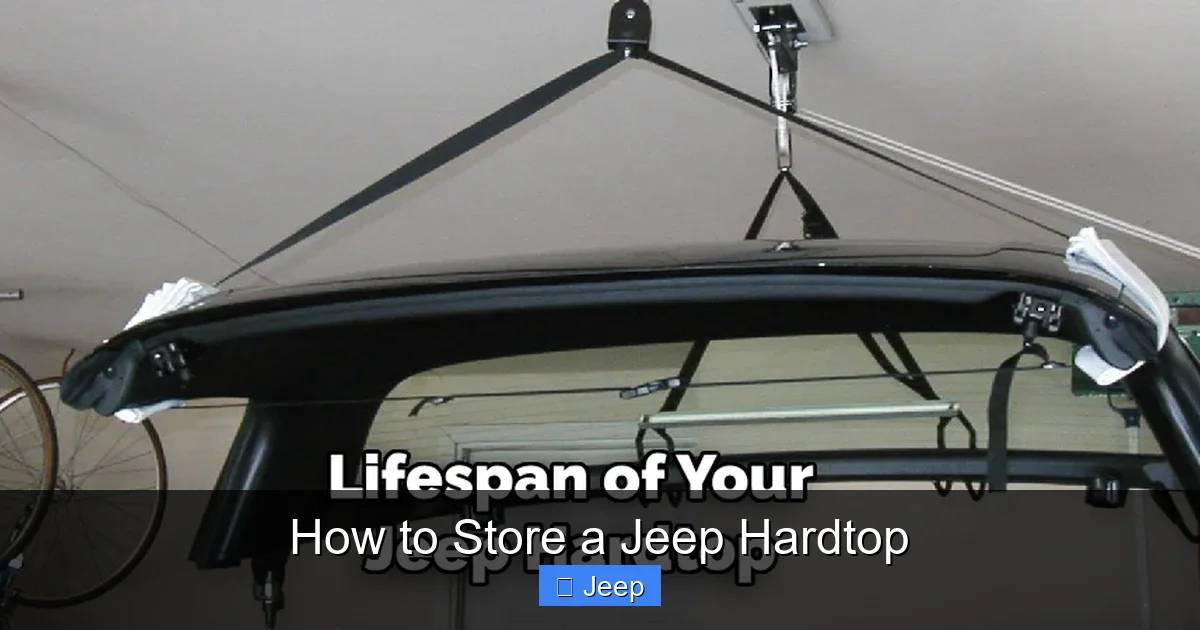
- Method C: Suspended Storage (Advanced)
- For the truly dedicated with ceiling joists, you can create a hoist system using strong straps and pulleys. This gets the top completely off the ground and out of the way.
- WARNING: This requires serious hardware and an understanding of weight and structural safety. The weight of a hardtop is significant; you can find exact weight specifications here to plan your supports correctly. Improper suspension can lead to a catastrophic drop.
Covering: Breathability is Everything
Do not use a standard blue poly tarp. It is the worst choice. It traps moisture, promotes condensation, and if it rubs against the surface in the wind, it can sandblast your paint.
- Ideal Cover: A soft, breathable, non-woven fabric cover designed for vehicle storage. Brands like Coverking, Budge, or Roush make them. They should be sized to fit your specific Jeep model (JK, JL, TJ, etc.) without being skin-tight. A slightly loose fit allows air circulation.
- How to Use It: Drape the cover over the supported hardtop. Ensure it touches the ground or platform all around to create a seal against pests and blowing debris. If storing outside, use bungee cords or straps with soft hooks to secure the cover, but again, do not cinch it tight against the top. The straps should hold the cover in place, not compress it.
- Alternative: For indoor storage on a rack, a simple, clean cotton sheet or moving blanket can suffice, as long as the environment is clean and pest-free. Just be sure it’s secured so it doesn’t slip off.
Phase Four: Long-Term Maintenance and Monitoring – The Set-It-and-Forget-It Trap
Storage is not “set it and forget it.” A quarterly check-up is essential to catch small problems before they become big ones.
The Quarterly Inspection Ritual
Every 3 months, take 15 minutes to:
- Check the Cover: Is it still secure? Is it damp on the inside? If it’s wet, carefully remove it, let the hardtop and cover dry separately, then re-cover.
- Look for Pests: Check for nests, chew marks on wiring, or droppings. Look around the support points and along the seams.
- Feel for Moisture: Run your hand over the interior and exterior surfaces. Any clamminess or spotting indicates a moisture problem.
- Inspect Supports: Make sure the padding hasn’t shifted and the hardtop is still resting correctly without any new pressure points.
- Air It Out: If possible and the weather is dry, remove the cover for a few hours to let the top “breathe.” This is especially important in humid climates.
Hardware and Small Parts Organization
The bane of Jeep ownership is finding that one missing bolt or disconnected wiring harness. Do not just throw all the hardware into a bucket.
- Use Ziplock Bags: Separate the bolts by location (windrail, rear header, side bars). Label each bag clearly: “JL Windshield Header Bolts – 10mm.”
- Wrap Wiring Harnesses: Coil the main wiring harness and any antenna cables neatly and secure them with a zip tie. Place them in a separate, labeled bag.
- Take Photos: Before you even remove the first bolt, take clear photos of the installed top from multiple angles. Also, take close-ups of the wiring connector and any tricky latch mechanisms. These photos are worth a thousand words during reinstallation.
- Store in a Safe Place: Keep all your labeled bags in a single, dedicated tool chest or bin that you will not use for anything else. Put this bin in the same climate-controlled space as the hardtop if possible.
What About Wrap or Paint Protection Film (PPF)?
If your hardtop has a wrap or PPF, storage considerations are slightly different. Wraps are vulnerable to edge lifting if moisture gets behind them. Ensure the wrap is in perfect condition before storage. The breathable cover is still mandatory. Avoid any adhesive tapes or covers that could leave residue on the vinyl. For PPF, the same rules apply; it’s just another layer of protection for your paint. If you’re considering a wrap to protect the original finish, researching the cost to wrap a Wrangler might be a smart investment for long-term preservation.
Conclusion: Ready for the Next Adventure
Storing your Jeep hardtop doesn’t have to be a source of anxiety. By treating it with the same care you give your Jeep itself, you ensure that this versatile component will serve you faithfully for years to come. The process boils down to a simple mental model: Clean it, Support it correctly, Cover it breathably, and Check on it.
Remember, your hardtop is what transforms your Jeep from a fun open-air toy into a practical, quiet, and secure vehicle. Protecting it is an investment in your Jeep’s versatility and your own future convenience. When spring arrives or you need that hardtop back on, a properly stored top will lift into place with a satisfying thunk, the seals will mate perfectly, and you’ll be back on the road without a second thought about warps, scratches, or musty smells. You’ll know you did it right. Now, go enjoy that Jeep, secure in the knowledge that your hardtop is resting comfortably, ready for its next command.
Frequently Asked Questions
Can I store my Jeep hardtop outside without a cover?
No, you should never store a hardtop exposed to the elements. Even without direct rain, UV rays will fade and degrade the paint and materials, while bird droppings, tree sap, and pollen can cause permanent staining and chemical damage. A breathable cover is the absolute minimum for outdoor storage.
What’s the biggest mistake people make when storing a Jeep hardtop?
The most common and damaging mistake is laying the hardtop flat on the ground or a hard surface, often with things placed on it. This causes the center to sag and warp over time due to the top’s own weight, making it nearly impossible to remount correctly. Always store it on its side or on padded supports.
Is it okay to store my hardtop in a damp basement?
It’s not ideal. Basements often have high humidity and risk of flooding. Moisture is the enemy, leading to mold, mildew, and corrosion. If you must use a basement, place the hardtop on a raised pallet or platform, use a dehumidifier in the space, and ensure it’s covered with a breathable fabric. Check it monthly for any signs of moisture.
How long can I safely store my Jeep hardtop?
With proper preparation (thorough cleaning, drying), correct support, and a breathable cover in a stable environment, a hardtop can be stored safely for many years—5, 10, or even longer. The key is the quarterly inspection ritual to catch any developing issues like moisture accumulation or pest intrusion early.
Should I remove the wiring harness and hardware from the hardtop before storage?
Yes, absolutely. Always disconnect the wiring harness from the Jeep and store it separately. Remove all bolts and fasteners. Store these small parts in clearly labeled Ziplock bags (e.g., “JL Hardtop Header Bolts”). This prevents the connectors from corroding or getting damaged, ensures you don’t lose hardware, and makes reinstallation much simpler and less frustrating.
Can I use a regular car cover for my hardtop?
A regular car cover designed for a vehicle body is usually not ideal. Hardtops have different shapes and sharp edges (like the windshield header) that can strain or tear a standard cover. It’s best to use a cover specifically sized for your Jeep model’s hardtop or a generic but high-quality, soft, breathable fabric cover that you can secure without creating pressure points.