
How to Store a Car Cover: A Step-by-Step Guide

Quick Answer
To store a car cover properly, remove loose dirt, clean it according to the manufacturer’s instructions when needed, and let it dry completely. Fold or roll it loosely with the paint-contact surface protected, place it in a clean storage bag, and keep it in a cool, dry, well-ventilated location. These steps help prevent mildew, unpleasant odors, fabric damage, and scratches caused by trapped grit.
Follow These Five Steps
- Remove debris: Shake off leaves, dust, pollen, and loose grit before folding.
- Dry thoroughly: Check the seams, elastic edges, straps, and lining for hidden moisture.
- Fold carefully: Keep the vehicle-facing surface away from dirty floors and rough ground.
- Choose a suitable bag: Use the supplied storage bag or another clean container that fits without excessive compression.
- Store indoors: Choose a dry shelf or cupboard away from direct sunlight, chemicals, and standing water.
One Rule to Remember
- Never seal a damp or dirty car cover in its storage bag, even if you plan to use it again soon.
Knowing how to store a car cover makes everyday vehicle care easier, especially when you remove the cover every morning or use it only during certain seasons. A few careful steps help keep the fabric in good condition and reduce the chance of transferring dirt onto your car’s paint.
In this guide, I’ll explain how to fold, dry, bag, and store different types of car covers. I’ll also cover what to do after rain, where to keep a cover in humid weather, and which storage mistakes are worth avoiding in 2026.
In This Guide
Why Does Proper Car Cover Storage Matter?
Proper storage protects the cover’s material and keeps its vehicle-facing surface clean. It also helps prevent trapped moisture, musty odors, and unnecessary stress on seams and elastic edges.
A car cover is a protective fabric or multilayer covering designed to shield a vehicle from selected environmental hazards, such as dust, sunlight, or rain. Its materials and coatings determine how it should be cleaned, dried, folded, and stored.
The basic routine is similar for indoor and outdoor covers, but thicker weather-resistant designs may need more drying time and additional space.
How Can Poor Storage Damage a Car Cover?
- Moisture buildup: Damp fabric packed into a closed bag can develop musty odors and mildew.
- Trapped grit: Sand and dust between folded layers can contaminate the surface that touches your vehicle.
- Fabric wear: Rough handling, sharp objects, and excessive compression can strain seams and coatings.
- Sun exposure: Leaving the cover exposed to strong sunlight between uses can add unnecessary material wear.
- Storage contamination: Oil, cleaning chemicals, and garage debris can stain or damage some cover materials.
Paint protection deserves particular attention. Consumer Reports recommends breathable car covers with soft inner materials because these features help reduce moisture buildup and the risk of scratching paint.
Its broader car-washing and paint-care guidance also emphasizes careful handling to help preserve a vehicle’s finish.
Section Takeaway: Store the cover as carefully as you would a clean detailing towel. Keeping it dry and free of grit protects both the fabric and the vehicle it covers.
How Do You Store a Car Cover Step by Step?
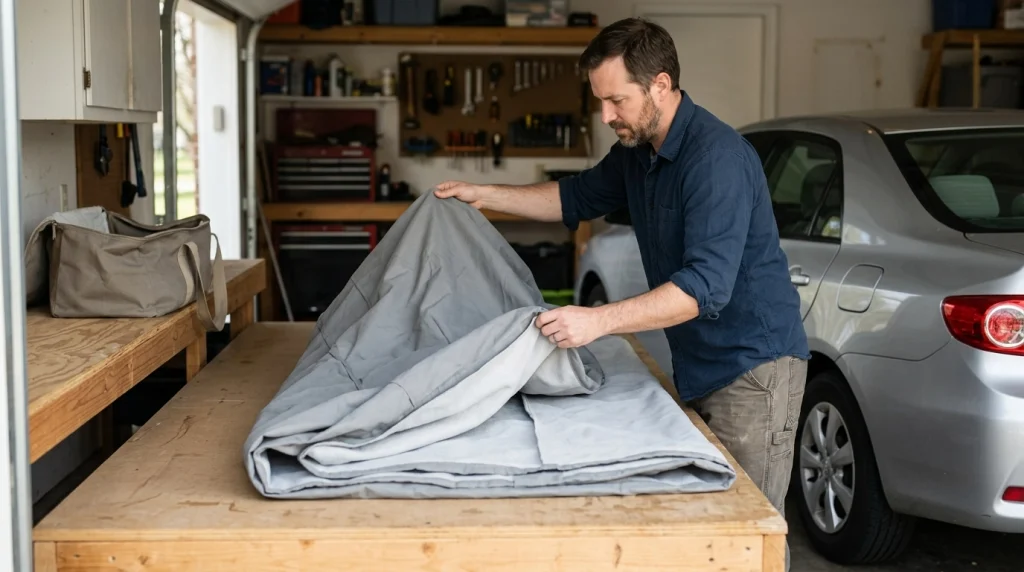
The safest approach is to remove debris, check for damage, dry the cover, fold or roll it gently, and place it in suitable storage. Following this order prevents dirt and moisture from becoming trapped between layers.
Step 1: Remove the Cover Without Dragging It
Release the cover’s straps, buckles, or elastic edges before pulling it away from the vehicle. Lift it where practical rather than dragging the fabric across the paint, driveway, or garage floor.
For a large sedan, SUV, or pickup truck, working from one end toward the other can make the cover easier to handle. Avoid letting the fabric trail through leaves, gravel, or muddy patches.
Step 2: Shake Off Loose Dirt and Inspect the Fabric
Take the cover to a reasonably clean area and gently shake off loose debris. Check the outer surface and the inner lining because contamination can collect on either side.
- Remove loose leaves, twigs, and pollen.
- Look for sand, dried mud, and road grime.
- Inspect the seams, elastic hem, straps, and mirror pockets.
- Check for small tears, loose stitching, or damaged fasteners.
Do not aggressively brush a delicate inner lining. If the cover needs washing, follow its care label rather than assuming every material can tolerate the same detergent or washing method.
Step 3: Clean It When Necessary
A lightly dusty cover may only need gentle debris removal, while a cover exposed to mud, bird droppings, or heavy road film may need proper cleaning. Follow the manufacturer’s instructions for water temperature, detergent, rinsing, and machine-washing restrictions.
Avoid bleach, fabric softener, harsh household cleaners, and machine drying unless the manufacturer explicitly permits them. Some covers use coatings or laminated layers that may be damaged by unsuitable chemicals or heat.
For general guidance, see AutoZone’s car cover cleaning guide.
Step 4: Let the Cover Dry Completely
Drying is the step you should never rush. Spread the cover out in a shaded, well-ventilated place where air can reach both sides.
If the cover is large, reposition it as needed so folded sections do not remain damp. A fan can help circulate air in a garage, especially during humid weather.
- Check the seams: Thick stitched areas may retain moisture.
- Feel the elastic edges: These sections can dry more slowly than flat panels.
- Inspect the inner lining: Do not assume it is dry because the outer surface feels dry.
- Allow extra time: Heavy multilayer covers generally need more drying time than lightweight indoor covers.
There is no reliable universal drying time for every cover. Humidity, airflow, material thickness, and the amount of water absorbed all affect the result.
Step 5: Fold or Roll the Cover Carefully
Once the cover is completely dry, fold both sides inward to create a long, manageable strip. Keep the clean paint-contact surface away from dirty floors and avoid sharp, forceful creases.
Fold or roll the strip into a bundle that fits the supplied bag without excessive compression. Tuck straps and buckles inward so they do not snag the fabric.
Step 6: Place It in a Clean Storage Bag
Use the original bag if it is clean, dry, and large enough for the folded cover. Otherwise, choose a suitable clean bag or storage container that protects the fabric without crushing it.
A breathable fabric bag is useful for routine storage, particularly when humidity is a concern. If you use a plastic container for dust protection, make sure the cover is fully dry and avoid sealing in residual moisture.
Step 7: Put the Bag in a Suitable Location
Place the packed cover on a raised shelf or inside a clean cupboard. Keep it away from leaking pipes, damp floors, direct sunlight, sharp tools, and automotive fluids.
That completes the routine. For frequent use, a consistent storage spot also makes it easier to find the cover and put it back on without unnecessary handling.
Section Takeaway: A clean, fully dry cover stored without excessive compression is ready for its next use. The original bag is helpful, but preparation and storage conditions matter more than achieving a perfect fold.
What Should You Do With a Wet or Dirty Car Cover?
Do not pack a wet car cover into a closed bag for later use. Open it up, remove excess water where practical, and allow it to dry completely before storage.
If the cover is dirty, remove loose debris and clean it according to its care instructions before folding. This is especially important before leaving it unused for several weeks or months.
How Should You Store a Cover After Rain?
Rainwater may remain in seams, elastic edges, or folds even when the larger panels appear dry. Open the cover fully in a ventilated area and check the thicker sections before packing it away.
- Remove excess water: Shake the cover gently without stretching its seams.
- Open all folds: Spread the fabric so air can reach the inner and outer surfaces.
- Improve airflow: Use a sheltered, ventilated space if outdoor humidity is high.
- Check hidden areas: Feel along the seams, hems, straps, and reinforced sections.
- Store only when dry: Wait until no dampness remains throughout the cover.
If you need to leave home before the cover dries, keep it loosely opened in a protected, ventilated location if possible. Avoid leaving a wet bundle inside the car trunk or sealing it in a storage bag overnight.
What If the Cover Is Dirty but You Cannot Wash It Immediately?
Keep it separate from clean items and avoid folding its dirty surface against the inner lining. Remove loose debris gently, then arrange proper cleaning before using it on the vehicle again.
For mud, bird droppings, or sticky residue, follow the care label and use a compatible cleaning method. Do not rub abrasive particles into the material, particularly if the cover has a soft lining.
In humid climates, including during Bangladesh’s rainy season, drying can take longer than expected. Prioritize ventilation over direct, intense heat, and do not rely on a fixed number of hours as proof that the cover is ready to pack.
Section Takeaway: Wet and dirty covers need attention before storage. Drying thoroughly and removing contamination are more important than folding quickly.
Where Should You Keep a Stored Car Cover?
The best storage location is clean, dry, shaded, and protected from spills and pests. An indoor shelf or cupboard usually works better than a damp garage corner or a vehicle trunk exposed to prolonged heat.
Choose the location according to how often you use the cover and the conditions where you park.
Comparing Common Car Cover Storage Locations
| Storage location | Main advantage | What to watch for |
|---|---|---|
| Indoor cupboard | Protects against dust and direct sunlight | Avoid damp or poorly ventilated cupboards |
| Raised garage shelf | Convenient for regular vehicle maintenance | Keep away from oil, chemicals, sharp tools, and leaks |
| Vehicle trunk | Convenient for carrying the cover | Heat, spills, and trapped moisture can be problems |
| Damp basement or floor-level corner | May offer spare storage space | Higher risk of moisture exposure, dirt, and pests |
For most drivers, a raised shelf in a dry garage or a clean indoor cupboard is the simplest choice. Keep the cover away from containers of fuel, solvents, oil, and other substances that could leak onto the fabric.
How Should You Store a Car Cover in Humid Weather?
Humidity makes it especially important to dry the cover completely and keep the storage area ventilated. A cover can develop a musty odor if moisture becomes trapped between its layers.
- Dry the cover indoors when rain or outdoor humidity makes air-drying difficult.
- Use a fan to improve air circulation when needed.
- Keep the storage bag off concrete floors that may be damp.
- Inspect the cover periodically during long storage periods.
- Air the cover out again if it develops a musty smell or feels damp.
A moisture absorber may help in a suitable storage cabinet, but it is not a substitute for drying the cover. Avoid placing chemicals or loose moisture-absorbing material directly against the fabric unless the manufacturer approves it.
Section Takeaway: Choose a location based on its actual conditions, not simply whether it is called a garage or cupboard. Dryness, cleanliness, ventilation, and protection from contamination are the priorities.
Is It Better to Fold or Roll a Car Cover?
Both folding and rolling work when the cover is clean and completely dry. The better option depends on the cover’s thickness, its storage bag, and how much space you have available.
Neither method guarantees longer life on its own. Avoid sharp creases, excessive compression, and contact between dirty surfaces.
| Method | Works well for | Best practice |
|---|---|---|
| Folding | Covers that fit neatly in a rectangular bag | Use broad folds and avoid forcing the bundle into a small space |
| Rolling | Covers that are easier to handle as a long bundle | Roll loosely and keep straps or buckles tucked inward |
Does the Type of Car Cover Change the Storage Method?
Yes, the material can affect drying time, folding bulk, and cleaning requirements. Follow the manufacturer’s instructions whenever they differ from general advice.
- Indoor fabric covers: Often lightweight and easy to fold, but the lining still needs protection from dust and grit.
- Outdoor weather-resistant covers: May use multiple layers or coatings, so allow enough time for every layer and seam to dry.
- Water-resistant covers: Require particular care around cleaning agents and heat because these can affect some protective finishes.
- Custom-fit covers: Have mirror pockets, shaped panels, or fitted edges that should be folded without forcing or stretching them.
When a manufacturer provides a specific folding diagram, storage bag, or care label, use those instructions first. General storage techniques should not override material-specific guidance.
Section Takeaway: Choose the method that fits your cover naturally. A loose, clean bundle is better than a tightly compressed package that strains the fabric.
What Car Cover Storage Mistakes Should You Avoid?
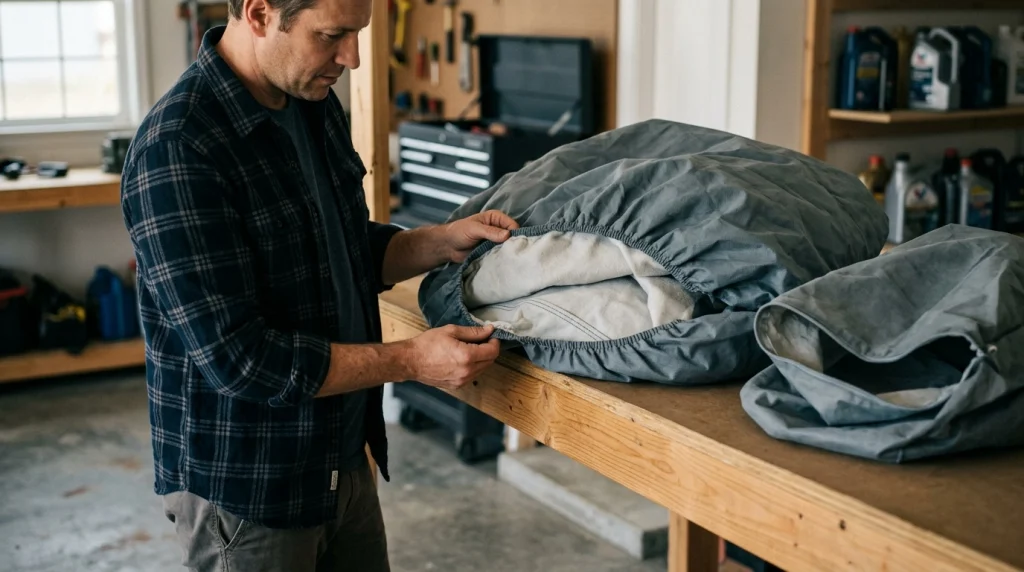
Most avoidable storage problems come from packing a cover before it is dry, allowing dirt to remain on the inner surface, or keeping it in an unsuitable location. A short inspection before storage can prevent many of these issues.
- Bagging a damp cover: Trapped moisture can lead to mildew and persistent odors.
- Folding in dirt: Grit may transfer to the paint-contact surface when you reuse the cover.
- Using excessive heat: A hot dryer or direct intense heat can damage some materials and coatings.
- Using harsh cleaners: Bleach and unsuitable detergents can affect certain fabrics and finishes.
- Compressing the cover too tightly: Forced folds can strain seams, hems, and coated layers.
- Leaving it on a damp floor: Moisture can reach the bag and its contents.
- Ignoring damage: Small tears, loose seams, and damaged straps can worsen with repeated handling.
- Skipping checks before reuse: Dust, pests, moisture, and debris may accumulate during long storage periods.
What Should You Check Before Using the Cover Again?
Before putting a stored cover back on your vehicle, unfold it in good light and inspect both sides. Make sure it is dry, clean, and free of anything that could scratch the paint.
Check the seams, elastic edges, straps, and fasteners for damage. If you notice grit on the inner lining, clean it according to the manufacturer’s instructions before covering the car.
Also ensure that the vehicle itself is clean and dry before fitting the cover. A dirty car underneath a clean cover can still expose the paint to abrasion when the material moves.
Section Takeaway: Storage does not end when you zip the bag. A quick inspection before reuse helps confirm that the cover is still suitable for protecting your vehicle.
Frequently Asked Questions
1. Should I store my car cover in its original bag?
Yes, if the original bag is clean, dry, and large enough to hold the cover without excessive compression. If it is damaged or too small, use another suitable clean bag or container that protects the material from dust and contamination.
2. Can I put a wet car cover in the trunk temporarily?
It is better not to leave a wet cover bundled inside a closed trunk. Moisture can become trapped, particularly in humid weather. If you must transport it, keep it separate from clean items and spread it out to dry as soon as practical.
3. Is it safe to store a car cover in a plastic bag?
A clean plastic bag can protect a completely dry cover from dust, but sealing in residual moisture can encourage musty odors and mildew. For routine storage, a suitable breathable bag is often a better choice, especially in humid conditions.
4. How long should a car cover dry before storage?
There is no single drying time that works for every cover. Lightweight fabric may dry faster than a thick multilayer cover, and high humidity slows the process. Check the panels, seams, elastic edges, and lining rather than relying only on elapsed time.
5. Should I wash my car cover before storing it for winter?
Clean it if it has accumulated dirt, mud, bird droppings, or other contamination. Follow the manufacturer’s cleaning instructions and allow the cover to dry completely before packing it away. A clean cover is easier to inspect and less likely to transfer debris to the vehicle later.
6. Can I leave my car cover in the garage all year?
Yes, provided the storage location stays reasonably dry, clean, and protected from direct sunlight, leaks, chemicals, and pests. During long storage periods, inspect the bag occasionally and check the cover before using it again.
7. Does folding or rolling make a car cover last longer?
Either method can work when performed carefully. The main priorities are removing dirt, drying the material completely, avoiding sharp creases, and preventing excessive compression. Follow any specific folding instructions supplied with your cover.
Final Takeaway: Keep Your Car Cover Clean, Dry, and Ready
Learning how to store a car cover properly does not require special tools or complicated techniques. Remove debris, clean the material when needed, dry it completely, and fold or roll it loosely before placing it in a suitable storage bag.
For everyday use, keep the bag in a convenient, dry location. For seasonal storage, pay extra attention to moisture, fabric damage, pests, and contamination during the months the cover remains unused.
Before putting the cover back on your vehicle, inspect its inner surface and make sure the car is clean and dry. That simple routine helps protect the cover, reduces avoidable paint-care problems, and keeps the equipment ready whenever you need it.