How to Start a Jeep Cherokee

Contents
- 1 Key Takeaways
- 2 📑 Table of Contents
- 3 Understanding Your Jeep Cherokee’s Starting System
- 4 Starting a Jeep Cherokee with a Traditional Key
- 5 Starting a Jeep Cherokee with Push-Button Start (Keyless Ignition)
- 6 Using the Remote Start Feature on Your Jeep Cherokee
- 7 Emergency Starting Procedures: When the Key Fob Fails
- 8 Troubleshooting Common Starting Problems
- 9 Maintenance Tips for a Reliable Start
- 10 Frequently Asked Questions

Portable Work Light

Car Seat Cover (Universal Fit)

Car Tissue Holder
Car Phone Holder
Starting your Jeep Cherokee is straightforward once you know its system. Whether you have a traditional key, a push-button start, or a remote starter, the process is simple. This guide covers every method, from daily use to emergency backups, and helps you troubleshoot common problems like a dead key fob or a locked steering wheel. You’ll also learn essential maintenance tips to keep your starting system reliable.
So, you’re staring at your trusty Jeep Cherokee, key in hand (or maybe not), and you need to get going. Starting a vehicle should be the simplest thing in the world, but with all the technology packed into modern cars, it can get confusing. Don’t worry. Whether you’re driving a classic 2000s model with a chunky key or a brand-new Cherokee with a slick push-button start, this guide will walk you through every single way to start a Jeep Cherokee. We’ll cover the standard procedures, the “oh no” emergency backups, and how to troubleshoot when things go wrong. By the end, you’ll feel like a Cherokee starting pro.
Jeep has been building the Cherokee for decades, and the way you start it has evolved dramatically. Early models used a straightforward metal key. Then came the chip-encoded transponder key for better security. Later, the keyless entry and push-button start system became popular, and many modern Cherokees also boast a remote start feature that lets you fire up the engine from your living room on a cold morning. Knowing which system your specific vehicle has is the first step. We’ll break it all down, section by section, with simple language and clear steps. No mechanic degree required.
Key Takeaways
- Identify Your System: Your Cherokee’s starting method depends on its model year and trim, ranging from a traditional key to a keyless push-button and remote start.
- Push-Button Requires the Fob: For keyless ignition, the key fob must be inside the vehicle and have a working battery for the system to recognize it.
- Remote Start is Separate: The factory remote start feature uses the key fob but operates the engine from outside the vehicle, following specific security steps.
- Always Have a Backup: Every Cherokee with a key fob includes a hidden emergency key for when the fob’s battery dies or the system malfunctions.
- Dead Battery is the #1 Culprit: Most starting issues stem from a weak or dead vehicle battery or a dead key fob battery, not a faulty starter motor.
- Steering Wheel Lock Can Interfere: If the steering wheel is locked, it can prevent the ignition from turning or the push-button from activating.
- Regular Maintenance Prevents Problems: Keeping your key fob battery fresh and your vehicle’s battery charged is the best way to avoid being stranded.
📑 Table of Contents
- Understanding Your Jeep Cherokee’s Starting System
- Starting a Jeep Cherokee with a Traditional Key
- Starting a Jeep Cherokee with Push-Button Start (Keyless Ignition)
- Using the Remote Start Feature on Your Jeep Cherokee
- Emergency Starting Procedures: When the Key Fob Fails
- Troubleshooting Common Starting Problems
- Maintenance Tips for a Reliable Start
Understanding Your Jeep Cherokee’s Starting System
Before we dive into the “how,” let’s quickly figure out the “what.” Your Cherokee’s starting system is determined mainly by its model year and trim level. A 2015 Cherokee Sport likely has a traditional key, while a 2022 Cherokee Limited probably has a keyless fob with a push-button start and remote start. Here’s a general timeline to help you identify your system.
Key Types Across Model Years
- Pre-2014 (Mostly): These models use a traditional metal key that fits into a cylinder ignition. You physically turn the key to start the engine.
- 2014-2020 (Varies by Trim): This era is a mix. Base models often retained the traditional key, while higher trims (Latitude, Limited, Trailhawk) introduced the keyless fob with a push-button start. The fob has a hidden emergency key inside.
- 2021 and Newer: Almost all Cherokee trims come standard with the keyless fob and push-button start. Remote start is also a very common, if not standard, feature.
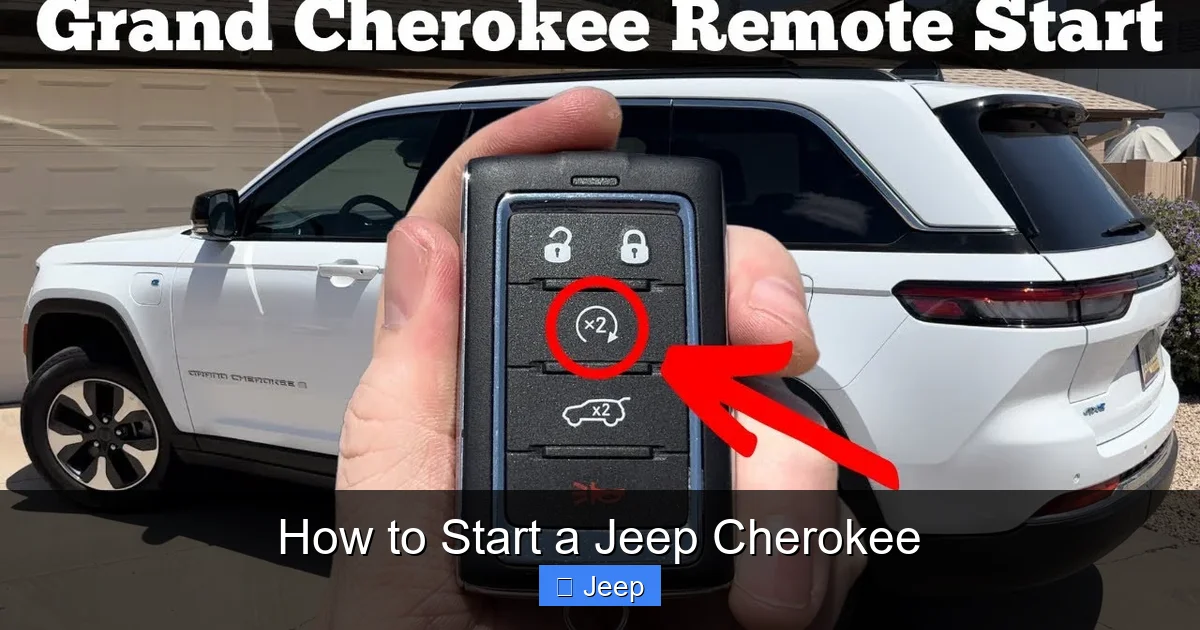
The easiest way to know for sure is to look at your key. If it’s a simple metal key with no buttons, you have a traditional system. If it’s a plastic fob with lock/unlock/trunk buttons and a small mechanical key hidden inside, you have a keyless system with a backup. If it has a dedicated remote start button (often a circular arrow icon), you have that feature too. Now, let’s get started.
Starting a Jeep Cherokee with a Traditional Key
If your Cherokee has a physical key that goes into a slot on the steering column, the process is classic and reliable. It’s the method most of us learned on. Here is the simple, step-by-step process.
Visual guide about How to Start a Jeep Cherokee
Image source: i.ytimg.com
Step-by-Step Process
- Step 1: Enter and Secure. Unlock the door with your key, get in, and close the door. Make sure the parking brake is engaged (the lever or foot brake).
- Step 2: Insert the Key. Locate the keyhole on the steering column, usually covered by a plastic cap. Insert the key fully.
- Step 3: Accessory Mode. Turn the key clockwise to the first detent (a slight click). This powers on the accessory circuits—your radio, interior lights, and power windows—without engaging the starter. Check that your “Check Engine” or other warning lights illuminate on the dashboard.
- Step 4: Start the Engine. Turn the key further clockwise to the second, stronger detent. You’ll hear the starter motor crank the engine. As soon as the engine fires and runs smoothly, release the key. It will spring back to the “On” position automatically. Do not hold it in the start position for more than a few seconds.
- Step 5: Drive Away. Once the engine is running, let it idle for 10-20 seconds to let oil circulate, then select your gear (Drive or Reverse) and carefully release the parking brake. You’re good to go!
Pro Tip: If the engine doesn’t start on the first try, wait about 10 seconds before trying again. This prevents flooding the engine (too much fuel) and gives the starter a moment to cool down.
Starting a Jeep Cherokee with Push-Button Start (Keyless Ignition)
This is the system most modern Cherokee owners will use. It’s convenient and sleek, but it relies on electronic communication between your key fob and the vehicle. The engine will only start if the car’s computer detects a valid, powered fob inside the cabin.
Visual guide about How to Start a Jeep Cherokee
Image source: jeepinside.com
How the System Works
The vehicle has antennas that create a low-energy “bubble” inside the passenger compartment. When you press the start/stop button, the car’s computer searches for the unique radio signal from your paired key fob. If it’s found, it allows the starter to engage. There’s also a safety interlock: you must have your foot on the brake pedal (for automatic transmissions) or the clutch pedal (for manuals, though rare in Cherokees) to start.
The Standard Starting Procedure
- Step 1: Enter and Secure. Unlock the door (using the fob’s buttons or the hidden key), get in, and close all doors. The fob can be in your pocket, purse, or cup holder—it just needs to be inside the vehicle’s detection zone.
- Step 2: Apply the Brake. Firmly press and hold the brake pedal. This is a mandatory safety step.
- Step 3: Press the Button. Locate the push-button start/stop button, typically on the dashboard or center console near the gear selector. Press it once firmly. You don’t need to hold it.
- Step 4: Engine Crank and Run. The starter will engage, the engine will crank, and it should start. The button’s LED light will usually illuminate to show the ignition is “On.” All dashboard warning lights should come on briefly during startup as a systems check.
- Step 5: To Stop the Engine. Press the button again while the vehicle is in Park (or Neutral) to turn the engine off. You do not need to press the brake to turn it off.
Important Note: If your Cherokee has an automatic transmission, it must be in Park (P) or Neutral (N) to start. The brake pedal requirement is in addition to this.
Using the Remote Start Feature on Your Jeep Cherokee
Many Cherokee models come with a factory-installed remote start. This allows you to start the engine from outside the vehicle using the key fob, typically to warm up or cool down the cabin before you get in. The process is different from the push-button start and has specific rules.

Visual guide about How to Start a Jeep Cherokee
Image source: adventurejeep.com
How to Activate Remote Start
- Prerequisites: Ensure all doors are locked, the hood is closed, and the vehicle is in Park. The key fob must have a good battery, and your Cherokee must have enough fuel and a charged 12V battery.
- Step 1: Lock the Vehicle. Press the lock button on your key fob to lock all doors. The hazard lights may flash to confirm.
- Step 2: Press the Remote Start Button. Immediately after locking, press and release the dedicated remote start button (the one with the circular arrow icon). You may need to press it twice quickly, depending on your model year. Consult your owner’s manual for the exact sequence.
- Step 3: Confirmation. The hazard lights will flash again, and the engine will start. The parking lights may also turn on. The climate control will run at a default setting (often HI for heat or LO for cool).
- Step 4: Enter and Drive. Within 10-15 minutes (the remote start timeout period), get into the vehicle, buckle up, press the brake pedal, and press the push-button start button. The engine will continue running, and you can select Drive and go. If you don’t enter within the timeout, the engine will shut off automatically for safety.
Remote start range is limited, usually about 200-300 feet in an open area. Walls and other obstructions will reduce it. For more detailed instructions on remote start systems in other vehicles, you can refer to guides like how to remote start a Nissan Murano, which explain similar principles of operation and safety checks.
Emergency Starting Procedures: When the Key Fob Fails
What happens when your key fob battery dies, or the car’s computer isn’t detecting it? Don’t panic. Your Cherokee has a built-in backup plan. Every keyless entry fob includes a hidden physical key.
Accessing the Hidden Emergency Key
Look at your key fob. There’s usually a small slot or a button on the back. Slide or press it to release the small, flat metal emergency key. Pull it out. This key is for unlocking the driver’s door only in an emergency.
Starting the Engine with a Dead Fob
Once you’ve used the emergency key to unlock and enter the driver’s door, you still need to start the engine. The push-button won’t work with a dead fob in your pocket. Here’s the trick:
- Step 1: Unlock and Enter. Use the emergency key to unlock the driver’s door. Get in and close the door.
- Step 2: Locate the Key Fob Backup Slot. Look on the steering column or near the cup holders for a small slot or icon that looks like a key. This is the designated spot to place your key fob for a “backup start.”
- Step 3: Place the Fob. Hold your key fob (even with a dead battery) and press it firmly against this slot. The vehicle’s antenna can sometimes read the fob’s internal chip through direct contact.
- Step 4: Press the Brake and Start Button. With your foot on the brake, press the push-button start as normal. The car should detect the fob via contact and start the engine.
Critical: Once the engine is running, drive straight to a safe location and replace the key fob battery immediately. The process will need to be repeated every time you stop the engine until the fob battery is replaced.
This emergency procedure is similar across many brands. For example, the steps for starting a Dodge Charger with the emergency key involve locating a similar backup slot on the steering column. The core principle—direct contact for fob detection—is the same.
Troubleshooting Common Starting Problems
Even with the right method, sometimes your Cherokee just won’t start. Let’s troubleshoot the most common issues logically.
Problem: “Key Fob Not Detected” or No Response When Pressing Start
- Check the Key Fob Battery: This is the most likely cause. Replace the coin cell battery (usually a CR2032) inside the fob.
- Interference: Other electronic devices, a strong radio antenna, or even a cell phone on the fob can interfere. Move the fob away from electronics and try again.
- Dead Vehicle Battery: If the 12V battery is too weak, it can’t power the ignition system’s electronics. You’ll likely see dim or no dashboard lights. A jump start is needed.
- Faulty Fob or Vehicle Antenna: If a new fob battery doesn’t help, the fob itself or the vehicle’s receiver antenna may be faulty. This requires a dealer or professional diagnosis.
Problem: Steering Wheel is Locked and Won’t Turn
This often happens when the wheel is turned while the vehicle is off, engaging the steering lock. It can prevent the key from turning or the push-button from activating.
- Solution: Gently but firmly rock the steering wheel left and right while attempting to turn the key (for traditional systems) or press the start button (for push-button). The goal is to relieve the pressure on the lock mechanism. You’ll feel a slight give. Do not force it violently.
- For keyless systems, sometimes simply placing the fob in the backup slot and pressing the start button while wiggling the wheel works. The principle is similar to unlocking a steering wheel on a push-start Nissan Altima.
Problem: Engine Crank but Won’t Start
This means the starter is working, but the engine isn’t firing. Possible causes include: no fuel (empty tank, bad fuel pump), no spark (bad ignition coils, spark plugs), or a major sensor failure. At this point, professional diagnosis is usually needed.
Problem: Nothing Happens (No Crank, No Lights)
This points to a complete power loss. The culprit is almost always a dead 12V battery. Causes include a parasitic draw (something left on), a failed alternator, or an old battery. A jump start using proper cables or a jump starter pack is the first step. If it starts after a jump, have the battery and charging system tested.
Maintenance Tips for a Reliable Start
Prevention is the best cure. A few simple habits will keep your Cherokee starting dependably for years.
Key Fob Care
- Replace the Battery Proactively: Don’t wait for it to die. Replace the key fob battery every 2-3 years. It’s a cheap, easy DIY fix.
- Keep Spares: Have a spare key fob programmed and stored in a safe place. Getting a new fob programmed by a dealer can be expensive.
- Avoid Physical Damage: Don’t throw your fob. A hard impact can damage the internal circuit board or chip.
Vehicle Battery Health
- Regular Checks: Have your 12V battery’s health tested at least once a year, especially before winter. Many auto parts stores do this for free.
- Clean Terminals: Corrosion on the battery terminals (white, crusty stuff) can prevent starting. Clean them with a baking soda/water solution and a wire brush.
- Avoid Short Trips: Frequent short drives don’t give the alternator enough time to fully recharge the battery, leading to a slow depletion over time.
- Use a Trickle Charger: If you store your Cherokee or don’t drive it often, a battery tender/trickle charger will keep it at a full charge without overcharging.
System-Specific Care
- For Push-Button Start: Ensure the brake pedal switch is functioning. A faulty switch will prevent starting. Also, keep the area around the push-button clean.
- For Remote Start: Remember the system will not start if the hood is open, a door is ajar, or the Check Engine light is on. Fix these underlying issues for remote start to work reliably.
- General: Ensure your vehicle’s software (if applicable) is up to date. Dealers sometimes release updates for ignition and security systems.
Frequently Asked Questions
My Jeep Cherokee key fob battery is dead. Can I still start it?
Yes. Use the hidden emergency key to unlock the door. Then, place the key fob directly into the designated backup slot on the steering column or center console and press the start button while holding the brake. The vehicle’s antenna can often read the fob’s chip through direct contact even with a dead battery.
Why is my steering wheel locked and preventing me from starting my Cherokee?
The steering lock engages when the wheel is turned while the vehicle is off. To unlock it, gently turn the wheel left and right while attempting to turn the key (traditional systems) or press the start button (keyless systems). The pressure will release the lock mechanism. Do not use excessive force.
My Cherokee’s remote start isn’t working. What should I check?
First, ensure all doors are locked, the hood is securely closed, and the gear selector is in Park. The Check Engine light must also be off. Confirm your key fob battery is good and you’re within the remote’s effective range (about 200-300 feet). Finally, make sure your vehicle has enough fuel.
What do I do if my Jeep Cherokee won’t start in very cold weather?
Cold weather thickens engine oil and reduces battery capacity. First, try turning off all accessories (lights, radio, heater). If the engine cranks slowly, the battery is likely weak. A jump start may be necessary. If it cranks normally but won’t fire, you may need to hold the start button or key in the start position for 3-5 seconds to help the fuel pump prime.
My Check Engine light is on, and now my Cherokee won’t start. Is it related?
Yes, often. Many modern vehicles, including the Cherokee, will disable the start function if the engine computer detects a critical fault that could cause damage. The illuminated Check Engine light is a warning that such a fault exists. You must diagnose and repair the underlying issue (using an OBD2 scanner) before the vehicle will start normally again.
How do I jump-start a Jeep Cherokee with a dead battery?
Connect the red (positive) jumper cable clamp to the positive (+) terminal of the dead battery. Connect the other red clamp to the positive terminal of the good donor battery. Connect the black (negative) clamp to the negative (-) terminal of the donor battery. Finally, connect the last black clamp to an unpainted metal surface on the Cherokee’s engine block or chassis, away from the dead battery. Start the donor vehicle, then attempt to start the Cherokee. Remove clamps in reverse order. For more detailed procedures, guides like how to jump start a Subaru Outback cover the same fundamental safety steps for any vehicle.