How to Reset Jeep Auto Start Stop

Contents
- 1 Key Takeaways
- 2 📑 Table of Contents
- 3 Understanding Your Jeep’s Auto Start Stop System
- 4 Common Reasons Your Jeep Needs a Reset
- 5 Step-by-Step Reset Procedures for Different Jeep Models
- 6 Troubleshooting When the Reset Doesn’t Work
- 7 Preventive Tips to Avoid Frequent Resets
- 8 Professional Help vs. DIY: Making the Right Choice
- 9 Conclusion: Getting Back to Smooth Stops and Starts
- 10 Frequently Asked Questions

Car Trash Can

Steering Wheel Cover

Car Body Cover

Car Back Support Cushion
Is your Jeep’s Auto Start Stop system not working or showing a warning light? This comprehensive guide provides clear, step-by-step reset instructions for every Jeep model. We explain why resets are needed after battery issues, how to perform them manually, and when to seek professional help. Follow these simple procedures to restore your vehicle’s fuel-saving technology and eliminate annoying dashboard alerts.
Key Takeaways
- Battery Disconnection is the Top Trigger: Jump-starting or replacing your Jeep’s battery almost always requires a system reset to restore Auto Start Stop functionality.
- Manual Reset Works for Most Cases: A simple ignition cycle or specific driving sequence can reset the system without any tools for the majority of Jeep owners.
- Warning Lights Indicate Issues: A yellow start-stop symbol or check engine light means the system is disabled and needs attention, either via reset or repair.
- Model Variations Exist: While the core process is similar, Grand Cherokee, Wrangler, and Compass models may have slight differences in reset procedures.
- Diagnostic Tools for Persistent Problems: If manual resets fail, an OBD2 scanner is needed to clear fault codes and reinitialize the system properly.
- Preventive Maintenance is Key: Keeping your battery healthy and avoiding improper jump-starts reduces the frequency of needed resets.
- Know When to Call a Pro: If resets don’t work or multiple warning lights appear, consult a mechanic to address underlying electrical or sensor faults.
📑 Table of Contents
- Understanding Your Jeep’s Auto Start Stop System
- Common Reasons Your Jeep Needs a Reset
- Step-by-Step Reset Procedures for Different Jeep Models
- Troubleshooting When the Reset Doesn’t Work
- Preventive Tips to Avoid Frequent Resets
- Professional Help vs. DIY: Making the Right Choice
- Conclusion: Getting Back to Smooth Stops and Starts
Understanding Your Jeep’s Auto Start Stop System
Jeep’s Auto Start Stop system is a clever fuel-saving feature designed to reduce emissions and improve mileage in city driving. When you come to a complete stop, like at a red light, the system automatically shuts off the engine. It then restarts the engine seamlessly the moment you press the accelerator or release the brake pedal. It’s a fantastic technology for stop-and-go traffic, but it can sometimes act up or disable itself, leaving you wondering what happened.
The system relies on a complex network of components working in harmony. This includes your vehicle’s main battery, the engine control module (ECM), various sensors (like brake pedal position and cabin temperature), and a heavy-duty starter motor. When everything is communicating correctly, you barely notice it working. However, if there’s a glitch—often after a battery disconnect—the system needs a “refresh” or reset to relearn its parameters and function again.
How It Works: The Science Behind the Save
Think of the Auto Start Stop system as a very attentive co-pilot. It constantly monitors data from dozens of sensors. It checks if the engine is at operating temperature, if the battery has enough charge for a restart, if the cabin is at the right temperature, and if you’ve come to a full stop. Only when all conditions are perfect will it deactivate the engine. The moment you tap the gas or turn the wheel, a reinforced starter motor fires up the engine in a fraction of a second. This cycle can happen dozens of times on a single commute.
Key Components That Can Cause Issues
The most common culprit for system failure is the battery. The Auto Start Stop system places extra demands on the battery, requiring it to maintain charge while the engine is off to power accessories and ensure a reliable restart. An old, weak, or recently disconnected battery can confuse the system’s computer. Other frequent offenders include faulty brake pedal switches, a failing starter motor, or corrupted software in the engine control module. A reset essentially tells these components to “start fresh” and re-establish their communication protocols.
Common Reasons Your Jeep Needs a Reset
You might not realize your Jeep needs a reset until you see a warning light or notice the system simply doesn’t engage anymore. Understanding the triggers helps you diagnose the problem quickly. The most frequent scenarios are directly related to your vehicle’s electrical system health.

Visual guide about How to Reset Jeep Auto Start Stop
Image source: jeepfixes.com
After Battery Disconnection or Replacement
This is the number one reason. Whether you jumped the car, replaced the battery, or had work done that required disconnecting the negative terminal, the engine control module loses its saved data. This includes the learned parameters for the Auto Start Stop system. The system will default to a disabled state until it goes through a relearn process, which is what we call a reset. If you’ve just had a new battery installed and your start-stop isn’t working, this is almost certainly the fix. For a detailed walkthrough specific to your Jeep model after a battery change, you can refer to this comprehensive guide on resetting your Jeep after a battery change.
Following System Errors or Warning Lights
If a sensor fails or the system detects an abnormality—like the battery voltage dropping too low during a stop—it will illuminate a yellow “A” symbol with an exclamation point on your dashboard. It might also trigger a generic check engine light. This is the system’s safety feature, disabling itself to prevent a no-start situation. In many cases, once the underlying cause (like a momentarily low battery) is gone, a simple reset will clear the stored fault code and bring the system back online.
After Certain Repairs or Maintenance
Any work that involves the electrical system can cause a reset need. This includes alternator replacement, major fuse work, or even a poor-quality jump-start that caused a voltage spike. Sometimes, routine maintenance like an oil change might involve disconnecting the battery for other diagnostics on some models, triggering the same issue. It’s a good practice to assume a reset might be needed after any significant electrical intervention.
Extreme Weather Conditions
Very hot or very cold weather can temporarily disable the system to protect the battery. If it’s extremely cold, the system needs the battery’s full cranking power. If it’s very hot, the air conditioning load is high. The system will often re-engage on its own once conditions moderate. However, if it stays off after the weather improves, a manual reset can help it “remember” its normal operating parameters.
Step-by-Step Reset Procedures for Different Jeep Models
The good news is that resetting the Auto Start Stop system on a Jeep is usually a straightforward process you can do at home. There are universal methods that work across most model years, from the Jeep Wrangler JL to the Grand Cherokee WL. The core principle involves completing a specific driving cycle that allows the engine control module to relearn system parameters.
Visual guide about How to Reset Jeep Auto Start Stop
Image source: jeepfixes.com
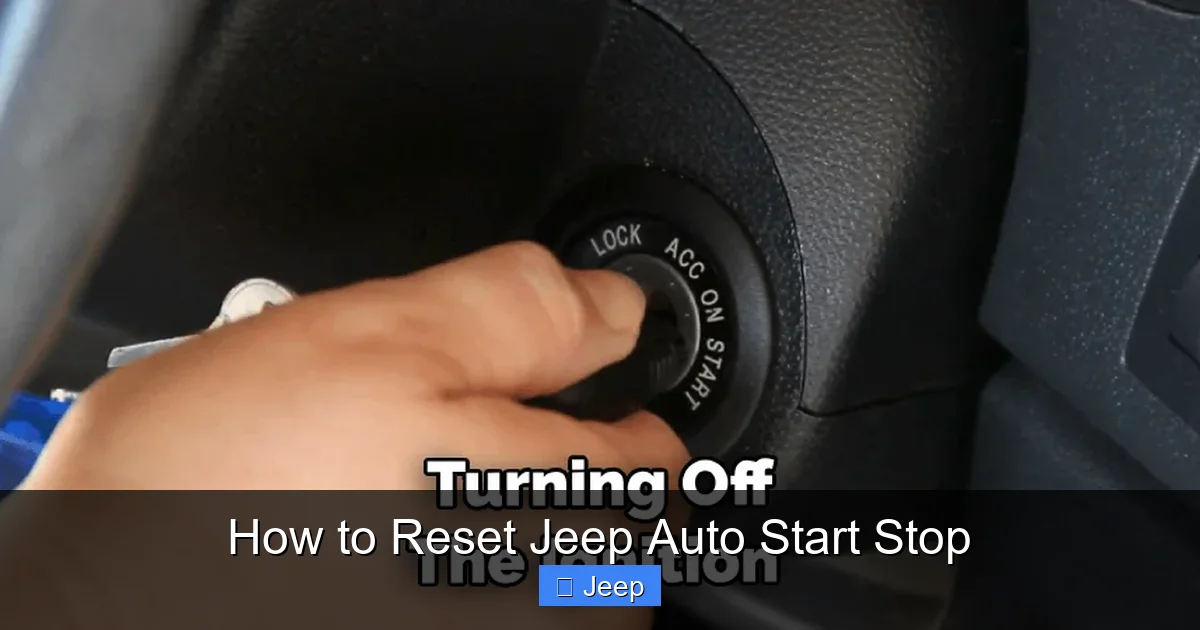
Universal Manual Reset Method (The Ignition Cycle)
This is the first and most effective method to try for any Jeep. It’s often called a “key cycle” or “reinitialization procedure.” Here’s how to do it:
- Step 1: Start your Jeep normally and let it idle for about 30 seconds to a minute. Ensure all accessories (radio, A/C) are off.
- Step 2: Turn the ignition completely OFF. Remove the key if you have a traditional key fob, or press the start/stop button until the engine is off and all dash lights go out for modern keyless models.
- Step 3: Wait for 60 seconds. This allows all control modules to fully power down and clear temporary memory.
- Step 4: Turn the ignition back to the ON position (the position where dash lights come on but engine is off). Again, wait about 10 seconds.
- Step 5: Start the engine normally. Do not press the accelerator.
- Step 6: Drive the vehicle. The reset is confirmed when the system engages during a stop. You must drive for at least 10-15 minutes, including several complete stops (at stop signs or lights) where you come to a full halt and then accelerate again. Avoid heavy acceleration during this relearn period.
After this driving cycle, the Auto Start Stop should be active. The warning light, if present, should go out. If the light remains on, proceed to the next method.
Model-Specific Procedures and Button Sequences
Some Jeep models, particularly newer ones with the Uconnect system, have a dedicated Auto Start Stop button (usually with an “A” icon and a line through it). This button manually disables the system for that drive cycle. Using it can sometimes interfere with the automatic reset process. For a proper reset, ensure this button is in its active position (not illuminated).
For Jeep Wrangler (JL) and Gladiator owners, there is a known procedure involving the vehicle’s menu:
- With the engine running, use the steering wheel controls to navigate to the Vehicle Settings menu on the instrument cluster.
- Find the Auto Start Stop option.
- Select Reset to Default or Relearn if available. Not all models have this digital option.
- Turn the engine off and perform the ignition cycle described above.
Jeep Grand Cherokee owners (2014-2023) might need to cycle the ignition three times in rapid succession (ON-OFF-ON-OFF-ON) without starting the engine, then start it normally and drive. Always consult your owner’s manual for model-specific nuances, as procedures can vary slightly between model years and trims.
Using Diagnostic Tools for Advanced Resets
If the manual ignition cycle and driving sequence don’t work, a fault code is likely stored that needs to be cleared with a scan tool. This is common if a sensor failed and triggered the warning. You’ll need an OBD2 scanner that can access the engine and transmission control modules beyond just reading generic codes. A basic code reader might clear a check engine light, but the Auto Start Stop system often requires a more advanced tool to clear its specific, proprietary codes.
Connect the scanner, read all stored codes from the ECM and TCM (Transmission Control Module), and note them. Clear the codes. Then perform the ignition cycle and driving sequence again. The system should now relearn without errors. If the codes return immediately, there is an active fault that needs repair before a reset will hold. For those comfortable with DIY diagnostics, this is the next logical step. However, if you’re not familiar with scan tools, this is where professional help is recommended.
Troubleshooting When the Reset Doesn’t Work
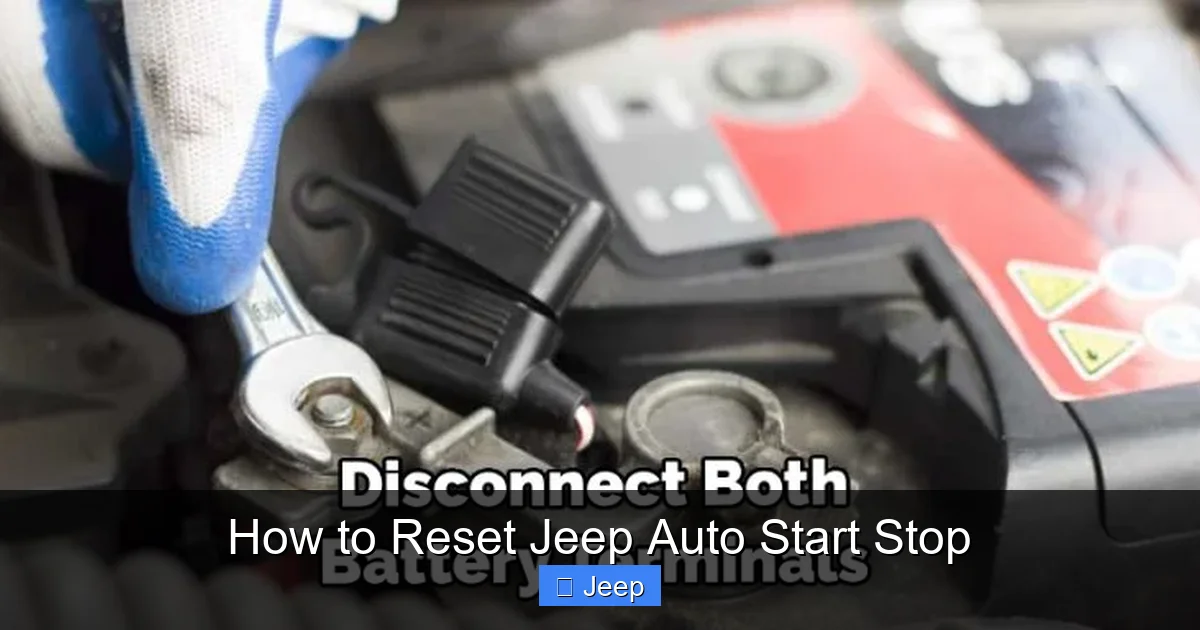
You’ve followed the ignition cycle and driven for 20 minutes, but the Auto Start Stop light is still on, or the system simply doesn’t engage. Don’t panic. This means either the reset didn’t complete, or there’s an underlying problem preventing it from functioning. Systematic troubleshooting will get you back on track.
Visual guide about How to Reset Jeep Auto Start Stop
Image source: jeepfixes.com
First, Check the Obvious
Before diving deep, verify a few simple things. Is the dedicated Auto Start Stop button turned off (illuminated)? If so, press it to turn the system back on. Is your battery charge good? A weak battery won’t allow the system to operate. Try measuring voltage with a multimeter—it should be above 12.6 volts with the engine off. Are all your other dashboard lights normal? A broader electrical issue could be affecting multiple systems.
Interpreting Stored Fault Codes
When you use a diagnostic scanner, you might see codes like P050E (Idle Speed Control System Performance), P053F (Intake Air Flow System Performance), or manufacturer-specific codes related to the start-stop system. These codes point to the area of failure. For example, a code related to the brake pedal switch means the system isn’t getting the signal that you’ve pressed the brake to stop, so it can’t shut off the engine. A code for the battery sensor means it’s reading incorrect voltage. Knowing the code narrows down the repair significantly.
Clear Codes vs. Full System Reset
There’s a difference between clearing a check engine light and performing a full system reset. Clearing codes turns off the warning light, but if the fault is still present, the light and system disablement will return quickly. A full reset, as described in the ignition cycle section, involves a specific power-down and relearn process that teaches the computer new baseline parameters. Always attempt the full reset procedure after clearing any codes. If the system disables itself again within a few drive cycles, the fault is persistent and needs a physical repair.
Preventive Tips to Avoid Frequent Resets
The best reset is the one you never need. By taking care of your Jeep’s electrical system, you can minimize the chances of the Auto Start Stop system acting up. A few simple habits go a long way.
Battery Health is Non-Negotiable
The battery is the heart of this system. Have your battery tested at least once a year, especially before winter. A battery that’s marginal for starting the engine is terrible for the start-stop system. Keep battery terminals clean and tight. If you have a battery maintainer for a vehicle that sits a lot, use it. A healthy, fully charged battery is the single most important factor for reliable Auto Start Stop operation.
Proper Jump-Starting Procedures
Never connect jumper cables directly to the battery terminals of a modern Jeep with sensitive electronics. Always connect the negative (ground) cable to an unpainted metal bolt or bracket away from the battery, as specified in your owner’s manual. A voltage spike from a bad connection can fry control modules. Use a modern, computer-safe jump starter if possible. After a jump-start, perform the ignition cycle reset immediately, as the system will almost certainly need it.
Regular System Checks During Service
When you take your Jeep in for an oil change or tire rotation, ask the technician to perform a quick scan of all vehicle systems, not just engine codes. Many independent shops and dealerships can do this for free or a small fee. Catching a weak battery sensor or a pending code early can save you from a frustrating system disablement later. It’s a small investment in peace of mind.
Professional Help vs. DIY: Making the Right Choice
While many Jeep owners can successfully reset the Auto Start Stop system themselves, there is a line where DIY ends and professional repair begins. Knowing that line saves you time, money, and potential damage.
Signs It’s Time to Call a Mechanic
Consult a professional if: the warning light returns immediately after a reset, you hear unusual grinding or clicking noises from the starter area when the engine attempts to restart, multiple dashboard warning lights are on simultaneously, or your diagnostic scan reveals sensor or component failures (like a faulty brake switch, starter motor, or battery sensor). These are not reset issues—they are parts replacement issues.
What to Expect at the Dealership or Shop
A technician will start with a full diagnostic scan, which typically costs $80-$150. This identifies any stored or pending codes. If a physical part is faulty, you’ll get a repair estimate. Common repairs include replacing the start-stop battery sensor, brake pedal switch, or in rare cases, the starter motor itself. If the issue is purely software-related, they may perform a module reflash or reset using their high-end factory scan tool, which is more thorough than a consumer-grade OBD2 reader.
Warranty and Long-Term Considerations
If your Jeep is still under the original powertrain or bumper-to-bumper warranty, always go to the dealership for diagnosis and repair. Having an unauthorized shop perform work could void warranty coverage on related components. For out-of-warranty vehicles, a reputable independent Jeep specialist is often more cost-effective than a dealer. Remember, permanently disabling the system (which some owners of other brands explore, like with certain Audi models) is not recommended or easily done on Jeeps through standard means, as it’s integrated into the emissions system. A proper reset or repair is the correct long-term solution.
Conclusion: Getting Back to Smooth Stops and Starts
Your Jeep’s Auto Start Stop system is a valuable piece of efficiency technology that should work reliably for years. Most issues boil down to a need for a simple reset, usually following a battery event. By mastering the universal ignition cycle method, you can solve the problem in under 30 minutes. Always start there, then move to code scanning if the light persists. Keep your battery in top shape, jump-start correctly, and don’t ignore persistent warning lights. With this knowledge, you’re equipped to handle the vast majority of Auto Start Stop hiccups yourself, saving you time and keeping your Jeep running as intended. For more specific scenarios, like the exact steps for a Chrysler Pacifica (which shares much of the same Stellantis technology), our library has detailed guides. Drive confidently, knowing you can troubleshoot this common modern automotive feature.
Frequently Asked Questions
How do I reset Auto Start Stop after jump-starting my Jeep?
After any jump-start, perform the universal ignition cycle: turn the engine off, wait 60 seconds, turn it back on, and then drive for 10-15 minutes with several complete stops. This allows the system to relearn battery parameters and should restore function.
Why does the start-stop warning light stay on even after I reset the system?
A persistent light means either the reset didn’t complete or a new fault occurred. First, ensure you completed a full driving cycle with several stops. If it remains on, use an OBD2 scanner to check for stored codes. A lingering code indicates a faulty component like a sensor or the battery itself that needs replacement.
Can I permanently disable the Auto Start Stop system on my Jeep?
Unlike some brands that offer a permanent disable via software, Jeeps do not have a simple, manufacturer-approved way to permanently turn off the system without voiding emissions-related warranties. The system is designed to be functional. A proper reset or repair is the recommended solution rather than attempting a disable.
How long does the entire reset and relearn process take?
The manual reset steps take about 2 minutes. The critical part is the subsequent driving cycle, which requires 10-20 minutes of real-world driving with multiple complete stops (at traffic lights or stop signs). Plan for at least a 15-minute drive after performing the ignition reset.
Will resetting the Auto Start Stop system affect my Jeep’s warranty?
No. Performing a standard reset procedure as outlined in your owner’s manual is a normal user action and will not affect your warranty. However, if the system requires repeated resets due to a faulty part, having it diagnosed and repaired by a certified Jeep dealer ensures warranty coverage for that repair.
Do all Jeep models (Wrangler, Grand Cherokee, Compass) use the same reset procedure?
The core ignition cycle method is universal across nearly all Jeep models. However, some newer models with advanced digital dash clusters may have a menu option to reset the system. The fundamental process of powering down, waiting, and completing a drive cycle remains the same for every Jeep on the road today.