
How to Remove Mildew From a Car Cover: A Safe Step-by-Step Guide
Quick Answer
To remove mildew from a car cover, take it off the vehicle, check the manufacturer’s cleaning instructions, and gently wash the affected areas with an approved mild cleaner. Rinse thoroughly and air-dry the entire cover before reinstalling or storing it. Never assume bleach, vinegar, or a washing machine is safe for every cover material.
Quick mildew-removal steps
- Check the label: Confirm the approved cleaner, water temperature, and washing method.
- Work outdoors: Choose a well-ventilated area and avoid breathing dust from heavily contaminated fabric.
- Remove loose dirt: Gently shake, brush, or rinse away surface debris.
- Clean gently: Use an approved solution and a soft sponge or brush.
- Rinse completely: Remove cleaner residue from both sides, seams, and hems.
- Dry everything: Allow the cover to dry fully before folding or putting it back on your car.
What to avoid
- Do not use bleach, strong solvents, or household mold removers unless the manufacturer specifically approves them.
- Avoid pressure washers, aggressive scrubbing, and unapproved dryer heat.
- Correct the moisture problem so mildew does not return.
Finding mildew on a car cover can be frustrating, especially when you bought the cover to protect your vehicle. The good news is that light surface growth may be manageable with careful cleaning and proper drying.
As a car enthusiast who prefers practical maintenance over unnecessary replacement, I would start with the gentlest method that suits the material. This guide explains how to clean mildew, choose a suitable cleaner, protect your vehicle’s paint, and prevent the same problem from returning.
In This Guide
Why Does Mildew Grow on a Car Cover?
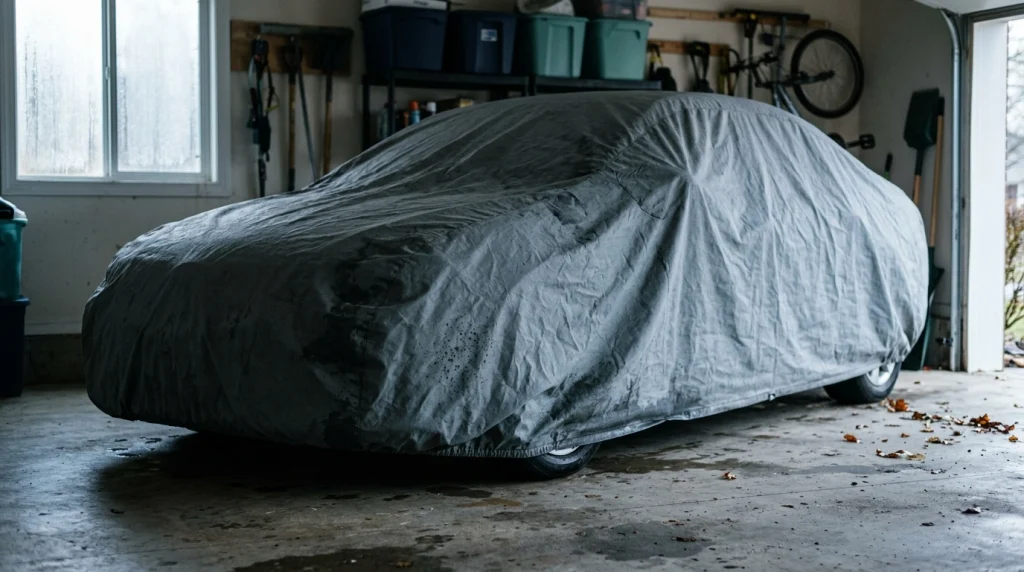
Mildew is a common term for surface fungal growth that can cause discolored spots and a musty smell. It develops when moisture remains on or within a suitable material long enough for fungal growth to establish itself.
A car cover does not need to be soaking wet for this to happen. Humid air, condensation, damp storage, and poor airflow can keep fabric moist longer than expected.
What causes mildew on a vehicle cover?
- Storing it damp: Folding a wet cover traps moisture between layers and inside creases.
- Covering a wet vehicle: Water can remain around mirrors, door handles, trim, and panel gaps.
- High humidity: Moist air can slow evaporation in garages and outdoor storage areas.
- Rain and condensation: Water can collect beneath a cover, depending on the weather, fit, and ventilation.
- Accumulated dirt: Pollen, leaves, dust, and other organic debris can remain on a cover and make cleaning more difficult.
The U.S. Environmental Protection Agency emphasizes moisture control as an important part of preventing mold. Its mold and moisture guidance provides useful background, although a car cover still requires cleaning instructions specific to its fabric.
Can mildew damage a car cover or vehicle paint?
Light surface growth may respond to gentle cleaning, but deep contamination can leave lasting stains or become difficult to remove from porous material. Repeated moisture exposure can also contribute to deterioration in susceptible fabrics and coatings.
There is another concern: dirt trapped against the cover’s inner lining can rub against automotive paint as you install or remove it. Clean both sides carefully, especially the surface that touches your vehicle.
How Do You Remove Mildew From a Car Cover?
The safest approach is to remove loose debris, apply a manufacturer-approved cleaner, gently wash the affected areas, rinse away residue, and dry the cover completely. The exact method depends on whether the cover uses ordinary fabric, a water-resistant coating, or a layered construction.
Step 1: Remove the cover and prepare a cleaning area
Take the cover off the vehicle and move it to a well-ventilated outdoor area when practical. Use a clean driveway, patio, or another suitable surface that will not transfer additional dirt to the fabric.
If the cover has extensive visible growth, avoid vigorous shaking near your face. Wear gloves, and consider a suitable particulate mask if handling it could release substantial dust or spores.
Step 2: Check the manufacturer’s care instructions
Find the sewn-in label, original packaging, or manufacturer’s website. Confirm which cleaning products, water temperatures, washing methods, and drying techniques the specific material allows.
Do not assume instructions for one brand apply to another. For example, Covercraft’s vehicle-cover resources distinguish between different fabrics and their care requirements.
Step 3: Remove loose dirt and debris
Gently shake off leaves and loose dust, or use a soft brush if the material permits it. A low-pressure garden-hose rinse can help remove surface dirt when the care instructions allow wet cleaning.
- Keep the inner lining away from gritty pavement.
- Do not scrape the fabric with a hard tool.
- Avoid stiff wire brushes and abrasive pads.
- Do not use a pressure washer unless the manufacturer explicitly approves it.
Step 4: Test the cleaner on a hidden area
Choose a small, inconspicuous section and apply the approved cleaning solution as directed. Check for color changes, unusual stiffness, coating damage, or other signs of incompatibility before cleaning the remaining fabric.
This small test is particularly important for expensive custom-fit covers, elastic hems, soft inner linings, and waterproof or multilayer materials.
Step 5: Gently clean the mildew spots
Apply the approved cleaner to the affected area and work it gently with a soft sponge, microfiber cloth, or soft-bristle brush. Use only enough pressure to clean the surface without damaging the fibers or protective treatment.
- Work in small sections rather than tackling the entire cover at once.
- Apply the cleaner according to its label and the cover manufacturer’s instructions.
- Gently agitate the visible spots without grinding contamination deeper into the fabric.
- Inspect the surrounding area and nearby folds for additional growth.
- Repeat the approved treatment only if necessary and permitted.
Pay particular attention to seams, elastic edges, mirror pockets, and the inner lining. These areas can retain moisture and may need extra attention during cleaning and drying.
Step 6: Rinse away all cleaner residue
Rinse the treated fabric thoroughly with clean water if the cover’s instructions permit rinsing. Remove remaining detergent and loosened contamination from the seams, hems, and both sides of the material.
Follow the specified rinse procedure instead of assuming one quick rinse is sufficient. Leftover residue can attract dirt or interfere with the intended properties of some fabrics.
Step 7: Air-dry the entire cover
Spread the cover out or hang it in a way that allows air to reach both sides. Reposition it as needed, paying attention to thicker seams, elastic hems, and folded sections.
- Allow every section to dry completely.
- Keep the cover away from unnecessary heat.
- Follow the manufacturer’s instructions about direct sunlight.
- Do not fold, bag, or reinstall the cover while it remains damp.
A large cover may take considerable time to dry in humid weather. Check the hidden folds and inner lining instead of relying on the appearance of the outer surface.
Section takeaway: Successful mildew removal requires gentle cleaning, thorough rinsing, and complete drying. Skipping the final step can allow the same problem to return.
Which Cleaning Products Are Safe for Removing Mildew?
The safest product is one approved for your specific car-cover material. Mild soap or detergent may be suitable for some covers, but coated and laminated fabrics can have different chemical restrictions.
| Cleaning option | General recommendation | Important caution |
|---|---|---|
| Approved mild detergent | Preferred when specified by the manufacturer | Use the recommended amount and rinse properly. |
| Mild soap and water | May suit light surface contamination | Confirm compatibility with the fabric and coating. |
| White vinegar | Do not use automatically | Acidity may affect certain dyes, materials, or coatings. |
| Chlorine bleach | Avoid unless expressly approved | May discolor or damage fibers and protective treatments. |
| Fabric softener | Generally unnecessary | Some cover manufacturers specifically prohibit it. |
| Strong solvents or degreasers | Avoid as a first-line treatment | May affect bonding, color, elastic, or water resistance. |
Can you use vinegar to remove mildew from a car cover?
Vinegar is a popular household cleaning suggestion, but it is not automatically safe for automotive cover fabrics. Its compatibility depends on the fabric, dye, protective coating, and manufacturer’s restrictions.
Use it only when the cover manufacturer confirms that the treatment is suitable. Otherwise, choose an approved alternative rather than risking damage to the material.
Should you use bleach on black mildew spots?
Do not use bleach simply because the stains look stubborn or dark. Many car covers have specialized coatings or layered construction that may be damaged by unsuitable chemicals.
If discoloration remains after appropriate cleaning, the staining may be permanent. A stronger chemical is not necessarily a safer or more effective solution.
Can You Machine-Wash a Mildewed Car Cover?
Some car covers can be machine-washed, while others require hand cleaning or a specific commercial machine. The care label determines the appropriate method, not the fact that the cover fits inside your washer.
| Washing method | When to consider it | Main limitation |
|---|---|---|
| Gentle hand washing | When the material permits manual cleaning | Avoid excessive soaking and aggressive scrubbing. |
| Household washing machine | When both the label and machine capacity allow it | Agitation and insufficient space may damage the cover. |
| Commercial front-loader | When the manufacturer specifies a larger machine | Still requires the correct settings and cleaner. |
| Air drying | When required or recommended by the manufacturer | Allow sufficient time for seams and folds to dry. |
Why should you avoid an unsuitable washing machine?
A large, saturated cover can twist around an agitator or become compressed in a small drum. This may stress the seams, elastic edges, and bonded layers.
Never assume a gentle cycle makes every cover machine-safe. Follow the material-specific instructions, including the required water temperature and machine type.
Can you put the cover in a tumble dryer?
Only if the manufacturer explicitly permits machine drying for that material. Heat may shrink certain fabrics or damage coatings, laminates, and elastic components.
When the instructions call for air drying, do not substitute a dryer for convenience. Thorough air drying is preferable to risking permanent damage through an unapproved drying method.
What If the Mildew Stains or Smell Won’t Come Out?
A lingering stain does not always mean the cleaning process failed. Mildew can leave discoloration in porous fibers even after the visible surface contamination has been removed.
However, a persistent musty odor or returning spots deserve another inspection before the cover touches your vehicle again.
What should you check when the smell remains?
- Hidden moisture: Recheck thick seams, elastic hems, folds, and mirror pockets.
- Inner lining: Inspect the surface that contacts your vehicle’s paint.
- Storage bag: Clean and dry it if its material permits, or replace it if contamination persists.
- Storage area: Look for damp floors, leaks, and poor ventilation.
- Remaining contamination: Repeat the approved cleaning process if the cover manufacturer recommends it.
When should you replace the car cover?
Replacement may be the better choice when contamination remains widespread after suitable cleaning or the cover has deteriorated. This is particularly important when the inner lining has become rough or damaged.
Look for these warning signs:
- Persistent mildew or odor that returns after proper cleaning and drying.
- Peeling, separating, or crumbling protective layers.
- Torn fabric, weakened stitching, or failing elastic.
- A damaged inner surface that could transfer debris onto the paint.
- Loss of the water resistance or other protective performance the cover is designed to provide.
Do not discard a cover solely because a faint stain remains. Assess the fabric’s condition, cleanliness, odor, and protective performance together.
How Can You Prevent Mildew From Returning?
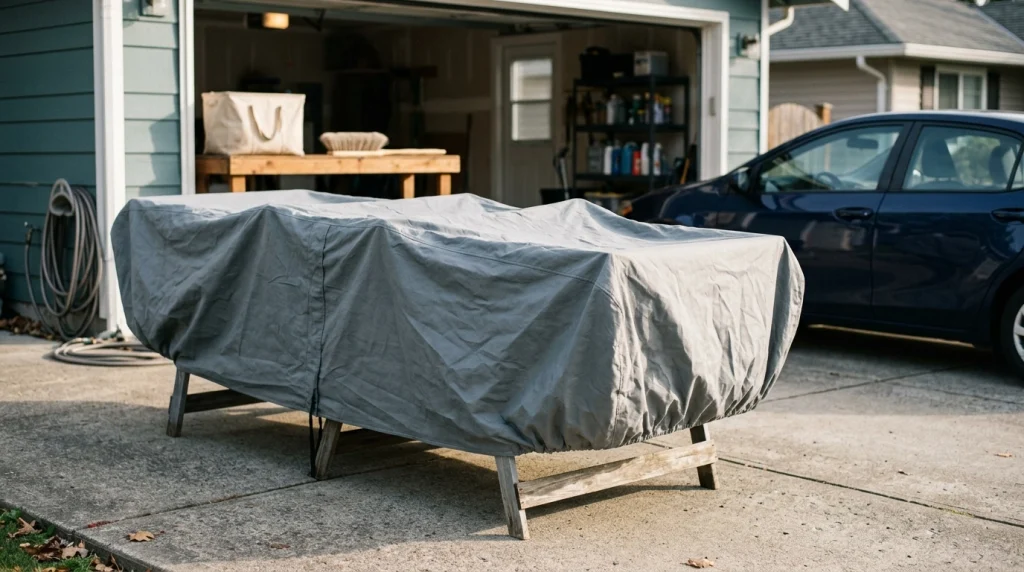
The most effective prevention strategy is to keep moisture from remaining trapped in the cover. Regular cleaning helps, but drying and storage habits are equally important.
Follow these car-cover maintenance habits
- Dry the vehicle first: Check around mirrors, door handles, trim, and other areas that retain water.
- Allow the cover to dry: After rain or cleaning, give it enough time to dry according to its care instructions.
- Store it properly: Fold or roll the cover only when fully dry.
- Improve ventilation: Reduce dampness in garages and storage areas where practical.
- Remove dirt regularly: Clear away pollen, leaves, dust, and other debris before it builds up.
- Use suitable storage: Follow the manufacturer’s recommendations for the storage bag or container.
- Inspect periodically: Check the inner lining, seams, and folds for moisture, odor, and early signs of growth.
Does a waterproof car cover prevent mildew?
No. Water resistance does not guarantee that moisture can never collect beneath or inside a cover. Condensation, a wet vehicle, humid air, and damp storage can still create conditions that encourage fungal growth.
Choose a cover designed for your parking environment, and follow its care instructions. An indoor dust cover and an outdoor weather cover may have different cleaning and ventilation requirements.
Section takeaway: Keep the vehicle and cover dry, remove accumulated dirt, and avoid sealing damp fabric in storage. These habits reduce the conditions that allow mildew to return.
Frequently Asked Questions
Can I remove mildew from a car cover without washing the entire cover?
Yes, spot cleaning may be suitable for small affected areas if the manufacturer permits it. Use an approved cleaner, work gently, rinse the treated area as directed, and dry it completely. If mildew is widespread or the odor remains, broader cleaning may be necessary.
Will sunlight kill mildew on a car cover?
Drying can help remove the moisture that supports fungal growth, but sunlight alone is not a reliable substitute for cleaning. Prolonged direct sunlight can also affect some materials, so follow the manufacturer’s drying recommendations.
Can I put a mildewed car cover back on my vehicle?
Clean and completely dry the cover first whenever practical. Remaining contamination, grit, or dampness can transfer to the vehicle or create additional moisture problems, particularly where the inner lining touches the paint.
Can I use a pressure washer to clean a car cover?
Avoid pressure washing unless the manufacturer specifically approves it. High-pressure water may damage delicate fabric, seams, coatings, or bonded layers. A permitted low-pressure hose rinse and gentle cleaning method provide more control.
Why does mildew keep returning to my car cover?
Recurring mildew usually means moisture remains trapped somewhere or the cover is being stored before it dries fully. Inspect the lining, seams, storage bag, vehicle, and parking area, then correct the moisture source before repeating the approved cleaning process.
Should I replace a car cover with black mildew spots?
Not necessarily. Some stains remain after appropriate cleaning, even when the surface is clean. Consider replacement when contamination persists, the smell repeatedly returns, or the fabric, lining, seams, or protective coating has deteriorated.
How should I store a car cover after cleaning?
Wait until every section is completely dry, including the folds and seams. Then store it using the manufacturer’s recommended bag or container in a clean, dry location with suitable ventilation.
Final takeaway: Removing mildew from a car cover starts with the right cleaning method, not the strongest chemical. Check the care instructions, clean gently, rinse thoroughly, and dry the cover completely before using or storing it again.
If the mildew keeps returning, investigate the moisture source rather than repeatedly treating the stains. Protecting both the cover’s material and your vehicle’s finish is the goal.