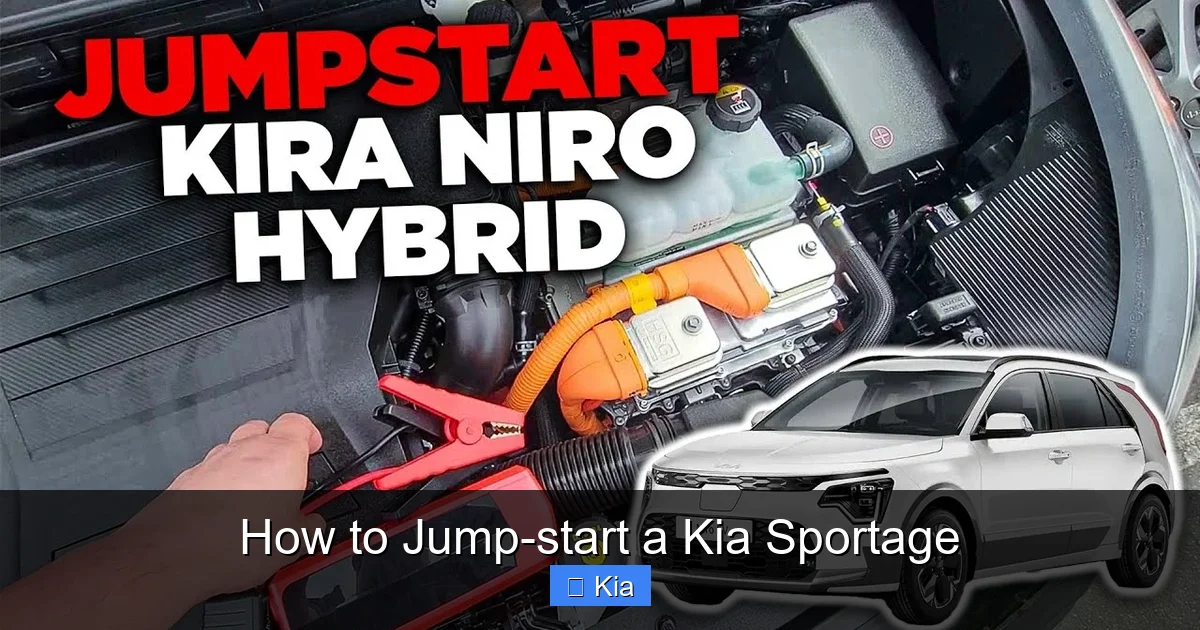
How to Jump-start a Kia Sportage

Contents
- 1 Key Takeaways
- 2 📑 Table of Contents
- 3 How to Jump-Start a Kia Sportage: A Complete Guide
- 4 Understanding Why Your Kia Sportage Battery Dies
- 5 Tools and Equipment You’ll Need
- 6 Step-by-Step Guide to Jump-Starting Your Kia Sportage
- 7 Safety Precautions and Common Mistakes to Avoid
- 8 Alternative: Using a Portable Jump Starter
- 9 When to Replace Your Kia Sportage Battery
- 10 Conclusion
- 11 Frequently Asked Questions

Car Neck Pillow

Radiator Coolant
Reflective Safety Triangle

Brake Cleaner Spray
Jump-starting a Kia Sportage is a straightforward process when done correctly, but it requires attention to safety and proper technique. Whether you’re dealing with a dead battery on a cold morning or after leaving lights on, knowing the right steps can get you back on the road quickly and safely.
Key Takeaways
- Safety first: Always wear safety glasses and avoid smoking or open flames near the battery to prevent explosions from flammable gases.
- Use quality jumper cables: Thick, insulated cables with strong clamps ensure efficient power transfer and reduce the risk of sparks or short circuits.
- Follow the correct connection order: Connect red to positive (+) first, then black to negative (-) on the dead battery, and finally attach the last black clamp to an unpainted metal surface on the dead car—not the battery terminal.
- Let the donor vehicle run: Allow the working car’s engine to run for a few minutes before attempting to start the Kia Sportage to build up charge.
- Don’t force a start: If the engine doesn’t turn over after 3–5 attempts, wait 10–15 minutes to avoid overheating the starter or damaging the electrical system.
- Disconnect in reverse order: Remove cables in the opposite sequence you connected them to minimize sparking and protect both vehicles’ electronics.
- Drive afterward: Once started, drive the Kia Sportage for at least 20–30 minutes to allow the alternator to recharge the battery fully.
📑 Table of Contents
- How to Jump-Start a Kia Sportage: A Complete Guide
- Understanding Why Your Kia Sportage Battery Dies
- Tools and Equipment You’ll Need
- Step-by-Step Guide to Jump-Starting Your Kia Sportage
- Safety Precautions and Common Mistakes to Avoid
- Alternative: Using a Portable Jump Starter
- When to Replace Your Kia Sportage Battery
- Conclusion
How to Jump-Start a Kia Sportage: A Complete Guide
There’s nothing quite as frustrating as turning the key in your Kia Sportage and hearing nothing but a faint click—or worse, complete silence. A dead battery can strike at the worst possible moment: during a morning commute, while running errands, or even when you’re parked in a remote area. But don’t panic. Jump-starting your Kia Sportage is a common fix that most drivers can handle with a few basic tools and a little know-how.
The good news? The Kia Sportage, like most modern vehicles, is designed with accessible battery terminals and clear labeling, making the jump-start process relatively simple. Whether you’re driving a 2010 model or a brand-new 2024 Sportage, the fundamentals remain the same. However, it’s crucial to follow the correct procedure to avoid damaging your vehicle’s electrical system, risking injury, or causing a fire. This guide walks you through every step—from preparation to cleanup—so you can confidently revive your Sportage and get back on the road.
Understanding Why Your Kia Sportage Battery Dies
Before diving into the jump-start process, it helps to understand why your Kia Sportage’s battery might have died in the first place. Car batteries don’t last forever—most last between three to five years, depending on climate, driving habits, and maintenance. But even a relatively new battery can fail under certain conditions.
One of the most common causes is leaving lights on—especially interior or trunk lights—overnight. Modern Kia Sportages come with automatic shut-off features, but they’re not foolproof. Another frequent culprit is extreme weather. Cold temperatures slow down the chemical reactions inside the battery, reducing its ability to hold a charge. In fact, a battery that works fine in summer might struggle to start your car in winter.
Electrical drains from aftermarket accessories—like dash cams, phone chargers, or upgraded stereos—can also slowly deplete the battery when the engine is off. Even something as simple as a faulty door switch that keeps the interior light on can drain the battery over time. Additionally, if your Sportage sits unused for days or weeks, the battery can lose charge due to normal parasitic drain from the vehicle’s computer systems.
It’s also worth noting that the alternator—the component that recharges the battery while driving—might be failing. If your battery keeps dying even after a jump-start, it could signal a deeper issue with the charging system. In such cases, a visit to a Kia service center or trusted mechanic is recommended.
Tools and Equipment You’ll Need
Jump-starting a Kia Sportage doesn’t require a mechanic’s toolkit, but having the right equipment makes the process safer and more effective. Here’s what you should have on hand:
Jumper Cables
The most essential tool is a set of high-quality jumper cables. Look for cables that are at least 10–12 feet long with thick, 4- to 6-gauge wires. Thicker cables carry more current, which is crucial for delivering enough power to start a dead battery. Insulated clamps with strong springs ensure a secure connection and reduce the risk of slipping or sparking.

Visual guide about How to Jump-start a Kia Sportage
Image source: i.ytimg.com

Visual guide about How to Jump-start a Kia Sportage
Image source: wonderfulengineering.com
A Working Vehicle
You’ll need another vehicle with a functioning battery—preferably a gasoline-powered car or truck. While some hybrid or electric vehicles can be used, it’s best to check the owner’s manual first. Diesel engines can also be used, but their higher compression may require more cranking power.
Safety Gear
Always wear safety glasses to protect your eyes from sparks or battery acid. Gloves are optional but recommended, especially if you’re unsure about the condition of the battery terminals. Avoid wearing loose clothing or jewelry that could come into contact with electrical components.
Owner’s Manual
Your Kia Sportage owner’s manual contains specific instructions and warnings related to jump-starting. It’s a good idea to keep it in the glove compartment for quick reference. The manual will also show you the exact location of the battery and any auxiliary jump-start points, which can vary slightly between model years.
Flashlight (Optional but Helpful)
If you’re jump-starting at night or in low-light conditions, a flashlight can help you see the battery terminals clearly. Some newer Sportages have under-hood lights, but it’s always better to be prepared.
Step-by-Step Guide to Jump-Starting Your Kia Sportage
Now that you’re prepared, let’s walk through the jump-start process step by step. Follow these instructions carefully to ensure a safe and successful start.
Step 1: Position the Vehicles
Park the working vehicle close to your Kia Sportage—close enough for the jumper cables to reach, but not so close that the bumpers touch. Make sure both vehicles are in Park (or Neutral for manual transmissions) and that the engines are off. Engage the parking brakes on both cars to prevent rolling.
Visual guide about How to Jump-start a Kia Sportage
Image source: i.ytimg.com
Step 2: Locate the Battery and Jump Points
Open the hood of your Kia Sportage and locate the battery. In most Sportage models, the battery is on the driver’s side of the engine bay. You’ll see two terminals: one marked with a red cover or “+” symbol (positive), and one marked with a black cover or “–” symbol (negative).
Some newer Kia Sportages—especially those with start-stop technology—may have a dedicated jump-start terminal instead of direct access to the battery. This is often located near the fuse box or under a cover labeled “Jump Start.” If your Sportage has this feature, use the designated positive terminal and a solid metal grounding point (like a bolt on the engine block) for the negative connection. Refer to your owner’s manual if you’re unsure.
Step 3: Connect the Jumper Cables
Follow this exact order to minimize the risk of sparks or short circuits:
- Red clamp to positive (+) terminal: Attach one red clamp to the positive terminal of the dead battery (or the jump-start terminal if applicable).
- Red clamp to donor battery: Attach the other red clamp to the positive terminal of the working vehicle’s battery.
- Black clamp to negative (–) terminal: Attach one black clamp to the negative terminal of the working vehicle’s battery.
- Black clamp to grounding point: Attach the final black clamp to an unpainted metal surface on the dead vehicle—such as a bolt or bracket on the engine block. Do not attach it to the negative terminal of the dead battery, as this can cause sparks near flammable gases.
Double-check all connections to ensure they’re secure and not touching any moving parts like fans or belts.
Step 4: Start the Donor Vehicle
Start the engine of the working vehicle and let it run for 3–5 minutes. This allows the alternator to send charge through the cables and begin recharging the dead battery. You may notice the headlights or dashboard lights on your Kia Sportage flicker slightly—this is normal.
Step 5: Attempt to Start the Kia Sportage
After a few minutes, try starting your Kia Sportage. Turn the key to the “Start” position and hold it for no more than 5–7 seconds. If the engine doesn’t turn over, wait 10–15 seconds before trying again. Avoid cranking for too long, as this can overheat the starter motor.
If the engine still won’t start after 3–5 attempts, wait 10–15 minutes and try again. Sometimes the battery needs more time to accept a charge. If it still fails, there may be a deeper issue—such as a faulty starter, bad alternator, or severely damaged battery—that requires professional attention.
Step 6: Disconnect the Cables
Once your Kia Sportage is running, disconnect the jumper cables in the reverse order:
- Remove the black clamp from the grounding point on the Kia Sportage.
- Remove the black clamp from the negative terminal of the donor vehicle.
- Remove the red clamp from the positive terminal of the donor vehicle.
- Remove the red clamp from the positive terminal (or jump-start point) on the Kia Sportage.
Be careful not to let the clamps touch each other or any metal surfaces while disconnecting.
Step 7: Keep the Engine Running
Leave your Kia Sportage running for at least 20–30 minutes to allow the alternator to recharge the battery. Avoid turning off the engine immediately, as the battery may not have enough charge to restart. If possible, drive the vehicle during this time—driving helps the alternator work more efficiently than idling.
Safety Precautions and Common Mistakes to Avoid
Jump-starting a car seems simple, but it’s easy to make mistakes that can lead to injury or vehicle damage. Here are some critical safety tips and common pitfalls to avoid:
Avoid Sparks Near the Battery
Car batteries emit hydrogen gas, which is highly flammable. A single spark can cause an explosion. That’s why you should never connect the final black clamp directly to the negative terminal of the dead battery. Instead, use a grounding point on the engine block. Also, avoid smoking, using lighters, or creating open flames near the battery.
Don’t Reverse the Cable Connections
Connecting red to negative or black to positive can cause a short circuit, damage electronics, or even destroy the battery. Always double-check the polarity before attaching the clamps. If you’re unsure, look for the “+” and “–” symbols on the battery or consult your owner’s manual.
Use the Right Grounding Point
Attaching the final black clamp to the negative terminal of the dead battery increases the risk of sparking. Instead, choose a clean, unpainted metal surface on the engine or chassis. Avoid plastic covers, rubber mounts, or painted surfaces, as they won’t conduct electricity well.
Don’t Jump-Start a Frozen or Leaking Battery
If the battery is cracked, leaking, or frozen (common in winter), do not attempt to jump-start it. A frozen battery can explode when charged. Instead, have it inspected and replaced by a professional.
Be Cautious with Modern Electronics
Modern Kia Sportages are packed with sensitive electronics. Improper jump-starting can cause voltage spikes that damage the ECU, infotainment system, or sensors. If you’re unsure, consider using a portable jump starter instead of another vehicle.
Alternative: Using a Portable Jump Starter
If you don’t have access to another vehicle, a portable jump starter is a convenient and safe alternative. These battery-powered devices are compact, rechargeable, and designed specifically for jump-starting cars.
How It Works
A portable jump starter has built-in cables and clamps. Simply connect the red clamp to the positive terminal and the black clamp to a grounding point, then press the power button. Most models have safety features like reverse polarity protection and spark-proof technology.
Advantages
Portable jump starters are ideal for emergencies, especially when you’re alone or in remote areas. They’re also safer than using another vehicle because there’s no risk of damaging the donor car’s electrical system. Many models also include USB ports for charging phones, flashlights, and other devices.
Tips for Use
Keep your portable jump starter charged and stored in a dry, temperature-controlled place—like your glove compartment or trunk. Check the charge level regularly, especially before long trips. While most can jump-start a Kia Sportage multiple times on a single charge, cold weather reduces their effectiveness.
When to Replace Your Kia Sportage Battery
Even with a successful jump-start, a dead battery is often a sign that it’s nearing the end of its life. Here are some signs it’s time for a replacement:
- The engine cranks slowly, even after a jump.
- The battery is more than 4–5 years old.
- You notice corrosion (white or blue powder) on the terminals.
- The check engine or battery warning light is on.
- The vehicle has trouble starting in cold weather.
Kia recommends having your battery tested annually after it reaches three years of age. Many auto parts stores offer free battery testing. If the test shows low voltage or poor cranking power, it’s time for a new one.
When replacing the battery, choose a high-quality unit that matches your Sportage’s specifications. Look for a battery with a good warranty and sufficient cold cranking amps (CCA) for your climate. Installation is usually straightforward, but some models require a battery reset procedure to ensure the vehicle’s computer recognizes the new battery.
Conclusion
Jump-starting a Kia Sportage is a valuable skill that every driver should know. With the right tools, careful preparation, and attention to safety, you can revive a dead battery and get back on the road in minutes. Remember to follow the correct connection order, use a proper grounding point, and allow time for the battery to recharge after starting.
While jump-starting is a quick fix, it’s not a long-term solution. If your battery dies frequently, it’s a sign that it may need replacement or that there’s an underlying issue with your vehicle’s charging system. Regular maintenance, avoiding electrical drains, and keeping your battery terminals clean can help prevent future problems.
Whether you’re using jumper cables and a friend’s car or relying on a portable jump starter, being prepared makes all the difference. Keep this guide handy, and you’ll never be stranded by a dead battery again.
Frequently Asked Questions
Can I jump-start a Kia Sportage with a hybrid or electric vehicle?
Yes, but check your owner’s manual first. Some hybrid and electric vehicles can be used to jump-start a Kia Sportage, but others may have restrictions due to their high-voltage systems. When in doubt, use a gasoline-powered vehicle or a portable jump starter.
What if my Kia Sportage has a start-stop battery?
Start-stop systems often use enhanced flooded batteries (EFB) or absorbed glass mat (AGM) batteries. These require careful handling. Use the designated jump-start terminal if available, and avoid connecting directly to the battery unless instructed. Consult your manual for model-specific guidance.
How long should I drive after jump-starting?
Drive for at least 20–30 minutes to allow the alternator to recharge the battery. Idling alone may not provide enough charge, especially in cold weather. If the battery dies again shortly after, have it tested.
Can jump-starting damage my Kia Sportage’s electronics?
Improper jump-starting can cause voltage spikes that damage sensitive electronics. Always follow the correct procedure, use quality cables, and avoid reversing polarity. If you’re concerned, use a portable jump starter with built-in protection.
Is it safe to jump-start in the rain?
Yes, but take extra precautions. Keep the battery terminals dry, avoid touching metal parts with wet hands, and ensure the cables don’t lie in puddles. Water increases the risk of short circuits.
What should I do if the jump-start doesn’t work?
If the engine doesn’t start after several attempts, wait 10–15 minutes and try again. If it still fails, the issue may be a faulty starter, bad alternator, or severely damaged battery. Call a roadside assistance service or have the vehicle towed to a repair shop.