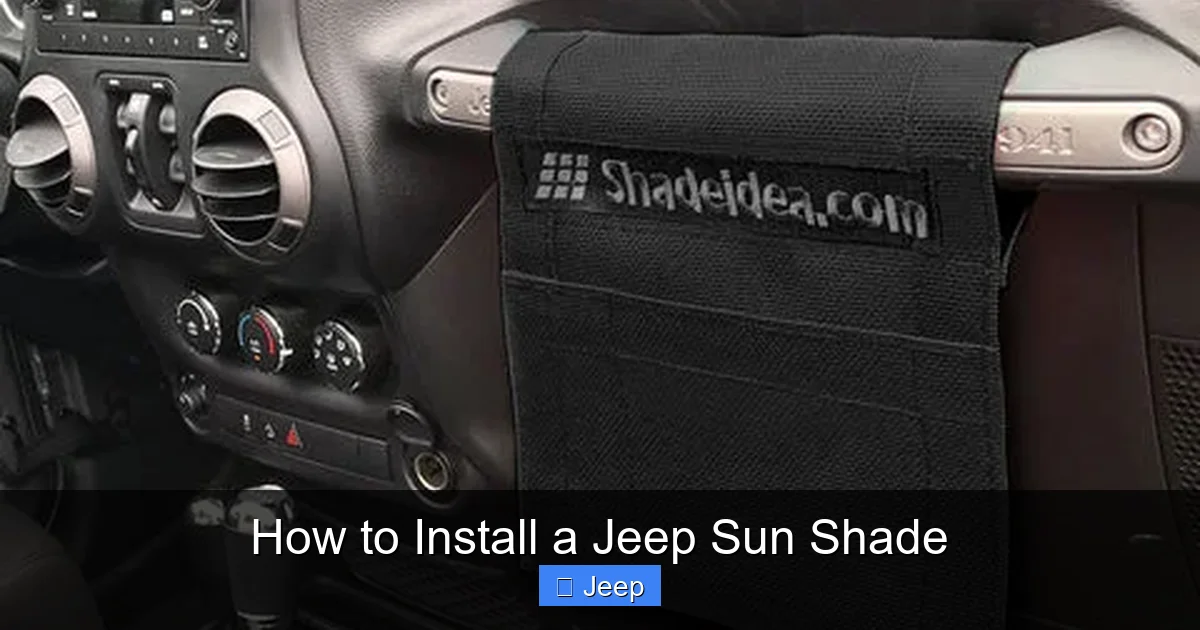
How to Install a Jeep Sun Shade

Contents
- 1 Key Takeaways
- 2 📑 Table of Contents
- 3 Why a Sun Shade is a Non-Negotiable for Your Jeep
- 4 Choosing the Right Sun Shade for Your Jeep
- 5 Essential Tools and Preparation for a Flawless Install
- 6 Step-by-Step Installation: The Universal Method
- 7 Model-Specific Tips for Popular Jeeps
- 8 Maintenance, Storage, and Troubleshooting
- 9 The Bigger Picture: Protecting Your Investment
- 10 Frequently Asked Questions
Car Wash Mitt
Foam Cannon

Battery Terminal Cleaner
Tire Shine Spray
Installing a Jeep sun shade is one of the simplest, most effective upgrades you can make. This comprehensive guide walks you through every step, from selecting the right type of shade for your specific Jeep Wrangler, Gladiator, or Grand Cherokee to mastering the installation for a perfect, secure fit. We cover fold-out, accordion, and custom-fit shades, ensuring you block harmful UV rays, protect your interior from cracking, and enjoy a cooler cabin every time you get in. It’s a quick DIY project that yields immediate comfort and long-term preservation for your vehicle.
There’s nothing quite like jumping into your Jeep on a hot summer day, only to be greeted by a steering wheel that feels like a branding iron and seats that radiate stored heat. We’ve all been there. The solution? A simple, inexpensive accessory that works wonders: the humble sun shade. But not all shades are created equal, and installing them incorrectly means you get none of the benefits. That’s why we’re breaking down everything you need to know about how to install a Jeep sun shade the right way. Whether you own a classic TJ, a modern JL Wrangler, a Gladiator, or a Grand Cherokee, this guide has you covered. Let’s get started and turn that scorching cockpit into a comfortably cool command center.
Key Takeaways
- Measure Precisely: Your windshield’s exact dimensions are critical for choosing a sun shade that fits snugly without gaps.
- Type Matters: Fold-out shades offer convenience; accordion shades maximize coverage; custom-fit shades provide the best seal.
- Clean First: Always clean the dashboard and windshield thoroughly before installation to prevent scratches and ensure adhesion.
- Secure Properly: Use the provided suction cups or straps correctly, ensuring they are locked and the shade is taut against the glass.
- Storage is Key: Develop a consistent routine for folding and storing your shade to maintain its shape and prevent damage.
- It’s Universal: The core installation principles apply to nearly all Jeep models, from a TJ Wrangler to a new JL.
📑 Table of Contents
- Why a Sun Shade is a Non-Negotiable for Your Jeep
- Choosing the Right Sun Shade for Your Jeep
- Essential Tools and Preparation for a Flawless Install
- Step-by-Step Installation: The Universal Method
- Model-Specific Tips for Popular Jeeps
- Maintenance, Storage, and Troubleshooting
- The Bigger Picture: Protecting Your Investment
Why a Sun Shade is a Non-Negotiable for Your Jeep
Before we talk installation, let’s talk about why this is one of the smartest, easiest upgrades you can make. Jeeps are fantastic at bringing the outdoors in, but that also means they are exceptional at trapping heat. Their large glass areas—the windshield and often the rear window—act like a greenhouse, magnifying the sun’s power. A quality sun shade is your first line of defense.
The Triple Threat: Protection, Preservation, and Comfort
The benefits go far beyond a cool touch on the steering wheel. First, it’s about UV protection. Prolonged sun exposure wreaks havoc on your Jeep’s interior. The dash pad cracks, leather or vinyl seats fade and become brittle, and electronic components can suffer. A sun shade blocks over 99% of damaging ultraviolet rays. Second, it’s about preservation. By shielding your dash and console, you’re protecting one of your vehicle’s most valuable and visible areas. This directly fights the kind of wear that leads to costly repairs or, worse, a significant drop in resale value. If you’ve ever wondered about the cost to repaint a Jeep, you know interior damage can be just as expensive to fix. Third, and most immediately, it’s about comfort. A sun shade can reduce interior temperatures by up to 40-50 degrees Fahrenheit. That means your A/C doesn’t have to work as hard, saving fuel (or battery in a 4xe), and you’re not sweating through your first ten minutes of driving. For those who take their Jeeps off-road, a cooler interior means your gear stored inside is also better protected.
Choosing the Right Sun Shade for Your Jeep
Not all sun shades fit all Jeeps. Picking the wrong type is the #1 reason for a poor installation experience. You have three primary options, each with its pros and cons.
Visual guide about How to Install a Jeep Sun Shade
Image source: jeepbeef.com
1. Universal Fold-Out (Pop-Up) Shades
These are the most common. They have a flexible wire frame that “pops” open and are trimmed to a general size (e.g., “fits most SUVs”). They are affordable and easy to store.
- Pros: Inexpensive, very compact when folded, widely available.
- Cons: Rarely a perfect fit. There will almost always be gaps around the edges, allowing sun to sneak through and heat to build up. The suction cups can be weak on curved glass.
2. Accordion (Tri-Fold) Shades
These are made of rigid, cardboard-like panels that fold like an accordion. They offer more surface area coverage than a simple pop-up.
- Pros: Good coverage, very sturdy, often have reflective coating on both sides.
- Cons: Bulkier to store, can be stiff to fold initially, still a “one-size-fits-most” approach with potential fit issues.
3. Custom-Fit (Precise Cut) Shades
These are the gold standard. They are laser-cut to the exact specifications of your Jeep’s windshield (and sometimes rear window). They are typically made from a thick, durable, multi-layered material.
- Pros: Perfect, gap-free seal. Maximum sun blockage. Often includes a custom storage bag. Looks professional.
- Cons: More expensive. Must be ordered for your specific year, make, and model.
Our Recommendation: If you plan to keep your Jeep for a while and want the best performance, invest in a custom-fit shade. The difference in fit and effectiveness is night and day. For a temporary or budget solution, a high-quality universal fold-out from a reputable brand can work in a pinch.
Essential Tools and Preparation for a Flawless Install
Rushing into installation is a recipe for a scratched dash or a falling shade. A few minutes of prep makes the job 10 times easier and guarantees a clean result.
Visual guide about How to Install a Jeep Sun Shade
Image source: jeepbeef.com
Your Toolkit
You likely have everything you need already:
- Your Sun Shade: Unfold it and let it relax for a few minutes if it’s been folded tightly.
- Microfiber Cloths (2-3): One for cleaning, one for drying, and a spare for buffing.
- Mild Glass Cleaner or Interior Safe Cleaner: Avoid harsh ammonia-based cleaners on your dash.
- Mild Dashboard Cleaner/Protectant: A dedicated automotive interior cleaner.
- Isopropyl Alcohol (Rubbing Alcohol): The secret weapon for degreasing the suction cup contact points.
The Critical Cleaning Step
This cannot be stressed enough. A dirty surface is the #1 cause of suction cups failing and shades sliding down. Follow this sequence:
- Clear the Dashboard: Remove everything—air fresheners, dash mats, loose items.
- Dry Clean: Use a dry microfiber cloth to wipe down the entire dashboard surface, especially the top where the shade will rest. Remove all dust and loose debris.
- Wet Clean: Apply your interior cleaner to a cloth (not directly to the dash) and wipe down the dashboard thoroughly. Get into the seams and around the instrument panel.
- Degrease the Suction Cup Spots: This is the pro tip. Locate where the shade’s suction cups will contact the windshield (usually near the top corners). Wipe those small areas firmly with a cloth dampened with isopropyl alcohol. This removes any residual oils, wax, or film that create a seal-breaking barrier. Let it air dry for 30 seconds.
- Final Dry: Go over the entire dashboard and the windshield contact areas with a clean, dry microfiber towel. The surface should be completely dry and have a slight “grip” to the touch.
Step-by-Step Installation: The Universal Method
This method works for the vast majority of fold-out and accordion shades. We’ll use a typical two-suction-cup design as our example.
Visual guide about How to Install a Jeep Sun Shade
Image source: jeepbeef.com
Step 1: Orientation and Positioning
Hold the shade up to the windshield. Identify the top and bottom. The reflective side (usually silver or chrome) should face outward, toward the sun. The non-reflective, often black or dark gray side, faces the interior. Position the shade so the bottom edge rests on the dashboard, ideally just behind the lip of the dash pad or covering the entire dash surface. The top edge should be as close to the headliner as possible. For Jeeps with a curve at the top of the windshield (like a JL), you may need to angle the shade slightly to maximize contact.
Step 2: Securing the Top (Suction Cups)
Most shades have two small suction cups at the top corners. Firmly press each suction cup against the clean, dry glass of the windshield where you degreased earlier. Press down in the center of the cup, then roll your finger out to the edges to push out any trapped air. You should hear a slight “pop” or feel a firm tug when you try to pull it off. Give each cup a firm tug to confirm it’s locked. If your shade has a single long suction cup strip, press it along the entire top edge in the same manner.
Step 3: Securing the Bottom (Straps or Wings)
Now, look at the bottom of the shade. It will have either:
- Two elastic straps with hooks: Hook these onto the shallow vents in your dash or the metal trim pieces on the sides of the dash. Pull them snug. The tension pulls the shade downward, tightening the top suction cups.
- Two “wings” or side flaps: These are designed to tuck into the side panels of your dash (the “A-pillar” covers). Gently pry the plastic dashboard panel away from the windshield (it’s flexible) and tuck the wing behind it. Do this on both sides. This creates a very secure, custom-like fit.
- No bottom attachment: Some rely solely on the top suction cups. In this case, ensure the shade’s bottom edge is heavy enough or has a non-slip backing to stay put on the dash. You may need to add a small piece of double-sided tape to the dash (test first!) for extra hold.
Step 4: The Final Tug and Check
Once all attachments are made, go back and give each suction cup one final, firm press. Then, try to gently pull the shade downward. It should not budge. Check for any gaps where sunlight is peeking through. If you see gaps, adjust the shade’s position slightly up or down and re-tighten the straps or re-tuck the wings. A perfectly installed shade will be drum-tight against the glass.
Model-Specific Tips for Popular Jeeps
While the core method is universal, some Jeeps have quirks.
Jeep Wrangler (JL/JT) & Gladiator (JT)
These models have a pronounced curve at the very top-center of the windshield. A universal shade might not contact the glass perfectly in the middle. A custom-fit shade is highly recommended here. If using a universal shade, you may need to position it slightly lower so the top corners seal, accepting a small gap at the very apex. The dashboard is also fairly flat, making bottom strap attachment to the vent slats very effective.
Jeep Wrangler (JK/JKU) & Liberty (KK)
These have a slightly less aggressive windshield curve. Universal shades often fit better. The dash design is similar to the JL. Pay special attention to the rear window if you also have a rear shade. The JK’s rear window is larger and more vertical.
Jeep Grand Cherokee (WK2, WL, etc.)
The Grand Cherokee’s windshield is larger and often has a more complex dashboard with a prominent cowl (the plastic cover at the base of the windshield). You must ensure the shade’s bottom edge clears this cowl properly. Some shades designed for SUVs will fit perfectly. The suction cups may need to be placed a bit wider due to the glass width.
Jeep Compass & Renegade
These are based on car platforms and have more standard SUV windshields. Most “universal SUV” shades will fit well. The dash is typically flatter, making strap or wing attachment straightforward.
Maintenance, Storage, and Troubleshooting
Your sun shade will last for years with proper care.
Folding and Storing
Never just crumple it up. Follow the manufacturer’s folding pattern (usually accordion-style for fold-outs, or the “circle fold” for some accordion types). Store it in its included bag or a dedicated spot in your cargo area—under a seat or in the tailgate storage bin on a Wrangler. Keeping it clean and dry prevents mildew and material fatigue.
Cleaning Your Shade
Dust it off regularly. For deeper cleaning, use a mild soap and cool water with a soft cloth. Rinse thoroughly and let it air dry completely before folding and storing. Never use abrasive cleaners or wipes with alcohol, as they can degrade the reflective coating.
Common Problems & Solutions
- Suction Cups Won’t Stick: The surface isn’t clean or degreased enough. Re-clean the glass with alcohol. Also, check the suction cups for tiny nicks or cracks. Replace them if they’re damaged—they’re often sold as replacement parts.
- Shade Slips Down: The bottom straps aren’t tight enough, or the wings aren’t tucked in securely. Re-adjust. On very hot days, the material can become slightly more pliable and lose tension; a custom-fit shade solves this.
- Gaps Around the Edges: The shade is the wrong size or type. A custom-fit shade is your only real solution here. For a universal shade, you can sometimes use small pieces of painter’s tape on the dashboard to block the worst gaps (test for residue first!).
- Scratches on Dash: The shade’s backing is dirty or has grit trapped in it. Always ensure both the dash and the shade’s contact side are clean before installation.
The Bigger Picture: Protecting Your Investment
Installing a sun shade is a small act of love for your Jeep. It’s a proactive measure that saves you money and maintains enjoyment. Think about it in the context of other Jeep ownership costs. You might research how much it costs to get a Jeep lifted for off-road prowess, or how much it costs to charge a Jeep 4xe for efficient commuting. The sun shade is the counterpart to those bigger projects—it’s the low-cost, high-impact maintenance that preserves the value you’re building with those other upgrades. A cracked, faded dash from sun exposure can instantly make a well-maintained Jeep look neglected. This simple step fights that. It’s also relevant for all powertrains. Whether you have a gas-powered Wrangler or a plug-in hybrid 4xe, the sun’s heat is an enemy of comfort and electronics. The shade works equally well for both.
Frequently Asked Questions
Can I leave my sun shade installed while driving?
No, never. Sun shades are designed for static, parked use only. They obstruct your forward view and can become a dangerous projectile in a sudden stop or collision. Always remove and store it before starting the engine.
How do I know what size sun shade to buy for my Jeep?
The best method is to check your Jeep’s year, make, and model against the manufacturer’s fitment guide for custom shades. For universal shades, measure the width and height of your windshield opening (from the dashboard up to the headliner, and side to side) and choose a shade that is equal to or slightly larger than those dimensions.
My suction cups keep falling off. What am I doing wrong?
Almost always, the issue is a dirty windshield. Re-clean the glass with isopropyl alcohol where the cups make contact. Also, ensure the suction cups themselves are clean, pliable, and free of cracks. If they are old and brittle, they need to be replaced.
Will a sun shade damage my dashboard or leave marks?
Not if installed correctly. The key is a clean dashboard and a clean shade backing. Dirt or grit trapped between them can cause scratches. Also, avoid shades with rough or abrasive backings. A quality shade with a soft, felt-like or non-slip backing is safe.
Do I need a separate sun shade for the rear window?
It’s highly recommended, especially for SUVs and wagons like the Grand Cherokee or Wrangler Unlimited. The rear glass lets in a tremendous amount of heat and UV. A rear shade dramatically cools the cargo area and protects rear passengers from direct sun. Many manufacturers sell matching sets.
How long should a good sun shade last?
A well-made custom-fit shade, with proper cleaning and storage, can easily last 5-10 years or more. The material is UV-resistant itself. Universal shades, due to their more frequent folding and less precise fit, typically have a shorter lifespan of 2-4 years before the reflective coating may start to degrade or the frame becomes loose.