
How to Fix a Chassis Control System Error on a Nissan Rogue

Experiencing a chassis control system error on your Nissan Rogue can be alarming, but it’s often fixable with the right approach. This guide walks you through common causes, DIY fixes, and when to seek professional help—so you can get back on the road safely and confidently.
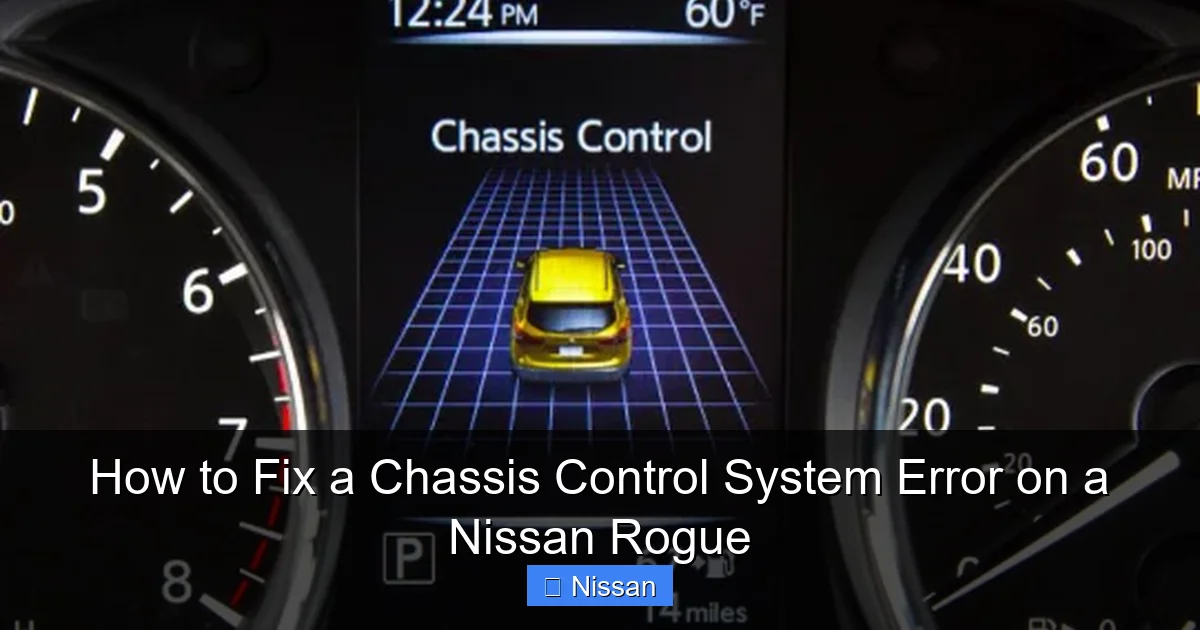
If you’ve ever been driving your Nissan Rogue and suddenly seen a warning light flash on your dashboard—especially one that says “Chassis Control System” or “VDC Off”—you know how unsettling it can be. Your vehicle feels different. Maybe the steering is stiffer, the brakes seem less responsive, or the stability control isn’t working like it should. You might even notice a message like “Service VDC System” or “TCS Off.” These aren’t just random glitches. They’re your car’s way of saying something in the chassis control system needs attention.
The chassis control system in your Nissan Rogue is a sophisticated network of sensors, modules, and software designed to keep you safe. It includes components like the Vehicle Dynamic Control (VDC), Traction Control System (TCS), Anti-lock Braking System (ABS), and electronic stability control. Together, they monitor wheel speed, steering angle, brake pressure, and vehicle motion to prevent skidding, loss of traction, or rollovers—especially in slippery conditions. When this system detects a problem, it disables certain functions and alerts you with a warning light. While it’s tempting to ignore it or hope it goes away, doing so could compromise your safety.
The good news? Many chassis control system errors are caused by simple, fixable issues. From a weak battery to a dirty sensor, the root cause is often something you can address yourself—especially if you have basic tools and a little patience. In this guide, we’ll walk you through everything you need to know: what the error means, how to diagnose it, step-by-step fixes, and when it’s time to call in a professional. Whether you’re a DIY enthusiast or just want to understand what’s happening under the hood, this article will help you take control of the situation and get your Rogue back to peak performance.
Key Takeaways
- Understand the warning signs: Dashboard alerts, reduced stability control, or unusual handling may indicate a chassis control system error.
- Check the basics first: Low battery voltage, loose connections, or a blown fuse can trigger false error codes.
- Scan for trouble codes: Use an OBD2 scanner to identify specific issues like faulty wheel speed sensors or ABS module problems.
- Inspect wheel speed sensors: Dirt, damage, or misalignment can disrupt signals to the chassis control system.
- Reset the system properly: After repairs, clear codes and test drive to ensure the error doesn’t return.
- Know when to visit a mechanic: Complex electrical or module failures may require professional diagnosis and repair.
- Prevent future errors: Regular maintenance and avoiding off-roading or harsh driving can extend system life.
📑 Table of Contents
What Is the Chassis Control System on a Nissan Rogue?
Before diving into fixes, it’s important to understand what the chassis control system actually does. Think of it as your car’s nervous system for stability and safety. It’s not a single part but a network of interconnected systems that work together to keep your vehicle balanced, especially during sudden maneuvers or poor road conditions.
At the heart of the system is the Vehicle Dynamic Control (VDC), which is Nissan’s version of electronic stability control. The VDC constantly monitors how your car is moving compared to how you’re steering. If it detects a mismatch—like your wheels are sliding or the car is starting to spin—it automatically applies brakes to individual wheels and reduces engine power to help you regain control. This is especially useful in rain, snow, or during emergency swerves.
The Traction Control System (TCS) is closely related. It prevents wheel spin during acceleration by cutting power or applying the brakes when it senses one or more wheels are losing grip. Meanwhile, the Anti-lock Braking System (ABS) stops your wheels from locking up during hard braking, allowing you to steer while slowing down. All these systems rely on data from wheel speed sensors, a steering angle sensor, a yaw rate sensor, and a brake pressure sensor.
These sensors send real-time information to the chassis control module (also called the ABS module or VDC module), which processes the data and makes split-second decisions. If any part of this system fails or sends incorrect data, the module may trigger a chassis control system error. The warning light appears, and the system may disable VDC, TCS, or ABS to prevent unsafe operation.
Understanding this helps explain why the error can stem from so many different sources. It’s not just about one broken part—it’s about the entire communication network. That’s why diagnosing the issue requires a systematic approach, starting with the most common and simplest causes.
Common Causes of a Chassis Control System Error
Visual guide about How to Fix a Chassis Control System Error on a Nissan Rogue
Image source: roborace.com
Now that you know what the system does, let’s look at why it might fail. Chassis control system errors on the Nissan Rogue can be triggered by a wide range of issues, but some are far more common than others. The key is to start with the basics before assuming you need expensive repairs.
One of the most frequent culprits is a weak or failing battery. The chassis control system relies on stable electrical voltage to function properly. If your battery is old, low on charge, or has corroded terminals, it can cause voltage drops that confuse the control module. This often happens after the car has been sitting for a while or during cold weather. You might notice other electrical issues too—like dim headlights, slow window operation, or a sluggish start.
Another common cause is a blown fuse or a faulty relay. The chassis control system is protected by several fuses in the engine bay and interior fuse boxes. If one of these fuses blows—due to a power surge or short circuit—the system may shut down. Similarly, a bad relay can interrupt power to the ABS pump or control module, triggering the error.
Loose or corroded electrical connections are also a big problem. Over time, vibration, moisture, and heat can cause connectors to loosen or corrode, especially near the wheel hubs or under the hood. Even a slightly loose ground wire can disrupt communication between sensors and the control module.
Then there are the sensors themselves. The wheel speed sensors, in particular, are prone to failure. Located near each wheel hub, they can get clogged with dirt, rust, or debris from the road. They can also be damaged by potholes, curbs, or during tire changes. When a sensor sends erratic or no signal, the system can’t accurately monitor wheel speed, leading to a chassis control error.
The steering angle sensor is another potential issue. This sensor tells the system how much you’re turning the wheel. If it’s misaligned—often after a wheel alignment or suspension work—or if it’s faulty, the VDC may not respond correctly. You might notice the error appears after turning sharply or driving on winding roads.
Finally, the chassis control module itself can fail. While less common, these modules can develop internal faults due to moisture, overheating, or electrical issues. When this happens, the entire system may go offline, and the error light will stay on even after other fixes.
How to Diagnose the Chassis Control System Error

Visual guide about How to Fix a Chassis Control System Error on a Nissan Rogue
Image source: carnewsbox.com
Diagnosing a chassis control system error starts with observation and basic checks. You don’t need to be a mechanic to do this—just a little patience and the right tools.
First, note when the error occurs. Does it happen at startup? After driving over bumps? Only in wet weather? This can give you clues. For example, if the light comes on after hitting a pothole, a damaged wheel speed sensor is likely. If it appears during cold mornings, a weak battery might be the cause.
Next, check your battery. Use a multimeter to test the voltage. A healthy battery should read around 12.6 volts when the car is off and 13.7 to 14.7 volts when the engine is running. If it’s below 12.4 volts, charge it or have it tested at an auto parts store. Also, inspect the terminals for corrosion—white or green buildup can disrupt power flow.
Then, look at the fuses. Locate the fuse box under the hood and inside the cabin (usually near the driver’s knee). Check the owner’s manual for the fuse diagram and inspect the fuses related to the ABS, VDC, and chassis control. A blown fuse will have a broken metal strip inside. Replace it with one of the same rating.
After that, inspect the wheel speed sensors. You’ll find them near each wheel hub, connected to the ABS system. Look for visible damage, loose wires, or heavy dirt buildup. You can clean them gently with brake cleaner and a soft brush, but avoid touching the sensor tip with metal tools.
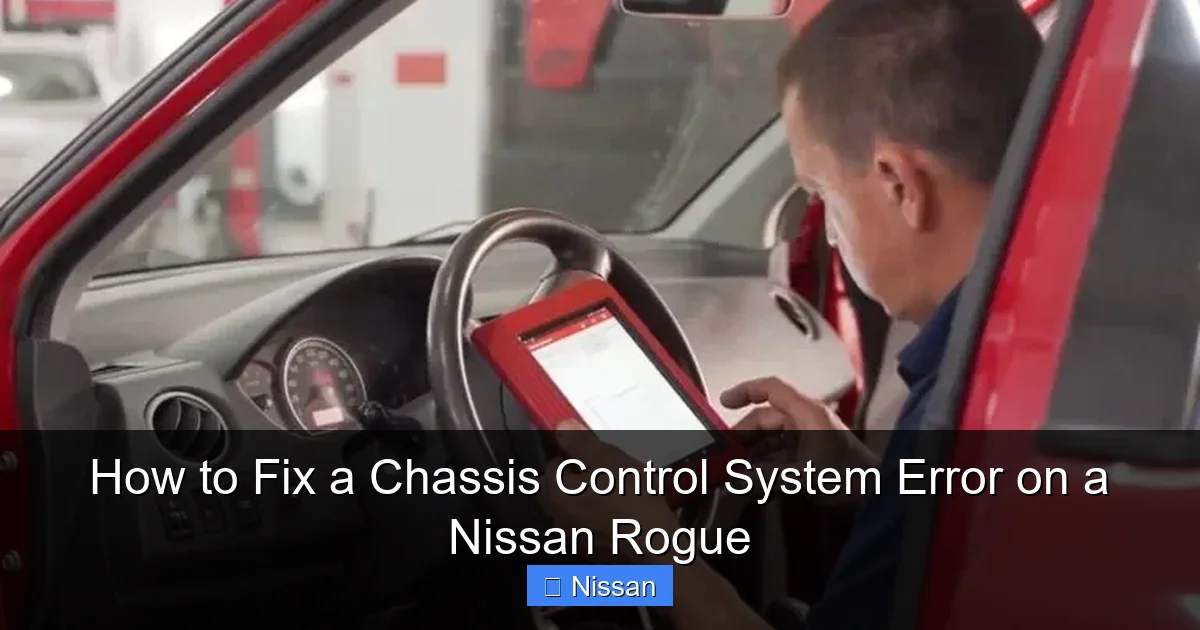
Now, it’s time to scan for trouble codes. This is where an OBD2 scanner comes in handy. Plug it into the OBD2 port (usually under the dashboard near the steering column) and turn the ignition to “on” (don’t start the engine). The scanner will read any stored diagnostic trouble codes (DTCs). Common codes for chassis control issues include:
– C1101–C1199: Wheel speed sensor faults
– C1145: Steering angle sensor malfunction
– C1155: ABS pump motor circuit failure
– U1000: Communication error with control module
Write down the codes and research what they mean. Many scanners come with apps or online databases that explain each code. This helps you pinpoint the exact component that’s causing the problem.
If you don’t have a scanner, most auto parts stores offer free code reading. Just drive in and ask—they’ll plug in their tool and tell you what’s going on.
Step-by-Step Fixes for Common Chassis Control Errors
Visual guide about How to Fix a Chassis Control System Error on a Nissan Rogue
Image source: griffle.com
Once you’ve identified the likely cause, it’s time to fix it. Here are step-by-step solutions for the most common issues.
Fixing a Weak or Dead Battery
If your battery is the problem, start by cleaning the terminals. Disconnect the negative cable first, then the positive. Use a wire brush and baking soda solution to scrub off corrosion. Rinse with water and dry thoroughly. Reconnect the positive cable first, then the negative. If the battery is more than 4–5 years old or won’t hold a charge, replace it. After installation, drive the car for at least 20 minutes to allow the system to relearn and reset.
Replacing a Blown Fuse
Locate the blown fuse using the fuse diagram. Use a fuse puller (or needle-nose pliers) to remove it. Insert a new fuse of the same amperage. Turn on the ignition and see if the error light goes away. If it blows again immediately, there’s likely a short circuit—seek professional help.
Cleaning or Replacing Wheel Speed Sensors
Jack up the car and remove the wheel if needed. Locate the sensor near the hub. Disconnect the electrical connector. Use brake cleaner and a soft brush to clean the sensor and surrounding area. Check the wiring for damage. If the sensor is cracked or the wire is frayed, replace it. Reinstall, reconnect, and lower the car. Clear the codes and test drive.
Resetting the Steering Angle Sensor
After wheel alignment or suspension work, the steering angle sensor may need recalibration. Turn the ignition on (engine off). Turn the steering wheel fully left, then fully right, then center it. Turn the ignition off. Some models require a scan tool for full reset—check your owner’s manual.
Clearing the Error Codes
After repairs, use your OBD2 scanner to clear the trouble codes. Turn the ignition on, select “Clear Codes,” and confirm. Start the engine and drive the car normally. If the light stays off, the fix worked. If it returns, further diagnosis is needed.
When to Visit a Mechanic
While many chassis control system errors can be fixed at home, some issues require professional attention. If you’ve tried the steps above and the error persists, it’s time to see a mechanic.
One red flag is if multiple systems are affected. For example, if the ABS, VDC, and airbag lights are all on, there may be a communication failure in the vehicle’s network. This often requires specialized diagnostic tools and software.
Another sign is if the error occurs randomly or under specific conditions, like high speeds or sharp turns. This could indicate a failing control module or internal sensor fault that’s hard to detect without advanced equipment.
Also, if you’ve replaced a sensor or fuse and the problem returns quickly, there may be an underlying electrical issue—like a short in the wiring harness or a grounding problem. These can be tricky to trace and often require a technician with experience in Nissan electrical systems.
Finally, if you’re not comfortable working on your car’s electronics, don’t risk it. Modern vehicles are complex, and incorrect repairs can cause more damage or safety hazards. A certified Nissan technician will have the right tools and knowledge to diagnose and fix the issue correctly.
Preventing Future Chassis Control System Errors
The best way to deal with a chassis control system error is to avoid it altogether. Regular maintenance and smart driving habits can go a long way.
Start with your battery. Have it tested annually, especially before winter. Replace it every 4–5 years, even if it seems fine. Keep terminals clean and tight.
Check your tires regularly. Uneven wear or low pressure can affect wheel speed sensor readings. Rotate tires every 5,000–7,000 miles and align them if you notice pulling or uneven wear.
Avoid driving through deep water or off-roading unless your Rogue is equipped for it. Water and mud can damage sensors and electrical components.
Also, be gentle with your brakes and suspension. Hitting potholes at high speed can damage sensors and mounts. Drive carefully on rough roads.
Finally, use a quality OBD2 scanner to check for pending codes periodically. Catching issues early can prevent full system failures.
Conclusion
A chassis control system error on your Nissan Rogue doesn’t have to be a nightmare. With the right knowledge and tools, many causes can be identified and fixed at home. From checking your battery to cleaning sensors, simple steps often resolve the issue. But when in doubt, don’t hesitate to consult a professional. Your safety is worth it. By understanding how the system works and staying proactive with maintenance, you can keep your Rogue running smoothly and safely for years to come.
Frequently Asked Questions
What does a chassis control system error mean on a Nissan Rogue?
A chassis control system error indicates a problem with the vehicle’s stability, traction, or braking systems, such as VDC, TCS, or ABS. It usually triggers a dashboard warning light and may disable certain safety features until the issue is resolved.
Can I drive my Nissan Rogue with a chassis control system error?
You can drive short distances cautiously, but it’s not recommended for long trips or in slippery conditions. The error may disable stability control, increasing the risk of skidding or loss of control.
How much does it cost to fix a chassis control system error?
Costs vary widely. Simple fixes like replacing a fuse or cleaning a sensor may cost under $50. Replacing a wheel speed sensor can cost $100–$300, while a new control module may exceed $1,000 including labor.
Will disconnecting the battery reset the chassis control system?
Disconnecting the battery may temporarily clear the error light, but it won’t fix the underlying issue. The light will likely return unless the root cause is addressed. Use an OBD2 scanner to properly clear codes after repairs.
Why does my chassis control light come on after a wheel alignment?
This often happens because the steering angle sensor needs recalibration after alignment. The system thinks the wheel is turned when it’s actually straight. A simple reset procedure or scan tool can fix it.
Can a bad alternator cause a chassis control system error?
Yes. A failing alternator can cause voltage fluctuations that disrupt the chassis control module. If your battery light is also on or electronics behave oddly, have the charging system tested.