How to Fill Bmw Transmission Fluid

Contents
- 1 Key Takeaways
- 2 📑 Table of Contents
- 3 Why Filling BMW Transmission Fluid Is Different
- 4 Understanding Your BMW’s Transmission System
- 5 BMW Transmission Fluid: The Right Stuff Matters
- 6 The Step-by-Step Process (For Models WITH a Dipstick)
- 7 The Complex Reality: Filling Sealed BMW Transmissions
- 8 When and Why You Might Need to Add Fluid
- 9 Cost, Tools, and The Bottom Line: DIY vs. Professional
- 10 Conclusion: Knowledge is Power, But Caution is Key
- 11 Frequently Asked Questions


Filling BMW transmission fluid is a delicate process due to the brand’s specific fluid requirements and often complex, sealed systems. Unlike many cars, most modern BMWs lack a traditional dipstick, requiring a professional-level procedure involving special tools and precise temperature conditions. Incorrect fluid type or overfilling can cause severe transmission damage. While some older models allow for a simpler fill-through-dipstick method, the safest approach for most BMW owners is to consult a specialist.
Key Takeaways
- BMW Uses Unique Fluids: BMW transmissions require specific, often proprietary, fluids like ZF Lifeguard or Pentosin. Using the wrong fluid is a guaranteed path to transmission failure.
- Most Modern Models Are Sealed: Since the early 2000s, the vast majority of BMWs have sealed “lifetime” transmissions without a user-serviceable dipstick, making a proper fill a professional procedure.
- Temperature Is Critical: The fluid level must be checked with the transmission at a specific, manufacturer-defined operating temperature (often ~30°C/86°F), requiring an OBD-II scan tool.
- The Fill Plug Location Varies: The fill/check plug is typically located on the side or bottom of the transmission pan, but its exact position is model-specific and can be difficult to access.
- Overfilling Is Dangerous: Too much fluid causes aeration, foam, and extreme pressure, leading to slipping, erratic shifts, and internal seal damage.
- DIY Is High-Risk: Unless you have the exact specifications, correct fluid, special tools (scan tool, pump, fill adapter), and experience, attempting this yourself is strongly discouraged.
- Pro Service Is Often Cheaper: When factoring in the cost of proprietary fluid (which can be $20+/quart), special tools, and the high risk of error, a professional service is usually the most cost-effective and safe choice.
📑 Table of Contents
- Why Filling BMW Transmission Fluid Is Different
- Understanding Your BMW’s Transmission System
- BMW Transmission Fluid: The Right Stuff Matters
- The Step-by-Step Process (For Models WITH a Dipstick)
- The Complex Reality: Filling Sealed BMW Transmissions
- When and Why You Might Need to Add Fluid
- Cost, Tools, and The Bottom Line: DIY vs. Professional
- Conclusion: Knowledge is Power, But Caution is Key
Why Filling BMW Transmission Fluid Is Different
Let’s be real. When you think of “filling transmission fluid,” you probably picture popping the hood, finding a red-handled dipstick, and adding a quart or two until the level is correct. Simple, right? Well, hold that thought. If you own a BMW, especially one made in the last 20 years, you’re about to enter a different world—a world of sealed units, proprietary fluids, and procedures that often require a mechanic’s scan tool and a deep understanding of ZF or Getrag engineering.
BMW, like many German automakers, treats the transmission as a “lifetime” sealed component in most of its modern vehicles. This doesn’t mean the fluid never degrades; it means it’s not designed for easy owner maintenance. The philosophy is that the transmission and its fluid are engineered to last the vehicle’s life under normal conditions, with service intervals measured in decades or 100,000+ miles. However, if a leak occurs, a repair is botched, or you simply need to top it off, the process is far from straightforward. This guide will walk you through the reality of the process, from identifying your system to understanding why a professional is usually your best—and safest—bet.
Understanding Your BMW’s Transmission System
Before you even think about a fluid funnel, you need to know what you’re dealing with. BMW has used a variety of transmission types over the years, and the fill procedure changes dramatically based on which one you have.
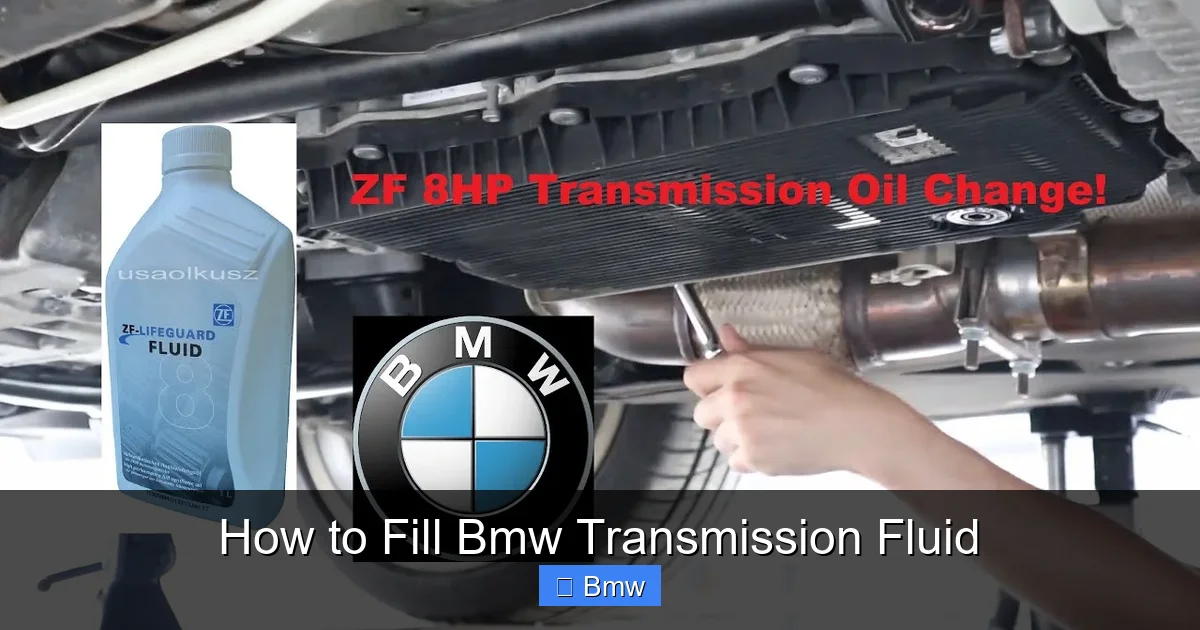
Visual guide about How to Fill Bmw Transmission Fluid
Image source: i.ytimg.com
The Great Divide: Dipstick vs. No Dipstick
The single most important factor is whether your BMW has a transmission dipstick. This simple tube is your gateway to a relatively simple check and fill.
- Models WITH a Dipstick: These are mostly older BMWs, typically from the E36 (1990s) and early E46 (early 2000s) eras, and some specific early 2000s 5 and 7 Series. They usually have a red or yellow handled dipstick located near the back of the engine bay, close to the firewall. If you find one, your life is much easier. The process is similar to checking engine oil: engine warm, on level ground, pull dipstick, wipe, reinsert, pull again to read.
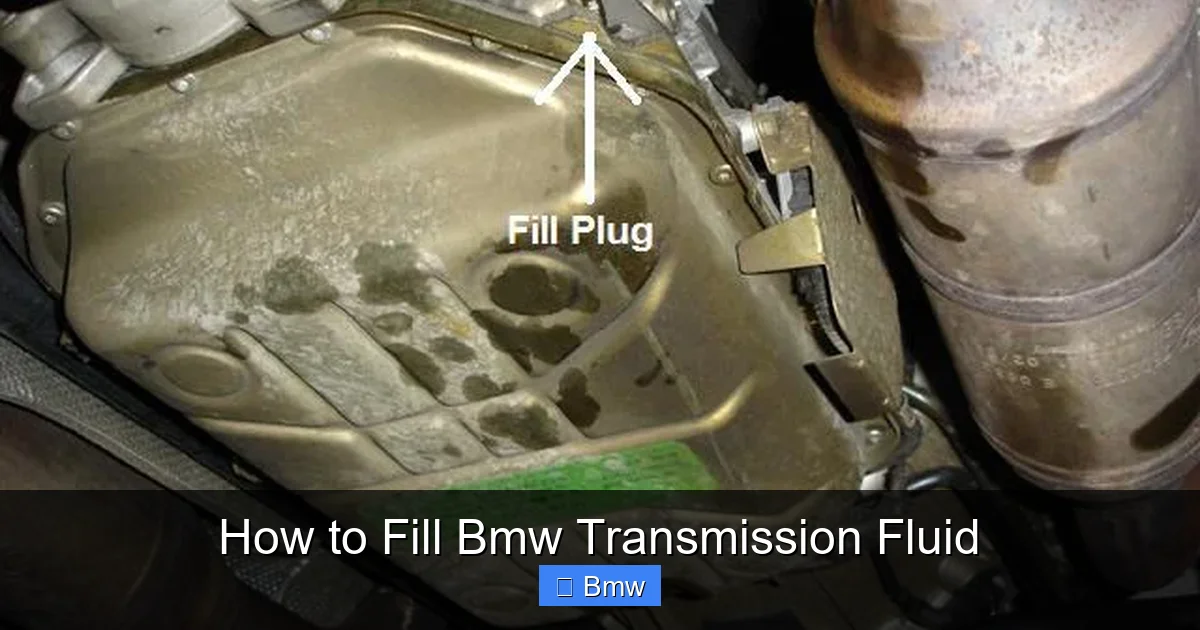
- Models WITHOUT a Dipstick (Sealed “Lifetime” Units): This is the reality for nearly all BMWs from the mid-2000s onward, including the popular E90 3 Series, F30 3 Series, G20 3 Series, X1, X3, X5, and most 5, 6, and 7 Series. There is no dipstick tube. The transmission pan has a single, often hidden, fill/check plug. To check the level, you must access this plug, have the transmission at a precise temperature, and use a special scan tool to command the transmission pump to circulate fluid and purge air. Without the scan tool command, fluid won’t flow out the plug even if it’s low. This is not a DIY job for the average enthusiast.
If you’re unsure, a quick online search for “[Your Year, Make, Model] transmission dipstick location” or a look in your owner’s manual under “Transmission Fluid” will confirm it. For sealed units, you’ll find instructions like “Transmission fluid level is checked and adjusted by an authorized BMW center.”
BMW Transmission Fluid: The Right Stuff Matters
Imagine putting cooking oil in your engine instead of 5W-30. That’s what using the wrong transmission fluid in a BMW is like. BMW specifications are exacting.
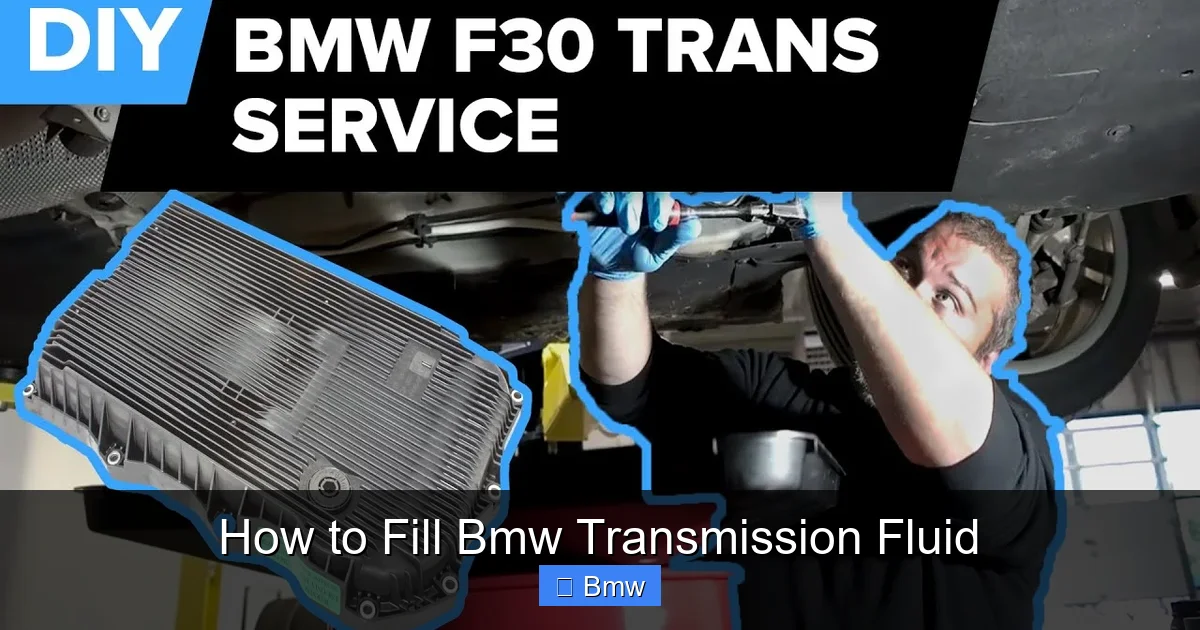
Visual guide about How to Fill Bmw Transmission Fluid
Image source: i.ytimg.com
Common BMW Transmission Fluids
Using the incorrect fluid will cause poor shifting, slippage, and eventual destruction. The specific fluid is determined by the transmission model (e.g., ZF 6HP, ZF 8HP, Getrag). Here are the most common ones:
- BMW ATF 3+ (L12100): An older specification for many 5-speed automatics (like the ZF 5HP). Still used in some applications but largely superseded.
- BMW ATF 4 (L12101): The standard for many 6-speed ZF automatics (6HP series) from the early 2000s to around 2012. Very common in E90/E92/E93 3 Series, E60 5 Series, and E70 X5.
- BMW ATF 5 (L12102): Used in some later 6-speed and early 8-speed applications.
- BMW ATF 6 (L12103): The primary fluid for the groundbreaking ZF 8HP 8-speed automatic, which has been the bread and butter for BMW since ~2010. Found in virtually all modern BMWs with 8-speed automatics, from F30 3 Series to G11 7 Series. This is a premium, synthetic fluid.
- ZF Lifeguard 8 (or Lifeguard 6): These are the ZF-branded versions of the same fluids BMW specifies. Many independent shops use ZF Lifeguard as it’s often more readily available and is chemically identical to the BMW-branded product. ZF manufactures the transmissions for BMW.
- Pentosin: BMW has also used Pentosin-branded fluids in some applications, particularly certain manual transmissions and older models. Always verify.
How to Find Your Exact Fluid: Your owner’s manual is the first source. The most reliable method is to check the transmission pan itself. After removing the pan (a major job), the fluid specification is almost always stamped or labeled on it. For a quick check, reputable BMW parts websites (like BMW OEM parts online) will ask for your VIN and list the required fluid. Never guess. If you have a ZF 8HP, you almost certainly need ATF 6 or ZF Lifeguard 8.
Pro Tip: When in doubt, consult a BMW specialist or use a dealer’s parts department with your VIN. The cost of a single quart of the correct fluid is cheap insurance compared to a $5,000+ transmission rebuild. This specificity is also true for other German brands; you can see similar exacting requirements when you learn how to check Audi transmission fluid.
The Step-by-Step Process (For Models WITH a Dipstick)
If your BMW is one of the lucky few with a traditional dipstick, the process is manageable for a competent DIYer with the right fluid and tools. Here is the general procedure. Always consult your specific factory service manual for your model year, as steps and temperatures can vary.

Visual guide about How to Fill Bmw Transmission Fluid
Image source: xoutpost.com
Preparation and Safety
- Gather Your Supplies: The correct BMW transmission fluid (check capacity—typically 7-10 quarts for a drain & fill, but for a top-off, have at least 1-2 quarts on hand). A long-neck funnel that fits securely into the dipstick tube. A clean, lint-free rag. A drain pan (if you plan to drain first, which is highly recommended for a fluid change). A torque wrench.
- Warm Up the Transmission: This is critical. The fluid must be at its normal operating temperature, typically around 30°C-50°C (86°F-122°F). Drive the car for at least 15-20 minutes on a highway or fast road to get it fully warmed. Do not let it overheat.
- Level Ground & Park: Park on a perfectly level surface. Apply the parking brake firmly. Shift through P-R-N-D and back to P.
The Fill Procedure
- Locate the Dipstick: It’s usually red or yellow, with a transmission symbol. It will have a “full” mark and an “add” mark or a cross-hatched area.
- Check the Level First: Pull the dipstick, wipe it clean, reinsert it fully, then pull it out again. Read the level. If it’s between the marks, do not add fluid. If it’s at or below the “add” mark, you need to add fluid.
- Add Fluid Slowly: Remove the dipstick entirely. Insert your funnel into the tube. Add fluid in small increments (half a quart at a time). After each addition, wait a minute for the fluid to settle down the tube.
- Re-check the Level: After adding, reinsert the dipstick fully, pull it out, and read. Repeat steps 3 and 4 until the fluid level is at the “full” or upper mark when hot. Do not overfill.
- Reinstall Dipstick: Once at the correct level, wipe any spilled fluid, and reinstall the dipstick securely.
The “Drain & Fill” vs. “Top-Off”
What we described is a “top-off.” If the fluid is severely low, or if it’s dark brown/black and smells burnt, a simple top-off is a band-aid. A proper service is a “drain and fill” (or multiple drain and fills). This involves removing the transmission pan drain plug (or the entire pan), letting the old fluid completely drain, then refilling with new fluid through the dipstick tube. This replaces most of the old fluid. Because some fluid remains in the torque converter and valve body, a true 100% change requires 3-4 sequential drain & fills. This is a messy, time-consuming job best left to professionals unless you have a dedicated workspace.
The Complex Reality: Filling Sealed BMW Transmissions
For the overwhelming majority of modern BMWs, the previous section is a fantasy. You have no dipstick. The fill process is a diagnostic procedure. Here’s why and how it’s done.
Why It’s a “Professional” Job
The sealed system has a fill plug on the transmission pan. To check the level, you:
- Raise and support the vehicle safely.
- Locate and remove the fill/check plug (often 8mm or 10mm hex, sometimes with a tamper-proof torx). It will be on the side or bottom of the pan. Have a drain pan ready—fluid will gush out if the transmission is overfilled.
- Connect a compatible BMW scan tool (like ISTA, ICOM, or a high-end aftermarket tool like Autel or Launch with the right software and license). This is non-negotiable.
- Use the scan tool to command the transmission control module (TCU) to activate the transmission pump and circulate fluid. This pressurizes the system and pushes fluid out the open fill plug.
- With the pump running, fluid should steadily stream out of the hole. If it doesn’t, the system is low. If it’s a torrent, it’s overfilled.
- You add or drain fluid through this same hole using a specialized pump or by temporarily installing a funnel and hose setup until fluid *just* starts to drip out steadily with the pump active. This is the “full” mark.
- Reinstall the plug to the exact torque specification (usually 20-30 Nm, but verify!).
See the problem? You cannot do this without a scan tool that can communicate with and command the TCU. A generic OBD-II reader will not work. The fluid must also be at a precise temperature, which the scan tool can read and sometimes control. One mistake—overfilling by even a quart—can be catastrophic.
The “Thermostat” or “Overflow” Method (A Risky Shortcut)
Some less-scrupulous shops or DIYers attempt a “thermostat method.” This involves removing the thermostat housing, starting the car, and adding fluid until it pours out of the thermostat hole. This is highly inaccurate and dangerous. It does not account for internal passages, torque converter volume, or correct temperature. It often leads to overfilling. Do not attempt this.
When and Why You Might Need to Add Fluid
Under normal conditions, a healthy sealed transmission should never need fluid added. So why would you find yourself in this situation?
- Transmission Pan Gasket or Seal Leak: The most common cause. The pan gasket (or the fill/check plug seal) can dry out, crack, or be installed incorrectly, causing a slow drip. You’ll see reddish fluid under the car.
- Cooler Line Leak: The lines that carry hot fluid to the transmission cooler (often in the radiator) can develop leaks at connections or the lines themselves.
- Shaft Seal Leak: The seal where the transmission output shaft meets the driveshaft or transfer case (in AWD models) can leak.
- Previous Improper Service: A prior mechanic may have underfilled the unit during a repair.
- Major Internal Failure: Rarely, an internal component failure can cause a leak into the bellhousing or other areas.
Symptoms of Low Transmission Fluid: Delayed, harsh, or slipping shifts; a burning smell (overheated fluid); transmission whine or clunk; and in severe cases, complete failure. If you see any of these, check for leaks immediately. Low fluid is an emergency. For other BMW-specific electrical warnings, you might also need to address issues like a driver restraint system malfunction, which is a separate but equally important safety system.
Cost, Tools, and The Bottom Line: DIY vs. Professional
Let’s talk brass tacks. What will this actually cost you in time, money, and risk?
The DIY Cost (For the Few with Dipsticks)
- Fluid: ~$15-$25 per quart. A drain & fill needs 7-10 quarts. A top-off may need 1-2.
- Tools: Funnel, drain pan, rags, socket set. You likely have these.
- Time: 1-2 hours for a top-off. 3-4 hours for a messy drain & fill.
- Risk: Moderate. Using wrong fluid or overfilling can destroy a $4,000-$8,000 transmission.
The Professional Cost (For Sealed Units – The Norm)
- Labor: 1.5 – 3 hours at $120-$180/hour shop rate. Total labor: $180 – $540.
- Fluid: Same as above, but they will use the correct product. Markup applies.
- Diagnostic/Scan Tool Fee: Often included in labor, but some shops charge for “diagnostic time.”
- Total: Expect $300 – $800+ for a fluid change/service on a modern BMW.
So, is DIY worth it? For the 95% of BMW owners without a dipstick, the answer is a hard no. The required diagnostic scan tool alone costs thousands. For the small minority with a dipstick, it’s a viable DIY if you are meticulous, have the correct fluid, and understand the severe consequences of error.
When to Call a Pro: Anytime you have no dipstick. Anytime you are unsure of the fluid type. Anytime the fluid is dark or smells burnt. Anytime you suspect a leak beyond a simple pan gasket.
Think of it this way: you wouldn’t attempt to fix a coolant leak on a BMW without knowing the system’s complexity. The transmission is equally complex and critical. A professional BMW technician has the factory data, the specific tools (like the ISTA system), and the experience to do it correctly and efficiently. While a BMW 3 Series oil change is a simple DIY, transmission service is in a different league.
Conclusion: Knowledge is Power, But Caution is Key
Filling BMW transmission fluid is not a simple top-off task. It’s a precise, model-specific procedure that often requires specialized knowledge and equipment. The key takeaways are clear: identify your transmission system (dipstick or sealed), use ONLY the manufacturer-specified fluid, and understand that the sealed “lifetime” system is not a DIY project. For the vast majority of modern BMWs, the correct and safest course of action is to have a qualified BMW specialist perform the service. They will use the proper scan tools, the correct fluid, and ensure the level is perfect at the correct temperature. This protects your investment and ensures your BMW’s legendary driving dynamics—smooth, responsive shifts—are preserved. When it comes to the heart of your BMW’s performance, cutting corners is a risk your wallet and your driving experience can’t afford.
Frequently Asked Questions
Can I use any ATF+4 or Dexron fluid in my BMW?
Absolutely not. BMW transmissions are engineered for very specific fluid chemistries. Using generic ATF can cause poor shifting, slippage, and rapid wear. Always use the fluid specified for your exact transmission model, such as BMW ATF 6 for most 8-speed automatics.
How do I know if my BMW transmission fluid is low?
Signs include delayed or harsh gear changes, a burning smell (overheated fluid), transmission whining, and visible leaks (red fluid) under the car. On dipstick models, you can check the level when hot. On sealed models, a professional must check it with a scan tool.
What happens if I overfill BMW transmission fluid?
Overfilling is extremely dangerous. It causes aeration (foaming), which leads to erratic hydraulic pressure, slipping, and overheating. The foam also cannot properly lubricate, causing wear. In severe cases, it can blow out seals and cause catastrophic internal damage.
Why does my 2015 BMW 328i have no transmission dipstick?
Because it has a sealed “lifetime” ZF 8HP 8-speed automatic transmission. BMW, like many manufacturers, designed this transmission to be filled and sealed at the factory, with the expectation it would not need service under normal conditions. Checking or adding fluid requires a professional scan tool procedure.
How often should I check the transmission fluid in my BMW?
For models with a dipstick, check it at every oil change with the engine and transmission warm. For sealed models, you should not need to check it unless you suspect a leak or have a shift quality issue. As a preventative measure, have a shop check the level and condition during major services every 60,000-100,000 miles.
Is it safe to try and fill my BMW transmission fluid myself if I have the correct fluid?
For dipstick models, yes, if you follow the warm-engine, level-ground procedure carefully. For sealed models (no dipstick), no. Without the factory scan tool to command the pump and verify the exact temperature, you cannot accurately check or fill the level. Attempting it will likely result in an incorrect level and potential damage.