
How to Dry a Car Cover: Safe Steps to Prevent Mold and Damage

Quick Answer
To dry a car cover safely, shake off excess water, spread the cover over a clean drying rack or clothesline, and let air circulate around both sides. Use a shaded, well-ventilated area unless the manufacturer specifies another method. Check the seams and elastic edges before folding or storing the cover.
Follow these essential steps
- Remove excess water: Shake the cover gently and allow loose water to drain.
- Spread it out: Hang it loosely or lay it flat instead of leaving it in a damp pile.
- Improve airflow: Choose a dry location with good ventilation and space around the fabric.
- Check both sides: Turn the cover when necessary so the underside can dry properly.
- Inspect the edges: Feel the seams, hems, and elastic areas for remaining moisture.
- Store it when dry: Follow the manufacturer’s care instructions before folding or placing it in a storage bag.
What should you avoid?
- Avoid tumble drying unless the specific cover’s instructions expressly allow it.
- Don’t pack a damp cover into a closed bag or container.
- Don’t assume every fabric needs the same amount of drying time or temperature.
A wet car cover can be awkward to handle, especially when it is large enough to cover an SUV or pickup truck. The challenge is getting the entire fabric dry without damaging its protective coating, seams, or fitted edges.
In this guide, I’ll explain how to dry a car cover after rain, washing, or everyday outdoor use. I’ll also cover drying times, indoor alternatives, common mistakes, and storage practices that help keep your cover ready for its next use.
In This Guide
Why Does Drying a Car Cover Properly Matter?
Drying a car cover means removing the moisture trapped in its fabric, seams, hems, and other construction details before reuse or storage. The correct method depends on the material and the manufacturer’s care instructions.
Drying is more than a housekeeping task. It helps reduce moisture-related problems and prevents you from putting a damp cover away where airflow is limited.
Moisture Can Encourage Mold and Mildew
A damp cover stored in a closed bag creates conditions that can encourage mold and mildew growth, particularly in warm, humid environments. You might notice a musty smell before visible spots appear.
Humidity is especially important in places where outdoor air remains moist for much of the day. A cover that dries quickly in a breezy climate may need considerably longer in a humid garage or enclosed storage area.
Protective Materials Need Appropriate Care
Car covers may use polyester, nonwoven fabrics, multilayer materials, soft inner linings, or water-resistant coatings. These constructions do not necessarily tolerate the same heat, friction, or washing methods.
Excessive heat can damage some synthetic materials and coatings. Abrasive handling can also stress seams, elastic edges, and bonded layers.
For this reason, check the care label before choosing a drying method. Manufacturer guidance takes priority over generic advice, particularly for specialty indoor covers and multilayer outdoor covers.
Drying Also Helps Protect Your Vehicle
A cover can trap moisture, dirt, and other contaminants against a vehicle’s surface. Before reinstalling it, check that the vehicle and the cover’s inner surface are reasonably clean and suitable for covering.
Never assume that a water-resistant cover is automatically safe to leave wet against paint for extended periods. The cover’s design, the vehicle’s surface, and the surrounding conditions all matter.
How Do You Dry a Car Cover Step by Step?
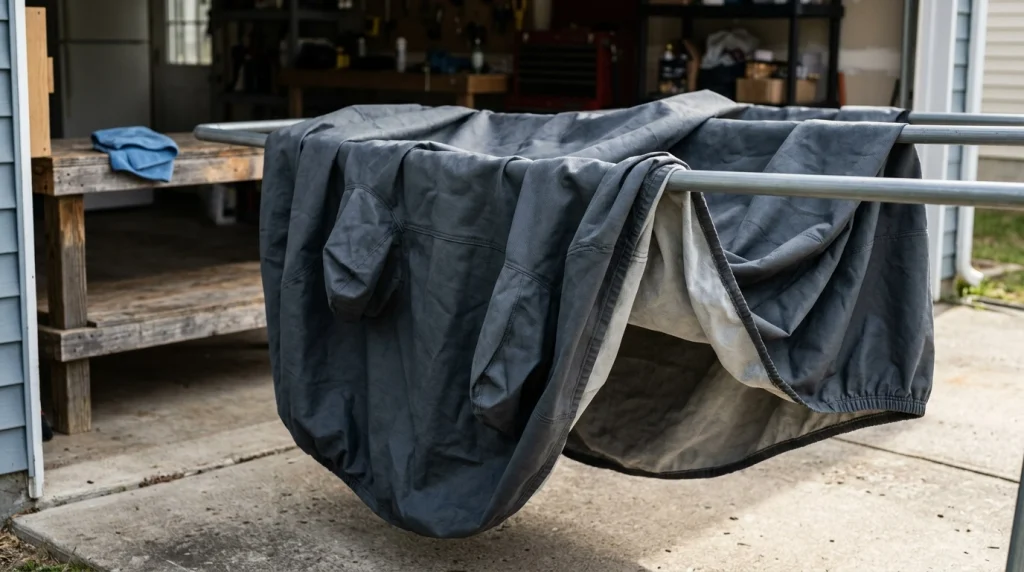
The most practical starting point for most car covers is controlled air-drying, provided the manufacturer’s instructions do not specify otherwise. The aim is to spread out the fabric, encourage airflow, and confirm that hidden areas are dry.
Step 1: Remove the Cover Carefully
If the cover is on your vehicle, remove it without dragging its dirty outer surface across the paint. Shake it gently to release loose water and debris.
If the vehicle has been sitting in the sun, avoid placing the cover against hot bodywork or exhaust components. Let hot areas cool before handling or reinstalling the cover.
Step 2: Choose a Clean Drying Surface
Use a clean clothesline, drying rack, wide railing, or another suitable support that can hold the cover without stretching it. For a large cover, two or more supports may help distribute its weight.
Avoid rough concrete, dirty fences, sharp edges, and surfaces that could snag the material. If you lay the cover flat, make sure the surface underneath is clean and does not trap water against the fabric.
Step 3: Spread Out the Fabric
Separate the folded sections so air can reach as much of the material as possible. A tightly bunched cover dries unevenly because moisture remains trapped between overlapping layers.
Arrange the cover loosely rather than pulling hard on its corners or elastic hem. This is particularly important for fitted covers that have shaped mirror pockets or reinforced seams.
Step 4: Let Air Circulate Around It
Choose a dry, well-ventilated location. A covered patio, shaded outdoor area, or ventilated garage can work, provided the fabric has enough space and the surrounding air is not excessively humid.
Shade is a sensible default when you do not know how the material responds to prolonged sunlight. Some covers tolerate outdoor exposure well, but reflective finishes, coatings, and certain fabrics may require more careful handling.
Step 5: Turn the Cover When Necessary
Once the exposed surface has dried, reposition the cover so the other side receives airflow. This is particularly useful when part of the material rests against a rack or another surface.
Do not repeatedly drag the fabric across a dirty support. Lift and reposition it gently to avoid introducing grit or causing abrasion.
Step 6: Check Seams and Elastic Edges
Run your hand over the main panels, then inspect the seams, hems, elastic edges, pockets, and grommets if fitted. These areas may retain moisture after the broad fabric feels dry.
You can gently blot small wet patches with a clean, absorbent microfiber towel. Avoid aggressive rubbing, twisting, or wringing because these actions can stress the material.
Step 7: Confirm It Is Completely Dry
Check both sides and all thicker or folded areas before storing the cover. If you feel dampness or detect moisture trapped in a seam, allow more drying time.
When the cover is fully dry, fold it loosely according to its care instructions. If the weather turns damp before drying finishes, move it to a better-ventilated sheltered area rather than packing it away.
Practical drying checklist
- Excess water has drained away.
- The cover is spread out without tight folds.
- Air can reach both sides.
- Seams, hems, and pockets feel dry.
- The cover is ready for storage according to its care instructions.
Which Car Cover Drying Method Should You Use?
Air-drying is a suitable default for many car covers, but the best arrangement depends on available space, the weather, and the fabric. A drying rack, clothesline, or ventilated indoor area can each work when used appropriately.
| Drying method | When it works | What to watch for |
|---|---|---|
| Clothesline or drying rack | When you have adequate space and airflow | Prevent snagging, stretching, and tight folds |
| Shaded outdoor area | During dry weather with moving air | Watch for rain, dust, falling debris, and strong sun |
| Ventilated garage | When outdoor conditions are wet or unsuitable | Avoid stagnant, humid air and damp floors |
| Indoor rack with a fan | When gentle airflow is available | Keep the fan and electrical connections away from water |
| Tumble dryer | Only when the exact care instructions permit it | Heat and tumbling may damage unsuitable fabrics |
Can You Dry a Car Cover in the Sun?
Some covers can tolerate ordinary outdoor drying, but prolonged direct sunlight is not the safest universal recommendation. Heat and ultraviolet exposure can affect certain fabrics, coatings, and elastic components.
If the manufacturer permits outdoor drying, choose conditions that allow the fabric to dry without exposing it to unnecessary heat. When the instructions are unclear, shaded air-drying is a cautious starting point.
Can You Dry a Car Cover in a Garage?
Yes, if the garage is dry enough and has adequate ventilation. Spread the cover across a rack or suitable supports instead of leaving it on a damp floor or in a pile.
A fan can help move air through the space, but it cannot compensate fully for an extremely humid room. If the cover remains damp, improve ventilation or move it to a drier location.
Can You Use a Clothes Dryer?
Do not assume a car cover is safe for machine drying. Some products require air-drying, while specific materials may have different manufacturer-approved instructions.
Using an unsuitable dryer setting can shrink fabric, distort elastic, or damage a protective layer. Check the exact product’s care label before using a tumble dryer or applying direct heat.
For additional guidance, consult the manufacturer’s car cover cleaning and care instructions and follow the directions for your specific material.
How Long Does a Car Cover Take to Dry?
A car cover may dry within several hours under favorable conditions, but there is no reliable single drying time for every cover. Fabric thickness, the amount of absorbed water, airflow, and humidity all affect the result.
Use the following table as a practical guide to the conditions that influence drying, not as a guaranteed time estimate.
| Condition | Likely effect | What you should do |
|---|---|---|
| Dry air and steady airflow | Usually supports faster evaporation | Spread out the cover and inspect it periodically |
| High humidity | Can slow moisture evaporation | Use a sheltered, ventilated area with drier air if available |
| Thick or multilayer fabric | May retain moisture longer | Check seams, hems, and layered sections carefully |
| Fabric folded or bunched | Restricts airflow and slows drying | Separate the folds and reposition the cover |
| Rain or persistent damp weather | May prevent effective outdoor drying | Move the cover indoors to a suitable ventilated space |
How Can You Tell When the Cover Is Dry?
Check the fabric across several locations instead of relying on one quick touch. Pay particular attention to the underside, folded sections, elastic hems, and stitched areas.
If any part still feels damp, continue drying. A cover should not go into a storage bag simply because its outer surface appears dry.
In humid weather, a dehumidifier in a suitable indoor space may help lower ambient humidity. Use electrical equipment safely and keep it away from water.
What Drying Mistakes Should You Avoid?
The biggest mistake is treating every car cover like an ordinary towel. Automotive covers can include specialized materials and protective layers that need more careful handling.
Folding the Cover While It Is Damp
Folding traps moisture between overlapping surfaces and reduces airflow. When a damp cover stays enclosed, it can develop unpleasant odors and may support mold or mildew growth.
Always inspect the inside of the folds before packing the cover away. If you are in a hurry, it is better to leave the cover spread out in a safe drying location.
Using Excessive Heat
Radiators, heat guns, hair dryers on hot settings, and unsuitable tumble-dryer cycles can damage certain cover materials. Avoid these shortcuts unless the manufacturer explicitly approves the method.
Controlled airflow is generally a safer option than trying to force the fabric dry with intense heat. It also makes it easier to monitor the material as it dries.
Leaving the Cover in a Wet Pile
A large wet cover can become heavy and awkward, which makes it tempting to leave it in a heap until later. Unfortunately, the folded areas receive little airflow and may stay damp much longer than the exposed fabric.
Spread the cover out as soon as practical. If you cannot dry it immediately, avoid sealing it inside a bag or container.
Ignoring Dirt and Grit
Drying does not remove every contaminant from a cover. Dirt and grit on the vehicle-facing surface can rub against paint when the cover moves.
If the cover needs cleaning, follow the product’s washing instructions before drying it. The AutoZone car cover cleaning guide provides an additional reference for cleaning and air-drying considerations.
Assuming Water-Resistant Means Waterproof
Water resistance varies by material and construction. A cover that sheds rain may still retain moisture in seams, inner layers, or areas where water collects.
Do not judge dryness by the outer surface alone. Check the complete cover before reinstalling or storing it.
How Should You Store a Dry Car Cover?
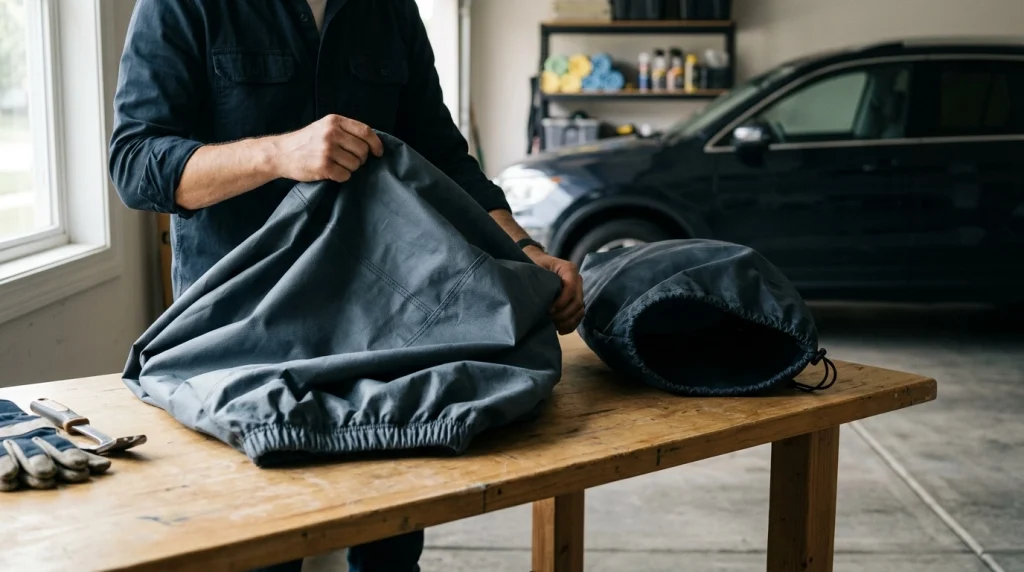
Store a car cover only after it has dried completely and is ready for storage according to its care instructions. A clean, dry storage location helps reduce moisture buildup and protects the cover from unnecessary contamination.
Choose a Suitable Storage Location
A dry cupboard, clean shelf, or suitable garage storage area can work well. Avoid damp floors, leaking roofs, and locations where condensation regularly forms.
Keep the cover away from sharp tools, chemicals, and rough objects that could snag or contaminate the fabric. If the supplied storage bag is appropriate for the product, use it once the cover is fully dry.
Fold Without Excessive Compression
Follow the manufacturer’s folding instructions and avoid forcing the cover into a small space. Tight compression can make the cover harder to handle and may create deep creases in some materials.
If the cover will remain unused for an extended period, check it occasionally for moisture, unusual odors, or visible contamination. Allow it to air out again if the storage environment becomes damp.
Check the Cover Before Reusing It
Before fitting the cover again, inspect its inner surface, seams, elastic, and any straps or grommets. Look for damage, debris, and signs of mildew that may need attention.
Make sure the vehicle’s surface is suitable for covering, too. Remove loose grit and avoid trapping unnecessary moisture between the cover and the paint.
For cleaning products and fabric-care precautions, review the Simple Green car cover cleaning instructions, while still following your cover manufacturer’s requirements.
Frequently Asked Questions
Can I Put a Wet Car Cover Back on My Car?
It is generally better to let a wet cover dry before reinstalling it, especially if it has been washed or will remain on the vehicle for an extended period. Check the manufacturer’s instructions and avoid trapping unnecessary moisture against the vehicle’s finish.
Can I Dry a Car Cover Overnight?
Yes, if you can leave it spread out in a safe, dry, well-ventilated location overnight. However, high humidity, thick fabric, and limited airflow may prevent complete drying, so inspect the cover before storing or using it.
Should I Dry My Car Cover Inside or Outside?
Either can work. Choose a shaded outdoor location when the weather is dry and suitable, or use a ventilated indoor space when rain, dust, or humidity makes outdoor drying impractical.
Can a Fan Help Dry a Car Cover?
Yes. A fan can improve air movement around the fabric and help moisture evaporate, particularly indoors. Keep the cover spread out, maintain safe electrical arrangements, and remember that airflow may not be enough when the room itself is very humid.
Can I Use a Hair Dryer to Dry My Car Cover?
Avoid using a hair dryer on a hot setting unless the manufacturer explicitly permits it. Concentrated heat can affect synthetic fabric, elastic, and protective coatings. Air-drying is the safer default for most covers.
How Do I Dry a Car Cover During the Rainy Season?
Move the cover to a sheltered, ventilated indoor location, spread it over suitable supports, and use a fan or dehumidifier if appropriate. In persistently humid weather, drying may take longer, so check the seams and underside before folding it.
What Should I Do If My Car Cover Smells Musty After Drying?
A musty odor may indicate that moisture remained trapped or that the cover needs cleaning. Inspect it for visible mold or mildew, follow the manufacturer’s cleaning instructions, and dry it thoroughly before storage. Seek manufacturer guidance if the odor or visible growth persists.
Final Takeaway: Dry Your Car Cover Before Storing It
Learning how to dry a car cover comes down to three habits: spread it out, provide suitable airflow, and check every section before storage. These simple steps help limit trapped moisture without exposing the material to unnecessary heat or rough handling.
Remember that a lightweight indoor cover and a heavy multilayer outdoor cover may need different care. Check the manufacturer’s instructions whenever you are unsure about sunlight, machine drying, cleaning, or storage.
Take the time to dry your cover properly after rain or washing. A little care between uses helps keep it clean, easier to handle, and ready to protect your vehicle when you need it.