
How to Clean Pre-collision Sensor on a Toyota Camry

Keeping your Toyota Camry’s pre-collision sensor clean is essential for reliable safety system performance. Dirt, snow, or debris can block the sensor and trigger warning lights or disable critical features like automatic emergency braking. This guide walks you through the simple process of cleaning the sensor at home—no tools or dealership visit required.
Key Takeaways
- Locate the sensor correctly: The pre-collision sensor on most Toyota Camry models is mounted behind the front grille or near the Toyota emblem.
- Use only safe cleaning materials: A soft microfiber cloth and mild glass cleaner are ideal—avoid harsh chemicals or abrasive tools.
- Turn off the engine before cleaning: For safety and accuracy, always power down the vehicle before touching the sensor area.
- Check for damage during cleaning: Inspect the sensor lens for cracks or scratches that could affect performance.
- Test the system after cleaning: Drive in a safe area to confirm warning lights are off and the system responds normally.
- Clean regularly in harsh conditions: In snowy, muddy, or dusty environments, clean the sensor every few weeks.
- Don’t ignore warning lights: If the system remains inactive after cleaning, visit a certified technician for diagnosis.
📑 Table of Contents
- Why Cleaning Your Toyota Camry’s Pre-Collision Sensor Matters
- Where Is the Pre-Collision Sensor Located on a Toyota Camry?
- When Should You Clean the Pre-Collision Sensor?
- Tools and Materials You’ll Need
- Step-by-Step Guide to Cleaning the Pre-Collision Sensor
- Common Mistakes to Avoid
- What to Do If Cleaning Doesn’t Fix the Problem
- Maintaining Your Pre-Collision System Long-Term
- Conclusion
Why Cleaning Your Toyota Camry’s Pre-Collision Sensor Matters
Your Toyota Camry comes equipped with advanced safety technology designed to protect you and your passengers. One of the most important features is the pre-collision system (PCS), which uses sensors to detect potential collisions and can automatically apply the brakes if you don’t react in time. This system relies heavily on a small but powerful sensor usually located at the front of the vehicle. When this sensor gets dirty, covered in grime, ice, or snow, it can’t “see” the road ahead clearly—and that means your safety system might not work when you need it most.
Imagine driving down a rainy highway when suddenly your car slams on the brakes for no reason—or worse, fails to brake when a car stops ahead of you. These scenarios can happen if the pre-collision sensor is obstructed. Even a thin layer of mud or a buildup of road salt can interfere with the sensor’s ability to detect objects. That’s why regular cleaning isn’t just a maintenance tip—it’s a safety essential.
Many Toyota Camry owners don’t realize how sensitive these sensors are. They’re designed to pick up subtle changes in distance and speed, so even minor blockages can trigger warning lights on your dashboard, such as the “Pre-Collision System Unavailable” message. In some cases, the system may go into standby mode entirely, leaving you without one of your car’s most valuable safety nets. The good news? Cleaning the sensor is quick, easy, and something you can do yourself in under 10 minutes.
Where Is the Pre-Collision Sensor Located on a Toyota Camry?
Visual guide about How to Clean Pre-collision Sensor on a Toyota Camry
Image source: camryownersmanual.com
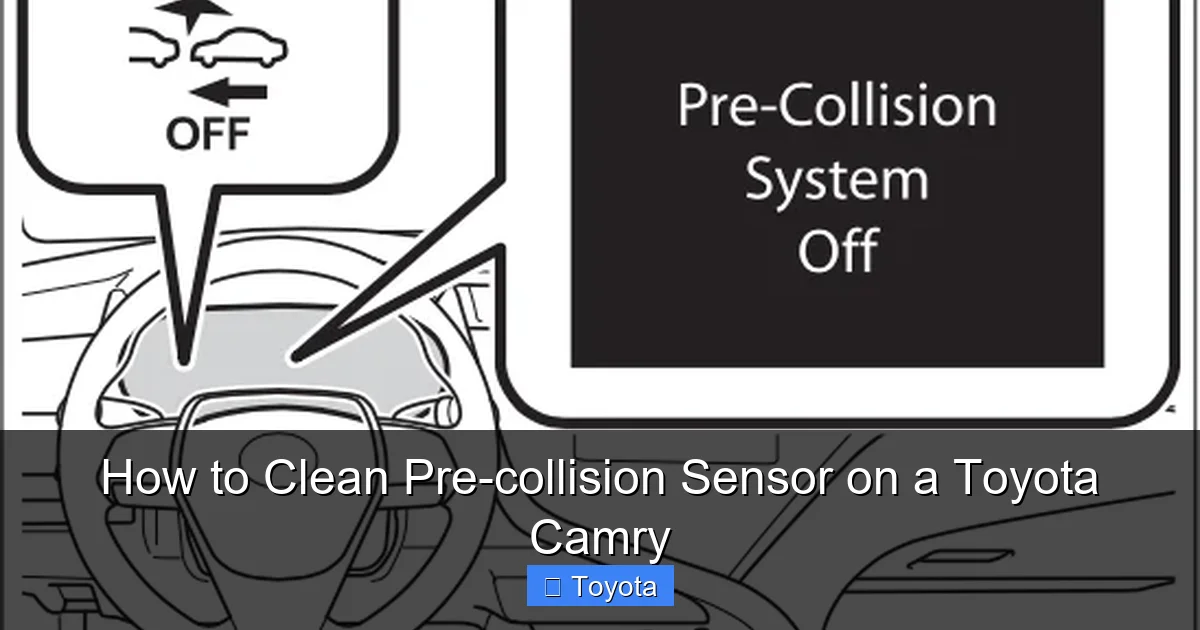
Before you start cleaning, you need to know where to look. The pre-collision sensor on most Toyota Camry models—especially those from 2018 onward—is typically mounted behind the front grille, often near or behind the Toyota emblem. On some trims, it may be integrated into the lower grille or just above the license plate. The exact location can vary slightly depending on the model year and trim level, so it’s helpful to consult your owner’s manual if you’re unsure.
To identify the sensor, look for a small, rectangular or circular lens—usually about the size of a quarter—that appears slightly different from the surrounding plastic. It may have a subtle tint or a glossy finish. This is the radar or camera lens that the pre-collision system uses to scan the road. On newer Camry models with Toyota Safety Sense 2.0 or 3.0, this sensor works in tandem with a forward-facing camera mounted near the rearview mirror, but the primary detection unit is still at the front.
One common mistake drivers make is confusing the pre-collision sensor with other components, like the adaptive cruise control radar (which is often in the same area) or parking sensors. While some systems share hardware, the pre-collision sensor is specifically designed for collision avoidance. If you’re having trouble locating it, try searching online for images of your specific Camry model year—Toyota’s official forums and YouTube tutorials can be especially helpful.
When Should You Clean the Pre-Collision Sensor?
Visual guide about How to Clean Pre-collision Sensor on a Toyota Camry
Image source: i.ytimg.com
You don’t need to clean the pre-collision sensor every time you wash your car—but there are certain situations when it’s absolutely necessary. The most obvious sign is a warning light on your dashboard. If you see the “Pre-Collision System Unavailable” or “PCS” warning, it’s time to check the sensor. Other indicators include erratic behavior from the automatic braking system, such as sudden braking when no obstacle is present, or the system failing to engage during a near-miss situation.
Environmental factors also play a big role. If you’ve been driving in heavy rain, snow, or mud, debris can easily accumulate on the sensor. Winter driving is especially problematic—road salt, ice, and slush can coat the lens and block its view. Even in dry conditions, dust, pollen, and bug splatter can build up over time and reduce sensor accuracy.
A good rule of thumb is to inspect the sensor every time you wash your car, especially during seasonal changes. If you live in an area with harsh winters or frequent construction zones, consider checking it weekly. Proactive cleaning not only prevents warning lights but also ensures your safety systems are always ready to respond.
Tools and Materials You’ll Need
Visual guide about How to Clean Pre-collision Sensor on a Toyota Camry
Image source: cadillarckits.com
The beauty of cleaning your Toyota Camry’s pre-collision sensor is that you don’t need any special tools or professional equipment. With just a few household items, you can get the job done safely and effectively. Here’s what you’ll need:
– A soft, lint-free microfiber cloth (avoid paper towels or rough fabrics)
– Mild glass cleaner or isopropyl alcohol (70% or lower)
– A small spray bottle (optional, for controlled application)
– A soft-bristled brush (like a clean toothbrush) for stubborn debris
– A flashlight (to inspect the sensor closely)
Avoid using harsh chemicals like ammonia-based cleaners, Windex with ammonia, or abrasive cleaners. These can damage the sensor lens or leave behind residues that interfere with performance. Similarly, don’t use compressed air unless absolutely necessary—it can push dirt further into the housing or damage delicate components.
If you’re cleaning in cold weather, make sure the sensor isn’t frozen. Gently warm the area with your hands or a hairdryer on low heat if needed, but never use hot water directly on the sensor, as rapid temperature changes can cause cracking.
Step-by-Step Guide to Cleaning the Pre-Collision Sensor
Now that you know where the sensor is and what tools to use, let’s walk through the cleaning process step by step. This method works for most Toyota Camry models from 2015 to the present.
Step 1: Park and Power Down
Start by parking your Camry on a flat, level surface and turning off the engine. Engage the parking brake for extra safety. This ensures the vehicle’s electrical systems are inactive, reducing the risk of accidental activation or damage.
Step 2: Locate the Sensor
Walk to the front of your vehicle and find the pre-collision sensor behind the grille or near the Toyota emblem. Use your flashlight to get a clear view. Look for a small, smooth lens that may appear slightly recessed.
Step 3: Remove Loose Debris
Use your soft-bristled brush to gently sweep away any loose dirt, leaves, or insects. Be careful not to press too hard—you’re just loosening surface debris, not scrubbing.
Step 4: Apply Cleaner
Spray a small amount of mild glass cleaner or isopropyl alcohol onto your microfiber cloth—never directly onto the sensor. This prevents liquid from seeping into the housing.
Step 5: Wipe Gently
Using light, circular motions, wipe the sensor lens clean. Focus on removing smudges, water spots, or film buildup. If the lens is very dirty, you may need to repeat the process with a fresh section of the cloth.
Step 6: Dry and Inspect
Use a dry part of the microfiber cloth to buff the lens until it’s completely dry and streak-free. Inspect the area under good lighting to ensure no residue remains.
Step 7: Test the System
Start your car and take it for a short drive in a safe, open area. Watch for any warning lights and observe how the pre-collision system behaves. If the light stays off and the system responds normally, you’re all set.
Common Mistakes to Avoid
Even a simple task like cleaning a sensor can go wrong if you’re not careful. Here are some common mistakes Toyota Camry owners make—and how to avoid them.
One of the biggest errors is using the wrong cleaning products. Harsh chemicals can degrade the sensor’s protective coating or leave behind a film that distorts readings. Stick to mild, non-abrasive cleaners and always apply them to the cloth, not the sensor.
Another mistake is pressing too hard while cleaning. The sensor lens is delicate and can scratch or crack under pressure. Use only gentle, sweeping motions—no scrubbing.
Some drivers try to clean the sensor while the engine is running, which is unsafe and unnecessary. Always power down the vehicle first.
Finally, don’t assume that a clean-looking grille means the sensor is clean. The lens can appear clear from a distance but still have microscopic dirt or oil buildup that affects performance. Always inspect it up close.
What to Do If Cleaning Doesn’t Fix the Problem
If you’ve cleaned the pre-collision sensor thoroughly and the warning light is still on, there may be a deeper issue. The sensor itself could be damaged, misaligned, or experiencing an electrical fault. In some cases, a software glitch or calibration error might be to blame.
First, try restarting your vehicle. Sometimes a simple reboot can reset the system and clear temporary errors. If that doesn’t work, check for any visible damage to the sensor housing or wiring. Cracks, dents, or loose connections can impair function.
If everything looks fine but the system remains offline, it’s time to visit a certified Toyota technician. They have the tools to run a full diagnostic scan and recalibrate the sensor if needed. Attempting to repair or recalibrate the sensor yourself can void your warranty or cause further damage.
Remember, the pre-collision system is a critical safety feature. If it’s not working properly, avoid driving in high-risk situations until it’s fixed.
Maintaining Your Pre-Collision System Long-Term
Cleaning the sensor is just one part of maintaining your Toyota Camry’s safety systems. To keep everything running smoothly, adopt a few simple habits.
First, wash your car regularly—especially the front end. Use a gentle car wash soap and avoid high-pressure sprays directly on the sensor area.
Second, during winter months, clear snow and ice from the grille and sensor after every storm. A small ice scraper or soft brush works well.
Third, schedule regular inspections during your routine maintenance visits. A technician can check sensor alignment and system performance as part of a broader safety check.
Finally, stay informed about any recalls or service bulletins related to your Camry’s safety systems. Toyota occasionally releases updates to improve sensor performance or fix known issues.
By taking these steps, you’ll ensure your pre-collision system stays reliable year after year.
Conclusion
Cleaning the pre-collision sensor on your Toyota Camry is a simple but vital task that can make a big difference in your safety on the road. With just a few minutes and the right materials, you can keep this critical system functioning at its best. Whether you’re dealing with winter grime, summer bugs, or everyday dust, regular maintenance helps prevent warning lights and ensures your car’s advanced safety features are always ready to protect you.
Don’t wait for a warning light to appear—make sensor cleaning part of your regular car care routine. Your safety, and the safety of others on the road, depends on it.
Frequently Asked Questions
How often should I clean the pre-collision sensor on my Toyota Camry?
It’s best to inspect and clean the sensor every time you wash your car, or at least once a month. In harsh conditions like snow, mud, or heavy rain, clean it weekly to prevent buildup.
Can I use Windex to clean the pre-collision sensor?
No, avoid Windex or any cleaner with ammonia. These can damage the sensor lens. Use a mild glass cleaner or isopropyl alcohol instead, applied to a microfiber cloth.
Will cleaning the sensor reset the warning light?
Cleaning often resolves the issue and turns off the warning light. If the light remains on, there may be a deeper problem requiring professional diagnosis.
Is it safe to clean the sensor myself?
Yes, cleaning the sensor is safe and designed to be done by owners. Just use gentle materials and avoid harsh chemicals or excessive pressure.
What if my sensor is cracked or damaged?
A damaged sensor should be inspected and replaced by a certified Toyota technician. Driving with a compromised sensor can disable safety features.
Does the pre-collision sensor need recalibration after cleaning?
No, cleaning alone does not require recalibration. However, if the sensor was removed or replaced, professional recalibration is necessary for accurate performance.
