How to Become a Tesla Certified Electrician

Contents
- 1 Key Takeaways
- 2 📑 Table of Contents
- 3 Your Roadmap to Becoming a Tesla Certified Electrician
- 4 Understanding the Role: What Does a Tesla Certified Electrician Actually Do?
- 5 Prerequisites: The Non-Negotiables Before You Apply
- 6 The Certification Pathway: Step-by-Step
- 7 Tools, Equipment, and Costs Involved
- 8 Maintaining Your Certification and Growing Your Business
- 9 Frequently Asked Questions (FAQs)
- 10 Frequently Asked Questions


Becoming a Tesla Certified Electrician is a strategic career move in the growing EV industry. It requires a valid electrician license, completion of Tesla’s specific training program, and passing their certification exam. This certification validates your expertise in installing and servicing Tesla charging equipment, opening doors to high-demand projects and premium clientele. The path involves formal education, hands-on experience, and a commitment to Tesla’s standards.
Key Takeaways
- Prerequisite is a valid electrician license: You must hold a current, unrestricted journeyman or master electrician license in your state or region before applying for Tesla certification.
- Complete the Tesla Training Program: Successfully finish the mandatory online and in-person training modules covering Tesla Wall Connector, Mobile Connector, and site assessment.
- Pass the Certification Exam: After training, you must pass a comprehensive exam to earn your official Tesla Certified Electrician status, which is valid for two years.
- Maintain certification with recertification: Your certification expires after two years and requires completing updated training and possibly an exam to maintain active status.
- Specialization in EV infrastructure: This certification focuses exclusively on Tesla’s charging products, not general vehicle maintenance, positioning you as an EV charging specialist.
- Access to proprietary resources: Certified electricians get access to Tesla’s installer portal, technical support, marketing materials, and priority in their referral network.
- Business opportunity: Certification enhances credibility, allowing you to charge premium rates and attract Tesla-owning clients directly through Tesla’s “Find an Installer” tool.
📑 Table of Contents
- Your Roadmap to Becoming a Tesla Certified Electrician
- Understanding the Role: What Does a Tesla Certified Electrician Actually Do?
- Prerequisites: The Non-Negotiables Before You Apply
- The Certification Pathway: Step-by-Step
- Tools, Equipment, and Costs Involved
- Maintaining Your Certification and Growing Your Business
- Frequently Asked Questions (FAQs)
Your Roadmap to Becoming a Tesla Certified Electrician
The electric vehicle revolution isn’t just about the cars; it’s about the entire ecosystem that supports them. At the heart of that ecosystem, literally and figuratively, is the charging infrastructure. And who installs that infrastructure? Skilled, specialized electricians. Becoming a Tesla Certified Electrician is one of the most strategic moves an electrician can make today. It’s a mark of expertise that tells homeowners and businesses you’re trained specifically for the job. This isn’t about general electrical work. It’s about understanding the unique requirements of high-power charging systems, navigating Tesla’s specific protocols, and ensuring safe, reliable, and efficient installations. This guide will walk you through every single step, from the initial prerequisites to maintaining your certification two years down the line.
Think of it this way: when a Tesla owner decides to install a Wall Connector at home, they want peace of mind. They want an installer who knows the difference between a NEMA 14-50 and a NEMA 6-50 outlet, who understands load calculation for a 60-amp circuit, and who can integrate seamlessly with Tesla’s own systems. That’s the promise of a certified professional. The path requires a solid foundation—a legitimate electrician’s license—and a commitment to Tesla’s specific training. It’s an investment of time and money that pays dividends in credibility and customer trust. Let’s break down exactly what that journey looks like.
Understanding the Role: What Does a Tesla Certified Electrician Actually Do?
Before you dive into the application, it’s crucial to understand what the job entails. A Tesla Certified Electrician is not a mechanic. You do not work on the car’s battery, motor, or software. Your domain is the electrical connection between the grid and the vehicle. Your primary responsibilities revolve around the installation, maintenance, and troubleshooting of Tesla’s charging equipment.
Visual guide about How to Become a Tesla Certified Electrician
Image source: elconelectric.com
Core Installation Tasks
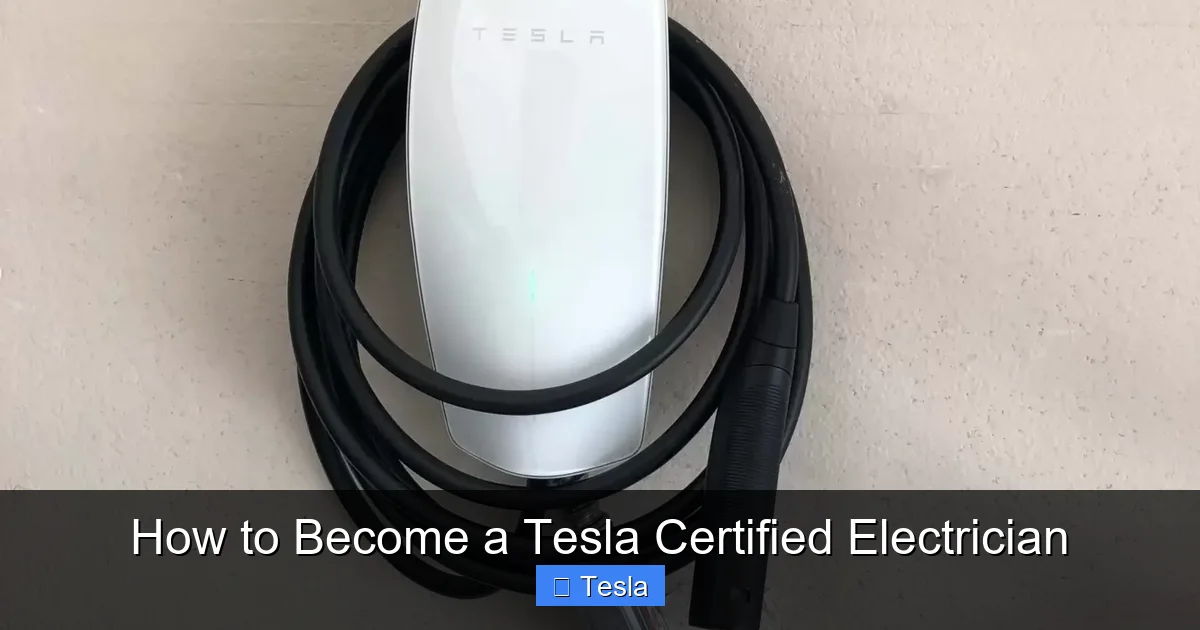
The bread and butter of this certification is installing Tesla Wall Connectors. This involves:
- Site Assessments: Evaluating a customer’s electrical panel capacity, available space, and optimal Wall Connector location.
- Electrical Upgrades: Often, this means upgrading a home’s main service panel or adding a dedicated subpanel to handle the 40-60 amp draw of a Wall Connector. This is where your core electrical skills are paramount.
- Conduit and Wiring: Running the appropriate gauge wire (often 6 AWG copper for 60A circuits) in conduit from the panel to the charger location, adhering to all local electrical codes (NEC).
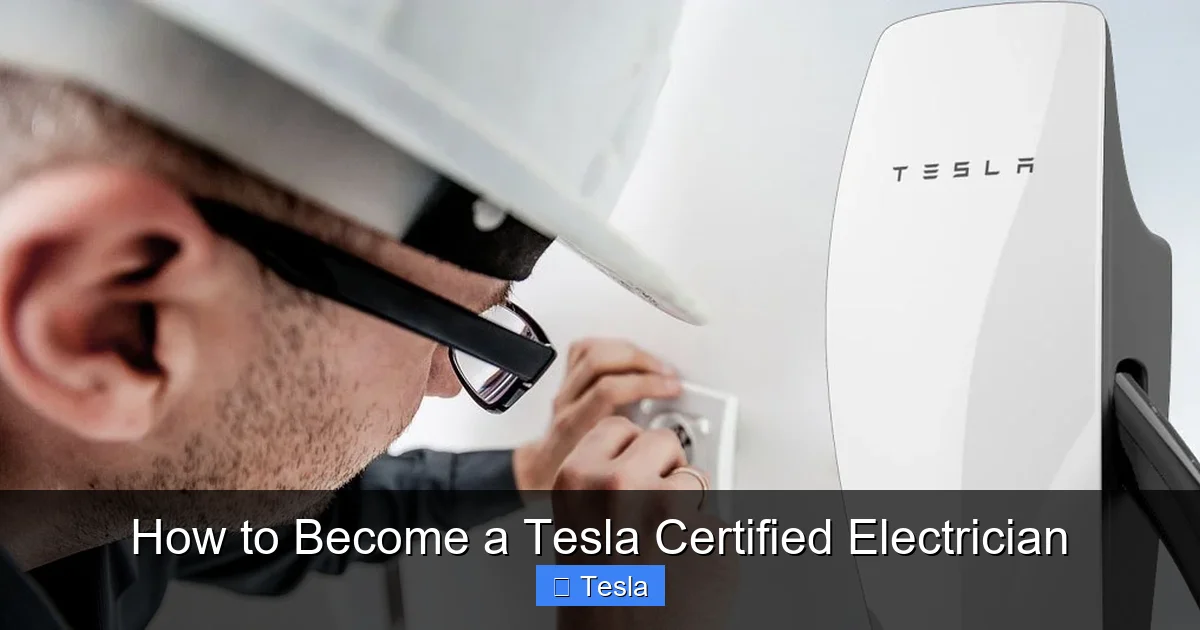
- Mounting and Termination: Securely mounting the Wall Connector, making the final connections inside the unit, and ensuring proper grounding.
- Network Configuration: Connecting the Wall Connector to the customer’s Wi-Fi network for remote monitoring and control via the Tesla app. Troubleshooting connectivity issues is a common task.
You’ll also install Tesla Mobile Connectors (the portable charger that comes with the car) on dedicated outlets, like a NEMA 14-50, ensuring the outlet is correctly wired and rated. For commercial projects, you might handle multiple Wall Connectors or larger Tesla Charger installations for fleets or destination charging.
The Business and Customer Service Side
Beyond the physical work, certification makes you a trusted advisor. You’ll consult with customers on their charging needs, explain the difference between various connector types, and provide accurate quotes. Tesla provides you with tools to generate professional proposals. Being certified means you’re listed in Tesla’s official installer directory, which drives customer leads directly to you. It’s a powerful marketing tool that separates you from the competition. Furthermore, understanding the cost implications for the customer is key; you might need to explain why a simple 220V outlet installation is different from a full Wall Connector job with a panel upgrade.
Prerequisites: The Non-Negotiables Before You Apply
You cannot skip this step. Tesla has clear, firm prerequisites. The most critical is your electrician’s license. This isn’t a suggestion; it’s a mandatory filter to ensure all certified installers are legally qualified to perform the work.
Visual guide about How to Become a Tesla Certified Electrician
Image source: american-electrical.com
1. A Valid, Unrestricted Electrician License
You must possess a current and active journeyman or master electrician license issued by a state, provincial, or local government authority in the country where you plan to install. The license must be:
- Unrestricted: It cannot have limitations that would prevent you from performing the work (e.g., a license restricted to low-voltage only).
- In Good Standing: No suspensions or revocations.
- Current: Not expired.
You will be required to provide your license number and jurisdiction during the application process. Tesla may verify this information. If you are an apprentice or helper, you are not eligible. The program is for licensed professionals. This requirement protects you, the customer, and Tesla. It ensures every installation is performed by someone who has met rigorous industry standards and understands the National Electrical Code (NEC) and local amendments.
2. Insurance and Business Requirements
While not always a strict pre-application requirement, you will need appropriate insurance to perform installations for customers. Tesla typically requires proof of:
- General Liability Insurance: Usually with a minimum coverage amount (e.g., $1,000,000). This protects the homeowner and Tesla in case of property damage or injury during the installation.
- Workers’ Compensation Insurance: If you have employees, this is legally required in most jurisdictions.
- A Business Entity: You must operate as a legitimate business (e.g., LLC, corporation, sole proprietorship). You cannot be a purely informal individual contractor without business registration.
It’s wise to have these documents ready before you apply, as you may need to provide proof during the onboarding process after passing the exam.
3. Technical Aptitude and Tools
This is less a formal prerequisite and more a practical reality. You need to be comfortable with:
- Using electrical testing equipment (multimeters, voltage testers).
- Reading electrical schematics and wiring diagrams.
- Operating power tools (drills, saws, conduit benders).
- Basic computer and smartphone proficiency for the Wi-Fi setup and Tesla’s online portal.
- Physically demanding work: lifting 50+ lb Wall Connectors, climbing ladders, working in attics or crawlspaces.
While Tesla provides specific training on their products, they assume you already possess the foundational trade skills.
The Certification Pathway: Step-by-Step
With your license in hand and your business insured, you can begin the formal certification process. This is a structured, multi-stage pathway.
Visual guide about How to Become a Tesla Certified Electrician
Image source: american-electrical.com
Step 1: Submit Your Online Application
Navigate to the Tesla Partnerships or Professionals portal (the exact URL can change, so search for “Tesla Certified Installer Program” or “Tesla Pro”). You will create an account and fill out a detailed application. This form asks for:
- Your personal and business information.
- Your electrician license details (number, state, expiration).
- Proof of insurance (you may upload certificates here or later).
- Information about your business experience, particularly with residential/commercial electrical work and, ideally, any EV charging experience.
- Your service area (zip codes or cities you cover).
Be thorough and honest. Tesla reviews these applications to ensure basic eligibility. There is typically no fee to apply. Once submitted, you wait for approval to proceed. This review can take anywhere from a few days to a couple of weeks.
Step 2: Access and Complete the Online Training Modules
Upon application approval, you gain access to Tesla’s online Learning Management System (LMS). This is the theoretical foundation of your certification. The modules are self-paced but must be completed within a set timeframe (often 30-60 days). Key topics include:
- Tesla Product Deep Dive: Detailed specs, features, and components of the Wall Connector, Mobile Connector, and Gen 2 Wall Connector.
- Site Assessment & Planning: How to properly evaluate a site, perform load calculations, and create a site plan. This is critical for avoiding common installation errors.
- Installation Procedures: Step-by-step video guides for mounting, wiring, and configuring the Wall Connector for different electrical supply scenarios (50A, 60A, 80A, etc.).
- Electrical Codes & Safety: Emphasis on NEC requirements specific to EVSE (Electric Vehicle Supply Equipment), grounding, bonding, and disconnect requirements.
- Wi-Fi Setup & Troubleshooting: Detailed instructions on connecting the Wall Connector to a customer’s network and resolving common connectivity problems.
- Customer Service & Documentation: How to use Tesla’s installer tools to generate proposals, complete installation reports, and process warranty claims.
You will take quizzes at the end of each module. You must pass these to move forward. The training is comprehensive and designed to ensure every certified electrician installs the equipment the same, safe way. It’s not just about *how* to install, but *why* each step matters.
Step 3: Attend the Mandatory In-Person Training
After successfully completing the online modules, you will be scheduled for an in-person training session. This is a hands-on, instructor-led class, usually held at a regional training center or sometimes a major Tesla Service Center. The format can be a one-day intensive or split over two days. Here, you will:
- Physically handle and disassemble/reassemble Wall Connectors.
- Practice making terminal connections with the correct torque specifications.
- Work with different cable types and conduit setups.
- Simulate Wi-Fi pairing and troubleshooting on actual units.
- Perform a full mock installation on a training panel or mock wall.
- Ask direct questions to Tesla trainers and network with other electricians.
This session solidifies the online learning and ensures you have the muscle memory and practical skill to perform the work correctly. Attendance is mandatory. If you miss it, you must reschedule, which can delay your certification.
Step 4: Schedule and Pass the Certification Exam
The final gate is the certification exam. This is typically administered at the end of the in-person training or scheduled separately at a proctored testing center (like a Pearson VUE center). The exam is:
- Comprehensive: It covers material from both the online modules and the in-person session.
- Multiple Choice: Usually 50-100 questions testing your knowledge of products, procedures, codes, and troubleshooting.
- Time-Limited: You have a set amount of time (e.g., 90 minutes) to complete it.
- Passing Score: You need a high score to pass, often 80% or 85%.
The exam ensures you have retained the critical information. If you fail, you are typically allowed one or two retakes, possibly after a waiting period and review of the training materials. Passing this exam is what earns you the title “Tesla Certified Electrician.” You will receive a digital certificate and your profile will be activated in Tesla’s installer directory.
Tools, Equipment, and Costs Involved
Let’s talk brass tacks. Becoming certified isn’t free, and you’ll need specific tools. Planning for these costs is part of the business preparation.
Certification Program Costs
The cost structure can vary by region and has changed over time. As of recent reports, the typical breakdown is:
- Application Fee: Often $0 or a nominal fee.
- Online Training Fee: Can range from $200 to $500.
- In-Person Training Fee: This is the major cost, often between $500 and $1,000. This fee usually covers the training materials, use of equipment during training, and the exam.
- Exam Fee: Sometimes included in the training fee, but can be separate (~$100-$150).
Total Estimated Cost: You should budget between $700 and $1,500 for the entire certification process from application to exam. Always check the current Tesla Pro portal for the most accurate and up-to-date pricing in your region. These fees are paid directly to Tesla or their training partners.
Essential Tools and Equipment for Installations
To perform the actual installations, you need a well-stocked electrician’s toolbox plus some specific items. Tesla’s training will list required tools, but they generally include:
- Core Electrician’s Tools: High-quality insulated screwdrivers, needle-nose pliers, wire strippers/cutters, voltage tester, multimeter, fish tape, conduit bender.
- Specialized Tools for Tesla: Torque wrench (with correct socket sizes for Wall Connector terminals, often 5mm or 6mm hex), wall mounting template (provided by Tesla or you make your own), wire pulling lubricant.
- Consumables: Appropriate gauge THHN/THWN-2 wire (6 AWG copper is common for 60A), conduit (EMT or PVC), connectors, wire nuts, heat shrink, electrical tape, wall anchors for mounting.
- Safety Gear: Gloves, safety glasses, hard hat (if needed), voltage-rated tools.
You will source your own wire and conduit per each job’s specific requirements. Tesla does not supply these for your business. The initial tool investment can be several hundred dollars if you don’t already own a professional-grade kit.
Business Setup and Marketing Costs
Don’t forget the overhead. You need:
- Vehicle: A reliable work vehicle to transport tools, equipment, and the Wall Connector itself. A branded van or truck is excellent marketing.
- Insurance: As mentioned, general liability and workers’ comp. Annual premiums vary widely by location and business size.
- Software: A system for estimates, invoicing, and customer management. Tesla provides a portal for generating official installation proposals, but you need your own business software.
- Marketing: While Tesla provides leads through their directory, you’ll also want a website, Google Business Profile, and possibly local advertising. Highlighting your Tesla Certification prominently is key.
These are ongoing business costs separate from the one-time certification fees.
Maintaining Your Certification and Growing Your Business
The certification is not a “set it and forget it” credential. It requires active maintenance and offers pathways for growth.
Recertification: The Two-Year Cycle
Your Tesla Certified Electrician status is valid for two years from the date you pass the exam. To maintain it, you must complete the recertification process before your expiration date. Recertification typically involves:
- Updated Online Training: Completing new modules that cover product updates, revised installation procedures, and changes to electrical codes or Tesla policies.
- Possible Exam: Depending on the extent of changes, you may need to pass a shorter recertification exam.
- Proof of Insurance: Re-submitting current certificates of insurance.
- License Verification: Confirming your electrician license is still active and in good standing.
There is a fee for recertification, usually lower than the initial certification cost (e.g., $200-$400). Tesla will notify you well in advance of your expiration date. Letting your certification lapse means you are removed from the installer directory and cannot legally represent yourself as Tesla Certified. You would have to reapply and potentially retake the full training and exam.
Leveraging Your Certification for Business Growth
Once certified, actively use that credential. Here’s how:
- Optimize Your Tesla Installer Profile: Ensure your business name, service area, contact info, and website are correct and complete. Upload high-quality photos of your completed installations (with customer permission).
- Display the Badge Everywhere: Put the “Tesla Certified Electrician” badge on your website homepage, service vehicles, business cards, and all marketing materials. It’s a trust signal.
- Gather and Showcase Reviews: Encourage satisfied Tesla-owning customers to leave reviews on your Google Profile and, if possible, on Tesla’s installer feedback system. Positive reviews are social proof.
- Specialize and Package: Market yourself as the “EV Charging Expert.” Offer bundled services like panel upgrades combined with charger installation. Educate customers on the cost of a 220V outlet versus a hardwired Wall Connector.
- Network with Related Businesses: Partner with home builders, solar installers, and real estate agents who work with Tesla-owning clients.
Your certification is your entry ticket to a lucrative niche. The demand for home charging installations is massive and growing, and Tesla owners are often willing to pay a premium for a certified, hassle-free experience.
Frequently Asked Questions (FAQs)
How long does the entire certification process take?
The timeline varies. After applying, approval can take 1-3 weeks. You then have 30-60 days to complete the online training. In-person training sessions are scheduled based on availability in your region, which could add another 1-4 weeks. From start to finish, a motivated electrician can become certified in 2-3 months, assuming training dates align quickly.
Is the Tesla certification recognized in all countries?
The certification is primarily for installers in the United States and Canada. Tesla has specific programs and partnerships in other regions like Europe, but the process, training, and certification name may differ. You must hold a valid electrician license in the specific country/state where you intend to install. Always check Tesla’s official regional websites for the correct program in your location.
What if I fail the certification exam?
You typically have two attempts to pass the exam. If you fail the first time, you will be given a waiting period (e.g., 24-48 hours) to review the training materials and can then retake it. If you fail a second time, you may be required to re-take the in-person training course before attempting the exam again. There is usually a fee for each exam attempt or retake.
Do I need to be a master electrician, or is a journeyman license enough?
A valid, unrestricted journeyman electrician license is the minimum requirement in most jurisdictions. You do not need to be a master electrician. However, you must be legally permitted to perform the work as defined by your local licensing authority. Some states may have specific requirements about who can pull permits for 240V installations, so know your local rules.
Will Tesla provide me with customers or leads?
Yes, that is a key benefit. Once certified and listed in Tesla’s “Find an Installer” directory, Tesla will refer customers in your service area directly to you through their website and app. The volume of leads depends on your location and the number of certified installers nearby. You are responsible for managing these leads, quoting jobs, and providing excellent service to maintain a good standing in the program.
Can I get certified if I only do commercial or fleet installations?
The standard Tesla Certified Electrician program focuses on residential Wall Connector and Mobile Connector installations. For large-scale commercial, fleet, or destination charging projects, Tesla has a separate, more rigorous partnership program often requiring larger bonding, insurance, and project management capabilities. The residential certification is the foundational step, but large commercial work may involve a different procurement process directly with Tesla’s commercial team.
Frequently Asked Questions
What is How to Become a Tesla Certified Electrician?
How to Become a Tesla Certified Electrician is an important topic with many practical applications.