
How to Become a Certified Tesla Charger Installer

Becoming a certified Tesla charger installer is a strategic move for electricians looking to specialize in the booming EV market. It involves meeting specific prerequisites, completing Tesla’s training, and passing an exam to install Wall Connectors safely and correctly. This certification not only validates your skills but also connects you with Tesla’s referral network, driving business growth. It’s a clear pathway to becoming a trusted expert in home EV charging infrastructure.
Key Takeaways
- Certification is Tesla’s official endorsement: It means you’ve met their rigorous standards for safely installing and configuring Wall Connectors, which builds immediate trust with Tesla owners.
- You must already be a licensed electrician: This is the non-negotiable first step. The program is for qualified professionals, not DIY enthusiasts.
- The process is application-based, not automatic: You must apply, be approved, pay fees, and pass both online and practical exams to earn and maintain your status.
- It’s an investment in tools and training: Beyond your existing electrical toolkit, you’ll need specific Tesla diagnostic tools and must complete their mandatory training courses.
- Certification drives business: Being listed on Tesla’s “Find an Installer” map is a powerful marketing tool that generates direct leads from Tesla customers in your service area.
[FEATURED_IMAGE_PLACEHOLDER]
📑 Table of Contents
- So, You Want to Install Tesla Chargers?
- Understanding the Tesla Charger Installer Certification
- Prerequisites: Are You Eligible?
- The Step-by-Step Application & Onboarding Process
- Tools, Equipment, and What You’ll Actually Need
- Running Your Business as a Certified Installer
- Common Pitfalls and How to Avoid Them
- Conclusion: Is This the Right Move for You?
So, You Want to Install Tesla Chargers?
The electric vehicle revolution isn’t coming—it’s already here. And with every new Tesla on the road, there’s a homeowner or business owner who needs a reliable, fast way to charge it. That’s where you come in. Becoming a certified Tesla charger installer isn’t just about slapping a Wall Connector on a wall. It’s about mastering a specific system, adhering to Tesla’s exacting standards, and positioning yourself as a go-to expert in a niche that’s only getting bigger. This guide will walk you through every single step, from the basic prerequisites to the moment your name appears on Tesla’s official installer map. We’ll talk real costs, practical tips, and the day-to-day realities of the job. Let’s get into it.
Why Certification Matters More Than Ever
You might be thinking, “I’m a licensed electrician—I can install a 240V outlet.” And technically, you’re right. But a Tesla Wall Connector is more than just a fancy outlet. It’s a networked, smart charging station that communicates with the car, your home’s Wi-Fi, and Tesla’s servers. Improper installation can lead to nuisance tripping, inefficient charging, or in rare cases, safety hazards. Tesla’s certification program ensures you understand the nuances: load calculation specifics for simultaneous charging, proper grounding and bonding, Wi-Fi troubleshooting, and how to use their proprietary configuration tools. It’s the difference between being a general electrician and being a specialist. Customers seeking a Tesla charger are often tech-savvy and will specifically look for a “Tesla Certified Installer.” That badge of approval is marketing gold. It short-circuits the trust-building process and often justifies a premium rate. For many electricians, this certification is the key that unlocks a profitable new service line.
Understanding the Tesla Charger Installer Certification
Before you dive into applications, you need to know exactly what you’re signing up for. Tesla’s program, officially called the “Tesla Charger Installation Partner” program, is designed for licensed electricians and electrical contractors. It’s not a certification for the cars themselves (that’s a separate path for technicians), but specifically for the home and commercial charging hardware—the Wall Connector and the Mobile Connector when used with a dedicated outlet.
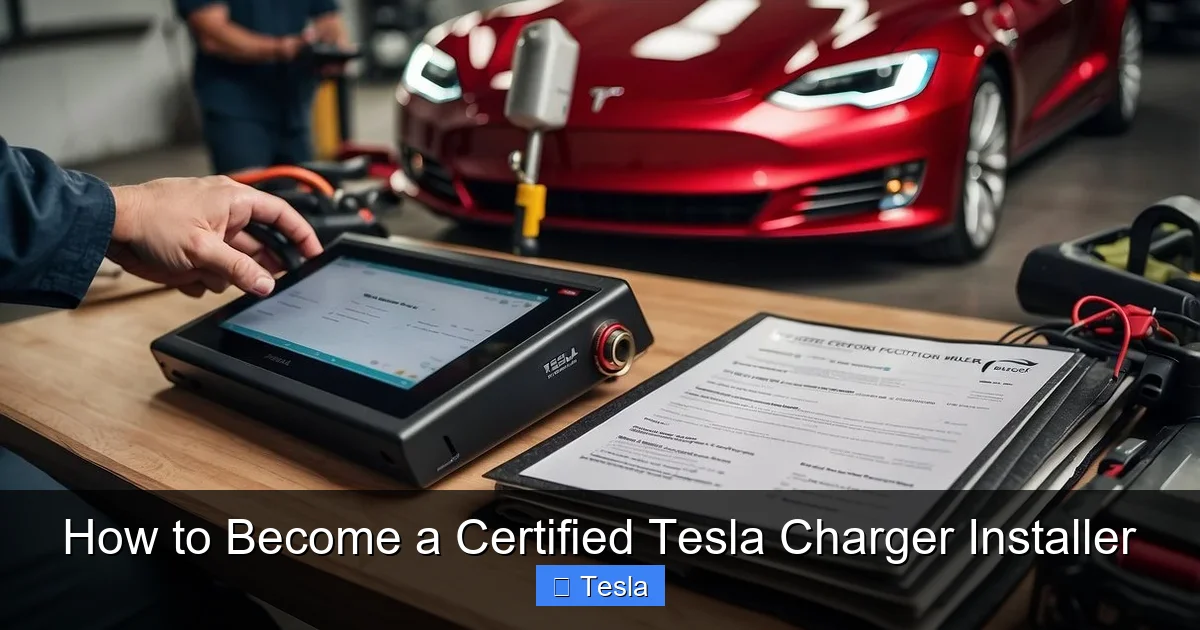
Visual guide about How to Become a Certified Tesla Charger Installer
Image source: koala.sh
The Two Tiers: Home vs. Commercial
The program has two primary tracks. The Home Installation certification is what most electricians pursue. It qualifies you to install the Gen 3 Wall Connector in residential settings. You’ll learn the specific electrical requirements, mounting techniques, and configuration via the Tesla mobile app. The Commercial Installation certification is more advanced. It covers the higher-power, hardwired Wall Connectors used in businesses, multifamily units, and fleets. This involves more complex load management, three-phase power knowledge, and commercial-grade networking. You typically start with the home certification and can add commercial later as your business grows. Both require passing a written exam and a hands-on practical assessment.
What the Certification Actually Covers
The training isn’t just a sales pitch. It’s a deep dive into Tesla’s ecosystem. You’ll learn about:
- Product Line: Differences between Mobile Connector, Gen 2 Wall Connector, and Gen 3 Wall Connector.
- Electrical Specifications: Exact amperage, voltage, and circuit breaker requirements for each model.
- Installation Best Practices: Mounting heights, clearance from combustibles, cable management, and weatherproofing for outdoor installs.
- Configuration & Commissioning: How to use the Tesla app to set charging schedules, assign the connector to a vehicle, and connect it to a home network.
- Troubleshooting: Diagnosing common Wi-Fi issues, error codes on the connector’s LED ring, and power delivery problems.
- Safety & Code Compliance: Ensuring every install meets NEC (National Electrical Code) standards and local AHJ (Authority Having Jurisdiction) requirements.
This knowledge is what separates a certified pro from someone who just follows instructions. It’s about understanding the “why” behind every step.
Prerequisites: Are You Eligible?
This is the gatekeeper. Tesla doesn’t just let anyone sign up. You must meet these criteria before your application will even be considered:
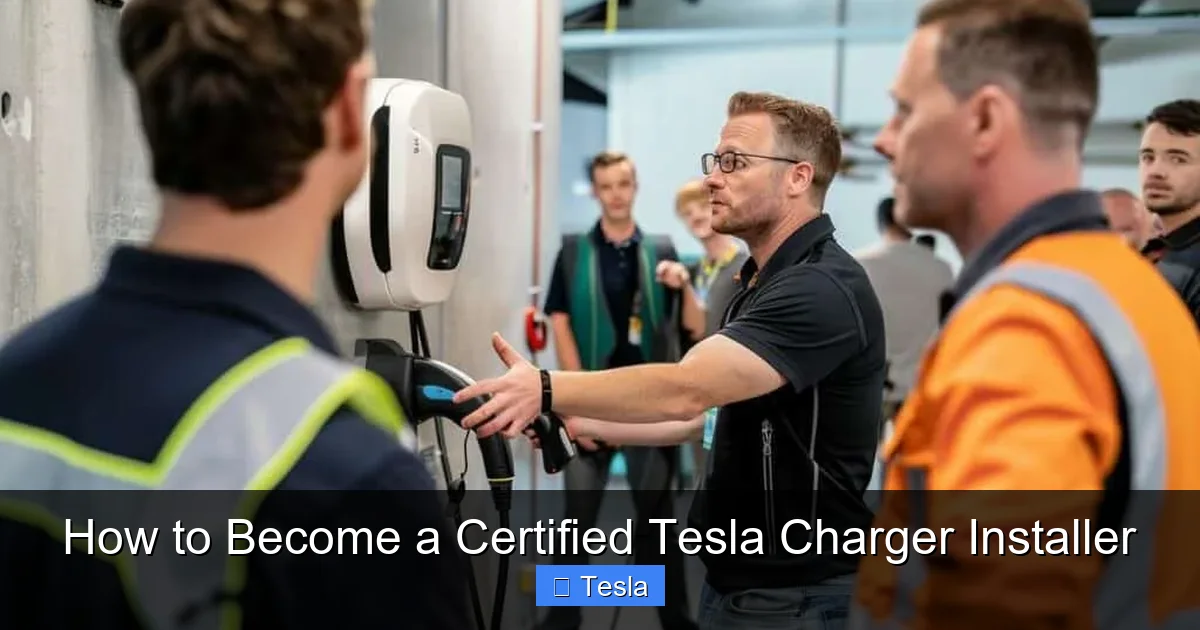
Visual guide about How to Become a Certified Tesla Charger Installer
Image source: wattlogic.com
- Active Electrical License: You must hold a current, valid electrician’s license (journeyman, master, or contractor license) in the state or country where you intend to perform installations. This is the absolute minimum. The license must be in good standing with no suspensions.
- Proof of Insurance: You need to provide proof of general liability insurance. Tesla typically requires a minimum coverage amount (often $1 million). This protects both you and Tesla in case of an installation-related incident.
- Business Registration: If you’re operating as a business (LLC, corporation, etc.), you must provide your business registration documents. Sole proprietors can often use their personal license but still need to meet insurance requirements.
- Technical Experience: While not always formally documented, Tesla expects you to have solid experience in residential electrical work, particularly with 240V circuits and subpanel installations. They want to know you can handle the job safely and competently.
- Geographic Service Area: You must define the specific zip codes or regions you will service. Tesla will not approve installers who list an overly broad area they can’t realistically cover.
A critical note: If you’re an apprentice or helper, you cannot get certified yourself. The license must be in your name. However, working under a certified master electrician is a great way to gain the required experience.
The Step-by-Step Application & Onboarding Process
Okay, you’ve got your license, insurance, and experience. Now what? The process is methodical:
Visual guide about How to Become a Certified Tesla Charger Installer
Image source: volteam.com.au
1. Submit the Online Application
Head to Tesla’s official installer partner portal (the URL is typically provided through their business contact channels or after initial inquiry). You’ll fill out a detailed form with your business information, license details, insurance certificates, and service area. Be precise and double-check everything. Incomplete applications are rejected or delayed.
2. Application Review & Approval
This can take 2-6 weeks. Tesla’s team will verify your license and insurance. They may also check your online presence (website, reviews) to gauge your professionalism. If you have a website, make sure it looks credible. If you have poor reviews or no web presence, it could hurt your chances. They are looking for partners who will represent the Tesla brand well.
3. Pay the Program Fees
Once approved, you’ll pay an initial enrollment fee. This typically ranges from $500 to $1,000. This fee grants you access to the training portal, pricing discounts on equipment (you must buy Wall Connectors through Tesla), and the right to use the Tesla branding in your marketing. There is often an annual renewal fee as well to maintain your listing.
4. Complete the Mandatory Online Training
You’ll be given access to Tesla’s Learning Management System (LMS). You must complete a series of online modules covering everything from product knowledge to safety protocols. This is self-paced but must be finished within a set timeframe (e.g., 30 days). You’ll take quizzes along the way. This is the easiest part if you pay attention.
5. Schedule and Pass the Exams
After the online training, you must schedule two exams:
- The Written Exam: A multiple-choice test on the training material. It’s open-book in some formats but requires a solid understanding. You need a passing score (usually 80%+) to proceed.
- The Practical Exam: This is the big one. You will be required to perform a full installation on a mock-up wall or at a Tesla facility. You’ll be judged on every step: safety prep, drilling, mounting, wiring, termination, configuration via the app, and cleanup. One mistake can mean a fail. You typically have one chance to pass; a failure may require retaking the entire course or paying a hefty retest fee.
Pro Tip: Before your practical, practice the entire process from start to finish on a training board. Time yourself. Have a friend watch and critique you. Muscle memory is key.
Tools, Equipment, and What You’ll Actually Need
You can’t show up with just a screwdriver and a fish tape. Tesla has specific requirements for the tools you use during the installation and for your service vehicle.
The Mandatory Tesla Toolkit
Upon certification, you are often required to purchase an official “Tesla Installer Tool Kit” or have your own tools that meet their exact specifications. This kit typically includes:
- Specialized Wrenches: For the unique Wall Connector terminal lugs.
- Torx Bits: Specific sizes for the Gen 3 connector’s security screws.
- Voltage Tester/MMF: A high-quality multimeter for verifying power and ground.
- Torque Wrench: Critical for properly tightening the main lug connection to the specified ft-lbs.
- Conduit Bender: If you do a lot of surface raceway work.
- Wi-Fi Analyzer Tool: To diagnose signal strength issues at the installation site.
You cannot use generic tools; Tesla is specific about brands and models to ensure consistency and safety.
Vehicle & Marketing Requirements
To remain in good standing, you must:
- Drive a marked service vehicle with your company logo and contact info. Tesla may require photo proof.
- Have a professional website with clear service descriptions and contact forms.
- Use Tesla-provided marketing materials and adhere to their brand guidelines.
- Maintain a certain level of customer satisfaction (measured by post-install surveys).
This is a partnership. You are an extension of the Tesla brand, so they invest in your presentation.
Running Your Business as a Certified Installer
Certification is the ticket, but running a profitable installation business is the race. Here’s what to expect day-to-day.
The Lead Flow: How Customers Find You
Your primary source of leads will be Tesla’s “Find an Installer” tool on their website. When a customer enters their zip code, your business will appear if you’re certified and cover that area. The quality of these leads is generally very high—they are motivated Tesla owners ready to buy. However, competition can be fierce in metro areas. You’ll also get direct referrals from Tesla Service Centers and delivery specialists. Outside of Tesla’s funnel, you should aggressively market your certification on your website, Google My Business, and social media. Phrases like “Tesla Wall Connector Installation” and “Certified Tesla Charger Installer” should be SEO focuses. You might also want to understand the broader context of EV charger installation costs, which you can explore in detail in our guide on how much it costs to install a Tesla charger.
Pricing Your Services
You have two primary pricing models:
- Flat-Rate Package: Tesla provides suggested retail pricing for the hardware and standard installation. Many installers adopt this as their base package (e.g., “Wall Connector + Basic Install”). This is simple for customers.
- Itemized Quote: You price the hardware (which you buy at a discounted contractor rate from Tesla) separately from your labor, plus any additional materials (conduit, subpanel upgrades, long wire runs). This is more accurate for complex jobs.
Key Insight: The profit is rarely in the hardware markup (Tesla controls that). The profit is in your labor efficiency and your ability to upsell on electrical upgrades. A simple 20-foot run from the main panel is quick money. A job requiring a new 200-amp subpanel in a detached garage is a major project with much higher revenue. Always inspect the site in person before quoting. Hidden obstacles (old panels, attics full of insulation, rock-filled trenches) can turn a $1,000 job into a $3,000 one.
The Importance of Permits and Inspections
This is non-negotiable. As a licensed electrician, you must pull the required electrical permit for every installation. This is for your protection and the homeowner’s. The permit process ensures a third-party (the city inspector) verifies your work is code-compliant. Never, ever skip this to save time or money. It voids your insurance, risks your license, and creates a massive liability if something goes wrong. Factor permit fees into your quote. Build relationships with local AHJs—being known as a reliable, code-compliant installer will make inspections smoother.
Common Pitfalls and How to Avoid Them
Even with certification, installers face challenges. Here are the most common and how to sidestep them.
Wi-Fi Woes
The #1 service call after installation is “The charger won’t connect to Wi-Fi.” The Wall Connector needs a strong, stable 2.4GHz signal (it does not use 5GHz). Your pre-installation site survey must include checking Wi-Fi strength at the proposed mounting location. Use a phone app to map signal strength. If it’s weak, you must solve it: install a Wi-Fi extender or access point near the charger, or use a hardwired Ethernet adapter (for Gen 3). Document the Wi-Fi solution in your contract and charge for it. Don’t assume the customer’s home network is adequate.
Panel Capacity Issues
Many homes, especially older ones, have 100-amp or even 60-amp main panels. Adding a 50-amp circuit for a Tesla charger can push them over the limit. You must perform a proper load calculation (NEC Article 220). If the panel is full or oversubscribed, you have three options: upgrade the main service (major cost), install a new subpanel near the garage (medium cost), or install a load management device like a Tesla Powerwall or a third-party load-sharing breaker (medium cost, but complex). Present these options clearly. The customer must understand the electrical reality before you begin.
Poor Communication and Scheduling
You’re dealing with high-end clients who often have tight schedules. Be professional. Confirm appointments the day before. Arrive on time. Communicate delays immediately. Provide a clear timeline (e.g., “The install will take 2-3 hours”). A messy, late, or rude installer will get a bad review, which can get you removed from Tesla’s program. Your online reputation is everything. Remember, these customers are likely to share their experience on Tesla forums and social media.
Conclusion: Is This the Right Move for You?
Becoming a certified Tesla charger installer is a significant commitment of time, money, and effort. It requires you to already be a competent, licensed electrician willing to invest in specialized tools and training. But for the right person, it’s one of the smartest business moves you can make in today’s trades landscape. The EV market is not a fad; it’s the future of transportation. Every year, more Teslas and other EVs hit the roads, and they all need to charge at home. By becoming certified, you tap into a dedicated, high-value customer stream with minimal marketing cost—just the cost of your certification and a commitment to excellence. You position yourself not as a generic electrician, but as a technology integrator. You solve a real problem for a passionate customer base. If you have the electrical license, the business mindset, and the dedication to quality, this certification can transform your electrical business from a local service into a specialized, profitable, and future-proof enterprise. The first step is verifying your eligibility. The next step is applying. The final step is joining the ranks of electricians powering the electric revolution, one home charger at a time.
Frequently Asked Questions
How much does it cost to become a certified Tesla charger installer?
The costs include an initial program fee (typically $500-$1,000), the cost of the mandatory Tesla tool kit (several hundred dollars), and the price of the training/exam. You must also factor in your existing business costs like insurance, licensing, and a marked service vehicle. The main investment is your time and commitment to the process.
How long does the certification process take?
From application approval to passing the exams, the process usually takes 1-3 months. This depends on how quickly you complete the online training and schedule your practical exam. The application review itself can take 2-6 weeks.
Can I install a Tesla charger without being certified?
Yes, any licensed electrician can legally install a 240V outlet for a Mobile Connector or even hardwire a Wall Connector. However, you cannot use Tesla’s branding, get leads from their “Find an Installer” map, or receive the installer warranty and support benefits. You also cannot purchase Wall Connectors at the contractor discount.
Do I need a special permit to install a Tesla charger?
Absolutely. A standard electrical permit is required for any new 240V circuit. As a licensed electrician, you are responsible for pulling this permit from your local AHJ and scheduling the required inspection. Never install without a permit.
What is the pass rate for the practical exam?
Tesla does not publish official statistics, but from installer anecdotes, the practical exam has a significant fail rate. Common failures include incorrect torque on lugs, poor wire management, failure to configure the connector via the app, and safety oversights like not de-energizing the circuit before work. Thorough practice is essential.
Is certification worth it for a small, one-person operation?
It can be. The leads from Tesla’s map can provide a steady stream of high-margin work for a solo electrician. However, you must be able to handle the volume and maintain the professional standards Tesla expects. For a solo operator, the certification fee and tool costs are a manageable investment if you get just 2-3 jobs per year from the referral program.
