
How the Bugatti Veyron Super Sport Enhances Aerodynamics

The Bugatti Veyron Super Sport is a masterpiece of aerodynamic engineering, using a sophisticated blend of active and fixed components to tame the forces of nature at over 250 mph. Its unique twin-deck spoiler, massive front diffuser, and intricately integrated cooling channels work in concert to generate thousands of pounds of downforce while minimizing drag. This intricate system, honed in wind tunnels, transforms raw engine power into stable, controllable, and record-breaking speed, making it a benchmark for all hypercars.
Key Takeaways
- Active Aerodynamics is Key: The Veyron SS uses a hydraulically adjustable rear wing and front air diffuser that change position based on speed and driving mode, optimizing for either maximum downforce or minimal drag.
- Fixed Sculpting for Stability: Immovable elements like the iconic front horseshoe grille, side rockers, and fixed rear wing profile are meticulously shaped to manage airflow, reduce lift, and channel air efficiently to radiators.
- Cooling is an Aerodynamic Challenge: Managing the 1,200-horsepower W16 engine’s heat requires precisely placed air intakes and ducts that must feed cool air without disrupting laminar flow, a delicate balancing act.
- Wind Tunnel Validation: Every curve and vent was validated in advanced wind tunnels, where engineers measured drag, downforce, and pressure distribution to achieve the perfect aerodynamic compromise.
- Real-World Performance: This aerodynamic ballet translates directly to real-world capability, enabling the Veyron SS to safely reach its electronically limited top speed of 258 mph and an unofficial record of 267.8 mph.
📑 Table of Contents
- The Unrelenting Pursuit of Speed: Introducing the Veyron Super Sport
- Active Aerodynamics: The Chameleon-Like Adaptation
- Fixed Aerodynamic Elements: Sculpted for Stability
- Cooling System Integration: Breathing for Power
- Wind Tunnel Wisdom: Where Science Meets Speed
- Real-World Impact: From Test Track to Public Roads
- Legacy and Influence: The Aero Benchmark
- Conclusion: The Art of Air Manipulation
The Unrelenting Pursuit of Speed: Introducing the Veyron Super Sport
Imagine trying to hold a sheet of paper out of a car window at 60 mph. The force is surprising. Now, imagine that force multiplied by more than four times. That’s the environment the Bugatti Veyron Super Sport operates in. To conquer the air itself and channel its 1,200 horsepower into a stable, ground-hugging missile, Bugatti’s engineers embarked on a quest where aerodynamics wasn’t just a consideration—it was the primary design language. The result is a car that doesn’t just push through air; it manipulates it with surgical precision.
Launched in 2010 as the ultimate evolution of the standard Veyron, the Super Sport wasn’t merely a power boost. It was a holistic re-engineering focused on weight reduction, cooling efficiency, and, most critically, aerodynamics. The goal? To transform the already formidable Veyron into a machine that could not only break records but do so with supreme confidence. Every body panel, every vent, and every curve serves a dual purpose: to look breathtakingly beautiful and to perform a vital function in the grand aerodynamic scheme.
Aerodynamic Philosophy: Downforce vs. Drag
At its core, automotive aerodynamics is a constant battle between two forces: downforce, which pushes the car onto the road for better grip, and drag, the resistance of air that slows it down. A high-performance car like the Veyron SS needs immense downforce at speed to prevent becoming airborne, but too much drag kills top speed. The genius of its design lies in finding the optimal balance across its entire performance envelope—from cornering at 150 mph to a straight-line top speed run.
This balance is achieved through a complex system of active and fixed devices. Think of it like a chameleon: the car changes its aerodynamic character on the fly. At lower speeds, it prioritizes downforce for agility. At its terrifying top speed, it reshapes itself to become as slippery as possible, shedding drag while still maintaining just enough downforce to stay planted. This adaptability is what makes the Veyron Super Sport’s aerodynamics so exceptionally advanced.
Active Aerodynamics: The Chameleon-Like Adaptation
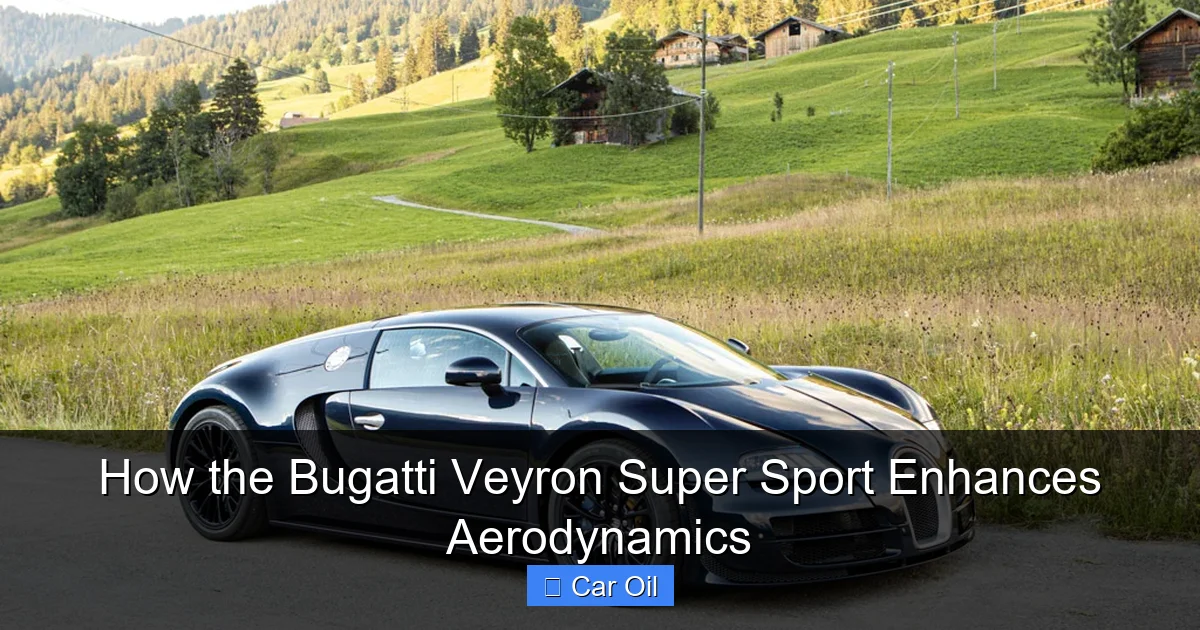
The most visible and intelligent part of the Veyron SS’s aero suite is its active system. Unlike fixed spoilers on most sports cars, the Bugatti’s rear wing and front diffuser are hydraulically actuated, moving through multiple positions in milliseconds based on inputs from the car’s computers.
Visual guide about How the Bugatti Veyron Super Sport Enhances Aerodynamics
Image source: ultimatecarpage.com
The Revolutionary Twin-Deck Rear Wing
The rear wing is arguably the star of the show. It’s not a single blade but a complex, two-tiered element often described as a “bi-plane” or “twin-deck” spoiler. This design is fundamental to its effectiveness.
- Low-Speed & Handling Modes: When the car is accelerating hard or cornering, the wing deploys to a steep angle, generating significant downforce over the rear axle. This increases rear tire grip, preventing oversteer and allowing for faster cornering speeds.
- High-Speed & Top Speed Modes: As the Veyron SS approaches its stratospheric top speed, the wing automatically lowers to a near-horizontal position. This dramatically reduces drag. Crucially, even in this position, the upper deck of the twin-deck design still creates a subtle amount of downforce, ensuring stability isn’t completely sacrificed for speed.
- Air Brake Function: Under hard braking, the wing flips upward to a near-vertical position, acting as an enormous air brake. This increases drag instantly to help slow the car, complementing the mighty carbon-ceramic brakes and reducing their thermal load.
This hydraulic system is a marvel of reliability, operating flawlessly under extreme pressure and temperature. It’s a perfect example of how form follows function—the wing’s striking shape is dictated entirely by its multi-stage aerodynamic role.
The Adaptive Front Diffuser
Matching the rear wing’s activity is an equally sophisticated front diffuser. Located beneath the iconic front bumper, this large opening can be raised or lowered by hydraulics.
- High-Downforce Position: When raised, it effectively increases the cross-sectional area under the car, accelerating airflow and creating a low-pressure zone that sucks the front end down. This counteracts the natural lift at the front and balances the downforce generated by the rear wing.
- Low-Drag Position: At top speed, the diffuser lowers to smooth the underbody airflow and reduce frontal area, cutting drag. Its movement is perfectly synchronized with the rear wing to maintain the ideal front-to-rear downforce balance, which is critical for stability.
Together, this active duo allows the Veyron Super Sport to be both a corner-carving beast and a bullet-like top-speed specialist, a duality few cars can achieve.
Fixed Aerodynamic Elements: Sculpted for Stability
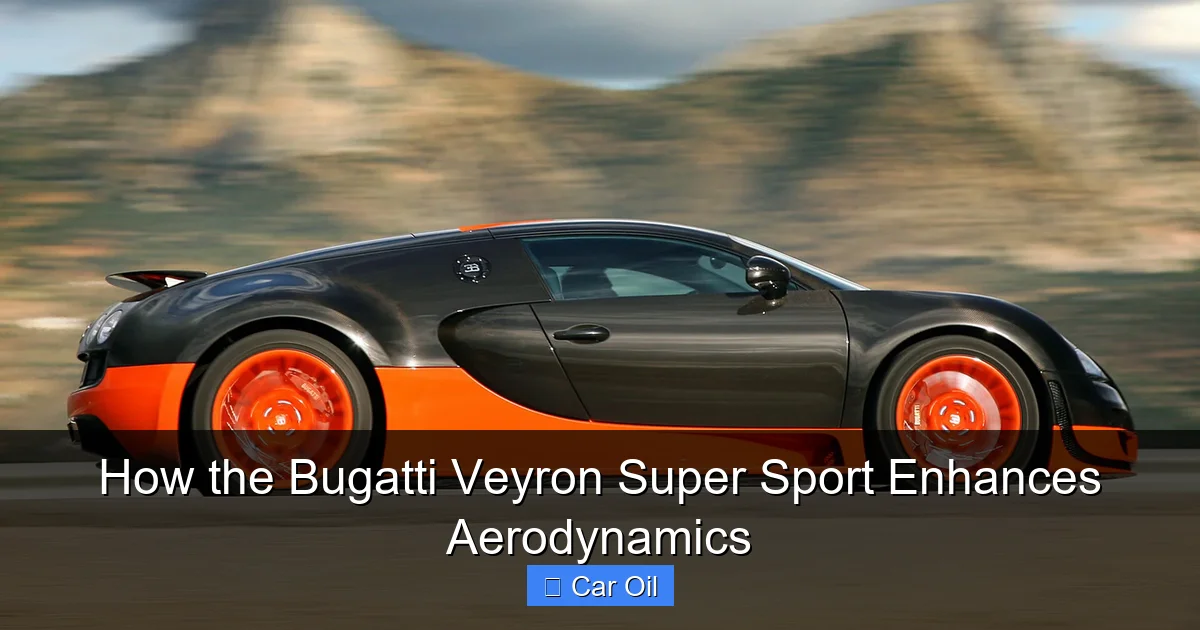
While the active components grab headlines, the fixed bodywork of the Veyron Super Sport is where the foundational aerodynamic principles are set in stone—or in this case, carbon fiber. These elements work tirelessly at all speeds to manage airflow, reduce lift, and direct air where it’s needed most.
Visual guide about How the Bugatti Veyron Super Sport Enhances Aerodynamics
Image source: all-auto.org
The Iconic Front End: More Than a Grille
The unmistakable horseshoe grille is an engineering necessity. Its large, rounded shape is not just a Bugatti signature; it’s a carefully sized aperture to feed the four turbochargers with cold, dense air. Flanking this grille are deep, sculpted side intakes that channel air to the front-mounted intercoolers. The entire front bumper assembly is designed to split airflow around the car’s wide body while minimizing turbulent wake. Notably, the Veyron SS features a more pronounced front splitter than the standard model, a fixed element that creates a high-pressure zone above it and a low-pressure zone below, physically pushing the front axle down.
Side Rockers and Rear Deck
The smooth, flowing side panels, or rockers, are designed to guide air cleanly from the front to the rear, preventing disruptive vortices. The transition to the rear is particularly critical. The wide, flat rear deck just ahead of the engine bay is not just for show; it helps to manage the extremely turbulent airflow exiting from the engine’s top. The fixed portion of the rear wing’s mountings and the surrounding bodywork are shaped to act as a stabilizing fin, much like those on a race car, helping to keep the car straight at speed.
The Underbody Story
Perhaps the most important fixed aerodynamic element is the car’s flat underbody. From the front splitter to the rear diffuser zone, the underside is nearly perfectly smooth. This is crucial for “ground effect.” As air flows under the car at high speed, it’s forced through a narrowing channel (the diffuser at the rear), accelerating it and creating a powerful low-pressure suction that literally pulls the car to the pavement. The Veyron SS’s underbody panels are meticulously fitted to ensure no turbulent air leaks disrupt this vital effect.
Cooling System Integration: Breathing for Power
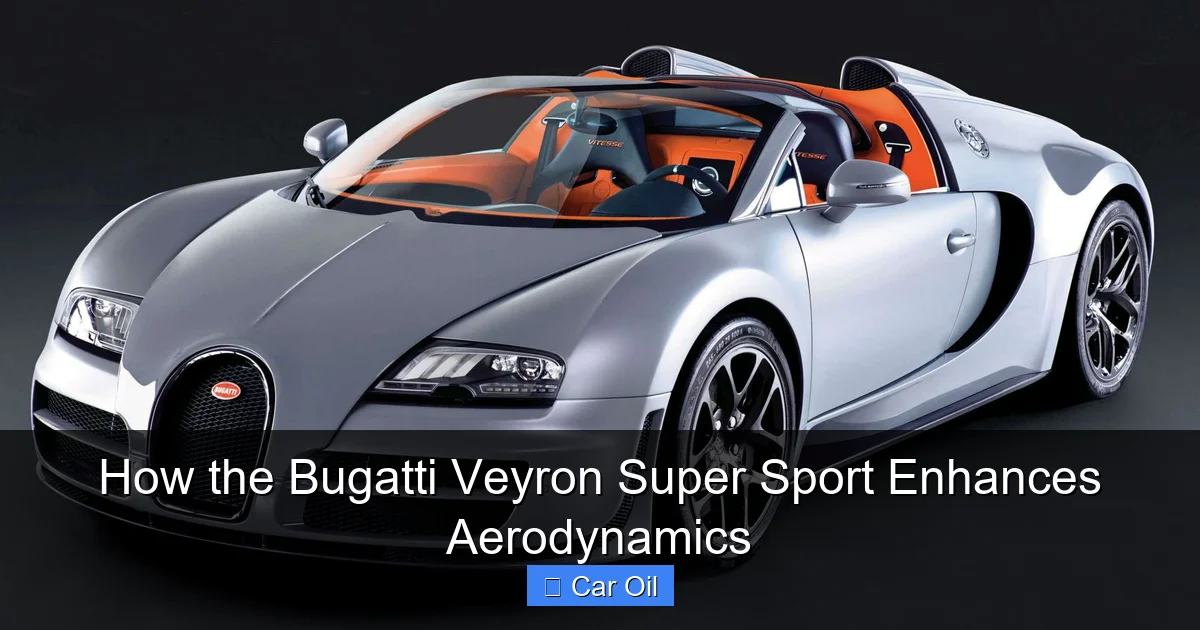
A 1,200-horsepower W16 engine with four turbochargers produces an immense amount of heat. Cooling this powerplant is an aerodynamic challenge of the highest order. You need massive amounts of air to flow over the radiators and intercoolers, but every intake and exit hole is a disruption to smooth airflow, increasing drag. Bugatti’s solution is a masterpiece of integrated design.
Visual guide about How the Bugatti Veyron Super Sport Enhances Aerodynamics
Image source: cdn.wallpapersafari.com
Strategic Air Intakes
The Veyron Super Sport features no fewer than 10 major air intakes. Each is positioned where high-pressure air naturally accumulates, minimizing the “cost” in drag. The primary intakes are:
- Front Grille & Side Intakes: Feed the front-mounted air-to-water intercoolers for the front turbochargers.
- NACA Ducts on the Roof: These distinctive, teardrop-shaped vents (named after the National Advisory Committee for Aeronautics) are pure function. They channel high-pressure air from the roof directly down into the engine bay to cool the rear turbochargers and exhaust system. Their shape is proven to induce minimal drag while moving large air volumes.
- Rear Intakes Behind the Wheels: Positioned in the low-pressure, high-turbulence wake of the rear wheels, these intakes feed the engine’s main air filters. It’s a clever use of an otherwise problematic area of airflow.
Maintaining these intricate cooling passages is critical. Just as a clogged cabin air filter in a Honda Civic reduces HVAC efficiency, any obstruction in the Veyron’s cooling ducts can lead to catastrophic overheating. The engineering philosophy, however, is worlds apart: here, airflow is lifeblood for performance.
Expelling the Hot Air
Getting cool air in is only half the battle. Getting the superheated air out is just as important and equally aerodynamic. Large vents are located in strategic low-pressure zones:
- Over the rear wheels, where bodywork vents expel hot air from the engine bay.
- Through the rear diffuser area, where the accelerating airflow helps suck hot gases out.
- The design ensures that hot air is not recirculated back into the intakes, a common problem in poorly designed high-performance cars. This thermal management is seamlessly woven into the car’s overall aerodynamic shape.
Wind Tunnel Wisdom: Where Science Meets Speed
The stunning form of the Veyron Super Sport didn’t emerge from a stylist’s sketch alone. It was born, refined, and perfected in the rarefied atmosphere of the wind tunnel. Bugatti utilized some of the world’s most advanced facilities, including its own in-house tunnel and partnerships with Formula 1 specialists.
The Iterative Process
Engineers would take a scale model or a full-size carbon-fiber prototype and subject it to controlled airflows at various speeds. They measured everything: total drag (Cd), front and rear downforce, pressure distribution across every surface, and airflow visualization using smoke or tufts. Small changes—a millimeter here, a degree there—were tested repeatedly. The goal was a Cd (drag coefficient) that was impressively low for a car with such a large frontal area and aggressive downforce requirements. While exact figures are manufacturer-confidential, estimates place the Veyron SS’s Cd around 0.36-0.38, remarkable for a car producing over 1,000 lbs of downforce.
Computational Fluid Dynamics (CFD)
Long before a model touched the tunnel, billions of calculations were run using CFD software. This digital simulation allowed engineers to visualize airflow in three dimensions, seeing streamlines, pressure gradients, and vortices. It was used to initially shape the body and to test radical ideas. The active aero systems were heavily simulated in CFD to understand how their movement would affect overall airflow stability. The marriage of CFD and physical wind tunnel testing allowed for an unprecedented level of optimization.
The lessons learned here trickle down, in concept, to all automotive design. Even something as seemingly mundane as maintaining proper tire pressure on a Honda Civic affects rolling resistance and, by extension, aerodynamic efficiency at highway speeds. The principle of reducing parasitic drag is universal, though the scale is vastly different.
Real-World Impact: From Test Track to Public Roads
All this theory and simulation culminates in one thing: mind-bending real-world performance. The Veyron Super Sport’s aerodynamics are not an academic exercise; they are the key to its legendary status.
Conquering the Top Speed
The car’s most famous feat was its 2010 run at the Volkswagen Ehra-Lessien test track, where it averaged 267.8 mph over two timed runs in opposite directions. This was only possible because at those velocities, the active aerodynamics were in their lowest-drag configuration. The fixed bodywork, honed to perfection, allowed the car to slice through the air with minimal resistance. The downforce generated, even in this “slipstream” mode, was calculated to be just enough to keep the car stable without creating excessive drag. Without this precise balance, the car would either become unstable and dangerous, or simply not have the power to overcome the immense air resistance.
Track Dominance
On a race track, the system shows its other side. In handling modes, the rear wing and front diffuser deploy, generating an estimated 1,000+ pounds of downforce. This transforms the car’s cornering behavior. It feels glued to the road, with terrifying grip levels that defy physics. The active systems constantly adjust, reacting to speed and lateral G-forces, ensuring the aero balance remains perfect as the driver pushes harder. It’s a system that provides immense safety margins and performance that is simply unattainable with passive aerodynamics alone.
The Driver’s Experience
For the driver, the aerodynamic systems are mostly transparent, governed by the car’s “EB” (Bugatti Electronics) control unit. However, the sensations are profound. The immense stability at 200+ mph is unnervingly calm. The car doesn’t float or wander; it feels physically connected to the earth. Under hard braking, the deploying air brake is a visceral experience, a sudden shove of air that slows the car with brutal efficiency. It’s a constant, silent dialogue between the car and the atmosphere, and the Veyron Super Sport is a flawless conversationalist.
Legacy and Influence: The Aero Benchmark
The Bugatti Veyron Super Sport set a new benchmark for what was possible in aerodynamic design for a production road car. Its integrated, intelligent approach to managing airflow has influenced every subsequent hypercar. Today, active aerodynamics are a staple on cars from the McLaren P1 to the Koenigsegg Jesko, all tracing their conceptual roots back to the pioneering work done on the Veyron program.
It proved that extreme speed and practical usability could coexist through intelligent aero. The car can sit in traffic with its wing folded, then transform into a top-speed weapon on a closed road. This philosophy of adaptive performance is now a cornerstone of modern hypercar engineering. The Veyron Super Sport remains, in many ways, the most complete expression of the original Veyron concept: an engineering masterpiece that uses every trick in the book—and invents a few new ones—to make the impossible feel routine.
Conclusion: The Art of Air Manipulation
The Bugatti Veyron Super Sport is more than just a collection of vents and wings; it is a symphony of controlled airflow. Its aerodynamics are a holistic system where active components dance with fixed sculptures, all serving the dual gods of downforce and low drag. From the hydraulically shifting twin-deck wing to the meticulously NACA-ducted roof vents, every square millimeter of its surface tells a story of wind tunnel validation and computational genius. It is the ultimate proof that in the pursuit of ultimate speed, mastering the air is the first and most important step. The Veyron Super Sport didn’t just break records; it redefined the very language of automotive aerodynamics, leaving a legacy that continues to shape the hypercars of today and tomorrow.
Frequently Asked Questions
How does the Veyron Super Sport’s active rear wing work?
The twin-deck rear wing is hydraulically controlled by the car’s computer. It automatically adjusts its angle based on speed, brake pressure, and cornering forces. It raises for maximum downforce during cornering and braking, and lowers to a near-flat position at top speed to minimize drag while still providing some stability.
What is the purpose of the NACA ducts on the roof?
The distinctive teardrop-shaped vents on the roof, called NACA ducts, are pure function. They efficiently channel high-pressure air from the roof down into the engine bay to cool the rear turbochargers and exhaust system. Their shape is designed to induce minimal drag while moving a large volume of air.
Does the Veyron Super Sport produce downforce at its top speed?
Yes, critically. Even in its lowest-drag, top-speed configuration where the wing is nearly horizontal, the fixed bodywork and the upper deck of the twin-wing design generate a calculated amount of downforce. This ensures the car remains stable and planted without creating excessive drag that would limit its top speed.
How many air intakes does the Veyron Super Sport have and why so many?
It has approximately 10 major air intakes. This is because the 1,200-horsepower W16 engine with four turbochargers generates immense heat. Multiple, strategically placed intakes are required to feed cool air to the front and rear intercoolers, engine bay, and turbochargers, preventing overheating during sustained high-speed driving.
What is the role of the underbody on the Veyron Super Sport?
The flat, smooth underbody is crucial for creating ground effect. As air flows under the car and through the rear diffuser, it accelerates, creating a low-pressure zone that sucks the car downward. This generates a significant portion of the car’s total downforce, enhancing grip and stability without adding external wings or splitters that would increase drag.
How did wind tunnel testing shape the final design?
Wind tunnel testing was fundamental. Engineers tested countless scale models and full-size prototypes, measuring drag, downforce, and pressure distribution. They iteratively refined every curve, vent, and angle. This process validated the CFD simulations and ensured the final shape achieved the perfect compromise between low drag for top speed and high downforce for handling.
