
Are There Any Recalls on a 2010 Ford F-150

Your 2010 Ford F-150 is subject to two major safety recalls: the widespread Takata airbag inflator recall and a power steering fluid leak recall. These issues pose serious risks, including airbag failure and potential fires. The good news? Repairs are free at Ford dealers. Use your VIN to check for open recalls via NHTSA or Ford’s website. Don’t wait—address recalls promptly to keep your truck safe and reliable. Regular maintenance beyond recalls ensures your F-150 remains roadworthy for years.
Key Takeaways
- Two Major Recalls: The 2010 Ford F-150 has significant recalls for Takata airbag inflators and power steering fluid leaks, both posing serious safety hazards.
- Takata Airbag Danger: Faulty inflators can explode, shooting metal shrapnel into the cabin. This recall affects nearly all 2010 F-150s with specific airbags.
- Steering Fire Risk: A deteriorated power steering hose can leak fluid onto hot engine parts, causing fire. It mainly impacts models with the 5.4L V8 engine.
- Free Repairs: All recall-related parts and labor are provided at no cost by Ford dealerships, regardless of ownership history.
- Easy Check: Use your Vehicle Identification Number (VIN) on the NHTSA website or Ford’s recall portal to instantly see if your truck has open recalls.
- Act Immediately: Do not ignore recall notifications. Prompt repair is crucial for your safety and your truck’s long-term reliability.
📑 Table of Contents
- Understanding Vehicle Recalls: Why They Matter for Your 2010 F-150
- The Big One: Takata Airbag Inflator Recall
- Steering System Recall: Power Steering Fluid Leaks
- How to Check if Your 2010 F-150 Has Open Recalls
- The Recall Repair Process: What to Expect at the Dealer
- Beyond Recalls: Maintaining Your 2010 F-150’s Safety and Reliability
- Conclusion: Your 2010 F-150 Deserves This Attention
Understanding Vehicle Recalls: Why They Matter for Your 2010 F-150
Let’s talk about your 2010 Ford F-150. It’s a legendary truck, built for work and play. But like any vehicle from that era, it has a history. And part of that history involves safety recalls. A recall is when the manufacturer or the government identifies a defect that poses a risk to safety. They then mandate a fix, which the automaker must provide for free. For a 2010 F-150, this isn’t just paperwork—it’s about addressing real, known dangers on the road. Ignoring a recall is like ignoring a check engine light, but far more serious. It directly compromises the systems meant to protect you and your passengers.
Why does this matter specifically for a 2010 model? That year sits in the middle of the 2009-2014 generation. These trucks are now 14+ years old. Parts wear, and some defects only become apparent after years on the road. The two primary recalls for this model year involve two critical systems: the airbags and the power steering. Both are foundational to safe driving. One protects you in a crash; the other helps you avoid one. Understanding these recalls is the first step toward ensuring your trusted F-150 remains a safe and reliable companion for years to come.
The Big One: Takata Airbag Inflator Recall
What is the Takata Recall?
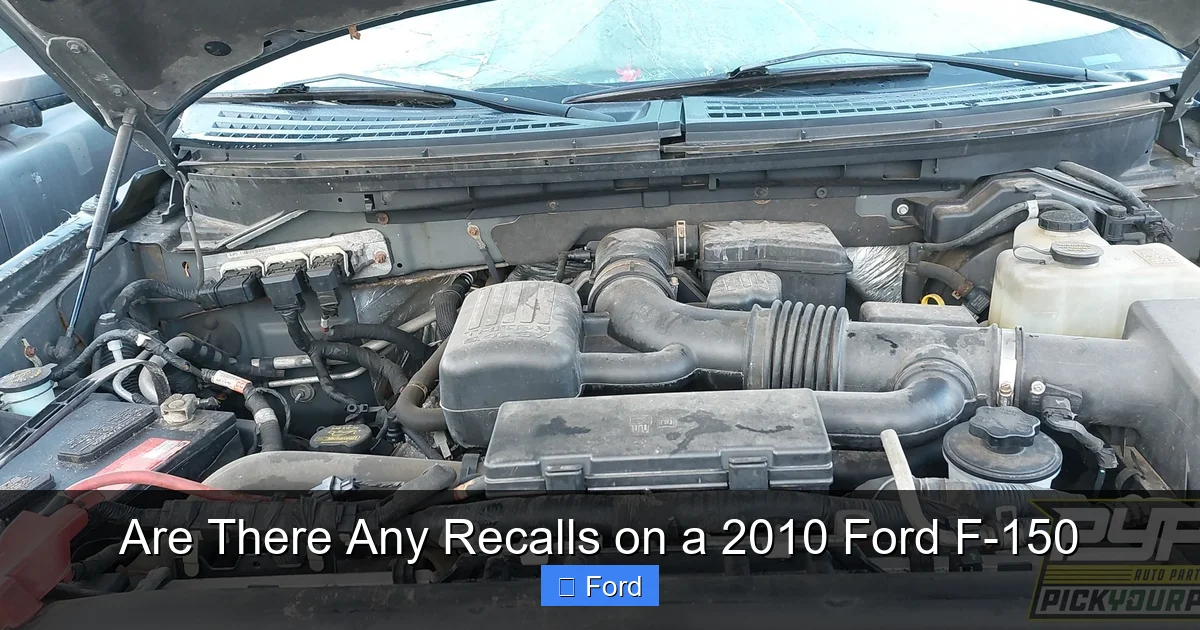
This is the massive, industry-wide recall that affected millions of vehicles from nearly every automaker. For your 2010 Ford F-150, it’s the most pressing recall. The problem lies with the driver and front passenger airbag inflators made by Takata. These inflators use a chemical propellant to rapidly inflate the bag during a crash. The defect? The propellant can degrade over time, especially in hot, humid climates. When the airbag deploys, this degraded propellant can burn too quickly, causing the metal inflator housing to rupture explosively. Instead of a soft cushion, you get shrapnel—metal fragments flying into the cabin at high speed.
Visual guide about Are There Any Recalls on a 2010 Ford F-150
Image source: pypimages.azureedge.net
The consequences are severe. Injuries from these ruptured inflators include lacerations, eye injuries, and even fatalities. This isn’t a hypothetical risk; the National Highway Traffic Safety Administration (NHTSA) has confirmed dozens of deaths worldwide linked to these defective inflators. The recall is so extensive that it’s often called the “largest and most complex safety recall in U.S. history.” For your 2010 F-150, it means the airbags you rely on could become a weapon in the very moment you need them most.
Which 2010 F-150s Are Affected?
Virtually all 2010 Ford F-150s are included in this recall. The recall covers trucks equipped with certain driver and/or passenger frontal airbags containing the faulty Takata inflators. Ford has identified the affected VIN ranges. The easiest way to know for sure is to check your specific vehicle. But as a general rule, if your 2010 F-150 has the original airbags, it is almost certainly subject to this recall. The recall is divided into “phases” based on the perceived risk of the inflator’s age and geographic location, but all affected vehicles must eventually be repaired.
It’s important to note that some repairs may involve replacing just the inflator, while others require replacing the entire airbag module. The specific repair depends on the design of your truck’s airbag system and the available remedy parts. Ford has been working for years to produce enough replacement inflators to address the backlog. Even if you’ve had a repair done in the past, it’s possible your truck was repaired with a temporary or another Takata inflator that itself may need future replacement. Always verify the status with a dealer.
The Dangers of a Faulty Inflator: A Closer Look
Why is this so urgent? The risk increases with time and exposure to heat and humidity. The chemical inside the inflator can break down, producing more explosive force and a weaker metal housing. In a crash, the intended function—controlled gas release—fails. The housing explodes outward. Imagine the steering wheel or passenger dashboard literally bursting apart, hurling sharp metal pieces toward the driver or passenger. These fragments can cause devastating injuries to the head, neck, and chest. Even a minor collision that would normally just trigger a standard airbag deployment can turn catastrophic with a ruptured Takata inflator.
There is no warning before failure. The inflator can look and function normally until the moment of deployment. This is why NHTSA and Ford stress immediate action. They have even issued urgent warnings for certain high-risk vehicles, advising owners to stop driving until repairs are made. While your 2010 F-150 may not be in the absolute highest-risk category (which are very early models from certain regions), it is still part of the recall population. The risk, while statistically low per vehicle, is absolute and unacceptable when a free fix is available.
What Does the Repair Involve?
The repair is performed exclusively by authorized Ford dealership technicians. For most 2010 F-150s, the fix involves removing the steering wheel or dashboard panel to access the airbag module. The defective inflator is then replaced with a new, safe version. In some cases, especially for passenger-side airbags, the entire airbag module might be replaced with a redesigned unit. The process typically takes a few hours. The key point: you pay nothing. Ford covers all parts and labor for this recall. This is a government-mandated safety correction, not a warranty service. Even if you are the tenth owner of the truck, the repair is free.
After the repair, the technician will reset the airbag warning light and ensure the system is fully functional. You should receive a repair order detailing the work done. Keep this document with your vehicle’s service records. It’s proof the recall was addressed, which is vital for future resale value and peace of mind. If your dealer tries to charge you for this repair, that is a clear violation. Politely refuse and ask to speak with the service manager, referencing the official NHTSA recall number (for the Takata recall, it’s often 15V-240 or similar, but your dealer will know).
Steering System Recall: Power Steering Fluid Leaks
The Issue Explained
Now, let’s discuss the second major recall for the 2010 Ford F-150, which targets the power steering system. Specifically, it affects certain models equipped with the 5.4-liter V8 engine. The problem lies with a power steering hydraulic hose. Over time, this hose can deteriorate and develop a leak. The escaping power steering fluid is highly flammable. If it sprays onto hot engine components—like the exhaust manifold or catalytic converter—it can ignite. This creates a significant risk of an under-hood fire, potentially while the vehicle is parked or even being driven.
Visual guide about Are There Any Recalls on a 2010 Ford F-150
Image source: autodetective.com
The recall, issued by Ford and overseen by NHTSA, identifies that the hose material may not be fully resistant to heat and environmental degradation over the long term. The failure is not sudden; it often starts as a small seepage that worsens. Many owners first notice a sweet, oily smell (power steering fluid) or see a puddle of reddish or amber fluid under the front of the truck. If left unaddressed, the leak can become severe enough to cause a loss of power steering assist, making the truck difficult to steer, and simultaneously create a fire hazard.
Symptoms to Watch For
How do you know if your 2010 F-150 is developing this problem? There are clear warning signs. First, visually inspect the area under your truck, particularly on the driver’s side near the front, for any fresh drips of reddish fluid. Power steering fluid is distinct from oil (brown/black) or coolant (green/orange). Second, check the power steering fluid reservoir under the hood. If the level is consistently low and you don’t see an obvious external leak, the internal hose might be leaking into the engine bay where it evaporates or gets burned off. Third, listen for a whining or groaning noise from the power steering pump when turning the wheel, especially at low speeds. This can indicate low fluid. Finally, be aware of any unusual smells—a burnt sugar-like odor—when the engine is hot, as fluid may be dripping on hot parts.
If you notice any of these symptoms, do not wait for a recall notice. Have your truck inspected by a mechanic immediately. Explain your suspicion about the power steering hose. Driving with a known leak is dangerous due to both the fire risk and the potential for sudden loss of steering assist, which could lead to an accident.
Which Models Are Included?
This recall is specific. It applies to certain 2010 Ford F-150s (and some 2011 models) that are equipped with the 5.4-liter V8 engine. It does not affect trucks with the 4.6-liter V8 or the 3.7-liter V6. Additionally, it may only cover specific build dates or VIN ranges within that engine group. The exact scope is defined by Ford’s recall documentation. Therefore, you cannot assume your 5.4L truck is affected or not affected based solely on the engine. The only definitive way is to use your VIN. If your 2010 F-150 has the 5.4L engine, it is highly advisable to check the recall status proactively, even if you haven’t received a notice.
The Repair Process: Replacing the Hose
The remedy for this recall is to replace the suspect power steering hydraulic hose with a new, improved design. The old hose is removed, and a new one, made of more durable materials resistant to heat and degradation, is installed. In some cases, if the leak has caused damage to adjacent components (like the power steering rack or pump), those parts may also need replacement, but the recall specifically covers the hose. The repair is performed at a Ford dealership at no cost to you. The job typically takes several hours, as the hose is often routed through tight engine compartments and may require draining and refilling the power steering system.
As with the airbag recall, keep all documentation. After the repair, the system should be bled of air and checked for leaks. Monitor your power steering fluid level for a few weeks afterward to ensure the new hose is sound. If the warning light for the power steering system (if equipped) comes on, or you notice any return of the symptoms, have the dealership re-check their work immediately.
How to Check if Your 2010 F-150 Has Open Recalls
Using the NHTSA Website
Checking for recalls is incredibly easy and should be a regular habit for any vehicle owner. The National Highway Traffic Safety Administration (NHTSA) provides a free, public recall lookup tool. Go to nhtsa.gov/recalls. You’ll need your Vehicle Identification Number (VIN). This 17-digit code is your truck’s unique fingerprint. You can find it on the driver’s side dashboard near the windshield (visible from outside), on the driver’s side door jamb sticker, or on your insurance and registration documents.

Visual guide about Are There Any Recalls on a 2010 Ford F-150
Image source: carscoops.com
Enter the VIN into the NHTSA search box and submit. The system will instantly display any open safety recalls for your specific vehicle, along with the recall description, potential risks, and the recommended corrective action. It will also tell you if there are no open recalls. This is the most official source. Bookmark this page and check your VIN periodically, even if you’ve already addressed recalls. New recalls can be issued years after a vehicle goes on sale.
Checking with Your Dealer or Ford Directly
You can also call any Ford dealership’s service department. Provide them with your VIN, and they can look up all active recalls in Ford’s internal system. This is often the fastest way to schedule a repair if a recall is found. Additionally, Ford has its own owner portal. Visit ford.com/recalls and enter your VIN. This will show recalls specific to your vehicle and sometimes even allow you to schedule a service appointment online directly with a chosen dealer. Using the manufacturer’s site can provide more detail about the repair parts and status (e.g., “parts available,” “repair on hold”).
VIN Lookup Tips and What to Do Next
Always double-check your VIN for typos when entering it online. The system is sensitive. If the NHTSA site says “No results found,” that means there are no open recalls for your VIN at that moment. However, it doesn’t mean your truck was never subject to one. It could mean the recall repair has already been completed and closed out in the system. You can verify this by asking a dealer for a full vehicle history report or by checking your own service records for recall work.
If you find an open recall, don’t panic. The next step is to call your local Ford dealer’s service department. Tell them you have an open recall and would like to schedule a repair. They will confirm the recall, check parts availability, and set an appointment. Do not delay. Some recalls, like the Takata airbag, have been prioritized into zones based on climate and vehicle age. But all must be fixed eventually. The earlier you address it, the sooner you eliminate that risk from your daily drive.
The Recall Repair Process: What to Expect at the Dealer
Scheduling Your Appointment
Once you’ve identified an open recall, call your preferred Ford dealership’s service department. Have your VIN ready. The advisor will pull up the recall details and check if the necessary parts are in stock. For older models like the 2010 F-150, parts for the Takata recall were historically in short supply, but availability has improved significantly over the years. The steering hose recall likely has better parts availability. The advisor will give you an estimated time of completion. Airbag replacements can take 2-4 hours; steering hose replacements might take 3-5 hours, depending on shop workload and any additional issues found.
Ask about loaner vehicles or shuttle services. Many dealers offer a loaner car or a shuttle for multi-hour repairs. It’s worth asking if they have a program for recall customers. If you need a loaner, reserve it when you book, as availability can be limited. Also, clarify if you need to do anything special, like removing personal items from the vehicle or disabling the battery.
What the Repair Involves
When you drop off your truck, the technician will first confirm the recall work to be done. For the Takata airbag, they will carefully disconnect the battery to prevent accidental deployment, remove the steering wheel or dashboard trim, and replace the inflator or module. They will then reconnect all electrical connectors, reassemble, and reset the airbag warning light. The system is then tested to ensure proper function. For the power steering hose, the technician will relieve system pressure, remove the old hose, install the new one, refill and bleed the power steering fluid, and check for leaks. They may also inspect related components for heat damage.
It’s a precise job. The technician is working on critical safety systems. You should expect a thorough, methodical process. Do not rush them. If they discover an unrelated but safety-critical issue (like severely worn brakes) during the inspection, they will inform you and get authorization before proceeding. The recall repair itself is non-negotiable and free, but additional recommended services are your choice.
After the Repair: Documentation and Verification
When you pick up your truck, the service advisor should hand you a completed repair order. This document is your proof that the recall was performed. It should list the recall number, a description of the work, parts used (often with new part numbers), and labor hours. Keep this with your permanent vehicle records. It’s essential for future buyers and for your own peace of mind. Before you leave, start the truck and check for any warning lights on the dashboard. The airbag light should be off. The steering should feel normal, with no unusual noises or fluid leaks under the vehicle. Take a short test drive to confirm everything feels right. If anything seems off, don’t hesitate to bring it back to the service lane immediately.
Beyond Recalls: Maintaining Your 2010 F-150’s Safety and Reliability
Regular Maintenance Checklist for an Aging Truck
Addressing recalls is non-negotiable, but it’s only part of keeping your 2010 F-150 safe. At 14-plus years old, proactive maintenance is more important than ever. Create a checklist. First, fluid checks: engine oil, coolant, transmission fluid, power steering fluid, and brake fluid. Change them on schedule or sooner if dirty. Second, tires: check pressure monthly, inspect for wear and damage, and rotate every 5,000-7,000 miles. Worn tires drastically reduce control, especially in bad weather. Third, brakes: inspect pads, rotors, and lines at least annually. Brake failure is a catastrophic risk. Fourth, battery: a weak battery can cause all sorts of electrical gremlins, including affecting airbag system performance during a crash. Test it twice a year and consider replacement if over 5 years old. A healthy electrical system is foundational for all safety features.
Fifth, belts and hoses: these rubber components dry out and crack with age. A broken serpentine belt can disable your power steering and cooling system. Inspect them visually. Sixth, lights and wipers: ensure all exterior lights work and wiper blades are effective. Visibility is a safety issue. Sticking to a rigorous maintenance schedule prevents small problems from becoming big, expensive, and dangerous ones. Consult your owner’s manual for Ford’s recommended intervals, but be prepared to do things sooner as the truck ages.
Upgrading Your Truck’s Safety and Comfort Features
Once your recall repairs are complete and your maintenance is up to date, consider targeted upgrades that enhance safety and driving experience. A reliable battery is paramount. If your original battery is original or failing, upgrading to a modern, high-cranking-amp battery ensures your truck starts in all conditions and provides stable power for all electronics, including critical safety systems. For the 2010 F-150, choosing the right battery size and type is key. We’ve done the research to help you pick the best battery for a 2010 Ford F-150 that offers durability and performance.
Comfort also contributes to safety. A tired, uncomfortable driver is a distracted driver. After years of use, your stock seats may be worn. High-quality seat covers not only protect your upholstery from further damage but can also provide better lumbar support and a more secure seating position. This is especially relevant for the popular SuperCrew configuration with its rear seats. Exploring the 10 best seat covers for the 2010 Ford F-150 Supercrew can refresh your cabin and improve your daily driving experience.
Finally, never underestimate your tires. They are your truck’s only connection to the road. In rain, snow, or ice, having the right tires is the single most important safety upgrade you can make. If you live in a region with winter weather, investing in a set of dedicated winter tires on steel wheels is a game-changer for traction and stopping power. Even all-season tires wear out; replacing them with a high-quality set from our list of the best winter tires for Ford F-150 can dramatically improve your control and confidence during the coldest months.
Keeping Detailed Records for Resale and Peace of Mind
Document everything. Keep a physical or digital file with all service receipts, recall repair orders, and maintenance logs. For a 2010 F-150, a well-documented history is a huge selling point. It proves to future buyers that the vehicle has been cared for and that all critical safety recalls have been addressed. When you eventually sell or trade-in, you can command a better price. More importantly, for your own use, these records help you track what’s been done and what’s coming up. If you ever have a question about a past repair, the invoice has the details. Set a calendar reminder for upcoming services. This habit transforms reactive ownership into proactive stewardship, ensuring your F-150 remains a safe, reliable workhorse for as long as you own it.
Conclusion: Your 2010 F-150 Deserves This Attention
So, are there any recalls on a 2010 Ford F-150? Absolutely. Two major ones demand your immediate attention: the Takata airbag inflator recall and the power steering hose leak recall. These are not minor service bulletins; they are serious safety defects that can lead to severe injury or death. The fantastic news is that Ford is legally obligated to fix them for free. All it takes is a few minutes of your time to check your VIN and schedule an appointment. There is no excuse for delay.
Think of it this way: your 2010 F-150 has likely served you faithfully for over a decade. It’s pulled trailers, carried cargo, and taken you on adventures. Addressing these recalls is the ultimate act of care—for yourself, your passengers, and the truck itself. It preserves its value and ensures it can continue to perform safely for years to come. Combine this with a solid maintenance routine and thoughtful upgrades, and you’ll squeeze every last reliable mile out of your American icon. Don’t wait for a warning sign that might never come. Check your recall status today. Your future self will thank you.
Frequently Asked Questions
How do I check if my 2010 Ford F-150 has any open recalls?
Visit the NHTSA recall website (nhtsa.gov/recalls) and enter your 17-digit VIN. You can also check Ford’s official recall portal or call any Ford dealership with your VIN. These methods will instantly show any active safety recalls for your specific truck.
Are recall repairs really free, even for used vehicles?
Yes, absolutely. All safety recall repairs must be performed by the manufacturer at no cost to the owner, regardless of whether you are the original owner or the fifth owner. The law requires this. Never pay for a recall-related part or labor.
How long does it typically take to fix the Takata airbag or steering recall on a 2010 F-150?
The Takata airbag repair usually takes 2-4 hours. The power steering hose recall typically takes 3-5 hours. Exact times vary by dealer workload and if any additional issues are found. Always ask for an estimate when you schedule your appointment.
What if I bought my 2010 F-150 from a private party and never received a recall notice?
Recall notifications are mailed to the registered owner on file. If you bought the truck privately, you likely weren’t on that list. This is why it’s your responsibility to periodically check for recalls using your VIN, independent of receiving a mailed letter. Never assume a lack of notice means no recall.
Can I still drive my truck with an open Takata airbag recall?
While the risk of a rupture is statistically higher in older vehicles and hot climates, NHTSA states the risk is low for most unaffected regions. However, because the consequences are catastrophic, they strongly urge owners to get the repair done immediately. If you are in the highest-risk zone and haven’t had the repair, they have advised to stop driving until fixed. For a 2010 F-150, it’s best to treat the recall as urgent and schedule the repair as soon as parts are available.
What should I do if the dealer says parts are unavailable and my repair is delayed?
This was common for Takata recalls in the past, but parts availability has improved. If your dealer indicates a delay, ask for an estimated date. You can also check the status on Ford’s recall website, which sometimes shows parts availability. Keep checking back. You are not obligated to wait indefinitely at one dealer; you can call other dealers in your area to see if they have parts on hand. Document all communications. The recall will eventually be completed when parts arrive.
