
What Type of Oil Does a 2008 Maserati Use?

Your 2008 Maserati requires a high-quality full synthetic oil with a viscosity of 5W-40 that meets Maserati specification MS-9390, as well as API SN and ACEA A3/B4 standards. Using the correct oil protects the high-performance F136 V8 engine from wear, ensures optimal performance, and maintains fuel efficiency. Always follow the intervals in your owner’s manual, typically every 5,000 to 7,500 miles, and use a premium oil filter to keep your Maserati running smoothly for years to come.
If you’re the proud owner of a 2008 Maserati, you know you’re driving a piece of automotive art. These Italian masterpieces combine breathtaking design with heart-pounding performance. But to keep that F136 V8 engine singing at its best, you need to use the right oil. In this guide, we’ll answer the burning question: what type of oil does a 2008 Maserati use? We’ll break down the exact specifications, viscosity grades, and top product recommendations so you can protect your investment and enjoy every mile.
First, let’s set the stage. If you’re wondering what type of car a Maserati is, it’s a high-performance grand tourer that demands the best in maintenance, starting with the right oil. The 2008 model year includes the Quattroporte (luxury sedan) and the GranTurismo (coupe) and Spyder (convertible). Both are powered by variations of the F136 V8 engine—a high-revving, aluminum-block masterpiece that thrives on premium fluids. Using the incorrect oil can lead to premature wear, reduced performance, and even catastrophic engine failure. That’s why getting the oil right is non-negotiable.
Key Takeaways
- Use Full Synthetic 5W-40: The 2008 Maserati Quattroporte and GranTurismo both require full synthetic oil with a 5W-40 viscosity grade.
- Meet Maserati MS-9390 Specification: Oil must meet Maserati’s own MS-9390 standard, along with API SN and ACEA A3/B4 certifications.
- Regular Oil Changes Are Critical: Change the oil every 5,000-7,500 miles (or as specified in your manual) to prevent engine wear.
- Always Use a High-Quality Oil Filter: Pair your synthetic oil with a premium filter (OEM or brands like Mann, Mahle) for maximum protection.
- Check Oil Level Frequently: Maserati engines can consume a small amount of oil; check the dipstick monthly and top off if needed.
- Never Use Conventional or Synthetic Blend Oil: High-revving V8 engines demand the superior protection of full synthetic oil.
- Consult Your Owner’s Manual: The manual is the ultimate source for your specific model’s requirements and capacities.
📑 Table of Contents
- Understanding Maserati’s Engineering and Oil Requirements
- Decoding the Oil Specifications for 2008 Maserati Models
- Recommended Oil Brands and Products for Your 2008 Maserati
- How to Check and Change Your Maserati’s Oil: A Step-by-Step Guide
- Common Mistakes to Avoid When Choosing Oil for Your Maserati
- The Long-Term Benefits of Using the Correct Oil
- Conclusion
Understanding Maserati’s Engineering and Oil Requirements
To fully grasp why oil choice matters so much for your 2008 Maserati, we need to appreciate the engineering behind these cars. Maserati’s F136 V8 engine is a work of art. It features dual overhead cams, variable valve timing, and a high redline (around 7,000 RPM for the 4.2L, 7,200 for the 4.7L). The engine is designed for exhilarating performance, with a focus on smooth power delivery and a glorious exhaust note. But all that performance creates extreme conditions inside the engine: high temperatures, intense pressure, and rapid moving parts.
The Heart of a Maserati: F136 V8 Engine
The F136 engine family debuted in 2001 and has powered every Maserati since. For 2008, the Quattroporte offered two displacements: the 4.2-liter (404 hp) and the 4.7-liter (433 hp) in the Sport GT S. The GranTurismo and Spyder used the 4.2-liter (405 hp). Despite the difference in displacement, the core architecture is the same. These engines are built to very tight tolerances and rely on oil not just for lubrication but also for cooling (especially the camshaft bearings and turbochargers in later models, though 2008 Quattroporte 4.2L is naturally aspirated) and cleaning (oil carries away combustion byproducts).
Because the F136 operates at high RPMs and under heavy loads, the oil must maintain a stable viscosity across a wide temperature range. It must also resist thermal breakdown—meaning it doesn’t thin out too much when hot or become too thick when cold. Additionally, the oil must protect against wear, rust, and deposits. That’s why Maserati specifies a full synthetic oil with a precise viscosity grade and industry certifications.
Why Oil Matters in High-Performance Engines
Think of oil as the lifeblood of your engine. It performs several critical functions:
- Lubrication: It forms a protective film between metal surfaces, preventing direct contact and reducing friction. In a high-revving V8, this is absolutely essential.
- Cooling: Oil absorbs heat from components like pistons, cylinders, and camshafts, then carries it to the oil pan where it dissipates. Some engines even have oil squirters that spray oil onto the underside of pistons.
- Cleaning: Detergents and dispersants in the oil keep sludge and varnish from building up on internal parts.
- Sealing: Oil helps seal the piston rings against the cylinder walls, maintaining compression.
- Corrosion Protection: Additives neutralize acids and prevent rust.
Using an oil that doesn’t meet Maserati’s specifications means you’re compromising one or more of these functions. Over time, that leads to increased wear, lower performance, and potentially expensive repairs. For example, oil that’s too thin at high temperatures might not maintain adequate film strength, causing metal-to-metal contact. Oil that’s too thick when cold can cause hard starts and insufficient lubrication during the critical warm-up period.
Decoding the Oil Specifications for 2008 Maserati Models
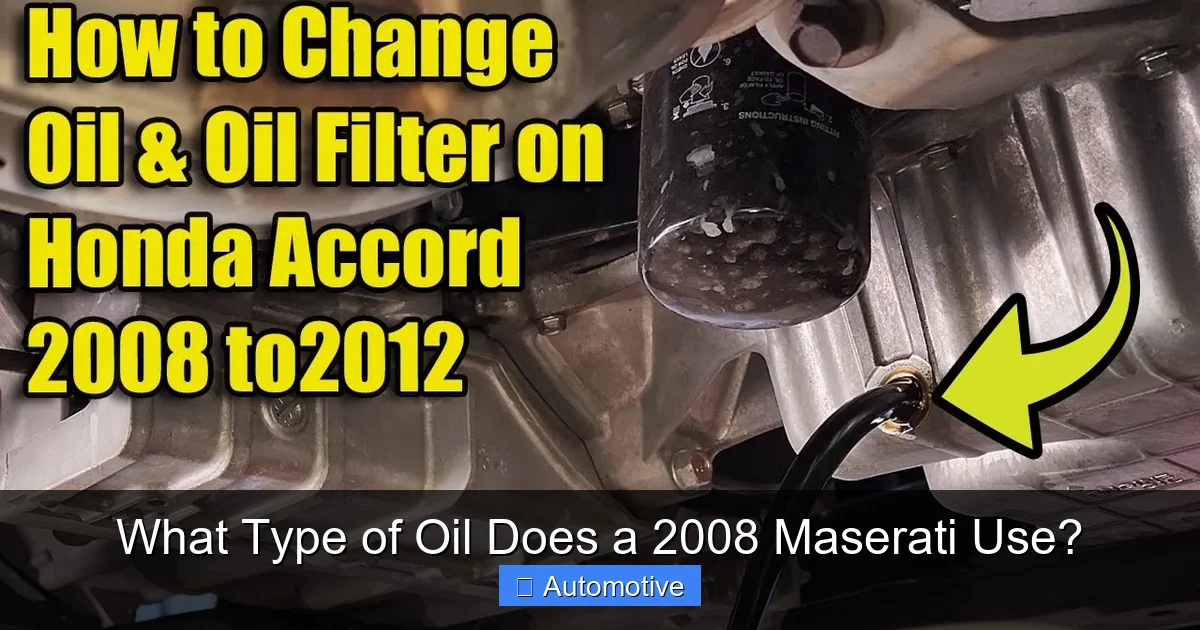
Now, let’s get into the nitty-gritty: what exactly does your 2008 Maserati require? The official recommendation from Maserati for all 2008 Quattroporte and GranTurismo models is a full synthetic oil with a viscosity of 5W-40 that meets the following standards:
Visual guide about What Type of Oil Does a 2008 Maserati Use?
Image source: i.ytimg.com
- Maserati specification MS-9390
- API SN (or higher)
- ACEA A3/B4 (or A3/B3 for older manuals)
These specifications ensure the oil can handle the demands of the F136 engine. Let’s break down what each means.
Viscosity Grades: 5W-40 Explained
The numbers on an oil bottle like “5W-40” tell you how the oil flows at different temperatures. The “5W” stands for “5 Winter,” indicating its cold-weather performance. The lower the number before the “W,” the better the oil flows in cold temperatures. A 5W oil will remain fluid enough to circulate quickly during cold starts, protecting the engine from wear during the first few seconds before it warms up.
The “40” is the high-temperature viscosity rating. It indicates how thick the oil remains at 100°C (212°F). A 40-weight oil is relatively thick, which is good for high-temperature, high-stress conditions because it maintains a protective film. In a high-performance engine like the F136, the oil gets very hot. A 5W-40 synthetic oil stays within the optimal viscosity range even when the engine is running hard on a track or in hot weather.
Some owners wonder if they can use 5W-30 instead, especially if they live in a colder climate. While 5W-30 is common for many modern cars, it’s generally not recommended for Maserati’s high-revving V8s. The 5W-30 is thinner at high temperatures, which may not provide enough film strength under heavy load. Stick with 5W-40 unless your owner’s manual explicitly states otherwise (some later models switched to 0W-40, but 2008 is firmly 5W-40).
API and ACEA Standards: What They Mean
API (American Petroleum Institute) and ACEA (European Automobile Manufacturers Association) are industry organizations that set performance standards for engine oils. These standards ensure the oil meets certain criteria for wear protection, sludge prevention, fuel economy, and emissions compatibility.
- API SN: This is the current standard for gasoline engines (as of this writing). It provides improved high-temperature stability, better sludge prevention, and enhanced fuel economy compared to older specs like SM or SL. Any oil meeting SN is acceptable, but higher (like SP) is also fine.
- ACEA A3/B4: This European spec is stricter than API in many ways. A3/B4 is designed for high-performance gasoline and light-duty diesel engines that require high HTHS (High Temperature High Shear) viscosity. It ensures the oil maintains its protective film under extreme conditions. Maserati, being an Italian brand, often references ACEA standards.
When buying oil, look for these labels on the bottle. A quality oil will list both API and ACEA certifications. For example, you might see “API SN/CF and ACEA A3/B4” on the back.
Maserati’s Own Specifications: MS-9390 and Beyond
Beyond the industry standards, Maserati has its own specification: MS-9390. This is a proprietary standard that Maserati developed to meet the specific demands of its engines. It essentially builds upon ACEA A3/B4 with additional requirements for things like oxidation stability, volatility, and compatibility with Maserati’s engine materials. Oils that carry the MS-9390 specification have been tested and approved by Maserati (or meet the same criteria).
For 2008 models, MS-9390 is the key. Some later Maseratis use MS-9400 or even newer specs, but for your 2008 Quattroporte or GranTurismo, MS-9390 is the benchmark. You’ll find this specification listed on the oil container or on the manufacturer’s website. Many premium synthetic oils that meet ACEA A3/B4 also meet MS-9390, but it’s worth verifying.
If you want to dive deeper into oil specifications for other vehicles, you might find our guide on how to know what type of oil your car needs helpful. It explains how to read your owner’s manual, decode oil labels, and make the right choice.
Recommended Oil Brands and Products for Your 2008 Maserati
Now that you know the specs, which oil should you actually buy? Not all synthetics are created equal. You need a high-quality full synthetic that meets or exceeds Maserati MS-9390, API SN, and ACEA A3/B4. Here are some top-tier options that are proven in Maserati engines.
Visual guide about What Type of Oil Does a 2008 Maserati Use?
Image source: hondatheotherside.com
Full Synthetic vs. Synthetic Blend: Why Full Synthetic is Non-Negotiable
Let’s clear up any confusion: you must use full synthetic oil in your 2008 Maserati. Synthetic blend oils mix conventional and synthetic base stocks, offering some benefits of synthetics at a lower price. But they don’t provide the same level of thermal stability, oxidation resistance, or low-temperature fluidity as full synthetics. Given the high-revving nature of the F136, a synthetic blend could break down faster, leading to increased wear and sludge formation. Conventional oil is outright unacceptable—it simply can’t handle the heat and stress.
Full synthetic oils are engineered from the ground up using advanced base stocks and additive packages. They offer superior protection across a wider temperature range, better cleaning power, and longer drain intervals (though we still recommend sticking to Maserati’s recommended change intervals). If you’re wondering whether your car really needs synthetic oil, check out our article on does my car use synthetic oil—it explains why modern high-performance engines like Maserati’s rely on synthetics.
Top Oil Choices: Pennzoil, Mobil 1, Castrol, and More
Here are some specific 5W-40 full synthetic oils that meet the required specs. These are widely available and have excellent reputations among Maserati owners:
- Mobil 1 5W-40 Extended Performance: A classic choice. Mobil 1 meets or exceeds many OEM specifications, including likely MS-9390 (check the product data sheet). It’s known for excellent wear protection and thermal stability.
- Pennzoil Platinum Euro 5W-40: Specifically formulated for European vehicles requiring ACEA A3/B4. It meets MS-9390 and is a great value.
- Castrol EDGE 5W-40 (or Castrol EDGE Professional): Castrol’s flagship synthetic, with strong anti-wear additives. The “Professional” line is often used by dealerships.
- Liqui Moly Top Tec 6200 5W-40: A German oil that meets the strictest specs, including MB 229.5 and Porsche A40, which are similar to Maserati’s needs. Highly regarded in the European car community.
- Ravenol VSI 5W-40: A premium German oil with excellent shear stability and cleaning power.
- Shell Helix Ultra 5W-40: Another European-focused synthetic that meets ACEA A3/B4.
When purchasing, always read the label to confirm it meets ACEA A3/B4 and API SN. Many of these oils also list Maserati MS-9390 explicitly. If you can’t find MS-9390 on the bottle, ACEA A3/B4 is a reliable indicator that the oil is suitable for high-performance European engines like Maserati’s.
You might also consider OEM-branded oil. Maserati (through its parent company Stellantis) may have partnerships with oil manufacturers. For example, some dealerships use “Maserati Approved” oils, which are essentially rebranded premium synthetics. These are guaranteed to meet the spec but often come at a premium price. The aftermarket options listed above are equally effective and more affordable.
How to Check and Change Your Maserati’s Oil: A Step-by-Step Guide
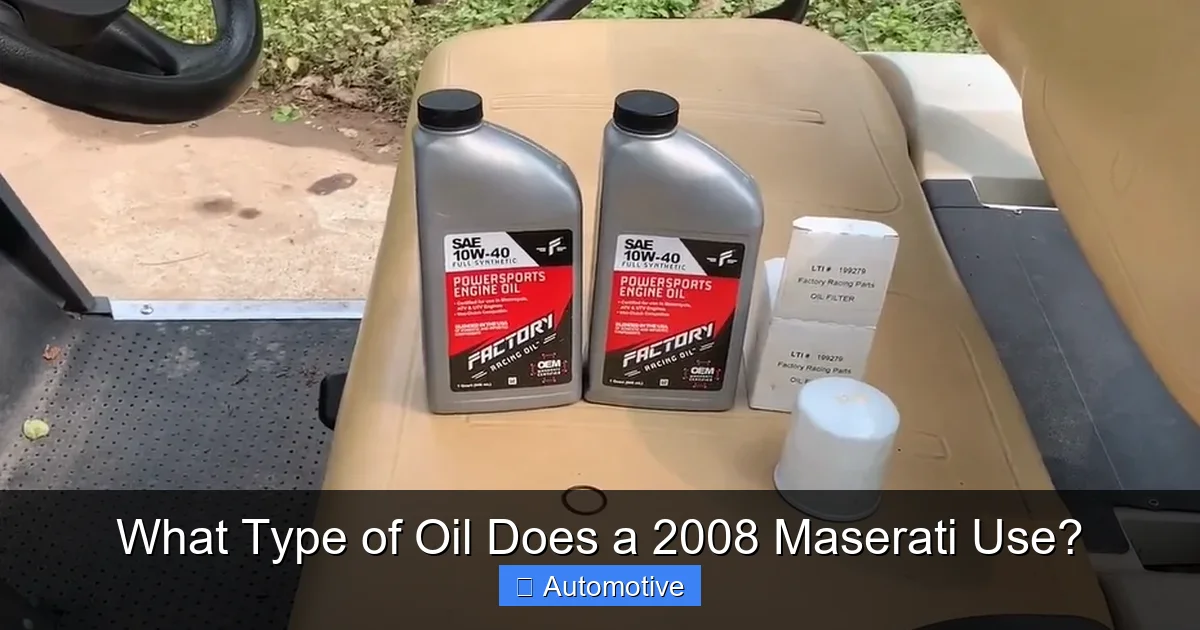
Now that you have the right oil, let’s talk about maintenance. Regular oil changes are crucial. The 2008 Maserati owner’s manual typically recommends changing the oil and filter every 5,000 to 7,500 miles, depending on driving conditions. If you do a lot of spirited driving, track days, or operate in extreme temperatures, you might want to change it more frequently—every 5,000 miles is a safe bet for these high-performance engines.
Visual guide about What Type of Oil Does a 2008 Maserati Use?
Image source: golfertroop.com
You can have the oil changed at a Maserati dealership, an independent European car specialist, or DIY if you’re mechanically inclined. Doing it yourself saves money and gives you a chance to inspect the engine. Here’s a step-by-step guide.
Essential Tools and Safety Precautions
Before you start, gather these tools and supplies:
- New oil (5W-40 full synthetic, quantity per your model—see below)
- New oil filter (compatible with F136 engine; see recommendations below)
- Oil drain pan (at least 6-8 quart capacity)
- Socket wrench and socket for drain plug (usually 17mm or 19mm)
- Oil filter wrench (if needed; some filters require a cap wrench)
- Funnel
- Jack and jack stands or ramps (if needed for clearance)
- Gloves and safety glasses
- Torque wrench (recommended for drain plug)
Safety first: Ensure the car is on level ground. Engage the parking brake. If you need to lift the car, use proper jack stands on solid frames—never rely on the jack alone. Allow the engine to warm up slightly (run for 5-10 minutes) to thin the oil for easier draining, but don’t work on a scorching-hot engine. Wear gloves to protect from hot surfaces and oil.
Draining the Old Oil and Replacing the Filter
1. Locate the drain plug: Under the engine, you’ll find a large bolt (drain plug) on the oil pan. Place your drain pan underneath.
2. Remove the drain plug: Using your socket wrench, turn the plug counterclockwise. Be prepared for oil to gush out initially. Let it drain completely—this may take 10-15 minutes.
3. Replace the drain plug: Once drained, clean the plug and inspect the washer. Replace the washer if it’s damaged or old (it’s often a crush washer). Reinstall the plug and torque it to the manufacturer’s specification (usually around 25-30 Nm, but check your manual). Do not overtighten.
4. Remove the old oil filter: The oil filter is located on the side of the engine. You may need a filter wrench. Turn it counterclockwise. Have a small container or rag ready to catch oil that drips from the filter housing.
5. Prepare the new filter: Before installing, lightly coat the rubber gasket on the new filter with fresh oil. This ensures a good seal and prevents sticking.
6. Install the new filter: Screw the new filter on by hand until the gasket contacts the mounting surface, then tighten according to the filter manufacturer’s instructions (usually 3/4 to 1 turn after contact). Do not overtighten.
Adding New Oil and Checking the Level
1. Add new oil: Remove the oil filler cap (usually on the valve cover). Insert a funnel and pour in the recommended amount of fresh oil. Oil capacity: For the 2008 Quattroporte 4.2L, it’s about 8.5 quarts (8.0 liters) including filter. For the Quattroporte 4.7L, it’s about 9.0 quarts (8.5 liters). For the GranTurismo 4.2L, it’s about 9.0 quarts (8.5 liters). Always double-check your owner’s manual for exact capacity, as it can vary slightly.
2. Check for leaks: After adding oil, start the engine and let it idle for about 30 seconds. Check around the drain plug and filter for any leaks. If you see a drip, tighten slightly.
3. Turn off the engine and wait: Shut off the engine and wait 2-5 minutes for the oil to settle back into the pan.
4. Check the dipstick: Pull the dipstick, wipe it clean, reinsert fully, then pull again to read. The oil level should be between the MIN and MAX marks, ideally near MAX. If it’s low, add a little more oil (in small increments) and recheck.
5. Replace the filler cap and run the engine: Once the level is correct, replace the cap. Start the engine and let it run for about a minute, then recheck the level to ensure it hasn’t dropped significantly (some oil may have filled the filter). Top off if needed.
6. Dispose of old oil responsibly: Transfer the used oil to a sealed container and take it to a recycling center or auto parts store. Never pour it down the drain.
Common Mistakes to Avoid When Choosing Oil for Your Maserati
Even with the best intentions, it’s easy to make mistakes when selecting oil. Here are some pitfalls to avoid.
Using the Wrong Viscosity
The most common error is using an oil with the wrong viscosity. As emphasized, 5W-40 is the standard for 2008 Maseratis. Some people think “thicker is better” and use 10W-40 or 15W-40, but those are too thick for cold starts and can cause wear. Others try to save money with 5W-30, which is too thin at high temperatures. Stick to 5W-40 unless you have a specific reason (like extreme heat and a recommendation from a trusted mechanic) and you understand the risks.
Neglecting the Oil Filter Quality
The oil filter is just as important as the oil itself. A cheap filter may have poor filtration media, allowing contaminants to circulate, or a weak housing that can fail under pressure. It might also have an anti-drainback valve that fails, causing dry starts. Always use a high-quality filter that meets Maserati specifications. OEM Maserati filters are excellent but pricey. Equally good alternatives are brands like Mann, Mahle, Wix, or Bosch. For the F136 engine, common part numbers include Mann HU 718/2 x, Mahle OC 389, or Wix 51024. Check with your parts supplier for the exact fit.
Overlooking the Importance of Regular Changes
Even the best synthetic oil degrades over time. Additives get used up, and the oil can become contaminated with fuel, water, and metal particles. Extending oil change intervals beyond the recommended 5,000-7,500 miles is a false economy. In a high-performance engine, you’re better off changing more frequently. Keep a maintenance log and set reminders.
The Long-Term Benefits of Using the Correct Oil
Why go through all this trouble? Because using the right oil pays dividends in the long run.
Engine Longevity and Performance
An engine that’s properly lubricated runs cooler, cleaner, and with less friction. This means less wear on critical components like bearings, camshafts, and cylinder walls. Over time, you’ll notice that your Maserati maintains its smoothness and power. It’s less likely to develop oil consumption issues, ticking noises, or premature failure. Plus, when it comes time to sell, a well-maintained engine with documented synthetic oil changes adds value.
Fuel Efficiency and Emissions
Modern synthetic oils are formulated to reduce internal friction. That translates to a slight improvement in fuel economy—maybe 1-2%, but every bit counts in a thirsty V8. Additionally, clean oil helps the engine’s emission control systems function properly. Sludge and deposits can affect sensor readings and combustion efficiency, potentially causing emission test failures. By using the right oil and changing it regularly, you keep your Maserati running cleanly and efficiently.
Conclusion
Your 2008 Maserati is a symphony of engineering, and oil is the conductor that keeps all the parts playing in harmony. The answer to “what type of oil does a 2008 Maserati use?” is clear: a full synthetic 5W-40 that meets Maserati MS-9390, API SN, and ACEA A3/B4. Stick to that formula, change the oil and filter every 5,000-7,500 miles with a high-quality filter, and you’ll protect your investment for years to come. Never cut corners with oil—it’s the cheapest insurance you can buy for your engine. When in doubt, consult your owner’s manual or a Maserati specialist. And remember, proper maintenance isn’t just about avoiding problems; it’s about preserving the joy of driving a true Italian legend.
Frequently Asked Questions
What happens if I use the wrong oil in my Maserati?
Using the wrong oil can cause increased engine wear, reduced performance, and potential damage over time. It may also void your warranty. Always use the specified 5W-40 full synthetic meeting MS-9390, API SN, and ACEA A3/B4.
Can I use conventional oil in a 2008 Maserati?
No. Conventional oil cannot handle the high temperatures and stresses of the F136 V8 engine. Full synthetic is mandatory to provide adequate protection and longevity.
How often should I change the oil in my 2008 Maserati?
Maserati recommends changing the oil and filter every 5,000 to 7,500 miles under normal driving conditions. For severe conditions (track use, extreme temps, frequent short trips), change every 5,000 miles or sooner.
Is 5W-30 acceptable instead of 5W-40?
5W-30 is generally not recommended for 2008 Maserati models. It is thinner at high temperatures and may not provide sufficient film strength for the high-revving V8. Stick with 5W-40 unless your owner’s manual explicitly states otherwise.
What is the oil capacity for a 2008 Maserati Quattroporte?
The 2008 Quattroporte with the 4.2L engine holds approximately 8.5 quarts (8.0 liters) with filter. The 4.7L version holds about 9.0 quarts (8.5 liters). The GranTurismo holds about 9.0 quarts (8.5 liters). Always verify with your owner’s manual.
Where can I find the recommended oil specification for my Maserati?
The best source is your owner’s manual. It lists the exact viscosity, specifications (MS-9390), and capacity. You can also contact a Maserati dealership or check the manufacturer’s website. For general guidance on determining oil specs, see our article on how to know what type of oil your car needs.
