
How Do You Reset the Tire Light on a 2008 Toyota Camry?

Seeing the tire pressure light on your 2008 Toyota Camry can be annoying, but resetting it is usually a straightforward DIY task after you’ve addressed the underlying issue. This guide walks you through the exact steps for both the standard manual button method and the alternative scanner method, ensuring you understand why the light came on in the first place. Always verify your tire pressures are correct before attempting any reset, as the light will simply return if the problem persists.
That little yellow exclamation point inside a tire symbol on your dashboard isn’t just trying to annoy you. It’s your car’s Tire Pressure Monitoring System (TPMS) sending a clear signal: one or more of your tires is under-inflated. On a reliable vehicle like a 2008 Toyota Camry, this system is a crucial safety feature. Ignoring it isn’t an option, but the good news is that once you’ve corrected the tire pressure, learning how to reset the tire light on a 2008 Toyota Camry is a simple process you can handle yourself in under a minute. This guide will walk you through every detail, from understanding what the light means to executing both the standard and alternative reset procedures with confidence.
Key Takeaways
- The light is a warning, not a reset command: The Tire Pressure Monitoring System (TPMS) light illuminates because a sensor has detected low pressure in one or more tires. You must inflate the tires to the correct PSI first; resetting is just clearing the warning after the fix.
- There are two primary reset methods: For a 2008 Camry, you can use the built-in “SET/ADJ” button located under the dash, or you can use an automotive TPMS scan tool. The button method is free and simple but requires the ignition to be in a specific state.
- Correct tire pressure is critical: Always use the pressure specifications found on the driver’s door jamb sticker, NOT the number on the tire sidewall. Over or under-inflating can cause poor handling, uneven wear, and reduced fuel economy.
- Resetting doesn’t fix faulty sensors: If the light flashes or returns immediately after a successful reset, it often indicates a dead or failing TPMS sensor battery or a malfunction in the system that requires professional diagnosis.
- Seasonal temperature changes trigger the light: Cold weather reduces tire pressure, often causing the light to come on in the morning. After driving and tires warming up, the pressure may normalize, but you should still check and adjust it.
- Don’t ignore a persistent light: Driving with significantly under-inflated tires is dangerous, leading to blowouts, poor braking, and increased stopping distances. Safety is the primary reason to address the TPMS warning promptly.
- The process is similar across many Toyotas: The steps for your 2008 Camry are nearly identical for other model years. For other vehicle brands or more complex systems, the procedure can differ greatly.
📑 Table of Contents
- Understanding Your Camry’s TPMS: It’s More Than Just a Light
- Essential Preparation Before You Touch Anything
- The Standard Method: Resetting with the “SET/ADJ” Button
- Alternative Method: Using a TPMS Scan Tool
- Post-Reset: Verification and What to Do If the Light Returns
- When to Seek Professional Help: Don’t Gamble with Safety
Understanding Your Camry’s TPMS: It’s More Than Just a Light
Before we dive into the “how,” it’s essential to understand the “why.” Your 2008 Camry uses a direct TPMS. This means each wheel has a small electronic sensor mounted inside the valve stem. These sensors constantly monitor the air pressure and temperature, transmitting that data to the car’s computer. When the pressure in any tire drops 25% or more below the recommended level, the system triggers the warning light on your dash. Some models also provide a specific tire location on the multi-information display.
Why Did the Light Come On in the First Place?
Resetting the light is just clearing the message. You must solve the problem that caused it. Common reasons include:
- Seasonal Temperature Change: This is the most frequent culprit. Cold air is denser, causing tire pressure to drop. A 10-degree Fahrenheit drop can lower pressure by about 1 PSI. The light often comes on during a cold morning but may turn off as you drive and the tires heat up. However, you should still check and adjust the pressure.
- Slow Leak or Puncture: A nail, screw, or damaged seal can cause a gradual loss of air. This is the scenario where resetting without fixing will cause the light to return.
- Recent Tire Service: If you or a shop rotated, replaced, or repaired a tire, the sensors might have been disturbed, or the system may need to be reset to recognize the new sensor positions.
- Faulty or Dead Sensor: TPMS sensor batteries last about 7-10 years. On a 2008 model, original sensors could be reaching the end of their life. A flashing light (instead of solid) often indicates a system malfunction, not just low pressure.
Pro Tip: Always keep a reliable digital tire pressure gauge in your glove compartment. Factory gauges at gas stations are often inaccurate.
Essential Preparation Before You Touch Anything
Rushing to reset the light without preparation is the #1 reason the light comes right back on. Follow this checklist to ensure a successful, lasting reset.
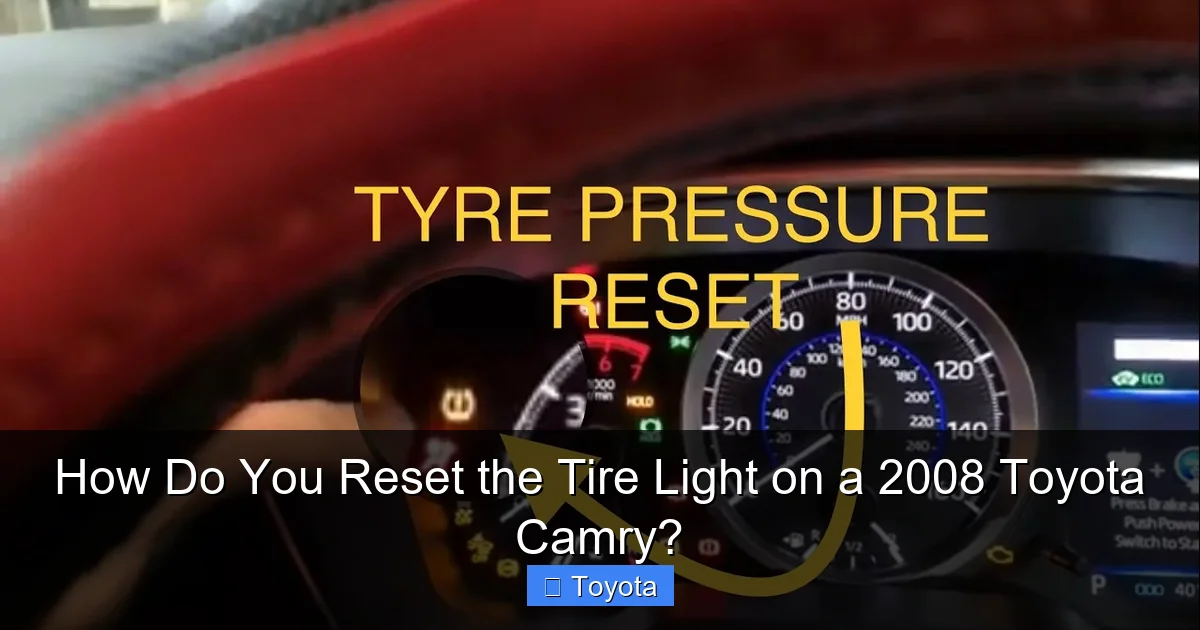
Visual guide about How Do You Reset the Tire Light on a 2008 Toyota Camry?
Image source: i.ytimg.com
Step 1: Find the Correct Tire Pressure
Do NOT use the pressure number printed on the tire’s sidewall. That is the maximum pressure the tire can hold, not the recommended pressure for your Camry. The correct specifications are on a sticker located on the driver’s side door jamb (the B-pillar) when you open the door. It will list pressures for the front and rear tires, usually in PSI (pounds per square inch). For a 2008 Camry, a common specification is 32 PSI for all four tires, but always verify with your door sticker.
Step 2: Check and Adjust All Four Tires (and the Spare!)
Check the pressure when the tires are cold, meaning the car has been parked for at least three hours or driven less than a mile. Cold readings are the most accurate.
- Remove the valve cap.
- Press your gauge firmly onto the valve stem.
- Read the pressure.
- If it’s low, use an air compressor (at home, a gas station, or a portable unit) to add air in short bursts, re-checking frequently.
- If it’s high, use the small nub on the back of many gauges or a separate tool to gently press the valve stem and release air.
- Replace the valve cap securely.
- Don’t forget your spare tire! If your spare is a full-size one with a sensor, it needs the correct pressure too. Many compact spares do not have sensors.
Important: If you find one tire is significantly lower than the others or you suspect a puncture, have it inspected by a professional before resetting. You may need a plug or patch. For more general car maintenance knowledge, understanding how to reset other dashboard lights, like the maintenance required indicator, is also useful for overall vehicle care.
The Standard Method: Resetting with the “SET/ADJ” Button
This is the factory-prescribed method for your 2008 Toyota Camry and requires no special tools. The button is typically located under the dashboard, to the left of the steering column, near the hood release. It may be labeled “SET” or “ADJ” (Adjust).
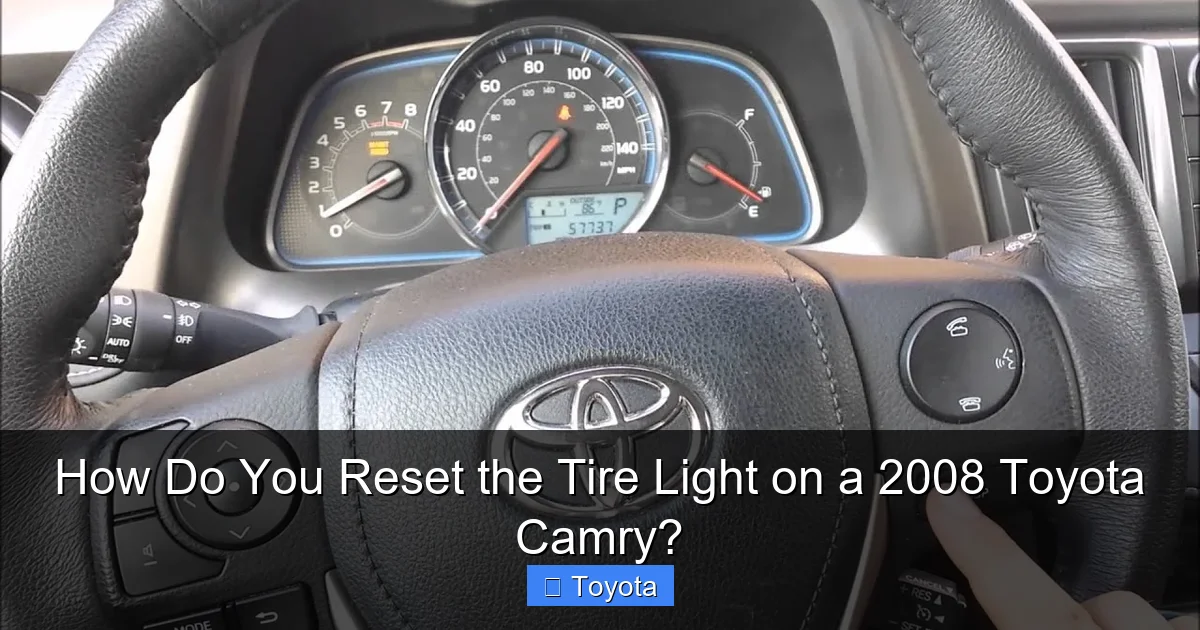
Visual guide about How Do You Reset the Tire Light on a 2008 Toyota Camry?
Image source: i.ytimg.com
Step-by-Step Button Reset Procedure
Follow these steps precisely. The sequence of ignition positions is key.
- Step 1: Ensure all tires are inflated to the correct cold pressure as described above.
- Step 2: Turn the ignition switch to the “ON” position (the position right before starting the engine, where all dashboard lights come on). Do NOT start the engine.
- Step 3: Locate the “SET/ADJ” button. On some models, you may need to press and hold the “ODO/TRIP” button until you see the TPMS menu, but for most 2008 Camrys, there is a dedicated button.
- Step 4: Press and hold the “SET/ADJ” button for about 3 seconds. You should hear a short beep, and the TPMS warning light should blink three times. This indicates the system has been reset and is now learning the current sensor positions and pressures.
- Step 5: Release the button. The light may remain on for a few seconds to a minute while the system re-evaluates the sensors. It should then turn OFF. If it continues to blink or stays solid, the reset was not successful or a fault exists.
- Step 6: Start the engine and let it run for a minute. The light should stay off. Take a short test drive (1-2 miles). The light should remain off after the drive. If it comes back on, re-check all pressures for accuracy.
Visual Confirmation: Some Camry models will show “SET” or “—” on the odometer/trip meter display during the reset process. Consult your owner’s manual for your specific trim’s display behavior.
Alternative Method: Using a TPMS Scan Tool
If the button method fails or you want a more definitive reset (especially after rotating tires or replacing sensors), an OBD2-compatible TPMS tool is the professional’s choice. These tools communicate directly with each sensor and the vehicle’s computer.
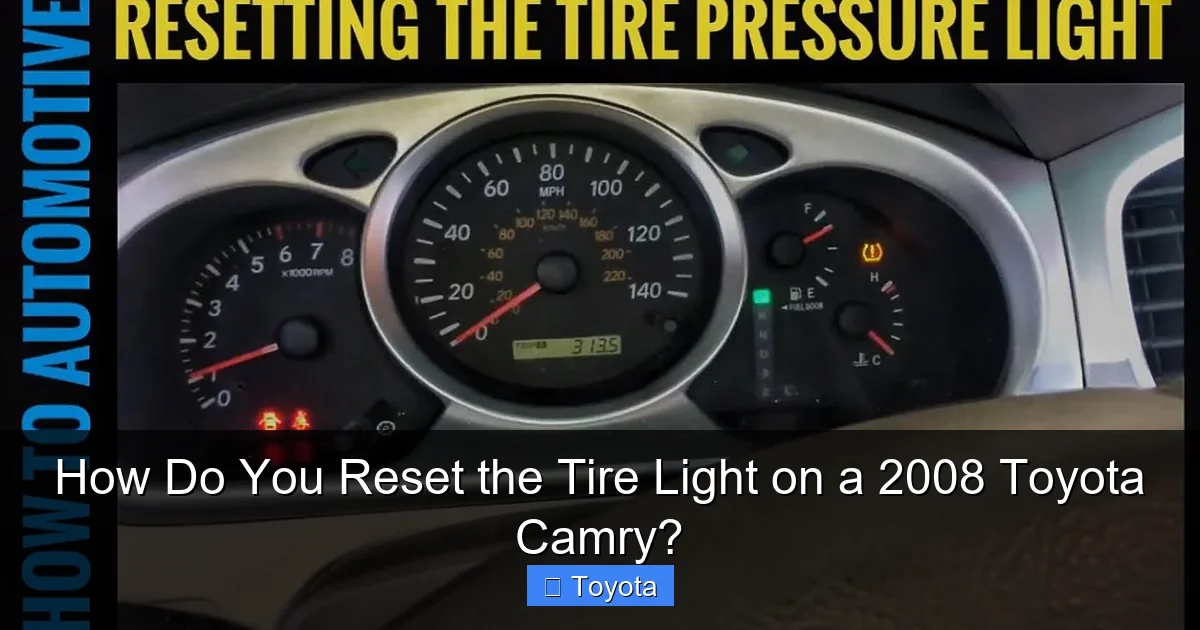
Visual guide about How Do You Reset the Tire Light on a 2008 Toyota Camry?
Image source: i.ytimg.com
When to Use a Scan Tool
Consider this method if:
- The button reset procedure does not turn the light off.
- You have just had tires rotated and the light came on because the system doesn’t know which sensor is where (some systems require a relearn procedure).
- You have replaced one or more TPMS sensors and need to program the new sensor IDs into the car’s computer.
- You want to diagnose which specific sensor is causing the problem before resetting.
How to Perform a Scan Tool Reset
While specific tool steps vary by brand (Autel, Launch, Foxwell, etc.), the general process is:
- Connect the TPMS tool’s OBD2 cable to the port under your Camry’s dash (the same port used for check engine diagnostics).
- Turn the ignition to the “ON” position.
- Power on the scan tool and select the “Toyota” make and “Camry” model/year.
- Navigate to the TPMS menu. The tool will likely prompt you to read the current sensor data first.
- Select the option to “Reset TPMS,” “Relearn,” or “Save Sensor IDs.” The tool will send a command to the car’s computer to clear the fault and start the learning cycle.
- Follow any on-screen prompts. You may need to activate each sensor individually with the tool’s trigger function.
- Once the tool confirms a successful reset/relearn, disconnect it.
- Start the car and verify the light is off. A short test drive is still recommended.
Note: Basic code readers that only read Check Engine lights will NOT communicate with the TPMS system. You need a dedicated TPMS tool or a more advanced scanner that includes TPMS functions. For those interested in the technical side of car maintenance, learning how different manufacturers implement TPMS resets can be fascinating, as procedures vary widely.
Post-Reset: Verification and What to Do If the Light Returns
Your job isn’t done the moment the light goes out. Verification is critical to ensure the problem is truly solved.
The Essential Test Drive
After completing either reset method, drive your Camry at speeds above 40 mph for at least 10-15 minutes. This allows the system to fully communicate with all sensors under load and varying conditions. The light should remain off for the entire drive and after you park. If it comes back on during this drive, stop and re-check all tire pressures immediately. A slow leak may have caused pressure to drop again.
Troubleshooting a Persistent or Flashing Light
If the light comes back on right away or is flashing (not steadily lit), the issue is more serious than low pressure.
- Steady Light After Reset: Re-check pressures meticulously. A tire may have a slow leak. Submerge the wheel in water or use soapy water to look for bubbles at the valve stem and tread. If a leak is found, repair or replace the tire/sensor.
- Flashing Light: This is a TPMS system malfunction code. It could be a dead sensor battery (common on 2008 models), a damaged sensor, or a fault in the receiver module. At this point, diagnosis requires a professional scan tool to read the specific fault code. You’ll likely need to visit a tire shop or dealership.
Remember, a persistent TPMS light will cause your vehicle to fail state safety inspections. Addressing it promptly is not just about convenience, but legality and safety.
When to Seek Professional Help: Don’t Gamble with Safety
While the reset is DIY, certain situations absolutely require a professional. Your safety and the integrity of your vehicle’s safety systems are paramount.
- You’ve reset the light, but it returns within a day or a short drive. This indicates an unresolved issue, most likely a slow leak or a failing sensor.
- The light is flashing. As stated, this is a system malfunction code that needs professional diagnostic equipment to interpret.
- You’ve replaced a tire or sensor and the light won’t go out. The new sensor’s ID may need to be programmed into the car’s computer, a process that requires specialized tools and knowledge.
- You are uncomfortable working with tires or electronics. There’s no shame in calling a pro. A local tire shop (like Discount Tire, Tire Kingdom, etc.) or your Toyota dealership can diagnose and fix TPMS issues quickly and often for a reasonable fee. Many will check and set your pressures for free.
Investing in professional service for TPMS ensures the system will work correctly when you need it most—during an emergency maneuver or sudden loss of pressure. It’s an investment in your safety. For other common Toyota issues, such as resetting an airbag light, professional diagnosis is also strongly recommended due to the critical safety role of that system.
Frequently Asked Questions
Can I just disconnect the battery to reset the tire light?
No. Disconnecting the battery may reset the engine computer, but it will not reset the TPMS system on a 2008 Camry. The TPMS has its own memory and requires the specific “SET/ADJ” button sequence or a scan tool to clear its warning. The battery disconnect method is ineffective and unnecessary.
How often should I check my tire pressure?
You should check your tire pressures at least once a month and before any long trip. Since tires naturally lose about 1 PSI per month, this regular check helps maintain optimal safety, fuel economy, and tire wear, preventing the TPMS light from ever coming on.
My tire pressure is fine, but the light is still on. Why?
This usually points to a faulty TPMS sensor. The sensor’s internal battery can die (sensors last 7-10 years), or the sensor itself may be damaged. A flashing light is a strong indicator of a system fault. You’ll need a professional to diagnose the bad sensor and replace it.
Do I need to reset the TPMS after rotating my tires?
On a 2008 Camry, the system does not automatically recognize which wheel is which after a rotation. Therefore, you must perform the reset procedure using the “SET/ADJ” button after any tire rotation. This tells the system to learn the current positions of all four sensors.
What if the reset procedure doesn’t work?
If you’ve followed the steps correctly and the light remains on, first double-check that every single tire (including the spare, if applicable) is inflated to the exact PSI on your door jamb sticker. If pressures are perfect, the system likely has a fault code stored. You will need a TPMS scan tool to read the code and identify the failed component, usually a sensor.
Is it safe to drive with the tire pressure light on?
It depends on why it’s on. If it came on due to a minor temperature drop and you’ve confirmed all tires are properly inflated, a short drive to a safe location to check them is okay. However, if a tire is genuinely low, driving on it is dangerous. It can cause overheating, a blowout, poor handling, and increased wear. You should address the warning immediately by checking and inflating your tires.
