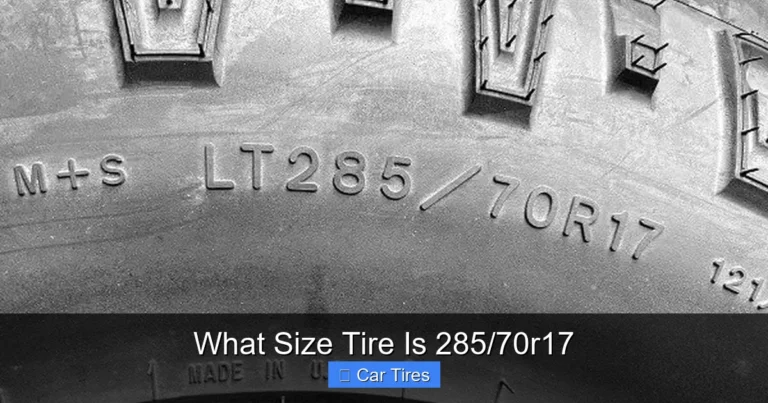
How Tall Is a 265/75r16 Tire
A 265/75R16 tire stands approximately 31.6 inches tall, making it a popular choice for SUVs and light trucks. This size offers a balance of ground clearance, comfort, and load capacity, ideal for off-road and everyday driving.
If you’ve ever looked at your vehicle’s tire and wondered, “How tall is a 265/75R16 tire?” you’re not alone. Tire sizing can feel like decoding a secret language—numbers, slashes, and letters that don’t seem to make sense at first glance. But once you break it down, it becomes much clearer. The 265/75R16 is one of the most common tire sizes used on trucks, SUVs, and off-road vehicles, and understanding its dimensions can help you make smarter decisions about performance, safety, and fitment.
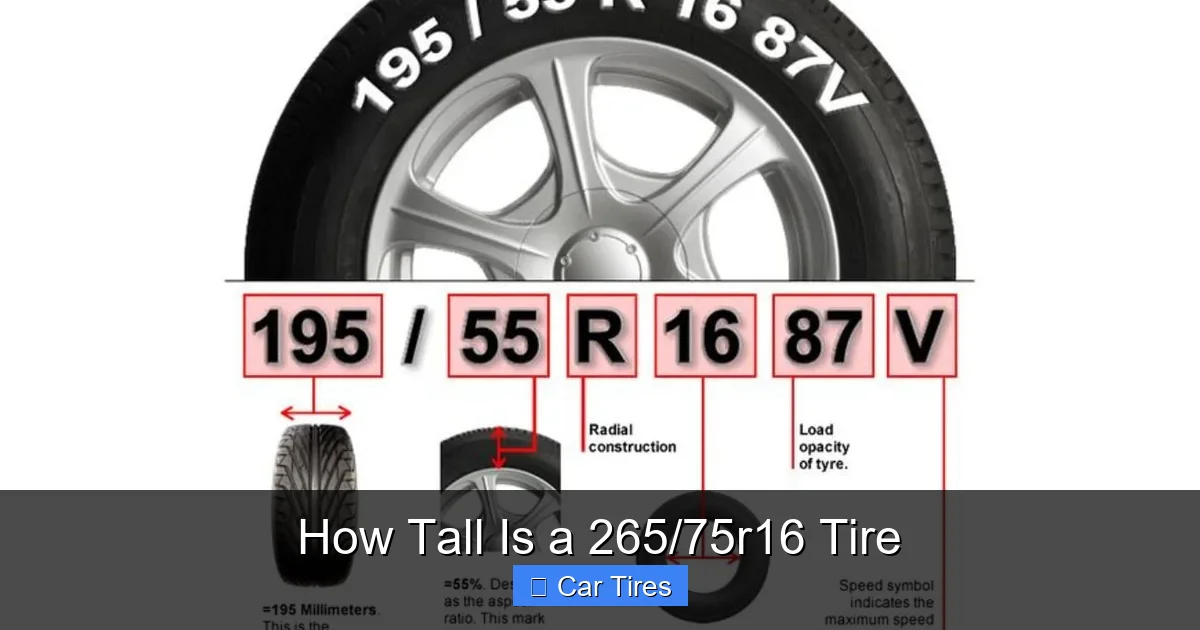
So, what does that string of numbers actually mean? The “265” refers to the tire’s width in millimeters. The “75” is the aspect ratio—meaning the sidewall height is 75% of the width. The “R” stands for radial construction, and the “16” is the wheel diameter in inches. Put it all together, and you get a tire that’s built for durability, traction, and a smooth ride. But the real question most drivers want answered is simple: how tall is it from the ground to the top?
The answer? A 265/75R16 tire is approximately 31.6 inches tall. That’s a solid size—tall enough to give you good ground clearance for rough terrain, but not so tall that it throws off your speedometer or makes your vehicle feel top-heavy. Whether you’re upgrading from a smaller tire, replacing worn-out ones, or just curious about what’s rolling under your ride, knowing the exact height helps you understand how it will affect your vehicle’s behavior on and off the road.
In This Article
- 1 Key Takeaways
- 2 📑 Table of Contents
- 3 Breaking Down the 265/75R16 Tire Size
- 4 Why Tire Height Matters
- 5 Common Vehicles That Use 265/75R16 Tires
- 6 Comparing 265/75R16 to Other Tire Sizes
- 7 Choosing the Right 265/75R16 Tire for Your Needs
- 8 Installation and Maintenance Tips
- 9 Upgrading to 265/75R16: What to Consider
- 10 Conclusion
- 11 Frequently Asked Questions
Key Takeaways
- Exact Height: A 265/75R16 tire is about 31.6 inches tall, measured from the ground to the top of the tread.
- Width and Sidewall: The tire is 265 millimeters wide with a sidewall height of 75% of that width, equaling roughly 8 inches.
- Common Applications: This size fits many trucks, SUVs, and 4x4s like the Ford F-150, Toyota Tacoma, and Jeep Wrangler.
- Load and Speed Ratings: Most 265/75R16 tires support heavy loads and have speed ratings of S (112 mph) or T (118 mph).
- Impact on Performance: Taller tires improve ground clearance and off-road ability but may affect speedometer accuracy and fuel economy.
- Replacement Tips: Always check your vehicle’s manual and consider overall diameter when switching tire sizes.
- Visual Comparison: This tire is slightly taller than a 245/75R16 and shorter than a 285/75R16, placing it in a sweet spot for versatility.
📑 Table of Contents
Breaking Down the 265/75R16 Tire Size
Let’s take a closer look at what each part of the 265/75R16 designation means. Understanding this will not only answer the question “how tall is a 265/75R16 tire” but also help you compare it to other sizes and make informed choices.
What Does 265 Mean?
The first number, 265, is the tire’s width in millimeters. This is the measurement from one sidewall to the other when the tire is mounted and inflated to the recommended pressure. So, a 265mm wide tire is about 10.4 inches wide. That’s fairly substantial—wider than many standard passenger car tires, which might be 205 or 225 millimeters. This extra width gives the 265/75R16 better grip on loose surfaces like gravel, mud, or sand, making it a favorite for off-road enthusiasts.
Understanding the 75 Aspect Ratio
The second number, 75, is the aspect ratio. This tells you how tall the sidewall is compared to the width. Specifically, it means the sidewall height is 75% of 265mm. To calculate that: 265 × 0.75 = 198.75 millimeters. That’s roughly 7.8 inches. So, from the rim to the tread, the sidewall is about 7.8 inches tall. This is a relatively tall sidewall, which contributes to a smoother ride because there’s more rubber to absorb bumps and potholes.
The “R” and “16” Explained
The “R” stands for radial construction, which is the standard for modern tires. Radial tires have layers of fabric and steel that run radially across the tire, providing strength, flexibility, and heat resistance. The “16” is the diameter of the wheel (or rim) in inches. So, this tire is designed to fit a 16-inch wheel. That’s a common size for trucks and SUVs—big enough to handle heavy loads but not so large that it sacrifices ride comfort.
Calculating the Overall Diameter
Now, to answer the main question: how tall is a 265/75R16 tire? To find the overall diameter, you need to add the wheel diameter to twice the sidewall height (since there’s a sidewall on the top and bottom of the wheel). Here’s the math:
– Sidewall height: 198.75 mm (from 265 × 0.75)
– Convert to inches: 198.75 mm ÷ 25.4 ≈ 7.82 inches
– Double the sidewall: 7.82 × 2 = 15.64 inches
– Add wheel diameter: 15.64 + 16 = 31.64 inches
So, the total height is approximately 31.6 inches. That’s the number you’ll see in most tire specifications and comparison charts. It’s a solid middle-ground size—taller than many stock tires on sedans, but not as massive as some oversized off-road tires.
Why Tire Height Matters
Visual guide about How Tall Is a 265/75r16 Tire
Image source: tiresalley.com
You might be thinking, “Okay, it’s about 31.6 inches tall—so what?” But tire height affects more than just how your vehicle looks. It plays a big role in performance, safety, and even fuel economy.
Ground Clearance and Off-Road Performance
One of the biggest benefits of a taller tire like the 265/75R16 is increased ground clearance. With nearly 32 inches of diameter, your vehicle sits higher off the ground. That means you’re less likely to scrape the undercarriage on rocks, curbs, or uneven terrain. For off-roading, this is a huge advantage. Whether you’re crawling over boulders or driving through deep ruts, extra height gives you confidence that your vehicle can handle it.
Impact on Speedometer and Odometer Accuracy
Here’s something many people don’t realize: changing tire size can throw off your speedometer and odometer. If you go from a smaller tire to a 265/75R16, your vehicle will actually be traveling faster than the speedometer shows. For example, if your speedometer says 60 mph, you might actually be going 62 or 63 mph. This happens because the taller tire covers more ground per revolution. Over time, this can lead to speeding tickets or inaccurate maintenance schedules based on mileage.
Most modern vehicles can be recalibrated through the onboard computer, but older models might need a physical adjustment. It’s always a good idea to check with a mechanic or use an online tire size calculator to see how much your speedometer will be off.
Fuel Economy and Rolling Resistance
Taller tires can also affect fuel economy. The 265/75R16 is wider and heavier than many standard tires, which means it has more rolling resistance. Your engine has to work harder to turn the wheels, especially at highway speeds. This can lead to a drop in miles per gallon—sometimes by 1 to 2 mpg. If you’re concerned about fuel efficiency, this is something to keep in mind, especially if you do a lot of highway driving.
On the flip side, the taller sidewall can improve comfort by absorbing more road shock. So, while you might lose a little fuel economy, you could gain a smoother, quieter ride.
Load Capacity and Towing
The 265/75R16 is often used on vehicles that need to carry heavy loads or tow trailers. This size is commonly available with higher load ratings, such as Load Range E (10-ply), which can support up to 3,400 pounds per tire. That makes it ideal for pickup trucks used for work, camping, or hauling. If you’re towing a boat or trailer, having tires that can handle the extra weight is crucial for safety and performance.
Common Vehicles That Use 265/75R16 Tires
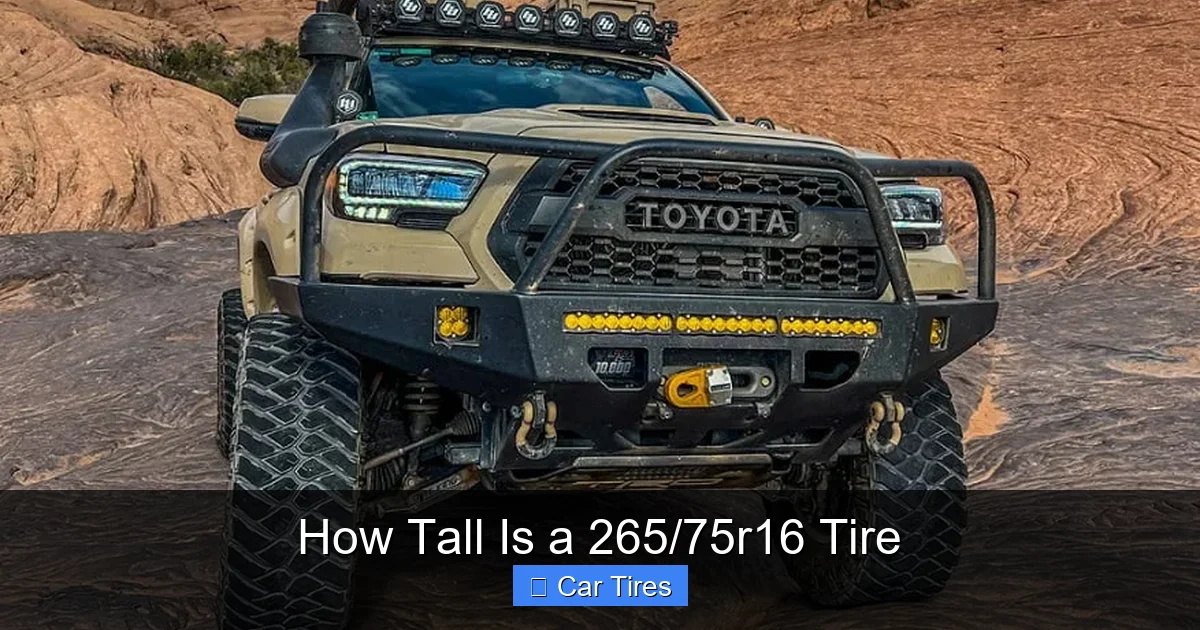
Visual guide about How Tall Is a 265/75r16 Tire
Image source: tiresalley.com
You’ll find the 265/75R16 tire on a wide range of vehicles, especially those designed for rugged use. Here are some popular models that often come equipped with this size or can be upgraded to it:
Pickup Trucks
– Ford F-150 (especially older models and trims with 16-inch wheels)
– Chevrolet Silverado 1500
– GMC Sierra 1500
– Ram 1500 (certain configurations)
These trucks are built for work and play, and the 265/75R16 offers a good balance of strength, comfort, and capability.
SUVs and 4x4s
– Toyota Tacoma
– Jeep Wrangler (TJ and JK models)
– Nissan Frontier
– Ford Ranger
These vehicles often use the 265/75R16 as a stock or optional size, especially in off-road trims. The tire’s height and width make it perfect for tackling trails while still being manageable on pavement.
Commercial and Utility Vehicles
Some vans, work trucks, and even older SUVs like the Ford Explorer or Chevrolet Tahoe may use this size, particularly if they’re equipped with heavy-duty suspensions or used for towing.
If you’re unsure whether your vehicle can handle a 265/75R16, check the owner’s manual or look at the tire placard on the driver’s side door jamb. It will list the recommended tire sizes and load ratings.
Comparing 265/75R16 to Other Tire Sizes
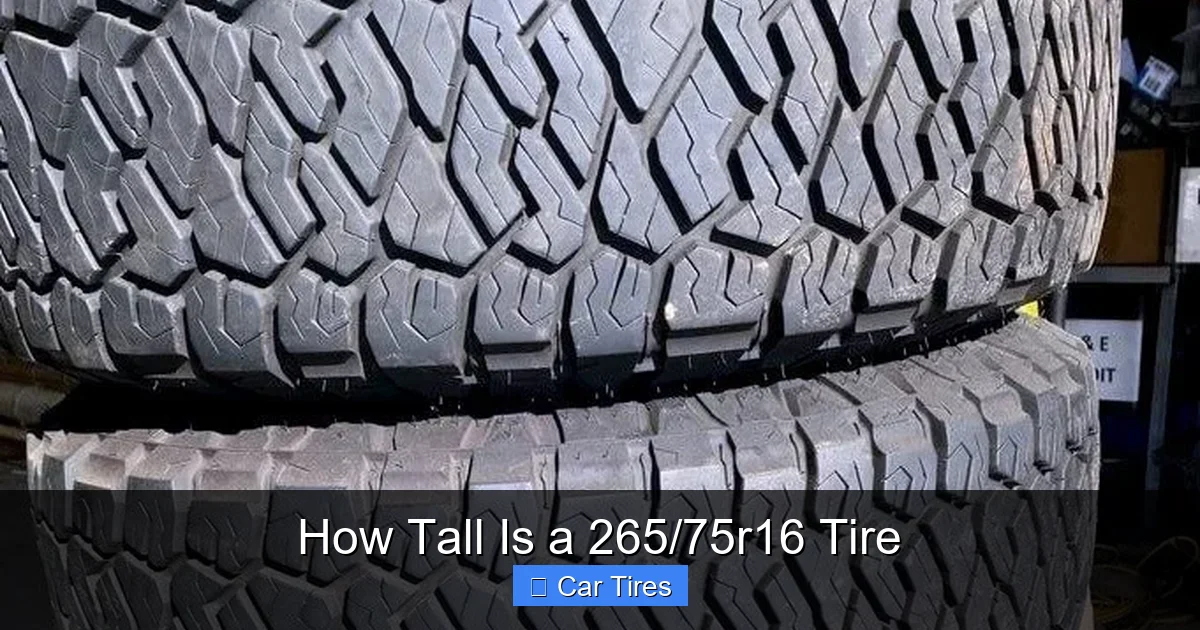
Visual guide about How Tall Is a 265/75r16 Tire
Image source: tireblogger.com
To really understand how tall a 265/75R16 tire is, it helps to compare it to other common sizes. Let’s look at a few alternatives and see how they stack up.
265/75R16 vs. 245/75R16
The 245/75R16 is a slightly narrower and shorter tire. Here’s the breakdown:
– Width: 245mm (vs. 265mm)
– Sidewall: 245 × 0.75 = 183.75mm ≈ 7.23 inches
– Total height: (7.23 × 2) + 16 = 30.46 inches
So, the 245/75R16 is about 1.1 inches shorter than the 265/75R16. That might not sound like much, but it can affect ground clearance and ride height. The 265/75R16 gives you a bit more height and width, which can be better for off-roading or if you want a more aggressive look.
265/75R16 vs. 285/75R16
Now let’s look at the bigger sibling: the 285/75R16.
– Width: 285mm
– Sidewall: 285 × 0.75 = 213.75mm ≈ 8.41 inches
– Total height: (8.41 × 2) + 16 = 32.82 inches
This tire is about 1.2 inches taller than the 265/75R16. It’s a popular choice for lifted trucks and serious off-roaders. However, it may require modifications to fit properly, such as trimming fenders or adjusting suspension. It also has more rolling resistance and can reduce fuel economy further.
265/75R16 vs. 265/70R16
This one’s interesting because the width is the same, but the aspect ratio is different.
– Width: 265mm
– Sidewall: 265 × 0.70 = 185.5mm ≈ 7.3 inches
– Total height: (7.3 × 2) + 16 = 30.6 inches
The 265/70R16 is about 1 inch shorter than the 265/75R16. It’s a common upgrade for drivers who want a wider tire but don’t want to increase overall height. It can improve handling and cornering due to the shorter, stiffer sidewall, but it may sacrifice some comfort and off-road capability.
Visual Comparison
If you’re trying to picture the difference, imagine stacking three 265/75R16 tires on top of each other—they’d be about 95 inches tall, or just under 8 feet. That gives you a sense of how substantial each tire is. Compared to a typical passenger car tire (like a 205/55R16, which is about 24.9 inches tall), the 265/75R16 is noticeably larger and more robust.
Choosing the Right 265/75R16 Tire for Your Needs
Not all 265/75R16 tires are created equal. Once you know the height and fit, you still need to choose the right type based on your driving habits and environment.
All-Terrain vs. Mud-Terrain
– All-Terrain Tires: These are great for everyday driving with occasional off-road use. They offer a quiet ride, good tread life, and solid performance on pavement and light trails. Examples include the BFGoodrich All-Terrain T/A KO2 and the Goodyear Wrangler DuraTrac.
– Mud-Terrain Tires: Built for serious off-roading, these have aggressive tread patterns that dig into mud, sand, and rocks. They’re louder on the highway and wear faster, but they excel in extreme conditions. Popular options include the Nitto Trail Grappler and the Mickey Thompson Baja Boss.
Load Range and Ply Rating
Tires come in different load ranges, indicated by letters like C, D, or E. The 265/75R16 is often available in Load Range E, which means it’s a 10-ply tire capable of handling heavy loads. If you tow or carry heavy cargo, this is the way to go. For lighter use, a Load Range D (8-ply) might be sufficient and could offer a slightly smoother ride.
Speed Rating
Most 265/75R16 tires have a speed rating of S (up to 112 mph) or T (up to 118 mph). Unless you’re driving a high-performance truck, these ratings are more than adequate for normal driving. Just make sure your tires match or exceed the speed rating recommended by your vehicle manufacturer.
Tread Life and Warranty
Tread life varies widely depending on the tire type and driving conditions. All-terrain tires typically last 50,000 to 70,000 miles, while mud-terrain tires might only last 30,000 to 40,000 miles. Look for tires with a good warranty and consider your annual mileage when making a choice.
Installation and Maintenance Tips
Putting on new 265/75R16 tires is more than just mounting them and driving away. Proper installation and maintenance are key to getting the most out of your investment.
Professional Installation
Always have your tires installed by a professional. They’ll ensure the tires are balanced, the wheels are aligned, and the torque specs are correct. Improper installation can lead to vibration, uneven wear, or even tire failure.
Rotation and Alignment
Rotate your tires every 5,000 to 7,000 miles to promote even wear. Front and rear tires wear differently, especially on 4WD vehicles. Also, get your alignment checked regularly—especially if you notice uneven tread wear or your vehicle pulling to one side.
Proper Inflation
Check tire pressure monthly. Underinflated tires wear faster, reduce fuel economy, and can overheat. Overinflated tires are more prone to blowouts and offer a harsher ride. Use the pressure recommended on the door jamb placard, not the maximum pressure listed on the tire sidewall.
Inspecting for Damage
Regularly inspect your tires for cuts, cracks, bulges, or embedded objects. The 265/75R16 is tough, but it’s not invincible. A small nail might not seem like a big deal, but it can lead to a slow leak or sudden failure.
Seasonal Considerations
If you live in an area with snow or ice, consider switching to winter tires in colder months. While some all-terrain tires have the Three-Peak Mountain Snowflake symbol (indicating winter capability), dedicated snow tires offer better traction in extreme conditions.
Upgrading to 265/75R16: What to Consider
Thinking about upgrading to 265/75R16 tires? Here are some important factors to keep in mind.
Will They Fit?
The first question is whether the tires will fit without rubbing. The 265/75R16 is about 31.6 inches tall, so you need to make sure there’s enough clearance in the wheel well, especially when turning or going over bumps. Some vehicles may require a leveling kit or small lift to accommodate the larger size.
Speedometer Calibration
As mentioned earlier, a taller tire can throw off your speedometer. Use an online tire size calculator to see the difference. If the change is more than 3%, you should have your speedometer recalibrated to avoid legal issues and ensure accurate readings.
Fuel Economy Impact
Be prepared for a slight drop in fuel economy. The wider, heavier tire increases rolling resistance. If you’re concerned about gas mileage, consider whether the benefits of the larger tire outweigh the cost.
Resale Value
Upgrading to a popular size like 265/75R16 can actually increase your vehicle’s resale value, especially if it’s a truck or SUV. Many buyers look for vehicles with larger, more capable tires.
Cost
The 265/75R16 is a common size, so prices are generally competitive. Expect to pay between $150 and $300 per tire, depending on the brand and type. All-terrain tires are usually in the middle of that range, while premium mud-terrain tires can cost more.
Conclusion
So, how tall is a 265/75R16 tire? The answer is approximately 31.6 inches—a size that strikes a great balance between performance, comfort, and capability. Whether you’re driving a Ford F-150, a Jeep Wrangler, or a Toyota Tacoma, this tire size offers excellent ground clearance, solid load capacity, and a smooth ride.
Understanding tire dimensions isn’t just about numbers—it’s about making informed decisions that affect your safety, performance, and driving experience. The 265/75R16 is a versatile, widely used size that works well for both daily driving and weekend adventures. By knowing its height, width, and impact on your vehicle, you can choose the right tire for your needs and get the most out of every mile.
Whether you’re upgrading for better off-road performance, replacing worn tires, or just curious about what’s under your vehicle, the 265/75R16 is a reliable, capable choice. Just remember to check fitment, maintain proper inflation, and consider how the change might affect your speedometer and fuel economy. With the right care, these tires can serve you well for tens of thousands of miles.
Frequently Asked Questions
How tall is a 265/75R16 tire in inches?
A 265/75R16 tire is approximately 31.6 inches tall from the ground to the top of the tread. This measurement includes the 16-inch wheel and the sidewall height on both top and bottom.
Can I put 265/75R16 tires on my truck?
It depends on your vehicle’s specifications and clearance. Many trucks and SUVs like the Ford F-150, Toyota Tacoma, and Jeep Wrangler can accommodate this size, but you should check your owner’s manual or consult a tire professional to ensure proper fit.
Will 265/75R16 tires affect my speedometer?
Yes, slightly. Because the tire is taller than some stock sizes, your speedometer may read a bit slower than your actual speed. A recalibration may be needed for accuracy, especially if the diameter change is more than 3%.
Are 265/75R16 tires good for off-roading?
Absolutely. The 265/75R16 offers excellent ground clearance, a wide footprint, and strong load capacity, making it ideal for off-road use. Many all-terrain and mud-terrain tires are available in this size.
How much do 265/75R16 tires cost?
Prices typically range from $150 to $300 per tire, depending on the brand, type (all-terrain, mud-terrain, etc.), and load rating. Premium models with longer tread life or specialized features may cost more.
What’s the difference between 265/75R16 and 285/75R16?
The 285/75R16 is wider (285mm vs. 265mm) and taller (about 32.8 inches vs. 31.6 inches). It offers more aggressive off-road performance but may require vehicle modifications and can reduce fuel economy more than the 265/75R16.