How Often Should You Replace a Toyota Cabin Air Filter?

Contents
- 1 Key Takeaways
- 2 📑 Table of Contents
- 3 What Exactly Is a Toyota Cabin Air Filter?
- 4 Why Regular Replacement Is Non-Negotiable
- 5 Toyota’s Official Recommendations: The Baseline
- 6 What Really Determines Your Replacement Schedule?
- 7 Tell-Tale Signs Your Cabin Filter Is on Its Last Legs
- 8 DIY vs. Professional Replacement: Which Path is Right for You?
- 9 Conclusion: A Simple Habit for Big Benefits
- 10 Frequently Asked Questions


Replacing your Toyota cabin air filter is a critical, often overlooked maintenance task. The standard recommendation is every 15,000 to 30,000 miles, but your driving environment and habits can drastically change this timeline. A clogged filter hurts air quality, strains your HVAC system, and reduces airflow. For most Toyota models, this is a simple, affordable DIY job that saves money and ensures you breathe clean air.
Have you ever turned on your Toyota’s air conditioning on a hot summer day only to be greeted by a weak, stuffy breeze? Or maybe you’ve noticed a persistent musty smell that no air freshener can tackle? The culprit is often a single, inexpensive component hiding in plain sight: your cabin air filter. This humble filter is the unsung hero of your car’s HVAC (Heating, Ventilation, and Air Conditioning) system, and knowing when to replace it is key to your comfort, your health, and your car’s well-being. So, how often should you replace a Toyota cabin air filter? Let’s dive deep into the specifics, moving beyond a simple mileage number to understand the real-world factors that determine your filter’s lifespan.
Key Takeaways
- Standard Interval: Toyota generally recommends replacing the cabin air filter every 15,000 to 30,000 miles under normal conditions, aligning with many other maintenance intervals like oil changes.
- Environment is Key: If you drive in heavy traffic, dusty areas, high pollen zones, or on unpaved roads, you should check and likely replace the filter every 12,000 to 15,000 miles.
- It’s Usually a DIY Job: On most Toyota models (Camry, Corolla, RAV4), the filter is easily accessible behind the glovebox or under the dash, requiring minimal tools and 15-30 minutes to replace.
- Listen to Your Car: Signs like weak airflow from vents, musty odors, or visibly dirty filters are clear indicators it’s time for a replacement, regardless of mileage.
- Health First: A fresh cabin filter blocks pollen, dust, soot, and allergens. For those with allergies or respiratory issues, adhering to a stricter schedule is crucial for in-cabin air quality.
- Model Variations Exist: Always consult your owner’s manual. Some older or specific Toyota models may have different access points or slightly different recommendations.
- Don’t Ignore It: A severely clogged filter makes your HVAC blower motor work harder, potentially leading to costly repairs and reduced efficiency of your air conditioning and heating systems.
📑 Table of Contents
- What Exactly Is a Toyota Cabin Air Filter?
- Why Regular Replacement Is Non-Negotiable
- Toyota’s Official Recommendations: The Baseline
- What Really Determines Your Replacement Schedule?
- Tell-Tale Signs Your Cabin Filter Is on Its Last Legs
- DIY vs. Professional Replacement: Which Path is Right for You?
- Conclusion: A Simple Habit for Big Benefits
What Exactly Is a Toyota Cabin Air Filter?
Before we talk about replacement, we need to understand what we’re dealing with. The cabin air filter is not the same as your engine’s air filter. While the engine air filter protects your motor from dust and debris, the cabin air filter protects you. It’s typically located behind the glove compartment or under the dashboard on the passenger side. Its job is to filter the air that enters your vehicle’s interior through the HVAC system.
Location and Function
As you drive, outside air is sucked into your car through an intake vent, usually at the base of the windshield. This air passes through the cabin filter before being blown into the cabin by the blower motor. The filter’s media (usually a pleated, fibrous material) traps particles like:
- Pollen and spores
- Dust and road grime
- Soot and particulate pollution (especially important in urban areas)
- Some models even include an activated carbon layer to absorb gaseous odors and exhaust fumes
Think of it as the lungs of your car’s interior climate system. A clean filter means clean air. A dirty filter is like breathing through a cloth—it restricts flow and lets contaminants through.
Types of Cabin Filters for Toyota
When you go to replace it, you’ll encounter a few types. The standard particulate filter is the most common and affordable. If you live in a city with heavy pollution or frequently drive in stop-and-go traffic, consider an activated carbon filter. The carbon layer chemically absorbs exhaust gases, ozone, and other smelly pollutants, providing a noticeable improvement in air quality. Some premium filters also have antimicrobial treatments to inhibit mold and bacteria growth on the filter itself, which is a bonus for those with allergies.
Why Regular Replacement Is Non-Negotiable
You might be tempted to “set it and forget it,” but neglecting your cabin filter has tangible consequences. It’s not just about a bad smell; it’s about system health and your personal well-being.

Visual guide about How Often Should You Replace a Toyota Cabin Air Filter?
Image source: s3.amazonaws.com
Health and Air Quality Inside Your Car
Studies show that air quality inside a car can be significantly worse than outside, especially in traffic, due to concentrated exhaust fumes. Your cabin filter is your primary defense. A clogged filter loses its ability to trap fine particles. Allergens like pollen and mold spores blow freely into your breathing space. For anyone with asthma, allergies, or other respiratory conditions, this can trigger symptoms and make driving uncomfortable or even unsafe. Regularly replacing the filter ensures the air you and your passengers breathe is as clean as possible.
Protecting Your HVAC System
Your car’s HVAC system is designed to move a certain volume of air. When the filter becomes clogged with debris, the blower motor has to work much harder to push air through the obstruction. This extra strain can:
- Shorten the lifespan of the blower motor
- Overwork the system, leading to premature wear
- Cause the fan to make excessive noise
- In extreme cases, lead to motor failure, which is a costly repair
In essence, a $15-$40 filter change is a tiny price to pay to protect a much more expensive component.
Fuel Efficiency and Performance
This is a lesser-known but real effect. The HVAC blower motor is powered by your car’s electrical system, which is ultimately driven by the engine (via the alternator). A motor straining against a clogged filter draws more amperage. While the impact on MPG is small, it’s a negative contribution to efficiency. More importantly, you get less heating and cooling performance for the energy used. Your vents will feel weak, and it will take longer to cool down or heat up the cabin, especially on extreme days.
Toyota’s Official Recommendations: The Baseline
So, what does Toyota itself say? The official recommendation found in most Toyota owner’s manuals is to replace the cabin air filter every 15,000 miles (24,000 km) or once a year, whichever comes first. However, this is a general guideline for “normal” operating conditions.

Visual guide about How Often Should You Replace a Toyota Cabin Air Filter?
Image source: i.ytimg.com
Typical Interval and the “Severe Service” Clause
Like oil change intervals, Toyota often includes a “severe service” recommendation. For the cabin filter, severe conditions typically include:
- Driving in areas with high dust or pollution
- Frequent driving on unpaved roads
- Heavy traffic, city driving (high soot exposure)
- Areas with high pollen counts (spring/fall)
Under these severe conditions, the manual may suggest inspecting the filter every 10,000 miles and replacing it as needed, or simply sticking to the 15,000-mile maximum. For a driver in Phoenix with dust storms, or someone in the countryside with high pollen, the 15,000-mile mark is a hard deadline, not a suggestion.
Model-Specific Considerations
While the 15k/1-year rule is a fantastic baseline, it’s wise to verify for your specific model year. For example:
- Toyota RAV4: Access is typically behind the glovebox (which you may need to remove). The filter is rectangular. The interval remains 15k miles.
- Toyota Camry: Often located behind the glovebox or in a slot under the dash on the passenger side. Access is generally straightforward.
- Toyota Tacoma/Tundra: These trucks can sometimes have a filter located under the hood, near the cowl, or behind the glovebox depending on the year. Always check the manual. For older models, you might even find that a specific question like does a 2006 Toyota Tundra have a cabin air filter is relevant, as not all early 2000s models came standard with one.
The best first step is always to crack open your owner’s manual. The maintenance schedule section will have the definitive interval for your vehicle.
What Really Determines Your Replacement Schedule?
Your personal reality on the road matters more than any generic sticker. Let’s break down the variables that can turn a 30,000-mile filter into a 10,000-mile one.
Visual guide about How Often Should You Replace a Toyota Cabin Air Filter?
Image source: i.ytimg.com
1. Your Environment: The #1 Factor
Where you live and drive dictates everything. If your daily commute involves:
- City/Highway Traffic: Constant exposure to brake dust, soot, and exhaust particulates. The filter will darken quickly.
- Rural/Unpaved Roads: A constant barrage of dirt, pollen, and farm dust. This is the fastest way to clog a filter.
- Desert/Arid Climates: Fine sand and dust are incredibly invasive.
- High-Pollen Regions: During spring and fall, pollen counts can be astronomical. The filter will become a thick, yellow mat.
- Industrial Areas: Higher levels of chemical pollutants and odors.
In these scenarios, halving the standard interval to 12,000-15,000 miles is a smart, proactive move.
2. Your Driving Habits
Even within the same city, your habits change the equation. Someone who mostly drives long highway miles at steady speeds will pull in less concentrated air than someone who idles in bumper-to-bumper traffic for an hour each way. The latter scenario subjects the filter to a higher concentration of pollutants over a shorter distance.
3. Filter Quality and Type
You get what you pay for. A cheap, basic filter from a big-box store might have a less dense media that clogs faster or allows smaller particles through. Investing in a quality filter from a reputable brand (like the ones you’d find in a guide on best air filter for Toyota RAV4) often means better filtration efficiency and a longer service life. An activated carbon filter, while sometimes more expensive, can last longer in polluted environments because its primary job is adsorption, not just mechanical trapping.
Tell-Tale Signs Your Cabin Filter Is on Its Last Legs
Don’t wait for the mileage sticker on your windshield. Your car will give you clear, physical signs that the filter needs attention.
Reduced Airflow from Vents
This is the most common and obvious symptom. When you turn the fan to high, the air that comes out feels noticeably weak and feeble compared to when the filter was new. It might feel like the blower motor is struggling. This is the direct result of the filter media being so clogged that air can’t pass through easily.
Unusual Odors
A musty, moldy, or “old socks” smell when the AC is on is a classic sign. Moisture can get trapped in a dirty filter, creating a breeding ground for mold and mildew. Even if you don’t smell mold, a general “stale” or “dirty” odor means the filter is saturated with contaminants and is no longer effective. A fresh filter should have little to no smell.
Visible Dirt and Debris
If you’re the DIY type and pop the filter out for a visual inspection, you’ll know it’s time when it looks like a black, felt blanket. You should not be able to see through the pleats. A lightly gray filter is normal. A filter that is completely dark, caked with dust and pollen, or has visible leaves and twigs packed into it is long past its prime.
Foggy Windows (A Less Obvious Sign)
This is an indirect clue. A clogged cabin filter can reduce the effectiveness of your defroster/defogger system. The HVAC system might struggle to provide enough dry, conditioned air to clear the windshield quickly. If your windows fog up excessively in conditions where they normally wouldn’t, a dirty cabin filter could be a contributing factor.
DIY vs. Professional Replacement: Which Path is Right for You?
For the vast majority of Toyotas on the road today, replacing the cabin air filter is one of the easiest and most satisfying DIY maintenance tasks you can do. It’s often compared in simplicity to changing a home furnace filter.
How Easy Is It Really? (The Access Story)
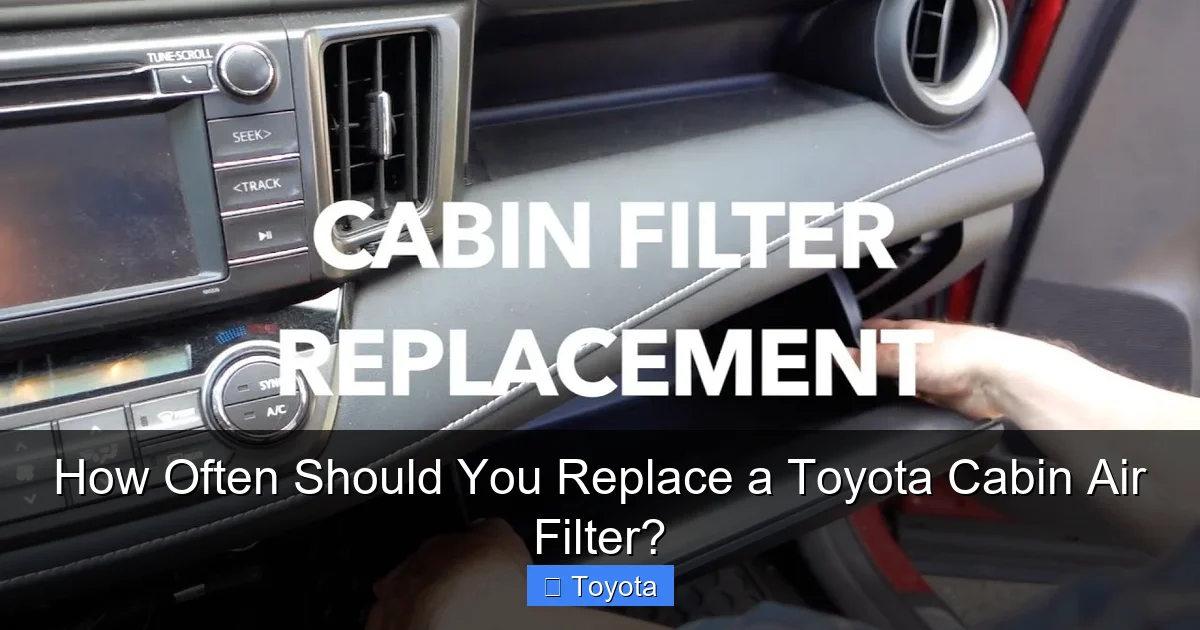
The difficulty lies almost entirely in access. On most modern Toyotas (Camry, Corolla, RAV4, Prius, Highlander), the filter is located behind the glovebox. The process usually involves:
- Opening the glovebox and removing any contents.
- Pushing in the glovebox stops (small plastic clips on the sides) to allow the box to drop down fully.
- Removing a plastic cover panel, which reveals the filter housing.
- Sliding out the old filter (note the airflow direction arrow!).
- Inserting the new filter with the arrow pointing in the same direction (usually towards the car’s interior).
- Reassembling everything.
This entire process takes 10-20 minutes for a first-timer with basic tools (maybe just a screwdriver). For models where the filter is under the dash or under the hood, it’s still a simple clip or screw removal. A detailed, model-specific walkthrough for a popular vehicle like the RAV4 can be found in resources like this step-by-step guide.
Tools, Cost, and Time
Tools: Usually none, or a basic Phillips-head screwdriver. You might need to disconnect the glovebox light connector.
Cost: A quality OEM-style replacement filter typically costs between $15 and $40 from an auto parts store or online. Premium activated carbon filters may run $30-$60.
Time: 15-30 minutes. It’s a perfect weekend morning project.
When to Call a Mechanic
While DIY is straightforward, there are reasons to seek professional help:
- If your model has the filter in a notoriously difficult location (some European makes are terrible, but this is rare for Toyota).
- If you are uncomfortable removing interior trim panels.
- If, during the process, you discover broken clips or damaged housing—a technician can source the correct parts.
- If you want the service done while you’re getting other routine maintenance, like an oil change or antifreeze change.
A professional service will typically add about $50-$100 in labor to the cost of the filter, but they have the experience and tools to do it flawlessly and can inspect the HVAC system while they’re in there.
Conclusion: A Simple Habit for Big Benefits
Your Toyota cabin air filter is a critical line of defense for your health and your car’s HVAC system. While the manufacturer’s baseline of every 15,000 to 30,000 miles is a good starting point, your personal environment and driving style should dictate the true schedule. For most drivers in varied conditions, aiming for the 15,000-mile mark—or even once a year—is a safe and smart practice. The signs of a failing filter are easy to recognize: weak airflow, strange smells, and visibly dirty media. Given its low cost and high DIY feasibility, there’s almost no excuse to neglect this simple service. By making cabin filter replacement a regular part of your maintenance routine, you invest in cleaner air for your lungs, a healthier HVAC system, and a more comfortable driving experience in your Toyota. So, take a look under that glovebox soon—you and your car will breathe easier for it.
Frequently Asked Questions
How often should I replace the cabin air filter in my Toyota Camry or RAV4?
The standard recommendation for most Toyota models, including the Camry and RAV4, is every 15,000 miles or once a year. However, if you frequently drive in heavy traffic, dusty conditions, or areas with high pollen, you should inspect it every 10,000 miles and likely replace it annually regardless of mileage.
Is it difficult to replace a Toyota cabin air filter myself?
For the vast majority of Toyota models, it is very easy. It’s typically located behind the glovebox and requires no tools, or just a screwdriver, to access. The entire job usually takes 10-20 minutes. You simply remove the old filter, note the airflow direction arrow, and insert the new one the same way. Detailed guides for specific models are widely available online.
What happens if I never replace my cabin air filter?
Over time, the filter will become completely clogged. This severely restricts airflow from your vents, making your HVAC system ineffective. It forces the blower motor to work harder, potentially leading to its premature failure. Most importantly, it stops filtering pollutants, allowing allergens, dust, and smog to fill your cabin, negatively impacting your health and comfort.
Should I buy a standard filter or an activated carbon filter for my Toyota?
It depends on your environment. A standard particulate filter is fine for general use and is more affordable. An activated carbon filter is highly recommended if you drive in heavy city traffic, areas with high pollution or smog, or if you want the best possible defense against odors and gaseous pollutants. The carbon layer adsorbs these chemicals, providing superior air quality.
How much does a Toyota cabin air filter cost to replace?
The filter itself costs between $15 and $60, depending on the type (standard vs. activated carbon) and brand. If you replace it yourself, that’s the total cost. If you have a dealership or shop do it, expect to add $50-$100 in labor, bringing the total to roughly $70-$160.
Can a clogged cabin filter affect my Toyota’s air conditioning performance?
Yes, absolutely. A clogged filter is the most common cause of weak airflow from your A/C vents. It restricts the volume of air the system can move, so it takes much longer to cool the cabin. It also makes the A/C system work harder, reducing its overall efficiency and lifespan. Replacing the filter often restores strong, cold airflow immediately.