How Often Do Toyota Hybrid Batteries Need to Be Replaced

Contents
- 1 Key Takeaways
- 2 📑 Table of Contents
- 3 Understanding Your Toyota Hybrid Battery
- 4 The Expected Lifespan: What The Data Shows
- 5 Critical Factors That Influence Battery Longevity
- 6 Recognizing the Warning Signs of a Failing Hybrid Battery
- 7 Maximizing Your Battery’s Life: Essential Maintenance Tips
- 8 The Replacement Process: What to Expect
- 9 Warranty Coverage: Your Safety Net
- 10 Conclusion: A Long-Term Partner with Proper Care
- 11 Frequently Asked Questions

Car GPS Navigator

Windshield Washer Fluid

Steering Wheel Cover

Pressure Washer for Car
Toyota hybrid batteries are engineered for exceptional durability, typically lasting between 8 to 15 years or 100,000 to 150,000 miles under normal conditions. Their lifespan is heavily influenced by driving habits, climate, and proper maintenance. While many batteries outlast the vehicle’s original ownership, understanding the signs of wear and warranty coverage is crucial for every hybrid owner. Proactive care can significantly extend battery life and avoid costly unexpected replacements.
Key Takeaways
- Long Lifespan is Standard: Toyota hybrid batteries are designed to last 8-15 years or 100,000-150,000 miles, often matching or exceeding the vehicle’s useful life.
- Warranty Provides Peace of Mind: In the U.S., federal mandate requires an 8-year/100,000-mile warranty on hybrid batteries, with California and other states offering 10-year/150,000-mile coverage.
- Warning Signs Are Clear: Reduced fuel economy, erratic engine behavior, warning lights (like “Check Hybrid System”), and a failing 12V battery are primary indicators of hybrid battery issues.
- Driving Style Matters: Aggressive driving, frequent short trips, and extreme climates (very hot or cold) accelerate battery degradation, while gentle, consistent driving promotes longevity.
- Maintenance is Proactive: Ensuring the 12V battery is healthy, keeping the hybrid system cooling components clean, and avoiding deep discharges protects the main traction battery.
- Replacement is a Major Investment: Replacement costs vary widely ($2,000 – $5,000+), but remanufactured or used options and core charge returns can reduce the expense.
- Diagnosis is Key: A “Check Hybrid System” light does not automatically mean a bad battery; a professional diagnosis with specific Toyota Techstream software is essential to pinpoint the exact fault.
📑 Table of Contents
- Understanding Your Toyota Hybrid Battery
- The Expected Lifespan: What The Data Shows
- Critical Factors That Influence Battery Longevity
- Recognizing the Warning Signs of a Failing Hybrid Battery
- Maximizing Your Battery’s Life: Essential Maintenance Tips
- The Replacement Process: What to Expect
- Warranty Coverage: Your Safety Net
- Conclusion: A Long-Term Partner with Proper Care
Understanding Your Toyota Hybrid Battery
When you drive a Toyota hybrid, like the iconic Prius, Camry Hybrid, or RAV4 Hybrid, you’re relying on a sophisticated piece of engineering: the high-voltage hybrid battery pack. This isn’t your standard 12-volt car battery. It’s a complex assembly of nickel-metal hydride (NiMH) or, in newer models, lithium-ion (Li-ion) cells. Its sole job is to store electrical energy generated by the gasoline engine and regenerative braking, then deliver that power to the electric motor(s) for propulsion. This constant dance of charging and discharging is what gives your Toyota its remarkable fuel efficiency. Because it works so hard in the background, a common and very smart question from every hybrid owner is: how often do Toyota hybrid batteries need to be replaced?
The short, reassuring answer is that these batteries are built to last a very long time. Toyota’s reputation for reliability is heavily backed by the durability of its hybrid system components. However, “lasting a long time” doesn’t mean “last forever.” Like all batteries, they degrade over cycles and years. Understanding the realistic timeline, the factors that affect it, and the signs of potential failure is the best way to manage your vehicle’s long-term health and cost of ownership. This guide will walk you through everything you need to know, from factory warranties to practical maintenance tips that can help you avoid a premature replacement.
The Expected Lifespan: What The Data Shows
So, let’s get to the heart of the matter. Based on decades of real-world data from millions of Toyota hybrids on the road globally, the industry consensus is clear. A well-maintained Toyota hybrid battery pack typically lasts between 8 and 15 years. In terms of mileage, you can generally expect 100,000 to 150,000 miles before a significant drop in performance or complete failure becomes likely. Many owners report their original batteries lasting well beyond 200,000 miles, especially in milder climates with gentle driving patterns.
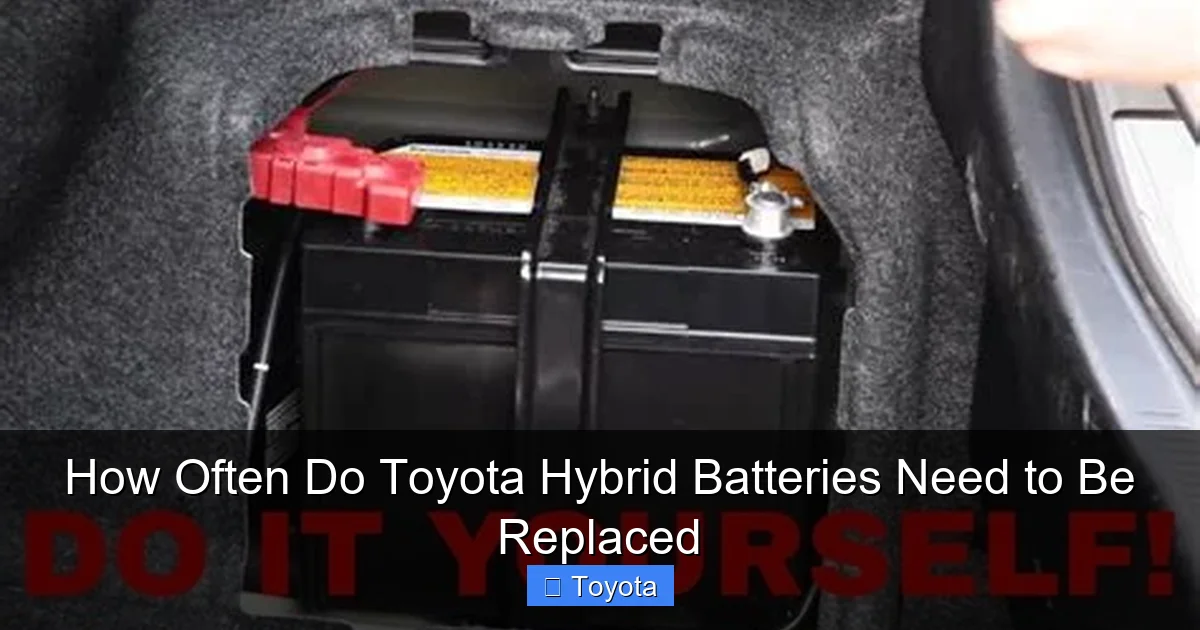
Visual guide about How Often Do Toyota Hybrid Batteries Need to Be Replaced
Image source: powerelectrichub.com
Real-World Examples
Let’s look at some practical examples. A 2010 Toyota Prius with 180,000 miles might still be on its original battery, showing only a slight reduction in electric-only driving range. Conversely, a 2015 Prius used primarily for short, stop-and-go city trips in a scorching desert climate like Phoenix, Arizona, might begin to show weakness at 120,000 miles. The variance comes from how the battery is used. The lithium-ion batteries introduced in the 4th generation Prius (2016+) and in models like the RAV4 Hybrid are generally more resilient to temperature extremes and have a slightly longer projected lifespan than the older NiMH technology, but both are exceptionally robust.
It’s also important to distinguish between a battery that has simply aged and one that has failed catastrophically. Gradual capacity loss means your car might use the gas engine more often, hurting MPG. A complete failure often results in the car not starting or displaying severe warning messages. The former is more common and can sometimes be managed or repaired (cell replacement), while the latter necessitates a full pack replacement.
Critical Factors That Influence Battery Longevity
Why do some batteries last 15 years while others struggle at 8? It’s not random. Several key factors dictate the health and lifespan of your Toyota’s hybrid battery.
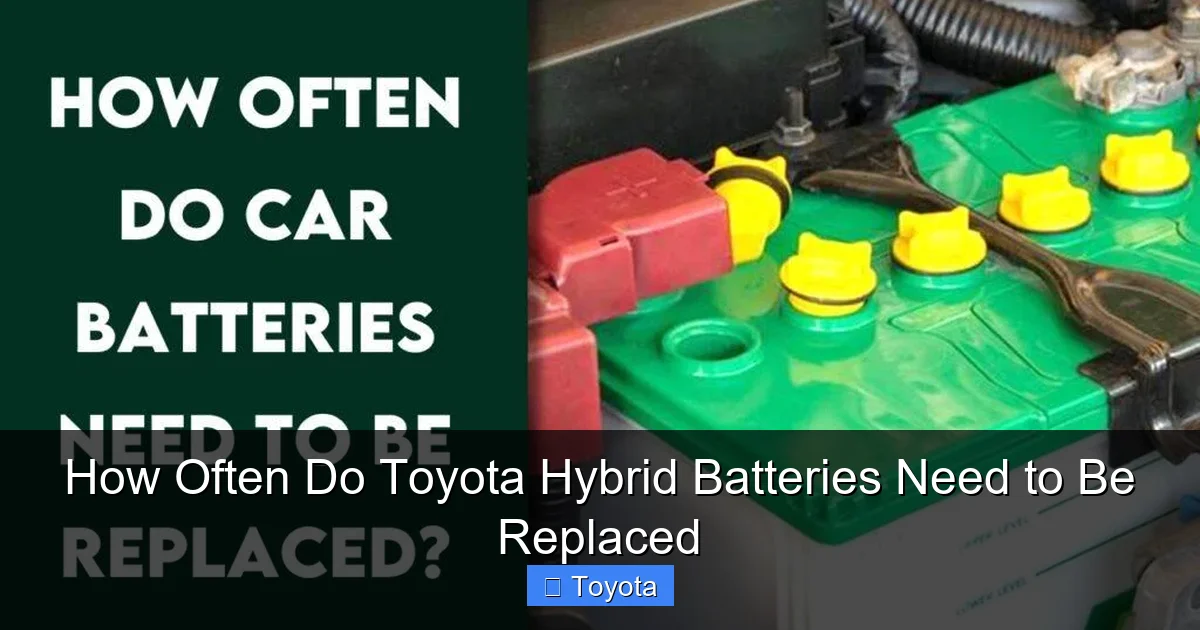
Visual guide about How Often Do Toyota Hybrid Batteries Need to Be Replaced
Image source: vehiclerides.com
1. Climate and Temperature Extremes
Heat is the number one enemy of all batteries. In the hybrid pack, extreme heat accelerates the chemical reactions inside the cells, leading to faster degradation. If you live in a consistently hot climate like Florida, Texas, or the Southwest, your battery will age faster than one in a moderate climate like coastal California or the Pacific Northwest. Similarly, extreme cold reduces battery efficiency and can strain the system, though the damage from cold is generally less severe than from heat. The battery’s own thermal management system works hard to keep it within an optimal temperature range, but it can only do so much against relentless ambient heat.
2. Driving Habits and Patterns
Your right foot has a direct impact. Aggressive driving—hard acceleration and braking—demands more from the battery, causing deeper discharge cycles and faster wear. Frequent short trips are also problematic. The hybrid system works best when the engine and battery can reach and maintain operating temperature. On a series of 2-mile trips, the battery may never fully charge or the engine may not stay warm, leading to suboptimal operation and potential moisture buildup inside the pack. The ideal pattern is a mix of steady highway cruising and efficient city driving, allowing the battery to cycle through its normal charge range (typically between 40% and 80% state of charge) without being forced to the extremes.
3. Vehicle Age and Mileage
This is the simplest factor: time and use. Every charge and discharge cycle, every mile driven, contributes to microscopic wear on the battery’s internal components. While the degradation curve is not linear (it’s steepest in the early years and then flattens), higher mileage always correlates with lower remaining capacity. A 200,000-mile battery will almost certainly have less available energy storage than a 50,000-mile battery from the same model year.
4. Overall Vehicle Health and Maintenance
The hybrid battery doesn’t exist in a vacuum. The health of the 12-volt auxiliary battery is critically important. This small battery powers all the car’s computers and accessories when the hybrid system is off. If it’s weak or failing, it can cause voltage irregularities that stress the main hybrid battery’s computer (the Battery Control Module) and potentially lead to erroneous error codes or poor charging management. Similarly, a clogged or failing hybrid system cooling fan or air intake can prevent the battery pack from cooling properly, as discussed in guides on how to fix a Check Hybrid System warning. Keeping the entire hybrid ecosystem—12V battery, cooling system, engine—in good shape protects the big battery.
Recognizing the Warning Signs of a Failing Hybrid Battery
You don’t have to wait for a complete breakdown to know something is wrong. Your Toyota will give you clues. Catching these early can sometimes allow for a less expensive repair (like replacing a few weak cells) instead of a full pack replacement.

Visual guide about How Often Do Toyota Hybrid Batteries Need to Be Replaced
Image source: vehiclerides.com
The Most Common Indicator: “Check Hybrid System”
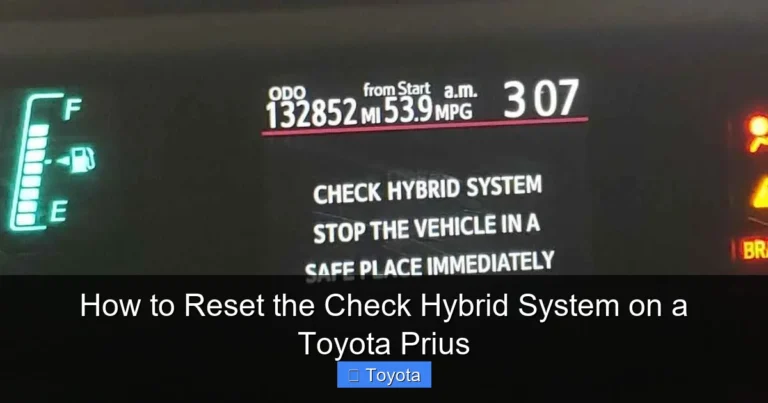
This is the big one. The moment that amber triangle with the exclamation point illuminates on your dash, it’s time to pay attention. This is a generic warning that the car’s computers have detected a fault somewhere in the hybrid system. It could be the traction battery, the motor-generators, the inverter, or a sensor. Do not ignore it. A diagnostic scan with Toyota-specific software (Techstream) is required to read the exact fault codes. While it often points to the battery, it’s not a guarantee. For example, a failing 12V battery can sometimes trigger this light. However, given the battery’s role, it’s the most common culprit as the vehicle ages.
Noticeable Drop in Fuel Economy
Are you suddenly making more stops at the gas pump for the same driving routine? A significant and unexplained drop in MPG is a classic symptom of a hybrid battery losing its ability to hold a charge. The car’s computer recognizes the reduced capacity and compensates by running the gasoline engine more often to make up the power shortfall. If your Prius that usually gets 50 MPG is now struggling to hit 40, it’s a red flag.
Erratic Engine Behavior and Strange Sounds
You might notice the gasoline engine starting and stopping more frequently than usual, even at steady highway speeds. The engine might sound like it’s straining or revving higher than normal to maintain speed. In some cases, a failing battery can cause the car to go into a “limp mode” with reduced power to protect the system. You might also hear unusual whining, clicking, or buzzing sounds from under the hood or from the rear (where the battery pack is located in many models), which could indicate failing internal battery components or cooling systems.
Difficulty Starting or Complete Failure to Start
In the final stages of failure, the hybrid battery may not have enough reserve power to start the car’s startup sequence. You’ll turn the key (or push the button), and you might hear a click or see the dash lights dim, but the engine won’t crank. In a hybrid, the “start” sequence involves the hybrid battery powering up the system first. If it’s completely dead, the car is essentially a brick. A completely dead 12V battery can also cause this, so it’s the first thing to check, but if the 12V is new and healthy, the hybrid pack is the next suspect.
Maximizing Your Battery’s Life: Essential Maintenance Tips
While you can’t stop time, you can absolutely influence how gracefully your hybrid battery ages. Think of these practices as longevity insurance for a very expensive component.
Drive Smart and Consistently
This is the most impactful thing you can do. Avoid jackrabbit starts and hard braking. Anticipate traffic flow to use gentle regenerative braking. Try to combine short errands into one longer trip to allow the engine and battery to warm up fully. If you have a lead-foot, consider using the “Eco” driving mode (if equipped), which softens throttle response and encourages more efficient energy use. The goal is to keep the battery within its optimal charge window and avoid deep, stressful cycles.
Never Ignore the 12-Volt Battery
This small battery is the linchpin. Have it tested at least once a year, especially if your car is over 3 years old. A weak 12V battery forces the hybrid system to work harder to keep it charged, creating electrical noise and stress. When replacing it, use a high-quality AGM (Absorbent Glass Mat) battery as specified by Toyota. A failing 12V battery is a frequent and easily preventable cause of hybrid system warnings. Understanding how often you have to replace a car battery applies here—treat the 12V with the same importance as the main hybrid pack’s health.
Keep the Hybrid Cooling System Clean and Functional
Your hybrid battery generates heat, especially during hard use. It’s cooled by air drawn in through a dedicated intake (often near the rear passenger side or trunk) and circulated by a fan. Periodically check this intake for leaves, debris, or blockages. A cabin air filter that is severely clogged can also reduce overall airflow in some models. If you hear the cooling fan running loudly for extended periods after driving, it could mean the system is working overtime to cool a hot battery, which is a sign to get the system checked.
Maintain Proper Engine Service
A well-tuned engine runs efficiently and charges the hybrid battery correctly. Stick to your recommended oil change intervals (learn how often to change car oil), use the specified oil grade, and replace spark plugs and air filters as per the maintenance schedule. An engine running poorly (misfiring, running rich) can create excessive vibration and uneven charging, which isn’t good for the battery’s delicate chemistry.
Storage Considerations
If you plan to store your hybrid vehicle for an extended period (over a month), don’t just let it sit. The 12V battery will drain, and the hybrid battery will self-discharge. The best practice is to connect a smart battery maintainer to the 12V battery and, if possible, have someone start and run the vehicle for 20-30 minutes every 2-3 weeks to allow the hybrid system to cycle and maintain its charge. If that’s not possible, a professional storage service is advisable.
The Replacement Process: What to Expect
If the diagnosis confirms a failed hybrid battery, you’re facing a significant repair. Here’s what the process and options look like.
Diagnosis and Confirmation
First, a reputable Toyota dealer or a specialist hybrid mechanic must perform a full diagnostic using the Toyota Techstream software. This reads the battery’s health data, including its “State of Health” (SOH) percentage and the voltage of individual cell blocks. A reading showing a SOH below 60-65% typically confirms replacement is needed. Don’t accept a diagnosis based on a generic OBD2 scanner alone; it won’t provide the deep battery data.
Replacement Options and Costs
The cost is the big shock for many. A brand-new OEM Toyota hybrid battery pack can range from $2,500 to over $5,000 installed, depending on the model and year. Labor is high because the heavy pack must be removed from the vehicle (often requiring dropping the rear suspension components in some models). However, you have other choices:
- Remanufactured/Refurbished: A core charge is applied to your old pack, which is then rebuilt with new or tested good cells. These typically cost $1,500 – $3,000 and come with a good warranty (often 12 months/12,000 miles). This is the most common and cost-effective route.
- Used/Salvage: Pulling a battery from a donor vehicle at a junkyard. This is the cheapest upfront option ($800 – $1,500) but carries the highest risk. You have no idea of its history or remaining life, and warranties are rare or very short.
- Cell-Level Repair: Some specialists can open the pack, test all the individual NiMH or Li-ion cells, and replace only the weak ones. This can be cheaper than a full remanufactured pack and extends the life of the good cells, but it’s labor-intensive and not all shops offer it.
The Replacement Procedure
Replacement is not a DIY job for 99% of people. It requires high-voltage safety training, specialized tools, and a deep understanding of the hybrid system. The process involves:
- Disconnecting the 12V battery first to de-energize the system’s safety relays.
- Using insulated tools to disconnect the high-voltage service plug and main cables from the battery pack.
- Physically removing the heavy (often 100+ lb) battery pack from the vehicle.
- Installing the new/remanufactured pack.
- Reconnecting all high-voltage cables and the service plug.
- Reconnecting the 12V battery.
- Performing a full system calibration and verification with Techstream to ensure the new battery is communicating correctly with the vehicle’s computers.
After replacement, your fuel economy and performance should return to near-new levels.
Warranty Coverage: Your Safety Net
This is the most comforting part of owning a Toyota hybrid. Federal emission regulations in the United States mandate that manufacturers warranty the hybrid battery for 8 years or 100,000 miles, whichever comes first. This is a transferable warranty that applies to subsequent owners. Furthermore, states that follow California’s stricter emission standards (CA, CT, ME, MD, MA, NJ, NY, OR, RI, VT) provide a longer 10-year or 150,000-mile warranty.
This means if your battery fails within these limits, Toyota will replace it at no cost to you (minus any applicable deductibles in some states). This warranty is a primary reason why hybrid batteries are such a known quantity—they are replaced under warranty for a significant portion of their potential lifecycle. Always check your vehicle’s warranty booklet or contact a dealer with your VIN to confirm your exact coverage. This federal warranty makes buying a used Toyota hybrid with lower mileage a much safer proposition, as you likely still have years of battery warranty remaining.
Conclusion: A Long-Term Partner with Proper Care
So, how often do Toyota hybrid batteries need to be replaced? For the vast majority of owners, the answer is: not very often, and often not at all during their ownership. With a factory warranty covering the first 8-10 years and a real-world lifespan that frequently extends to 15 years or more, these batteries are not the ticking time bomb some might fear. They are a robust, long-life component that, when paired with sensible driving habits, regular vehicle maintenance, and a watchful eye for warning signs, will serve you reliably for the life of your car. The key is to be an informed owner. Understand that the “Check Hybrid System” light is a serious message, not a suggestion. Prioritize the health of your 12V battery and cooling system. And when the time eventually comes for a replacement, know your options—from remanufactured packs with solid warranties to the safety net of the factory coverage. Your Toyota hybrid is a marvel of efficiency, and its battery is the heart of that system. Treat it well, and it will pay you back in years of worry-free, fuel-sipping driving.
Frequently Asked Questions
What is the average cost to replace a Toyota hybrid battery?
The cost varies significantly. A new OEM battery can be $2,500-$5,000+ installed. Remanufactured batteries are the most common choice, typically costing $1,500-$3,000 with a warranty. Used salvage batteries are cheaper ($800-$1,500) but risky. Always get a detailed quote that includes labor and the core charge for your old battery.
Can I drive my Toyota hybrid with a bad hybrid battery?
You might be able to drive it for a short time in a limited “limp mode,” but it’s not advisable. A severely degraded battery can cause the car to stall, lose power steering/braking assist, or fail to start. Continuing to drive with a “Check Hybrid System” light risks damaging other expensive components like the inverter. Have it diagnosed immediately.
Does my Toyota hybrid battery have a warranty?
Yes, absolutely. In the U.S., federal law mandates an 8-year/100,000-mile warranty on hybrid batteries. In California and states that adopt its emission standards, the warranty is 10 years or 150,000 miles. This warranty is transferable to subsequent owners. Always verify your specific coverage with your dealer using your VIN.
Can I replace the Toyota hybrid battery myself?
We strongly advise against it. The hybrid battery operates at high voltage (over 200V) and can be lethal if mishandled. The replacement requires specialized high-voltage safety training, insulated tools, and a Toyota Techstream diagnostic system for proper calibration. Improper installation can damage the new battery, your vehicle’s computers, or cause serious injury. This is a job for certified professionals.
Is it worth replacing a hybrid battery in an older Toyota?
It depends on the car’s overall value and condition. If your Toyota is in excellent shape, has low mileage otherwise, and you plan to keep it for several more years, a remanufactured battery replacement is often a smart investment compared to a car payment. If the car has high mileage, other major issues, or low market value, the cost may not make financial sense. Get a professional diagnosis and a quote, then compare to your car’s private party value.
How does charging a 12V battery affect the hybrid battery?
They are separate systems, but connected. The 12V battery is charged by the hybrid system’s DC-DC converter, which steps down power from the high-voltage pack. A failing 12V battery can cause the hybrid system to work harder to keep it charged, creating electrical stress and potentially causing hybrid system errors. Always maintain a healthy 12V battery. For more on this, see our guide on how to charge a Toyota hybrid battery’s 12V system safely.