
How Much Is Car Insurance for a 17-year-old per Month

Car insurance for a 17-year-old typically ranges from $200 to $600 per month, depending on location, vehicle type, driving record, and coverage level. Adding a teen to a parent’s policy or choosing high deductibles can significantly reduce costs.
[FEATURED_IMAGE_PLACEOLDER]
Key Takeaways
- Age and inexperience drive high premiums: 17-year-old drivers face the highest insurance rates due to lack of experience and higher accident risk.
- Location matters: Urban areas with high traffic and theft rates often have higher premiums than rural regions.
- Vehicle type impacts cost: Sports cars and luxury vehicles cost more to insure than safe, economical models like sedans or SUVs with high safety ratings.
- Adding to a parent’s policy is cheaper: Insuring a teen under a family plan is usually more affordable than a standalone policy.
- Good grades can lower rates: Many insurers offer discounts for students with a B average or higher.
- Defensive driving courses help: Completing an approved course may qualify teens for a discount with some providers.
- Higher deductibles reduce monthly payments: Choosing a $1,000 deductible instead of $500 can cut premiums, but increases out-of-pocket costs in a claim.
📑 Table of Contents
- How Much Is Car Insurance for a 17-Year-Old per Month?
- Why Is Car Insurance So Expensive for 17-Year-Olds?
- Factors That Affect Car Insurance Rates for 17-Year-Olds
- Real-World Examples of 17-Year-Old Car Insurance Costs
- Ways to Reduce Car Insurance Costs for a 17-Year-Old
- Should You Buy a Standalone Policy or Add to a Parent’s Plan?
- Tips for Parents and Teens
- Conclusion
How Much Is Car Insurance for a 17-Year-Old per Month?
Getting your first driver’s license at 17 is an exciting milestone. But with that freedom comes responsibility—and one of the biggest responsibilities is car insurance. If you’re a parent or a teen preparing to drive, you’ve probably asked: How much is car insurance for a 17-year-old per month?
The short answer? It’s expensive. On average, car insurance for a 17-year-old can range from $200 to $600 per month, depending on several factors. That’s a huge chunk of change, especially for a young driver or a family budget. But don’t panic—there are ways to manage and reduce these costs.
In this guide, we’ll break down exactly what influences insurance rates for 17-year-olds, real-world examples of pricing, and practical tips to keep premiums as low as possible. Whether you’re shopping for your first policy or adding a teen to your existing plan, this article will help you make informed decisions.
Why Is Car Insurance So Expensive for 17-Year-Olds?

Visual guide about How Much Is Car Insurance for a 17-year-old per Month
Image source: clovered.com
You might be wondering why insurance companies charge so much for teen drivers. After all, it’s just one person behind the wheel. The truth is, insurers base their rates on risk—and statistically, 17-year-old drivers are among the riskiest on the road.
High Accident Rates Among Teens
According to the Centers for Disease Control and Prevention (CDC), drivers aged 16 to 19 are nearly three times more likely to be in a fatal crash than drivers aged 20 and older. Inexperience plays a huge role. At 17, most drivers have only been on the road for a year or less. They’re still learning how to react in emergencies, judge distances, and handle distractions.
Insurance companies see this data and respond by charging higher premiums. It’s not personal—it’s actuarial science. The more likely you are to file a claim, the more you’ll pay.
Lack of Driving History
Another factor is the absence of a driving record. Unlike adults who’ve built up years of safe driving, teens start with a blank slate. Insurers have no way to verify whether a 17-year-old is a careful driver or a risk-taker. So, they assume the worst-case scenario.
This lack of history means teens are automatically placed in the highest risk category. Even if your 17-year-old has never gotten a ticket or been in an accident, the insurer doesn’t know that yet. It takes time—usually three to five years of clean driving—to start seeing rate reductions.
Gender and Age Combined
Interestingly, gender still plays a role in insurance pricing, especially for young drivers. Statistically, male teens are involved in more accidents than female teens, particularly in the first few years of driving. As a result, 17-year-old boys often pay more than 17-year-old girls—sometimes by hundreds of dollars per year.
However, this gap narrows as drivers get older. By the time someone reaches their mid-20s, gender-based pricing differences usually disappear in most states.
Factors That Affect Car Insurance Rates for 17-Year-Olds
Visual guide about How Much Is Car Insurance for a 17-year-old per Month
Image source: usinsuranceagents.com
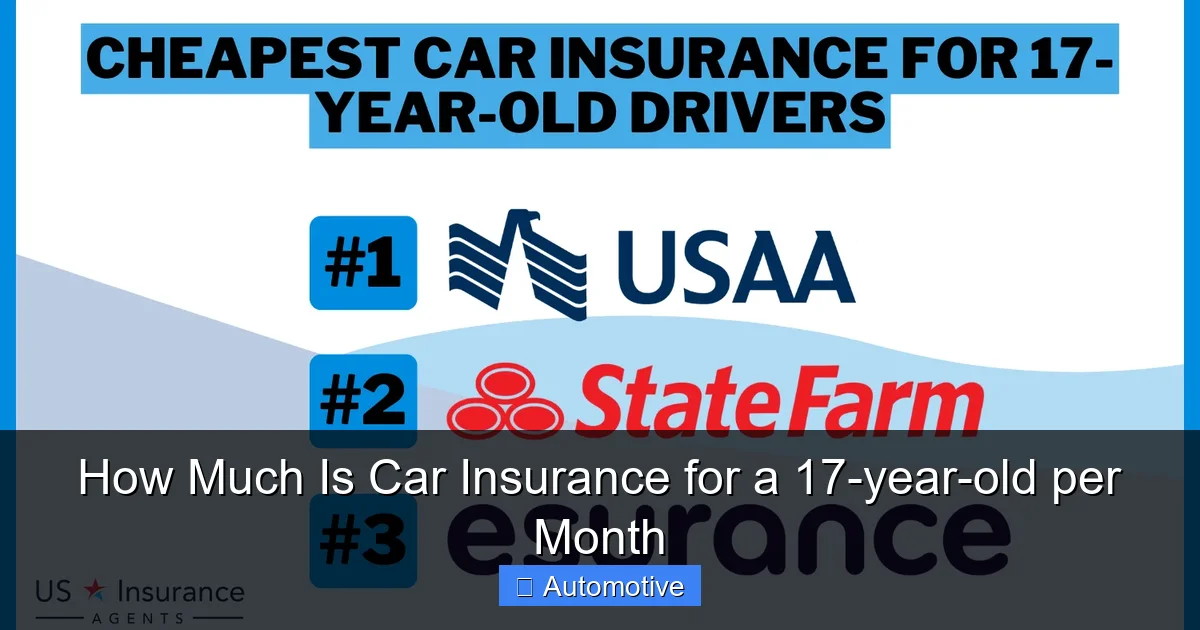
Now that you know why rates are high, let’s look at the specific factors that determine how much you’ll actually pay. Understanding these can help you find ways to lower your premium.
1. Location
Where you live has a massive impact on insurance costs. Urban areas with high population density, heavy traffic, and higher crime rates tend to have much higher premiums than rural areas.
For example, a 17-year-old in Los Angeles, California, might pay $500 or more per month, while a teen in a small town in Iowa could pay closer to $250. States like Michigan, Louisiana, and Florida are known for having some of the highest average car insurance rates in the U.S., while states like Maine, Ohio, and Wisconsin tend to be more affordable.
Even within a state, ZIP codes matter. Living in a neighborhood with high vehicle theft rates or frequent accidents can push your premium up.
2. Type of Vehicle
The car your teen drives makes a big difference. Insurers look at safety ratings, repair costs, theft rates, and performance.
Sports cars, high-performance vehicles, and luxury models are expensive to insure because they’re more likely to be involved in accidents and cost more to repair or replace. For example, insuring a 17-year-old to drive a Ford Mustang or a BMW 3 Series will cost significantly more than insuring them in a Toyota Corolla or Honda Civic.
On the other hand, vehicles with high safety ratings, anti-theft systems, and good crash test results can help lower premiums. SUVs with advanced driver-assistance features (like automatic emergency braking and lane departure warnings) are also viewed more favorably by insurers.
3. Coverage Level
The type and amount of coverage you choose directly affect your monthly payment. Most states require minimum liability coverage, but many families opt for full coverage—which includes collision, comprehensive, and higher liability limits.
Full coverage is more expensive but offers better protection. For a 17-year-old, full coverage might cost $400–$600 per month, while minimum liability could be as low as $150–$250. However, if your teen is driving a newer or more valuable car, full coverage is usually recommended.
4. Driving Record
Even at 17, a clean driving record can help. If your teen has had no accidents, tickets, or violations, some insurers may offer a slight discount. Conversely, a speeding ticket or at-fault accident can spike premiums by 20% or more.
5. Credit Score (in Most States)
In most states (except California, Hawaii, Massachusetts, and Michigan), insurers use credit-based insurance scores to help determine rates. Teens typically don’t have credit histories, so the score of the primary policyholder (usually a parent) is used. A lower credit score can lead to higher premiums.
6. Annual Mileage
How much your teen drives also matters. The more miles driven, the higher the risk of an accident. If your 17-year-old drives to school, work, and social events every day, that’s more exposure than someone who only drives on weekends.
Some insurers offer low-mileage discounts, so if your teen doesn’t drive often, be sure to mention it.
Real-World Examples of 17-Year-Old Car Insurance Costs
Visual guide about How Much Is Car Insurance for a 17-year-old per Month
Image source: citizensinsurance.net
To give you a clearer picture, here are some realistic examples based on national averages and quotes from major insurers.
Example 1: 17-Year-Old in Texas
– **Location:** Houston, TX
– **Vehicle:** 2018 Honda Civic
– **Coverage:** Full coverage (liability, collision, comprehensive)
– **Driving Record:** Clean
– **Added to Parent’s Policy:** Yes
Monthly Premium: ~$380
This is a common scenario. The teen is added to a parent’s existing policy, which is cheaper than a standalone plan. The Honda Civic is a safe, reliable car with good safety ratings, which helps keep costs down.
Example 2: 17-Year-Old in New York
– **Location:** Brooklyn, NY
– **Vehicle:** 2020 Ford Mustang
– **Coverage:** Full coverage
– **Driving Record:** Clean
– **Standalone Policy:** Yes (no parent on policy)
Monthly Premium: ~$650
Here, the combination of a high-risk vehicle (sports car), urban location, and standalone policy drives the cost up significantly. New York also has high insurance rates overall.
Example 3: 17-Year-Old in Ohio
– **Location:** Columbus, OH
– **Vehicle:** 2015 Toyota Camry
– **Coverage:** Minimum liability only
– **Driving Record:** Clean
– **Added to Parent’s Policy:** Yes
Monthly Premium: ~$220
This example shows how choosing minimum coverage and a safe, older vehicle can keep costs relatively low—even for a teen.
Ways to Reduce Car Insurance Costs for a 17-Year-Old
The good news? There are several proven strategies to lower your monthly premium without sacrificing essential protection.
Add Your Teen to Your Existing Policy
This is almost always cheaper than buying a separate policy for your teen. Most insurers offer a “permissive use” clause, meaning your child can drive your car occasionally without being listed. But if they’re going to be a regular driver, they should be added to the policy.
Adding a 17-year-old to a family plan typically increases the premium by $1,500 to $3,000 per year—still far less than a standalone policy, which could cost $5,000 or more annually.
Choose a Safe, Affordable Vehicle
As mentioned earlier, the car matters. Avoid high-performance or luxury vehicles. Instead, opt for a used sedan or SUV with high safety ratings. Look for models with features like electronic stability control, airbags, and anti-lock brakes.
Some insurers even offer discounts for vehicles with advanced safety tech, such as blind-spot monitoring or rearview cameras.
Take Advantage of Discounts
Many insurance companies offer discounts specifically for young drivers. Here are some common ones:
– **Good Student Discount:** Available for teens with a B average or higher. Can save 10–25%.
– **Defensive Driving Course:** Completing an approved course (often online) may qualify for a discount.
– **Driver Training Discount:** If your teen completed a state-approved driver’s education program.
– **Low Mileage Discount:** For teens who drive less than a certain number of miles per year.
– **Multi-Policy Discount:** Bundling car insurance with home or renters insurance.
– **Pay-in-Full Discount:** Paying the annual premium upfront instead of monthly.
Increase the Deductible
The deductible is what you pay out of pocket before insurance kicks in after a claim. Choosing a higher deductible—say, $1,000 instead of $500—can reduce your monthly premium by 10–30%.
Just make sure your family can afford to pay the higher deductible if an accident occurs.
Maintain a Clean Driving Record
This one takes time, but it’s worth it. Safe driving over several years will gradually reduce your premium. Some insurers offer “accident forgiveness” programs, which prevent your rate from increasing after your first at-fault accident.
Consider Usage-Based Insurance
Some companies offer telematics programs (like Progressive’s Snapshot or State Farm’s Drive Safe & Save). These programs track your driving habits—speed, braking, mileage—via a mobile app or device.
If your teen drives safely, they could earn a discount of up to 30%. This is a great way to prove responsibility and lower costs over time.
Should You Buy a Standalone Policy or Add to a Parent’s Plan?
This is a common dilemma for families. Let’s compare the two options.
Adding to a Parent’s Policy
Pros:
– Lower overall cost
– Easier to manage (one policy, one bill)
– Often includes multi-car discounts
– Parent’s driving history may help reduce rates
Cons:
– Parent’s premium increases
– If the teen has an accident, it could affect the parent’s rates long-term
Standalone Policy
Pros:
– Protects the parent’s driving record
– Teaches financial responsibility to the teen
– May be required if the teen owns the car
Cons:
– Much more expensive (often 2–3 times higher)
– Harder to qualify for discounts
– Limited options for young drivers
In most cases, adding a 17-year-old to a parent’s policy is the smarter financial choice. It saves money and simplifies management. However, if the teen is buying their own car and will be the primary driver, a standalone policy might be necessary.
Tips for Parents and Teens
Navigating car insurance as a family can be stressful. Here are some practical tips to make the process smoother.
Start the Conversation Early
Don’t wait until the day your teen gets their license to talk about insurance. Discuss costs, responsibilities, and expectations well in advance. This helps set the tone for safe, responsible driving.
Set Ground Rules
Create a driving agreement that outlines rules like:
– No texting or phone use while driving
– Curfews (e.g., no driving after 10 p.m.)
– Passenger limits (many states restrict teen passengers)
– Consequences for violations
These rules not only improve safety but may also qualify your teen for discounts.
Shop Around Every Year
Insurance rates change. What was a good deal last year might not be the best option now. Get quotes from at least three different insurers annually to ensure you’re getting the best rate.
Teach Financial Responsibility
If possible, have your teen contribute to the insurance cost. Even a small monthly payment teaches budgeting and accountability. It also reinforces the value of safe driving—because a ticket or accident could increase their share.
Review Coverage Annually
As your teen gains experience, your coverage needs may change. After a few years of clean driving, you might be able to reduce coverage on an older car or lower your deductible.
Conclusion
So, how much is car insurance for a 17-year-old per month? The answer isn’t one-size-fits-all, but the average falls between $200 and $600. While that’s a steep price, understanding the factors that influence rates—and knowing how to reduce them—can make a big difference.
By choosing a safe vehicle, adding your teen to your policy, taking advantage of discounts, and encouraging responsible driving, you can keep costs manageable. Remember, insurance isn’t just a legal requirement—it’s protection for your family, your teen, and others on the road.
The journey to affordable car insurance starts with knowledge. Use this guide to compare options, ask the right questions, and make smart decisions. With time and safe driving, those monthly premiums will gradually decrease, making the road ahead a little less expensive.
Frequently Asked Questions
Why is car insurance so expensive for 17-year-olds?
Car insurance is expensive for 17-year-olds because they are statistically more likely to be involved in accidents due to inexperience. Insurers charge higher premiums to offset this increased risk.
Can I avoid high insurance costs by buying a cheap car?
Yes, choosing a safe, economical vehicle like a sedan or SUV with high safety ratings can lower your premium. Avoid sports cars and luxury models, which are more expensive to insure.
Does getting good grades really lower insurance rates?
Yes, many insurers offer a good student discount for teens with a B average or higher. This can save 10–25% on premiums and is one of the easiest ways to reduce costs.
Is it better to add my teen to my policy or get them their own?
Adding your teen to your existing policy is usually cheaper than a standalone plan. It also allows you to take advantage of family discounts and multi-car savings.
Will my rates go down as my teen gets older?
Yes, insurance rates typically decrease as drivers gain experience. By age 25, most drivers see significantly lower premiums, especially if they maintain a clean driving record.
Can defensive driving courses help reduce insurance costs?
Yes, completing an approved defensive driving course may qualify your teen for a discount with some insurers. It also improves driving skills and safety awareness.