
How Much Is a Subaru Catalytic Converter Worth for Scrap?

Contents
- 1 Key Takeaways
- 2 📑 Table of Contents
- 3 How Much Is a Subaru Catalytic Converter Worth for Scrap?
- 4 What Makes Subaru Catalytic Converters Valuable?
- 5 Factors That Affect Scrap Value
- 6 How to Determine the Value of Your Subaru’s Catalytic Converter
- 7 Where to Sell a Subaru Catalytic Converter for Scrap
- 8 Legal and Environmental Considerations
- 9 Protecting Your Subaru from Theft
- 10 Conclusion
- 11 Frequently Asked Questions

Car Windshield Wiper Blades

Car Vacuum Cleaner (Portable)

LED Emergency Road Flares

Car LED Headlight Bulb
If you’re wondering how much a Subaru catalytic converter is worth for scrap, you’re not alone. These components contain precious metals like platinum, palladium, and rhodium, making them valuable to recyclers—especially as thefts rise and demand grows.
Key Takeaways
- Subaru catalytic converters contain precious metals: Platinum, palladium, and rhodium drive their scrap value, with prices fluctuating based on global markets.
- Scrap prices range from $50 to $500+: The exact amount depends on the model, year, converter type (OEM vs. aftermarket), and current metal prices.
- OEM converters are worth more: Factory-installed units from Subaru typically fetch higher prices than aftermarket replacements due to higher metal content.
- Location and recycler matter: Prices vary by region and buyer—always get multiple quotes from reputable scrap yards or online buyers.
- Theft is a growing concern: Due to their value, Subaru catalytic converters are frequently targeted by thieves—consider protective measures.
- Legal and environmental responsibility: Always sell through licensed recyclers to comply with EPA regulations and avoid fines.
- DIY removal is risky: Improper handling can damage the part or violate emissions laws—professional removal is recommended.
📑 Table of Contents
- How Much Is a Subaru Catalytic Converter Worth for Scrap?
- What Makes Subaru Catalytic Converters Valuable?
- Factors That Affect Scrap Value
- How to Determine the Value of Your Subaru’s Catalytic Converter
- Where to Sell a Subaru Catalytic Converter for Scrap
- Legal and Environmental Considerations
- Protecting Your Subaru from Theft
- Conclusion
How Much Is a Subaru Catalytic Converter Worth for Scrap?
If you’ve ever looked under your Subaru and noticed a small, muffler-like component near the engine, you’ve seen the catalytic converter. It’s a critical part of your vehicle’s exhaust system, designed to reduce harmful emissions. But beyond its environmental role, this unassuming metal box holds surprising value—especially when it comes to scrap.
In recent years, catalytic converters have become hot commodities in the recycling world. Why? Because they contain precious metals like platinum, palladium, and rhodium. These metals are rare, expensive, and essential in various industries, from jewelry to electronics. As a result, even old or damaged catalytic converters can fetch a decent payout when sold for scrap.
Subaru vehicles, known for their reliability and all-wheel-drive systems, are no exception. Whether you drive a Forester, Outback, Impreza, or WRX, your Subaru’s catalytic converter could be worth more than you think. But how much exactly? That depends on several factors—from the model and year of your car to the current market price of precious metals.
In this guide, we’ll break down everything you need to know about the scrap value of a Subaru catalytic converter. We’ll explore what makes these parts valuable, how pricing works, where to sell them, and how to protect your vehicle from theft. By the end, you’ll have a clear understanding of how much your Subaru’s catalytic converter is worth—and how to get the best return.
What Makes Subaru Catalytic Converters Valuable?
Visual guide about How Much Is a Subaru Catalytic Converter Worth for Scrap?
Image source: cdn.autocatalystmarket.com
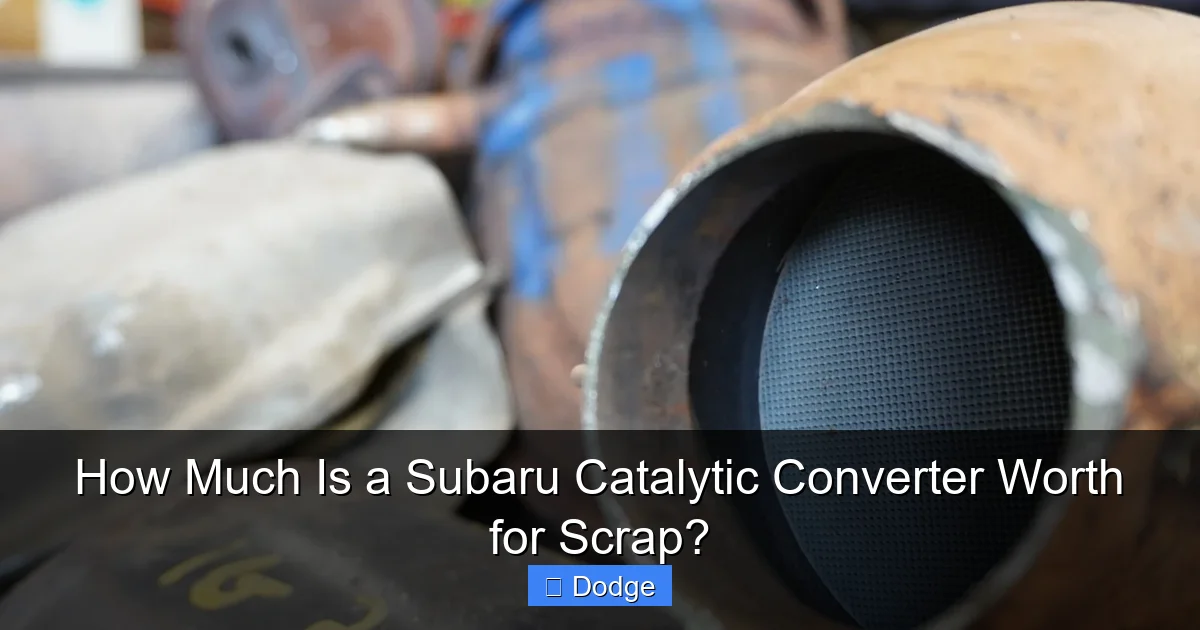
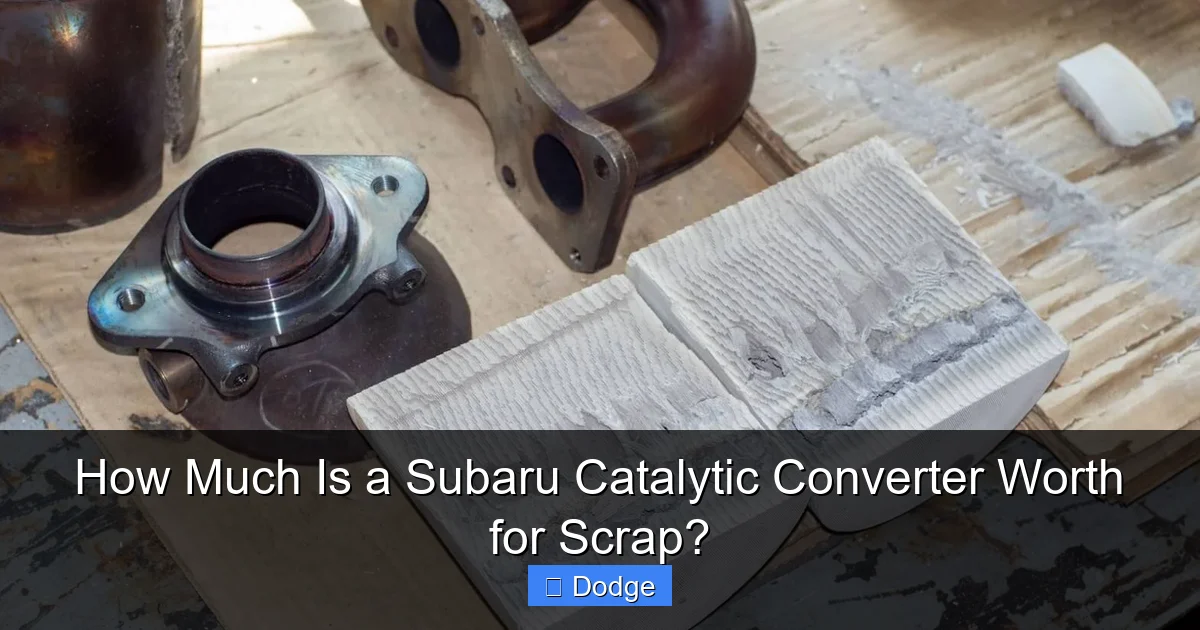
At first glance, a catalytic converter might look like a simple metal canister. But inside, it’s packed with a ceramic honeycomb structure coated in precious metals. These metals act as catalysts, speeding up chemical reactions that convert toxic gases—like carbon monoxide, nitrogen oxides, and hydrocarbons—into less harmful substances like carbon dioxide and water vapor.
The real value lies in those metals. Platinum, palladium, and rhodium are not only rare but also incredibly useful. Platinum is used in jewelry and medical devices. Palladium is crucial in electronics and fuel cells. Rhodium, the rarest of the three, is used in catalytic converters themselves and in high-end industrial applications.
Subaru vehicles, especially those built between the late 1990s and early 2010s, often use high-quality OEM (original equipment manufacturer) catalytic converters. These units tend to have higher concentrations of precious metals compared to aftermarket replacements. For example, a 2005 Subaru Outback with a factory-installed converter might contain more rhodium than a 2018 model with a lower-emission design.
Another factor is engine size and type. Turbocharged Subarus like the WRX or STI often have larger or dual catalytic converters, which means more metal content. Similarly, older models with less stringent emissions standards sometimes used richer catalyst coatings, increasing their scrap value.
It’s also worth noting that Subaru’s reputation for durability means many of these vehicles are still on the road decades later. That longevity translates into a steady supply of used converters entering the scrap market—but demand often outpaces supply, especially as global metal prices rise.
Precious Metal Content in Subaru Converters
So, how much of these metals are we really talking about? While exact amounts vary, here’s a general idea:
– Platinum: 2–8 grams per converter
– Palladium: 3–12 grams per converter
– Rhodium: 0.5–2 grams per converter
To put that in perspective, rhodium alone can cost over $6,000 per troy ounce (about 31 grams) as of 2024. Even a small amount can significantly boost the scrap value.
For example, a 2003 Subaru Legacy with a high-flow OEM converter might contain 1.5 grams of rhodium. At current prices, that’s worth around $300 just in rhodium—before adding platinum and palladium. When you factor in processing costs and buyer margins, the final scrap payout might be $150–$250, but the metal value is undeniable.
Why OEM Converters Are Worth More
Original equipment manufacturer (OEM) catalytic converters are almost always more valuable than aftermarket ones. Why? Because they’re designed to meet strict emissions standards and often use higher-grade materials.
Aftermarket converters—those installed by repair shops or third-party manufacturers—are typically built to be cheaper and more efficient. They may use less precious metal or alternative catalysts like cerium. While they still work, they don’t command the same prices in the scrap market.
If you’re unsure whether your Subaru has an OEM converter, check the stamp or label. Most factory units have a Subaru logo or part number. Aftermarket ones might bear brands like MagnaFlow, Walker, or Bosal.
Factors That Affect Scrap Value
Visual guide about How Much Is a Subaru Catalytic Converter Worth for Scrap?
Image source: scrappie.co.uk
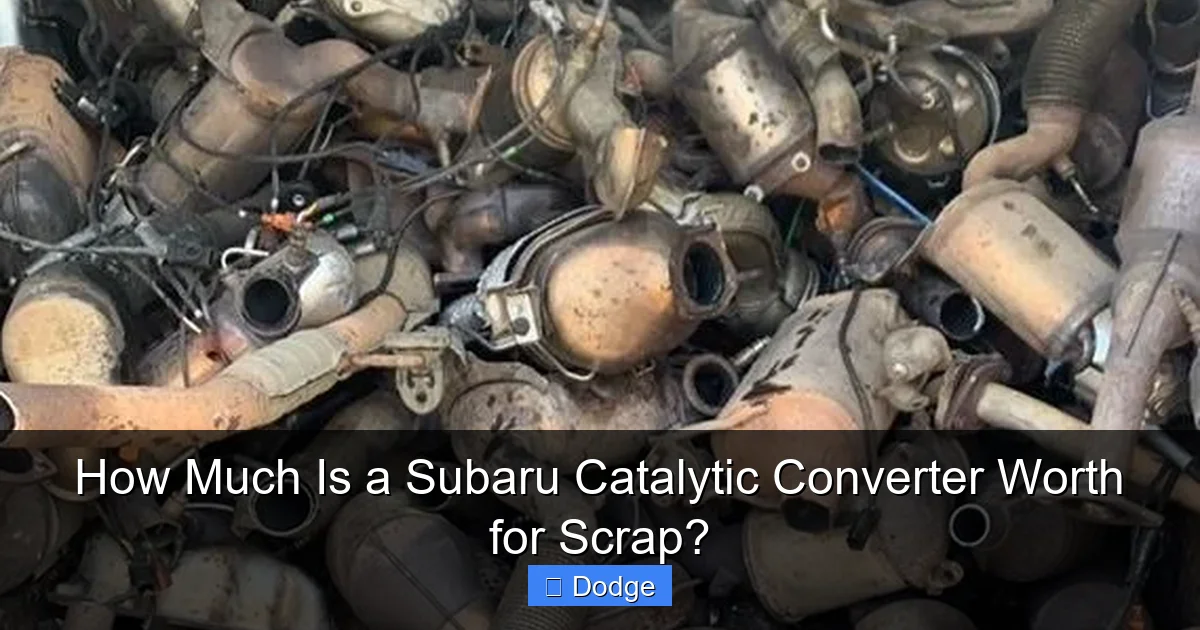
Now that you know why Subaru catalytic converters are valuable, let’s look at what determines how much you’ll actually get when you sell one for scrap.
1. Vehicle Model and Year
Not all Subarus are created equal when it comes to catalytic converter value. Older models—especially those from the 1990s and early 2000s—tend to have higher metal content. For instance:
– A 1999 Subaru Forester with a 2.5L engine might have a converter worth $100–$200 in scrap.
– A 2008 Subaru Impreza WRX with a turbocharged engine and dual cats could be worth $300–$500+.
Newer models, particularly those built after 2015, often use smaller converters with lower metal loads to meet stricter emissions standards. A 2020 Subaru Crosstrek, for example, might only fetch $50–$100.
2. Type of Catalytic Converter
Subaru vehicles can have different types of catalytic converters:
– Two-way converters: Found in older models, these handle carbon monoxide and hydrocarbons.
– Three-way converters: More common in modern Subarus, they also reduce nitrogen oxides.
– High-flow or performance converters: Often used in turbo models, these have larger substrates and more metal.
High-flow converters, especially in performance Subarus, are among the most valuable. They’re designed to handle higher exhaust volumes and often contain more precious metals.
3. Condition of the Converter
A damaged or melted catalytic converter is worth less than one in good condition. Heat damage, physical dents, or clogging can reduce the amount of recoverable metal. However, even a failed converter still has value—just not as much.
If the ceramic honeycomb inside is broken or powdered, it may be harder to extract the metals efficiently. Some recyclers will still buy it, but at a discount.
4. Current Precious Metal Prices
The scrap value of your Subaru catalytic converter isn’t fixed—it changes daily based on global commodity markets. Platinum, palladium, and rhodium prices fluctuate due to supply chain issues, geopolitical events, and industrial demand.
For example, during the 2020–2022 semiconductor shortage, palladium prices soared because of its use in electronics. That drove up catalytic converter values across the board. In 2024, rhodium remains one of the most expensive metals, often exceeding $10,000 per troy ounce.
To get an idea of current prices, check resources like Kitco or Metalary. Many scrap buyers also post daily rate sheets online.
5. Location and Buyer
Where you live and who you sell to can make a big difference. Scrap yards in urban areas with high theft rates may offer lower prices due to risk. Rural buyers might pay more but have fewer options.
Online buyers like Catalytic Converter Recycling, Greener Recycling, or PGM Refiners often provide competitive quotes and free shipping. They’ll ask for your VIN, photos, and converter details to give an estimate.
Always get at least three quotes before selling. Some buyers may lowball you, especially if they know you’re in a hurry.
How to Determine the Value of Your Subaru’s Catalytic Converter
Visual guide about How Much Is a Subaru Catalytic Converter Worth for Scrap?
Image source: recyclinginside.com
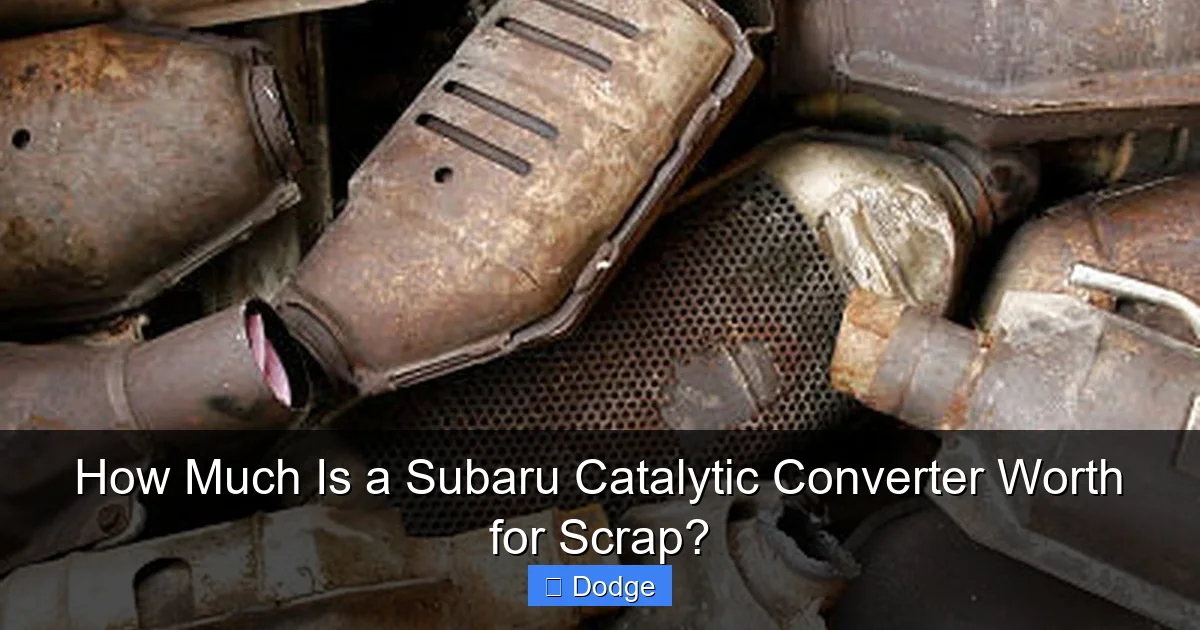
So, how do you figure out how much your specific Subaru converter is worth? Here’s a step-by-step guide:
Step 1: Identify Your Vehicle
Start by noting your Subaru’s make, model, year, and engine size. This information helps determine the type and likely metal content of your converter.
For example:
– 2005 Subaru Outback, 3.0L H6
– 2012 Subaru WRX, 2.5L Turbo
– 2018 Subaru Forester, 2.5L
You can find this info on your registration, insurance card, or by checking the VIN decoder online.
Step 2: Locate the Converter
The catalytic converter is usually located under the vehicle, between the engine and the muffler. On Subarus, it’s often close to the exhaust manifold. Look for a cylindrical or oval-shaped metal box with pipes on both ends.
Take clear photos from multiple angles. Include any stamps, labels, or part numbers. These details help buyers assess value.
Step 3: Check for OEM vs. Aftermarket
Look for a Subaru logo or part number stamped on the converter. If it’s missing or shows a third-party brand, it’s likely aftermarket.
OEM converters are almost always worth more. If you’re unsure, consult a Subaru dealer or mechanic.
Step 4: Research Current Metal Prices
Visit a precious metals pricing site like Kitco.com or JM Bullion. Note the current spot prices for platinum, palladium, and rhodium.
While you won’t get full market value (due to refining costs), this gives you a baseline. For example, if rhodium is at $8,000/oz, even 1 gram is worth over $250 in raw metal.
Step 5: Get Quotes from Buyers
Contact local scrap yards, auto recyclers, or online buyers. Provide your vehicle details and photos. Most will give a quote within 24 hours.
Compare offers. Don’t forget to ask about shipping costs, payment methods, and whether they require proof of ownership.
Step 6: Consider Selling as a Core
If your converter is still functional, you might get more by selling it as a “core” to a parts remanufacturer. These companies refurbish and resell used converters, often paying more than scrap value.
However, this route requires more effort—you’ll need to remove the part carefully and ship it intact.
Where to Sell a Subaru Catalytic Converter for Scrap
Once you know your converter’s value, it’s time to find a buyer. Here are your best options:
Local Scrap Yards and Auto Recyclers
Many junkyards and metal recyclers accept catalytic converters. Call ahead to confirm they buy them and ask about their pricing process.
Pros:
– Fast, in-person transactions
– No shipping required
Cons:
– Lower prices due to overhead and risk
– May require proof of ownership
Tip: Bring your vehicle title or registration to prove you legally own the part.
Online Buyers and Refiners
Websites like:
– Catalytic Converter Recycling
– Greener Recycling
– PGM Refiners
– Scrap Catalytic Buyers
These companies specialize in catalytic converter recycling. They offer free shipping labels, detailed quotes, and fast payments.
Pros:
– Higher payouts
– Transparent pricing
– Nationwide service
Cons:
– Must ship the part (risk of damage)
– Wait time for payment
Tip: Package the converter securely in a box with padding. Include your contact info and quote number.
Auto Repair Shops and Dealerships
Some Subaru dealerships or independent mechanics buy used converters, especially if they’re refurbishing vehicles.
Pros:
– Trusted local option
– May offer store credit
Cons:
– Limited availability
– Often lower than scrap value
Pawn Shops and Metal Buyers
Be cautious with pawn shops. While some buy catalytic converters, many lack expertise and may offer unfair prices.
Only deal with licensed, reputable buyers. Avoid anyone who refuses to show pricing or asks for cash-only transactions.
Legal and Environmental Considerations
Selling a catalytic converter isn’t as simple as selling scrap metal. There are legal and environmental rules to follow.
EPA Regulations
In the U.S., the Environmental Protection Agency (EPA) regulates catalytic converter removal and sale. It’s illegal to remove a converter unless the vehicle is being scrapped or the part is being replaced for legitimate repair.
You must prove ownership and that the vehicle is no longer in use—or that the converter was legally replaced.
State Laws
Some states have stricter rules. For example:
– California requires documentation for any catalytic converter sale.
– Texas mandates that buyers verify the seller’s identity and vehicle ownership.
Check your state’s Department of Motor Vehicles (DMV) or environmental agency for specific requirements.
Environmental Responsibility
Catalytic converters contain hazardous materials. Improper disposal can harm the environment.
Always sell to licensed recyclers who follow EPA guidelines. They’ll safely extract metals and dispose of residues.
Never dump a converter in a landfill or sell it to unlicensed buyers.
Protecting Your Subaru from Theft
Unfortunately, the high value of catalytic converters has led to a surge in thefts. Subarus are frequent targets because they’re common, have accessible undercarriages, and often carry valuable OEM converters.
Why Are Subarus Targeted?
– High ground clearance makes converters easy to access.
– Popular models mean more units on the road.
– OEM converters hold more precious metals.
In cities like Chicago, Los Angeles, and Atlanta, catalytic converter thefts have increased by over 300% in recent years.
How to Protect Your Vehicle
Here are practical tips to deter thieves:
– Park in well-lit, secure areas: Garages, driveways with motion lights, or monitored lots.
– Install a catalytic converter shield: Steel plates that bolt over the converter, making removal difficult.
– Etch your VIN on the converter: Makes it traceable and less attractive to thieves.
– Use a security device: Products like the CatClamp or CatStrap lock the converter in place.
– Consider GPS tracking: Small devices can alert you if the converter is tampered with.
Many Subaru owners also join neighborhood watch groups or use apps like Nextdoor to report suspicious activity.
What to Do If Your Converter Is Stolen
If you discover your catalytic converter is missing:
1. Contact the police immediately. File a report—it’s required for insurance claims.
2. Notify your insurance company. Comprehensive coverage often covers theft.
3. Get a replacement. Only use EPA-compliant converters to avoid fines.
4. Install anti-theft measures to prevent future thefts.
Conclusion
So, how much is a Subaru catalytic converter worth for scrap? The answer isn’t one-size-fits-all. Depending on your vehicle’s model, year, and converter type, you could receive anywhere from $50 to $500 or more.
The key drivers of value are the precious metals inside—platinum, palladium, and rhodium—whose prices fluctuate with global markets. OEM converters from older, high-performance Subarus tend to be the most valuable, while newer or aftermarket units fetch less.
To get the best return, do your research. Identify your converter, check metal prices, and get multiple quotes from reputable buyers. Always follow legal and environmental guidelines to avoid fines or harm.
And don’t forget: with theft on the rise, protecting your Subaru’s catalytic converter is just as important as knowing its worth. A few preventive measures can save you thousands in replacement costs and headaches.
Whether you’re scrapping an old car or replacing a failed converter, understanding the value of your Subaru’s catalytic converter empowers you to make smart, informed decisions. It’s not just about the money—it’s about responsibility, safety, and getting the most out of your vehicle.
Frequently Asked Questions
How much can I get for a Subaru catalytic converter at a scrap yard?
Most scrap yards pay between $50 and $300 for a Subaru catalytic converter, depending on the model, age, and current metal prices. OEM units from older or turbocharged models typically fetch the highest prices.
Is it legal to sell a catalytic converter for scrap?
Yes, but only if you legally own the vehicle and the converter was removed for legitimate reasons, such as recycling a totaled car or replacing a failed part. Always provide proof of ownership to avoid legal issues.
Do I need to remove the catalytic converter myself to sell it?
You can, but it’s not recommended unless you have mechanical experience. Improper removal can damage the part or violate emissions laws. Many buyers offer pickup services or work with local mechanics.
Can I sell a damaged or clogged catalytic converter?
Yes, but it will likely be worth less. Recyclers can still extract precious metals, but heat damage or broken internals may reduce the payout. Always disclose the condition when getting quotes.
Why are Subaru catalytic converters stolen so often?
Subarus are targeted because they have high ground clearance, making converters easy to access, and many models use valuable OEM units with high precious metal content. Thieves can remove them in under a minute.
How can I find out the exact value of my Subaru’s catalytic converter?
Use your VIN to identify the model and engine, take clear photos of the converter, and get quotes from multiple licensed recyclers. Online buyers often provide instant estimates based on this information.


