
How Much Is a 2014 Ford F-150 Worth?

The value of a 2014 Ford F-150 ranges from $8,000 to over $35,000, depending heavily on trim level, engine, mileage, condition, and regional demand. Base XL models with high mileage are at the low end, while low-mileage, top-trim Platinum or Raptor versions command premium prices. Always check multiple valuation sources and inspect the vehicle’s history to get an accurate price for your specific truck.
So, you’re looking at a 2014 Ford F-150, or maybe you’re thinking of selling yours. The big question hanging in the air is simple but tricky: how much is a 2014 Ford F-150 worth? You’ve come to the right place. This isn’t just about a single number; it’s about understanding the story your truck tells. A 2014 F-150 was a watershed model year. It was the second year of the groundbreaking aluminum-intensive twelfth generation, a truck that redefined the segment with its tough, lightweight body and advanced powertrains. That innovation still echoes in its value today. Whether you’re a first-time buyer, a seasoned owner, or someone just curious about the market, this guide will walk you through every nook and cranny of determining the worth of a 2014 Ford F-150. We’ll talk trims, engines, miles, rust, and even what time of year might get you more cash. Let’s pop the hood and get into the details.
Key Takeaways
- Trim Level is King: The single biggest factor is the trim (XL, XLT, Lariat, King Ranch, Platinum, Limited, Raptor). A Platinum can be worth $10,000+ more than a base XL with similar miles.
- Mileage Matters Greatly: Expect a significant price drop for every 20,000 miles over 100,000. A truck with 80,000 miles is worth substantially more than one with 150,000 miles, all else being equal.
- Condition & History Are Critical: A clean title, full service records, and no accidents can add 10-15% to the value. Rust, interior wear, and unaddressed recalls subtract from the price.
- Engine Choice Impacts Price: The popular 3.5L EcoBoost V6 often holds value slightly better than the 5.0L V8, while the high-performance Raptor’s 6.2L V8 commands a major premium.
- Market & Seasonality Fluctuate: Prices are typically higher in spring/summer and in regions with harsh winters or strong truck demand (Texas, Midwest). Economic shifts and new model releases cause value swings.
- Private Sale vs. Trade-In: You’ll almost always get more money selling privately ($1,500-$3,000 more on average) than trading in, but it requires more time and effort.
- Use Multiple Valuation Tools: Never rely on one source. Cross-reference Kelley Blue Book (KBB), NADA Guides, and Edmunds with recent local listings on Autotrader or Facebook Marketplace for a real-world price.
📑 Table of Contents
The Core Factors Driving a 2014 Ford F-150’s Value
Think of a truck’s value like a recipe. You need the right ingredients in the right amounts. For the 2014 F-150, the main ingredients are trim level, engine, mileage, condition, location, and vehicle history. Change one ingredient, and the final price—the “taste”—changes dramatically. Let’s break down each one.
Trim Level: The Starting Point of Your Price
This is your foundation. Ford didn’t just offer one “F-150” in 2014; they offered a spectrum from bare-bones work truck to luxury hauler. Here’s a quick hierarchy from lowest to highest typical value:
- XL: The workhorse. Vinyl seats, basic AM/FM radio, manual windows/locks. The most affordable. Value range: ~$8,000 – $15,000.
- XLT: The popular sweet spot. Adds cloth seats, power windows/locks, keyless entry, and more. Huge volume in the used market. Value range: ~$12,000 – $20,000.
- Lariat: The luxury leader for many. Leather seats, heated/cooled front seats, SYNC with MyFord Touch, dual-zone climate, often 20″ wheels. Value range: ~$18,000 – $27,000.
- King Ranch: The Texas-inspired luxury trim. Unique leather with King Ranch logo, heated/cooled seats, premium audio, often wood trim. Commands a premium over Lariat. Value range: ~$20,000 – $29,000.
- Platinum: The top non-limited trim. Almost everything: premium leather, heated/cooled rear seats, adaptive cruise control, 360-degree camera, premium audio. Value range: ~$25,000 – $35,000+.
- Limited: The flashiest, with unique grille, 22″ wheels, and all Platinum features plus more chrome. Rare and valuable. Value range: ~$28,000 – $38,000+.
- Raptor: The unicorn. The high-performance off-road model with the 6.2L V8, long-travel suspension, and wide body. Despised by some, worshipped by many. Low supply, high demand. Value range: ~$30,000 – $45,000+ for clean, low-mile examples.
A 2014 F-150 XLT and a 2014 F-150 Platinum are not the same vehicle. The price difference can be enough to buy a decent used sedan. Always start your valuation by identifying the exact trim.
Under the Hood: Engine and Powertrain
The 2014 model year offered several powertrain options, and they affect value differently:
- 3.5L EcoBoost V6: The most common and popular engine. It’s powerful, fuel-efficient, and generally holds value very well. Buyers love the torque and towing capacity.
- 5.0L V8: The traditional “Coyote” V8. Favored by those who prefer the sound and feel of a naturally aspirated V8. Its value is comparable to the EcoBoost but can be slightly lower in regions where fuel economy is a huge concern.
- 6.2L V8: Exclusively in the Raptor. This is a performance engine, and its scarcity drives value up.
- 6-Speed Automatic Transmission: Standard on all. Its reliability is generally good, but a well-documented transmission service history is a big plus.
Pro Tip: An EcoBoost-powered truck in a region with high fuel prices (like California) might fetch a slightly higher price than an identical V8 model in Texas. It’s all about local demand.
The Mileage Equation: How Many is Too Many?
For a 2014 vehicle, mileage is a critical health indicator. The national average is about 12,000 miles per year. So for a 2014 model in 2024, the “average” would be around 120,000 miles.
- Low Mileage (Under 90k): Highly desirable. Expect a premium. A pristine XLT with 70,000 miles could be priced at the top of its range.
- Average Mileage (90k – 140k): The bulk of the market. Pricing is most competitive here. Condition becomes the deciding factor between two similarly optioned trucks.
- High Mileage (Over 140k): Prices drop steeply. However, a well-maintained, high-mileage truck with complete records can still be a smart buy for a buyer willing to risk potential repairs. A truck with 200,000 miles will be in a different price universe.
Remember: It’s not just the number. A truck with 150,000 miles of mostly highway commuting and a full service history is worth more than one with 120,000 miles of hard towing and off-road abuse with no records.
Condition and Vehicle History: The True Story
Two identical 2014 F-150 XLTs with 120,000 miles can have a $3,000-$5,000 price difference based on condition. Buyers and appraisers scrutinize:
- Title Status: A clean title is non-negotiable for top value. Salvage, rebuilt, or flood-damaged titles decimate value, often by 50% or more.
- Accident History: Using a CARFAX or AutoCheck report is essential. A minor fender-bender reported might shave a few hundred dollars. Major structural damage can slash thousands.
- Interior & Exterior Wear: Faded paint, dents, rust (especially in the rocker panels and bed, common on older aluminum F-150s), ripped seats, and stained carpets are red flags. A detailed, clean truck sells faster and for more.
- Mechanical Health: Are there any check engine lights? How do the tires, brakes, and suspension components look? Has the timing belt/chain (if applicable to the engine) been serviced? A pre-purchase inspection by a trusted mechanic is worth every penny for a buyer and a great selling point for a seller.
- Maintenance Records: This is your secret weapon. A stack of oil change receipts, tire rotations, and major service records proves you cared for the truck. It builds buyer confidence and directly increases value.
Geography and Season: Where and When You Sell
The value of a 2014 Ford F-150 is not the same in Miami as it is in Minneapolis.
- Regional Demand: Trucks are king in the Midwest, South, and rural West. You’ll often find higher prices and faster sales in states like Texas, Oklahoma, and Wyoming. In major coastal cities, prices can be softer due to lower demand and higher supply of smaller cars.
- Seasonal Trends: The best time to sell a truck is spring and early summer (March-June). Buyers are thinking about road trips, camping, and projects. Prices can be 5-10% higher than in the dead of winter. Conversely, the best time to buy is often late fall and winter (November-February) when demand dips.
Example: A 2014 F-150 XLT 4×4 with 120,000 miles might list for $16,500 in Colorado in May. The same truck might sit at $15,000 in December in the same market.
Breaking Down Value by Trim: Real-World Price Ranges
Let’s get specific. Using data from major valuation sites (KBB, NADA, Edmunds) and a scan of current private party listings as of early 2024, here are realistic price brackets for a 2014 Ford F-150 worth in average condition with average miles (100k-140k). Remember, these are starting points.
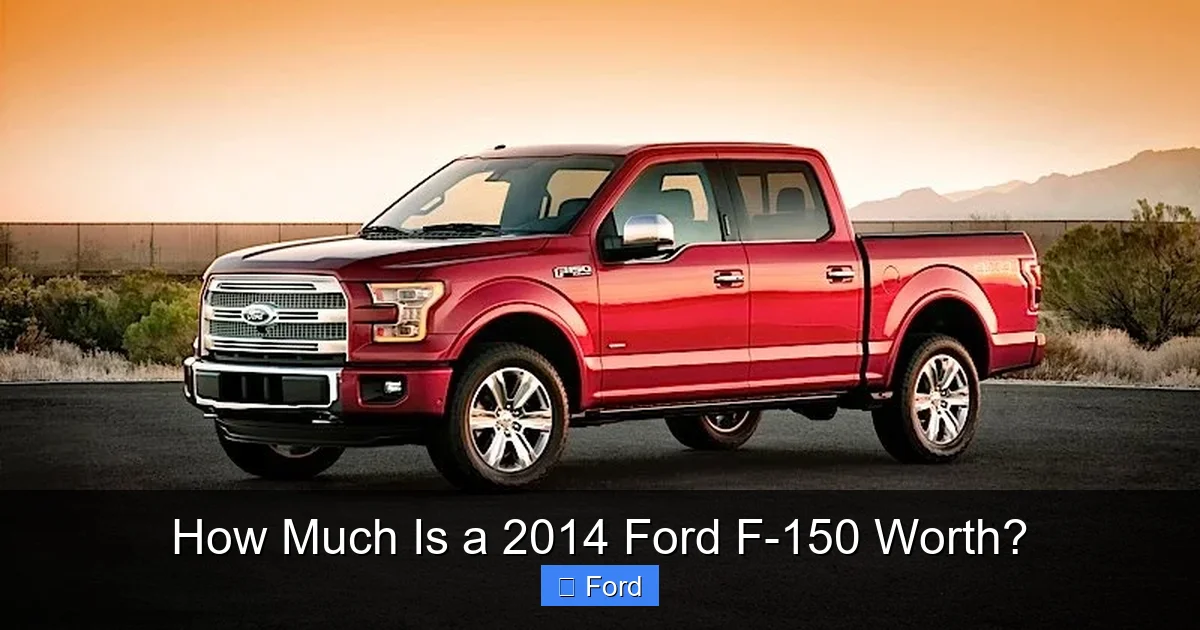
Visual guide about How Much Is a 2014 Ford F-150 Worth?
Image source: motorreview.com
XL and XLT: The Volume Sellers
These are the most common trucks on the road. Competition is high, so condition and mileage are paramount.
- 2014 F-150 XL (Regular Cab, 6.5′ Bed, 4×2, 3.5L EcoBoost, ~120k miles): $9,000 – $13,000. The low end of the market.
- 2014 F-150 XLT (SuperCab, 5.5′ Bed, 4×4, 3.5L EcoBoost, ~120k miles): $15,000 – $19,000. This is a very common and desirable configuration.
- 2014 F-150 XLT (SuperCrew, 5.5′ Bed, 4×2, 5.0L V8, ~100k miles): $17,000 – $22,000. More doors and a bigger cab add value.
Key Add-Ons That Increase XLT/XL Value: The FX4 off-road package (even if just cosmetic), tow package, and the 301A or 302A option packages (which add features like power seats, upgraded audio, and keyless entry) can add $1,000-$2,500.
Lariat and King Ranch: The Luxury League
Here, the price is all about the amenities. Buyers are paying for comfort.
- 2014 F-150 Lariat (SuperCrew, 5.5′ Bed, 4×4, 3.5L EcoBoost, ~110k miles): $20,000 – $26,000. Expect the higher end if it has the Lariat Premium package (adaptive cruise, lane-keep assist).
- 2014 F-150 King Ranch (SuperCrew, 5.5′ Bed, 4×4, 5.0L V8, ~100k miles): $23,000 – $29,000. The unique leather and badging hold a strong premium.
What to Inspect: The complexity of features means more potential for expensive repairs. Test every power seat adjuster, the sunroof/moonroof, the heated/cooled seats, and the premium sound system. Non-functioning options will significantly hurt value.
Platinum, Limited, and the Holy Grail: Raptor
This is where the 2014 Ford F-150 worth enters premium territory. These are near-luxury vehicles or dedicated performance machines.
- 2014 F-150 Platinum (SuperCrew, 5.5′ Bed, 4×4, 3.5L EcoBoost, ~90k miles): $26,000 – $33,000. The adaptive cruise control and 360-degree camera are big selling points.
- 2014 F-150 Limited (SuperCrew, 5.5′ Bed, 4×4, 3.5L EcoBoost, ~80k miles): $30,000 – $36,000. The 22″ wheels and unique styling make it stand out. Low miles are critical for value.
- 2014 F-150 Raptor (SuperCrew, 6.5′ Bed, 4×4, 6.2L V8, ~50k miles): $35,000 – $45,000+. This is a market unto itself. A Raptor with under 40,000 miles and a clean history can approach $50,000. Rust on the frame or cab is a major issue to check for.
Raptor-Specific Advice: These were off-roaded. Look closely at the undercarriage for damage, bent control arms, or leaks from the long-travel shocks. The 6.2L V8 is robust but not fuel-efficient. The value is in its capability and cult status, not practicality.
The 2014-Specific Context: What Makes This Year Unique
You can’t value a 2014 F-150 without understanding its place in history. This was year two of a radical redesign. That brings some specific pros and cons to the value equation.
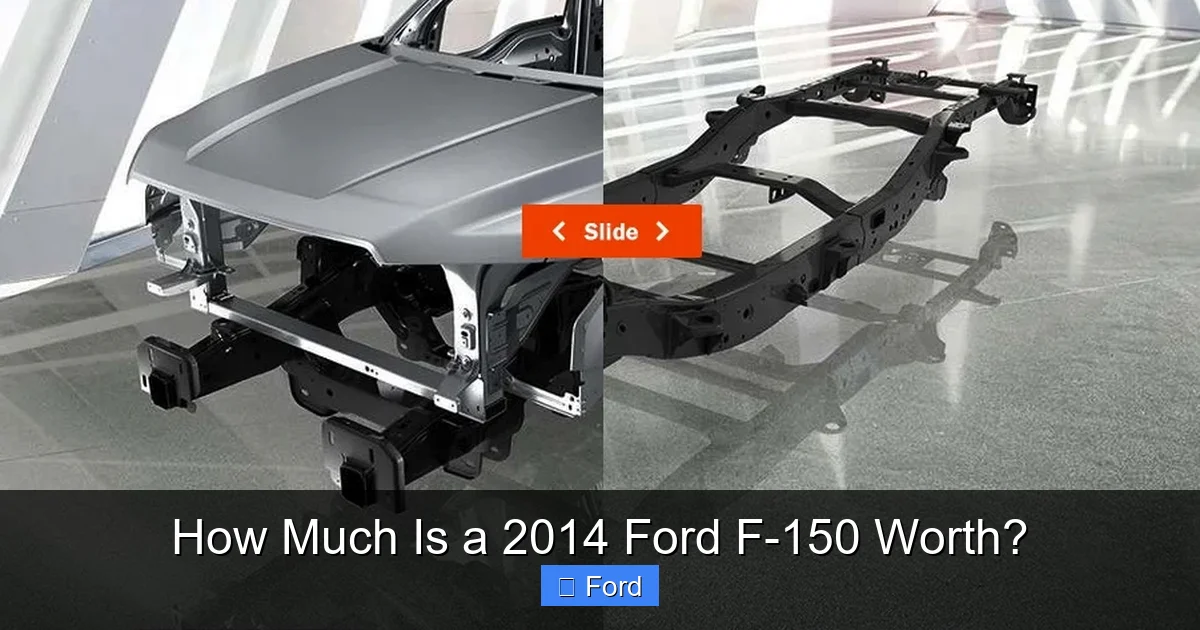
Visual guide about How Much Is a 2014 Ford F-150 Worth?
Image source: motorreview.com
The Aluminum Body: Innovation and Concern
The switch from steel to aluminum in the body (bed, cab, doors) saved up to 700 pounds. It was a huge deal. For value:
- The Good: It doesn’t rust like steel. No cancer in the bed or cab from the inside out. This is a major long-term durability plus.
- The Concern: Early aluminum repair is more specialized and can be more expensive than steel. Some buyers are still wary of “costly repairs.” A vehicle history report showing no aluminum-specific repairs is a positive. Also, the aluminum skin is more prone to dents and door dings than steel, so a thorough inspection for body damage is crucial.
First-Year EcoBoost Quirks
While the 3.5L EcoBoost was introduced in 2011, the 2014 model had some early-models-of-this-generation issues to be aware of:
- Turbocharger & Intercooler: Some early reports of turbo issues or intercooler leaks exist. A smart buyer will ask if the truck has the updated turbocharger clamps and intercooler hoses. A mechanic can check for boost leaks.
- Carbon Buildup: Direct-injection engines like the EcoBoost can suffer from carbon buildup on intake valves over time, potentially causing rough idle or misfires. Regular use of fuel system cleaners and, eventually, walnut blasting cleaning is recommended. A history of this service is a plus.
For Sellers: If you’ve had these services done, advertise it! “Recent turbo inspection and decarbonization service” is worth money. For buyers, budget $500-$1,000 for a potential decarbonization service if the history is unknown.
The Infotainment Growing Pains
The 2014 F-150 introduced MyFord Touch with an 8-inch screen. It was revolutionary but also notoriously buggy in its early years—slow responses, crashes, and Bluetooth issues.
- Impact on Value: A non-functional touchscreen is a deal-breaker for many. The good news is that most of the major software bugs were addressed through dealer updates (SYNC 3 was a later upgrade).
- What to Do: Ensure the system has the latest factory updates. If it’s glitchy, research the cost of a Factory Navigation upgrade or a third-party Android Auto/Apple CarPlay module. These fixes cost money and will lower the truck’s value if not addressed.
How to Find the Exact Value for a Specific 2014 Ford F-150
Now you know the factors. How do you get a number? You need a triangulation method.
Visual guide about How Much Is a 2014 Ford F-150 Worth?
Image source: s1.cdn.autoevolution.com
Step 1: Start with the Valuation Giants
Go to Kelley Blue Book (KBB), NADA Guides, and Edmunds. Input the EXACT details: year, make, model, trim, engine, drivetrain (4×2/4×4), mileage, and most importantly, select the correct condition (Not “Perfect,” but “Good” or “Very Good” for most used trucks). These tools give you a theoretical value based on aggregated data. They are your baseline.
Step 2: Do Your Real-World Homework
This is the most important step. Go to Autotrader, Cars.com, and Facebook Marketplace. Search for your exact configuration: “2014 Ford F-150 XLT SuperCrew 5.5′ bed 4×4 EcoBoost.” Filter by miles within 20,000 of yours and in your state/region. Don’t just look at the asking price; see what similar trucks are actually selling for (on Facebook, look for “SOLD” posts). This tells you what real buyers are paying right now. This real-world comps data is gold.
Step 3: Factor in Your Unique Story
Now adjust your baseline KBB/NADA number up or down based on your homework.
- Add Value (+$500 – $2,000): Full service records from day one, recent major maintenance (tires, brakes, timing belt/chain), no accidents, clean title, desirable aftermarket mods (like a high-quality tonneau cover or running boards that aren’t gaudy), low miles for the year.
- Subtract Value (-$1,000 – $5,000+): Accident history, salvage title, high miles, rust, needed repairs (e.g., “needs transmission work”), worn-out tires, broken features, undesirable mods (extreme lift kits, cheap aftermarket wheels, “bro” stickers), flood damage history.
Step 4: Get a Professional Opinion (Optional but Wise)
For a fee (or sometimes free), a trusted mechanic can do a pre-sale inspection. A clean bill of health from a third party is a powerful selling tool and can validate a higher asking price. You can also get a free appraisal at a CarMax or dealership, but take their number with a grain of salt—they need to make a profit on the resale.
Selling vs. Trading In: Where You’ll Get Your True 2014 Ford F-150 Worth
This is the final, crucial decision. How you dispose of the truck determines your final number.
The Private Party Path: Top Dollar, More Work
Selling it yourself (via Facebook Marketplace, Craigslist, etc.) will almost always get you the highest price. You cut out the middleman. You’re selling to someone who wants your exact truck, not to a dealer who will wholesale it and needs their margin. Expect to get 10-15% more than a trade-in offer.
- Pros: Maximum profit, control over the sale, potential for a quick deal with a motivated buyer.
- Cons: Time-consuming (meeting people, test drives), safety concerns (meeting strangers), paperwork responsibility, dealing with lowballers and tire-kickers.
Tip for Sellers: Take fantastic photos on a clean background. List every feature and option. Be honest about flaws. Have all records organized. Price it slightly above your “must-have” number to allow for negotiation.
The Trade-In Path: Convenience and Certainty
Driving into a dealership and driving out in a new car is easy. The dealer will give you an offer on the spot. But that offer is not the true retail value of your truck. It’s the wholesale value. The dealer must recondition it, market it, and sell it, so their offer is their buying price.
- Pros: Fast, easy, no hassle, often applied instantly to your new car purchase, no sales tax on the trade-in value in most states.
- Cons: You leave thousands on the table. Dealerships are trained to lowball. Use their offer as a starting point for negotiation on your new car, not as your truck’s value.
Pro Strategy: Get written offers from multiple dealerships (Ford, Carmax, Carvana) before you commit. Use the highest one as leverage with your preferred dealer.
The Middle Ground: Online Consignment & Auctions
Services like Vauto or local dealership consignment programs sell your truck for you for a fee (often a flat rate or commission). Online auctions (like through a dealer’s online store) can also work. These split the difference between effort and profit. Research the fees carefully.
Frequently Asked Questions
How much is a 2014 Ford F-150 with 150,000 miles worth?
For a common trim like an XLT SuperCrew 4×4 with the 3.5L EcoBoost, expect a value in the $11,000 to $15,000 range, depending heavily on condition, service history, and location. High mileage significantly reduces the price, but a well-documented, rust-free example can still be a good value for a buyer.
Does the 4×4 or FX4 package add much value?
Yes, 4×4 typically adds $1,500 to $3,000 over a comparable 4×2 model. The FX4 off-road package (which includes skid plates, off-road tuned shocks, and electronic-locking rear differential) can add another $500 to $1,500 on top of the 4×4 premium, especially in regions where snow and off-road use are common.
What is the best trim level for resale value on a 2014 F-150?
Generally, the mid-to-upper trims like Lariat and King Ranch hold their percentage of original value best because they have high demand from buyers wanting comfort and capability. However, the Raptor is the absolute king of resale value retention due to its cult following and low production numbers. A well-kept Raptor can depreciate far slower than any other model.
Should I fix minor issues before selling to get the best 2014 Ford F-150 worth?
Absolutely. Fixing small, inexpensive problems yields a high return. Replace burned-out bulbs, fix a cracked windshield, address a check engine light (even if it’s just an oxygen sensor), give it a thorough detail, and replace worn wiper blades. These low-cost fixes make the truck look and feel well-cared-for, justifying a higher asking price and helping it sell faster. Major repairs should be disclosed and factored into the price.
How does the EcoBoost vs. V8 engine affect the 2014 F-150’s price?
The difference is usually minimal, often $500 to $1,000. The 3.5L EcoBoost is more fuel-efficient and has more low-end torque, making it popular for towing. The 5.0L V8 appeals to those who prefer the traditional sound and feel. In regions with high fuel costs or for towing-focused buyers, the EcoBoost may have a slight edge. The 6.2L V8 in the Raptor is in a completely different, higher-value league.
What are the biggest value killers for a 2014 F-150?
The top three are: 1) A salvage or rebuilt title (cuts value in half). 2) Significant rust, especially on the frame, rocker panels, or inside the bed. 3) A missing or incomplete service history, which creates doubt about the truck’s longevity. Addressing these issues before listing is critical if you want to maximize your return.
