How Much Is a 2005 Ford F-150 Worth?

Contents
- 1 Key Takeaways
- 2 📑 Table of Contents
- 3 The 2005 Ford F-150: A Legacy of Toughness
- 4 What Determines the Price? The Four Pillars of Value
- 5 Trim Level Deep Dive: Matching the Truck to Your Need
- 6 Where and How to Sell: Getting Top Dollar
- 7 The Maintenance Factor: Your Secret Weapon
- 8 Final Thoughts: Is It Worth It Today?
- 9 Frequently Asked Questions

Emergency First Aid Kit

Car Tool Kit Set

Diesel Fuel Additive

Pressure Washer for Car
The value of a 2005 Ford F-150 ranges widely from $2,000 to $9,000+, depending primarily on mileage, condition, trim level, and location. This iconic truck is known for its durability and strong aftermarket support, making it a smart buy for a dependable workhorse or a capable family hauler. Understanding these key factors will help you get a fair price whether you’re buying or selling.
Its simple, proven mechanics keep repair costs relatively low, which significantly boosts its long-term value proposition compared to more complex contemporaries.
Key Takeaways
- Price Range is Broad: Expect a 2005 F-150 to sell between $2,000 (high-mileage, base model, rough condition) and $9,000+ (low-mileage, top trim, pristine condition).
- Mileage is King: This is the single biggest value driver. Trucks with under 150,000 miles command a premium, while those over 200,000 miles are valued primarily for parts or project use.
- Trim Level Matters: The XL is the most affordable and common. The XLT offers the best balance of features and value. The Lariat (and rare King Ranch) can see significant price jumps if well-equipped.
- Condition Trumps All: A clean, accident-free truck with a full service history will always fetch more, regardless of mileage. Rust, especially in the cab corners and bed, is a major value killer.
- Engine Choice Impacts Value: The 4.6L V8 (2-valve) is the most common and reliable. The 5.4L V8 (3-valve) has more power but known timing chain issues. The V6 is rare and less desirable, affecting resale.
- Where You Sell Matters: Private party sales typically yield the highest price for sellers. Dealership trade-ins offer convenience but lower offers. Regional demand for trucks can shift prices by 15-20%.
- Maintenance History is Gold: Documented regular oil changes, transmission services, and timing chain replacements (for 5.4L engines) can add hundreds or even thousands to the final sale price.
📑 Table of Contents
The 2005 Ford F-150: A Legacy of Toughness
Let’s talk about a true American icon. The 2005 Ford F-150 isn’t just a used truck; for many, it’s the last of a simpler era. It’s the truck that defined a generation of worksites, family road trips, and weekend adventures. You’re looking at the tenth generation of the F-series, a body style that ran from 2004 to 2008. This was the year after the massive 2004 redesign, so Ford worked out most of the early kinks. That makes the 2005 model a sweet spot for reliability and modern features, without the ultra-high price tag of a brand-new truck.
So, how much is a 2005 Ford F-150 worth? The honest answer is: it depends. A lot. This isn’t a one-price-fits-all situation. Your grandpa’s old farm truck with 300,000 miles and a missing fender is in a completely different value universe than a low-mileage, garage-kept Lariat with every option checkbox ticked. We’re going to break down every single factor that twists the price dial, from the engine under the hood to the state you live in. By the end, you’ll know exactly what to look for and what a fair price looks like.
Why This Year’s Model Still Matters
Why are we even talking about a 20-year-old truck? Because it’s incredibly relevant. The 2005 F-150 represents the peak of “old-school” truck engineering before complex emissions systems and advanced driver aids became standard. It’s a vehicle you or a local mechanic can actually work on with basic tools. Parts are abundant and cheap at any auto parts store or junkyard. This simplicity translates directly into ownership cost, which is a huge part of its value. When you buy one, you’re not just buying a vehicle; you’re buying a known quantity with a massive community of owners and a wealth of knowledge online. It’s also why models from this era, like the 2007 Ford F-150, still hold such strong value years later.
What Determines the Price? The Four Pillars of Value
Forget about guesswork. The market value of any 2005 F-150 is built on four non-negotiable pillars. Think of them as legs on a stool—if one is weak, the whole thing wobbles. We’ll walk through each one so you can评估 (that’s “assess” for the non-Chinese speakers!) your own truck or the one you’re eyeing like an expert.

Visual guide about How Much Is a 2005 Ford F-150 Worth?
Image source: images.customwheeloffset.com
Pillar 1: Mileage – The Odometer’s Powerful Story
This is the headline act. In the used truck world, the mileage number is the first thing every buyer asks. It’s a direct (if imperfect) proxy for how much life is left in the major components. For a 2005 model, we have some clear thresholds.
- Under 150,000 Miles: This is the “sweet spot” territory. The truck has likely had its major services done and still has plenty of life left in the engine and transmission. Prices in this bracket are the highest. You’re looking at a vehicle that’s been used but not abused.
- 150,000 – 200,000 Miles: This is the “high-mileage” bracket, but for a well-maintained Ford truck of this era, it’s not a deal-breaker. This is where documentation becomes critical. A truck with 180,000 miles and a binder full of repair records is worth more than a 160,000-mile truck with none. Expect prices to drop incrementally every 20,000 miles here.
- Over 200,000 Miles: Welcome to the “project” or “beater” zone. The value here is highly speculative. Is the engine original and running strong? Has the transmission been rebuilt? Is the frame solid? These trucks sell for parts value or to someone who needs a simple, cheap hauler and doesn’t mind fixing things. Prices can plummet to the $1,500-$3,000 range unless it’s an exceptionally clean, low-trim example.
Pro Tip: Don’t just look at the number. Ask, “What was the truck’s life?” A 200,000-mile truck that was a highway commuter is in far better shape than a 120,000-mile truck that was a daily workhorse towing max weight in the desert heat. Usage matters as much as the number.
Pillar 2: Condition – The “Eye Test” & The Hidden Truth
Condition is where a truck’s true personality shows. It’s more than just a few dents. You need to be a detective.
- Exterior & Rust: Walk the truck slowly. Look at the rocker panels, cab corners, and the bottom of the bed sides. These are rust magnets. Surface rust is one thing; rot that you can poke a screwdriver through is a catastrophic red flag that destroys value. Check the frame. A rusty, flaking frame is a structural and safety issue. Also, check for mismatched paint, which hints at unreported accident damage.
- Interior: Is the wear on the seats and steering wheel proportional to the mileage? A 100,000-mile truck with a shredded driver’s seat and a cracked dashboard tells a story of neglect. Test every switch, button, and window. Non-working features add up to deductions.
- Mechanical & Underhood: Start it cold. Listen for excessive ticking (could be a lifter issue on the 5.4L), smoke from the exhaust (blue = burning oil, white = coolant leak), or rough idling. Check the oil and transmission fluid. Clean, full fluids are a good sign. Dark, burnt, or low fluids are warning signs. Look for leaks under the truck.
- Title & History: This is the hidden layer. Is the title clean? Or is it branded as “Salvage,” “Rebuilt,” or “Flood”? A branded title can halve the value. A free vehicle history report (like Carfax or AutoCheck) is worth its weight in gold. It will reveal accidents, title changes, and odometer readings.
Pillar 3: Trim Level & Options – The Feature Factor
The 2005 F-150 came in a dizzying array of trims. Your basic choice was between Regular Cab, SuperCab (extended cab), and Crew Cab. Then came the trims: XL, STX, XLT, FX4, Lariat, and the ultra-rare King Ranch. Here’s how they generally stack up in value, from lowest to highest, assuming similar mileage and condition.
- XL: The work truck. Vinyl seats, AM/FM radio, manual windows/locks. Basic, tough, and the most affordable. The value here is purely in the drivetrain and body.
- STX: A sportier appearance package on the XL, often with alloy wheels and a console. Slight premium over a bare XL.
- XLT: The “Goldilocks” trim. It adds cloth seats, power windows/locks, air conditioning, and often a CD player. This is the most popular used model because it offers a great mix of comfort and capability for the money.
- FX4: The off-road package. It includes skid plates, off-road tuned suspension, and all-terrain tires. Desirable for buyers who need or want off-pavement ability. Adds a modest premium to an equivalent XLT.
- Lariat: The luxury truck. Leather seats (often heated/cooled), dual-zone climate control, a premium sound system, woodgrain trim, and often a sunroof. This is where value jumps significantly. A clean Lariat can be worth 25-40% more than a comparable XLT.
- King Ranch: The pinnacle. Available only on Crew Cab short beds, it featured unique leather with King Ranch branding, heated/cooled seats, and every option available. Extremely rare and highly sought after by collectors, commanding the highest prices.
Critical Options: Certain options are worth more. A 4×4 drivetrain is almost always worth $1,000-$2,500 more than a 2WD version. The powerful 5.4L V8 engine is preferred over the standard 4.6L V8 by many buyers, though it has its own quirks (more on that later). A tow package with integrated brake controller is a big plus for buyers who need to haul.
Pillar 4: Geography & Season – Location, Location, Location
Your ZIP code matters. A 4×4 F-150 with a lift kit and big tires will sell for top dollar in Colorado or Texas. That same truck in Florida or Southern California might languish because the demand for off-road rigs is lower. Conversely, a pristine 2WD F-150 might be perfect for a Florida retiree but worth less in a snowy state where 4×4 is a necessity. Seasonality plays a role too. Prices for trucks and SUVs typically peak in the fall and winter (before holiday spending) and in early spring (for work season). You might find better deals in the dead of summer or right after the holidays.
Trim Level Deep Dive: Matching the Truck to Your Need
Let’s get specific. You don’t buy a 2005 F-150 blind. You buy it for a purpose. Here’s how the trims break down for real-world use.
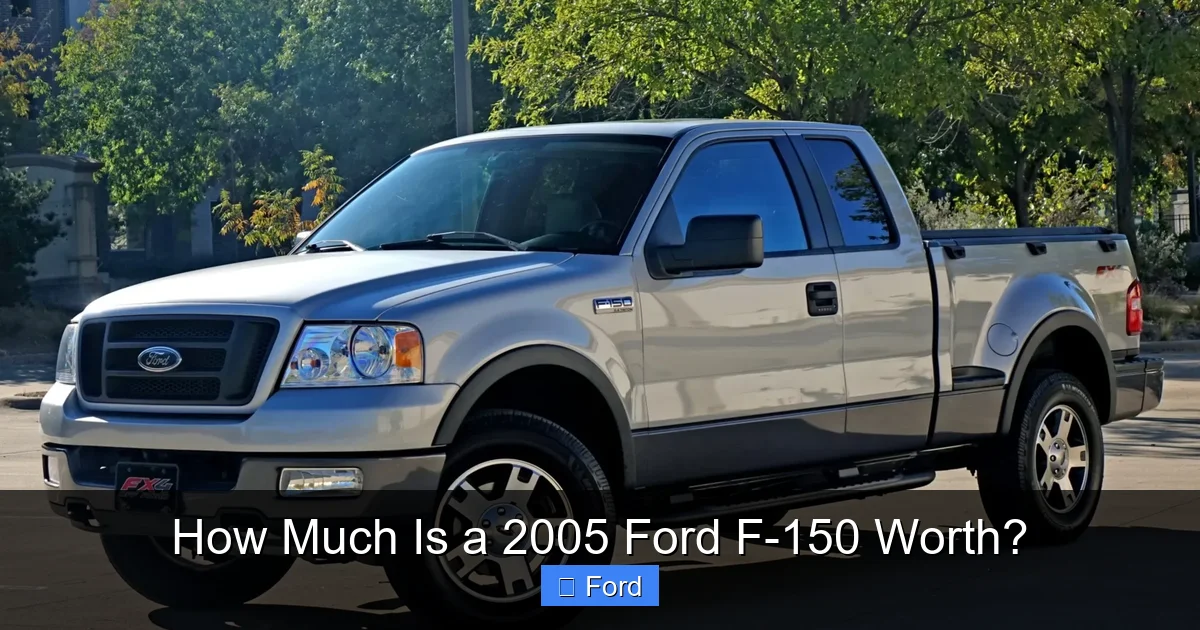
Visual guide about How Much Is a 2005 Ford F-150 Worth?
Image source: bringatrailer.com
The XL: No-Frills Workhorse
Think of the XL as the blue-collar hero. It’s all about function. You get a tough bed, a capable drivetrain, and nothing else. The value proposition is simple: you’re paying for the chassis, engine, and transmission. If you need a truck to haul mulch, pull a trailer, or be a beat-up farm truck, the XL is perfect. You can add your own radio and floor mats. Its value is more stable because it’s not dependent on fancy features that can break. On the downside, driving one every day can feel Spartan. For a seller, an XL is harder to move unless priced aggressively against an XLT.
The XLT: The People’s Champion
This is the volume seller for a reason. The XLT adds just enough comfort and convenience to make daily driving pleasant without ballooning the price. Cloth seats are more comfortable than vinyl. Power windows are a non-negotiable for most modern drivers. A decent sound system is nice. For a family that needs a truck for soccer practice and Home Depot runs, the XLT is the ideal blend. In the market, an XLT with the 5.4L V8 and 4×4 in good condition is the benchmark. Everything else is compared to it. When you’re pricing, start with the going rate for a solid XLT and adjust up or down for your specific trim and options.
The Lariat & King Ranch: Luxury on the Jobsite
These are for the buyer who wants a truck that feels like a luxury sedan. The leather, the power-adjustable pedals, the heated seats—it’s all here. The value here is highly sensitive to condition. A cracked leather seat or a malfunctioning sunroof can destroy thousands in value because the buyer is paying for the premium experience. These trims also attract a different buyer: often someone who wants a single vehicle for work and play, who values comfort as much as capability. The King Ranch, with its unique badging and ultra-low production numbers, has a cult following. If you have one, you’re not just selling a truck; you’re selling a piece of F-150 history, and the price should reflect that niche appeal.
Where and How to Sell: Getting Top Dollar
You’ve established your truck’s value. Now, how do you actually get that money? The sales channel is a huge part of the final price.

Visual guide about How Much Is a 2005 Ford F-150 Worth?
Image source: biscayneauto.com
Private Party Sale: The Highest Ceiling
Selling it yourself (on Craigslist, Facebook Marketplace, or Autotrader) will almost always get you the most money. You cut out the middleman. You set the price. The downside? You do all the work: writing the ad, taking photos, meeting strangers, handling payment, and doing the paperwork. For a 2005 F-150, the private market is robust. There are always people looking for a affordable, reliable used truck. Your ad must be honest, detailed, and full of great photos. List all maintenance, note any flaws, and be prepared to negotiate. The effort pays off in a higher sale price.
Dealership Trade-In: The Path of Least Resistance
Trading it in at a dealership is the easy button. They handle everything. You walk out with a down payment on your new truck. But you pay for that convenience. Dealerships need to make a profit, so they will offer you wholesale price—often 15-25% less than a private sale. They also factor in their reconditioning costs ( detailing, fixing small things). It’s a fair deal if you value your time over every last dollar. Get multiple quotes from different dealers, including “car max” type stores, to find the best offer.
Auctions & Specialty Buyers
For very high-mileage, damaged, or non-running trucks, online auctions (like Copart or IAAI) or salvage yards might be the only option. These sales are for cash, quick, and final. Prices are low because the buyer assumes all risk. For a running, decent truck, this is not the route to maximize value. However, if your truck is a total loss or a parts donor, this is where it has a defined market value.
The Maintenance Factor: Your Secret Weapon
Here’s the non-obvious truth: a 2005 F-150 with a thick, organized binder of service records is worth more than a similar truck with no records. Period. It proves the truck was cared for, not just driven. Buyers pay for peace of mind.
Critical Records to Have
- Timing Chain Service: This is THE big one for the 5.4L V8 (the “3-valve” engine). The timing chains are known to wear and can cause catastrophic engine failure. If you have receipts showing the chains, tensioners, and guides were replaced (a $2,000-$3,000 job), it is a massive selling point. It can add $1,500+ to the value.
- Transmission Service: The 4R70E/4R75E transmission, while robust, needs fluid and filter changes. A record of a transmission service (especially if done more than once) is excellent.
- Regular Oil Changes: Stubs from quick-lube places or your own notes show consistent maintenance.
- Major Services: Spark plugs, coolant flushes, differential fluid changes, brake jobs.
Common 2005 F-150 Issues to Disclose (and Fix)
Transparency builds trust and protects you from a lawsuit. Be upfront about these common issues:
- 5.4L V8 (3-valve) Timing Chain Rattle: A distinct rattling noise on cold start that goes away after a few seconds is the early sign. If it rattles for more than a few seconds, it’s likely the chains are worn.
- Spark Plug Issues: The 3-valve 5.4L has a design where the plugs can break off in the cylinder head if not removed correctly. If the plugs haven’t been changed since new, this is a huge risk for a new owner. Having them professionally removed and replaced is a huge plus.
- Rear Axle Seal Leaks: Common on higher-mileage trucks. Check for oil around the rear differential and on the inside of the rear wheels.
- Body Rust: As mentioned, this is the #1 killer of value. Be honest about it.
Fixing minor items before you sell—like a cracked windshield, bad tire, or broken accessory—can net you more in the final price than you spend on the fix. It shows the truck is “ready to go.”
Final Thoughts: Is It Worth It Today?
So, is a 2005 Ford F-150 a good buy in today’s market? Absolutely, but with caveats. It’s not for everyone. If you want a quiet, fuel-efficient, tech-packed daily driver, look at something else—maybe a 2005 Kia Sorento or 2005 Jeep Liberty for more car-like SUVs. But if you need a simple, tough, repairable, and capable truck that won’t break the bank, the 2005 F-150 is a champion.
Its value proposition is this: you buy a known, simple platform. You avoid the expensive, complex repairs of newer trucks (like expensive emissions components or advanced transmissions). You buy parts at Walmart or a junkyard. You can do a lot of the work yourself. For under $5,000, you can have a fully functional, 4×4 truck that can still pull a trailer, carry a load, and be a reliable daily driver for years. That’s a value that’s hard to beat. Just go in with your eyes open, get a pre-purchase inspection from a trusted mechanic, and use the framework in this guide to negotiate a fair price based on the four pillars. That 2005 F-150 isn’t just old; it’s proven.
Frequently Asked Questions
What is the average price for a 2005 Ford F-150?
The average price varies wildly by condition and trim. For a running, driving, average-condition example (typically an XLT with 150k-200k miles), expect to pay between $4,000 and $6,500. Exceptional low-mileage Lariats can reach $8,000-$9,000, while high-mileage or rough XLs can be found for $2,000-$3,500.
Which 2005 F-150 trim offers the best value for money?
The XLT trim almost always offers the best balance. It includes essential comfort features like power windows, cloth seats, and air conditioning, which make daily driving pleasant, without the significant price jump of the leather-trimmed Lariat. An XLT with the reliable 4.6L V8 engine and 4×4 is a highly sought-after and sensible used truck.
How does mileage really affect the value of a 2005 F-150?
Mileage is the primary value driver. For every 20,000 miles above the 150,000-mile mark, the price typically drops by 10-15%. Below 150,000 miles, the depreciation is slower. However, a well-documented 200,000-mile truck with a major engine rebuild can be worth more than a neglected 120,000-mile truck. Proven maintenance can mitigate high mileage.
What are the most common problems to look for in a 2005 Ford F-150?
For trucks with the 5.4L V8 (3-valve), listen for a timing chain rattle on cold starts, which indicates impending failure. Check if the spark plugs have been replaced correctly to avoid breakage. On all models, inspect thoroughly for rust in the cab corners, rocker panels, and frame. Also, look for rear axle seal leaks and test all electrical features.
Should I buy a 2005 F-150 with over 200,000 miles?
You can, but with caution. Only consider it if the price is very low (under $3,500) and you have a complete, verifiable service history, especially for the engine and transmission. You must budget for potential repairs like a timing chain job (for 5.4L) or transmission rebuild. These are best for mechanically-inclined buyers or those who need a temporary, cheap work truck.
Is it better to trade in my 2005 F-150 or sell it privately?
Selling privately will almost always get you 15-25% more money. The trade-in process at a dealership is fast and convenient, but they need to make a profit on resale. If you have the time and patience to meet buyers and handle the paperwork, a private sale is financially superior. Get a trade-in quote first to know your absolute bottom line before selling privately.