How Much Does It Cost to Replace a Toyota Fuel Pump?

Contents
- 1 Key Takeaways
- 2 📑 Table of Contents
- 3 Understanding Your Toyota’s Fuel Pump: The Heart of the Delivery System
- 4 The Core Cost Factors: Why Prices Vary So Much
- 5 Detailed Cost Breakdown: Parts, Labor, and the “Extras”
- 6 Model-Specific Cost Snapshots: From Corolla to Tundra
- 7 DIY vs. Professional Replacement: Is It Worth the Risk?
- 8 Smart Strategies to Save Money and Ensure Quality
- 9 Prevention is the Best Medicine: Extending Your Fuel Pump’s Life
- 10 Conclusion: Knowledge is Your Best Defense Against Cost Surprises
- 11 Frequently Asked Questions

Parking Sensor Kit

Car Bumper Protector

Rear View Camera

Side Mirror Rain Guard
Replacing a Toyota fuel pump typically costs between $400 and $1,200+, with the average landing around $600-$900. The final price depends heavily on your specific Toyota model, engine type, and whether you use OEM or aftermarket parts. Labor is a major factor, as the pump is often inside the fuel tank, requiring tank removal. Understanding these variables helps you budget accurately and avoid unexpected repair bills.
Key Takeaways
- Total cost averages $600-$900: For most Toyota sedans and SUVs, expect a total bill in this range, but trucks and performance models can exceed $1,200.
- Parts are 40-60% of the cost: An OEM fuel pump assembly for a modern Toyota often runs $250-$500, while aftermarket options can be 30-50% cheaper.
- Labor is the biggest variable: Shop labor rates ($80-$150/hr) and job time (2-4 hours) create the biggest price differences between locations and shops.
- Model matters significantly: A Toyota Camry pump is different (and often cheaper) than a Tacoma or 4Runner pump due to tank design and part availability.
- DIY can save 50% but is risky: If you have the skills and tools, doing it yourself avoids labor costs but involves fuel system work, which has fire and safety risks.
- Preventative maintenance extends life: Using top-tier fuel, keeping your tank above 1/4 full, and replacing the fuel filter regularly can add years to your pump’s life.
- Always get multiple quotes: Get a detailed estimate breaking down parts and labor. A lower quote might use inferior parts or skip crucial steps like tank cleaning.
📑 Table of Contents
- Understanding Your Toyota’s Fuel Pump: The Heart of the Delivery System
- The Core Cost Factors: Why Prices Vary So Much
- Detailed Cost Breakdown: Parts, Labor, and the “Extras”
- Model-Specific Cost Snapshots: From Corolla to Tundra
- DIY vs. Professional Replacement: Is It Worth the Risk?
- Smart Strategies to Save Money and Ensure Quality
- Prevention is the Best Medicine: Extending Your Fuel Pump’s Life
- Conclusion: Knowledge is Your Best Defense Against Cost Surprises
Understanding Your Toyota’s Fuel Pump: The Heart of the Delivery System
Before we dive into dollars and cents, let’s talk about what this part actually does. Your Toyota’s fuel pump is an electric motor, usually located inside the fuel tank. Its job is simple but critical: it pressurizes gasoline and sends it from the tank, through the fuel lines, and into your engine’s injectors. Without a consistent, correct fuel pressure, your engine can’t run properly—it might sputter, stall, or not start at all. Modern Toyota pumps are part of an integrated module that also includes the fuel level sender and sometimes a filter. This design protects the pump from debris and keeps it cool by submerging it in fuel, but it means when it fails, you often have to replace the whole assembly.
Failure is rarely sudden without warning. You might notice a whining noise from the rear of the car, difficulty starting especially when hot, engine misfires under load, or a sudden drop in fuel economy. Ignoring these signs can lead to a complete breakdown, leaving you stranded. The pump works hard its whole life, and factors like running the tank consistently low (which causes the pump to overheat), dirty fuel, and a clogged fuel filter all contribute to its eventual wear out. Replacing it is not a simple “unplug and swap” job on most models, which is why the labor cost is so significant.
The Core Cost Factors: Why Prices Vary So Much
If you call three different shops for a quote on your 2018 Toyota RAV4, you might get three different numbers. This isn’t because they’re making it up; it’s because several key factors create a wide price range. Understanding these will help you decipher any estimate and spot a good deal from a potential scam.

Visual guide about How Much Does It Cost to Replace a Toyota Fuel Pump?
Image source: filebroker-cdn.lazada.com.ph
The Parts Price Puzzle: OEM vs. Aftermarket vs. Remanufactured
This is your first major decision. OEM (Original Equipment Manufacturer) parts are made by the same company that supplied the part for your car when it was new (like Denso for many Toyotas). They are guaranteed to meet the original specifications and usually come with a solid warranty. They are also the most expensive, often costing $300-$600 for the pump module alone on newer models.
Aftermarket parts from brands like Bosch, Carter, or Standard Motor Products are built to OEM standards but are manufactured independently. They offer significant savings, typically 30-50% less than OEM. Quality varies by brand, so sticking with reputable names is crucial. A cheap, no-name pump might fail in a year, costing you more in the long run.
Remanufactured (Reman) units are used OEM cores that have been completely disassembled, cleaned, worn parts replaced, and tested to like-new condition. They are a middle-ground option, often priced between aftermarket and OEM, and usually come with a good warranty. For a Toyota known for reliability, a quality reman or aftermarket pump is often a smart financial choice.
Labor: The Hidden (and Largest) Variable
This is where bills explode. Replacing an in-tank pump isn’t like changing a spark plug. The process generally involves:
- Disconnecting the battery (safety first!).
- Relieving fuel system pressure.
- Jacking up the vehicle and supporting it safely.
- Removing the rear seat or access panel (on many models).
- Disconnecting fuel lines and electrical connectors.
- Removing the fuel pump module from the tank.
- Installing the new module, ensuring seals are perfect.
- Reassembling everything and checking for leaks.
This takes time. A skilled mechanic on a familiar model might do it in 2 hours. On a first-time model or if the tank is rusty/seized, it can take 4 hours or more. Multiply that by the shop’s hourly rate. Labor rates vary wildly: a dealership in a major city might charge $150/hour, while an independent shop in a smaller town might be $90/hour. This 60% difference in labor cost is the single biggest reason for quote variance.
Your Specific Toyota Model, Year, and Engine
Not all Toyotas are created equal in the repair shop. A fuel pump for a 2015 Toyota Camry 2.5L 4-cylinder is a different part number and a different job than one for a 2015 Camry 3.5L V6. The V6 model’s tank and pump assembly are often more complex. Similarly, a Toyota Tacoma’s pump is different from a Corolla’s. Trucks and SUVs (Tacoma, 4Runner, Tundra) often have more cumbersome tank access, sometimes requiring dropping the entire rear axle or drive shaft, which adds significant labor time. Always ensure the quote is for your exact VIN or at least year, make, model, and engine size.
Detailed Cost Breakdown: Parts, Labor, and the “Extras”
Let’s assemble a sample estimate for clarity. We’ll use a common scenario: a 2020 Toyota RAV4 with the 2.5L 4-cylinder engine, needing a fuel pump replacement at an independent repair shop.

Visual guide about How Much Does It Cost to Replace a Toyota Fuel Pump?
Image source: backyardmechanic.org
Parts Cost Deep Dive
For this RAV4, a quick parts search shows:
- OEM Denso Pump Module: $425 – $550
- Quality Aftermarket (Bosch/Standard): $280 – $380
- Remanufactured Unit: $320 – $420
But wait, there’s more. A smart shop will also recommend replacing the fuel filter (if it’s a separate unit, not in the pump) and the in-tank pump seal/gasket. These are cheap ($15-$40) but critical to prevent future leaks. Some pump assemblies come with these; others don’t. Always ask if those are included. Also, if your fuel is contaminated, a shop might recommend a fuel tank cleaning or at least a flush, adding $80-$150 to the parts bill.
Labor Cost Analysis
For our RAV4 example, the labor time guide (from sources like ALLDATA) suggests 2.5 to 3.0 hours. Let’s take 2.8 hours as a realistic average for an experienced mechanic. Now apply the shop rate:
- Dealership @ $150/hr: 2.8 hrs x $150 = $420 in labor
- Independent Shop @ $110/hr: 2.8 hrs x $110 = $308 in labor
- Specialist/High-Cost Area @ $135/hr: 2.8 hrs x $135 = $378 in labor
See how the labor alone creates a $112 swing before we even add parts?
Putting It All Together: Sample Total Estimates
Using our parts and labor numbers, here are three realistic total estimates for the same job on the same car:
Scenario A (Budget-Conscious):
Aftermarket Pump ($320) + Fuel Filter & Seal ($30) + Labor @ $110/hr ($308) + Shop Supplies/Taxes (~$50) = ~$708
Scenario B (Balanced Middle Ground):
Reman Pump ($370) + Fuel Filter & Seal ($30) + Labor @ $120/hr ($336) + Shop Supplies/Taxes (~$55) = ~$791
Scenario C (Dealership OEM):
OEM Pump ($480) + Fuel Filter & Seal ($40) + Labor @ $150/hr ($420) + Shop Supplies/Taxes (~$60) = ~$1,000
Now, imagine doing this on a Toyota Tundra where the tank drop adds 2 extra hours of labor. That $308 labor cost from our RAV4 example could easily become $550+, pushing the total well over $1,200 even with aftermarket parts. This is why getting a specific quote for your exact vehicle is non-negotiable.
Model-Specific Cost Snapshots: From Corolla to Tundra
While individual quotes vary, here are general price ranges for popular Toyota models. These assume a standard 4-cylinder engine and a mid-range independent shop using quality aftermarket or reman parts.
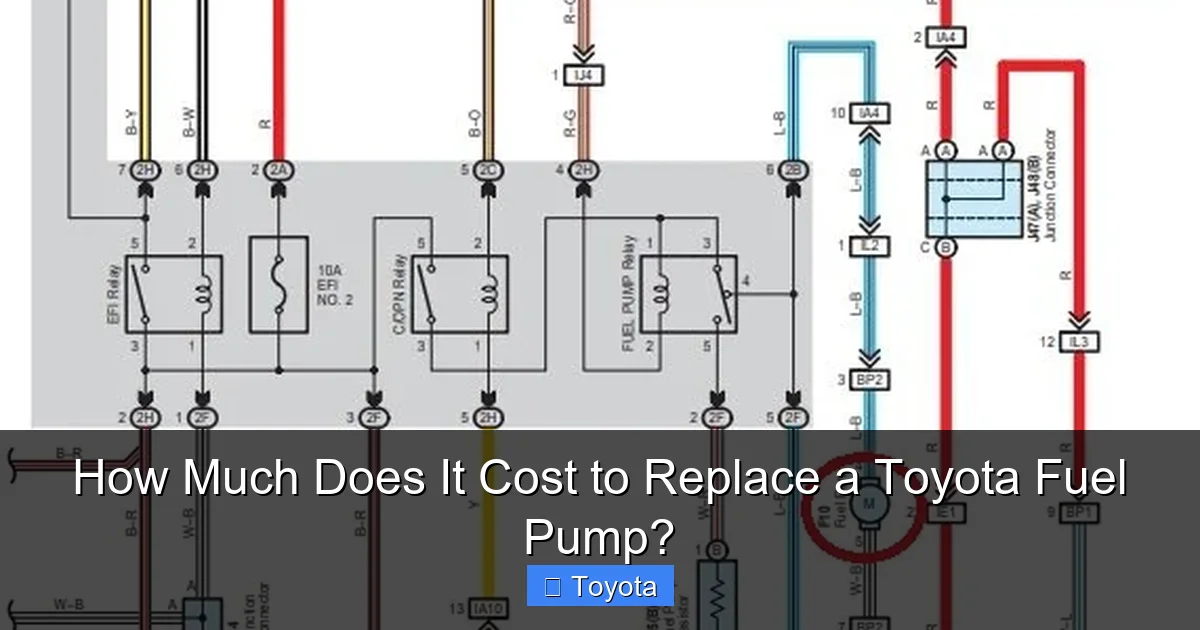
Visual guide about How Much Does It Cost to Replace a Toyota Fuel Pump?
Image source: i2.wp.com
- Toyota Camry (2018-2024): $550 – $850. Generally straightforward access under the rear seat.
- Toyota Corolla (2014-2024): $500 – $800. Similar to Camry, very common and well-documented repair.
- Toyota RAV4 (2019-2024): $650 – $950. Slightly more complex than sedans, but still accessible via rear seat.
- Toyota Tacoma (2016-2024): $750 – $1,200+. Access can be tricky. Older models (pre-2016) may require dropping the rear driveshaft, adding significant labor.
- Toyota 4Runner (2014-2024): $800 – $1,300+. Similar to Tacoma; tank access is the labor-intensive part.
- Toyota Tundra (2014-2024): $900 – $1,500+. Large tank, often requiring substantial disassembly. The full-size truck penalty is real.
- Toyota Prius (Hybrid): $700 – $1,100+. The fuel tank is in a unique location and the hybrid system adds complexity, but the pump itself is standard.
Pro Tip: When you get a quote, ask the shop: “Is the fuel tank being dropped, or is there rear seat access?” This single question tells you a lot about the inherent labor difficulty of your specific model.
DIY vs. Professional Replacement: Is It Worth the Risk?
The siren song of saving $300-$600 in labor is powerful. But before you drain your tank and grab a wrench, consider the full picture of a DIY fuel pump replacement.
The Allure of the DIY Route
The primary advantage is cost. You only pay for the part and any consumables (seals, filter, shop rags). For a mechanically inclined person with the right tools (jack stands, basic hand tools, possibly a fuel pressure tester), it’s a challenging but doable weekend project. You also gain intimate knowledge of your vehicle and the satisfaction of a job done yourself. There’s no risk of a shop using inferior parts—you choose exactly what goes in.
The Very Real Risks and Drawbacks
Safety is the #1 Concern. You are working with a highly flammable liquid under pressure. One static spark from a disconnected connector or a fuel drip onto a hot exhaust manifold can cause a fire. Proper procedure requires battery disconnection, pressure relief, and extreme caution. Environmental Risk: Spilling gasoline is not just a fire hazard; it’s an environmental contaminant and a huge cleanup hassle. You need proper containers and a plan. Tool and Skill Gap: Many modern fuel pump modules have locking rings that require a special tool ($30-$60). Stripping this plastic ring means a tow to a shop anyway. The “One Mistake” Problem: A tiny rip in a fuel line O-ring or a misaligned connector can cause a persistent leak. This might not show up until you’ve driven 50 miles, leading to a tow bill and a very angry tow truck driver. Voiding Warranty: If your car is still under a powertrain warranty, this DIY job will void it instantly.
Verdict: DIY is only for those with significant mechanical experience, a safe workspace (concrete floor, no flames, excellent ventilation), and the specific service manual for their Toyota. For the vast majority of owners, professional installation is the prudent, safe, and ultimately more economical choice when you factor in risk. For those interested in other Toyota modifications, exploring the cost to wrap a Toyota Camry might be a safer and more aesthetic weekend project.
Smart Strategies to Save Money and Ensure Quality
You’re now armed with knowledge. Here’s how to turn it into savings and a reliable repair.
Get Three Detailed, Itemized Quotes
Never accept a single “ballpark” number over the phone. Call a dealership, a reputable independent shop, and maybe a specialist (like a fuel system or Toyota-only shop). Ask for a written estimate that breaks down:
- Part number and brand (OEM, aftermarket, reman)
- Exact part cost
- Estimated labor hours
- Hourly labor rate
- Shop supplies (rags, cleaners, sealant)
- Taxes
Compare the parts being used. A $200 quote vs. a $700 quote is likely using a very low-quality pump or skipping crucial steps like filter/seal replacement or tank cleaning.
Consider the “Shop Supply” and “Environmental Fee” Scrutiny
These are legitimate (rags, brake cleaner, hazardous waste disposal) but can be padded. Ask what’s included. A reasonable shop supply fee is 5-10% of the labor cost. Be wary of flat “shop fees” of $50+ on a small job.
Ask About the Warranty
A reputable shop will warrant their work. Ask: “What is the warranty on parts and labor?” A standard is 12 months/12,000 miles. A 3-year/36,000-mile warranty is excellent and often worth a slightly higher price, especially with an aftermarket part.
When a Used Car Purchase is Involved
If you’re buying a used Toyota and the seller mentions a recent fuel pump replacement, get the paperwork. Verify the part used and who did the work. If it was a cheap aftermarket pump installed at a shady shop, it might be a red flag. Conversely, a documented OEM replacement at a dealership is a big plus. For broader used car buying tips, resources on maintenance costs for high-end brands can provide perspective on long-term ownership expenses across different vehicles.
Prevention is the Best Medicine: Extending Your Fuel Pump’s Life
Fuel pumps are wear items. They will eventually fail. But you can dramatically extend their life with simple habits.
- Don’t Run on Empty. This is the #1 rule. Fuel is the pump’s coolant and lubricant. Consistently driving with less than 1/4 tank causes the pump to overheat and wear out prematurely. Fill up at 1/4 tank.
- Use Top-Tier Detergent Gasoline. Brands that meet the Top Tier specification (check toptiergas.com) have superior detergent additives that keep fuel injectors and, indirectly, the pump clean. Cheap, low-quality gas leads to varnish and deposits.
- Replace the Fuel Filter on Schedule. If your Toyota has an external fuel filter (many do), replace it as per the owner’s manual, usually every 30,000-60,000 miles. A clogged filter makes the pump work harder, shortening its life. On models with the filter integrated into the pump module, this is done with the pump replacement.
- Address Other Fuel System Issues Promptly. A failing fuel pressure regulator or leaking injector can cause the pump to run constantly at high pressure, wearing it out.
- Listen and Act. That new whining noise from the back seat area? Get it diagnosed. Catching a weak pump early might just require cleaning the intake screen (a much cheaper service) rather than full replacement.
Following these steps can easily add 50,000+ miles to your pump’s life, turning a $800 repair into a $0 repair for the duration of your ownership.
Conclusion: Knowledge is Your Best Defense Against Cost Surprises
The cost to replace a Toyota fuel pump is not a simple number. It’s a equation: (Part Choice x Part Price) + (Labor Hours x Shop Rate) + Incidentals = Total Cost. For the average Toyota owner, budgeting between $600 and $900 is a safe starting point for most sedans and crossovers. For trucks and larger SUVs, prepare for $1,000 or more. The most important action you can take is to get specific, itemized quotes for your exact vehicle. Understand what you’re paying for—don’t just choose the lowest number. A quality part from a reputable shop with a solid warranty is worth the extra $100 over a cheap part from a discount store. Finally, remember that this repair, while inconvenient, is an opportunity to invest in your car’s long-term health. A new fuel pump restores proper performance, fuel economy, and reliability. By following the prevention tips, you can ensure your new pump enjoys a long, trouble-free life, and you won’t be facing this bill again for many years and miles.
Frequently Asked Questions
What are the most common symptoms of a failing Toyota fuel pump?
The most frequent signs include a whining or humming noise from the rear of the vehicle, hard starting (especially when the engine is hot), engine sputtering or loss of power under acceleration, frequent stalling, and a noticeable drop in fuel economy. A check engine light may illuminate with codes like P0087 (Fuel Rail/System Pressure – Too Low).
Can I drive my Toyota with a bad fuel pump?
You can drive it for a short time if the failure is intermittent, but it’s extremely risky. The pump could fail completely at any moment, leaving you stranded in a dangerous location. Driving with low fuel pressure also risks damaging the catalytic converter and engine. It’s best to diagnose and replace it as soon as symptoms appear.
Does my Toyota’s warranty cover a fuel pump replacement?
It depends. The federal emissions warranty covers the fuel pump for 8 years/80,000 miles (whichever comes first) because it’s an emissions-related component. The basic bumper-to-bumper warranty (typically 3 years/36,000 miles) also covers it. If your car is out of these warranties, the repair is your responsibility. Always check your specific warranty booklet.
Is it better to replace just the pump motor or the whole assembly?
For almost all modern Toyotas, you must replace the entire pump module/assembly. The pump is not a separate, serviceable component; it’s integrated into the module with the fuel level sender, filter, and seals. Attempting to disassemble the module is nearly impossible and will cause leaks. Always buy the complete assembly.
How long does a Toyota fuel pump usually last?
There’s no set mileage, but a well-maintained fuel pump in a Toyota can easily last 100,000 to 150,000 miles or more. The key variables are fuel quality and not running the tank low. Poor maintenance can cut that life in half. Some early-model pumps have known issues, so check Technical Service Bulletins (TSBs) for your specific year and model.
My Toyota has over 200,000 miles. Should I replace the fuel pump as preventative maintenance?
Generally, no. Fuel pumps are not a scheduled maintenance item like oil or filters. They are replaced when they fail. However, if you’re already dropping the tank for another major repair (like a rear axle or major suspension work on a truck), it might be cost-effective to replace the pump at the same time since the labor is already being done. Otherwise, wait for symptoms.