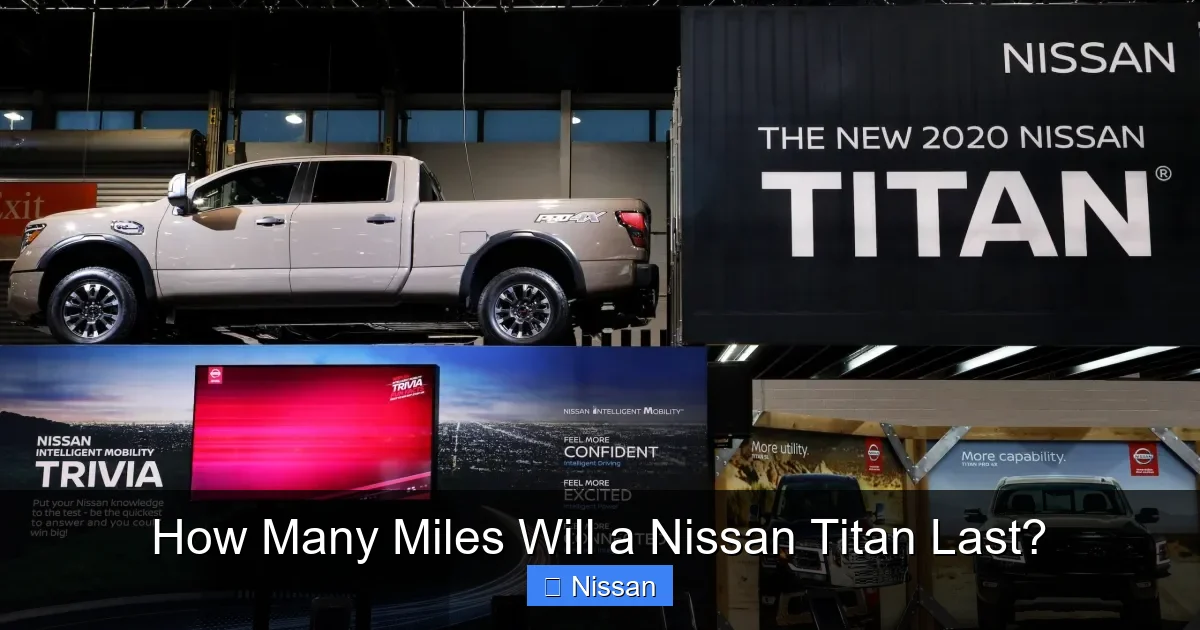
How Many Miles Will a Nissan Titan Last?

Contents
- 1 Key Takeaways
- 2 How Many Miles Will a Nissan Titan Last?
- 3 Real-World Mileage Examples from Nissan Titan Owners
- 4 Engine and Drivetrain: The Heart of the Titan’s Longevity
- 5 The Role of Maintenance in Extending Your Titan’s Life
- 6 Driving Habits That Impact Longevity
- 7 Model Year Differences and Their Impact on Lifespan
- 8 Tips to Maximize Your Nissan Titan’s Lifespan
- 9 Conclusion
- 10 Frequently Asked Questions

Car Windshield Wiper Blades

Battery Terminal Cleaner

Reflective Stickers

Multipurpose Lubricant Spray
The Nissan Titan is built for durability and can last well over 200,000 miles with proper maintenance. Many owners report reaching 250,000 to 300,000 miles, especially with consistent care and timely repairs.
This is a comprehensive guide about How Many Miles Will a Nissan Titan Last?.
Key Takeaways
- Typical lifespan: Most Nissan Titans last between 200,000 and 250,000 miles with regular maintenance.
- High-mileage examples: Some well-maintained Titans have surpassed 300,000 miles, proving their long-term reliability.
- Engine strength: The 5.6L V8 engine is robust and designed for heavy use, contributing to the truck’s longevity.
- Maintenance matters: Oil changes, transmission care, and timely part replacements are key to extending the Titan’s life.
- Driving habits impact longevity: Gentle driving, avoiding overloading, and using quality fuel help the truck last longer.
- Model year differences: Newer models (2017+) often have better technology and durability than earlier versions.
- Resale value holds up: High-mileage Titans in good condition still retain decent resale value due to their reputation for toughness.
[FEATURED_IMAGE_PLACEHOLDER]
How Many Miles Will a Nissan Titan Last?
If you’re thinking about buying a Nissan Titan—or you already own one—you’re probably wondering: How long will this truck really last? It’s a fair question. Trucks are big investments, and you want to know your hard-earned money is going toward something that can go the distance. Whether you’re using it for daily commuting, towing a trailer, or hauling gear for weekend adventures, you need reliability.
The good news? The Nissan Titan is built to last. With proper care, many owners report their Titans hitting 200,000 miles and beyond. Some even push past 250,000 or even 300,000 miles. That’s not just hearsay—there are real-world examples of high-mileage Titans still running strong. Of course, longevity isn’t just about the truck’s design. It also depends on how you treat it, how often you maintain it, and what kind of driving you do.
In this guide, we’ll break down everything you need to know about the Nissan Titan’s lifespan. We’ll look at real mileage examples, explore the factors that affect durability, and share practical tips to help your Titan go the extra mile—literally. Whether you’re a first-time truck buyer or a seasoned Titan owner, this article will give you the insight you need to maximize your truck’s life.
Real-World Mileage Examples from Nissan Titan Owners
One of the best ways to understand how long a Nissan Titan can last is to hear from real owners. Across online forums, social media groups, and truck enthusiast communities, there are countless stories of Titans hitting impressive mileage milestones.
Take, for example, a 2010 Nissan Titan owner from Texas who shared his truck had reached 287,000 miles. He used it primarily for towing a travel trailer across the state and kept up with regular oil changes every 5,000 miles. He replaced the water pump and alternator once, but the original engine and transmission were still going strong. Another owner in Colorado reported 265,000 miles on his 2012 Titan, using it for mountain driving and snow plowing. He credited the truck’s longevity to using synthetic oil and avoiding extreme overloading.
Even newer models are showing promise. A 2018 Titan owner in Oregon recently posted about hitting 180,000 miles with only routine maintenance—no major engine or transmission work. He drives mostly on highways for work and tows a small camper a few times a year. These examples aren’t rare outliers. They’re becoming more common as owners learn how to care for their Titans properly.
It’s also worth noting that Nissan has made improvements over the years. The 2017 redesign brought a stronger frame, better suspension, and an updated 5.6L V8 engine with more horsepower and torque. These upgrades have contributed to better long-term reliability. So while older Titans can still last a long time, newer models may have an edge when it comes to durability and technology.
Engine and Drivetrain: The Heart of the Titan’s Longevity
When it comes to how many miles a Nissan Titan will last, the engine and drivetrain are the most critical components. The Titan is powered by a 5.6-liter V8 engine, known for its strength and reliability. This engine has been used in various Nissan and Infiniti vehicles, and it’s proven itself in demanding conditions.
The 5.6L V8 Engine: Built for Power and Durability
The 5.6L V8 in the Titan delivers around 400 horsepower and 413 lb-ft of torque, depending on the model year. That’s plenty of power for towing, hauling, and everyday driving. But more than just performance, this engine is designed to last. It uses a cast-iron block and aluminum heads, which provide a good balance of strength and weight. The engine also features variable valve timing (VVT), which helps improve fuel efficiency and reduce wear over time.
One of the reasons the V8 lasts so long is its simplicity. Unlike some modern engines with turbochargers or complex direct injection systems, the Titan’s engine is naturally aspirated and relatively straightforward. That means fewer things can go wrong. Of course, that doesn’t mean it’s immune to issues—regular maintenance is still essential—but it’s less prone to the kinds of problems that can shorten an engine’s life.
Transmission and 4WD System: Strength Under Pressure
The Titan comes with a 9-speed automatic transmission (in newer models) or a 7-speed (in older ones), both of which are built to handle the V8’s power. These transmissions are generally reliable, but they do require regular fluid changes. Skipping transmission service is one of the fastest ways to reduce your Titan’s lifespan. Most experts recommend changing the transmission fluid every 30,000 to 60,000 miles, depending on driving conditions.
If you have a 4WD model, the transfer case and differentials also play a role in longevity. The Titan’s 4WD system is robust and capable, but it needs maintenance too. Make sure to service the differentials and transfer case according to the owner’s manual—usually every 30,000 to 50,000 miles. Neglecting these components can lead to costly repairs down the road.
Common Engine and Drivetrain Issues to Watch For
While the Titan’s engine and drivetrain are strong, they’re not perfect. Some owners have reported issues like:
– Timing chain wear: Over time, the timing chain can stretch, leading to poor performance or engine damage. This is more common in high-mileage Titans (over 200,000 miles).
– Oil consumption: A few models, especially pre-2017, have been known to burn oil. Regular oil level checks can help catch this early.
– Transmission shudder: Some owners report a shaking sensation during acceleration, often due to low or degraded transmission fluid.
The good news? Most of these issues can be prevented or managed with proper maintenance. For example, using high-quality synthetic oil and changing it on schedule can reduce timing chain wear. And keeping up with transmission service can prevent shudder and extend the life of the gearbox.
The Role of Maintenance in Extending Your Titan’s Life
Let’s be honest: no truck lasts forever without care. The Nissan Titan is no exception. While it’s built tough, its longevity depends heavily on how well you maintain it. Think of maintenance like insurance—it costs a little now to avoid big bills later.
Oil Changes: The #1 Priority
Regular oil changes are the single most important thing you can do for your Titan. Engine oil lubricates moving parts, reduces friction, and helps cool the engine. Over time, oil breaks down and gets contaminated with dirt and metal particles. If you don’t change it, your engine will wear out faster.
Nissan recommends changing the oil every 5,000 to 7,500 miles, depending on driving conditions. If you do a lot of towing, drive in dusty areas, or frequently stop-and-go in traffic, you should change it closer to 5,000 miles. Use synthetic oil if possible—it lasts longer and performs better in extreme temperatures.
Tire Care and Rotation
Tires might not seem like a big deal, but they affect your truck’s performance, safety, and fuel economy. Rotate your tires every 6,000 to 8,000 miles to ensure even wear. Check tire pressure monthly—underinflated tires can reduce fuel efficiency and cause uneven wear. And don’t forget to inspect the tread. Worn tires can affect braking and handling, especially when towing.
Brake System Maintenance
Brakes are critical for safety, especially in a heavy truck like the Titan. Have your brake pads and rotors inspected every 12,000 to 15,000 miles. If you hear squeaking, grinding, or feel a vibration when braking, get it checked immediately. Replacing brake components early can prevent damage to the calipers and rotors, saving you money in the long run.
Cooling System and Radiator Care
The cooling system keeps your engine from overheating. Over time, coolant breaks down and can become acidic, damaging the radiator and water pump. Flush and replace the coolant every 60,000 to 100,000 miles, depending on the type used. Also, inspect hoses and belts for cracks or leaks during routine maintenance.
Suspension and Steering Components
The Titan’s suspension is designed to handle heavy loads, but it still wears out over time. Components like ball joints, tie rods, and shocks should be inspected every 50,000 miles. If you notice uneven tire wear, a rough ride, or steering looseness, it’s time for a check-up. Replacing worn suspension parts early can prevent more serious damage and keep your truck driving smoothly.
Driving Habits That Impact Longevity
You might not think your driving style affects how many miles a Nissan Titan will last—but it does. How you drive can either extend or shorten your truck’s life, sometimes dramatically.
Avoiding Overloading and Excessive Towing
The Titan is rated to tow up to 9,300 pounds (depending on configuration), but that doesn’t mean you should always tow at max capacity. Consistently overloading or towing near the limit puts extra stress on the engine, transmission, suspension, and brakes. Over time, this can lead to premature wear and costly repairs.
If you do tow frequently, consider upgrading to a heavy-duty cooling system or transmission cooler. These additions can help manage heat and reduce strain on critical components.
Gentle Acceleration and Braking
Flooring the gas pedal or slamming on the brakes might feel exciting, but it’s hard on your truck. Aggressive driving increases wear on the engine, transmission, and brakes. Instead, accelerate smoothly and brake gradually. This not only helps your Titan last longer but also improves fuel economy and reduces emissions.
Using the Right Fuel
Always use the recommended fuel grade—usually 87 octane regular unleaded. Using lower-grade fuel can cause knocking and reduce engine efficiency. While premium fuel won’t hurt the engine, it’s not necessary and won’t significantly improve performance or longevity.
Warming Up the Engine
In cold weather, let your Titan idle for 30 seconds to a minute before driving. This allows oil to circulate and lubricate the engine. However, avoid excessive idling—modern engines warm up faster when driven gently. Prolonged idling can lead to carbon buildup and reduced fuel efficiency.
Model Year Differences and Their Impact on Lifespan
Not all Nissan Titans are created equal. The truck has evolved over the years, and some model years are more reliable than others. Understanding these differences can help you choose a truck that’s built to last.
First Generation (2004–2015): Solid but Flawed
The first-generation Titan was a strong entry into the full-size truck market. It had a powerful V8 and a rugged design, but it also had some issues. Early models (2004–2006) had problems with the fuel pump and electrical system. The 2007–2015 models improved, but some owners still reported transmission issues and oil consumption.
Despite these flaws, many first-gen Titans have lasted over 200,000 miles. The key is finding one with a clean maintenance history and avoiding models with known issues.
Second Generation (2017–2024): Improved and Refined
The 2017 redesign brought major upgrades. The new Titan featured a stronger frame, better suspension, and an updated 5.6L V8 with more power and better fuel economy. The interior was also modernized with better materials and technology.
These improvements have led to better long-term reliability. Owners report fewer mechanical issues, and the truck feels more refined on the road. If you’re buying used, a 2017 or newer model is generally a safer bet for longevity.
Special Editions and Trim Levels
Nissan has offered various trim levels over the years, from the basic S to the premium Platinum Reserve. Higher trims often come with better suspension, upgraded interiors, and additional features. While these don’t directly affect engine life, they can improve ride quality and reduce driver fatigue—especially on long trips.
The Pro-4X trim, for example, includes off-road enhancements like skid plates and all-terrain tires. These features can help protect the undercarriage from damage, which is especially useful if you drive on rough terrain.
Tips to Maximize Your Nissan Titan’s Lifespan
Now that you know what affects your Titan’s longevity, here are some practical tips to help it go the distance.
Follow the Maintenance Schedule
Your owner’s manual has a detailed maintenance schedule. Stick to it. This includes oil changes, tire rotations, brake inspections, and fluid replacements. If you’re not sure what’s due, many repair shops offer free inspections.
Use Quality Parts and Fluids
Don’t skimp on parts. Use OEM (original equipment manufacturer) or high-quality aftermarket parts for repairs. Cheap parts may save money upfront but can fail sooner and cause more damage. The same goes for fluids—use the recommended type and brand.
Keep It Clean
Wash your Titan regularly, especially in winter. Salt and road grime can cause rust and corrosion. Pay attention to the undercarriage, wheel wells, and door seams. A little cleaning can prevent big problems.
Address Issues Early
If you notice a strange noise, vibration, or warning light, don’t ignore it. Small problems can turn into big ones if left unchecked. Get it checked by a trusted mechanic as soon as possible.
Store It Properly
If you’re not driving your Titan for a long time, store it properly. Keep it in a garage if possible, and use a battery maintainer to keep the charge up. Inflate the tires to the recommended pressure and consider using a car cover to protect the paint.
Conclusion
So, how many miles will a Nissan Titan last? The answer is: a lot—if you take care of it. With proper maintenance, smart driving habits, and attention to detail, your Titan can easily surpass 200,000 miles. Many owners have pushed theirs past 250,000 or even 300,000 miles, proving that this truck is built to go the distance.
The 5.6L V8 engine is a workhorse, and the Titan’s rugged design makes it ideal for tough jobs. But like any vehicle, it needs care. Regular oil changes, timely repairs, and gentle driving will go a long way in extending its life. And if you’re buying used, look for a well-maintained model—preferably a 2017 or newer for the best reliability.
At the end of the day, the Nissan Titan isn’t just a truck—it’s a long-term investment. Treat it right, and it will reward you with years of dependable service. Whether you’re hauling gear, towing a trailer, or just cruising down the highway, your Titan can keep up with you for the long haul.
Frequently Asked Questions
How many miles can a Nissan Titan last with proper maintenance?
With proper maintenance, a Nissan Titan can last between 200,000 and 250,000 miles. Some well-cared-for models have even surpassed 300,000 miles.
What is the most important maintenance for a Nissan Titan?
Regular oil changes are the most critical. Changing the oil every 5,000 to 7,500 miles helps protect the engine and extend the truck’s lifespan.
Can a Nissan Titan tow heavy loads without damaging the engine?
Yes, the Titan can safely tow up to 9,300 pounds. However, frequent heavy towing increases wear, so consider adding a transmission cooler for protection.
Are older Nissan Titans reliable?
First-generation Titans (2004–2015) can be reliable if well-maintained, but they may have more issues than newer models. A clean service history is key.
What causes a Nissan Titan to fail early?
Neglecting maintenance, aggressive driving, overloading, and using low-quality fluids are common causes of premature failure.
Is the Nissan Titan a good truck for long-term ownership?
Yes, especially the 2017 and newer models. With proper care, the Titan offers strong performance, durability, and long-term value.