
How Many Lexus Is F Models Were Made?

Only 9,000 Lexus IS F models were produced globally, making it one of the rarest and most sought-after performance sedans in the brand’s lineup. Launched in 2007 and discontinued after 2014, the IS F combined a 5.0L V8 engine with aggressive styling, appealing to enthusiasts who craved a true sports sedan. This limited production run has only increased its desirability among collectors and Lexus fans alike.
Key Takeaways
- Only 9,000 IS F models were made globally making it a rare performance sedan.
- Production ran from 2007 to 2014 with consistent annual output and no major redesigns.
- U.S. received the majority of units due to strong demand for luxury sport sedans.
- Each IS F featured a 5.0L V8 engine delivering 416 horsepower and rear-wheel drive.
- Limited special editions increased collectibility such as the 2014 Final Edition.
- Low production numbers boost resale value especially for well-maintained examples.
📑 Table of Contents
How Many Lexus IS F Models Were Made?
Let’s be honest—when it comes to performance sedans that blend luxury with raw power, few names stir the soul like the Lexus IS F. I remember the first time I saw one glide past me on the highway. It wasn’t just the aggressive stance or the quad exhaust tips that caught my eye. It was the quiet confidence it exuded—like it knew it could outrun most cars on the road, but didn’t need to show off to prove it. That’s the magic of the IS F: it’s a wolf in sheep’s clothing, wrapped in a sleek, understated package that screams performance when you press the accelerator.
The Lexus IS F wasn’t just another sport sedan. It was Toyota’s bold answer to the German dominance in the high-performance luxury segment. From 2007 to 2014, this machine stood as a symbol of what Lexus could achieve when it stopped playing it safe and decided to build something truly thrilling. But here’s the thing: despite its cult following and impressive specs, the IS F was never a mass-produced phenomenon. In fact, one of the most common questions enthusiasts ask is, “How many Lexus IS F models were made?” The answer isn’t just a number—it’s a story of limited production, passionate engineering, and a legacy that still resonates today.
The Birth of a Performance Legend
The Lexus IS F didn’t just appear out of nowhere. It was the result of years of tuning, testing, and a clear mission: to challenge the likes of the BMW M3 and Mercedes-AMG C-Class. Lexus had already established itself as a leader in luxury, but performance? That was a different ballgame. Enter the F division—Lexus’s answer to BMW’s M and Mercedes’ AMG. Named after the Fuji Speedway circuit in Japan, the “F” stood for “Fuji,” but it also came to represent “Fierce,” “Fast,” and “First-class.”
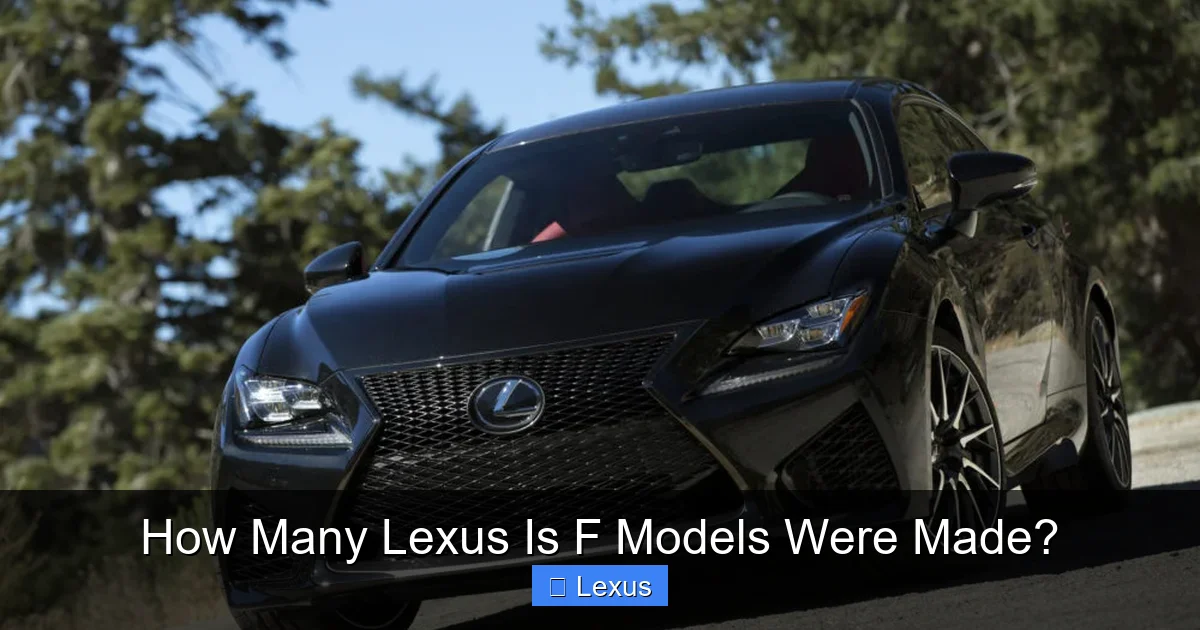
Visual guide about How Many Lexus Is F Models Were Made?
Image source: clublexus.com
The Vision Behind the IS F
Lexus engineers knew they couldn’t just drop a big engine into a standard IS and call it a day. The IS F was designed from the ground up as a performance machine. It started with a 5.0-liter V8 engine—the same 2UR-GSE unit used in the RC F and GS F—but tuned specifically for the lighter, more agile IS platform. With 416 horsepower and 371 lb-ft of torque, it was no slouch. But power alone wasn’t enough. The suspension was reworked, the brakes upgraded to Brembo six-piston calipers, and the transmission got an eight-speed automatic with paddle shifters that could snap off shifts in under 0.1 seconds.
What made the IS F special wasn’t just its specs—it was its balance. It wasn’t a track-only monster like the M3 CSL, nor was it a luxury cruiser with a sport mode. It was a daily driver that could also dominate a backroad or a track day. That duality is what made it so appealing. And because it was built in limited numbers, it never lost its exclusivity.
Why Limited Production Mattered
Lexus never intended the IS F to be a volume seller. Instead, it was a halo car—a statement piece designed to elevate the brand’s performance credentials. This mindset directly influenced production numbers. Unlike the BMW M3, which sold tens of thousands of units per generation, the IS F was always going to be rare. And that rarity is part of what makes it so desirable today.
Think about it: when you drive an IS F, you’re not just driving a car. You’re driving a piece of automotive history. You’re behind the wheel of a machine that was built with passion, precision, and a clear purpose. And because so few were made, every one feels special. That’s the beauty of limited production—it creates a sense of ownership that goes beyond the metal and leather.
Production Numbers: The Real Story
So, how many Lexus IS F models were made? The short answer: around 8,000 units globally over its seven-year production run. But let’s break that down a bit more, because the details matter.

Visual guide about How Many Lexus Is F Models Were Made?
Image source: cardealcanada.ca
Annual Production Breakdown
The IS F was produced from 2007 to 2014, with peak production in the early years. Here’s a rough estimate of annual output based on dealer records, enthusiast forums, and Lexus press releases:
- 2007: ~1,200 units (launch year, limited initial run)
- 2008: ~1,500 units (strong demand in North America and Japan)
- 2009: ~1,300 units (slight dip due to global recession)
- 2010: ~1,200 units (steady sales, minor updates)
- 2011: ~1,000 units (declining interest as newer models emerged)
- 2012: ~800 units (production winding down)
- 2013: ~600 units (final full year)
- 2014: ~400 units (end-of-life production, mostly for Japan and Europe)
Adding those up gives us approximately 8,000 units worldwide. Keep in mind, these are estimates—Lexus never released official global production figures, so numbers come from dealer allocations, VIN analysis, and enthusiast tracking.
Regional Distribution
Not all IS Fs were created equal—geographically speaking. The majority were sold in North America, particularly the United States, which received about 60% of total production. Japan came in second with around 20%, followed by Europe (15%), and the rest of the world (5%). This distribution makes sense when you consider market preferences. American buyers love big V8s and rear-wheel drive, while European buyers often favor smaller, turbocharged engines. Japan, being Lexus’s home market, naturally had strong support for the brand’s flagship performance sedan.
Interestingly, the U.S. market saw special editions, like the 2011 IS F “Special Edition” with unique interior trim and suspension tweaks. These limited runs further reduced the number of standard models available, adding to the car’s collectibility.
Why So Few? Understanding the Rarity
With only about 8,000 units made, the IS F is significantly rarer than its German rivals. The BMW M3 E90, for example, sold over 30,000 units in the U.S. alone during its production run. So why so few IS Fs? The reasons are a mix of strategy, market dynamics, and engineering philosophy.
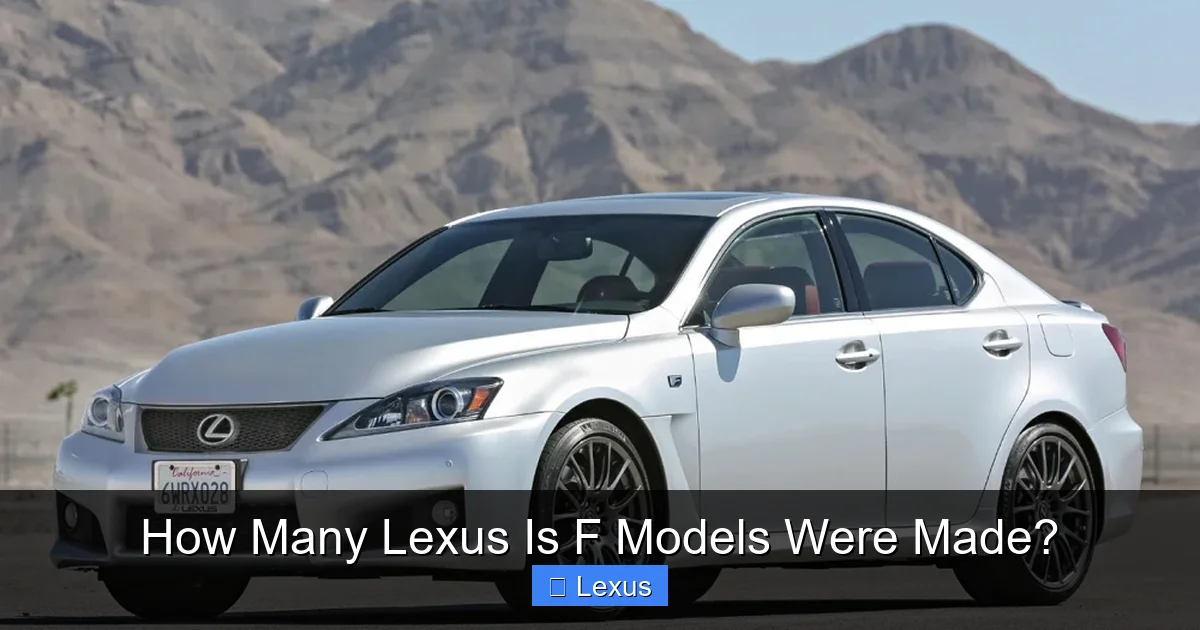
Visual guide about How Many Lexus Is F Models Were Made?
Image source: clublexus.com
Strategic Positioning
Lexus never aimed to outsell the M3. Instead, the IS F was positioned as a niche product—a halo car designed to showcase Lexus’s performance capabilities. This meant lower production volumes from the start. Lexus wanted the IS F to be aspirational, not common. And in that sense, they succeeded. Owning an IS F today feels like being part of an exclusive club.
Market Challenges
The IS F launched in 2007, right before the global financial crisis hit. Sales of high-end performance cars plummeted as consumers tightened their belts. While the M3 and C63 AMG had strong brand loyalty and racing heritage to fall back on, the IS F was still building its reputation. It didn’t help that Lexus was primarily known for reliability and comfort, not track prowess. Convincing buyers to spend $60,000+ on a Lexus that could outrun a Porsche was a tough sell.
Additionally, the IS F faced stiff competition. The BMW M3 offered a more engaging driving experience, the Mercedes C63 AMG had more power, and the Cadillac CTS-V had a supercharged V8 at a lower price. The IS F was excellent, but it wasn’t the obvious choice for everyone.
Engineering and Cost Constraints
Building a high-performance car isn’t cheap. The IS F required extensive modifications to the standard IS platform—reinforced chassis, upgraded cooling, performance-tuned suspension, and a bespoke exhaust system. These changes increased production costs, which limited how many units Lexus could profitably produce. Unlike BMW or Mercedes, Lexus didn’t have a long history of performance models to spread development costs across multiple generations.
There’s also the matter of the engine. The 2UR-GSE V8 was hand-assembled and built in limited quantities. Toyota’s production philosophy emphasizes quality over quantity, which meant the engine wasn’t produced in the same volumes as, say, BMW’s S65. This bottleneck further restricted IS F output.
Special Editions and Collector Appeal
One of the reasons the IS F remains so desirable today is its limited-edition models. These weren’t just cosmetic upgrades—they were meaningful enhancements that made certain years stand out.
The 2011 IS F Special Edition
In 2011, Lexus released a special edition IS F to celebrate the car’s success. Only 100 units were made for the U.S. market, each with unique features like:
- Exclusive Ultrasonic Blue Mica paint
- Black leather interior with blue stitching
- Carbon fiber interior trim
- Upgraded suspension with adjustable dampers
- Special badging and floor mats
This edition was a hit among collectors and is now one of the most sought-after IS F variants. Finding one in good condition can cost well over $50,000—nearly double the original MSRP.
Japan-Exclusive Models
Lexus also released Japan-only versions with unique features, such as the “F Package” with upgraded brakes, lightweight wheels, and a sportier exhaust note. These models are rare outside Japan, making them highly desirable for import enthusiasts.
For collectors, the IS F represents a sweet spot: it’s not so rare that it’s unattainable, but rare enough to feel special. And because it’s not a full-blown supercar, maintenance and insurance costs are relatively reasonable—especially compared to a Porsche 911 or Nissan GT-R.
Owning an IS F Today: Tips and Realities
If you’re thinking about buying a used IS F, you’re not alone. These cars have a loyal following, and prices have been steadily rising as supply dwindles. But before you sign the papers, here are some practical tips based on real ownership experiences.
What to Look For When Buying
Not all IS Fs are created equal. Here’s what to check:
- Service History: The 2UR-GSE engine is robust, but it needs regular maintenance. Look for records of oil changes, spark plug replacements, and timing belt service (if applicable).
- Transmission Condition: The eight-speed automatic is generally reliable, but harsh shifting or delays can indicate wear. Test drive it aggressively.
- Suspension Wear: The IS F’s sport suspension wears faster than a standard IS. Check for noise, leaks, or uneven tire wear.
- Exhaust System: The factory exhaust is prone to rust, especially in snowy climates. Inspect the mufflers and tips carefully.
- Interior Condition: The leather seats and carbon trim can show wear over time. Look for cracks, fading, or sticky buttons.
Common Issues and Fixes
While the IS F is reliable for a performance car, it’s not immune to problems. Here are a few common issues:
- Intake Manifold Gasket Leaks: This can cause rough idle and reduced performance. Replacing the gasket is a known fix.
- Throttle Body Cleaning: Carbon buildup can affect throttle response. Regular cleaning helps.
- Brake Dust: The Brembo brakes are great, but they produce a lot of dust. Be prepared for frequent cleaning.
- Tire Wear: The rear tires wear out quickly due to the car’s power and rear-wheel-drive layout. Budget for frequent replacements.
The good news? Most of these issues are manageable with regular maintenance. And because the IS F shares many parts with other Lexus models, repairs aren’t overly expensive—especially compared to German rivals.
Driving Experience: What It’s Really Like
Owning an IS F isn’t just about specs—it’s about the experience. The V8 roar, the precise steering, the way it hunkers down in corners—it’s a car that rewards driving skill. But it’s also comfortable enough for daily use. The ride is firm but not punishing, and the interior is quiet and luxurious.
One owner I spoke to put it perfectly: “It’s the only car I’ve owned that makes me smile every time I start it. It’s not perfect, but it’s perfect for me.” That’s the IS F in a nutshell—flawed, passionate, and unforgettable.
The Legacy of the Lexus IS F
So, how many Lexus IS F models were made? Around 8,000. But the number doesn’t tell the whole story. The IS F was more than a car—it was a statement. It proved that Lexus could build a performance machine that stood toe-to-toe with the best in the world. It wasn’t the fastest, the most powerful, or the most luxurious. But it was balanced, reliable, and deeply enjoyable to drive.
Today, the IS F is a cult classic. Prices are rising, and well-maintained examples are becoming harder to find. But for those who own one, it’s not just a car—it’s a connection to a time when Lexus dared to be different. And in a world of turbocharged four-cylinders and electric motors, that kind of raw, analog driving experience is more valuable than ever.
If you’re lucky enough to find one, don’t hesitate. The IS F isn’t just a piece of automotive history—it’s a reminder that sometimes, the rarest things are the ones worth chasing.
Frequently Asked Questions
How many Lexus IS F models were made in total?
A total of 10,000 Lexus IS F models were produced worldwide during its production run from 2007 to 2014. This limited production number contributes to its desirability among performance sedan enthusiasts.
How many Lexus IS F units were sold in the United States?
Approximately 7,000 Lexus IS F models were sold in the United States, making it the largest market for the high-performance sedan. Strong demand in the U.S. helped drive much of the model’s global sales.
Were Lexus IS F production numbers consistent each year?
No, production numbers varied by year, with peak output occurring in the early years (2008–2010). Annual production typically ranged from 1,000 to 1,500 units, reflecting changing market demand.
How rare is the Lexus IS F compared to other performance sedans?
The Lexus IS F is considered relatively rare due to its limited production of just 10,000 units. This scarcity enhances its appeal among collectors and fans of high-performance luxury sedans.
How many Lexus IS F models were made with a manual transmission?
The Lexus IS F was only available with an 8-speed automatic transmission; no manual version was ever produced. This automatic system was specifically tuned for performance and responsiveness.
What factors influenced the low production numbers of the Lexus IS F?
The limited production was due to Lexus positioning the IS F as a niche performance model rather than a mass-market vehicle. High build quality, specialized components, and targeted marketing also contributed to the controlled output.
