
How Many Catalytic Converters Are in a Toyota Tacoma?

The number of catalytic converters in a Toyota Tacoma depends on the model year, engine size, and exhaust system configuration. Most modern Tacomas have two catalytic converters—one upstream and one downstream—while some V6 and turbocharged models may include additional units for emissions compliance.
If you’re a Toyota Tacoma owner—or considering becoming one—you’ve probably heard the term “catalytic converter” thrown around, especially when talking about emissions, performance, or unexpected repair bills. But how many catalytic converters are actually in a Toyota Tacoma? The answer isn’t as simple as “one” or “two.” It depends on several factors, including the year your Tacoma was made, the engine it’s running, and even where you live.
The catalytic converter is a critical part of your vehicle’s exhaust system. Its job is to reduce harmful emissions by converting toxic gases like carbon monoxide, nitrogen oxides, and unburned hydrocarbons into less harmful substances like carbon dioxide, nitrogen, and water vapor. Thanks to stricter environmental regulations over the past few decades, modern vehicles—including the Toyota Tacoma—are equipped with more advanced and often multiple catalytic converters to meet emissions standards.
So, how many does your Tacoma have? Let’s break it down.
Key Takeaways
- Most Toyota Tacomas have two catalytic converters: one before the muffler (upstream) and one after (downstream), especially in models from 2005 onward.
- V6 and turbocharged engines may have more: Some 3.5L V6 and 2.4L turbocharged Tacomas feature dual exhaust systems, requiring two or more catalytic converters.
- Model year matters: Older Tacomas (pre-2005) often had only one catalytic converter, while newer models meet stricter emissions standards with multiple units.
- Federal vs. California emissions standards: Tacomas sold in California or other CARB-compliant states may have additional catalytic converters compared to federal-only models.
- Replacement costs vary: Replacing a catalytic converter can cost $1,000–$3,000+, depending on the model, labor, and whether OEM or aftermarket parts are used.
- Signs of failure include reduced performance, check engine light, and rattling noises: Early detection helps avoid costly repairs and emissions test failures.
- Tampering is illegal: Removing or bypassing catalytic converters violates federal and state laws, including the Clean Air Act.
📑 Table of Contents
- Understanding Catalytic Converters in the Toyota Tacoma
- How Model Year Affects the Number of Catalytic Converters
- Engine Type and Exhaust Configuration Matter
- Federal vs. California Emissions Standards
- Signs of Catalytic Converter Problems
- Replacement Costs and Considerations
- Legal and Environmental Considerations
- Conclusion
Understanding Catalytic Converters in the Toyota Tacoma
To answer the question properly, we need to understand what a catalytic converter does and why Toyota might install more than one in certain Tacoma models. A catalytic converter is essentially a metal canister filled with a ceramic honeycomb structure coated with precious metals like platinum, palladium, and rhodium. As exhaust gases pass through, these metals act as catalysts to trigger chemical reactions that neutralize pollutants.
In the past, many vehicles—including early Toyota Tacomas—had just one catalytic converter located near the engine, typically after the exhaust manifold. But as emissions standards tightened, automakers began using multiple converters to improve efficiency and meet regulatory requirements.
Today, most Toyota Tacomas come with at least two catalytic converters. One is positioned close to the engine (the upstream or “pre-cat” converter), and another is located further down the exhaust line, usually before the muffler (the downstream or “post-cat” converter). This dual setup allows for more thorough emissions control and helps the vehicle’s onboard diagnostics (OBD-II) monitor the efficiency of the system.
But why two? The upstream converter handles the initial reduction of pollutants right after combustion, while the downstream converter polishes the exhaust stream and ensures that any remaining harmful gases are neutralized. Additionally, the downstream converter helps the vehicle’s computer assess whether the upstream converter is working properly by comparing oxygen levels before and after.
How Model Year Affects the Number of Catalytic Converters
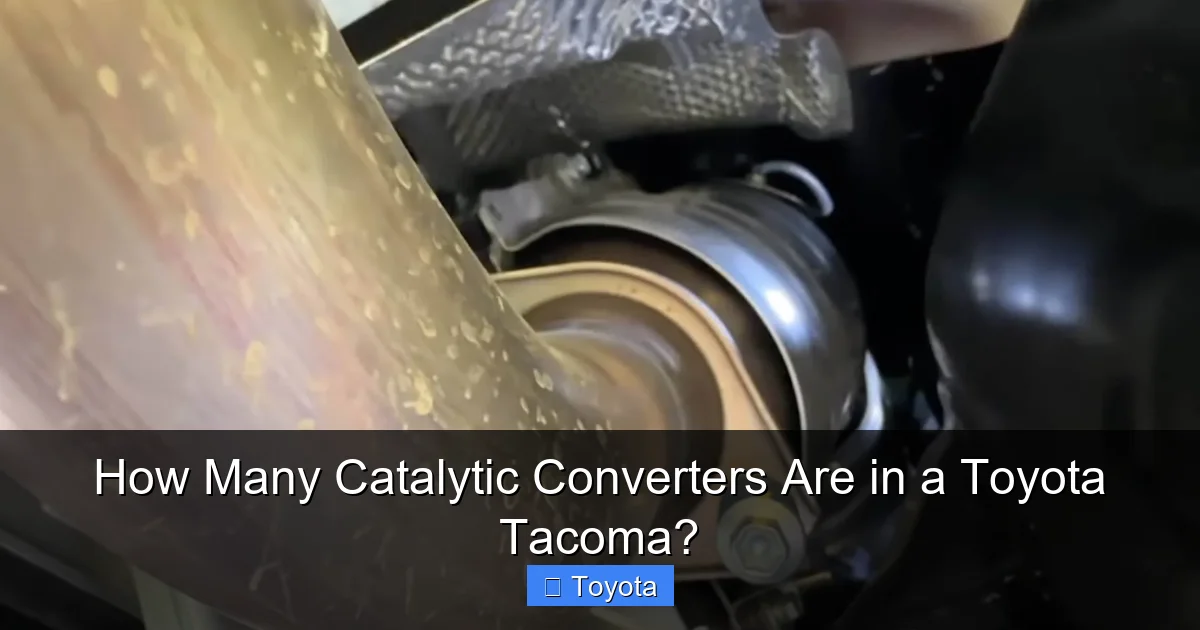
Visual guide about How Many Catalytic Converters Are in a Toyota Tacoma?
Image source: tacoma4g.com
The year your Toyota Tacoma was manufactured plays a major role in how many catalytic converters it has. Emissions regulations have evolved significantly since the Tacoma first hit the market in 1995, and Toyota has adapted its exhaust systems accordingly.
Pre-2005 Tacomas: Simpler Exhaust Systems
If you’re driving a first-generation Toyota Tacoma (1995–2004), there’s a good chance it has only one catalytic converter. These older models were designed to meet less stringent emissions standards, and many came with a single converter located in the exhaust pipe near the engine. For example, the 2.4L four-cylinder and 3.4L V6 engines from this era typically used one converter, especially in federal emissions vehicles.
However, even in this era, some models—particularly those sold in California or other states with stricter emissions rules—may have had two converters. California Air Resources Board (CARB) compliance often required additional emissions equipment, including extra catalytic converters.
2005–2015 Tacomas: The Shift to Dual Converters
With the introduction of the second-generation Tacoma in 2005, Toyota upgraded its emissions systems to meet tougher federal and state standards. Most 2005–2015 Tacomas now came standard with two catalytic converters. This was true for both the 2.7L four-cylinder and the 4.0L V6 engines.
The 4.0L V6, in particular, often featured a dual exhaust setup on certain trims (like the TRD Off-Road and TRD Sport), which meant two separate exhaust manifolds and, consequently, two upstream catalytic converters—one for each bank of cylinders. These models still had a single downstream converter, bringing the total to three in some cases.
But even non-TRD models with single exhaust systems typically had two converters: one upstream and one downstream. This dual setup became the norm as Toyota aimed to improve fuel efficiency and reduce emissions across the board.
2016–Present Tacomas: Advanced Emissions Control
The third-generation Toyota Tacoma, introduced in 2016, brought further refinements to the exhaust system. With the discontinuation of the 4.0L V6 and the introduction of the more efficient 3.5L V6 engine, Toyota continued to use multiple catalytic converters to meet modern emissions standards.
Most 2016–2023 Tacomas with the 3.5L V6 engine have two catalytic converters: one upstream and one downstream. However, some models—especially those with dual exhaust systems or sold in CARB states—may have additional converters or more complex exhaust routing.
In 2024, Toyota introduced a new 2.4L turbocharged four-cylinder engine to replace the aging 3.5L V6. This new engine, designed for better fuel economy and lower emissions, also features advanced exhaust treatment. While early reports suggest it still uses two catalytic converters, the turbocharged design may require more precise emissions control, potentially leading to additional components in the future.
Engine Type and Exhaust Configuration Matter
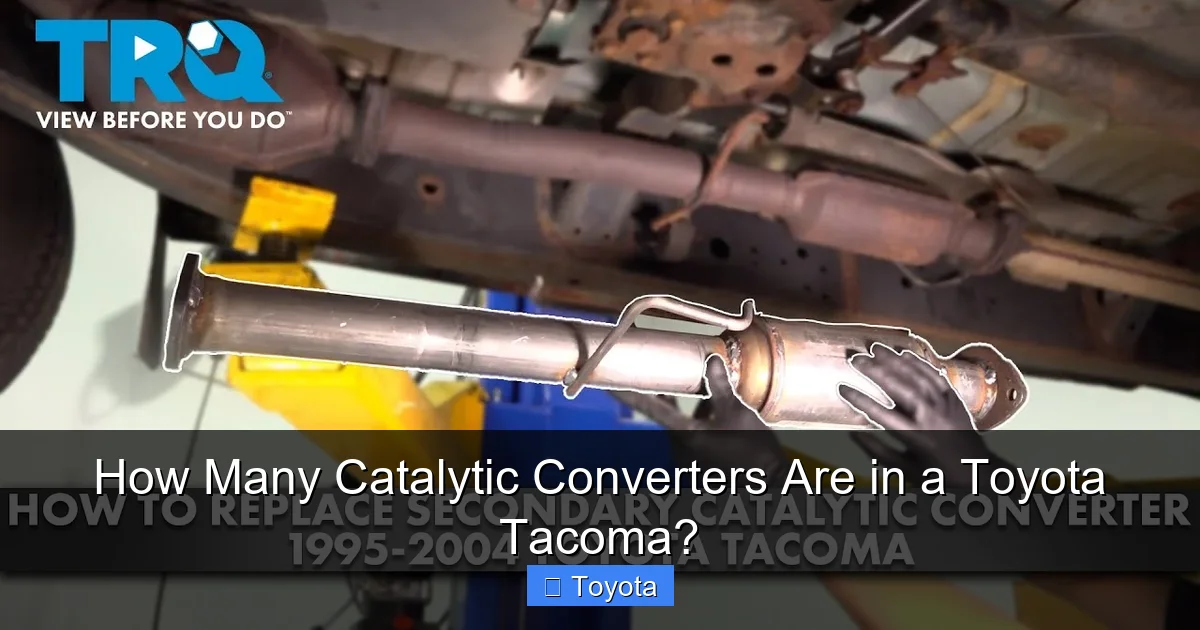
Visual guide about How Many Catalytic Converters Are in a Toyota Tacoma?
Image source: i.ytimg.com
The engine under your Tacoma’s hood is one of the biggest factors determining how many catalytic converters your truck has. Let’s look at the most common engines and their typical converter setups.
2.7L Four-Cylinder Engine
The 2.7L inline-four engine has been a staple in the Tacoma lineup for decades. Found in base models and work trucks, this engine is known for its reliability and fuel efficiency. Most 2.7L Tacomas—especially those from 2005 onward—have two catalytic converters: one upstream and one downstream.
Because this engine uses a single exhaust manifold, there’s only one upstream converter. The downstream converter is usually located near the rear of the truck, before the muffler. This setup is simple, effective, and meets emissions requirements for federal and most state standards.
3.5L V6 Engine (2016–2023)
The 3.5L V6 engine, introduced in 2016, powers most mid- to high-end Tacoma trims. This engine features a dual overhead cam (DOHC) design and produces around 278 horsepower. Due to its higher output and more complex combustion process, it requires more robust emissions control.
Most 3.5L V6 Tacomas have two catalytic converters. However, because it’s a V6 with two cylinder banks, some models—especially those with dual exhaust systems—may have two upstream converters (one per bank) and one downstream converter, totaling three.
For example, a 2020 Toyota Tacoma TRD Pro with dual exhaust will likely have three catalytic converters: two near the engine (one for each exhaust manifold) and one further back in the system. This setup ensures that emissions are controlled efficiently across both sides of the engine.
2.4L Turbocharged Four-Cylinder (2024+)
The newest addition to the Tacoma lineup is the 2.4L turbocharged four-cylinder engine, which debuted in 2024. This engine replaces the 3.5L V6 and offers improved fuel economy and lower emissions. Despite being smaller, the turbocharged design produces comparable power (around 278 hp) and torque.
Early reports and service documentation suggest that the 2.4L turbo engine uses two catalytic converters: one close to the turbocharger (upstream) and one downstream. The proximity of the first converter to the turbo helps reduce emissions quickly, while the second ensures compliance with OBD-II monitoring requirements.
Because this engine is still new, long-term data on converter performance and failure rates is limited. However, Toyota has designed it with emissions compliance in mind, so it’s likely to meet or exceed current standards.
Federal vs. California Emissions Standards
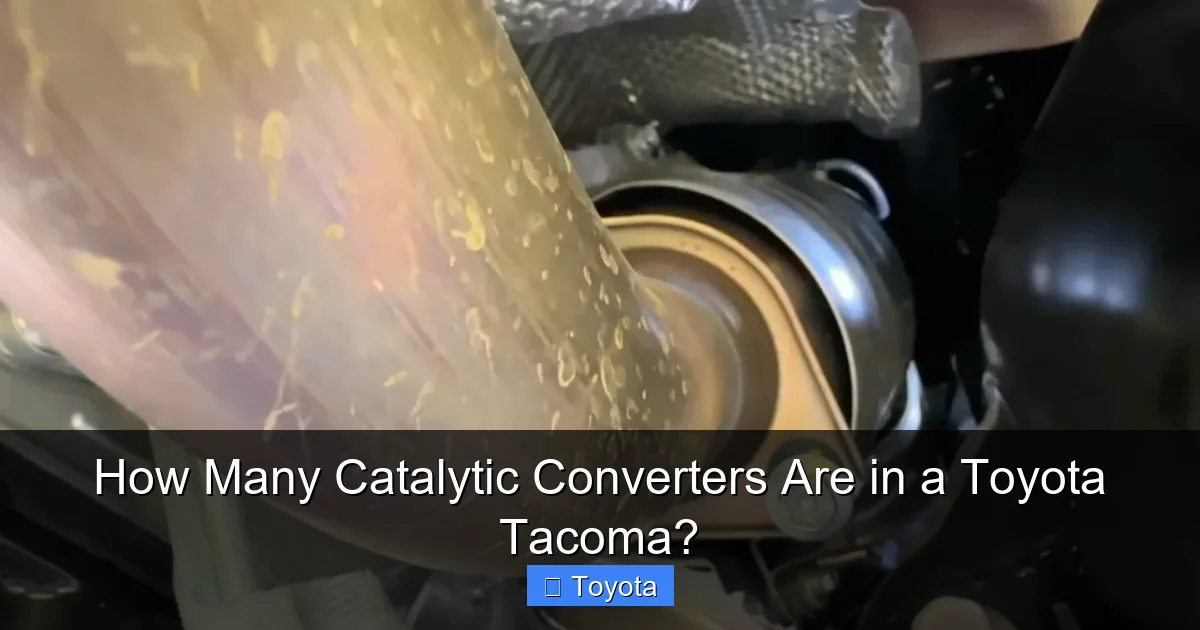
Visual guide about How Many Catalytic Converters Are in a Toyota Tacoma?
Image source: thedrive.com
Where you live can also affect how many catalytic converters your Toyota Tacoma has. The U.S. has two main emissions standards: federal (EPA) and California (CARB). Vehicles sold in California and the 16 other states that follow CARB rules must meet stricter emissions requirements.
Federal Emissions Vehicles
Tacomas sold in most states follow federal emissions standards. These vehicles typically have two catalytic converters—one upstream and one downstream—regardless of engine type. This setup is sufficient to meet EPA requirements and pass emissions inspections in non-CARB states.
CARB-Compliant Vehicles
Tacomas sold in California, New York, Massachusetts, and other CARB states often have additional emissions equipment, including extra catalytic converters. For example, a 2022 Tacoma SR5 with the 3.5L V6 sold in California might have three catalytic converters instead of two, with an additional converter or more advanced exhaust routing to reduce nitrogen oxide (NOx) emissions.
CARB-compliant models may also feature more sophisticated oxygen sensors, exhaust gas recirculation (EGR) systems, and secondary air injection, all of which work together with the catalytic converters to minimize pollution.
If you’re buying a used Tacoma, it’s important to check whether it was originally sold in a CARB state. A vehicle that was retrofitted to meet federal standards may have missing or altered emissions components, which can cause problems during inspections or resale.
Signs of Catalytic Converter Problems
Knowing how many catalytic converters your Tacoma has is useful, but it’s even more important to recognize when one might be failing. A malfunctioning converter can hurt performance, reduce fuel economy, and cause your truck to fail emissions tests.
Common Symptoms of Failure
- Check Engine Light: The most common sign. The OBD-II system monitors converter efficiency, and if it detects a problem, it will trigger a code like P0420 (Catalyst System Efficiency Below Threshold).
- Reduced Engine Performance: A clogged converter restricts exhaust flow, making the engine work harder. You may notice sluggish acceleration, hesitation, or a lack of power.
- Increased Fuel Consumption: When the engine can’t expel exhaust gases efficiently, it burns more fuel to compensate.
- Rattling Noise: If the ceramic honeycomb inside the converter breaks apart, you may hear a rattling sound from under the truck, especially when idling or accelerating.
- Strong Sulfur Smell: A failing converter may emit a rotten egg odor due to unburned sulfur compounds in the exhaust.
- Excessive Heat Under the Vehicle: A clogged converter can overheat, sometimes causing the undercarriage to glow red-hot.
What to Do If You Suspect a Problem
If you notice any of these symptoms, have your Tacoma inspected by a qualified mechanic. They can use a scan tool to read diagnostic trouble codes and perform a visual and physical inspection of the exhaust system.
In some cases, the issue may not be the converter itself but a faulty oxygen sensor or engine misfire that’s causing the converter to overwork. Fixing the root cause is essential—replacing a converter without addressing underlying problems will only lead to another failure.
Replacement Costs and Considerations
Replacing a catalytic converter is not cheap. Costs vary widely depending on the model, labor rates, and whether you choose an OEM (original equipment manufacturer) or aftermarket part.
Average Replacement Costs
- OEM Catalytic Converter: $1,500–$3,000+ per unit. Toyota OEM converters are built to exact specifications and often come with a warranty, but they’re the most expensive option.
- Aftermarket Converter: $800–$1,800 per unit. High-quality aftermarket converters (like those from MagnaFlow or Walker) can be a cost-effective alternative, but make sure they’re EPA- or CARB-compliant.
- Labor Costs: $150–$400, depending on shop rates and how difficult the converter is to access. Some converters are welded in place and require cutting and welding, which increases labor time.
Tips to Save Money
- Get Multiple Quotes: Prices can vary significantly between dealerships and independent shops.
- Consider Used or Reconditioned Units: In some cases, a used converter from a salvage yard may work, but be cautious—there’s no guarantee of longevity.
- Check for Recalls or Warranty Coverage: Toyota has issued recalls for certain catalytic converter issues in the past. If your truck is still under warranty, the repair may be covered.
- Prevent Future Problems: Keep up with regular maintenance, fix engine misfires promptly, and avoid short trips that prevent the converter from reaching optimal operating temperature.
Legal and Environmental Considerations
It’s important to understand that tampering with your catalytic converter is illegal. The Clean Air Act prohibits the removal, modification, or bypass of emissions control devices on vehicles used on public roads.
Why It’s Illegal
Catalytic converters are a key part of the U.S. strategy to reduce air pollution. Removing or disabling them increases harmful emissions, contributing to smog, acid rain, and health problems like asthma and bronchitis.
Penalties for Tampering
Violations can result in fines of up to $4,819 per vehicle (as of 2024), depending on the state. In California, penalties can be even higher, and you may be required to repair the vehicle and pass a smog check before it can be registered.
Exceptions
There are limited exceptions for off-road vehicles, race cars, or vehicles used exclusively on private property. However, if you drive your Tacoma on public roads—even occasionally—you must keep the catalytic converters intact and functional.
Conclusion
So, how many catalytic converters are in a Toyota Tacoma? The answer depends on your truck’s model year, engine, exhaust configuration, and emissions certification. Most modern Tacomas have two catalytic converters—one upstream and one downstream—while some V6 and dual-exhaust models may have three or more.
Understanding your Tacoma’s emissions system helps you maintain it properly, avoid costly repairs, and stay compliant with environmental laws. Whether you’re troubleshooting a check engine light or planning a repair, knowing what’s under your truck can save you time, money, and stress.
If you’re ever unsure, consult your owner’s manual, a Toyota service technician, or a trusted mechanic. And remember: keeping your catalytic converters in good working order isn’t just about passing inspections—it’s about protecting the environment and keeping your Tacoma running strong for years to come.
Frequently Asked Questions
How many catalytic converters does a 2020 Toyota Tacoma have?
Most 2020 Toyota Tacomas have two catalytic converters: one upstream (near the engine) and one downstream (before the muffler). However, V6 models with dual exhaust systems may have three converters—two upstream and one downstream.
Can a Toyota Tacoma have only one catalytic converter?
Yes, older Tacomas (pre-2005) often had only one catalytic converter, especially base models with four-cylinder engines. However, most Tacomas from 2005 onward have at least two.
Is it legal to remove a catalytic converter from a Toyota Tacoma?
No, removing or disabling a catalytic converter is illegal under the Clean Air Act if the vehicle is used on public roads. Penalties include fines and registration issues.
Why does my Tacoma have two check engine lights related to the catalytic converter?
This usually indicates a P0420 or P0430 code, meaning the upstream and downstream oxygen sensors detect low converter efficiency. It could mean the converter is failing or there’s an engine issue like a misfire.
Do all Toyota Tacomas have the same number of catalytic converters?
No, the number varies by model year, engine, and emissions certification. V6 and turbocharged models, especially those sold in California, may have more converters than four-cylinder federal models.
How much does it cost to replace a catalytic converter on a Toyota Tacoma?
Replacement costs range from $1,000 to $3,000+, depending on whether you use OEM or aftermarket parts and how many converters need replacement. Labor can add $150–$400.
