How Many Catalytic Converters Are in a Nissan Altima?

Contents
- 1 Key Takeaways
- 2 📑 Table of Contents
- 3 What Is a Catalytic Converter and Why Does It Matter?
- 4 How Many Catalytic Converters Are in a Nissan Altima?
- 5 Where Are the Catalytic Converters Located in a Nissan Altima?
- 6 Common Signs of a Failing Catalytic Converter
- 7 Replacing a Catalytic Converter in a Nissan Altima
- 8 Tips for Maintaining Your Catalytic Converter
- 9 Conclusion
- 10 Frequently Asked Questions


The number of catalytic converters in a Nissan Altima varies by model year, engine type, and drivetrain configuration. Most Altima models come with either one or two catalytic converters, depending on whether they have a 4-cylinder or V6 engine and if they’re front-wheel or all-wheel drive.
If you’re a Nissan Altima owner—or considering buying one—you’ve probably wondered about the inner workings of your vehicle’s exhaust system. One component that often raises questions is the catalytic converter. Not only is it essential for reducing harmful emissions, but it’s also a frequent target for theft and a common source of repair expenses. So, how many catalytic converters are in a Nissan Altima?
The short answer? It depends. The number of catalytic converters in your Altima isn’t a one-size-fits-all number. It varies based on several factors, including the model year, engine size, and even the drivetrain. Whether you drive a 2005 Altima with a 2.5L 4-cylinder or a 2020 model with a 3.5L V6, the configuration of your exhaust system—and thus the number of catalytic converters—can differ significantly.
Understanding how many catalytic converters your Altima has isn’t just about satisfying curiosity. It’s also important for maintenance, troubleshooting check engine lights, and knowing what to expect during repairs or inspections. In this comprehensive guide, we’ll break down everything you need to know about catalytic converters in the Nissan Altima, from how they work to where they’re located, and how to keep them functioning properly.
Whether you’re a DIY mechanic, a first-time car owner, or just someone who wants to be more informed about their vehicle, this article will give you the knowledge you need to understand your Altima’s emissions system inside and out.
Key Takeaways
- Engine Type Matters: 4-cylinder Nissan Altimas typically have one catalytic converter, while V6 models often feature two—one for each exhaust bank.
- Model Year Impacts Count: Older models (pre-2007) may have fewer converters, while newer emissions standards require more advanced systems with multiple units.
- Location Varies by Design: Catalytic converters are usually found under the vehicle, near the engine (pre-cat) and further back in the exhaust system (main cat).
- AWD Models May Differ: All-wheel-drive Altimas sometimes have additional exhaust routing that can affect converter placement and number.
- Maintenance Is Crucial: Regular inspections and timely replacements prevent performance issues and ensure compliance with emissions regulations.
- Replacement Costs Vary: OEM catalytic converters are expensive, but aftermarket or used options can reduce costs—though quality should never be compromised.
- Legal and Environmental Impact: Tampering with or removing catalytic converters is illegal in most U.S. states and harms the environment.
📑 Table of Contents
- What Is a Catalytic Converter and Why Does It Matter?
- How Many Catalytic Converters Are in a Nissan Altima?
- Where Are the Catalytic Converters Located in a Nissan Altima?
- Common Signs of a Failing Catalytic Converter
- Replacing a Catalytic Converter in a Nissan Altima
- Tips for Maintaining Your Catalytic Converter
- Conclusion
What Is a Catalytic Converter and Why Does It Matter?
Before diving into how many catalytic converters are in a Nissan Altima, it’s important to understand what a catalytic converter actually does—and why it’s such a critical part of your vehicle.
A catalytic converter is an emissions control device located in the exhaust system. Its job is to convert toxic pollutants in exhaust gas—such as carbon monoxide, nitrogen oxides, and unburned hydrocarbons—into less harmful substances like carbon dioxide, nitrogen, and water vapor. This process happens through a series of chemical reactions facilitated by precious metals like platinum, palladium, and rhodium coated on a ceramic honeycomb structure inside the converter.
Without a functioning catalytic converter, your car would release significantly more pollution into the atmosphere. In fact, modern catalytic converters can reduce harmful emissions by up to 90%. That’s why they’re not just a good idea—they’re legally required in most countries, including the United States, Canada, and the European Union.
In the U.S., the Environmental Protection Agency (EPA) mandates that all vehicles sold after 1975 must be equipped with a catalytic converter. Over time, emissions standards have become stricter, leading to more advanced and complex converter systems. This means newer Nissan Altimas often have more sophisticated setups than older models.
How the Catalytic Converter Works
The catalytic converter operates using two types of catalysts: reduction and oxidation. The reduction catalyst (usually rhodium) helps break down nitrogen oxides into nitrogen and oxygen. The oxidation catalyst (typically platinum and palladium) converts carbon monoxide and unburned hydrocarbons into carbon dioxide and water.
These reactions occur at high temperatures—usually between 600°F and 1,600°F—which is why the converter is positioned close to the engine, where exhaust gases are hottest. As the exhaust flows through the ceramic honeycomb, the precious metals trigger the chemical reactions that clean the emissions.
Over time, the converter can become clogged or contaminated by oil, coolant, or unburned fuel, reducing its efficiency. This can lead to poor engine performance, reduced fuel economy, and even a failed emissions test.
Why Catalytic Converters Are Targeted
One reason catalytic converters are so frequently discussed—especially in recent years—is theft. Because they contain valuable precious metals, thieves often target vehicles to steal and resell the converters. The Nissan Altima, being a popular and common sedan, is unfortunately a frequent target.
In fact, according to the National Insurance Crime Bureau (NICB), catalytic converter thefts have risen dramatically over the past decade. Thieves can remove a converter in under a minute using basic tools, often cutting it out from under the vehicle. This not only leaves the car unusable but can cost thousands of dollars to repair.
Knowing how many catalytic converters your Altima has can help you assess your risk and take preventive measures, such as installing a protective shield or parking in well-lit, secure areas.
How Many Catalytic Converters Are in a Nissan Altima?
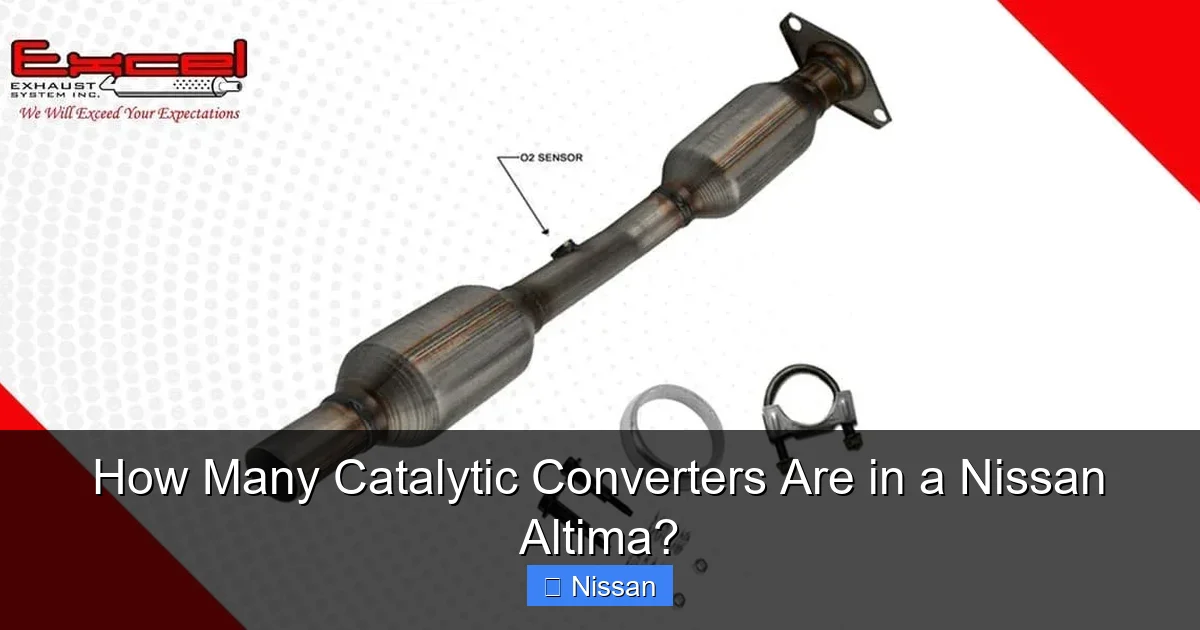
Visual guide about How Many Catalytic Converters Are in a Nissan Altima?
Image source: excelexhaust.com
Now, let’s get to the heart of the matter: how many catalytic converters does a Nissan Altima actually have?
The answer depends on several key factors, including the engine type, model year, and drivetrain. Let’s break it down by category.
4-Cylinder Engine Models (2.5L)
Most Nissan Altimas equipped with the 2.5L inline-4 engine—found in models from 2002 to 2023—typically have **one catalytic converter**. This single converter is usually located in the exhaust manifold or just downstream of it, often referred to as a “pre-cat” or “manifold converter.”
For example, a 2015 Nissan Altima 2.5S with the 4-cylinder engine will have one catalytic converter positioned near the engine block. This setup is common in front-wheel-drive (FWD) models, which make up the majority of Altima sales.
However, it’s worth noting that some later 4-cylinder models—especially those from 2019 onward—may include a second, smaller catalytic converter further down the exhaust system. This “main” or “downstream” converter helps further reduce emissions and meet stricter EPA standards. So while the primary converter is near the engine, a secondary unit may be present near the muffler.
V6 Engine Models (3.5L)
Nissan Altimas with the 3.5L V6 engine—such as the 2005–2013 Altima 3.5 SE or SL—typically have **two catalytic converters**. This is because the V6 engine has two separate exhaust manifolds (one for each cylinder bank), and each manifold usually has its own catalytic converter.
These are often referred to as “dual catalytic converters” or “twin cats.” One is located on the driver’s side, and the other on the passenger side, both near the engine. This dual setup allows for more efficient emissions control, as each bank of cylinders can be monitored and treated independently.
In some cases, there may also be a third catalytic converter further back in the exhaust system, acting as a secondary or “post-cat” unit. However, this is less common and usually only found in models designed to meet the most stringent emissions standards, such as those sold in California or other states with CARB (California Air Resources Board) regulations.
Model Year and Emissions Standards
The number of catalytic converters in a Nissan Altima can also vary by model year due to evolving emissions regulations.
– **Pre-2007 Models:** Older Altimas, especially those from the early 2000s, often had simpler exhaust systems with just one catalytic converter, even on V6 models. Emissions standards were less strict, so manufacturers didn’t need as many components.
– **2007–2012 Models:** As emissions regulations tightened, Nissan began adding more converters. V6 models typically had two, while 4-cylinder models still usually had one—though some may have included a secondary unit.
– **2013–2023 Models:** Modern Altimas, especially those from 2019 onward, are designed to meet Tier 3 emissions standards. These vehicles often feature more advanced exhaust systems, sometimes with two converters even on 4-cylinder engines. For example, a 2020 Altima SR with the 2.5L engine may have a pre-cat near the engine and a main cat further back.
All-Wheel Drive (AWD) Considerations
While most Nissan Altimas are front-wheel drive, some models—particularly from 2019 onward—offer an optional all-wheel-drive (AWD) system. AWD models may have slightly different exhaust routing due to the additional drivetrain components, but this typically doesn’t increase the number of catalytic converters.
In most cases, AWD Altimas with a 4-cylinder engine still have one converter, and AWD V6 models have two. However, the physical placement might be adjusted to accommodate the rear differential and driveshaft. Always consult your owner’s manual or a trusted mechanic if you’re unsure.
Where Are the Catalytic Converters Located in a Nissan Altima?

Visual guide about How Many Catalytic Converters Are in a Nissan Altima?
Image source: moparmax.com
Knowing how many catalytic converters your Altima has is one thing—knowing where they’re located is another. This is especially important if you’re troubleshooting a problem, performing maintenance, or trying to prevent theft.
Primary (Pre-Cat) Location
The primary catalytic converter—often called the “pre-cat”—is usually located very close to the engine. In most Altimas, it’s integrated into the exhaust manifold or mounted just behind it. This positioning allows it to heat up quickly and begin reducing emissions as soon as the engine starts.
To locate it, look under the front of your vehicle, near the engine block. You’ll see a metal canister (about the size of a large coffee can) with exhaust pipes connected to both ends. This is your catalytic converter. On 4-cylinder models, there’s typically just one. On V6 models, you’ll see two—one on each side.
Secondary (Main Cat) Location
Some newer Altimas include a second catalytic converter further down the exhaust system, usually before the muffler. This “main cat” or “downstream converter” helps further clean the exhaust gases after they’ve passed through the pre-cat.
This unit is typically located under the passenger side of the vehicle, closer to the rear axle. It’s often larger and may be housed in a separate metal casing. If your Altima has two converters, you’ll notice a noticeable gap between the pre-cat and the main cat, with a section of exhaust pipe connecting them.
Visual Identification Tips
If you’re trying to identify your catalytic converters, here are a few visual clues:
– **Shape:** Most converters are cylindrical or oval-shaped metal boxes.
– **Size:** They’re usually 6–10 inches long and 4–6 inches in diameter.
– **Heat Shield:** Many have a stamped metal heat shield around them to protect nearby components.
– **Oxygen Sensors:** You’ll often see one or more oxygen (O2) sensors mounted before and after the converter. These sensors monitor exhaust gas levels and help the engine control unit (ECU) adjust the air-fuel mixture.
If you see a component with wires connected to it and exhaust pipes on both ends, it’s likely a catalytic converter.
Common Signs of a Failing Catalytic Converter
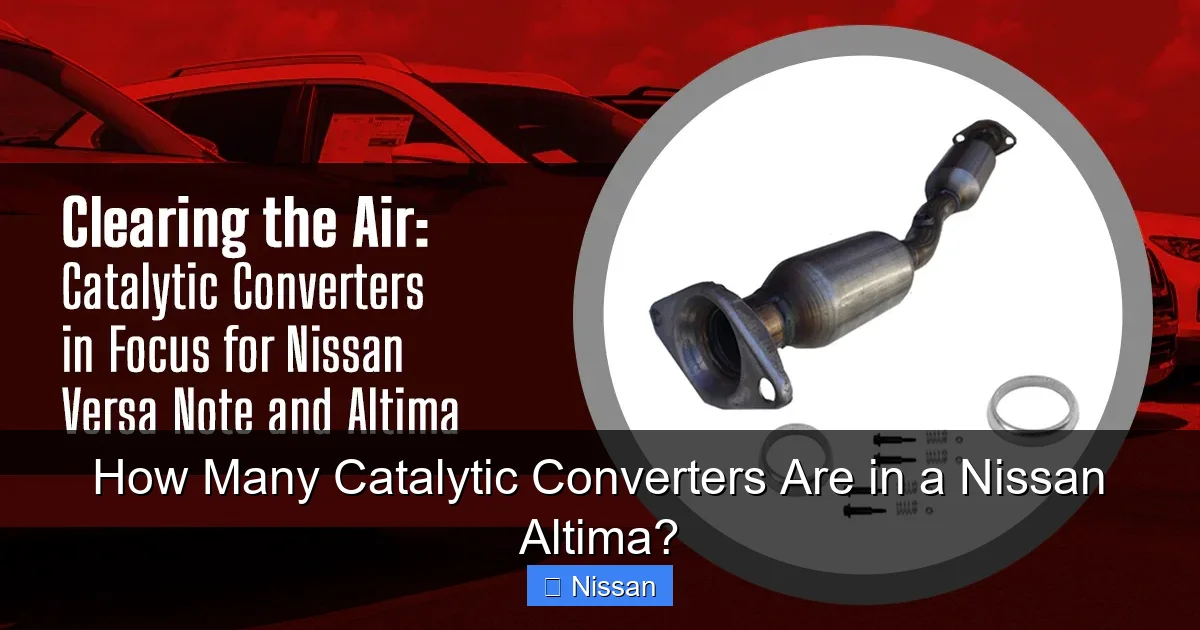
Visual guide about How Many Catalytic Converters Are in a Nissan Altima?
Image source: excelexhaust.com
Even with proper maintenance, catalytic converters can fail over time. Knowing the warning signs can help you address problems early and avoid costly repairs.
Check Engine Light
One of the most common indicators of a catalytic converter issue is the check engine light. Modern vehicles, including the Altima, use oxygen sensors to monitor the efficiency of the converter. If the downstream O2 sensor detects that the converter isn’t reducing emissions effectively, the ECU will trigger the check engine light.
Common trouble codes related to catalytic converters include:
– P0420: Catalyst System Efficiency Below Threshold (Bank 1)
– P0430: Catalyst System Efficiency Below Threshold (Bank 2)
These codes don’t always mean the converter is bad—sometimes it’s a faulty O2 sensor or an engine misfire. But they should never be ignored.
Reduced Engine Performance
A clogged or failing catalytic converter can restrict exhaust flow, leading to reduced engine power, sluggish acceleration, and poor fuel economy. You might notice your Altima struggling to maintain speed on highways or taking longer to reach highway speeds from a stop.
In severe cases, the engine may stall or fail to start at all.
Rattling Noise
If you hear a rattling sound coming from under your vehicle—especially when idling or accelerating—it could mean the internal honeycomb structure of the converter has broken apart. This is a sign of physical damage and usually requires replacement.
Excessive Heat Under the Car
A malfunctioning catalytic converter can overheat due to unburned fuel entering the exhaust system. If you notice a strong smell of sulfur (like rotten eggs) or see smoke coming from under the car, it could indicate a problem.
Failed Emissions Test
If your Altima fails a state emissions test, a faulty catalytic converter is one of the most likely culprits. Most states require vehicles to pass emissions testing to renew registration, so this is a serious issue.
Replacing a Catalytic Converter in a Nissan Altima
If your catalytic converter fails, replacement is usually necessary. However, it’s not a cheap repair.
Cost Considerations
The cost of replacing a catalytic converter in a Nissan Altima can vary widely:
– **OEM (Original Equipment Manufacturer) Converter:** $1,000–$3,000+
– **Aftermarket Converter:** $500–$1,500
– **Used or Reconditioned Converter:** $200–$800
Labor costs typically add $100–$300, depending on the shop and location.
OEM converters are the most reliable but also the most expensive. Aftermarket options can be more affordable but may not last as long or meet all emissions standards. Used converters are the cheapest but come with risks—make sure they’re from a reputable source and have been tested.
DIY vs. Professional Installation
Replacing a catalytic converter is not a simple DIY job. It requires lifting the vehicle, removing exhaust components, and often welding or using specialized clamps. If you’re not experienced with exhaust systems, it’s best to leave this to a professional mechanic.
Additionally, improper installation can lead to exhaust leaks, which are not only noisy but can be dangerous due to the risk of carbon monoxide entering the cabin.
Legal and Environmental Notes
It’s important to note that tampering with or removing a catalytic converter is illegal under the Clean Air Act. Doing so can result in fines of up to $25,000 per violation in the U.S. Even if you replace it with an aftermarket unit, it must be EPA-compliant.
Some states, like California, require converters to meet CARB standards, which are even stricter. Always check local regulations before making any changes.
Tips for Maintaining Your Catalytic Converter
While catalytic converters are designed to last 100,000 miles or more, proper maintenance can extend their life and prevent premature failure.
Use the Right Fuel
Always use the recommended fuel grade for your Altima. Using lower-octane fuel than specified can cause engine knocking, which sends unburned fuel into the exhaust system and can damage the converter.
Avoid leaded gasoline or fuel additives that contain metals, as these can coat the catalyst and reduce efficiency.
Fix Engine Problems Promptly
Misfires, rich fuel mixtures, and oil leaks can all send excess fuel or contaminants into the exhaust, overloading the catalytic converter. If you notice a check engine light, rough idling, or poor fuel economy, have your vehicle inspected right away.
Avoid Short Trips
Catalytic converters need to reach high temperatures to work effectively. Frequent short trips prevent the converter from heating up, leading to moisture buildup and reduced efficiency. Try to combine errands or take longer drives occasionally to help the system reach operating temperature.
Inspect Regularly
During routine maintenance, ask your mechanic to inspect the catalytic converter for signs of damage, rust, or leaks. Catching problems early can save you money in the long run.
Protect Against Theft
Given the rise in catalytic converter thefts, consider installing a protective shield or etching your VIN onto the converter. Park in well-lit areas or garages whenever possible, and consider using a steering wheel lock or alarm system as a deterrent.
Conclusion
So, how many catalytic converters are in a Nissan Altima? The answer depends on your specific model, but most 4-cylinder Altimas have one, while V6 models typically have two. Newer vehicles may include additional converters to meet stricter emissions standards.
Understanding your Altima’s catalytic converter setup is important for maintenance, troubleshooting, and theft prevention. These components play a vital role in reducing harmful emissions and keeping your vehicle running smoothly. While they can be expensive to replace, proper care and timely repairs can help you avoid major issues down the road.
Whether you’re driving a 2005 Altima or a 2023 model, knowing how your exhaust system works empowers you to make informed decisions about your vehicle’s care. And in a world where environmental responsibility and vehicle security are more important than ever, that knowledge is invaluable.
Frequently Asked Questions
How many catalytic converters does a 2020 Nissan Altima have?
A 2020 Nissan Altima with the 2.5L 4-cylinder engine typically has one catalytic converter near the engine, though some models may include a second unit further back in the exhaust system. V6 models are no longer offered in the 2020 Altima, so dual converters are not present.
Can I drive my Nissan Altima with a bad catalytic converter?
You can drive short distances with a failing catalytic converter, but it’s not recommended. A clogged converter can cause engine damage, reduced performance, and increased emissions. It may also cause your vehicle to fail an emissions test.
How much does it cost to replace a catalytic converter on a Nissan Altima?
Replacement costs range from $500 to over $3,000, depending on whether you choose OEM, aftermarket, or used parts. Labor adds $100–$300. Prices vary by location and shop.
Is it illegal to remove the catalytic converter on a Nissan Altima?
Yes, removing or tampering with a catalytic converter is illegal under the U.S. Clean Air Act. Doing so can result in fines and registration issues. Some states have additional penalties.
Why are catalytic converters stolen from Nissan Altimas?
Catalytic converters contain precious metals like platinum, palladium, and rhodium, which can be sold for scrap. The Altima’s popularity and ground clearance make it an easy target for thieves.
How long do catalytic converters last in a Nissan Altima?
Most catalytic converters last 100,000 to 150,000 miles. With proper maintenance, some can last even longer. Factors like engine health, fuel quality, and driving habits affect longevity.