
How Many Bolts Hold a Dodge Truck Bed On?

Most Dodge Ram trucks use between 8 to 12 bolts to secure the truck bed to the frame, depending on the model year and configuration. Knowing this helps during maintenance, modifications, or bed removal, ensuring you’re prepared with the right tools and steps.
Key Takeaways
- Typical Bolt Count: Most Dodge Ram trucks from 1994 to present use 8 to 12 bolts to attach the bed to the frame, with variations by model and year.
- Bolt Location: Bolts are strategically placed along the front, sides, and rear of the bed, often hidden under trim or bed liners.
- Tools Required: A socket wrench, torque wrench, penetrating oil, and sometimes a breaker bar are essential for safe removal.
- Model Variations: Older models (pre-2009) may use fewer bolts, while newer Rams (2009+) often have more for structural integrity.
- Bed Removal Purpose: Common reasons include frame repairs, rust treatment, suspension work, or custom modifications.
- Safety First: Always support the bed with jack stands before removing bolts to prevent injury or damage.
- Reinstallation Tips: Use proper torque specs and thread locker to ensure a secure, long-lasting reattachment.
📑 Table of Contents
- How Many Bolts Hold a Dodge Truck Bed On?
- Understanding the Dodge Ram Truck Bed Attachment System
- Bolt Count by Dodge Ram Model and Year
- Where Are the Bolts Located?
- Tools and Preparation for Bed Removal
- Step-by-Step Guide to Removing the Bed
- Reinstalling the Truck Bed
- Common Mistakes to Avoid
- Maintenance Tips to Prevent Bolt Issues
- Conclusion
How Many Bolts Hold a Dodge Truck Bed On?
If you’re a proud owner of a Dodge Ram truck—whether it’s a classic 1990s model or a modern 2023 Ram 1500—you might have wondered: *How many bolts actually hold the truck bed on?* It’s a surprisingly common question, especially if you’re planning to remove the bed for repairs, upgrades, or maintenance. The answer isn’t one-size-fits-all, but understanding the typical bolt count and their locations can save you time, frustration, and even prevent costly mistakes.
The short answer? Most Dodge Ram trucks use between **8 and 12 bolts** to secure the bed to the frame. However, the exact number depends on the model year, cab configuration (regular, extended, or crew cab), and whether your truck has additional structural reinforcements. For example, older models like the second-generation Ram (1994–2001) often use 8 bolts, while newer third- and fourth-generation Rams (2009–present) may use up to 12 or more, especially in heavy-duty or crew cab versions.
Knowing how many bolts hold your Dodge truck bed on isn’t just trivia—it’s practical knowledge. Whether you’re tackling frame rust, replacing suspension components, installing a new bed liner, or customizing your truck with a flatbed conversion, understanding the bed attachment system is crucial. In this guide, we’ll walk you through everything you need to know: from bolt counts and locations to removal tips, tools, and safety precautions.
Understanding the Dodge Ram Truck Bed Attachment System
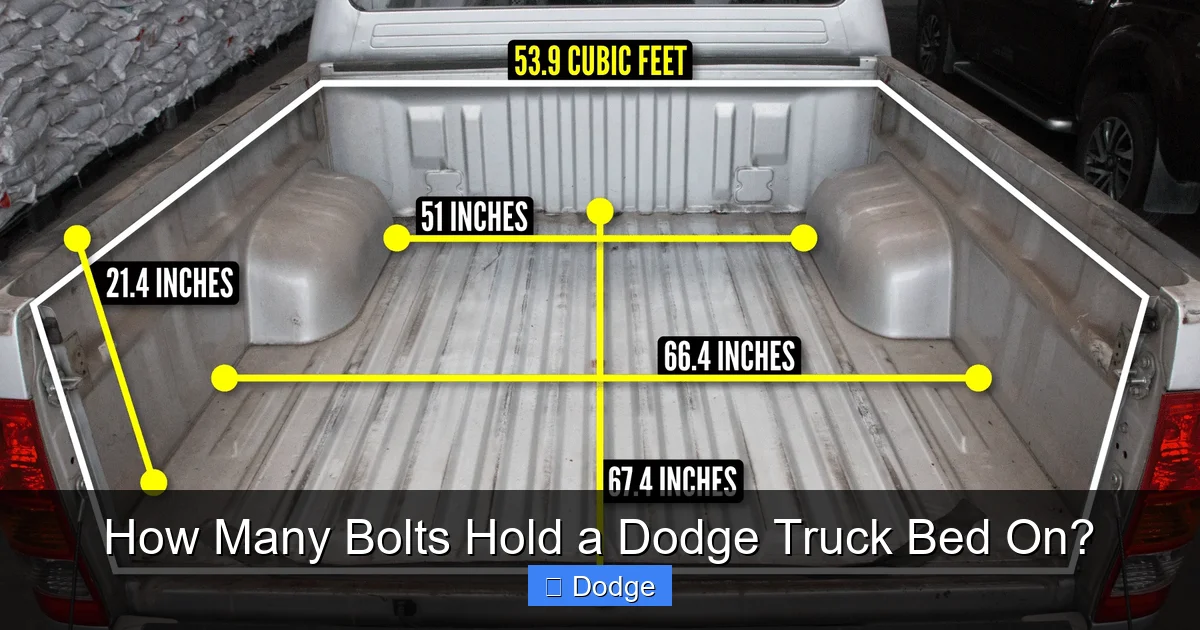
Visual guide about How Many Bolts Hold a Dodge Truck Bed On?
Image source: veasks.com
Before diving into bolt counts, it helps to understand *how* the truck bed is attached to the frame. Unlike some vehicles where the bed is welded or bonded, Dodge Ram trucks use a **bolted connection system**. This design allows for easier access to the frame, suspension, and drivetrain components without requiring major disassembly.
Each bolt passes through the bed’s mounting brackets and threads into the frame rails. These brackets are typically located at key structural points: the front of the bed (near the cab), along the sides (under the wheel wells), and at the rear (near the tailgate). The bolts are usually high-strength, Grade 8 or equivalent, and are designed to withstand the stresses of hauling, off-roading, and daily driving.
One important thing to note: **the bolts are not always visible**. On many models, they’re hidden beneath plastic trim, bed liners, or even under the wheel well liners. This means you’ll need to do some digging—literally—to locate them all. Additionally, over time, these bolts can seize due to rust, especially in regions with harsh winters or high humidity. That’s why preparation and the right tools are essential.
Why Is the Bed Bolted Instead of Welded?
You might wonder why Dodge doesn’t just weld the bed on for a more permanent connection. The answer lies in **serviceability and modularity**. A bolted bed allows mechanics and DIYers to remove the bed quickly for access to the frame, fuel tank, suspension, or transmission. It also makes it easier to replace a damaged bed without replacing the entire truck.
For example, if your frame develops rust or you want to upgrade to a fiberglass or aluminum bed, a bolted system makes the swap far more feasible. It also simplifies manufacturing—Dodge can assemble the frame and bed separately and bolt them together at the end of the line.
Common Reasons for Bed Removal
There are several practical reasons why someone might need to remove their Dodge truck bed:
– **Frame rust repair:** If the frame is corroded, removing the bed gives full access for welding or replacement.
– **Suspension or drivetrain work:** Replacing leaf springs, shocks, or the rear differential often requires bed removal.
– **Fuel tank access:** The fuel tank sits between the frame rails, directly under the bed.
– **Custom modifications:** Installing a flatbed, utility bed, or camper shell may require removing the original bed.
– **Bed replacement:** If the bed is damaged or you want a different style (e.g., aluminum for weight savings).
Understanding the bolt count and layout helps you plan for these tasks efficiently.
Bolt Count by Dodge Ram Model and Year

Visual guide about How Many Bolts Hold a Dodge Truck Bed On?
Image source: m.media-amazon.com
Now let’s get specific. The number of bolts holding your Dodge truck bed on varies by generation and configuration. Below is a breakdown by major model years and series.
Second-Generation Ram (1994–2001)
The second-gen Ram, known for its bold “big rig” styling, typically uses **8 bolts** to secure the bed. These are located:
– 2 bolts at the front (near the cab)
– 2 bolts per side (under the wheel wells)
– 2 bolts at the rear (near the tailgate)
This setup is consistent across regular cab, extended cab, and quad cab models. However, some heavy-duty (2500/3500) versions may have additional reinforcement bolts, bringing the total to 10.
Third-Generation Ram (2002–2008)
The third-gen Ram introduced a more refined design and improved structural rigidity. Most models in this range use **10 bolts**:
– 2 front bolts
– 3 per side (one near each wheel well and one in the middle)
– 2 rear bolts
Crew cab models and heavy-duty variants may have an extra bolt or two, especially if equipped with a reinforced frame or towing package.
Fourth-Generation Ram (2009–2018)
With the introduction of the fourth-gen Ram, Dodge increased structural strength and safety. These trucks commonly use **12 bolts**:
– 2 front bolts
– 4 per side (spaced evenly along the bed rail)
– 2 rear bolts
The additional bolts help distribute load more evenly and improve crash performance. This is especially true for crew cab and Mega Cab models, which have longer beds and greater weight.
Fifth-Generation Ram (2019–Present)
The latest Ram trucks continue the trend of increased bolt counts for durability. Most 2019–2024 Ram 1500, 2500, and 3500 models use **12 to 14 bolts**, depending on configuration.
– Light-duty 1500 models: 12 bolts
– Heavy-duty 2500/3500 models: 14 bolts (with extra reinforcement near the hitch and rear suspension)
The bolts are often larger in diameter (typically 14mm or 15mm) and may require higher torque specs during reinstallation.
Special Cases and Exceptions
While the above ranges are typical, there are exceptions:
– **Dually (dual rear wheel) models:** These often have extra bolts near the rear to support the wider axle and increased load.
– **Chassis cab trucks:** Used for commercial applications, these may have a different bed attachment system altogether, sometimes using U-bolts or clamps instead of through-bolts.
– **Custom or aftermarket beds:** If your truck has been modified, the bolt count may differ from factory specs.
Always consult your owner’s manual or a factory service manual for your specific VIN to confirm bolt locations and counts.
Where Are the Bolts Located?
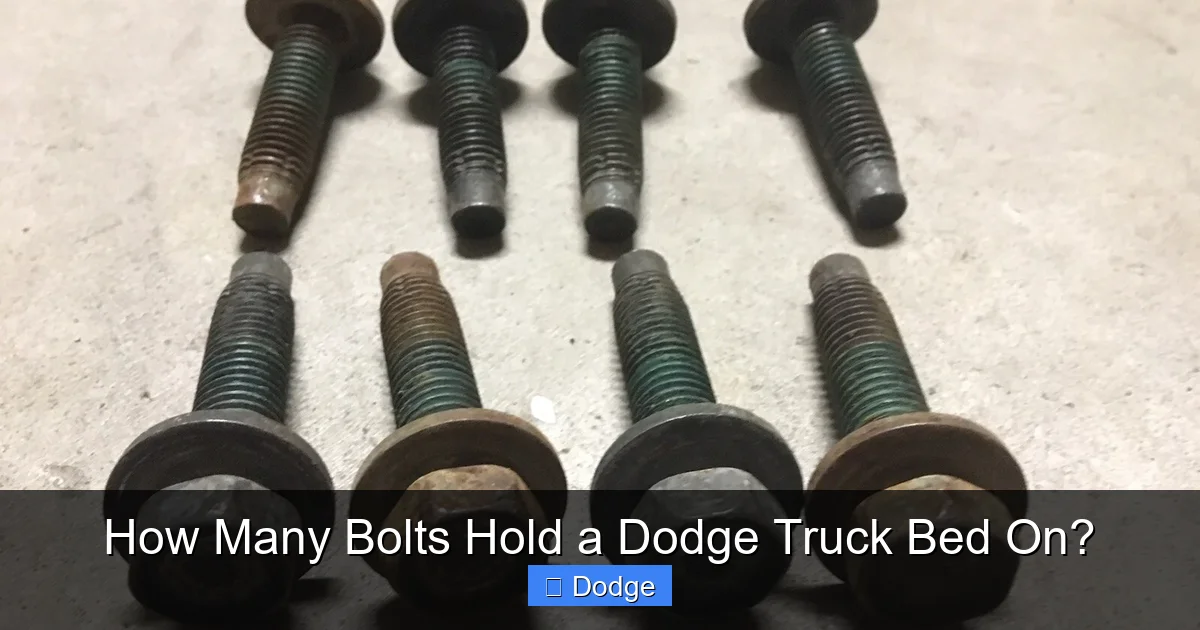
Visual guide about How Many Bolts Hold a Dodge Truck Bed On?
Image source: i.ebayimg.com
Knowing *how many* bolts there are is only half the battle—you also need to know *where* to find them. Dodge hides these bolts in strategic locations to protect them from damage and maintain a clean appearance.
Front Bolts (Near the Cab)
The front bolts are usually the easiest to locate. Look for two access holes on the floor of the bed, just behind the cab. These are often covered by rubber plugs or carpet. Remove the plug and you’ll see the bolt head. On some models, you may need to remove a small section of the bed liner to access it.
Side Bolts (Under the Wheel Wells)
The side bolts are typically found under the wheel well liners. You’ll need to remove the plastic liner (usually held by clips or screws) to expose the bolt. There are usually two or three per side, spaced along the length of the bed. On newer models, one may be located near the fuel filler neck, so be careful not to damage the fuel lines.
Rear Bolts (Near the Tailgate)
The rear bolts are located near the tailgate, often under the bed floor or behind the spare tire carrier. On some models, you’ll need to lower the spare tire to access them. These bolts are critical for bed stability, especially when hauling heavy loads.
Hidden or Hard-to-Reach Bolts
Some bolts may be tucked under the bed’s side rails or behind the rear bumper. In rare cases, a bolt may be located inside the frame rail, requiring partial disassembly. Always inspect thoroughly before assuming you’ve found them all.
Tools and Preparation for Bed Removal
Removing a truck bed isn’t a quick job—it requires planning, the right tools, and safety precautions. Here’s what you’ll need:
Essential Tools
– **Socket wrench set** (with extensions and a universal joint)
– **Torque wrench** (for reinstallation)
– **Breaker bar** (for stubborn bolts)
– **Penetrating oil** (like PB Blaster or WD-40)
– **Jack stands or a bed support fixture**
– **Floor jack** (to lift the bed slightly)
– **Safety glasses and gloves**
Step-by-Step Preparation
1. **Park on a level surface** and engage the parking brake.
2. **Disconnect the battery** to avoid electrical issues.
3. **Remove the tailgate** (if applicable) to reduce weight.
4. **Disconnect wiring harnesses** for taillights, license plate lights, and backup cameras.
5. **Drain the fuel tank** or clamp the fuel lines to prevent spills.
6. **Support the bed** with jack stands before removing any bolts.
Safety Tips
– Never remove all bolts at once. Loosen them first, then remove one at a time while the bed is supported.
– Use at least two jack stands—preferably four—for stability.
– Have a helper assist with lifting and positioning.
– Label wires and hoses to avoid confusion during reinstallation.
Step-by-Step Guide to Removing the Bed
Once you’re prepared, follow these steps to safely remove your Dodge truck bed:
Step 1: Loosen All Bolts
Start by spraying penetrating oil on each bolt and letting it sit for 15–30 minutes. Then, use a breaker bar to loosen each bolt—do not remove them yet. This prevents the bed from shifting unexpectedly.
Step 2: Support the Bed
Place jack stands under the bed’s front and rear corners. Use wood blocks to prevent damage to the bed floor. Raise the jack just enough to take the weight off the bolts.
Step 3: Disconnect Electrical and Fuel Lines
Unplug all wiring harnesses and disconnect the fuel filler neck and vent lines. Cap the fuel lines to prevent leaks.
Step 4: Remove the Bolts
Now, remove each bolt completely. Keep them in a labeled container so you don’t lose them.
Step 5: Lift the Bed
With the bolts removed, carefully lift the bed using a floor jack or enlist help. Tilt it slightly and slide it off the frame. You may need to wiggle it free if it’s stuck due to rust or sealant.
Step 6: Store or Work on the Frame
With the bed off, you can now access the frame, suspension, and drivetrain for repairs or modifications.
Reinstalling the Truck Bed
Reinstallation is the reverse of removal, but with a few critical details:
Use Proper Torque Specs
Always tighten bolts to the manufacturer’s torque specification. For most Rams, this is between **80 and 100 ft-lbs**, but check your service manual. Over-tightening can strip threads; under-tightening can lead to bed movement.
Apply Thread Locker
Use a medium-strength thread locker (like Loctite Blue) on each bolt to prevent loosening from vibration.
Reconnect Everything
Reattach wiring, fuel lines, and the tailgate. Double-check all connections before lowering the bed.
Final Inspection
Lower the bed slowly and ensure it sits evenly on the frame. Tighten all bolts in a crisscross pattern for even pressure.
Common Mistakes to Avoid
Even experienced DIYers can make errors during bed removal. Here are some common pitfalls:
– **Forgetting to support the bed:** This can cause the bed to drop suddenly, damaging the truck or injuring someone.
– **Not labeling wires:** Mixing up taillight or camera wires can lead to electrical issues.
– **Using the wrong tools:** Impact wrenches can over-torque bolts; use a torque wrench instead.
– **Ignoring rust:** If bolts are seized, don’t force them. Use heat or a bolt extractor.
– **Skipping the service manual:** Always refer to your specific model’s manual for accurate specs.
Maintenance Tips to Prevent Bolt Issues
To make future bed removal easier, follow these maintenance tips:
– **Inspect bolts annually** for rust or looseness.
– **Apply anti-seize compound** to bolt threads during reinstallation.
– **Keep bed drains clear** to prevent water buildup and corrosion.
– **Use a bed liner** to protect the floor and reduce moisture exposure.
Conclusion
So, how many bolts hold a Dodge truck bed on? The answer ranges from **8 to 14**, depending on your Ram’s model year, cab style, and configuration. While it might seem like a small detail, knowing this information is essential for anyone planning bed removal, frame repairs, or custom modifications.
From the classic second-gen Rams with their 8-bolt setups to the modern fifth-gen trucks with up to 14 bolts, Dodge has evolved its bed attachment system for strength, safety, and serviceability. Whether you’re a weekend warrior or a professional mechanic, understanding bolt locations, using the right tools, and following safety procedures will ensure a smooth and successful job.
Remember: preparation is key. Take your time, support the bed properly, and always consult your service manual. With the right approach, removing and reinstalling your Dodge truck bed can be a manageable—and even rewarding—project.
Frequently Asked Questions
How many bolts hold a 2005 Dodge Ram 1500 bed on?
A 2005 Dodge Ram 1500 typically uses 10 bolts to secure the bed to the frame. These are located at the front, sides, and rear of the bed.
Can I remove the truck bed by myself?
While possible, it’s not recommended to remove a truck bed alone. The bed is heavy and awkward to handle—having a helper ensures safety and prevents damage.
What size are the bed bolts on a Dodge Ram?
Most Dodge Ram bed bolts are 14mm or 15mm in diameter, with a coarse thread pitch. Always verify with your service manual.
Do I need to drain the fuel tank to remove the bed?
Yes, it’s strongly recommended. The fuel tank sits directly under the bed, and removing it reduces fire risk and gives better access.
Can I reuse the original bed bolts?
Yes, as long as they’re not rusted, stripped, or damaged. Clean them thoroughly and apply thread locker during reinstallation.
How much does it cost to have a shop remove my truck bed?
Professional bed removal typically costs between $200 and $500, depending on labor rates and whether additional repairs are needed.
