
How Long Will a Toyota 4.7 V8 Last

The Toyota 4.7L V8 engine is renowned for its durability, often lasting 250,000 to 300,000 miles or more with proper care. Built with robust engineering and proven reliability, this powerplant powers popular models like the Land Cruiser, Tundra, and Sequoia, making it a favorite among off-roaders and long-distance drivers alike.
Key Takeaways
- Exceptional Longevity: The Toyota 4.7 V8 is engineered to last 250,000–300,000 miles or more with regular maintenance.
- Proven Track Record: Used in high-mileage vehicles like the Land Cruiser and Tundra, it’s trusted by overlanders and fleet operators worldwide.
- Simple, Durable Design: With a cast-iron block, aluminum heads, and conservative tuning, it avoids overstressing components.
- Maintenance Is Key: Timely oil changes, coolant flushes, and timing belt replacements are critical to long-term reliability.
- Common Issues Are Manageable: While not immune to wear, problems like VVT-i solenoid failure or oil leaks are fixable and don’t doom the engine.
- Resale Value Stays Strong: High-mileage 4.7 V8 vehicles retain value due to their reputation for toughness and longevity.
- Ideal for Heavy Use: Whether towing, off-roading, or daily driving, this engine handles stress well when maintained properly.
📑 Table of Contents
- How Long Will a Toyota 4.7 V8 Last? A Deep Dive into One of Toyota’s Most Reliable Engines
- Real-World Examples: High-Mileage 4.7 V8 Engines That Prove the Point
- Maintenance Matters: How to Maximize the Life of Your 4.7 V8
- Common Problems and How to Address Them
- Is the Toyota 4.7 V8 Right for You?
- Conclusion: A Legendary Engine Built to Last
How Long Will a Toyota 4.7 V8 Last? A Deep Dive into One of Toyota’s Most Reliable Engines
If you’re considering buying a Toyota with a 4.7-liter V8—or already own one—you’re probably wondering: *How long will this engine really last?* The short answer? With proper care, it can easily surpass 250,000 miles, and many owners report hitting 300,000 or even 350,000 miles without a major rebuild. That’s not just a rumor—it’s a well-documented reality among Toyota enthusiasts, mechanics, and long-term owners.
The 4.7L V8, officially known as the 2UZ-FE, has been a cornerstone of Toyota’s lineup since its introduction in 1998. Found under the hood of legendary vehicles like the Toyota Land Cruiser, Sequoia, Tundra, and Lexus LX 470, this engine was built with one goal in mind: reliability under pressure. Whether you’re hauling a trailer through the mountains, navigating rocky trails, or commuting daily in stop-and-go traffic, the 4.7 V8 is designed to handle it all—without complaining.
What makes this engine so durable? It starts with its overbuilt design. Toyota didn’t cut corners. The 2UZ-FE features a cast-iron engine block, aluminum cylinder heads, and a conservative power output that reduces stress on internal components. It’s not the most powerful V8 on the market, but that’s part of its strength. By not pushing the limits, Toyota ensured longevity. Add in a timing belt (not a chain), which, while requiring periodic replacement, is easier and cheaper to service than many modern timing systems, and you’ve got a recipe for long-term dependability.
Real-World Examples: High-Mileage 4.7 V8 Engines That Prove the Point
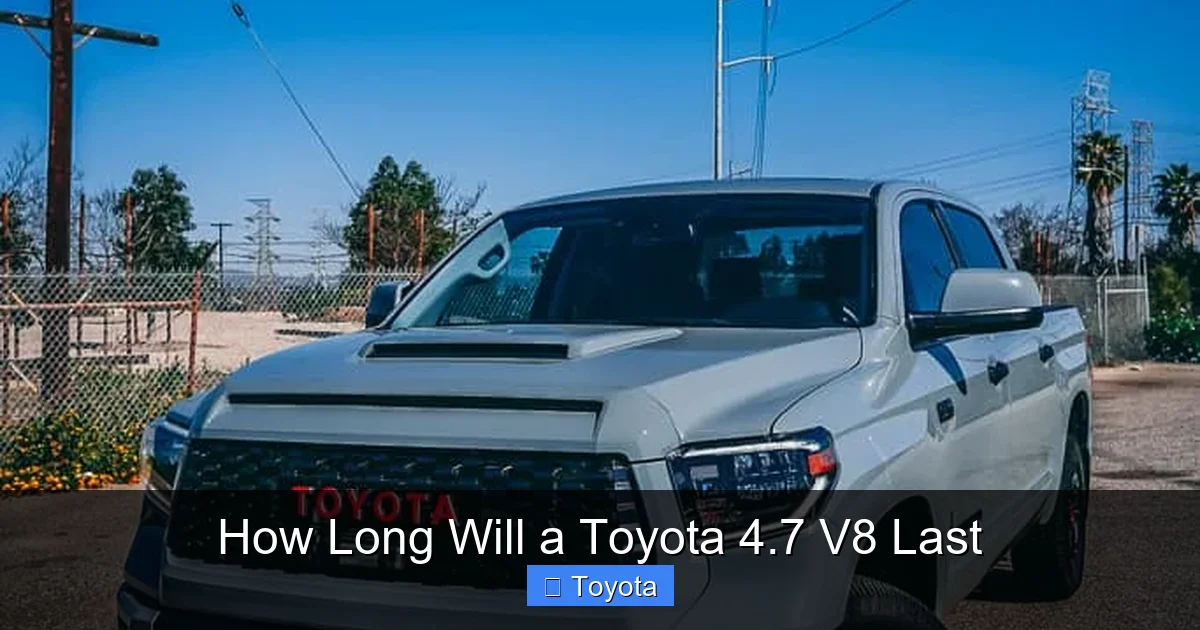
Visual guide about How Long Will a Toyota 4.7 V8 Last
Image source: charlesandhudson.com
Nothing speaks louder than real-world results. Across forums, YouTube channels, and owner testimonials, stories of 4.7 V8 engines hitting incredible mileages are common. Take, for example, a 2001 Toyota Land Cruiser owned by a mechanic in Colorado. After 327,000 miles, the engine still ran smoothly, with only routine maintenance and a single timing belt replacement at 200,000 miles. The owner reported no major internal issues—just regular oil changes, coolant flushes, and attention to the VVT-i system.
Another example comes from a fleet operator in Texas who used a 2005 Tundra with the 4.7 V8 for long-haul deliveries. After 290,000 miles, the truck was still on its original engine, transmission, and differentials. The only major repair was replacing the water pump and radiator at 240,000 miles—both common wear items, not engine failures.
Even in harsh environments, the 4.7 V8 holds up. Overlanders in Alaska and desert adventurers in Nevada have documented Land Cruisers with 300,000+ miles still traversing rugged terrain. These aren’t garage queens—they’re working vehicles that earn their keep. And when they do need work, parts are widely available and repairs are straightforward, thanks to the engine’s simple, accessible design.
Why the 4.7 V8 Outlasts Many Modern Engines
Modern engines are packed with technology—turbocharging, direct injection, variable valve timing, and complex electronics. While these features improve efficiency and performance, they also introduce more points of failure. The Toyota 4.7 V8, by contrast, is refreshingly straightforward. It uses port fuel injection (not direct injection), which reduces carbon buildup on intake valves. It has a traditional timing belt system that, while requiring replacement every 90,000–100,000 miles, is less prone to sudden failure than some timing chains.
Additionally, the engine’s low specific output—around 235–310 horsepower depending on the model year—means it’s not being pushed to its limits. Toyota tuned it for torque and smoothness, not peak horsepower. This conservative approach reduces heat, wear, and stress on internal components like pistons, rings, and bearings.
Another factor is the engine’s oiling system. The 4.7 V8 has a robust oil pump and generous oil capacity (about 6.5 quarts), which helps keep components well-lubricated, even under heavy loads. Combined with Toyota’s reputation for quality control, it’s no surprise that these engines often outlive the vehicles they’re in.
Maintenance Matters: How to Maximize the Life of Your 4.7 V8
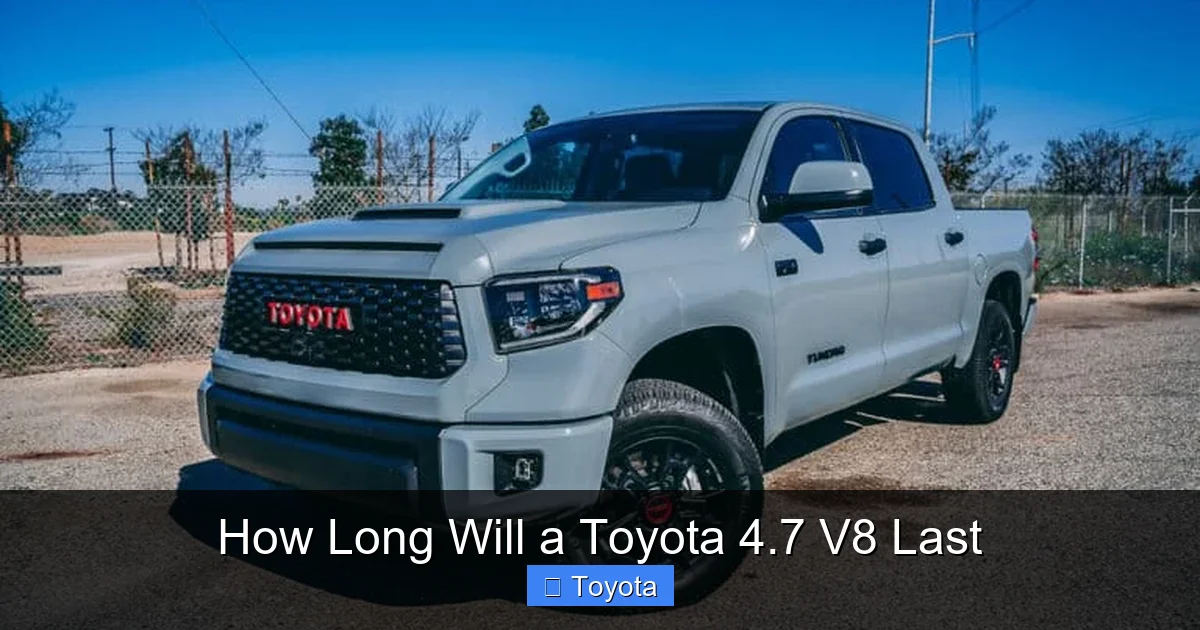
Visual guide about How Long Will a Toyota 4.7 V8 Last
Image source: charlesandhudson.com
While the 4.7 V8 is inherently durable, it’s not maintenance-free. Like any engine, it thrives on consistent care. Skipping oil changes or ignoring warning signs can shorten its lifespan significantly. But follow a solid maintenance schedule, and you’ll be rewarded with decades of reliable service.
Oil Changes: The Lifeline of Your Engine
Oil is the lifeblood of any engine, and the 4.7 V8 is no exception. Toyota recommends changing the oil every 5,000 miles under normal driving conditions, and every 3,000 miles under severe conditions—like towing, off-roading, or frequent short trips. Using high-quality synthetic or conventional oil (5W-30 is standard) helps protect internal components and maintain proper viscosity.
One common mistake owners make is using the wrong oil filter. Stick with OEM Toyota filters or reputable aftermarket brands like WIX or Mobil 1. Cheap filters can fail prematurely, leading to oil starvation and engine damage. Also, always replace the oil drain plug gasket to prevent leaks.
Timing Belt Replacement: Don’t Skip This Critical Service
The 4.7 V8 uses a timing belt, not a chain. While belts are quieter and cheaper to produce, they wear out and must be replaced. Toyota recommends replacing the timing belt every 90,000 to 100,000 miles. Ignoring this service is a gamble—if the belt breaks, the pistons can collide with the valves, causing catastrophic engine damage.
When replacing the timing belt, it’s wise to also replace the water pump, tensioner, and idler pulleys. These components wear over time, and replacing them all at once saves labor costs and prevents future breakdowns. A full timing belt service typically costs $800–$1,200 at a reputable shop, but it’s a small price to pay for peace of mind.
Coolant and Radiator Care
Overheating is one of the biggest threats to any engine, and the 4.7 V8 is no exception. The cooling system must be maintained to prevent corrosion, leaks, and overheating. Toyota recommends flushing the coolant every 60,000 miles or every 5 years, whichever comes first.
Use only Toyota Super Long Life Coolant (pink or red) or an equivalent HOAT (Hybrid Organic Acid Technology) coolant. Mixing coolants can cause chemical reactions that damage the radiator and water pump. Also, inspect the radiator for leaks, cracks, or debris buildup, especially if you drive off-road or in dusty conditions.
Air Filter and Fuel System Maintenance
A clean air filter ensures proper airflow and fuel efficiency. Replace it every 15,000–30,000 miles, or more often if you drive in dusty environments. A clogged filter forces the engine to work harder, reducing performance and increasing fuel consumption.
The fuel system should also be maintained. Use quality fuel and consider adding a fuel system cleaner every 10,000 miles to remove deposits from injectors and intake valves. While the 4.7 V8 uses port injection (which is less prone to carbon buildup than direct injection), keeping the system clean helps maintain smooth idle and throttle response.
VVT-i System: Keep It Clean and Functional
The 4.7 V8 features Toyota’s Variable Valve Timing with intelligence (VVT-i), which improves efficiency and performance. However, the VVT-i solenoids can become clogged with debris over time, leading to rough idle, reduced power, or check engine lights.
If you notice a P1349 or P1351 code (common VVT-i-related codes), don’t panic. Often, the issue can be resolved by cleaning the solenoids with brake cleaner or replacing them with OEM parts. Regular oil changes help prevent sludge buildup, which is the main cause of VVT-i problems.
Common Problems and How to Address Them
Visual guide about How Long Will a Toyota 4.7 V8 Last
Image source: imageapisecure.autoit.dk
No engine is perfect, and the 4.7 V8 has a few known issues. But the good news? Most are manageable and don’t require engine replacement.
Oil Leaks: A Common but Fixable Issue
Oil leaks are the most frequent complaint among 4.7 V8 owners. The most common sources are the valve cover gaskets, camshaft seals, and rear main seal. Over time, these rubber components harden and crack, allowing oil to seep out.
While leaks don’t immediately harm the engine, they can lead to low oil levels and potential damage if ignored. Replacing gaskets and seals is a straightforward job for a skilled mechanic, typically costing $300–$600 depending on the location. Using high-quality gaskets and proper torque specs ensures a long-lasting repair.
Water Pump Failure
The water pump is driven by the timing belt and often replaced during timing belt service. However, if it fails prematurely, it can cause overheating and engine damage. Symptoms include coolant leaks, whining noises, or steam from the front of the engine.
Replacing the water pump is best done during a timing belt job, but if it fails early, it can be replaced separately. Always use an OEM or high-quality aftermarket pump and replace the gasket to prevent leaks.
Exhaust Manifold Cracks
Some 4.7 V8 engines, particularly in early Tundras and Sequoias, developed cracks in the exhaust manifolds. This can cause loud ticking noises, especially when cold, and may trigger a check engine light due to exhaust leaks.
Replacing the manifolds with upgraded aftermarket versions (like those from Doug Thorley or PPE) can resolve the issue and improve exhaust flow. This is a more involved repair, often requiring removal of the intake manifold, but it’s a known fix with plenty of DIY guides available.
Throttle Body and MAF Sensor Issues
Rough idle, hesitation, or poor fuel economy can sometimes be traced to a dirty throttle body or malfunctioning mass airflow (MAF) sensor. Cleaning the throttle body with throttle cleaner and replacing the MAF sensor (if faulty) can restore smooth operation.
These are inexpensive fixes—throttle body cleaning costs little, and MAF sensors run $100–$200 for OEM parts. Regular maintenance helps prevent these issues from arising.
Is the Toyota 4.7 V8 Right for You?
If you’re looking for a reliable, long-lasting engine that can handle tough jobs and high mileage, the 4.7 V8 is an excellent choice. It’s not the most fuel-efficient or powerful engine on the market, but it excels in durability and simplicity.
This engine is ideal for:
– Off-road enthusiasts who need a tough, reliable powerplant
– Towing and hauling, thanks to its strong low-end torque
– Long-distance drivers who value dependability over speed
– Buyers seeking a vehicle with strong resale value and low long-term costs
However, if you prioritize fuel economy or cutting-edge performance, a newer turbocharged or hybrid engine might be a better fit. But for sheer longevity and peace of mind, the 4.7 V8 is hard to beat.
Conclusion: A Legendary Engine Built to Last
So, how long will a Toyota 4.7 V8 last? The answer is clear: with proper maintenance, it can easily reach 250,000 to 300,000 miles—and often much more. Its overbuilt design, conservative tuning, and proven track record make it one of the most reliable V8 engines ever produced.
From the deserts of Nevada to the mountains of Colorado, the 4.7 V8 has earned its reputation as a workhorse that keeps going. Whether you’re buying a used Land Cruiser or maintaining your current Tundra, understanding how to care for this engine will ensure it serves you well for decades.
Don’t let its age fool you. The 2UZ-FE isn’t just a relic of the past—it’s a testament to Toyota’s commitment to quality and durability. And as long as you give it the care it deserves, it will keep running strong, mile after mile.
Frequently Asked Questions
How many miles can a Toyota 4.7 V8 engine last?
A well-maintained Toyota 4.7 V8 can last 250,000 to 300,000 miles or more. Many owners report reaching 350,000 miles with only routine maintenance and minor repairs.
What vehicles use the Toyota 4.7 V8 engine?
The 4.7L V8 (2UZ-FE) is found in the Toyota Land Cruiser, Tundra, Sequoia, and Lexus LX 470, produced from 1998 to 2009.
Is the Toyota 4.7 V8 reliable?
Yes, the 4.7 V8 is highly reliable due to its simple design, cast-iron block, and conservative power output. It’s known for long-term durability when properly maintained.
What maintenance does a 4.7 V8 need?
Key maintenance includes oil changes every 3,000–5,000 miles, timing belt replacement every 90,000–100,000 miles, coolant flushes, and attention to the VVT-i system and gaskets.
Can a 4.7 V8 engine be rebuilt?
Absolutely. The 4.7 V8 is commonly rebuilt due to its strong internal components. Rebuilds can restore performance and extend engine life beyond 400,000 miles.
Are parts for the Toyota 4.7 V8 still available?
Yes, parts are widely available through Toyota dealers, aftermarket suppliers, and online retailers, making repairs and maintenance affordable and accessible.
