How Long Should You Let Car Run After Jumping Battery
After jump-starting a car battery, it’s essential to let the engine run long enough to allow the alternator to recharge the battery. Most experts recommend driving or idling for at least 15–30 minutes, but the exact time depends on your vehicle, battery condition, and driving conditions.
This is a comprehensive guide about how long should you let car run after jumping battery.
In This Article
- 1 Key Takeaways
- 2 How Long Should You Let Car Run After Jumping Battery
- 3 Why Recharging Matters After a Jump-Start
- 4 How Long Should You Let the Engine Run?
- 5 Idling vs. Driving: Which Is Better?
- 6 Signs Your Battery Isn’t Holding a Charge
- 7 Best Practices for Jump-Starting and Recharging
- 8 Conclusion
- 9 Frequently Asked Questions
- 9.1 How long should I let my car run after jumping the battery?
- 9.2 Can I just idle my car instead of driving?
- 9.3 Will my car die again if I turn it off too soon?
- 9.4 How do I know if my battery is too old to hold a charge?
- 9.5 Is it safe to jump-start a car in the rain?
- 9.6 Should I use a battery charger instead of idling?
Key Takeaways
- Let your car run for 15–30 minutes after a jump-start: This gives the alternator enough time to restore charge to the battery.
- Driving is better than idling: Moving the vehicle increases alternator output, leading to faster and more effective recharging.
- Older or damaged batteries may need more time: If your battery is weak or near the end of its life, it may take longer to recharge—or may not hold a charge at all.
- Avoid turning off the engine too soon: Shutting off the car before the battery is sufficiently recharged can lead to another dead battery.
- Use a battery charger if possible: For a full recharge, especially after a deep discharge, a dedicated battery charger is more reliable than idling.
- Check your battery and alternator regularly: Prevent future jump-starts by maintaining your electrical system and replacing old batteries proactively.
- Keep jumper cables or a portable jump starter handy: Being prepared can save you time and stress during emergencies.
[FEATURED_IMAGE_PLACEHOLDER]
How Long Should You Let Car Run After Jumping Battery
We’ve all been there—running late, keys in hand, only to turn the ignition and hear that dreaded clicking sound. Your car battery is dead, and you need a jump-start. You call a friend, flag down a kind stranger, or use your portable jump starter, and within minutes, your engine roars back to life. But now comes the real question: how long should you let your car run after jumping the battery?
It’s a common dilemma, and one that many drivers don’t think about until they’re stranded again just a few hours later. The truth is, simply getting your car started isn’t enough. If you don’t allow enough time for the battery to recharge, you could be setting yourself up for another failure. The alternator needs time to restore the energy lost during the jump-start, and cutting that process short can leave you right back where you started.
In this guide, we’ll walk you through everything you need to know about post-jump battery care. From how long to let your car run to why driving is better than idling, we’ll cover the science, the best practices, and the common mistakes to avoid. Whether you’re a new driver or a seasoned road warrior, understanding this process can save you time, money, and a whole lot of frustration.
Why Recharging Matters After a Jump-Start
When your car battery dies, it’s usually because it no longer has enough stored energy to power the starter motor. Jump-starting gives it a temporary boost from an external power source—like another car’s battery or a portable jump starter. But that boost is just a jumpstart, not a full recovery. The battery is still depleted, and unless it’s recharged, it won’t be able to start your car the next time you need it.
This is where the alternator comes in. Once your engine is running, the alternator takes over, generating electricity to power your car’s electrical systems and recharge the battery. Think of the alternator as your car’s built-in power plant. It converts mechanical energy from the engine into electrical energy, which is then stored in the battery for later use.
But here’s the catch: the alternator doesn’t instantly restore a dead battery to full capacity. It takes time. How much time depends on several factors, including the battery’s age, its state of charge, and how much power your car’s electrical systems are drawing while running.
For example, if you jump-start your car and immediately turn on the heater, headlights, radio, and defroster, you’re putting extra demand on the alternator. That means less power is available to recharge the battery. On the other hand, if you keep electrical loads low and drive steadily, the alternator can focus more on restoring the battery’s charge.
The Role of the Alternator
The alternator is a critical component in your car’s electrical system. It’s driven by a belt connected to the engine, so it only works when the engine is running. As the engine spins, the alternator generates alternating current (AC), which is then converted to direct current (DC) to match the battery’s requirements.
A healthy alternator can produce between 13.5 and 14.5 volts when the engine is running. This voltage is slightly higher than the battery’s resting voltage (around 12.6 volts), which allows current to flow into the battery and recharge it.
However, if the alternator is weak or failing, it may not produce enough voltage to recharge the battery effectively. This is why some cars can be jump-started but still die shortly after—because the alternator isn’t doing its job.
Battery Capacity and Depth of Discharge
Another factor that affects recharging time is the battery’s capacity and how deeply it was discharged. Car batteries are designed to deliver short bursts of high current (to start the engine), but they’re not meant to be fully drained like a phone battery.
When a battery is deeply discharged—say, because you left the headlights on overnight—it loses a significant amount of its stored energy. Recharging it fully can take much longer than if it had only been partially drained.
For instance, a battery that’s only 50% discharged might regain enough charge in 15 minutes of driving to start the car again. But a battery that’s 90% discharged could need 30 minutes or more to reach a usable state.
How Long Should You Let the Engine Run?
So, how long should you let your car run after jumping the battery? The general rule of thumb is 15 to 30 minutes of continuous engine operation. But this isn’t a one-size-fits-all answer. The ideal time depends on several variables, including your driving habits, the condition of your battery, and the electrical load on your vehicle.
Let’s break it down.
15 Minutes: The Minimum Recommendation
Most automotive experts agree that 15 minutes is the bare minimum you should let your car run after a jump-start. This gives the alternator enough time to begin restoring charge to the battery. However, this assumes ideal conditions: a healthy battery, a functioning alternator, and minimal electrical load.
If you’re just idling in your driveway with the radio off and lights dimmed, 15 minutes might be enough to get you through a short trip. But if you’re planning to drive somewhere and then shut off the engine, you’re taking a risk. The battery may not have regained enough charge to restart the car.
30 Minutes: The Safer Bet
For most drivers, 30 minutes of running time is a safer and more reliable target. This duration allows the alternator to deliver a meaningful charge, especially if the battery was deeply discharged. It also gives the system time to stabilize, reducing the chance of another failure.
If possible, try to drive during this time rather than just idling. Driving increases engine RPMs, which in turn increases alternator output. This means more power is generated and sent to the battery.
When to Go Beyond 30 Minutes
There are situations where even 30 minutes may not be enough. For example:
– Your battery is old (typically over 3–5 years).
– The battery was completely dead (e.g., left in a cold garage overnight).
– You’re in cold weather, which reduces battery efficiency.
– Your car has high electrical demands (e.g., aftermarket sound system, heated seats, etc.).
In these cases, you may need to let the car run for 45 minutes to an hour—or better yet, use a battery charger.
Idling vs. Driving: Which Is Better?
One of the most common questions after a jump-start is whether it’s better to let the car idle or to drive it. The short answer: driving is almost always better than idling.
Here’s why.
Alternator Output at Idle
When your car is idling, the engine runs at a low RPM (typically 600–1000 RPM). At this speed, the alternator produces less electricity. While it’s still generating enough power to run the car’s basic systems, it’s not working at full capacity.
This means the battery recharges more slowly when the car is idling. In fact, some studies suggest that idling for 30 minutes may only restore 10–20% of a dead battery’s charge.
Alternator Output While Driving
When you drive, especially at higher speeds, the engine RPM increases. This spins the alternator faster, boosting its electrical output. At highway speeds (around 2000–3000 RPM), the alternator can produce significantly more power—enough to recharge the battery much faster.
For example, a 20-minute drive at moderate speeds may recharge the battery more effectively than 45 minutes of idling.
Practical Example
Imagine you jump-start your car in a parking lot and need to get home, which is 10 miles away. If you idle for 30 minutes and then drive home, you’re only getting a partial recharge during the idle time. But if you drive home immediately after the jump-start, the entire 20–30 minute trip contributes to recharging the battery.
In this scenario, driving is clearly the better option.
When Idling Might Be Necessary
There are times when idling is your only choice—like if you’re stuck in traffic or waiting for help. In those cases, try to minimize electrical load. Turn off the radio, heater, and lights if possible. This frees up more power for the alternator to focus on recharging the battery.
Also, avoid turning the engine off and on repeatedly. Each time you restart, you drain the battery again, undoing some of the progress made during recharging.
Signs Your Battery Isn’t Holding a Charge
Even after letting your car run for 30 minutes or more, you might still experience issues. If your car dies shortly after being turned off, or if it struggles to start the next time, your battery may not be holding a charge. This could indicate a deeper problem.
Common Symptoms of a Failing Battery
– Slow engine crank when starting (the engine turns over slowly).
– Dim headlights or interior lights.
– Electrical components (like power windows or radio) working sluggishly.
– The battery warning light on your dashboard.
– A battery that dies frequently, even after being recharged.
Testing Your Battery
If you suspect your battery is failing, it’s worth getting it tested. Most auto parts stores offer free battery and charging system tests. They’ll check:
– The battery’s voltage and cold cranking amps (CCA).
– The alternator’s output.
– Whether the battery can hold a charge under load.
A healthy battery should read around 12.6 volts when the car is off and 13.7–14.7 volts when the engine is running.
When to Replace the Battery
Car batteries typically last 3–5 years, depending on climate, driving habits, and maintenance. If your battery is older than 4 years and you’ve had to jump-start it, it’s probably time for a replacement.
Even if it seems to work after a jump, an aging battery is more likely to fail again—especially in extreme temperatures.
Best Practices for Jump-Starting and Recharging
To get the most out of your jump-start and avoid future problems, follow these best practices.
Use Proper Jump-Starting Technique
Always connect the jumper cables in the correct order:
1. Connect the red (positive) clamp to the dead battery’s positive terminal.
2. Connect the other red clamp to the good battery’s positive terminal.
3. Connect the black (negative) clamp to the good battery’s negative terminal.
4. Connect the other black clamp to an unpainted metal surface on the dead car (not the battery)—this grounds the circuit and reduces sparking.
Start the working car, let it run for a few minutes, then try starting the dead car. Once it’s running, disconnect the cables in reverse order.
Avoid Short Trips After a Jump
If you’ve just jump-started your car, avoid making short trips where you drive for only a few minutes and then turn off the engine. These brief runs don’t give the alternator enough time to recharge the battery.
Instead, plan a longer drive—20 minutes or more—to ensure a proper recharge.
Consider a Portable Battery Charger
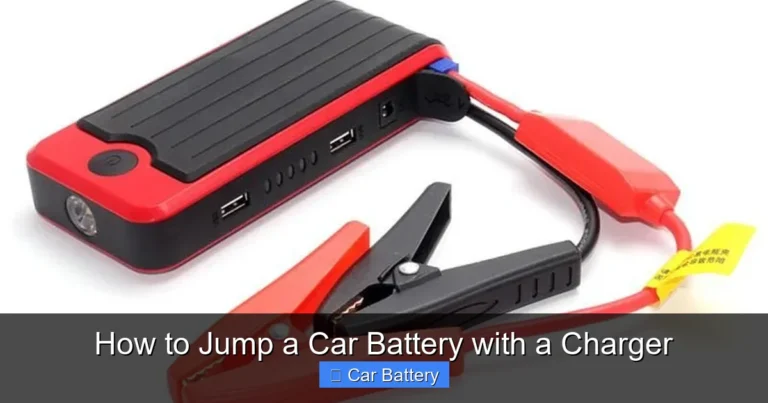
For a more reliable recharge, especially after a deep discharge, use a dedicated battery charger. These devices plug into a wall outlet and deliver a slow, steady charge to the battery over several hours.
Unlike idling or driving, a charger can fully restore a dead battery to 100% capacity. It’s especially useful if you don’t have time to drive for an extended period.
Maintain Your Battery
Regular maintenance can prevent jump-starts altogether. Keep the battery terminals clean and free of corrosion. Check the battery’s water level (if it’s a serviceable type) and ensure the hold-down clamp is secure.
Also, avoid leaving lights or accessories on when the engine is off. Even small drains can kill a battery over time.
Conclusion
Jump-starting a dead battery is a quick fix, but it’s not the end of the story. To avoid being stranded again, you need to let your car run long enough for the alternator to recharge the battery. While 15 minutes is the minimum, 30 minutes—or better yet, a 20–30 minute drive—is the ideal target.
Driving is more effective than idling because it increases alternator output. And if your battery is old or frequently dying, it may be time for a replacement. Regular maintenance, proper jump-starting technique, and using a battery charger when possible can all help keep your car reliable and ready to go.
Remember: a jump-start gets you moving, but recharging keeps you moving. Take the time to do it right, and you’ll save yourself from future headaches on the road.
Frequently Asked Questions
How long should I let my car run after jumping the battery?
You should let your car run for at least 15–30 minutes after a jump-start. This gives the alternator enough time to recharge the battery. Driving is better than idling because it increases alternator output.
Can I just idle my car instead of driving?
Idling is better than nothing, but it’s less effective than driving. At idle, the alternator produces less power, so the battery recharges more slowly. A 20-minute drive is usually more effective than 30 minutes of idling.
Will my car die again if I turn it off too soon?
Yes, if you turn off the engine before the battery is sufficiently recharged, it may not have enough power to restart. This is especially true if the battery was deeply discharged or is old.
How do I know if my battery is too old to hold a charge?
Signs include slow engine cranking, dim lights, frequent jump-starts, and a battery older than 4–5 years. Have it tested at an auto parts store to confirm.
Is it safe to jump-start a car in the rain?
Yes, it’s generally safe to jump-start a car in the rain as long as you avoid direct contact with water and metal parts. Keep the jumper cables away from moving engine components.
Should I use a battery charger instead of idling?
Yes, a battery charger is the most effective way to fully recharge a dead battery. It delivers a steady charge over several hours and is ideal when you don’t have time to drive.