
Best Car Jump Starter Battery

Finding the best car jump starter battery can save you from unexpected breakdowns and costly towing fees. These portable devices pack enough power to revive dead batteries in seconds, often doubling as USB chargers and emergency flashlights. With so many options on the market, choosing the right one depends on your vehicle type, climate, and safety features.
Key Takeaways
- Power Output Matters: Look for jump starters with at least 1000 peak amps for most cars; larger vehicles may need 2000+ amps.
- Safety Features Are Essential: Overcharge protection, reverse polarity alerts, and spark-proof clamps prevent accidents during use.
- Portability and Size Count: Compact designs with built-in handles or carrying cases make storage and transport easier.
- Multi-Functionality Adds Value: Many top models include USB ports, LED lights, and even air compressors for added convenience.
- Battery Type Affects Performance: Lithium-ion batteries offer lighter weight and faster recharge times compared to traditional lead-acid units.
- Check Compatibility: Ensure the jump starter works with your engine size—gas or diesel—and battery voltage (12V or 24V).
- Read Real User Reviews: Professional ratings are helpful, but customer feedback reveals real-world reliability and durability.
📑 Table of Contents
Why Every Driver Needs a Car Jump Starter Battery
Picture this: It’s a cold winter morning, you’re running late for work, and your car won’t start. The battery is dead—again. You call a tow truck, wait an hour in the freezing rain, and pay $100 just to get back on the road. Sound familiar? Now imagine having a small device in your glove box that could’ve solved the problem in under two minutes—no help needed. That’s the magic of a quality car jump starter battery.
Unlike traditional jumper cables that require another vehicle and a second driver, modern jump starters are self-contained power packs. They store electrical energy and deliver it directly to your car’s battery through heavy-duty clamps. Think of them as a portable lifeline for your vehicle. Whether you’re dealing with extreme temperatures, an old battery, or accidentally leaving your lights on overnight, a jump starter gives you independence and peace of mind.
But not all jump starters are created equal. Some are too weak for larger engines, others lack safety mechanisms, and many fail when you need them most. That’s why choosing the best car jump starter battery isn’t just about convenience—it’s about reliability, safety, and long-term value. In this guide, we’ll walk you through everything you need to know to pick the right one for your needs.
How Car Jump Starters Work

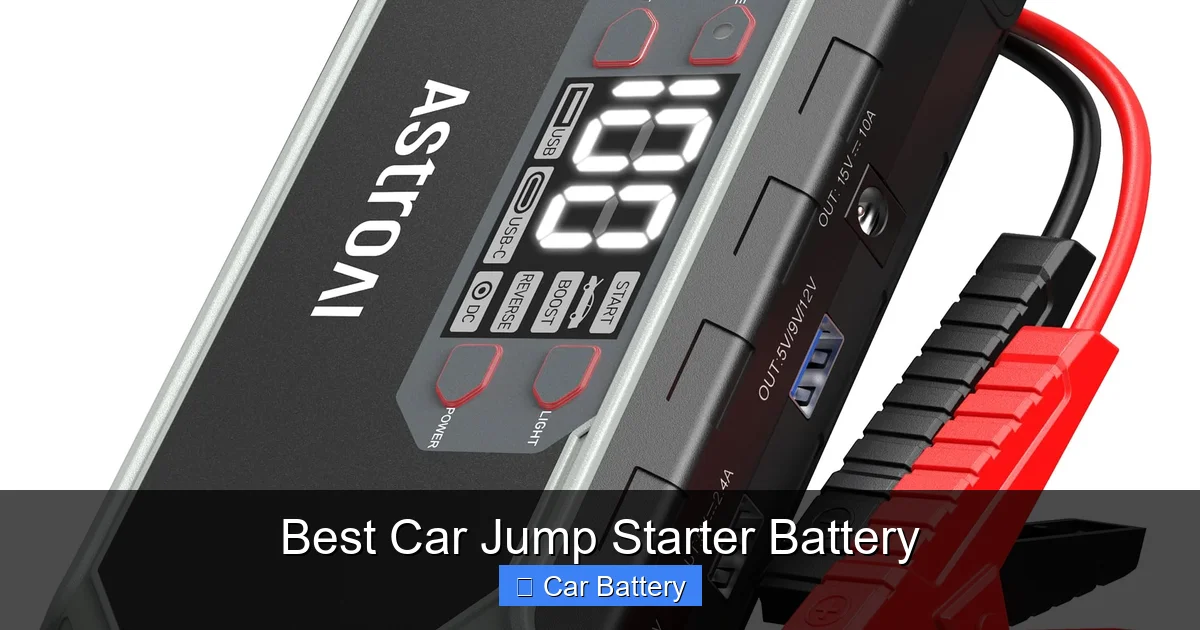
Visual guide about Best Car Jump Starter Battery
Image source: m.media-amazon.com
At their core, jump starters are rechargeable batteries designed to deliver a high burst of current to your vehicle’s dead battery. When your car won’t start, it’s usually because the battery doesn’t have enough charge to turn the starter motor. A jump starter steps in like a temporary booster, giving your battery the jolt it needs to restart the engine.
Most modern jump starters use lithium-ion or lithium polymer batteries. These are lighter, more compact, and recharge faster than older lead-acid models. Once charged—either via a wall outlet, car charger, or even solar panel in some advanced units—they store enough energy to jump-start a typical sedan multiple times before needing a recharge.
The process is simple:
1. Turn off your vehicle and the jump starter.
2. Connect the red clamp to the positive (+) terminal and the black clamp to the negative (-) terminal or a grounded metal surface.
3. Turn on the jump starter and wait a few seconds for it to detect the connection.
4. Start your car. If it doesn’t start immediately, wait 30–60 seconds and try again.
5. Once the engine is running, disconnect the clamps in reverse order.
It sounds straightforward, but safety is critical. Reverse polarity—connecting the clamps incorrectly—can damage your car’s electronics or cause sparks, fires, or even explosions. That’s why the best car jump starter batteries come with built-in safeguards like automatic shutoff, reverse polarity alarms, and spark-proof technology.
Understanding Peak Amps vs. Cranking Amps
When shopping for a jump starter, you’ll see terms like “peak amps” and “cranking amps.” Don’t let the jargon confuse you—here’s what they mean:
– **Peak amps** refer to the maximum current the device can deliver in a short burst (usually under a second). This is what gets your engine turning over. For most compact and midsize cars, 1000–1500 peak amps are sufficient. SUVs, trucks, and diesel engines may require 2000+ peak amps.
– **Cranking amps (CA)** and **cold cranking amps (CCA)** are measures of a battery’s ability to start an engine at specific temperatures. While these matter more for your car’s main battery, they help you understand how much power your jump starter should deliver. A jump starter with 800–1000 CA is typically enough for everyday use.
Always match the jump starter’s output to your vehicle’s requirements. Overestimating isn’t harmful, but underestimating can leave you stranded.
Top Features to Look for in the Best Car Jump Starter Battery
Visual guide about Best Car Jump Starter Battery
Image source: m.media-amazon.com
With dozens of models on the market, it’s easy to feel overwhelmed. To simplify your search, focus on these key features that separate the best from the rest.
Safety Mechanisms
Safety should be your top priority. The last thing you want is a device that shocks you, sparks near your battery, or fries your car’s computer. Look for jump starters with:
– Reverse polarity protection (alerts you if clamps are connected wrong)
– Overcurrent and short-circuit protection
– Spark-proof clamps and automatic shutoff
– Temperature sensors to prevent overheating
Brands like NOCO, Tacklife, and GOOLOO consistently include these features in their premium models.
Battery Capacity and Recharge Time
Capacity is measured in milliampere-hours (mAh). A higher mAh means more stored energy and more jump attempts per charge. For example:
– 10,000–15,000 mAh: Suitable for small to midsize cars (3–4 jumps per charge)
– 20,000+ mAh: Ideal for trucks, SUVs, or frequent use
Recharge time varies. Most lithium-ion jump starters recharge fully in 2–4 hours via USB-C or wall adapter. Some even support pass-through charging, meaning you can charge your phone while the unit itself is charging.
Portability and Design
You’ll want a jump starter that fits in your trunk, glove box, or under a seat. Compact models weigh between 1–3 pounds and often include built-in handles or carrying cases. Avoid bulky lead-acid units unless you need extreme power for commercial vehicles.
Also consider the clamp design. Spring-loaded, insulated clamps are easier to handle and reduce the risk of slipping.
Additional Functions
The best car jump starter batteries do more than just jump-start your car. Many include:
– **USB ports** (USB-A and USB-C) to charge phones, tablets, or GPS devices
– **LED flashlights** with strobe and SOS modes for emergencies
– **Digital displays** showing battery level, voltage, and error codes
– **Air compressors** (in combo units) to inflate tires or sports equipment
These extras turn a simple tool into a full roadside emergency kit.
Durability and Warranty
Look for water-resistant or IP-rated casings (like IP65) if you live in rainy or snowy areas. A sturdy build ensures the unit survives drops, vibrations, and temperature swings.
Most reputable brands offer 1–3 year warranties. Longer warranties often indicate higher confidence in product quality.
Best Car Jump Starter Batteries in 2024
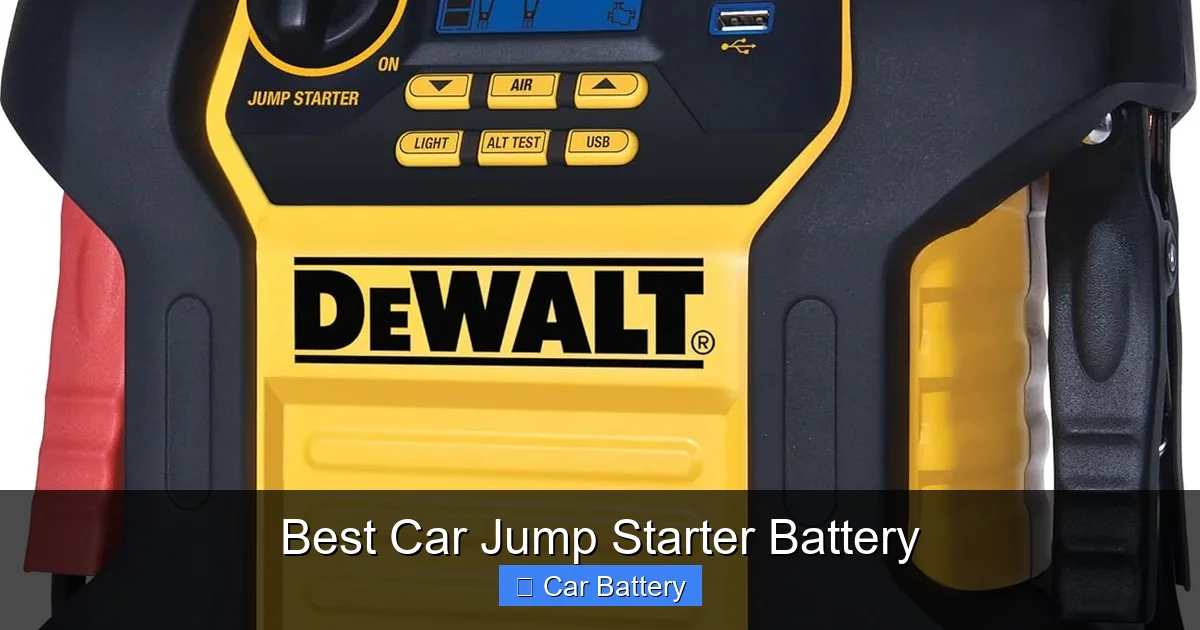
Visual guide about Best Car Jump Starter Battery
Image source: images-na.ssl-images-amazon.com
Based on performance, safety, and user feedback, here are five standout models that represent the best car jump starter batteries available today.
1. NOCO Boost Plus GB40
The NOCO GB40 is a favorite among drivers for its balance of power, safety, and portability. With 1000 peak amps, it can jump-start cars, motorcycles, boats, and even small trucks. It features ultra-safe technology with spark-proof clamps and reverse polarity protection. The built-in LED flashlight has seven modes, including SOS and emergency strobe. At just 2.4 pounds, it’s easy to store and comes with a 1-year warranty.
2. Tacklife T8 Max
For those who want extra power, the Tacklife T8 Max delivers 2000 peak amps—enough for large SUVs and diesel engines. It includes a digital display showing real-time voltage and battery status. The dual USB ports (including USB-C) charge devices quickly, and the 12,000mAh battery provides up to 30 jump starts. Its rugged design and IP65 rating make it ideal for outdoor adventures.
3. GOOLOO GP4000
This budget-friendly option doesn’t skimp on features. The GP4000 offers 4000 peak amps, making it one of the most powerful portable jump starters under $100. It supports vehicles up to 10.0L gas and 8.0L diesel engines. The bright LED screen shows battery level and alerts for incorrect connections. Plus, it doubles as a power bank with fast-charging USB ports.
4. Audew 2000A Jump Starter
If you drive a heavy-duty vehicle, the Audew 2000A is built for you. With 2000 peak amps and a massive 20,000mAh battery, it handles trucks, RVs, and construction equipment. It includes a built-in air compressor with a 150 PSI limit—perfect for inflating tires on the go. The large LCD screen and multiple safety protections make it a reliable choice for professionals and off-roaders.
5. Anker Roav Jump Starter Pro
Known for its sleek design and smart features, the Anker Roav combines style with substance. It delivers 1500 peak amps and includes a 12,800mAh battery. The standout feature? A built-in app that monitors battery health, jump count, and charging status via Bluetooth. It also has a powerful LED light and dual USB-C ports. Ideal for tech-savvy drivers who value connectivity.
How to Use a Car Jump Starter Safely
Using a jump starter correctly ensures both your safety and the longevity of your vehicle’s electrical system. Follow these steps every time:
1. **Park Safely:** Pull over to a safe location away from traffic. Turn off the ignition and engage the parking brake.
2. **Inspect the Battery:** Look for cracks, leaks, or swelling. If the battery is damaged, do not attempt to jump-start—call a professional.
3. **Charge the Jump Starter:** Ensure your jump starter has at least 50% charge before use. A fully depleted unit won’t deliver enough power.
4. **Connect the Clamps:** Attach the red clamp to the positive terminal (marked “+” or “POS”) and the black clamp to the negative terminal or a clean, unpainted metal surface on the engine block (not the battery itself).
5. **Power On:** Turn on the jump starter and wait for the indicator light to confirm a proper connection.
6. **Start the Engine:** Turn the key and attempt to start the car. If it doesn’t start within 3–5 seconds, wait 60 seconds before trying again.
7. **Disconnect Carefully:** Once the engine is running, turn off the jump starter and remove the clamps in reverse order (black first, then red).
8. **Drive or Recharge:** Drive the car for at least 15–20 minutes to allow the alternator to recharge the battery. Alternatively, plug in the jump starter to recharge it for next time.
Common Mistakes to Avoid
– **Connecting Clamps Backwards:** This can cause sparks, damage electronics, or even explode the battery. Always double-check polarity.
– **Using on a Swollen Battery:** A bulging battery indicates internal damage. Jump-starting it is extremely dangerous.
– **Leaving the Unit in Extreme Temperatures:** Store your jump starter in a cool, dry place. Extreme heat or cold reduces battery life.
– **Ignoring Maintenance:** Recharge your jump starter every 3–6 months, even if unused, to maintain battery health.
Maintenance and Storage Tips
A well-maintained jump starter lasts longer and performs better when you need it most. Here’s how to keep yours in top shape:
– **Recharge Regularly:** Even if you haven’t used it, plug in your jump starter every few months to prevent deep discharge.
– **Clean the Clamps:** Wipe the metal contacts with a dry cloth to remove dirt and corrosion.
– **Check the Display:** If your model has a screen, monitor the battery level and error messages.
– **Store Properly:** Keep it in a protective case or pouch, away from moisture and direct sunlight.
– **Update Firmware (if applicable):** Some smart jump starters allow firmware updates via app—check the manufacturer’s website periodically.
By treating your jump starter like any other essential tool, you’ll ensure it’s ready when disaster strikes.
Conclusion: Invest in Peace of Mind
The best car jump starter battery isn’t just a gadget—it’s a smart investment in your safety, time, and wallet. For less than the cost of a single tow truck call, you can own a device that saves you from countless stressful situations. Whether you’re commuting daily, road-tripping across the country, or simply want to be prepared, a reliable jump starter belongs in every vehicle.
When choosing one, prioritize safety, power, and usability. Read reviews, compare specs, and don’t be swayed by flashy ads. A quality jump starter from a trusted brand will serve you well for years. And remember: the best time to buy one is before you need it.
So go ahead—add that compact powerhouse to your emergency kit today. Your future self will thank you the next time your car won’t start on a dark, rainy night.
Frequently Asked Questions
Can a jump starter damage my car’s electronics?
No, if used correctly. Modern jump starters with safety features like reverse polarity protection and spark-proof clamps are designed to protect your vehicle’s electrical system. Always follow the manufacturer’s instructions.
How many times can a jump starter revive a dead battery?
It depends on the capacity and your vehicle’s size. A 10,000mAh unit can typically jump a compact car 3–5 times on a full charge. Larger vehicles may only get 1–2 jumps.
Do I need a jump starter if my car has a new battery?
Yes. Even new batteries can die from leaving lights on, extreme weather, or parasitic drains. A jump starter ensures you’re never stranded—no matter the battery age.
Can I use a jump starter in the rain or snow?
Yes, but with caution. Most quality jump starters are water-resistant, but avoid submerging them. Keep connections dry and ensure your hands are dry before handling clamps.
How long does it take to recharge a jump starter?
Most lithium-ion models recharge in 2–4 hours using a wall adapter. Some support fast charging via USB-C, which can cut recharge time in half.
Are jump starters safe to fly with?
Yes, but check airline rules. Lithium-ion jump starters under 100Wh (most portable models) are allowed in carry-on luggage. Never pack them in checked bags due to fire risk.