Hawaii Window Tint Law Guide

Contents
- 1 Key Takeaways
- 2 📑 Table of Contents
- 3 Understanding VLT: The Core of All Window Tint Laws
- 4 Hawaii’s Specific VLT Limits: No Exceptions for Vehicle Type
- 5 Medical Exemptions: The Pathway to Darker Front Tint
- 6 Penalties for Non-Compliance: What Happens If You’re Caught
- 7 How to Ensure Your Tint is Legal: A Practical Checklist
- 8 Comparing Hawaii to Other States: Why You Can’t Assume
- 9 The Cost of Compliance and Non-Compliance
- 10 Special Considerations for BMW Owners
- 11 Conclusion: Enjoy the Islands, Tint the Right Way
- 12 Frequently Asked Questions


Hawaii enforces strict window tint laws with a 70% VLT limit on front side windows and 35% on rear windows for all vehicles. Unlike many states, Hawaii offers no special van or SUV exemptions, applying the same rules universally. Medical exemptions for darker front tint are available but require state-issued documentation. Violations result in fix-it tickets and fines, with repeat offenses leading to higher penalties. Always verify your tint’s VLT with a professional meter before hitting the road.
So, you just picked up your dream BMW with its sleek, dark tinted windows, or you’re thinking of having your car tinted to escape Hawaii’s glorious but intense sunshine. Before you spend a single dollar or hit the road, you need to understand the Aloha State’s window tint laws. They are specific, strictly enforced, and different from many mainland states. Getting it wrong means a ticket, a fine, and the hassle of removing or replacing your tint. This guide breaks down everything you need to know about Hawaii’s window tint regulations, from the exact Visible Light Transmission (VLT) percentages to medical exemptions and penalties. We’ll make it simple, so you can enjoy your ride with peace of mind.
Hawaii’s laws, outlined in Hawaii Revised Statutes §291-4, are designed to balance driver privacy and comfort with critical safety needs for law enforcement. The islands’ unique conditions—high UV exposure and a heavy reliance on tourism and outdoor activities—make window tinting a popular aftermarket upgrade. However, the state maintains a clear, uniform standard that applies to all vehicles without the common “SUV loophole” seen elsewhere. Whether you drive a compact sedan, a luxury SUV like an X5, or a pickup truck, the rules are the same. Let’s dive in.
Key Takeaways
- Front windows must allow at least 70% light (VLT 70%): This is non-negotiable for all passenger vehicles, including BMWs, unless you have a state-approved medical exemption.
- Rear windows can be as dark as 35% VLT: This applies to both side and rear windows on sedans, SUVs, and MPVs uniformly under Hawaii law.
- Medical exemptions are the only legal way for darker front tint: Conditions like lupus or xeroderma pigmentosum qualify, but you must carry the state-issued permit and certificate in your vehicle.
- Factory tint is not automatically legal: Many BMWs come with factory tint around 20% rear, which is illegal in Hawaii. You must comply or replace it.
- Penalties start with a “fix-it” ticket: First offenses typically require tint removal or replacement to pass inspection. Fines increase for repeat violations within a set period.
- Enforcement is active and consistent: Police use tint meters during traffic stops. Hawaii’s sunny climate makes tinting popular, so compliance checks are common statewide.
- Aftermarket tint must have a certification sticker: The installer must provide a state-compliant sticker on the window proving the tint meets legal VLT percentages.
📑 Table of Contents
- Understanding VLT: The Core of All Window Tint Laws
- Hawaii’s Specific VLT Limits: No Exceptions for Vehicle Type
- Medical Exemptions: The Pathway to Darker Front Tint
- Penalties for Non-Compliance: What Happens If You’re Caught
- How to Ensure Your Tint is Legal: A Practical Checklist
- Comparing Hawaii to Other States: Why You Can’t Assume
- The Cost of Compliance and Non-Compliance
- Special Considerations for BMW Owners
- Conclusion: Enjoy the Islands, Tint the Right Way
Understanding VLT: The Core of All Window Tint Laws
Before we talk specifics, you must understand the term VLT. It stands for Visible Light Transmission. Simply put, it’s the percentage of visible light that passes through your window glass and tint film combined. A lower percentage means darker tint. A VLT of 70% means 70% of outside light gets in, making it quite light. A VLT of 35% means only 35% of light enters, resulting in a much darker appearance.
How VLT is Measured and Why It Matters
Law enforcement officers use a handheld device called a tint meter. They place it on the window, and it gives an instant VLT reading. This measurement includes both your car’s original glass and any aftermarket film. Factory automotive glass is rarely 100% clear; it usually has a slight tint, often around 70-80% VLT. When you add aftermarket film, the combined VLT drops. This is crucial: if your BMW’s factory glass is at 75% VLT and you add a 20% film, the final VLT is not 20%—it’s a darker combination, likely around 15-18%, which is far below Hawaii’s legal limit for front windows.
This is a common pitfall. Many people look at the film’s labeled percentage alone. You must consider the total darkness. Always ask your installer for the final combined VLT percentage for your specific vehicle’s glass. Reputable shops will test this with a meter before final installation.
Hawaii’s Specific VLT Limits: No Exceptions for Vehicle Type
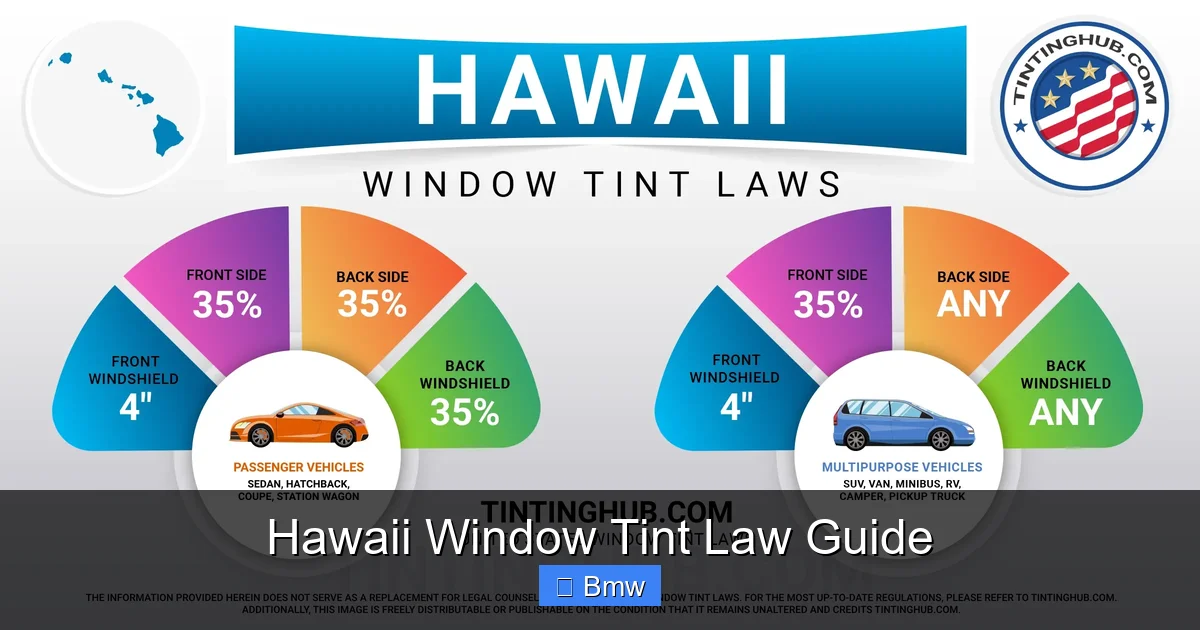
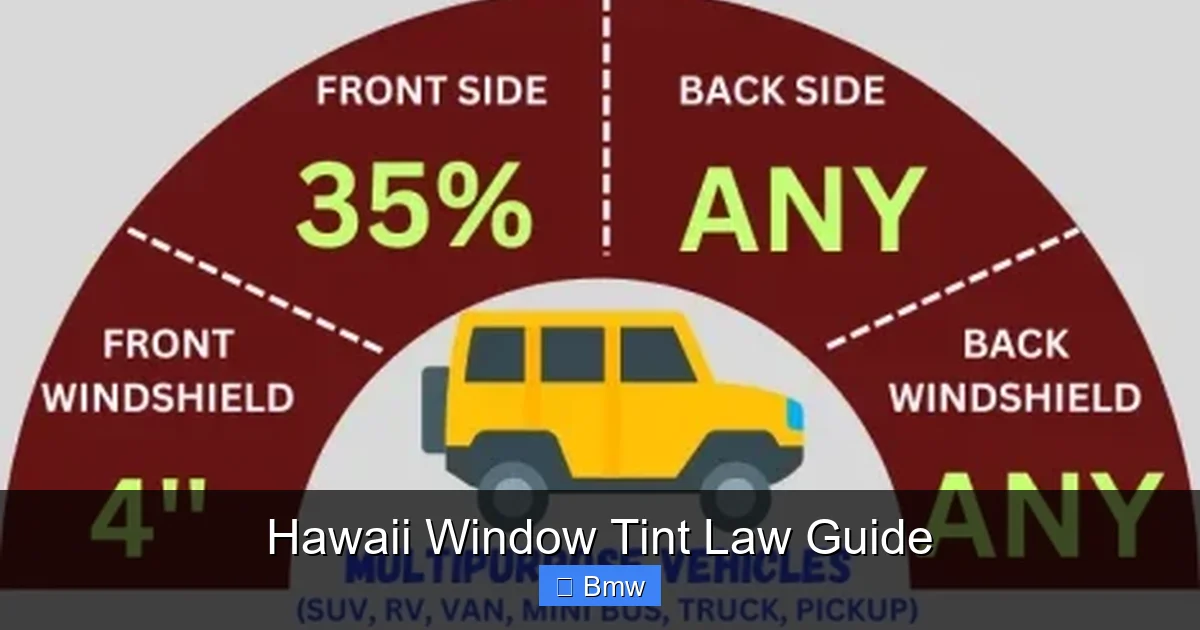
Now for the hard numbers. Hawaii has a straightforward, two-tier system that applies to all passenger vehicles, regardless of whether it’s a two-door sports car or a seven-passenger SUV. There is no different standard for the back side or rear windows of vans and SUVs, which is a major point of difference from states like Georgia or New Jersey that have darker allowances for rear windows on larger vehicles.
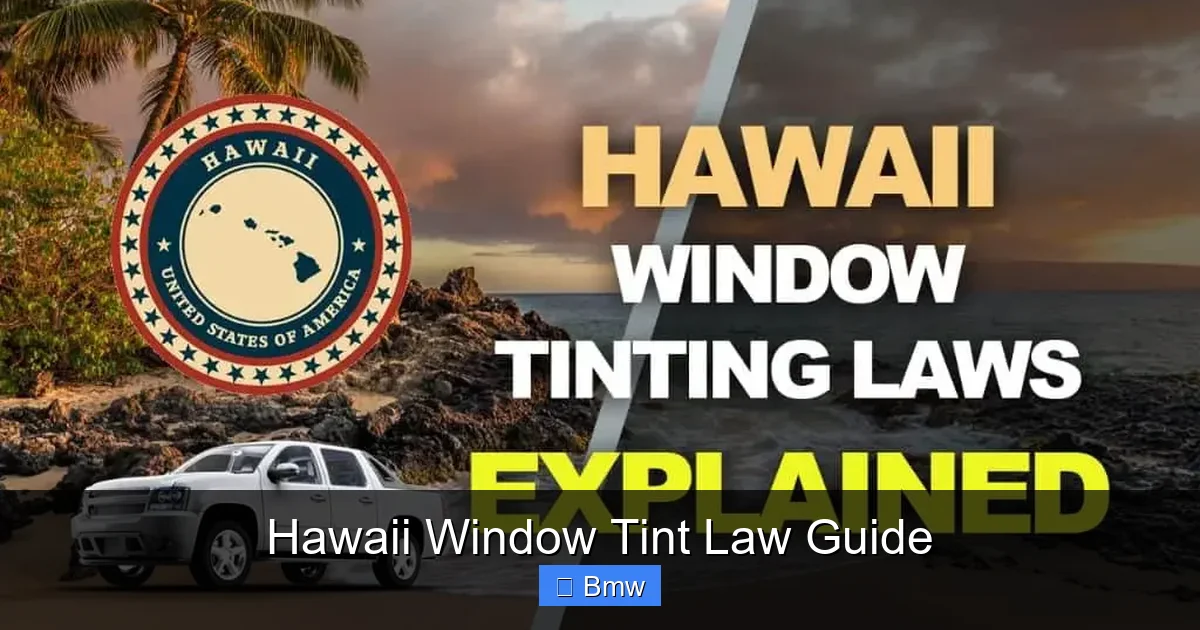
Visual guide about Hawaii Window Tint Law Guide
Image source: tintinghub.com
Front Side Windows: The 70% Rule
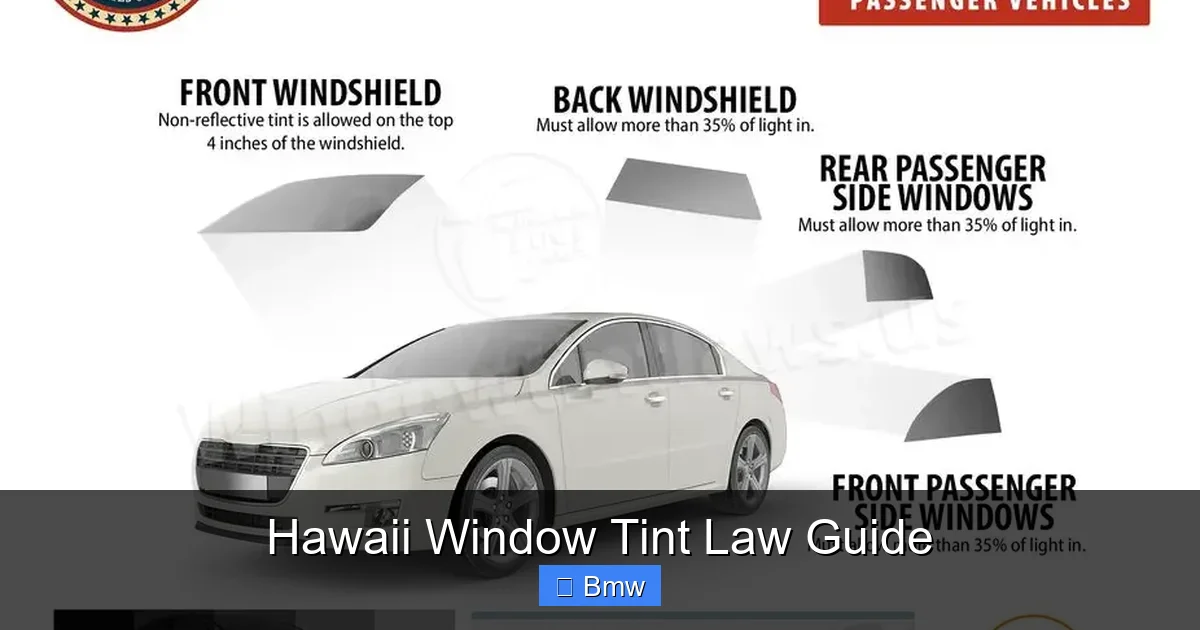
The front driver and passenger side windows must allow a minimum of 70% of visible light to pass through. This means the combined VLT of your glass plus any film must be 70% or higher. In practical terms, this is a very light tint. It’s often called a “factory tint” level, but as we noted, even some factory tints can push this limit. For BMW owners, this is the most critical check. Many European models, even base models, come with slightly darker glass for privacy. You cannot legally apply any aftermarket film to the front windows unless your factory glass is already above 70% VLT and you are adding an extremely light, nearly clear film. In most cases, front windows must remain untinted or have a clear/UV-blocking film that does not significantly darken the glass.
Rear Side and Rear Back Windows: The 35% Rule
The rear side windows (behind the driver and passenger) and the rear back window (hatch or trunk) must allow at least 35% of visible light to pass through. This is a moderately dark tint. A 35% VLT is a very common and popular choice for rear windows nationwide because it provides excellent privacy and heat rejection while still allowing decent visibility at night. Most aftermarket “limo tint” (5%) or “dark tint” (15-20%) is illegal for these windows in Hawaii. You must specifically purchase and install film rated for a 35% final combined VLT.
The Windshield: Non-Reflective Tint Only
Hawaii law permits a non-reflective tint on the top 5 inches of the windshield, typically along the visor strip. This is often used to reduce glare from the sun high in the sky. Any tint below this line, or any tint that has a reflective or mirrored appearance, is illegal on the windshield. This applies to all vehicles.
Summary Table of Hawaii VLT Requirements
| Window Location | Minimum VLT Required | Notes |
|---|---|---|
| Front Windshield | Non-reflective only on top 5″ | No below-the-line tint |
| Front Side Windows | 70% (must allow ≥70% light) | Applies to driver & passenger |
| Rear Side Windows | 35% (must allow ≥35% light) | Same for all vehicles |
| Rear Back Window | 35% (must allow ≥35% light) | Same for all vehicles |
Key Point: Hawaii does not have a “any darkness to rear windows on MPVs/SUVs” rule. If you drive a BMW X5, Honda Pilot, or Ford Expedition, your rear windows are still held to the 35% standard, not a darker 5% or 15%. This is a critical distinction from many other states’ laws.
Medical Exemptions: The Pathway to Darker Front Tint
Hawaii recognizes that certain medical conditions require additional protection from sunlight. The state provides a medical exemption process that, if approved, allows for darker tint on the front side windows beyond the standard 70% VLT limit.
Visual guide about Hawaii Window Tint Law Guide
Image source: windowtintlaws.us
Who Qualifies for a Medical Exemption?
Eligibility is determined by a licensed physician. Conditions that typically qualify include, but are not limited to:
- Lupus erythematosus: Causes severe photosensitivity.
- Xeroderma pigmentosum: A rare genetic disorder causing extreme sensitivity to UV light.
- Porcelain: Severe sun allergy.
- Certain skin cancers or severe photodermatitis.
The condition must be documented as requiring significant shielding from solar radiation. General discomfort from the sun or a desire for privacy does not qualify.
The Application Process
Obtaining a medical exemption is a formal process:
- Physician Certification: You must obtain a signed statement from your Hawaii-licensed physician. This statement must detail your diagnosis, the specific medical necessity for additional protection, and the recommended VLT percentage for your front windows.
- State Application: Submit the physician’s statement along with a completed application form (available from the Hawaii Department of Transportation or county police department) to the appropriate state authority.
- Approval & Permit: If approved, you will receive a medical exemption permit and a certificate. These documents must be kept in your vehicle at all times, typically in the glove compartment.
- Sticker Requirement: Your vehicle’s front windows will also need a special state-issued medical exemption sticker, usually placed in the lower corner of the front windshield, visible to law enforcement.
It’s important to note that the exemption specifies the exact VLT percentage granted. It is not a “go as dark as you want” pass. The physician’s recommendation and state approval will dictate the maximum darkness allowed, often 50% or 35% VLT for fronts.
Penalties for Non-Compliance: What Happens If You’re Caught
Hawaii takes window tint violations seriously. The penalties are structured to encourage immediate correction.
Visual guide about Hawaii Window Tint Law Guide
Image source: carglassadvisor.com
First Offense: The “Fix-It” Ticket
In most counties, a first-time offense for illegal window tint results in a “fix-it” ticket, also known as a correctable violation. You are given a specific period (often 30 days) to:
- Remove the illegal tint.
- Replace it with compliant film.
- Obtain a certificate of compliance from the installer.
- Present proof of correction to the court or police department to have the ticket dismissed.
There is usually no fine for the first offense if you comply within the timeframe. However, you will incur the cost of removal and replacement.
Subsequent Offenses: Fines and Court
If you are cited again for a tint violation within a certain period (e.g., one or two years), you will face monetary fines. The amount varies by county but typically ranges from $50 to $200+ per window violation. For example, illegal tint on both front windows could be cited as two separate violations. You will also be required to appear in court, where a judge may impose additional penalties or fees. Multiple offenses can lead to a cumulative fine that far exceeds the cost of doing the tint correctly the first time.
Failed Vehicle Inspection
In Hawaii, vehicles must pass an annual safety inspection. Illegal window tint is an automatic fail. You will not receive your inspection sticker until the tint is brought into compliance. This means you cannot legally drive the vehicle until it passes, creating a significant inconvenience and potential storage issue.
How to Ensure Your Tint is Legal: A Practical Checklist
Don’t leave compliance to chance. Follow these steps before and after tint installation.
1. Research and Choose the Right Film Percentage BEFORE Installation
Do not tell the shop “make it as dark as legal.” You must specify: “I need film that will result in a final combined VLT of 35% for the rear windows and a clear or UV-only film for the front windows that keeps the total above 70%.” A professional shop will know Hawaii’s laws and can calculate the correct film darkness based on your car’s factory glass VLT. For a BMW, ask them specifically about the factory glass VLT for your model year. They should have this data or test a sample window.
2. Demand a Certification Sticker and Documentation
After installation, the shop is legally required to apply a state-compliant sticker to the inside of your front windshield (and sometimes other windows). This sticker must state the film manufacturer, the VLT percentage, and a certification number. Do not pay or leave the shop without this sticker. Also, get a written receipt or certificate that lists the exact film product installed and its stated VLT. Keep this with your vehicle documents.
3. Get a Post-Installation VLT Test
Ask the installer to use their tint meter to show you the final VLT reading on each window. This is your proof of compliance. Take a photo of the meter reading if possible. This documentation is invaluable if you are ever pulled over and your tint is questioned.
4. Know Your Factory Tint
If your car came with factory tint (common on BMW’s Premium Packages or M models), you must verify its VLT. It is often around 20% for rear windows, which is illegal in Hawaii. You would need to remove the factory tint and install 35% film, or potentially add a very light film over it if the combined result is 35% or higher (rare). This is an expensive but necessary step for compliance. Always assume factory tint is non-compliant until proven otherwise with a meter reading.
5. When in Doubt, Get a Professional Inspection
Before your official state safety inspection, you can take your car to any reputable tint shop or even some auto glass companies for a quick VLT check. For a small fee, they’ll tell you if you pass or fail. This gives you time to fix any issues before the official test.
Comparing Hawaii to Other States: Why You Can’t Assume
If you’re moving to Hawaii from the mainland, or if you’ve read about tint laws elsewhere, you might make dangerous assumptions. Hawaii’s laws are stricter than many in some aspects and more lenient in others. Let’s compare.
Hawaii vs. States with “SUV Loopholes”
States like Georgia and New Jersey allow any darkness (often 5% or less) on the rear side and rear windows of vehicles classified as “Multipurpose Passenger Vehicles” (SUVs, vans, station wagons). Hawaii has no such classification. Your BMW X5, Range Rover, or Ford Explorer is held to the same 35% rear window standard as a Honda Civic. This is the biggest point of confusion for newcomers. You cannot legally have limo tint on the rear windows of your SUV in Hawaii.
Hawaii vs. States with Darker Front Tint Allowances
Some states, like Arizona or Florida, allow 33% or 35% VLT on front side windows. Hawaii’s 70% front limit is significantly lighter. The darkest legal front tint in Hawaii is essentially a very light smoke. If you’re used to 35% front tint, you must remove it when bringing your car to Hawaii.
The Takeaway for Mobile Drivers
If you frequently drive between states, you must comply with the laws of the state you are currently in. There is no “national” tint standard. Your legally tinted car in Arizona could be illegal in Hawaii. This is especially important for military personnel or snowbirds. Always check local laws before traveling. You can find a comprehensive Window Tint Laws By State guide to compare all 50 states’ regulations.
The Cost of Compliance and Non-Compliance
We’ve talked about fines, but what about the actual cost of getting legal tint? And how does that compare to the cost of getting caught?
Average Cost of Legal Tint Installation in Hawaii
Professional window tinting in Hawaii typically costs between $200 and $600 for a full passenger car, depending on the vehicle size, number of windows, and the quality/brand of film. For a large SUV like a BMW X5, it could be $400-$800+. This price is for removal of old non-compliant tint (if applicable) and installation of new, compliant film with a warranty. Using a reputable, state-licensed installer is crucial, as they will ensure the film meets the correct VLT and provide the necessary certification sticker. For a detailed breakdown of pricing factors, you can refer to this guide on how much auto window tint costs.
The True Cost of a Ticket
A single fix-it ticket might seem free if you correct it, but you still pay for the re-tint. A second offense fine could be $150-$250 per window. Add court costs, and you’re easily spending $500+ on a mistake. Factor in the time off work to appear in court or get re-inspected, and the “savings” from using a cheap, non-compliant installer vanishes. Furthermore, your insurance rates could potentially increase if you accumulate traffic violations. It’s almost always cheaper to do it right the first time with a professional who knows Hawaii law.
Special Considerations for BMW Owners
BMW drivers often have specific concerns due to the brand’s design and common factory options.
Factory Tint vs. Aftermarket Compliance
Many BMWs, especially from the late 2000s onward, offer a “Privacy Glass” or “Sunset” option. This is a factory-applied tint, usually on the rear windows and sometimes the rear quarter glasses. Its VLT is typically around 20%. This is illegal in Hawaii for the rear windows. You cannot simply add a 15% film over it to make it “more private.” The combined VLT would be around 5-10%, which is far darker than 35%. Your options are: 1) Live with the illegal tint and risk a ticket (not recommended), 2) Have the factory tint professionally removed (costly and can damage defroster lines), or 3) Have a very light, high-VLT film (e.g., 70% or higher) applied over it to bring the total up to the 35% minimum. Option 3 is often the most cost-effective, but you must test the final VLT. Discuss this thoroughly with your tint shop.
Heated Rear Windows and Defroster Lines
BMW rear windows almost always have embedded heating elements (defroster lines). This is common on all modern cars. When removing or installing tint on these windows, extreme care must be taken. Poor removal techniques can tear the delicate defroster lines, rendering them useless and requiring a very expensive window replacement. Always use a specialist experienced with BMWs for any tint work involving rear windows.
BMW i-Series and Large Glass Roofs
Models like the i3 or i8 have extensive glass areas. Hawaii’s law applies to all “side windows” and “rear windows.” Large panoramic roofs are typically considered part of the “roof” and not specifically regulated under the side/rear window VLT rules, but any fixed side glass panels are. Clarify with your installer and the authorities if you have a unique glass roof configuration. The safest approach is to keep any large fixed glass panels as light as factory or apply only clear UV film.
Conclusion: Enjoy the Islands, Tint the Right Way
Hawaii’s window tint laws are clear: 70% front, 35% rear, with medical exemptions as the only pathway to darker front glass. There are no SUV loopholes. For BMW owners, this often means addressing factory-installed dark rear glass. The process involves research, professional installation with certification, and documentation. While it might be tempting to go darker for that sleek look or maximum heat rejection, the risks of tickets, failed inspections, and court appearances are real and consistently enforced across the islands.
Your best strategy is to partner with a reputable, licensed window tint shop in Hawaii that specializes in compliance. Tell them you need to meet Hawaii Revised Statutes §291-4. Get the VLT tested in writing, ensure the certification sticker is properly applied, and keep all paperwork in your glove box. By following this guide, you can legally enjoy the benefits of window tint—reduced glare, cooler cabin temperatures, and added privacy—while respecting the laws that keep Hawaii’s roads safe for everyone. Mahalo for driving responsibly!
Frequently Asked Questions
Can I have 20% tint on my BMW’s rear windows in Hawaii?
No. Hawaii law requires a minimum of 35% VLT on all rear side and rear back windows for every passenger vehicle, including SUVs like the BMW X5. A 20% tint is too dark and illegal. You must use film that results in a combined VLT of 35% or higher.
What is the penalty for a first-time window tint violation in Hawaii?
For a first offense, you will typically receive a “fix-it” ticket. You must correct the violation (remove or replace the tint) within a set period, usually 30 days, and provide proof of correction to the court. There is generally no monetary fine for the first offense if you comply.
Do I need a medical exemption for any front window tint at all?
Yes. Hawaii requires front side windows to allow at least 70% of light. Any film that darkens the front windows below this 70% combined VLT threshold requires a state-issued medical exemption permit and a special windshield sticker. A clear UV-blocking film that does not significantly darken the glass is usually legal without an exemption.
How does an officer test my window tint?
Police use a handheld digital tint meter. They place the sensor on the inside of your window, and it instantly reads the combined VLT percentage of your glass and film. They can test any window during a routine traffic stop.
Is my car’s factory tint automatically legal in Hawaii?
No. You are responsible for ensuring your vehicle complies with Hawaii law. Many factory tints, especially on rear windows (like on many BMWs), are darker than 35% VLT and are therefore illegal. You must verify the VLT with a meter or assume you need to modify it.
Can I tint my windshield below the 5-inch visor line?
No. Hawaii only permits a non-reflective tint on the top 5 inches of the windshield. Any tint below this line, or any tint that is reflective or mirrored, is illegal on the windshield, regardless of VLT percentage.