Georgia Window Tint Law

Contents
- 1 Key Takeaways
- 2 📑 Table of Contents
- 3 Understanding Georgia Window Tint Law: A BMW Owner’s Essential Guide
- 4 The Legal Breakdown: VLT, Reflection, and Key Percentages
- 5 Special Considerations for BMW Models
- 6 Installation, Inspection, and Enforcement
- 7 Penalties and Consequences of Non-Compliance
- 8 Medical Exemptions and Special Cases
- 9 Staying Compliant: A Practical Checklist for BMW Owners
- 10 Conclusion: Tint Smart, Drive Legal
- 11 Frequently Asked Questions

Trunk Organizer

Car Floor Mats (Universal)

Chain Lubricant Spray

LED Emergency Road Flares
Navigating Georgia’s window tint laws is crucial for BMW owners to avoid fines and ensure safety. The state has specific Visible Light Transmission (VLT) percentages for each window, with stricter rules for the front windshield and front sides. Medical exemptions exist, but violations can lead to tickets and mandatory tint removal. Understanding these regulations helps you tint your BMW legally while enjoying style and comfort.
Key Takeaways
- VLT is Key: Georgia law measures tint darkness by Visible Light Transmission (VLT) percentage. Lower numbers mean darker tint. The front windshield must allow over 70% of light in.
- Front Side Rules: Front side windows must allow more than 32% of light in (VLT over 32%). This is a common area where BMW owners accidentally violate the law.
- Rear Side & Back: Rear side windows and the rear window have no darkness limit for passenger vehicles, but must not be more than 20% reflective.
- Reflection Limits: Tint cannot be more than 20% reflective on any window. Metallic tints often exceed this and are illegal.
- Medical Exemptions: Certain medical conditions requiring sun protection can qualify for a darker front-side tint exemption, but you must carry documentation.
- Enforcement: Police use tint meters to check VLT. A first-time violation typically results in a “fix-it” ticket and a fine, requiring you to remove or replace the illegal tint.
- Factory Tint: Many new BMWs come with a slight factory tint (often around 70-80% VLT) on rear windows. This is legal, but adding aftermarket tint can push you over the legal limit if not careful.
📑 Table of Contents
- Understanding Georgia Window Tint Law: A BMW Owner’s Essential Guide
- The Legal Breakdown: VLT, Reflection, and Key Percentages
- Special Considerations for BMW Models
- Installation, Inspection, and Enforcement
- Penalties and Consequences of Non-Compliance
- Medical Exemptions and Special Cases
- Staying Compliant: A Practical Checklist for BMW Owners
- Conclusion: Tint Smart, Drive Legal
Understanding Georgia Window Tint Law: A BMW Owner’s Essential Guide
So, you just picked up a sleek new BMW or finally decided to tint the windows on your trusty Bimmer. You want that perfect blend of privacy, UV protection, and that aggressive, sporty look. But before you book that tint appointment, you need to know the rules of the road in Georgia. Window tint laws are not suggestions; they are legal regulations with real penalties for non-compliance. For BMW owners, who often prioritize both aesthetics and performance, understanding these laws is non-negotiable. This guide breaks down everything you need to know about Georgia window tint law, tailored specifically for the BMW community.
Why This Matters for Your BMW
Think of your BMW’s window tint as part of its tuning. Just as you wouldn’t modify the engine without understanding emissions laws, you shouldn’t modify the glass without knowing tint regulations. An illegal tint ticket is more than a nuisance; it’s a mark on your driving record, a fine, and potentially a costly fix. Furthermore, improper tint can interfere with advanced driver-assistance systems (ADAS) like cameras and sensors, which many modern BMWs rely on for safety features. Staying legal protects your wallet, your car’s technology, and your peace of mind.
The Legal Breakdown: VLT, Reflection, and Key Percentages
Georgia’s window tint law is centered on two main concepts: Visible Light Transmission (VLT) and reflectivity. Let’s decode what these mean for your BMW’s windows.
Visual guide about Georgia Window Tint Law
Image source: i1.wp.com
What is VLT?
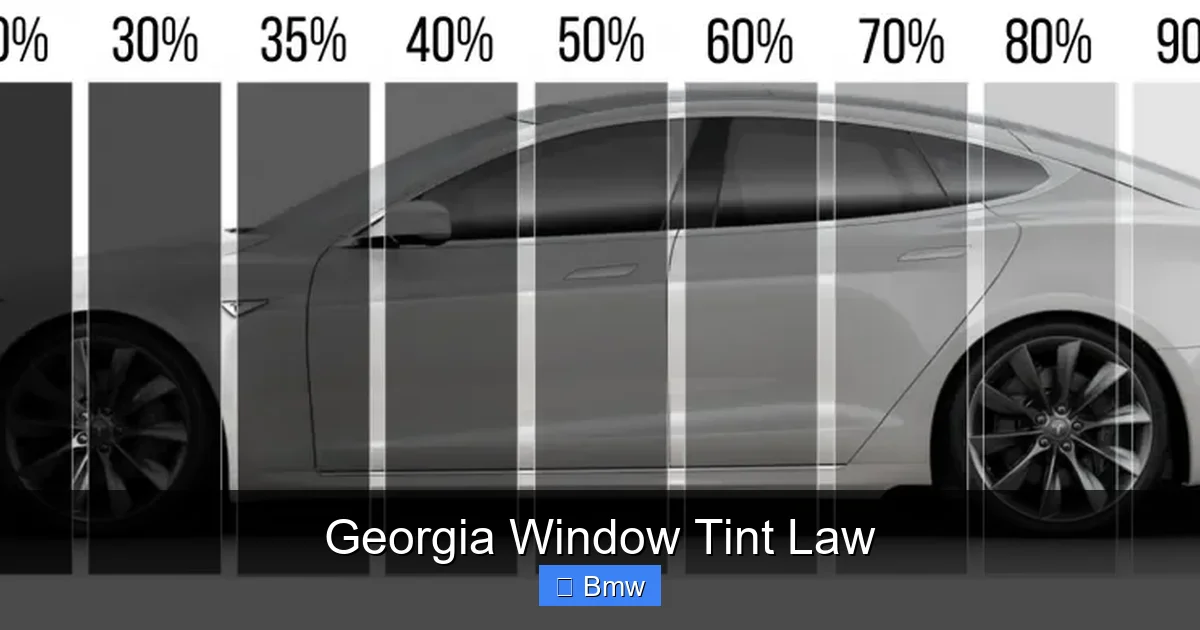
VLT stands for Visible Light Transmission. It’s the percentage of visible light that passes through your car’s window glass and tint film combined. A VLT of 70% means 70% of outside light gets in, making it very light. A VLT of 20% means only 20% of light enters, resulting in a very dark window. Georgia sets minimum VLT requirements (i.e., maximum darkness) for different windows. You must measure the combined VLT of the factory glass plus any aftermarket film.
Georgia’s Specific VLT Requirements
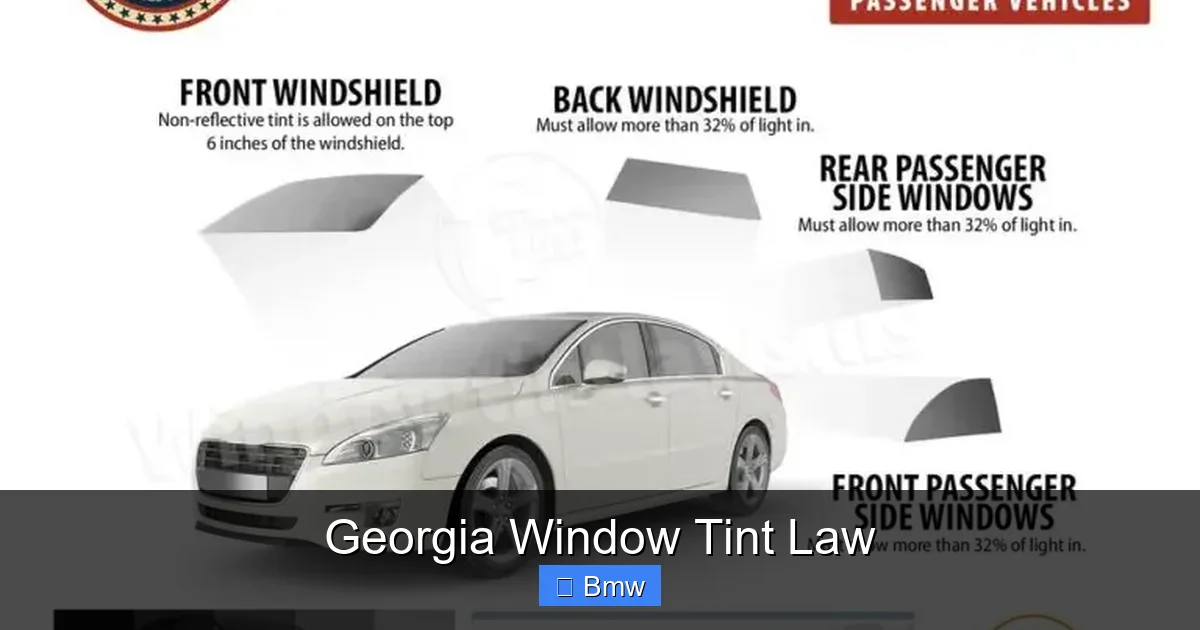
Here is the breakdown for standard passenger vehicles, which includes all BMW models:
- Windshield: Non-reflective tint is allowed on the top 6 inches of the windshield. This is the “AS-1” line area. For the rest of the windshield, tint must allow over 70% of light in. Many BMW owners apply a light strip or full windshield tint that meets this 70%+ requirement.
- Front Side Windows: Must allow more than 32% of light in (VLT > 32%). This is the most restrictive and commonly violated rule. A dark 20% or 35% tint on the front doors of your BMW is illegal in Georgia.
- Rear Side Windows: No darkness limit. You can go as dark as you want, down to 5% or even “limo” tint, and it’s perfectly legal.
- Rear Window: No darkness limit. However, if your BMW has a rear window defroster, you must ensure the tint does not interfere with its function.
Reflectivity Rules: The Shiny Tint Trap
Georgia also limits how reflective your tint can be. Tint film cannot be more than 20% reflective on any window. This rule targets metallic or mirrored finishes. Many high-performance, “chromatic” or “mirror” tint films popular on sports cars like BMWs can exceed this 20% limit, making them illegal even if the VLT is within limits. Always ask your installer for the film’s reflectivity rating.
Special Considerations for BMW Models
BMW vehicles have some unique factors that intersect with tint laws.
Visual guide about Georgia Window Tint Law
Image source: windowtintlaws.us
Factory Tint vs. Aftermarket Tint
Many new BMWs, especially models like the 3 Series, 5 Series, X5, and X3, come with a very light factory tint on the rear glass. This is typically around 70-80% VLT—essentially a clear coat with a slight hue. It’s 100% legal. The problem arises when owners add a dark aftermarket film over this factory tint. For example, if your factory rear glass is 75% VLT and you add a 20% film, the combined VLT might be around 15% (75% x 20% = 15%). This is still legal for rear windows. But if you mistakenly add the same 20% film to the front windows, which have no factory tint (100% VLT glass), the result is 20% VLT—a clear violation. Always know your starting factory VLT. Your BMW dealer can provide this info.
ADAS and Sensor Interference
Modern BMWs are packed with cameras behind the windshield and sometimes in the rear glass for features like Driving Assistant Plus, Park Distance Control, and 360-degree cameras. Applying aftermarket tint, especially metallized film, can interfere with signal transmission to these sensors and cameras. This can cause system errors, reduced performance, or complete failure. When tinting your BMW, you must use a non-metallic, ceramic-based film that is explicitly guaranteed to be compatible with ADAS and GPS signals. This is a critical, often overlooked, technical consideration. For more on how car modifications interact with technology, you might read about common car window tinting mistakes.
The Sunroof/Moonroof
Georgia law does not explicitly address moonroofs. However, they are considered a window. The general interpretation is that the same VLT rules for rear windows apply—there is no darkness limit. But again, reflectivity rules apply, and you must ensure any tint does not obstruct the moonroof’s operation or cause excessive heat buildup.
Installation, Inspection, and Enforcement
Getting your BMW tinted is only half the battle. How it’s done and how you handle inspections matters.
Visual guide about Georgia Window Tint Law
Image source: windowtintlaws.us
Choosing a Professional Installer
Do not use a shade-tree mechanic for your BMW tint. Seek a reputable, experienced shop that understands both high-end vehicles and Georgia law. They should:
- Use a calibrated tint meter to measure your factory glass VLT before recommending a film.
- Offer films that are legal for Georgia (e.g., >32% VLT for front, <20% reflective).
- Guarantee their work and provide documentation on the film’s specifications (VLT and reflectivity).
- Be knowledgeable about ADAS compatibility for your specific BMW model and year.
- Provide a warranty on both the film and labor.
The cost for a professional, legal tint job on a BMW will vary based on film quality and vehicle size. You can expect to pay more for premium ceramic films that are ADAS-safe. For a general idea of tinting costs, resources like this auto window tint cost guide are helpful, though BMW prices may be at the higher end.
The Inspection Station & “Fix-It” Tickets
In Georgia, your vehicle must pass an annual safety inspection. Tint is checked during this inspection using a tint meter. If your BMW fails for illegal tint, you will be given a “notice of violation” or a “fix-it” ticket. You must then:
- Have the illegal tint removed or replaced with legal tint by a licensed shop.
- Obtain a certificate of compliance from the shop.
- Present that certificate to the inspection station to get your sticker.
There is also a monetary fine associated with the violation, typically around $25-$50 plus court costs, but the primary goal is correction. Repeated violations can lead to higher fines. Remember, a failed inspection means you cannot legally renew your registration.
Penalties and Consequences of Non-Compliance
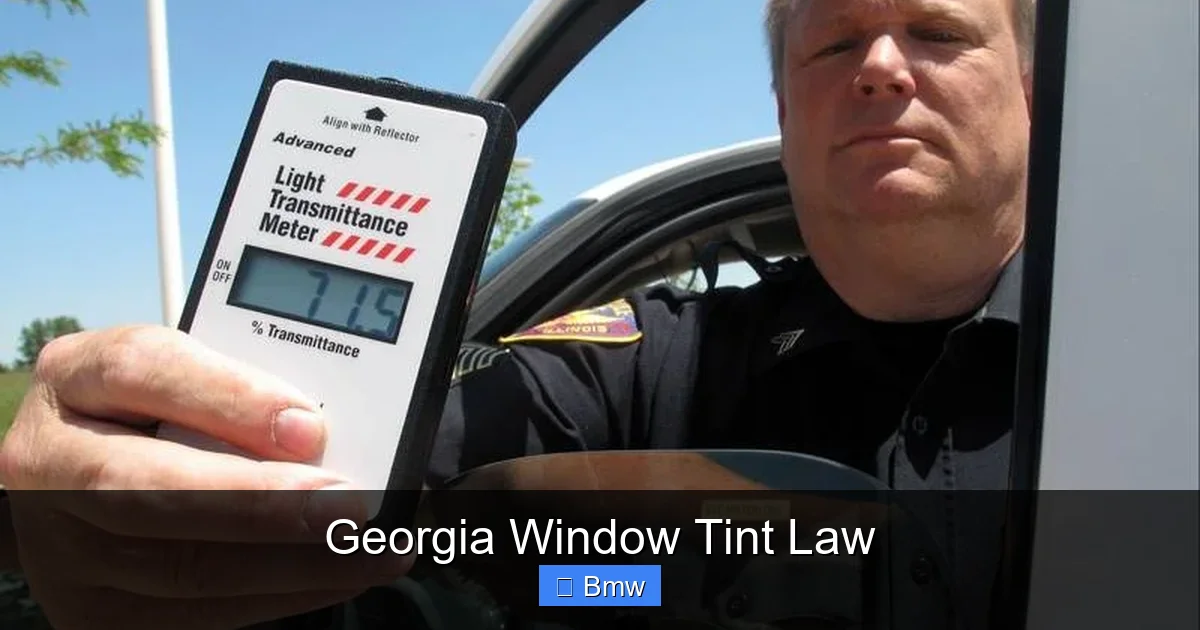
What happens if you get pulled over for tint before your inspection? A police officer with a tint meter can issue a citation on the spot.
- First Offense: Usually treated as a correctable violation. You’ll get a ticket with a fine and a court date. If you show proof (receipt and certificate) that you corrected the tint within a specified period (often 30 days), the fine is often reduced or waived.
- Subsequent Offenses: Fines increase. The court may be less lenient.
- Impact on Insurance: Generally, a single tint violation does not affect your insurance premiums. However, it is a moving violation on your record, and multiple violations can impact your rates.
- Resale Value: Illegal tint can be a red flag for a savvy buyer. It suggests the owner may not follow regulations, and the buyer will likely demand its removal or a price reduction to cover the cost of removal.
Medical Exemptions and Special Cases
Georgia law provides a medical exemption for individuals with a physician’s statement for conditions like lupus, melanoma, xeroderma pigmentosum, or other light-sensitive disorders. This exemption allows for darker tint on the front side windows.
How to Get a Medical Exemption
- Obtain a signed statement from a licensed physician (MD or DO) on official letterhead. The statement must include your name, the medical condition requiring the exemption, and a description of the necessity for window tint.
- Carry this statement in your vehicle at all times. It is not filed with the DMV; it’s your personal documentation to present if cited.
- The exemption applies only to the front side windows. All other tint on your BMW must still comply with reflectivity rules.
- The tint on the front windows under a medical exemption still cannot be more than 20% reflective.
It’s important to note that the exemption is for the driver and/or passengers with the condition. It does not grant blanket permission for pitch-black front windows. The VLT under exemption is typically still required to be above a certain very dark threshold (often interpreted as >5%), but the specific >32% rule is waived. The key is the physician’s statement validating the need.
Staying Compliant: A Practical Checklist for BMW Owners
Before you tint, follow this simple checklist:
- Know Your Factory Glass: Contact your BMW dealer or use a tint meter to find the factory VLT on all windows.
- Choose Legal Film: Select a film with a VLT rating that, when combined with your factory glass, meets Georgia law (>32% for front sides). Ensure reflectivity is ≤20%.
- Prioritize ADAS Compatibility: Insist on a non-metallic, ceramic film. Ask for written confirmation from the installer that the film is compatible with your BMW’s ADAS systems.
- Get It Professionally Installed: A bad install causes bubbles, peeling, and gaps that can look worse than no tint. Professional installation is key for both aesthetics and legality.
- Get Documentation: Keep the invoice from the tint shop. It should list the exact film product used and its VLT/reflectivity ratings. This is your proof if questioned.
- Pass Your Inspection: After tinting, get your car inspected promptly to ensure it passes and you receive your annual sticker.
Conclusion: Tint Smart, Drive Legal
Tinting your BMW in Georgia is a fantastic way to enhance comfort, protect your interior from the harsh southern sun, and add a touch of personal style. However, the “style” part must stay within the legal boundaries set by the state. By understanding the VLT percentages for each window, respecting the reflectivity limits, and choosing an installer who respects both your BMW’s technology and Georgia law, you can enjoy your tinted windows without any legal headaches. Remember, the goal is to be the cool driver with the cool car, not the driver with a fix-it ticket. Stay informed, stay legal, and enjoy the ride in your beautifully tinted BMW.
Frequently Asked Questions
Can I have 20% tint on my front windows in Georgia if I have a medical condition?
Yes, a valid physician’s statement for a light-sensitive medical condition provides an exemption from the standard >32% VLT rule for front side windows. You must carry the statement in your vehicle at all times. The tint still cannot exceed 20% reflectivity.
My BMW came with dark rear windows from the factory. Is that legal?
Yes, factory tint is legal as long as it was installed by the manufacturer before the vehicle’s first sale. Georgia law has no darkness limit on rear side and rear windows for passenger vehicles. The issue only arises if you add aftermarket film that pushes the combined VLT too low on the front windows or creates excessive reflectivity.
Will window tint affect my BMW’s backup camera or parking sensors?
It can, if you use the wrong film. Metallic or metallized tint can interfere with the radio signals used by ADAS systems. Always specify to your installer that you need a non-metallic, ceramic-based film that is guaranteed to be compatible with your BMW’s sensors and cameras. This is a critical step for modern vehicles.
What happens if I fail inspection for tint? Can I just pay the fine and keep it?
No. A failed inspection for tint means you will not receive your annual registration sticker, making your vehicle illegal to operate. You must correct the violation (remove or replace the tint) and obtain a certificate of compliance from a licensed shop to pass reinspection. The “fix-it” ticket process requires correction, not just payment.
Is there any way to legally have darker than 32% tint on the front of my BMW without a medical exemption?
No. For standard passenger vehicles, Georgia law is clear: front side windows must allow more than 32% of light in. There are no other exemptions for privacy or aesthetic preferences. The only legal pathway to darker front-side tint is the documented medical exemption.
How do I know if the tint shop I choose will make my BMW legal?
A reputable, law-abiding shop will measure your factory glass with a meter, explain the combined VLT result, and recommend a film that keeps you over 32% for the front. They will provide the film’s technical specs (VLT and reflectivity). Be wary of any shop that offers “20% all around” without discussing your factory glass or the front-window law. Also, explicitly ask about ADAS compatibility for your specific BMW model.