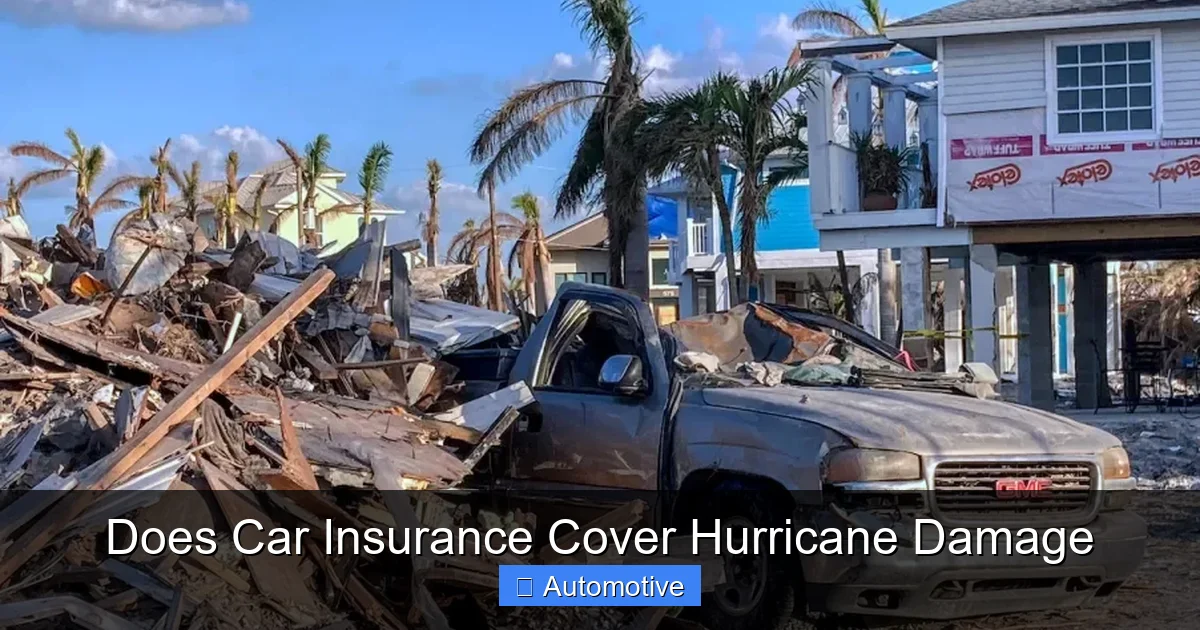
Does Car Insurance Cover Hurricane Damage

Contents
- 1 Key Takeaways
- 2 📑 Table of Contents
- 3 Does Car Insurance Cover Hurricane Damage?
- 4 Understanding Auto Insurance Coverage Types
- 5 What Types of Hurricane Damage Are Covered?
- 6 How to File a Claim After Hurricane Damage
- 7 Tips to Protect Your Car Before a Hurricane
- 8 Common Myths About Hurricane Car Insurance
- 9 When to Consider Upgrading Your Coverage
- 10 Conclusion
- 11 Frequently Asked Questions

Car GPS Navigator

Portable Air Pump

Car USB Charger
Fuel Injector Cleaner
Yes, car insurance can cover hurricane damage—but only if you have the right coverage. Comprehensive insurance typically pays for storm-related destruction like flooding, fallen trees, and wind damage, while liability-only policies won’t help. Knowing your policy details before a hurricane hits can save you thousands in repairs.
Key Takeaways
- Comprehensive coverage is key: It’s the only auto insurance that typically covers hurricane damage like flooding, hail, and debris.
- Liability insurance won’t help: This basic coverage only pays for damage you cause to others—not your own vehicle.
- Flood damage is included: Unlike home insurance myths, comprehensive auto insurance usually covers flood-related losses from hurricanes.
- Check your deductible: You’ll still pay out-of-pocket up to your deductible amount, so choose wisely based on risk.
- Document everything: Take photos, file claims quickly, and keep records to speed up the process.
- Act before the storm: Insurers often stop writing new policies once a hurricane watch is issued.
- Rental reimbursement helps: If your car is in the shop, this add-on covers temporary transportation costs.
📑 Table of Contents
- Does Car Insurance Cover Hurricane Damage?
- Understanding Auto Insurance Coverage Types
- What Types of Hurricane Damage Are Covered?
- How to File a Claim After Hurricane Damage
- Tips to Protect Your Car Before a Hurricane
- Common Myths About Hurricane Car Insurance
- When to Consider Upgrading Your Coverage
- Conclusion
Does Car Insurance Cover Hurricane Damage?
When a hurricane approaches, most people think about boarding up windows, stocking up on supplies, and securing their homes. But what about your car? It’s easy to forget that vehicles are just as vulnerable—if not more so—to storm damage. High winds can hurl debris through windshields, storm surges can submerge engines in saltwater, and falling trees can crush roofs. So the big question is: Does car insurance cover hurricane damage?
The short answer is: it depends on your policy. Not all auto insurance plans are created equal, and understanding the difference between coverage types could mean the difference between a full repair bill and a financial disaster. If you only carry state-minimum liability insurance—which is required in most places—you’re likely out of luck when it comes to storm-related repairs. But if you’ve added comprehensive coverage, you’re probably protected.
Hurricanes bring a mix of dangers: flooding, high winds, hail, flying debris, and power outages. Each of these can damage your vehicle in different ways. A tree limb might smash your sunroof, floodwaters could ruin your electronics, or hail might dent your hood. Without the right insurance, you’re left paying for all of it yourself. That’s why it’s crucial to know what your policy includes—and what it doesn’t—before disaster strikes.
Understanding Auto Insurance Coverage Types

Visual guide about Does Car Insurance Cover Hurricane Damage
Image source: clovered.com
To answer whether car insurance covers hurricane damage, you first need to understand the different types of coverage available. Most drivers are familiar with liability insurance, but that’s just the starting point. Let’s break down the main categories and how they relate to storm damage.
Liability Coverage: The Bare Minimum
Liability insurance is required in nearly every state and covers damage or injuries you cause to other people or their property. For example, if you rear-end another car, liability pays for their repairs and medical bills—but not yours. Unfortunately, liability does not cover any damage to your own vehicle, regardless of the cause. That means if a hurricane flips your car or floods the interior, liability won’t help. It’s designed to protect others, not you.
Collision Coverage: For Crashes and Accidents
Collision insurance pays for damage to your car when you hit something—like another vehicle, a guardrail, or even a tree during high winds. So if hurricane-force winds push your car into a fence, collision coverage would likely apply. However, collision doesn’t cover non-crash events like flooding, hail, or falling debris unless they directly cause a collision. It’s helpful in some storm scenarios, but it’s not your main defense against hurricane damage.
Comprehensive Coverage: Your Best Bet Against Storms
Here’s where things get interesting. Comprehensive coverage is the type of insurance that most commonly covers hurricane damage. It’s designed for “acts of God” and other non-collision events. This includes:
– Flooding from storm surges or heavy rain
– Hail damage
– Wind-driven debris (like signs, branches, or roof tiles)
– Falling trees or power lines
– Vandalism or theft during evacuation chaos
In short, if your car is damaged by something other than a crash, comprehensive coverage is likely your safety net. Most insurers consider hurricanes a covered peril under this policy. But there are limits—like your deductible and policy caps—so read the fine print.
Additional Coverage Options That Help
Beyond the basics, a few add-ons can make a big difference during hurricane season:
– Rental Reimbursement: If your car is in the shop for storm repairs, this covers the cost of a rental vehicle.
– Towing and Labor Coverage: Helps pay for towing if your car is disabled by floodwater or debris.
– Gap Insurance: If your car is totaled and you owe more than it’s worth, gap insurance covers the difference.
These extras aren’t always necessary, but they can ease the financial burden when you’re already stressed.
What Types of Hurricane Damage Are Covered?
Visual guide about Does Car Insurance Cover Hurricane Damage
Image source: clovered.com
Now that you know comprehensive coverage is your best friend, let’s look at the specific types of damage hurricanes can cause—and whether insurance will pay for them.
Flood Damage: Yes, It’s Covered
One of the biggest misconceptions is that flood damage isn’t covered by auto insurance. But that’s not true—comprehensive coverage typically includes flood damage, whether from rising storm surges, overflowing rivers, or trapped rainwater. This can include:
– Waterlogged interiors (seats, carpets, electronics)
– Engine damage from hydrolocking (when water enters the engine)
– Mold and mildew growth
– Corrosion from saltwater exposure
However, if you drive your car into floodwater knowing it’s dangerous—called “voluntary immersion”—some insurers may deny the claim. So if you see standing water, turn around. It’s not worth the risk.
Wind and Hail Damage: Covered Under Comprehensive
High winds during hurricanes can send debris flying at dangerous speeds. A loose stop sign, a shattered window, or a collapsing billboard can all smash into your car. Hail—common in hurricanes and tropical storms—can dent panels, crack windshields, and damage sensors. Both are considered “acts of nature” and are covered under comprehensive insurance.
For example, imagine you park your car under a large oak tree before evacuating. During the storm, a branch breaks off and crashes through your windshield. With comprehensive coverage, you’d file a claim, pay your deductible (say, $500), and the insurer would cover the rest of the repair costs.
Falling Objects and Debris
Hurricanes often bring down power lines, satellite dishes, and even parts of buildings. If any of these hit your car, comprehensive coverage should apply. This also includes damage from flying projectiles like patio furniture or trash cans swept up by the wind.
Vehicle Theft or Vandalism During Evacuations
During chaotic evacuations, cars left behind may be at higher risk of theft or vandalism. If your vehicle is broken into or stolen while you’re away due to a hurricane warning, comprehensive coverage can help. Just make sure to report the incident to police and your insurer as soon as possible.
What’s Not Covered?
While comprehensive coverage is broad, it’s not unlimited. Here are a few things that typically aren’t covered:
– Normal wear and tear: Rust, fading paint, or old tires won’t be replaced.
– Mechanical breakdowns: If your engine fails due to age, not storm damage, it’s not covered.
– Intentional damage: If you deliberately drive into floodwater, your claim may be denied.
– Damage from lack of maintenance: If your car floods because you ignored a leaking seal, the insurer might argue it’s your fault.
Always read your policy to understand exclusions.
How to File a Claim After Hurricane Damage
Visual guide about Does Car Insurance Cover Hurricane Damage
Image source: krapflegal.com
If your car is damaged in a hurricane, acting quickly can make the claims process smoother. Here’s a step-by-step guide to help you get back on the road.
Step 1: Ensure Safety First
Before inspecting your car, make sure it’s safe to approach. Watch for downed power lines, unstable structures, or contaminated water. If your vehicle is in a flooded area, don’t try to start it—this can cause further engine damage.
Step 2: Document the Damage
Take clear photos and videos of all damage from multiple angles. Include shots of the surrounding area to show the storm’s impact. Note the date, time, and location. If possible, get a written statement from a witness or local official confirming the hurricane conditions.
Step 3: Contact Your Insurance Company
Call your insurer as soon as possible. Most companies have 24/7 claims lines, especially during disasters. Provide your policy number, describe the damage, and submit your photos. Ask about next steps—some insurers may send an adjuster, while others use virtual inspections.
Step 4: Get a Repair Estimate
Your insurer may require an estimate from a certified repair shop. Don’t start repairs until the claim is approved, or you might risk not getting full reimbursement. If you’re in a disaster zone, ask if the insurer has a list of preferred shops.
Step 5: Pay Your Deductible
Once the claim is approved, you’ll pay your deductible—the amount you agreed to pay out-of-pocket when you bought the policy. For example, if repairs cost $3,000 and your deductible is $500, the insurer pays $2,500.
Step 6: Use Rental Reimbursement (If Available)
If you have rental coverage, ask your insurer to arrange a temporary vehicle while yours is being fixed. Keep receipts for any rental costs you pay upfront—you’ll need them for reimbursement.
Step 7: Follow Up
Stay in touch with your adjuster. If repairs are delayed or the estimate seems low, speak up. You have the right to a fair assessment.
Tips to Protect Your Car Before a Hurricane
The best way to handle hurricane damage is to avoid it altogether. Here are practical tips to protect your vehicle before a storm hits.
Park in a Safe, Elevated Location
If possible, move your car to higher ground—like a parking garage or uphill street. Avoid low-lying areas, riverbanks, or under trees. If you live in a flood-prone zone, consider storing your car at a friend’s house inland.
Use a Car Cover or Garage
A heavy-duty car cover can protect against hail and flying debris. If you have a garage, park inside and close the door. Even a simple tarp can help reduce water damage.
Remove Valuables and Important Documents
Take out laptops, phones, and personal items. Store your registration, insurance card, and emergency kit in a waterproof bag—either with you or in a secure place.
Check Your Tires and Battery
Make sure your tires are properly inflated and your battery is charged. You may need to evacuate quickly, and a flat tire or dead battery could leave you stranded.
Fill Up Your Gas Tank
Gas stations may close before a storm, and power outages can prevent pumps from working. A full tank ensures you can evacuate if needed.
Review Your Insurance Policy
Don’t wait until the storm is approaching. Check your coverage now. Do you have comprehensive? What’s your deductible? Can you afford to pay it if needed? If not, consider adjusting your policy.
Common Myths About Hurricane Car Insurance
There’s a lot of misinformation out there. Let’s clear up some common myths.
Myth 1: “My Home Insurance Covers My Car”
False. Homeowners or renters insurance does not cover vehicles. Auto insurance is separate. Even if your home is damaged in the same storm, your car needs its own policy.
Myth 2: “All Auto Insurance Covers Flood Damage”
Only if you have comprehensive coverage. Liability and collision alone won’t help. Always confirm your policy details.
Myth 3: “I Can Buy Coverage After the Storm Starts”
Most insurers stop writing new policies or adding coverage once a hurricane watch or warning is issued. You need to be prepared in advance.
Myth 4: “If My Car Is Totaled, I’ll Get What I Paid for It”
Insurers pay the car’s actual cash value (ACV)—what it’s worth at the time of loss, not what you paid. If your car is older, the payout might be much lower than your loan balance. That’s where gap insurance helps.
Myth 5: “I Don’t Need Comprehensive If I Park Indoors”
Even garaged cars can be damaged by flooding, falling debris, or power surges. Comprehensive coverage is still valuable, especially in hurricane zones.
When to Consider Upgrading Your Coverage
If you live in a coastal area or frequent hurricane zone, comprehensive coverage isn’t just smart—it’s essential. Here’s when to consider upgrading:
– You live in Florida, Texas, Louisiana, or another high-risk state
– Your car is newer or has high value
– You can’t afford major repair bills out-of-pocket
– You’ve had storm damage in the past
Even if you’re on a budget, raising your deductible can lower your premium while keeping comprehensive coverage. For example, switching from a $250 to a $1,000 deductible could save you hundreds per year.
Conclusion
So, does car insurance cover hurricane damage? The answer is a resounding yes—if you have comprehensive coverage. This type of policy protects against flooding, wind, hail, falling objects, and more. Without it, you’re left footing the bill for thousands in repairs.
Hurricanes are unpredictable, but your insurance doesn’t have to be. Take time now to review your policy, understand your deductible, and consider adding rental or gap coverage. Park smart, document everything, and act fast if damage occurs.
Remember: preparation is your best defense. A little planning today can save you a lot of stress—and money—tomorrow. Don’t wait for the next storm to find out what your insurance really covers. Be proactive, stay informed, and drive with confidence, no matter the weather.
Frequently Asked Questions
Does liability insurance cover hurricane damage to my car?
No, liability insurance only covers damage you cause to others, not your own vehicle. It does not pay for hurricane-related repairs like flooding or wind damage.
Will my car insurance cover flood damage from a hurricane?
Yes, if you have comprehensive coverage. This type of policy typically includes flood damage caused by storm surges, heavy rain, or rising water.
Can I add comprehensive coverage after a hurricane is announced?
No, most insurers stop allowing new coverage or policy changes once a hurricane watch or warning is issued. You must have comprehensive coverage in place before the storm.
What should I do if my car is flooded during a hurricane?
Do not start the engine. Take photos, contact your insurer immediately, and have the car towed to a repair shop for assessment. Starting a flooded engine can cause severe damage.
How much will I pay out-of-pocket for hurricane damage repairs?
You’ll pay your deductible—the amount you agreed to when purchasing your policy. The insurer covers the rest, up to your car’s actual cash value.
Does insurance cover rental cars if my vehicle is damaged in a hurricane?
Only if you have rental reimbursement coverage. This add-on pays for a temporary vehicle while yours is being repaired. Check your policy to see if it’s included.