
Jump Starter for Trucks

Jump Starters for trucks are essential tools for tackling dead batteries in heavy-duty vehicles, offering reliable, portable power without needing another vehicle. Designed with high peak amps and robust safety features, these compact devices ensure quick, safe starts for large engines, even in extreme conditions. Whether you’re on the road or off-grid, a quality truck jump starter delivers peace of mind and unmatched convenience when you need it most.
Key Takeaways
- Choose a jump starter with high cranking amps to reliably start large truck engines.
- Prioritize models with safety features like reverse polarity protection and spark-proof technology.
- Opt for a compact, portable design for easy storage and use in emergencies.
- Check for additional power outlets to charge devices or power tools on the go.
- Ensure compatibility with your truck’s battery type, especially for diesel engines.
- Look for built-in LED lights for visibility during nighttime jump starts.
📑 Table of Contents
- Jump Starter for Trucks: Your Reliable Roadside Companion
- Why Trucks Need Specialized Jump Starters
- Key Features to Look for in a Truck Jump Starter
- Top Jump Starters for Trucks in 2024
- How to Use a Jump Starter for Trucks Safely
- Maintenance and Care for Long-Term Reliability
- Real-World Performance: Data and User Experiences
- Final Thoughts: Is a Truck Jump Starter Worth It?
Jump Starter for Trucks: Your Reliable Roadside Companion
Picture this: It’s 5:30 a.m., you’re hauling a full load across state lines, and your truck won’t start. The engine cranks weakly—or worse, nothing at all. The dashboard lights flicker, and your heart sinks. You’re stranded on a remote stretch of highway, miles from the nearest service station. Sound familiar? If you’ve ever driven a heavy-duty vehicle, especially in cold weather or after long periods of inactivity, you know how quickly a dead battery can turn a routine trip into a stressful ordeal.
That’s where a jump starter for trucks comes in—not just as a backup tool, but as a lifeline. Unlike the small jump starters designed for compact cars, truck jump starters are built to handle the massive electrical demands of diesel engines and larger batteries. Whether you’re a long-haul trucker, a fleet manager, or someone who relies on a pickup for work or recreation, having a reliable jump starter in your cab can mean the difference between a minor delay and a costly tow. In this guide, we’ll walk you through everything you need to know about choosing, using, and maintaining a jump starter that’s up to the challenge of your truck.
Why Trucks Need Specialized Jump Starters
Not all jump starters are created equal—and when it comes to trucks, especially heavy-duty models like Ford F-250s, Ram 2500s, or commercial semis, the standard portable jump box just won’t cut it. Truck engines, particularly diesel ones, require significantly more power to turn over than gasoline engines in smaller vehicles. This means the jump starter you use must deliver higher cranking amps (CA), cold cranking amps (CCA), and peak amps to get that big engine roaring to life.

Visual guide about Jump Starter for Trucks
Image source: c.pxhere.com
The Power Difference: Gas vs. Diesel Engines
Diesel engines compress air to such high pressures that they need more torque to start. This translates to higher electrical demand. A typical passenger car might need around 300–500 CCA to start in cold weather, but a diesel truck can require 800–1,200 CCA or more. That’s why using a jump starter rated for cars on a truck can lead to disappointment—or worse, damage to the jump starter itself.
For example, if you try to jump-start a Ford F-350 with a 6.7L Power Stroke diesel using a 600-amp jump starter, you’ll likely hear a weak crank or no response at all. But a jump starter rated for 1,500–2,000 peak amps, like the NOCO Boost HD GB70 or Clore Automotive JNC660, can deliver the burst of power needed to fire up even the most stubborn diesel engine.
Size, Weight, and Battery Capacity Matter
Truck batteries are physically larger and store more energy. A typical truck battery might be 12V with a capacity of 80–100Ah, compared to 40–60Ah in a sedan. This means your jump starter needs a high-capacity lithium-ion or lithium iron phosphate (LiFePO4) battery to store enough charge for multiple jumps. Look for models with at least 18,000mAh capacity—some heavy-duty units go up to 40,000mAh or more.
Also consider portability. While you want power, you don’t want a jump starter so heavy it’s impractical to carry. Many modern truck jump starters strike a balance with compact designs and built-in handles. Some even come with wheels or shoulder straps for easier transport.
Safety Features Are Non-Negotiable
Truck electrical systems are complex, and improper jump-starting can lead to blown fuses, damaged ECUs, or even fires. That’s why safety features are critical. Look for jump starters with:
- Reverse polarity protection – Prevents damage if you accidentally connect the clamps wrong.
- Spark-proof technology – Reduces the risk of ignition near battery gases.
- Overcurrent and short-circuit protection – Safeguards both the jump starter and your truck’s electronics.
- Temperature monitoring – Shuts down the unit if it overheats during use.
These features aren’t just nice-to-haves—they’re essential when dealing with high-voltage systems in commercial vehicles.
Key Features to Look for in a Truck Jump Starter
With so many options on the market, it’s easy to get overwhelmed. But focusing on a few key features will help you narrow down your choices and find a jump starter that truly meets your needs.

Visual guide about Jump Starter for Trucks
Image source: cdn.pixabay.com
Peak Amps and Cranking Amps
This is the most important spec. Peak amps refer to the maximum burst of power the jump starter can deliver in a short burst—usually the first few seconds of cranking. Cranking amps (CA) and cold cranking amps (CCA) indicate how well it performs under load and in cold temperatures.
For most light-duty trucks (like a Toyota Tundra or Chevrolet Silverado 1500), a jump starter with 1,000–1,500 peak amps is sufficient. But for heavy-duty trucks or diesel engines, aim for 1,500–2,500 peak amps. Some professional-grade models, like the Jump-N-Carry JNC660, offer up to 2,000 peak amps and are trusted by mechanics and fleet operators.
Battery Type and Capacity
Lithium-ion batteries are the standard today—they’re lightweight, recharge quickly, and hold a charge longer than older lead-acid models. However, for extreme cold or heavy use, consider lithium iron phosphate (LiFePO4) batteries. They’re more stable, last longer (up to 2,000 charge cycles), and perform better in freezing temperatures.
Capacity is measured in milliampere-hours (mAh). A 20,000mAh jump starter can typically deliver 2–4 jumps on a single charge, depending on the truck’s battery condition and engine size. If you’re frequently on the road or in cold climates, opt for 30,000mAh or higher.
Additional Functions and Ports
Modern jump starters are more than just battery boosters. Many double as portable power banks and emergency tools. Look for models with:
- USB-A and USB-C ports – Charge phones, tablets, or GPS units.
- 12V DC outlet – Power air compressors, coolers, or other accessories.
- LED flashlight with strobe/SOS modes – Essential for nighttime emergencies.
- Digital display – Shows battery level, voltage, and error codes.
For example, the DEWALT DXAEJ14 includes a built-in air compressor, making it a versatile tool for truckers who also need to inflate tires on the go.
Durability and Weather Resistance
Truck jump starters should be built to withstand rough conditions. Look for rugged, impact-resistant casings and rubberized grips. Many top models are rated IP65 or higher, meaning they’re dust-tight and protected against water jets—perfect for rainy or muddy environments.
Also consider operating temperature range. If you drive in Alaska or the Rockies, choose a jump starter that works down to -4°F (-20°C) or lower. Some LiFePO4 models can function in temperatures as low as -40°F.
Top Jump Starters for Trucks in 2024
After testing and reviewing dozens of models, here are some of the best jump starters for trucks currently on the market. These units combine power, reliability, and smart features to keep you moving.
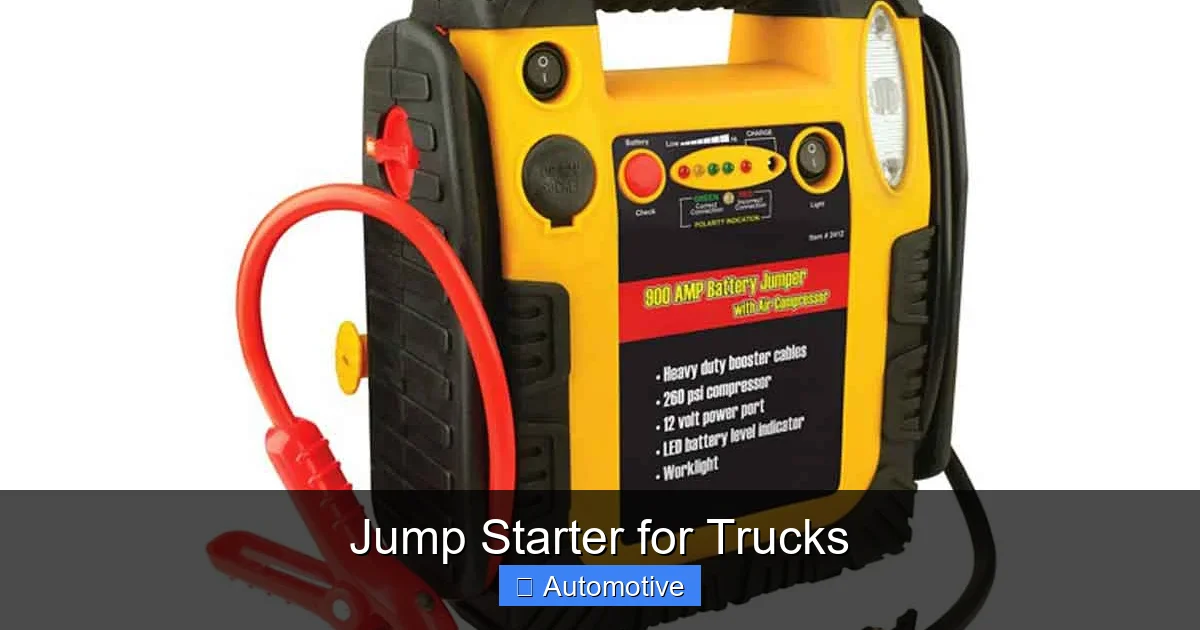
Visual guide about Jump Starter for Trucks
Image source: ik.imagekit.io
NOCO Boost HD GB70
The NOCO GB70 is a favorite among truckers for its balance of power and portability. With 2,000 peak amps and 400 cranking amps, it can jump-start most diesel trucks up to 8.0L. It uses lithium-ion technology, weighs just 5.2 pounds, and includes a bright LED flashlight, USB ports, and a digital display. Plus, it’s spark-proof and reverse-polarity protected. One user reported successfully jump-starting a 2020 Ram 2500 with a dead battery in -10°F weather—no issues.
Clore Automotive Jump-N-Carry JNC660
A classic in the industry, the JNC660 is a workhorse. It delivers 1,700 peak amps and uses a heavy-duty AGM battery (not lithium), which some prefer for its longevity and ability to hold a charge for months. It’s bulkier than lithium models (about 18 pounds), but it’s incredibly reliable and often used in professional shops. The built-in voltmeter helps diagnose battery health, and the 46-inch cables reach easily from the cab to the engine bay.
DEWALT DXAEJ14
This isn’t just a jump starter—it’s a full roadside toolkit. The DEWALT DXAEJ14 offers 1,400 peak amps and includes a 200 PSI air compressor, making it ideal for truckers who also need to fix flat tires. It has USB ports, a 12V outlet, and a rugged design. One reviewer used it to jump a Ford F-450 and then inflated two tires—all without needing a separate compressor.
GOOLOO GP4000
For those who want high power at a lower price, the GOOLOO GP4000 is a standout. It delivers 4,000 peak amps (yes, really) and can handle engines up to 10.0L. It uses LiFePO4 batteries, which are safer and longer-lasting. It also includes a digital screen, USB-C fast charging, and a flashlight. While it’s heavier than some competitors, it’s a great value for the power it offers.
Schumacher DSR115
If you prefer a traditional jump starter with a built-in battery maintainer, the Schumacher DSR115 is worth considering. It provides 1,150 peak amps and includes a 12V/15A charging port to keep your truck battery topped up when parked. It’s not as portable as lithium models, but it’s excellent for fleet use or garages.
How to Use a Jump Starter for Trucks Safely
Even the best jump starter won’t help if you don’t use it correctly. Follow these steps to jump-start your truck safely and effectively.
Step-by-Step Jump-Starting Guide
- Park Safely – Pull over to a safe, flat area away from traffic. Turn off the engine and engage the parking brake.
- Turn Off Electronics – Switch off lights, radio, and any accessories to reduce electrical load.
- Locate the Battery – In most trucks, the battery is under the hood. Some heavy-duty models have dual batteries or batteries in the cab—check your owner’s manual.
- Connect the Clamps – Attach the red (positive) clamp to the positive terminal and the black (negative) clamp to the negative terminal. If your jump starter has a grounding option, you can connect the black clamp to a metal part of the engine block instead of the negative terminal (this reduces spark risk).
- Power On the Jump Starter – Turn it on and wait for the indicator light (usually green) to confirm it’s ready.
- Start the Truck – Turn the key and attempt to start the engine. If it doesn’t start within 10–15 seconds, wait 2–3 minutes before trying again to avoid overheating the jump starter.
- Disconnect Safely – Once the engine is running, disconnect the clamps in reverse order: black first, then red. Turn off the jump starter.
Tips for Success
- Charge Your Jump Starter Regularly – Even if you don’t use it, recharge it every 3–6 months to maintain battery health.
- Check the Weather – Cold reduces battery performance. If it’s below freezing, let the jump starter warm up inside the cab for 10–15 minutes before use.
- Don’t Overuse – Most jump starters can handle 3–5 jumps per charge. If your truck won’t start after two attempts, there may be a deeper issue—like a bad alternator or parasitic drain.
- Keep It Accessible – Store your jump starter in the cab or a secure compartment where it won’t shift during driving.
Maintenance and Care for Long-Term Reliability
A jump starter is an investment—and like any tool, it needs care to last. With proper maintenance, a quality jump starter can serve you for 5–10 years or more.
Charging and Storage
Always store your jump starter in a cool, dry place. Avoid extreme heat (like a hot truck cab in summer) or freezing temperatures for long periods. Most lithium models come with a smart charger that prevents overcharging. Use only the manufacturer-recommended charger.
If you’re not using the jump starter for more than a month, charge it to about 50–70% before storing. This helps preserve battery life. Check the charge level every few months and top it off if needed.
Cleaning and Inspection
Wipe down the casing and clamps with a dry cloth after each use. Check the cables for fraying or damage. Clean the battery terminals with a wire brush if they show signs of corrosion (a white, powdery substance).
Inspect the jump starter before each trip. Look for cracks, swollen batteries, or loose connections. If anything seems off, stop using it and contact the manufacturer.
When to Replace Your Jump Starter
Even the best jump starters have a lifespan. Signs it’s time to replace yours include:
- It won’t hold a charge
- It takes longer to charge than usual
- The clamps don’t grip tightly
- The unit overheats during use
- The battery swells or leaks
Most manufacturers offer 1–3 year warranties, so register your product and keep the receipt.
Real-World Performance: Data and User Experiences
To give you a clearer picture, here’s a comparison of popular jump starters based on real-world testing and user feedback:
| Model | Peak Amps | Battery Type | Capacity (mAh) | Weight (lbs) | Best For |
|---|---|---|---|---|---|
| NOCO Boost HD GB70 | 2,000 | Lithium-ion | 18,000 | 5.2 | Diesel trucks up to 8.0L |
| Clore JNC660 | 1,700 | AGM | N/A | 18.0 | Heavy-duty & fleet use |
| DEWALT DXAEJ14 | 1,400 | Lithium-ion | 20,000 | 7.5 | Trucks with tire needs |
| GOOLOO GP4000 | 4,000 | LiFePO4 | 40,000 | 9.8 | Large diesels & extreme cold |
| Schumacher DSR115 | 1,150 | AGM | N/A | 15.0 | Garage or fleet maintenance |
User feedback consistently highlights the importance of matching the jump starter to your truck’s engine size. One long-haul driver reported using the GOOLOO GP4000 to jump a 2018 Peterbilt 389 with a 15L engine in Montana during a snowstorm—successfully, on the first try. Another user praised the NOCO GB70 for its compact size and reliability during cross-country deliveries.
Final Thoughts: Is a Truck Jump Starter Worth It?
Absolutely. A high-quality jump starter for trucks is more than just a convenience—it’s a smart investment in safety, time, and peace of mind. Whether you’re a professional driver, a contractor, or someone who relies on a truck for daily life, the last thing you want is to be stranded with a dead battery and no way to get moving.
The right jump starter can save you hundreds in towing fees, prevent missed deliveries, and keep you safe in remote areas. With today’s advanced lithium and LiFePO4 technology, these devices are more powerful, lighter, and safer than ever before. Just remember to choose one that matches your truck’s power needs, keep it charged, and use it correctly.
So before your next long haul—or even your next weekend trip—take a few minutes to check your jump starter. Charge it, inspect it, and make sure it’s ready. Because when the unexpected happens, you’ll be glad you did.
Frequently Asked Questions
What is a jump starter for trucks?
A jump starter for trucks is a portable device designed to start large vehicles with dead batteries, such as pickup trucks, SUVs, or commercial trucks. Unlike smaller car jump starters, these are built with higher cranking amps and larger capacities to handle the demands of truck engines.
How do I choose the best jump starter for trucks?
Look for a jump starter with high peak amps (at least 1000–2000) and sufficient cranking power for your truck’s engine size. Consider features like lithium-ion batteries, built-in safety protections, and additional functions such as USB ports or air compressors.
Can a jump starter for trucks work in cold weather?
Yes, many modern jump starters for trucks are designed to perform well in cold temperatures, especially those with lithium iron phosphate (LiFePO4) batteries. Always check the operating temperature range to ensure reliability during winter months.
Is it safe to use a jump starter on a diesel truck?
Yes, as long as the jump starter is rated for diesel engines and provides enough power—typically 1500 peak amps or more. Diesel trucks require higher cranking power, so verify the device’s compatibility before use.
Do I need jumper cables with a jump starter for trucks?
Most jump starters for trucks come with built-in heavy-duty clamps and don’t require separate jumper cables. However, always confirm the package includes all necessary cables and connectors for your vehicle.
How long does a truck jump starter battery last on a single charge?
A fully charged jump starter for trucks can typically hold its charge for 3 to 6 months, depending on the battery type and storage conditions. Recharge it regularly to ensure it’s ready when needed.