Does Bmw Service Mini Cooper?

Contents
- 1 Key Takeaways
- 2 📑 Table of Contents
- 3 The Simple Answer: Yes, But With Important Details
- 4 A Lesson in Brand History: The BMW-MINI Connection
- 5 What to Expect at a MINI Dealer Service Center
- 6 The Cost Question: Is MINI Service Expensive?
- 7 Can I Take My MINI to a Regular BMW Dealer or Independent Shop?
- 8 Real-World Owner Experiences and Advice
- 9 Making Your Decision: A Final Checklist
- 10 Frequently Asked Questions



The short answer is yes. BMW, as the parent company of MINI, fully services MINI Coopers through its global network of authorized MINI dealerships and service centers. You get factory-trained technicians, genuine MINI parts, and access to the latest technical information and software. While you can use independent shops, sticking with the official network ensures warranty compliance and specialized expertise for your unique British-built, German-engineered car.
Key Takeaways
- Corporate Ownership: MINI is a brand under the BMW Group umbrella, meaning BMW’s infrastructure fully supports MINI vehicles.
- Dealership Network: Service is performed at dedicated MINI dealerships or BMW dealerships with MINI-certified technicians, not typically at standard BMW brand-only shops for other models.
- Genuine Parts & Software: You receive MINI-specific OEM parts and access to manufacturer-specific diagnostic tools and software updates.
- Warranty Protection: Having service done at an authorized center is almost always required to maintain your factory warranties.
- Specialized Knowledge: Technicians undergo specific training on MINI’s unique engineering, from its transverse engine layout to its go-kart handling philosophy.
- Cost Considerations: MINI service costs are generally aligned with premium European brands and can be higher than non-specialist independent shops.
- Owner Choice: You are not forced to use the dealer for maintenance after warranty expiry, but the dealer offers the most specialized care.
📑 Table of Contents
- The Simple Answer: Yes, But With Important Details
- A Lesson in Brand History: The BMW-MINI Connection
- What to Expect at a MINI Dealer Service Center
- The Cost Question: Is MINI Service Expensive?
- Can I Take My MINI to a Regular BMW Dealer or Independent Shop?
- Real-World Owner Experiences and Advice
- Making Your Decision: A Final Checklist
The Simple Answer: Yes, But With Important Details
If you’re a proud MINI Cooper owner, you’ve likely wondered, “Does BMW service MINI Cooper?” It’s a smart question. After all, your MINI has a BMW engine under the hood (in most models), shares technology platforms, and has that distinctive German engineering precision. The answer is a definitive yes, but with a crucial clarification. BMW, as the parent company of the MINI brand, services MINI Coopers through its dedicated MINI dealership network, not through the standard BMW passenger car service bays you might see for 3 Series or X5 models.
Think of it like this: BMW Group is the large corporation. MINI is one of its specialized divisions, like a boutique subsidiary with its own identity, dealerships, and customer experience. So, when your MINI needs service, you take it to a “MINI” dealer. These dealerships are owned and operated by the same groups that often own BMW stores, and the technicians are BMW Group employees who receive specific, additional training on all things MINI. They have the exact same access to technical databases, software, and genuine parts catalogs for your specific model year and trim.
Why This Structure Exists
This separation protects the unique brand identity of MINI. A MINI owner expects a different vibe—playful, personalized, community-focused—compared to the more formal, executive experience at a BMW dealership. By having separate MINI stores and service advisors, the brand maintains its distinct character. However, behind the scenes, the engineering support, parts supply chain, and warranty administration are all seamlessly integrated within the BMW Group.
A Lesson in Brand History: The BMW-MINI Connection
To fully understand the service relationship, you need a quick history lesson. MINI was an independent, iconic British brand famous for its tiny, revolutionary cars like the classic Mini Cooper. In 1994, BMW acquired the Rover Group, which included MINI. By 2000, BMW decided to completely reinvent MINI as a premium, small-car brand under its control, launching the new MINI Cooper in 2001. This new MINI kept the iconic styling but was built on BMW’s UKL (Ultimate Kit) platform, using BMW-sourced engines (originally from the Chrysler/PSA partnership, later fully BMW) and technology.
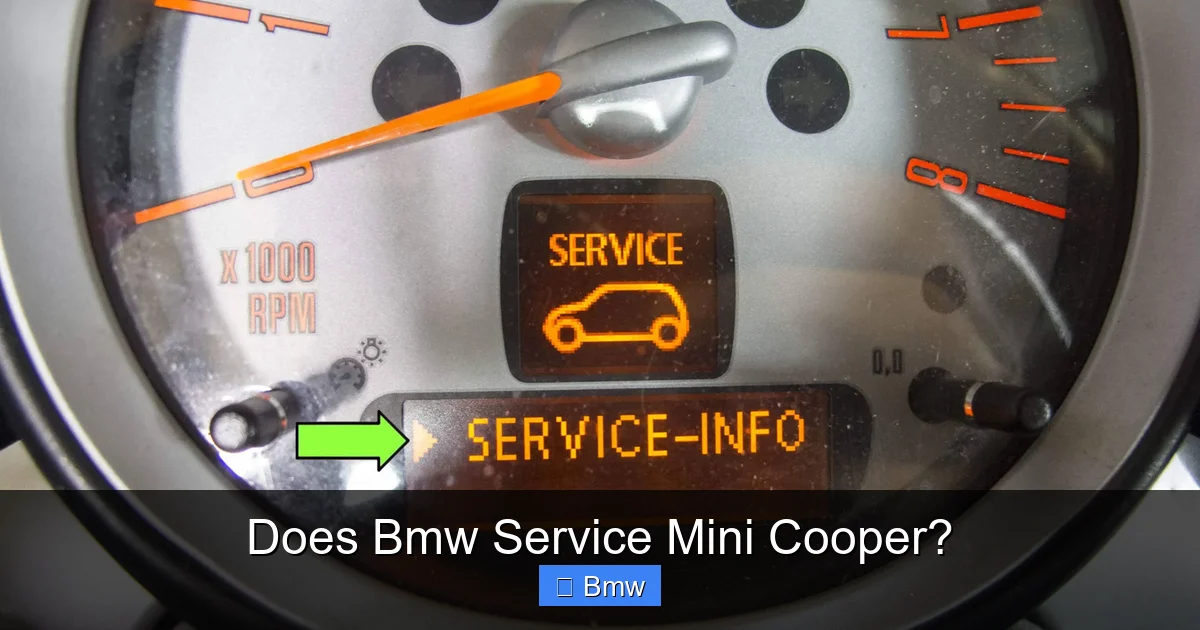
Visual guide about Does Bmw Service Mini Cooper?
Image source: cdn4.pelicanparts.com
This means your modern MINI Cooper is fundamentally a BMW Group product. It shares component suppliers, manufacturing philosophies, and, most importantly for service, a corporate commitment to quality and technical support. When you buy a MINI, you’re buying a car backed by one of the world’s largest and most advanced automotive corporations. The service network is a direct extension of that backing.
The “British Heart, German Mind” Philosophy
MINI often markets itself as having a “British heart” (for its styling, driving feel, and heritage) and a “German mind” (for its engineering, build quality, and technology). This duality perfectly explains the service setup. The people you interact with at the MINI store embody the friendly, approachable British spirit. The tools in the back shop, the diagnostic software on the computers, and the engineering specifications for your turbocharged engine are pure, precise German engineering from BMW Group.
What to Expect at a MINI Dealer Service Center
Walking into a MINI authorized service center feels different from a BMW center, but the core competency is identical. Here’s what you can expect, which directly answers “how” BMW services your MINI Cooper.
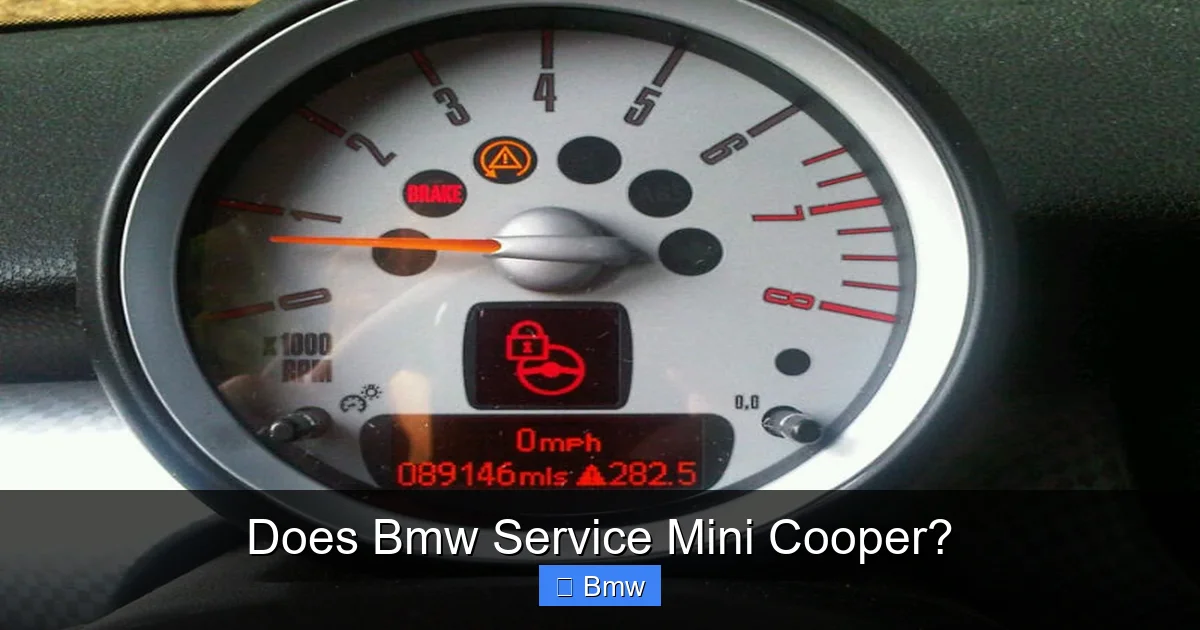
Visual guide about Does Bmw Service Mini Cooper?
Image source: cimg2.ibsrv.net
Factory-Trained MINI Technicians
These aren’t general mechanics. They are technicians who have completed the BMW Group’s rigorous training programs, with a specific track for MINI. They study the unique longitudinal and transverse engine layouts (depending on the model), the sophisticated suspension tuning that gives MINI its famous go-kart feel, and the specific electronics packages like the MINI Connected infotainment system. They understand that a MINI Cooper S’s turbocharger and direct injection system have specific service intervals and failure modes different from a BMW’s N20 engine, even if they share some DNA.
MINI-Specific Diagnostic Equipment
Your MINI’s computer systems are proprietary. Generic scan tools from an auto parts store won’t read all the fault codes or allow for programming and coding of features. MINI dealers use the latest ISTA (Integrated Service Technical Applications) software from BMW Group. This is the same diagnostic system used at BMW dealers, but with the MINI-specific vehicle data and wiring diagrams loaded. They can perform software updates, recalibrate systems after repairs, and access the deepest electronic diagnostics. This is a key reason to use the authorized network.
Genuine MINI Parts (OEM)
When a part needs replacement, the dealer will install a Genuine MINI Part. These are parts manufactured to BMW Group’s exact specifications, often by the same Tier-1 suppliers who make the original components. They come with a full warranty. While high-quality aftermarket parts exist, using genuine parts ensures perfect fit, finish, and performance, maintaining the car’s integrity and resale value. For example, a MINI-specific brake pad set is designed for the Cooper’s lighter weight and driving dynamics, which might differ from a pad for a similarly-sized BMW.
Warranty Compliance and Recall Work
This is non-negotiable for new and certified pre-owned MINIs still under factory warranty. Having maintenance and repairs done at an authorized MINI center is typically a requirement to keep your warranty valid. Furthermore, all manufacturer recall notifications are sent directly to the registered owner and are processed seamlessly through this network. If there’s a known issue with a specific batch of fuel pumps or clutch components, the MINI dealer will handle the repair at no cost under the recall.
The Cost Question: Is MINI Service Expensive?
This is the elephant in the room. MINI is a premium brand, and service costs reflect that. You can generally expect labor rates and parts prices to be on par with other European luxury brands like Audi, Mercedes-Benz, and yes, BMW. A simple oil change for a MINI Cooper can cost significantly more than for a Honda Civic. However, it’s often less than servicing a larger, more complex BMW 7 Series.
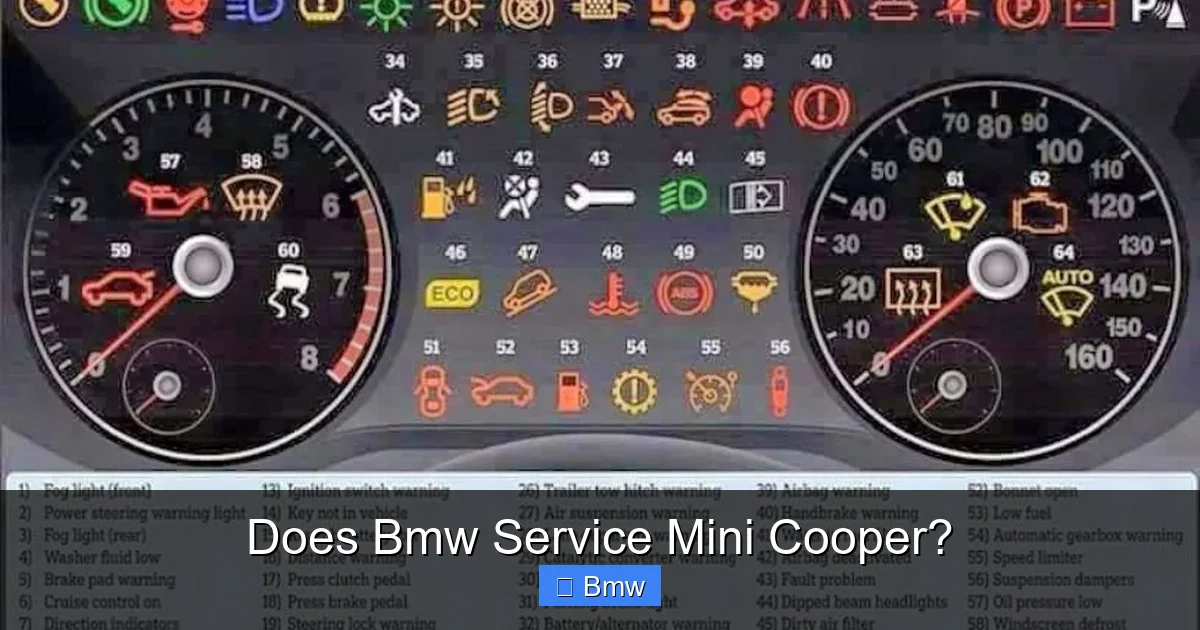
Visual guide about Does Bmw Service Mini Cooper?
Image source: cimg1.ibsrv.net
Several factors influence cost:
- Model and Engine: A base Cooper with a 1.5L turbo three-cylinder will have lower service costs than a John Cooper Works (JCW) model with its higher-performance 2.0L engine and upgraded components.
- Service Type: Routine maintenance (oil, filter, fluid checks) is predictable. Major services (every 30,000-40,000 miles) that include spark plugs, air filters, cabin filters, and fluid flushes (transmission, differential, coolant) will be more expensive.
- Location: Service pricing can vary by region and even by specific dealer. Urban dealerships often have higher labor rates.
- Age and Mileage: OlderMINIs will naturally require more wear-and-tear items (brakes, suspension bushings, belts, hoses).
To get a true apples-to-apples comparison, you should always request a detailed, written estimate before authorizing work. Compare this to a reputable independent shop that specializes in European cars, but be sure to ask about their use of OEM vs. aftermarket parts and their access to the latest software.
Saving Money Without Sacrificing Quality
You don’t have to break the bank. MINI often offers prepaid maintenance plans at the time of purchase, which can lock in rates. Dealerships also run seasonal service specials on oil changes, brake service, and tire rotations. Signing up for the MINI Owner’s Portal can deliver these offers directly to your email. For out-of-warranty cars, using a combination of genuine parts for critical components (engine, transmission) and high-quality aftermarket for wear items (wipers, some filters) with a specialist independent shop can be a cost-effective strategy, provided you trust the shop’s expertise with MINIs.
For perspective on general European service costs, you might read about BMW alignment costs or BMW brake fluid service, which are often similar to MINI pricing for comparable work.
Can I Take My MINI to a Regular BMW Dealer or Independent Shop?
This is a critical point of confusion. The answer is: it depends, and you must be careful.
The “MINI-Certified” BMW Dealer
Many BMW dealerships are part of large dealer groups that also own the local MINI franchise. In these cases, the BMW store will have a separate MINI service department, with MINI-branded signage, separate advisors, and MINI-certified technicians. This is perfectly acceptable and is, in fact, the official channel. You are still getting the authorized network service. However, a BMW dealer that does not have a MINI franchise or dedicated MINI technicians should not be your first choice. Their technicians are experts on BMWs, not necessarily on the unique quirks of a MINI’s transverse engine layout or specific suspension geometry.
The Independent Shop Route
After your warranty expires, you are legally free to take your MINI to any reputable independent mechanic. This is a popular choice for owners looking to save money. However, you must be very selective:
- Specialization is Key: Look for shops that advertise expertise in “European Cars,” “BMW/MINI,” or “German Automobiles.” A general mechanic may not have the specific knowledge.
- Tool Access: Do they have the latest ISTA diagnostic software or a comparable high-end scan tool? Without it, they are guessing on many electronic issues.
- Parts Sourcing: Can they reliably source genuine MINI parts or high-quality aftermarket equivalents? Some shops have relationships with wholesale parts distributors.
- Technical Information: Do they subscribe to repair databases like ALLDATA or Mitchell that have factory-level repair procedures?
The risk of using a non-specialist shop is improper diagnosis, use of incorrect parts, and potential voiding of remaining warranty coverage if the work is not performed to BMW Group standards. For major work like engine or transmission rebuilds, a specialist is non-negotiable.
Real-World Owner Experiences and Advice
Hearing from other MINI owners is invaluable. The consensus in owner forums like MINI2.com or Reddit’s r/MINI is remarkably consistent.
The “Warranty Peace of Mind” Camp
Many owners, especially those with newer cars, swear by the dealer. “I pay a premium, but I sleep at night knowing the work is done right with the right parts, and my warranty is intact,” is a common sentiment. They appreciate the car wash and loaner vehicle perks, the comfortable waiting lounge with Wi-Fi, and the ability to speak directly with a service advisor who knows the model. For complex electronic gremlins, they believe only the dealer’s software can fix it.
The “Trusted Independent Specialist” Camp
An equally vocal group of owners with older, out-of-warranty MINIs champion their local European specialist. “I saved 30% on my 60,000-mile service by using my guy. He’s a former MINI tech who left the dealer to open his own shop. He has all the tools and uses only OEM parts,” is a typical story. These owners often build long-term relationships with a mechanic who becomes intimately familiar with their specific car’s history.
The Hybrid Approach
A pragmatic third group uses the dealer for warranty work, major software-related recalls, and complex diagnostics, but turns to their trusted independent for routine maintenance (oil changes, brakes, belts) once the warranty expires. This balances cost savings with the need for specialist intervention on big jobs. They often use the dealer’s online parts catalog to identify the exact part number and then purchase it themselves to give to the independent shop, ensuring genuine parts are used without the dealer labor markup.
One practical tip: always get the detailed service report from the dealer after warranty work. It provides a valuable, factory-documented service history that boosts your car’s resale value. For those considering aftermarket upgrades, a simple accessory like a BMW MINI Cooper car seat cover can be installed anywhere, but for anything affecting the car’s core systems, stick to the experts.
Making Your Decision: A Final Checklist
So, does BMW service MINI Cooper? Absolutely, through its dedicated MINI network. Should you use it? Here’s a quick decision guide.
- If your MINI is under factory or CPO warranty: Use an authorized MINI dealer. It’s the only way to fully protect your investment. Period.
- If you have a complex, diagnostic-heavy problem: Start with the MINI dealer. Their tools and technical support are unparalleled for your specific vehicle.
- If you are out of warranty and need routine maintenance: Research and find a highly-rated independent shop with proven MINI/BMW expertise. Get multiple estimates.
- If cost is the primary driver and your car is older: The independent route is likely best, but do your homework on the shop’s reputation.
- If you value convenience, amenities, and factory documentation: The dealer experience is worth the premium for many.
Ultimately, your MINI Cooper is a special car that blends British character with German engineering. It deserves care from people who understand both halves of that equation. Whether that’s at a MINI-branded service bay or a back-alley specialist’s shop, the key is informed, specialized attention. The BMW Group has built the ultimate support system for your MINI through its dealer network—it’s up to you to decide how best to utilize it throughout your ownership journey.
Frequently Asked Questions
Can I take my MINI Cooper to a BMW dealership for service?
You can only take it to a BMW dealership that also has a MINI franchise and dedicated MINI service department. A standard BMW-only dealer for models like the 3 Series or X5 may not have MINI-certified technicians or parts inventory. Always call ahead and specify you have a MINI Cooper.
Will servicing at a MINI dealer keep my warranty valid?
Yes. Having maintenance and warranty repairs performed at an authorized MINI dealer is a standard requirement to maintain your factory warranties. They will use the correct procedures, genuine parts, and report all work directly to BMW Group, keeping your service history pristine.
Is MINI service more expensive than BMW service?
Generally, MINI service costs are comparable to other premium European brands and are often slightly lower than servicing larger, more complex BMW models like the 7 Series. However, they are significantly higher than non-premium brands. Costs depend on your specific MINI model, required service, and your geographic location.
Can an independent shop fix my MINI Cooper?
Yes, but with caution. After your warranty expires, you can use any shop. For reliable results, seek an independent shop that specializes in European cars, specifically BMW/MINI. They need the proper diagnostic tools (like ISTA), technical information, and experience with MINI’s unique engineering to avoid costly mistakes.
What are the main benefits of using an authorized MINI dealer?
The main benefits are: 1) Warranty protection, 2) Technicians with specific MINI training, 3) Access to the latest factory diagnostic software and technical updates, 4) Use of genuine MINI OEM parts with a warranty, and 5) Comprehensive, documented service history that enhances resale value.
What service intervals does a MINI Cooper require?
Modern MINI Coopers use a condition-based service system (CBS) that monitors your driving and vehicle data to determine when service is needed, rather than a strict mileage/time interval. However, a general guideline is an oil service every 7,500-10,000 miles and a major inspection every 30,000-40,000 miles. Your MINI’s onboard display will provide the specific “Service Due” alert.