
Does a 2015 Toyota Tacoma Have a Timing Belt or Chain

The 2015 Toyota Tacoma uses a timing chain, not a timing belt, for both its 2.7L 4-cylinder and 4.0L V6 engines. This is a significant reliability feature, as timing chains are designed to last the lifetime of the engine with proper maintenance, primarily regular oil changes. Unlike timing belts, which require expensive, scheduled replacement, the Tacoma’s chain system drastically reduces long-term ownership costs and the risk of catastrophic engine failure due to a neglected belt. The primary maintenance focus is on ensuring clean, adequate oil flow to lubricate the chain and its tensioner components.
Key Takeaways
- Timing Chain Confirmed: Every 2015 Toyota Tacoma, regardless of engine (2.7L 4-cylinder or 4.0L V6), is equipped with a durable timing chain system from the factory.
- No Scheduled Replacement: Unlike timing belts, there is no manufacturer-recommended mileage or time interval for replacing the timing chain itself on a 2015 Tacoma. It is considered a “lifetime” part.
- Maintenance is About Oil: The chain’s health is 99% dependent on consistent, high-quality oil changes. Clean oil lubricates the chain, tensioner, and guides, preventing premature wear.
- Failure is Extremely Rare: Timing chain failure on a properly maintained 2015 Tacoma is highly unusual. When failures do occur, they are almost always linked to severe neglect of oil changes or a faulty tensioner/guide.
- Listen for Warning Signs: While not common, a worn chain may produce a distinct rattling or slapping noise from the front of the engine, especially when cold. Other signs include poor performance, check engine lights, or metal shavings in the oil.
- Cost Savings Over Belts: Owners avoid the typical $500-$1,000+ timing belt replacement service required by many competitors. Potential repair costs are focused on the oil system and, in rare cases, the tensioner or guides.
- Resale Value Boost: The presence of a timing chain is a known positive for used truck buyers, simplifying the service history and reducing perceived future maintenance costs.
📑 Table of Contents
- The Straight Answer: Your 2015 Tacoma Has a Timing Chain
- Timing Chain vs. Timing Belt: Understanding the Difference
- Maintenance Schedules: What Actually Needs Attention?
- Signs Your Timing Chain Might Be Wearing Out
- What Happens If a Timing Chain Fails? The Critical Difference
- Owner Responsibilities: Keeping Your Chain Healthy for Life
- Conclusion: A Major Reliability Win for Tacoma Owners
The Straight Answer: Your 2015 Tacoma Has a Timing Chain
If you’re a 2015 Toyota Tacoma owner or prospective buyer, one of the most practical and important questions you can ask is about the engine’s timing system. The answer is straightforward and should bring a sigh of relief: your 2015 Tacoma has a timing chain, not a timing belt. This applies to both the standard 2.7-liter 4-cylinder (2TR-FE) and the optional 4.0-liter V6 (1GR-FE) engines. This design choice by Toyota is a cornerstone of the Tacoma’s reputation for legendary reliability and low long-term ownership costs. A timing chain is a robust, metal link system that synchronizes the rotation of the crankshaft and camshaft(s), ensuring the engine’s valves open and close at the precise moment relative to the pistons’ position. A belt, by contrast, is a toothed rubber composite that performs the same function but has a finite service life. Knowing you have a chain means you can largely forget about a major, costly scheduled service that plagues many other vehicles on the market.
A Brief History of Tacoma Timing Systems
It’s helpful to understand that this hasn’t always been the case for the Tacoma. The first generation (1995-2004) used timing belts on its 2.4L, 2.7L, and 3.4L engines. The second generation (2005-2015) saw a pivotal shift: for the 2005 model year, Toyota introduced the all-new 4.0L V6 (1GR-FE) with a timing chain. The carry-over 2.7L 4-cylinder (2TR-FE) from the previous generation also used a chain. Therefore, every Tacoma built from 2005 onward—including your 2015 model—has been a chain-driven engine. This makes the 2015 a very mature and well-understood platform in terms of its timing system. There are no obscure engine codes or mid-year changes to worry about; the rule is simple and universal across the entire model year and engine lineup.
Timing Chain vs. Timing Belt: Understanding the Difference
To fully appreciate why your Tacoma’s timing chain is such a benefit, let’s break down the key differences between these two critical components. At a fundamental level, both serve the identical purpose of maintaining precise synchronization between the engine’s upper and lower halves. However, their construction, maintenance needs, and failure modes are worlds apart.
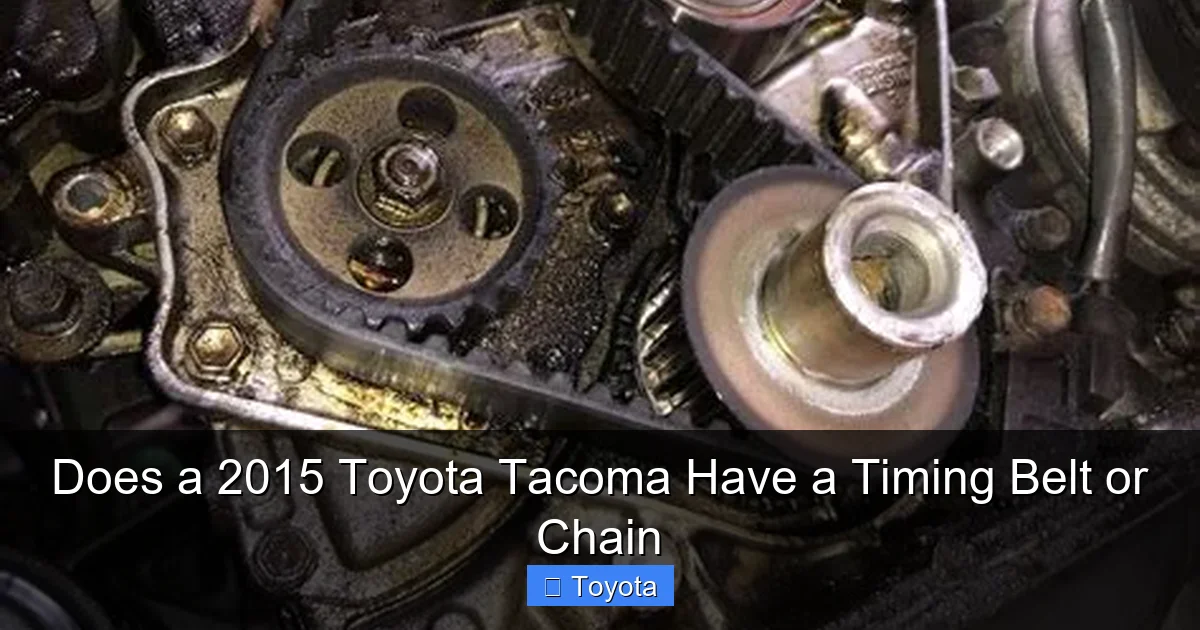
Visual guide about Does a 2015 Toyota Tacoma Have a Timing Belt or Chain
Image source: autozonic.com
Construction and Material Science
A timing belt is made from a flexible, reinforced rubber compound with precise teeth molded into it. It’s lightweight, quiet, and efficient. However, rubber degrades over time due to heat, oil contamination, and environmental factors. This means it has a definitive lifespan, typically recommended for replacement every 60,000 to 100,000 miles, depending on the manufacturer. A timing chain, on the other hand, is a continuous loop of hardened steel links, similar to a bicycle chain but far more robust. It rides on metal sprockets attached to the crankshaft and camshaft(s). Its metal-on-metal design is inherently resistant to the heat and chemical degradation that claims belts. It is engineered to last the entire design life of the engine under normal operating conditions.
Pros and Cons: A Practical Comparison
The advantages of a chain are clear for a workhorse truck like the Tacoma. Durability and “lifetime” service are the headline benefits. You will never receive a service bulletin or see a maintenance schedule item calling for chain replacement. This eliminates a significant, unexpected expense and the associated labor-intensive job. Chains are also generally more tolerant of minor engine misalignments. The primary historical con of chains was noise and friction. Early chains could be noisier and siphon a tiny amount more horsepower. Modern engineering, including hydraulic tensioners and improved guide materials, has all but eliminated these issues. The 2015 Tacoma’s chain is quiet during normal operation. The only real downside is that if a chain *does* fail due to extreme neglect or a rare component defect, the resulting damage can be just as catastrophic as a belt failure on an interference engine. But this scenario is exceptionally rare with proper upkeep.
Maintenance Schedules: What Actually Needs Attention?
This is the most critical section for owners. The mantra “no scheduled replacement” does NOT mean “no maintenance.” The timing chain system’s health is inextricably linked to the engine’s lubrication system. Your #1, #2, and #3 priorities are all about oil.
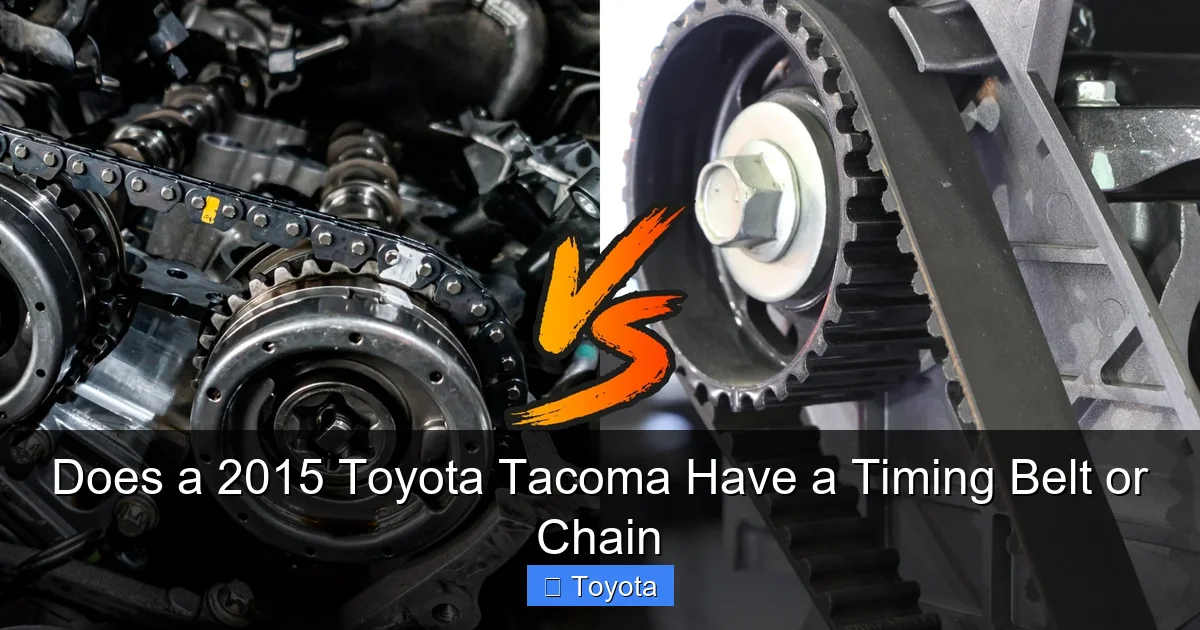
Visual guide about Does a 2015 Toyota Tacoma Have a Timing Belt or Chain
Image source: rerev.com
The “Lifetime” Myth: What Toyota Really Means
When Toyota states the timing chain is “lifetime,” it refers to the design life of the vehicle under normal use. It is not a guarantee against all wear. The chain, along with its companion components—the tensioner (which keeps the chain taut) and guides (which direct the chain’s path)—rely on a constant film of clean oil. The tensioner in the 2015 Tacoma is hydraulically operated, using engine oil pressure to automatically adjust tension. If oil pressure drops because of low oil level, severely degraded oil, or a failing pump, the tensioner cannot function properly. This can lead to chain slap, accelerated wear on the chain and guides, and eventually, failure. Therefore, the “lifetime” is conditional on you upholding your end of the bargain: impeccable oil maintenance.
The Oil Change: Your Single Most Important Task
There is no more impactful maintenance item for your timing chain than a timely, correct oil change. Why does this matter so much? The chain and its components are bathed in engine oil. Dirty, sludge-filled oil loses its lubricity and can contain abrasive particles that act like sandpaper on the precision-machined chain links and sprockets. Low oil level means the tensioner may not get enough pressure, allowing the chain to become loose and rattle. For the 2015 Tacoma, Toyota’s official recommendation is an oil change every 5,000 miles or 6 months, whichever comes first, when using conventional oil. With synthetic oil, this interval can often be extended, but many experts still recommend sticking to the 5,000-mile mark for a truck that may see towing, dusty conditions, or short-trip driving. Always use the oil viscosity specified in your owner’s manual—typically 0W-20 for the 4-cylinder and 5W-30 for the V6. Using the correct oil is vital for maintaining proper hydraulic tension. You can learn more about the specific oil requirements for your Tacoma here.
Other Components to Be Aware Of
While the chain itself is the star, the supporting cast is crucial. The timing chain tensioner is the most common failure point in high-mileage chains, but it’s still rare on a well-maintained 2015 Tacoma. A hydraulic tensioner can develop a leak or its internal piston can stick, losing its ability to maintain pressure. The plastic guides that the chain slides over can, over an extremely long period (150,000+ miles), become brittle and crack. If a guide breaks, it can cause the chain to derail. However, Toyota’s guides on these engines are known for their longevity. The best defense against all of this remains clean, plentiful oil. It lubricates, cools, and helps clean these components.
Signs Your Timing Chain Might Be Wearing Out
Given that a timing chain is designed for the engine’s life, symptoms are not common on a 2015 Tacoma with a decent service history. However, no mechanical system is infallible. Being aware of the potential warning signs can help you catch a minor issue before it becomes a major engine rebuild.
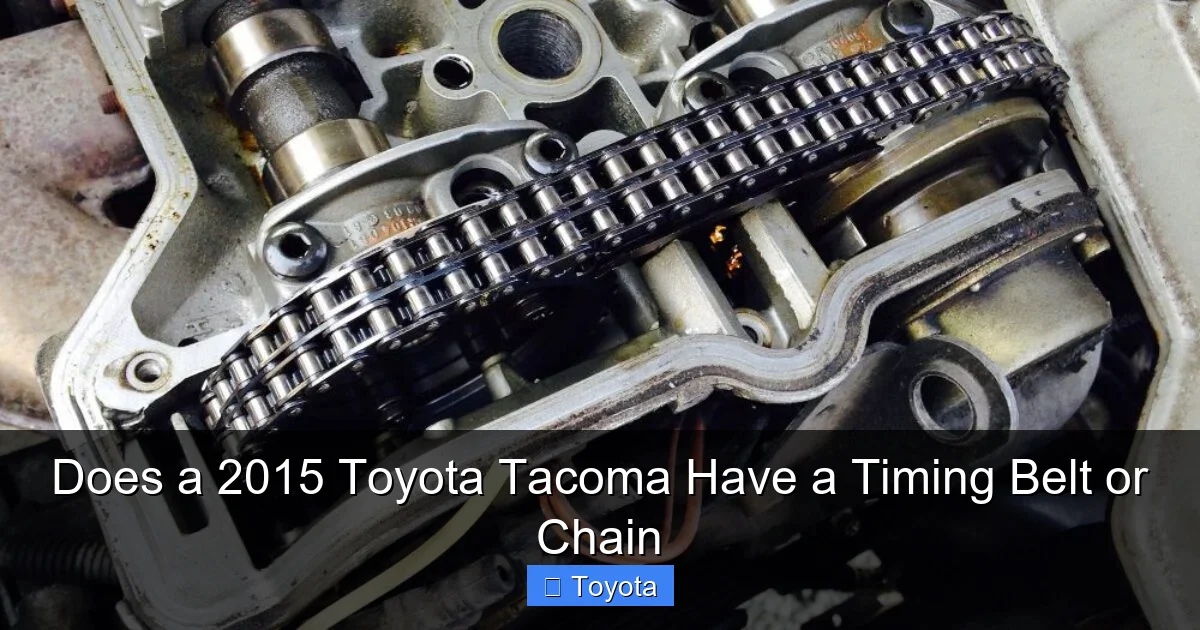
Visual guide about Does a 2015 Toyota Tacoma Have a Timing Belt or Chain
Image source: motorverso.com
The Classic Symptom: Rattling Noise
The most frequent indicator of a timing chain issue is a distinct rattling or slapping noise coming from the front of the engine, typically on the passenger side. This noise is often most pronounced during cold starts, right after the engine has been sitting overnight. As the engine warms up and oil circulates fully, the noise may diminish or disappear. This is the sound of a loose chain with inadequate tensioner pressure, slapping against the guides or tensioner arm. A persistent, loud rattle that doesn’t go away is a serious red flag requiring immediate diagnosis.
Performance Issues and Check Engine Lights
A chain that has stretched significantly or a tensioner that has failed can cause the engine’s computer (ECU) to detect a problem. You might experience rough running, misfires (especially on the V6, which has a single chain for both banks), or a noticeable loss of power and fuel efficiency. The ECU monitors camshaft and crankshaft position sensors. If the chain has jumped a tooth or is excessively loose, the relative positions become incorrect, triggering a P0340 (Camshaft Position Sensor Circuit Malfunction) or similar code. If you see a check engine light accompanied by poor performance, have the codes read immediately. Metal shavings found in the oil during a drain is another ominous sign of excessive chain or sprocket wear and requires urgent inspection.
What Happens If a Timing Chain Fails? The Critical Difference
This is the nightmare scenario that makes the timing system question so important. The consequences of a failure depend entirely on whether your engine is an “interference” or “non-interference” design. Here’s where the Tacoma’s engineering provides crucial peace of mind.
The 2015 Tacoma’s Non-Interference Design
Both the 2.7L 2TR-FE and 4.0L 1GR-FE engines in the 2015 Tacoma are non-interference engines. This is a key safety feature. In an interference engine, if the timing system fails and the chain/belt stops, the pistons continue moving and can collide with the open valves, causing massive, instant damage—bent valves, wrecked pistons, and a destroyed cylinder head. This is the classic “belt break = engine destroyed” scenario. In a non-interference engine like the Tacoma’s, the piston and valve paths are designed so they never occupy the same space at the same time. Therefore, if the timing chain were to break or jump, the pistons and valves would not collide. The engine would simply stop running. The damage would be limited to the timing chain system itself (chain, tensioner, guides, possibly the cover). While this is still a significant repair requiring engine disassembly, it is a fraction of the cost of an interference engine failure. It is a repair, not a total engine replacement.
Contrast with Timing Belt Failure
This is the starkest argument for the Tacoma’s chain system. Many popular SUVs and cars from the same era use timing belts on interference engines. For those vehicles, a neglected belt is a ticking time bomb. When it fails, the repair bill easily exceeds $4,000-$6,000 for a new cylinder head and associated machine work. The 2015 Tacoma’s chain and non-interference design means the absolute worst-case scenario from a chain failure is still a far less expensive and less complex repair. To understand the catastrophic potential of a timing belt failure on the wrong engine, you can read about the general consequences here. Remember, though, for your Tacoma, this article discusses belts, but the principle of catastrophic failure on an interference engine is the same risk you’ve largely avoided.
Owner Responsibilities: Keeping Your Chain Healthy for Life
You now have the good fortune of a “lifetime” timing component. Your job is to honor the conditions of that “lifetime.” It boils down to a few simple, proactive habits.
1. Oil Changes Are Non-Negotiable
We cannot stress this enough. Set a reminder. Use a high-quality oil filter. Stick to the 5,000-mile interval if your driving is anything but gentle, long-distance highway cruising. If you tow a trailer, drive in dusty off-road conditions (which the Tacoma is built for), or make mostly short trips where the oil doesn’t fully warm up, consider even more frequent changes. Clean oil is the lifeblood of the chain and tensioner. Checking the oil level monthly is also a simple habit that can save you. Low oil level is a direct threat to chain tension. Knowing your truck’s oil capacity is useful for proper top-ups; you can find that information here.
2. Listen and Observe
Make it a habit to listen to your engine when you start it, especially on cold mornings. A new, normal-sounding Tacoma engine should be smooth and quiet. Any new, persistent metallic rattle from the front of the engine deserves a professional listen. Also, pay attention to the check engine light. Don’t ignore it. Have any codes scanned promptly. And, when you do an oil change, take a moment to look at the drained oil. If it looks like thick sludge or you see shiny metal particles or glitter in it, that’s a sign of abnormal wear somewhere in the engine, potentially related to the timing system or other components.
3. Use Genuine or High-Quality Replacement Parts
If you ever need to replace the tensioner, guides, or chain (likely only on a very high-mileage engine over 200,000 miles), insist on OEM (Toyota) parts or top-tier aftermarket brands (like Aisin, Iwis, or Cloyes). The timing system is not an area to cheap out. A substandard chain or tensioner can fail prematurely, negating all your careful maintenance. A reputable mechanic will understand this and recommend quality parts.
4. Don’t Fear Proactive Inspection
If you purchase a used 2015 Tacoma with questionable maintenance history, or if your truck is pushing past 200,000 miles, it is not unreasonable to have a mechanic perform a timing chain inspection. This involves removing the timing cover and visually inspecting the chain, tensioner, and guides for wear, cracks, or excessive slack. It’s an added cost but provides immense peace of mind. For most owners, however, this is unnecessary if oil changes have been consistent.
Conclusion: A Major Reliability Win for Tacoma Owners
To circle back to the original question with absolute clarity: your 2015 Toyota Tacoma has a timing chain. This is one of the most significant and owner-friendly engineering decisions Toyota made for this generation. It translates directly into lower lifetime ownership costs, eliminates a major anxiety-inducing scheduled service, and, thanks to the engine’s non-interference design, removes the specter of a total engine loss from a simple maintenance oversight. The “lifetime” promise is real, but it is a two-way street. Your commitment to flawless oil change discipline is the price of admission. By treating your Tacoma’s lubrication system with respect, you are directly protecting its timing chain—and by extension, the entire heart of your truck—for hundreds of thousands of miles. This simple fact is a key reason why the 2015 Tacoma holds its value so well and is regarded as one of the most dependable used trucks you can buy. Enjoy the peace of mind that comes with a chain-driven, non-interference engine, and keep up with those oil changes.
Frequently Asked Questions
Is the timing chain on a 2015 Tacoma really “lifetime” and never needs replacing?
Yes, Toyota designed the timing chain system to last the engine’s lifespan under normal maintenance. There is no scheduled replacement in the owner’s manual. However, “lifetime” is contingent on flawless oil change practices. On engines with extreme neglect or very high mileage (250,000+), components like the tensioner or plastic guides may eventually wear and could need attention, but the chain itself is exceptionally durable.
What does a bad timing chain sound like on a 2015 Tacoma?
>A failing or loose timing chain typically produces a loud, metallic rattling or slapping noise from the front of the engine (passenger side). It’s often loudest during cold starts and may quiet down as the engine warms and oil circulates fully. A constant, loud rattle is a serious issue that requires immediate diagnosis to prevent damage.
How much would it cost to replace the timing chain on a 2015 Tacoma if it failed?
While rare, a full timing chain replacement is a major labor-intensive job. For the 2015 Tacoma, estimates typically range from $1,200 to $2,500+, depending on the shop, your location, and if any additional parts like the tensioner, guides, or water pump (often replaced at the same time) are needed. This is vastly cheaper than the $5,000+ interference engine damage from a broken belt on other vehicles.
Are both the 2.7L 4-cylinder and 4.0L V6 engines in the 2015 Tacoma chain-driven?
Yes, absolutely. Both the 2.7L 2TR-FE and the 4.0L 1GR-FE engines use a timing chain. There are no exceptions for the 2015 model year. You do not need to check your VIN or engine code; the rule is universal across the entire lineup.
Can I install an aftermarket timing chain or upgrade for more power?
For a stock or mildly modified 2015 Tacoma, there is no need. The factory chain is more than adequate. For extreme high-horsepower builds (e.g., large forced induction), aftermarket performance chains with different materials or designs exist, but they are for race applications and are unnecessary for 99% of owners. Stick with OEM or high-quality standard replacement parts if ever needed.
Does a timing chain affect my Tacoma’s resale value?
Yes, positively. The knowledge that the vehicle has a “lifetime” timing chain is a significant selling point. Buyers are relieved they don’t need to budget for an expensive timing belt service. It simplifies the vehicle’s maintenance history and is often cited in listings as a key reliability feature, helping maintain strong resale value.
