
How Many People Can Fit in a Toyota Highlander Hybrid?

The Toyota Highlander Hybrid is a three-row SUV that typically seats either seven or eight people, depending on the trim level and second-row configuration. The base LE and XLE trims offer an eight-passenger capacity with a second-row bench seat, while the Limited and Platinum trims provide seven seats with optional captain’s chairs. While the third row is best suited for children or shorter adults, the overall flexible interior makes it a top choice for families and carpoolers needing reliable, fuel-efficient transportation.
Key Takeaways
- Standard seating is for 7 or 8 passengers: The configuration depends on the trim; bench seat (8 seats) or captain’s chairs (7 seats) in the second row.
- The third row is compact: It’s most comfortable for children or smaller adults on shorter trips, not for full-sized adults on long journeys.
- Cargo space shrinks significantly with all seats up: You must choose between passenger capacity and cargo volume; folding seats is essential for larger loads.
- Safety and comfort features are family-focused: The Highlander Hybrid includes multiple airbags, LATCH anchors, and available rear-seat entertainment to accommodate a full crew.
- It competes directly with other 3-row hybrids: Its main rivals are models like the Honda Pilot Hybrid and Kia Sorento Hybrid, with seating being a key differentiator.
- Hybrid system doesn’t compromise interior space: The battery pack is located under the rear seats, preserving passenger and cargo room compared to the non-hybrid model.
📑 Table of Contents
- Introduction: Solving the Family Transport Puzzle
- Understanding the Official Seating Configurations: 7 vs. 8
- A Detailed Look at Each Row: Space, Access, and Practicality
- Cargo Space: The Inevitable Trade-Off with Passengers
- Real-World Scenarios: Who Exactly Fits Where?
- Safety and Comfort Features for a Full Cabin
- Maintenance Considerations When Frequently at Max Capacity
- Conclusion: Is the Highlander Hybrid’s Capacity Right for You?
Introduction: Solving the Family Transport Puzzle
So, you’re looking at the Toyota Highlander Hybrid. Maybe you’ve got a growing family, a carpool squad, or you just love the idea of a fuel-efficient people-mover. One of the very first questions that pops up is the big one: “How many people can actually fit in this thing?” It’s a simple question, but the answer has a few important layers that directly affect whether this SUV is the right fit for your life.
Let’s be clear from the start: the Toyota Highlander Hybrid is designed as a three-row SUV. That means it has seating behind the front seats, in two distinct rows. But the total number of seats isn’t a single, universal number. It’s a choice you make based on your trim and how you configure that crucial middle row. Understanding this capacity is about more than just headcount; it’s about legroom, ease of access, and what you’re leaving behind in the garage when you pack everyone in. We’re going to break down every detail, from the official specs to the real-world realities of fitting adults and kids, car seats, and all the gear that comes with them. By the end, you’ll know exactly if the Highlander Hybrid’s interior can handle your crew.
Understanding the Official Seating Configurations: 7 vs. 8
Toyota offers the Highlander Hybrid in several trim levels: LE, XLE, Limited, and Platinum. The primary factor determining whether you get seven or eight seats is the second-row seating style. This isn’t just about an extra seat; it changes the entire character of the cabin’s middle section.
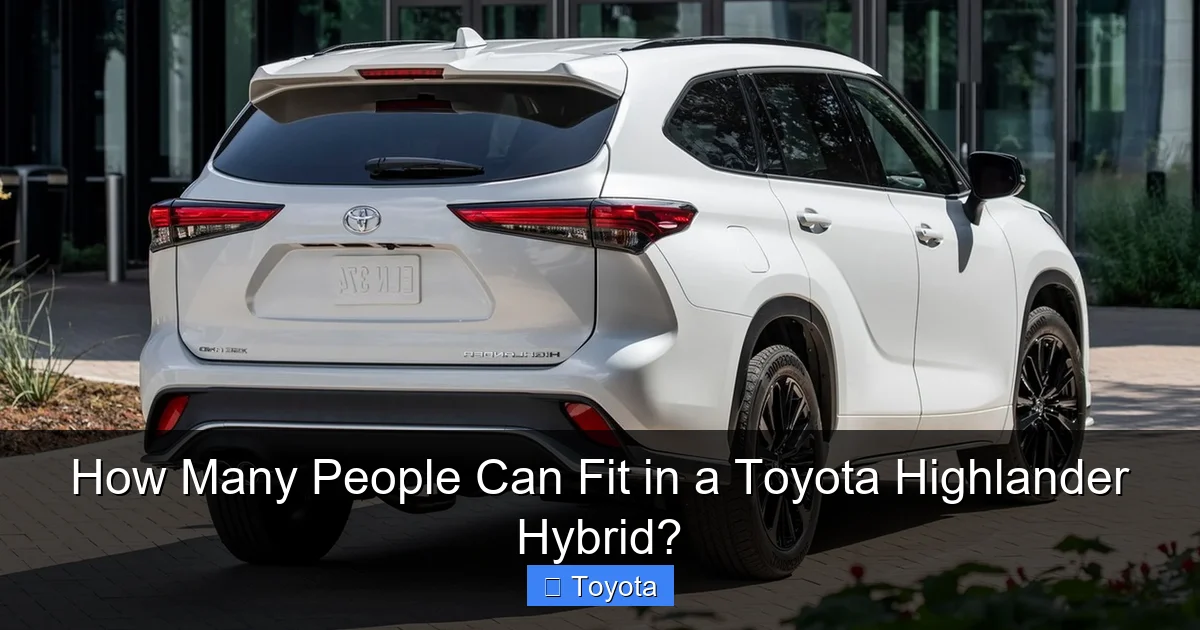
Visual guide about How Many People Can Fit in a Toyota Highlander Hybrid?
Image source: carscoops.com
The Eight-Passenger Layout: The Bench Seat Standard
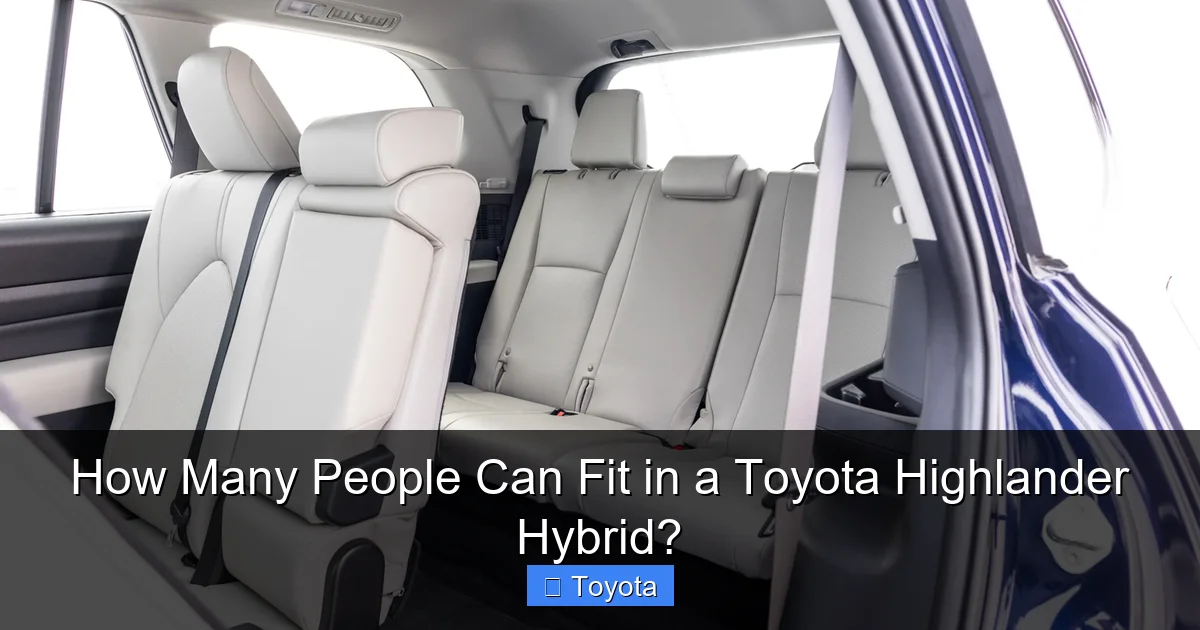
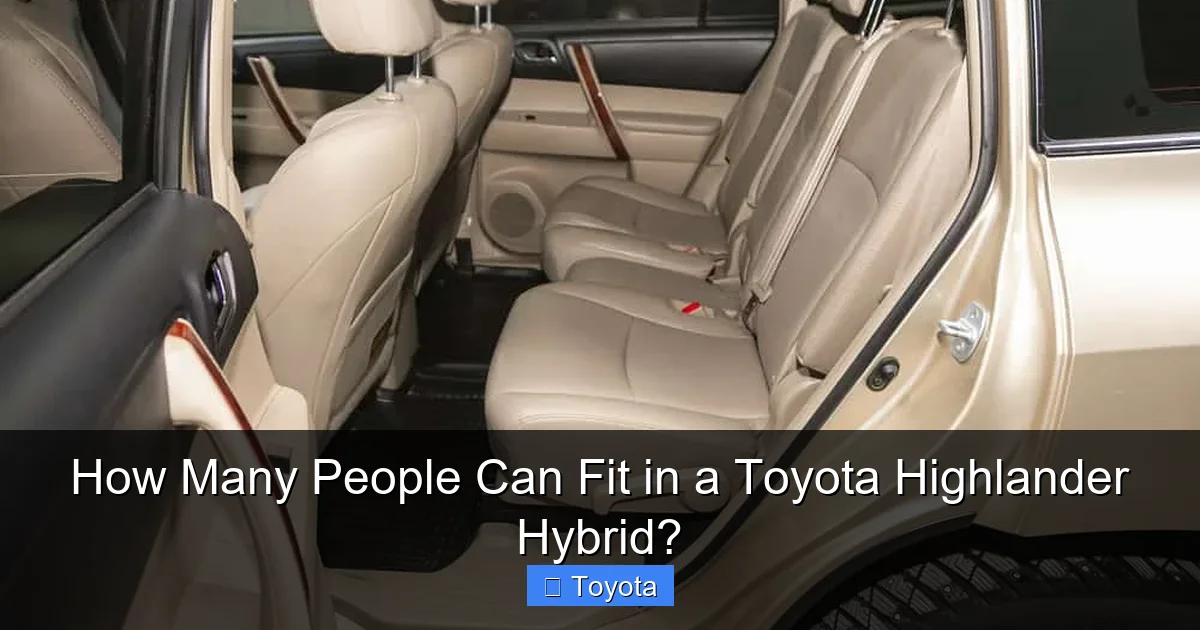
On the LE and XLE trims, the standard and only second-row option is a 60/40 split fold-flat bench seat. This bench provides a total of three seating positions. Combined with the two front seats and the three in the third row, you get the maximum eight-passenger capacity.
Who is this for? This is the classic, utilitarian family setup. It’s perfect if you regularly need to transport three children across the second row. The bench seat is often simpler for kids to climb over and can sometimes feel more spacious for three smaller bodies or two with a booster in the middle. It also typically offers a bit more total shoulder room across the row than captain’s chairs.
The Seven-Passenger Layout: Captain’s Chairs for Comfort and Access
Move up to the Limited and Platinum trims, and the standard second-row changes to individual captain’s chairs. These are two separate, bucket-style seats with their own armrests and often more pronounced bolstering. This reduces the second-row capacity by one seat, bringing the total to seven passengers. Importantly, on the XLE trim, captain’s chairs are available as an optional upgrade.
Who is this for? This layout is a game-changer for adult comfort and third-row access. With a bench seat, getting to the third row requires folding and tumbling the entire middle seat on the passenger side (in left-hand drive models). With captain’s chairs, you simply slide the front seat forward and walk between the two chairs to reach the back. This is a massive convenience for parents loading kids, for grandparents, or for any adult who doesn’t want to perform a gymnastics routine to get to the third row. The individual chairs also often feel more premium and can include features like heating, ventilation, and adjustable headrests.
A Detailed Look at Each Row: Space, Access, and Practicality
The number on paper is one thing. The actual experience of sitting in each row is another. Let’s walk through the cabin from front to back, measuring comfort and utility.
Visual guide about How Many People Can Fit in a Toyota Highlander Hybrid?
Image source: motortrend.com
First Row: The Driver and Front Passenger
This is straightforward. The front row has two comfortable bucket seats with a center console. There are no surprises here—plenty of headroom and legroom for almost any adult. The focus here is on the driver’s command of the vehicle and the front passenger’s comfort. Storage is abundant with a large center console, door pockets, and glove box. This row is never the limiting factor in your passenger count.
Second Row: The Critical Middle Ground
This is where the 7 vs. 8 decision plays out. Whether you have a bench or captain’s chairs, legroom is generous for the class. Adults can sit comfortably here without feeling cramped, provided the front seats aren’t reclined to their极限. The real story is about child seats. The Highlander Hybrid has excellent LATCH anchor accessibility. With a bench seat, you can typically install three child seats across (though wide convertible seats might be tight). With captain’s chairs, you install two in the chairs themselves and one in the third row behind them, or two in the second row if your third row is folded. This is a key practical consideration for families with multiple young children.
Access Tip: If you frequently need to get to the third row with the vehicle parked tightly, the captain’s chair configuration is almost always worth the trade-off of one seat. The walkway between the chairs is a huge usability win.
Third Row: The “Occasional Use” Zone
Here’s the honest truth about most three-row SUVs, including the Highlander Hybrid: the third row is best described as “best for kids or small adults on shorter trips.” It’s not a penalty box, but it’s not a living room sofa either. Headroom is adequate for most, but knee room and foot space are limited. You’ll be sitting with your knees slightly elevated, and your feet will often find the floor under the second-row seats. The seat cushion itself is fairly thin and positioned higher off the floor, which can lead to a “knees-up” seating position that becomes uncomfortable after an hour or two on the highway.
For adults, it’s perfect for teenagers, smaller-framed adults, or trips under 90 minutes. For children from booster seat age up to early teens, it’s usually just fine. The step up into the third row is reasonably tall but manageable. The seat folds and tumbles easily to access the cargo area behind it. When not in use, it folds completely flat into the floor, creating a seamless load floor.
Cargo Space: The Inevitable Trade-Off with Passengers
You can’t have eight people and a week’s worth of luggage. This is the fundamental law of SUV physics. The Highlander Hybrid’s cargo capacity changes dramatically based on which rows are standing. Let’s look at the numbers and what they mean in practice.
Visual guide about How Many People Can Fit in a Toyota Highlander Hybrid?
Image source: jalopytalk.com
Cargo Volume with All Seats Up
With all three rows in their upright, passenger-ready positions, you’re left with a modest amount of space behind the third row. Think 16 cubic feet or so. What does that fit? A few small suitcases, a couple of grocery bags, or a stroller. It’s essentially “overflow” or “run to the store” space. If you’re planning a family vacation with eight people and their bags, you will not fit everything with all seats occupied. You’ll need a rooftop carrier or a trailer.
Cargo Space with the Third Row Folded
This is the most common “family mode.” Fold the lightweight third row into the floor, and you reveal a much more useful cargo area. Capacity jumps to around 48 cubic feet. This is a practical space that can handle several medium-sized suitcases, a couple of duffel bags, and still have room for a cooler or pet carrier. For a weekend trip with five or six people, this is usually sufficient. You’re trading the occasional need for that third row for significant hauling ability.
Cargo Space with Both Rear Rows Folded
When you need maximum volume—think moving a friend, hauling large purchases, or packing for a long road trip with a smaller group—fold both the second and third rows. This opens up a cavernous 84 cubic feet of cargo space. That’s competitive with many full-size SUVs and more than enough for a family of four to go on a month-long adventure. The load floor is completely flat, which is fantastic for loading bulky items.
Practical Comparison: To give you a sedan-sized perspective, that 84 cubic feet is similar to what you might find in a large sedan’s trunk. If you’re curious how typical luggage fits in a different Toyota, you can read about how many suitcases fit in a Toyota Camry. The Highlander with rows folded dwarfs that space, but with all rows up, it offers less than that Camry trunk.
Real-World Scenarios: Who Exactly Fits Where?
Let’s move from specs to stories. How does this play out for different types of owners?
The Classic Family with Three Kids
This is the Highlander’s bread and butter. A family with two parents and three children (say, ages 8, 10, and 13). The eight-passenger bench-seat model is ideal. The kids can all ride in the second row, perhaps with one in a booster. The third row can be used for extra gear, a dog, or left folded for more cargo. As the kids grow into adults, the second row remains comfortable, and the third row can be used by the youngest for trips. This setup provides maximum flexibility for the inevitable phase where all three kids need their own space but still want to travel together.
The Carpool Commander
If you’re the designated driver for a sports team, scout troop, or neighborhood group, the eight-seat configuration is your goal. You can easily fit four kids in the second and third rows, plus two more in the front (with appropriate restraints, of course). The captain’s chair option might be less ideal here, as you’d lose one seat. However, the easier third-row access is a huge plus when you’re loading and unloading a stream of kids at practice. Think about your typical load: will it be 6-7 kids regularly, or more like 4-5? That decides your config.
The Road Trip Enthusiast
For long journeys, comfort is king. A seven-passenger Platinum with captain’s chairs might be the ultimate road trip machine for a family of four (two parents, two teens). The parents up front, one teen in the second-row captain’s chair, and the other in the spacious third row. The remaining captain’s chair can be used for luggage, a cooler, or a pet bed. The flat cargo floor with the third row folded is perfect for packing coolers and bags within easy reach. Just remember to factor in fuel stops based on the Highlander’s tank size when planning routes with a full crew and luggage.
Safety and Comfort Features for a Full Cabin
Carrying more people means your responsibility as a driver increases. The Highlander Hybrid is equipped with a comprehensive suite of safety and comfort features designed with a full cabin in mind.
Comprehensive Safety Net
Toyota Safety Sense (TSS) 2.5 comes standard on all trims. This includes Pre-Collision System with Pedestrian Detection, Full-Speed Range Dynamic Radar Cruise Control, Lane Departure Alert with Steering Assist, and Automatic High Beams. These systems are invaluable when you’re distracted by chatter in the back or managing multiple passengers. Additionally, the vehicle has a full complement of airbags, including front, side, curtain, and a driver’s knee airbag. The LATCH system (Lower Anchors and Tethers for Children) is easy to use in the second and third rows, making child seat installation less frustrating.
Comfort and Convenience for All
Available features like a rear-seat entertainment system (on higher trims) are a godsend on long trips, keeping rear passengers occupied and reducing “are we there yet?” syndrome. Multi-zone automatic climate control ensures both front and rear occupants can set their ideal temperature. Heated and ventilated front seats, along with heated second-row seats (on some trims), add a layer of comfort everyone can appreciate. The available panoramic moonroof brightens the entire cabin, making the second and third rows feel less claustrophobic.
Maintenance Considerations When Frequently at Max Capacity
If you’re consistently using your Highlander Hybrid to its fullest—eight people and a full cargo load—you’re putting more stress on the vehicle’s components. The engine and hybrid system work harder, the brakes wear faster, and the suspension is under constant load. This makes regular, timely maintenance even more critical than for a lightly-used vehicle.
Pay extra attention to your transmission fluid. Heavy, sustained loads can raise operating temperatures and accelerate fluid degradation. Following the severe service schedule in your owner’s manual is wise. You might consider more frequent checks or even earlier changes than the standard interval. Similarly, your tires will wear unevenly if your vehicle is often heavily loaded on one side (common with family loading patterns). Regular tire rotations are non-negotiable. For specific guidance on your Highlander’s transmission, you can read more about how often to change transmission fluid in a Toyota Highlander to ensure you’re following the best practices for your driving habits.
Conclusion: Is the Highlander Hybrid’s Capacity Right for You?
So, how many people can fit in a Toyota Highlander Hybrid? The definitive answer is: up to eight, but with important caveats about comfort and utility. You choose between the practical, max-capacity eight-seater with its bench seat and the comfortable, accessible seven-seater with captain’s chairs. The third row is a legitimate bonus for kids and short trips, but it’s not a substitute for a full-size SUV’s rear seat on a cross-country journey.
Your decision should be based on your typical need, not your theoretical maximum. If you have three kids who will all need their own space for the next decade, the eight-passenger model is the safe, flexible bet. If your “third passenger” is occasional—a grandparent, a friend’s kid, or a teenager who sometimes prefers the front—the seven-passenger layout with its superior comfort and access might be the better daily experience. Always test drive with your family and bring car seats if you use them. Sit in the third row. Fold the seats. See how your lifestyle gear fits. The Highlander Hybrid offers one of the most versatile and efficient packages in the three-row segment, but its true capacity is defined by how your specific people and their stuff map onto its clever, flexible interior.
Frequently Asked Questions
Can two adults fit comfortably in the Highlander Hybrid’s third row?
For most adults, the third row is best suited for shorter trips (under 1-2 hours) or for smaller-framed individuals. Two average-sized adults will find the legroom and knee room tight, and the seating position is higher off the floor. It’s doable, but not ideal for a cross-country trip.
How many car seats can I install in the Highlander Hybrid?
It depends on the second-row configuration. With the eight-passenger bench seat, you can typically install three child seats across (though wide convertible seats may be a tight squeeze). With the seven-passenger captain’s chairs, you can install two in the second row and one in the third row, or two in the second row if you don’t need the third.
Does the hybrid battery take up cargo or passenger space?
No. One of the clever aspects of the Highlander Hybrid is that its lithium-ion battery pack is located underneath the third-row seats. This means it does not impinge on passenger space in any row or reduce the cargo volume when the seats are folded. The space is identical to the non-hybrid model.
What is the maximum payload capacity when all seats are occupied?
3
The maximum payload (the weight of all passengers and cargo) for a Toyota Highlander Hybrid is typically around 1,500 to 1,600 pounds. With eight people on board, especially if they are adults, you can easily approach or exceed this limit before adding any luggage. It’s crucial to be mindful of weight distribution and total load when the vehicle is full.
Is it difficult to get into the third row with the eight-passenger bench seat?
Yes, it’s more difficult than with captain’s chairs. To access the third row on the passenger side (in left-hand drive models), you must fold the middle seat of the bench forward and slide the front passenger seat forward. This creates a narrow, awkward opening. On the driver’s side, access is even more restricted. The captain’s chair configuration provides a much wider, easier walkway.
How does the Highlander Hybrid’s cargo space compare to the non-hybrid Highlander?
The cargo space is virtually identical. Because the hybrid battery is tucked under the third-row seats, it doesn’t affect the cargo volume behind the third row or the total volume when rows are folded. The numbers for all configurations (all seats up, third row folded, both rows folded) are the same between hybrid and non-hybrid models.
