
Does a 2009 Toyota Corolla Have a Timing Belt or Chain?

The 2009 Toyota Corolla is equipped with a timing chain, not a timing belt. This is a key reliability feature, as timing chains are designed to last the lifetime of the engine with proper maintenance, unlike belts which require scheduled replacement. This means no periodic, expensive timing belt service for 2009 Corolla owners, but it underscores the critical importance of regular oil changes to ensure chain lubrication and longevity.
Key Takeaways
- The 2009 Toyota Corolla uses a timing chain: For the 1ZZ-FE and 2ZR-FE engines available that year, Toyota utilized a durable timing chain system.
- Timing chains are “lifetime” components: They are not on a scheduled replacement interval like belts, but their lifespan is directly tied to engine oil health and maintenance.
- No $500-$1000 timing belt service: Owners avoid the major preventative maintenance cost associated with timing belts, which is a significant long-term financial benefit.
- Oil changes are non-negotiable: The chain is lubricated by engine oil. Skipping oil changes leads to chain wear, stretch, and potential failure.
- Listen for warning signs: A rattling noise from the front of the engine on startup (especially when cold) can indicate a worn timing chain or tensioner.
- Engine design is interference: While the chain is robust, if it were to fail due to extreme neglect, the resulting piston-to-valve contact would cause severe engine damage.
📑 Table of Contents
- Understanding the Heartbeat: Timing Belts vs. Timing Chains
- The 2009 Toyota Corolla: Engine by Engine Breakdown
- Maintenance Realities: Chains vs. Belts in Your Daily Drive
- Cost Analysis: The Financial Peace of a Chain
- Warning Signs & Potential Problems: Listen to Your Engine
- The Verdict and Final Recommendations for 2009 Corolla Owners
Understanding the Heartbeat: Timing Belts vs. Timing Chains
Let’s start with the basics. Your car’s engine is a precisely orchestrated dance of metal. The camshaft(s) control the opening and closing of the intake and exhaust valves. The crankshaft converts the up-and-down motion of the pistons into rotational force. The timing system is the choreographer that ensures these two parts move in perfect sync. If they fall out of sync—what we call “timing is off”—the engine runs poorly, if at all, and can destroy itself in seconds.
There are two primary ways to connect these crucial components: a timing belt or a timing chain. A timing belt is typically made of reinforced rubber with teeth that mesh with gears. It’s quieter, cheaper to produce, and sits outside the engine, protected by a cover. A timing chain is exactly what it sounds like—a metal roller chain, similar to a bicycle chain but far stronger. It runs inside the engine, lubricated by the engine oil.
The choice between them has huge implications for maintenance, cost, and long-term reliability. Belts are a consumable item; they dry out, crack, and can break. They require replacement at strict intervals, usually every 60,000 to 100,000 miles, as recommended by the manufacturer. Chains, in theory, are as permanent as the engine block itself. They are lubricated constantly, and with proper oil changes, they should not need replacement. This fundamental difference is the core of your question about the 2009 Toyota Corolla.
The Great Divide: Why Manufacturers Choose One Over the Other
Historically, many automakers, including Toyota, used timing belts in smaller, economy engines to reduce cost, weight, and noise. The belt’s external location also made it easier and cheaper to replace during a service. However, belts come with a major drawback: they have a defined service life and a failure is catastrophic. A broken timing belt in an interference engine (where pistons and valves share the same space) means bent valves, damaged pistons, and a bill that often exceeds the car’s value.
Enter the timing chain. Chains are more expensive to manufacture and can be noisier (though modern engineering has minimized this). They add a bit of weight and complexity. The advantage is immense: they are built for the long haul. They don’t need scheduled swaps. The trade-off is that they rely entirely on the engine’s lubrication system. Dirty oil, low oil pressure, or neglected oil changes are the chain’s biggest enemies, leading to accelerated wear of the chain links, pins, and the critical hydraulic tensioner that keeps it taut.
By the late 1990s and early 2000s, as engineering and materials improved, a major shift began. Automakers like Toyota started migrating their most popular, high-volume engines to chains for the durability and “lifetime” marketing benefit it offered to consumers. This transition was largely complete for core Corolla engines by the mid-2000s.
The 2009 Toyota Corolla: Engine by Engine Breakdown
So, we arrive at the 2009 model year. This was the final year of the ninth-generation Corolla in North America. It was offered with two primary engine options, and the answer is consistent for both: timing chain.
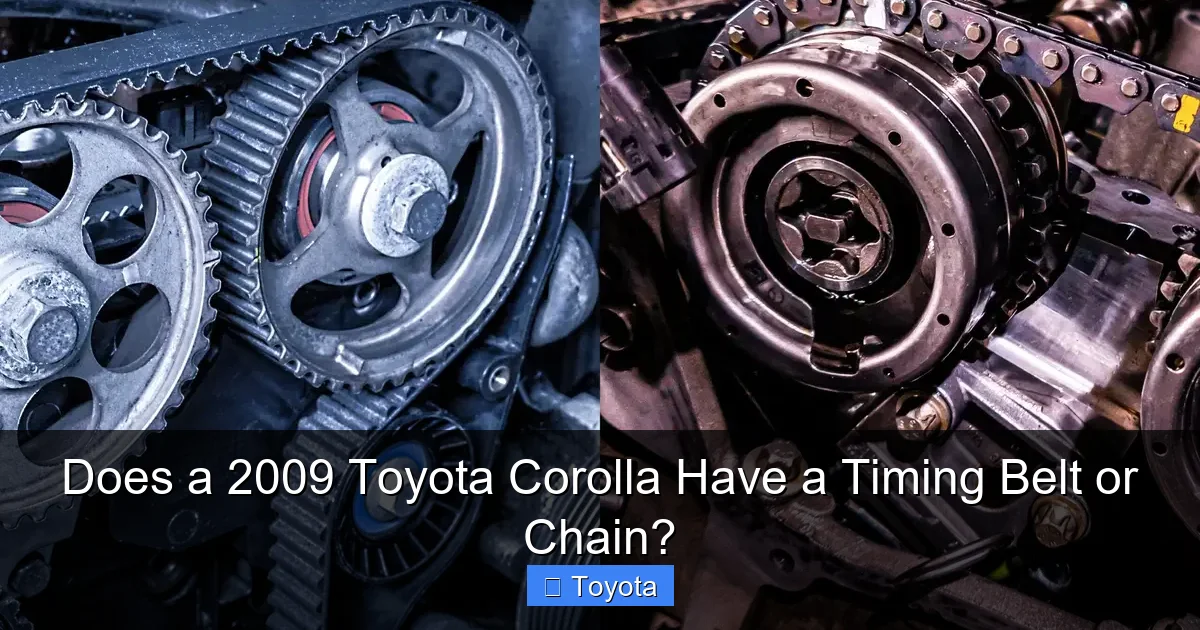
Visual guide about Does a 2009 Toyota Corolla Have a Timing Belt or Chain?
Image source: images.cars.com
- 1ZZ-FE 1.8L 4-Cylinder: This workhorse engine, producing 132 horsepower, was the most common. It features a single overhead cam (SOHC) design with 16 valves. It uses a timing chain to connect the crankshaft to the camshaft.
- 2ZR-FE 2.4L 4-Cylinder: Available in the sportier XRS model, this more powerful 158-horsepower engine employs a dual overhead cam (DOHC) setup with 16 valves and Toyota’s VVT-i (Variable Valve Timing with intelligence) system. It also uses a timing chain.
Both engines are of the “interference” design. This means that if the valves and pistons were to collide due to a loss of timing, significant mechanical damage would occur. However, with the timing chain system, the likelihood of a sudden, unheralded failure like a belt snap is extremely low. The failure mode is usually one of progressive wear—the chain stretches, the tensioner wears out, and the timing gradually becomes retarded, leading to poor performance, check engine lights, and eventually, if ignored, severe damage.
This is a crucial point of reassurance for 2009 Corolla owners. You do not have a ticking time bomb under your hood in the form of a rubber belt with a finite calendar life. You have a robust chain system that, when cared for, will faithfully serve the engine’s lifetime. To understand the broader context of Toyota’s engine evolution, you can explore resources that detail what year Toyota Tundra has a timing chain, showing how this technology migrated across their entire lineup.
How to Visually and Physically Confirm It Yourself
If you’re a hands-on car owner and want to see it for yourself, here’s how. You’ll need a basic socket set and a flashlight.
- Locate the timing cover: On the front of the engine, you’ll see a large, usually black or silver, metal cover. This is the timing chain cover. It’s bolted to the front of the engine block and cylinder head.
- Distinguish it from a belt cover: A timing belt cover is often made of plastic or a composite material. A timing chain cover is always metal because it contains the oil that baths the chain. It will have an oil drain plug or a gasket surface.
- Remove the cover (for absolute proof): If you remove the bolts (typically 10mm or 12mm), you can peer inside. You will see a long, continuous metal chain wrapped around toothed sprockets on the crankshaft and camshaft(s). There is no rubber belt.
For most owners, simply knowing the official specification is enough. But for the curious or DIY-minded, this visual confirmation is straightforward. Remember, always be sure the engine is cold and the negative battery terminal is disconnected before poking around the engine bay.
Maintenance Realities: Chains vs. Belts in Your Daily Drive
This is where the rubber, so to speak, meets the road. Knowing you have a chain changes your entire maintenance philosophy and ownership cost outlook.
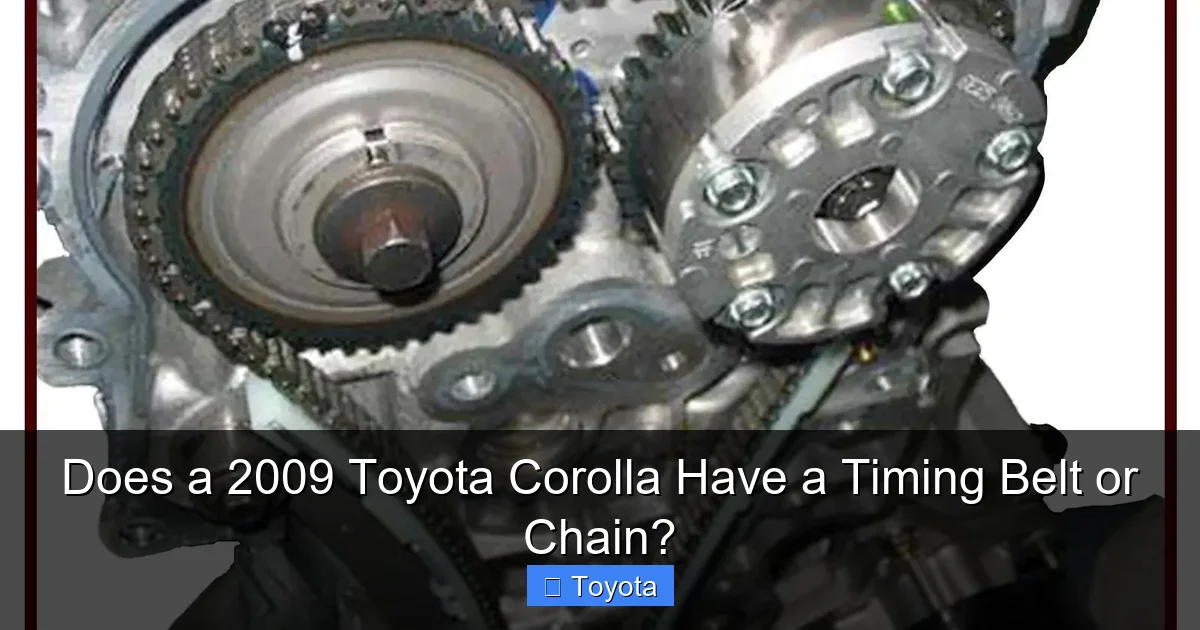
Visual guide about Does a 2009 Toyota Corolla Have a Timing Belt or Chain?
Image source: i2.wp.com
The “Lifetime” Myth and the Oil Change Imperative
When manufacturers say “lifetime,” they mean the expected life of the vehicle under normal use and, most critically, normal maintenance. For a timing chain, “normal maintenance” is almost entirely defined by engine oil changes. The chain and its components—the pins, rollers, and especially the hydraulic tensioner—rely on clean oil at the correct pressure to create a lubricating film that minimizes metal-on-metal contact.
Dirty, sludgy oil, or oil that has been run too long, loses its lubricity and becomes abrasive. It accelerates wear on the chain. Low oil level or pressure means the tensioner (which is oil-pressure operated) can’t keep the chain properly tight, leading to slack, noise, and wear. The single most important thing you can do for your 2009 Corolla’s timing chain is to change the oil and filter exactly on schedule, using the oil viscosity and type specified in your owner’s manual (typically 5W-20 or 5W-30). If you’re unsure about the exact capacity, a quick reference to how much oil a Toyota Corolla takes will give you the precise figure for your specific engine.
Other Related Belt Systems: Don’t Confuse Them!
It’s vital not to confuse the timing chain with the serpentine belt. The serpentine belt (or accessory drive belt) is a long, single rubber belt that powers your alternator, power steering pump, air conditioning compressor, and water pump. This is a completely separate belt that does have a scheduled replacement interval, typically every 60,000 to 100,000 miles. It is an accessory belt, not a timing component. A failing serpentine belt will cause your battery to die, your A/C to blow warm air, or your engine to overheat—but it will not cause internal engine destruction. You can learn more about the specific lifespan of a Toyota serpentine belt to manage that part of your maintenance.
There is also a possibility of a small, separate balance shaft belt on some engine variants, but this is not a timing belt for the camshaft and is also a wear item. The primary, critical synchronization between the crank and cams is handled by the metal chain in your 2009 Corolla.
Cost Analysis: The Financial Peace of a Chain
Let’s talk numbers, because this is where the tangible benefit of a timing chain becomes crystal clear.
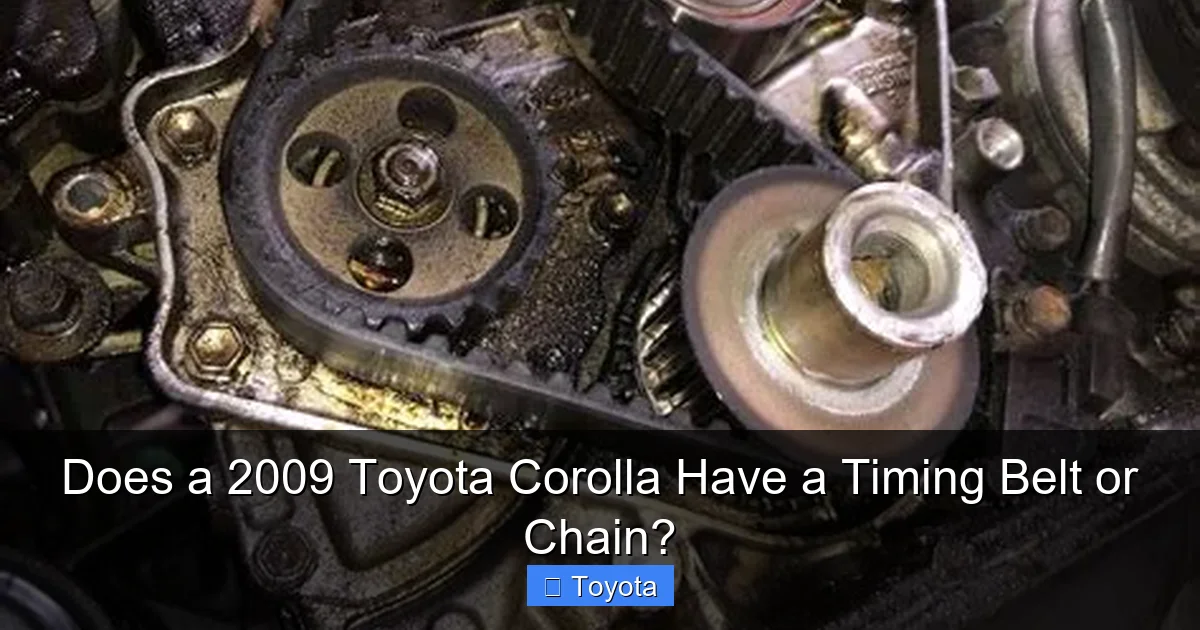
Visual guide about Does a 2009 Toyota Corolla Have a Timing Belt or Chain?
Image source: autozonic.com
The Staggering Cost of a Timing Belt Replacement
On a car that uses a timing belt, the service is one of the most expensive routine maintenance items you’ll face. It’s not just the belt. The job requires removing the harmonic balancer, water pump (often replaced at the same time as it’s driven by the belt), and various covers. It’s 4-8 hours of skilled labor. For a 2009 Corolla with a belt (which it doesn’t have, but imagine), you’d be looking at a bill of $500 to $1,200+ at a dealership or independent shop. This is a planned, unavoidable expense that hits your wallet every ~90k miles.
The “No-Brainer” Savings of the Chain
For your 2009 Corolla, that $500-$1,200 bill simply does not exist for the timing system. There is no scheduled service. You will never get a quote for a “timing chain replacement” as a preventative measure. Your major engine-related service costs are limited to:
- Oil and filter changes: Every 5,000-10,000 miles. Cost: $40-$80 if you DIY, $70-$120 at a quick lube.
- Spark plugs: Every 120,000 miles for platinum/iridium plugs. Cost: $150-$300 in parts + labor.
- Serpentine belt: As mentioned, every 60k-100k miles. Cost: $100-$250.
The financial advantage is massive over the life of the vehicle. You’ve avoided one of the most costly single services on a modern car. This is a primary reason why the 2009 Corolla, and Toyotas of this era with chains, are praised for their long-term cost of ownership. Your maintenance budget is predictable and focused on consumables like oil, filters, and tires.
Warning Signs & Potential Problems: Listen to Your Engine
While chains are robust, they are not indestructible. Neglect can cause problems. The key is to recognize the symptoms early.
The Classic Symptom: Rattling on Startup
The most common indicator of a worn timing chain or a failing hydraulic tensioner is a distinct rattling or clattering noise from the front of the engine (timing cover area) that lasts for 1-3 seconds upon cold startup. This noise often goes away once oil pressure builds and the tensioner fully engages. It’s the sound of a loose chain with slack being thrown around before the tensioner takes up the play. If you hear this, it’s a serious warning. Get it diagnosed immediately. Ignoring it will lead to chain stretch, mis-timing, and eventually, engine damage.
Other Red Flags
- Check Engine Light (CEL): Modern engine computers (ECUs) monitor camshaft and crankshaft position sensors. If the chain stretches enough to alter the relationship between these sensors, you’ll get a P0010-P0016 series code related to cam/crank correlation. This is a direct alarm bell.
- Poor Performance and Fuel Economy: A stretched chain retards cam timing. You might notice a general lack of power, sluggish acceleration, and a drop in MPG. The engine’s computer is trying to compensate but can’t fully overcome the mechanical disadvantage.
- Metal Shavings in Oil: This is a mechanic’s discovery. During an oil change, if the drain plug magnet or the oil itself shows excessive fine metallic particles, it can indicate accelerated wear of chain components. This is a result, not a cause, but a sign of a larger problem.
If any of these symptoms appear, the diagnosis will likely involve removing the timing cover to inspect the chain, tensioner, and guides for wear. The repair cost at this point is significant—often $1,500 to $3,000+—because it’s essentially an engine rebuild. This reinforces why preventative maintenance (oil changes) is so critical. A well-maintained chain in a 2009 Corolla should easily surpass 250,000 miles without issue.
The Verdict and Final Recommendations for 2009 Corolla Owners
So, to answer your question with absolute certainty and context: Yes, your 2009 Toyota Corolla has a timing chain. This is a major point in its favor for reliability and long-term value. You bought a car that avoided one of the biggest scheduled maintenance hurdles.
However, this benefit comes with a single, non-negotiable responsibility: be religious about your oil changes. Use high-quality oil and a good filter. Do not extend intervals beyond what Toyota recommended for your driving conditions (severe vs. normal). If you have any doubt about your oil change history, consider having a mechanic perform a compression test or a borescope inspection through the spark plug holes to check for any signs of chain-related issues. Also, if you’re purchasing a used 2009 Corolla with high mileage, always ask for maintenance records proving consistent oil service.
In the grand comparison, as you might evaluate whether to buy a Honda Civic or Toyota Corolla, the timing system is a key differentiator. For this generation, the Corolla’s chain gives it a clear edge in projected long-term maintenance costs over many competitors that still used belts. It’s a testament to Toyota’s engineering philosophy of prioritizing durable, low-owner-fuss designs for its bread-and-butter models.
Enjoy your reliable Corolla. Keep the oil clean and full, listen for that startup rattle, and you can likely enjoy many more years and miles of trouble-free, chain-driven motoring.
Frequently Asked Questions
Does a 2009 Toyota Corolla have a timing belt or chain?
A 2009 Toyota Corolla has a timing chain for both its available 1.8L (1ZZ-FE) and 2.4L (2ZR-FE) engines. This chain is designed to last the lifetime of the engine with proper oil maintenance.
What are the signs of a bad timing chain on a 2009 Corolla?
The primary sign is a rattling or clattering noise from the front of the engine that lasts a few seconds on cold starts. Other signs include a check engine light with cam/crank sensor codes, poor performance, and decreased fuel economy.
Does a timing chain ever need to be replaced on a 2009 Corolla?
Under normal maintenance with regular oil changes, a timing chain should not need replacement and is considered a “lifetime” part. However, with severe neglect (chronic low oil, skipped changes), the chain, tensioner, and guides can wear out and require replacement, which is a major repair.
What happens if the timing chain fails in a 2009 Corolla?
The 2009 Corolla engines are interference engines. A timing chain failure would cause the pistons to collide with the open valves, resulting in bent valves, damaged pistons, and likely a destroyed cylinder head. This requires a complete engine rebuild or replacement.
Is a timing chain more reliable than a timing belt?
Yes, a properly maintained timing chain is generally more reliable and durable than a timing belt. Belts are rubber and require scheduled replacement (every 60k-100k miles). Chains are metal and lubricated by oil, intended to last the engine’s life but dependent on oil change diligence.
What maintenance is specifically required for the timing chain in my 2009 Corolla?
No direct maintenance is required for the chain itself. The only critical maintenance is changing the engine oil and filter on schedule using the correct oil viscosity. Clean oil is essential for lubricating the chain and its hydraulic tensioner. You should also ensure the engine always has the correct oil level.
