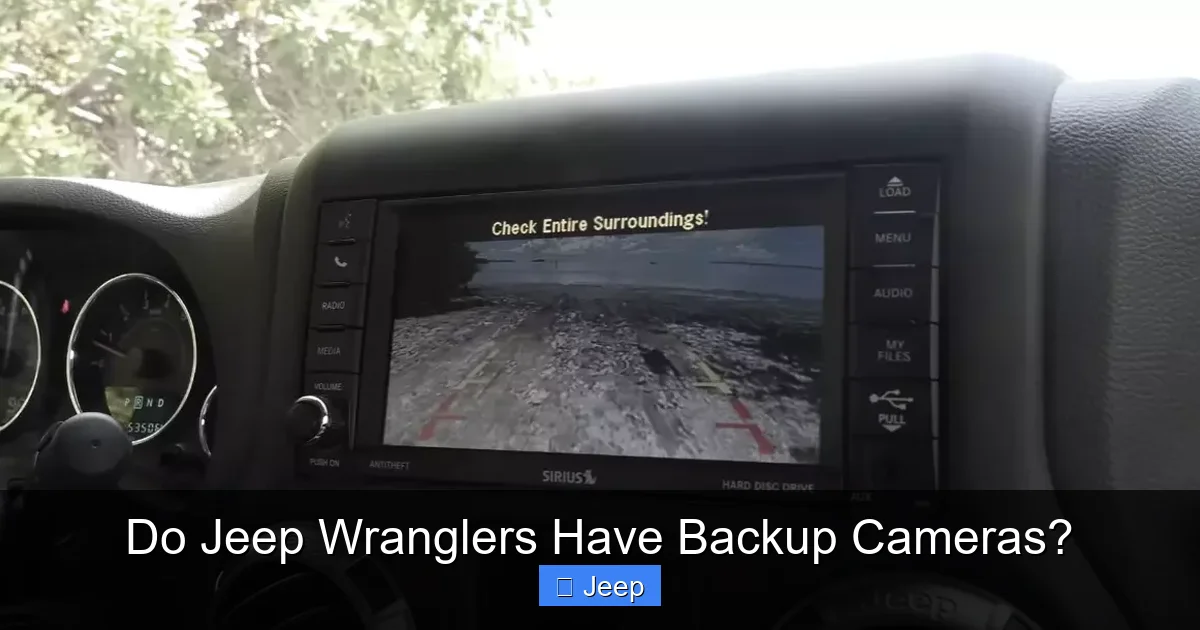
Do Jeep Wranglers Have Backup Cameras?

Contents
- 1 Key Takeaways
- 2 📑 Table of Contents
- 3 The Great Divide: A History of Backup Cameras in the Wrangler
- 4 Factory-Installed Options: What You Get (and When)
- 5 Aftermarket Upgrades: Your Complete Guide for Pre-2021 Wranglers
- 6 Installation Considerations: What You Need to Know
- 7 Benefits Beyond Just Backing Up: Why a Wrangler Owner Really Needs One
- 8 Addressing Common Concerns and Myths
- 9 Making Your Decision: A Simple Flowchart
- 10 Conclusion: Seeing Clearly is No Longer a Luxury
- 11 Frequently Asked Questions
Car Phone Holder

Car Glass Cleaner
Car Inverter

Liquid Car Polish
Yes, modern Jeep Wranglers have backup cameras, but it depends entirely on the model year and trim level. The feature became standard in the 2021 model year (JL generation) due to federal safety regulations. For earlier Wranglers (JK/JKU and TJ), a backup camera is not factory-installed but is easily added through a vast array of aftermarket options, from simple license plate mounts to full integrated stereo systems.
Key Takeaways
- Model Year is Everything: 2021+ JL Wranglers come standard with a backup camera. 2018-2020 JLs often have it as part of a safety package. 2007-2018 JK/JKU and earlier TJ models do not have a factory camera.
- Aftermarket Solutions Abound: For pre-2021 Wranglers, adding a camera is a straightforward and popular upgrade with options for every budget and need.
- Installation Varies in Complexity: Simple wireless license plate cameras can be a DIY project in under an hour. Integrated systems requiring wiring to the reverse light may need professional installation.
- Cameras Enhance More Than Just Backing Up: They are crucial for off-road obstacle spotting, trailer hitching, and navigating tight urban spaces in a wide vehicle.
- Screen Integration Options: You can use a dedicated small monitor, integrate with an aftermarket stereo (like many Pioneer models with built-in cameras), or even pair with a smartphone.
- Durability is Key: Choose cameras rated for off-road use, with waterproof housing (IP67 or higher) and robust mounts that can handle trail debris and pressure washing.
[FEATURED_IMAGE_PLACEHOLDER]
📑 Table of Contents
- The Great Divide: A History of Backup Cameras in the Wrangler
- Factory-Installed Options: What You Get (and When)
- Aftermarket Upgrades: Your Complete Guide for Pre-2021 Wranglers
- Installation Considerations: What You Need to Know
- Benefits Beyond Just Backing Up: Why a Wrangler Owner Really Needs One
- Addressing Common Concerns and Myths
- Making Your Decision: A Simple Flowchart
- Conclusion: Seeing Clearly is No Longer a Luxury
The Great Divide: A History of Backup Cameras in the Wrangler
If you’re a Jeep Wrangler owner or potential buyer, the question “Do Jeep Wranglers have backup cameras?” is a smart one. The answer isn’t a simple yes or no. It’s a story of evolving safety standards, Jeep’s unique philosophy, and the incredible ingenuity of the aftermarket industry. For decades, the Wrangler stood apart from the modern automotive tide. While sedans and crossovers rapidly adopted backup cameras in the early 2010s, the Wrangler—a focused off-road tool—often left them off the roster. This changed dramatically, but the legacy means the answer depends heavily on which Wrangler you’re looking at.
Let’s rewind. The first widespread mandate for backup cameras in the U.S. came from the National Highway Traffic Safety Administration (NHTSA), which required them on all new vehicles starting May 2018. However, manufacturers could phase them in over a few years. For Jeep, this timeline intersected with the launch of the current JL generation Wrangler in 2018. This created a confusing few-year window where some new Wranglers had them and some didn’t, depending on the trim. Understanding this history is the first step to knowing what your Wrangler has and what it can get.
The TJ and JK/JKU Eras: No Factory Camera, But a World of Options
If your Wrangler is a TJ (1997-2006) or a JK/JKU (2007-2018), it did not come from the factory with a backup camera. Period. These were simpler times, focused on solid axles and removable tops. Safety tech was minimal by today’s standards. This is the vast majority of Wranglers still on the road today, and for these models, adding a camera is one of the most common and impactful upgrades owners make.
The aftermarket saw this need and answered powerfully. For the JK/JKU, you could even find factory-style dealer add-ons for certain high-trim models late in the run, but these were rare. The real revolution was in the aftermarket. Owners could choose from basic, affordable cameras that mounted on the spare tire or license plate, all the way up to fully integrated systems that replaced the factory radio with a modern head unit featuring a large screen and seamless reverse camera activation. This democratization of safety tech means even a 1998 TJ can be equipped with a modern backup aid.
The JL Generation (2018-Present): Standardization and Packages
With the 2018 introduction of the JL Wrangler, Jeep began integrating cameras more seriously. For the 2018-2020 model years, a backup camera was not universally standard. It was frequently bundled within the optional “Advanced Safety Group” or similar packages (like the “Safety Group” on some trims). This package typically also included forward collision warning and blind-spot monitoring. So, two identical new Wrangler Unlimited Sahars on the lot could differ: one with the camera and one without, based on whether that package was ordered.
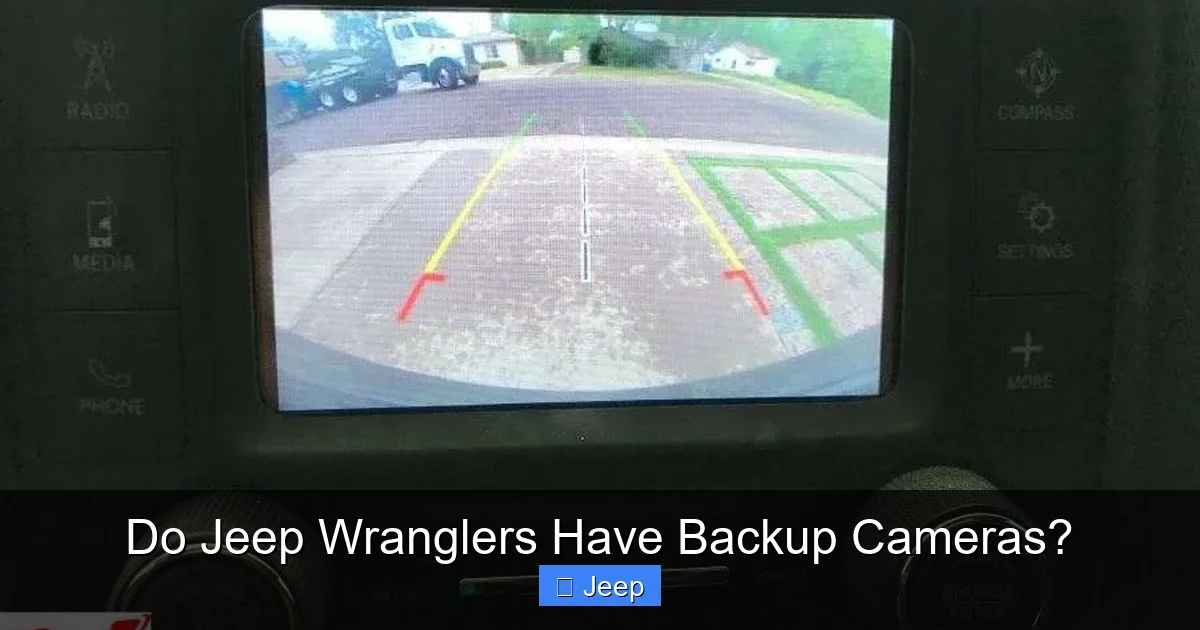
The true turning point was the 2021 model year. Driven by the full implementation of the NHTSA mandate and a push for standardized safety, Jeep made a rearview camera standard equipment on every single Wrangler and Gladiator, regardless of trim. This was a monumental shift. For the first time, you could walk into a dealership and buy a brand-new, base-model Wrangler Sport with a reverse camera as a given. The camera itself is typically integrated into the tailgate handle on the JL, keeping the clean, factory look.
Factory-Installed Options: What You Get (and When)
For those with a newer Wrangler or shopping new, it’s crucial to decode the factory options. Here’s a breakdown by generation to help you identify what your vehicle has or should have.
Visual guide about Do Jeep Wranglers Have Backup Cameras?
Image source: shunauto.com
JL Wrangler (2018-2023+)
- 2018-2020 Models: The camera was part of the “Advanced Safety Group” (often code “XAZ”). If your window sticker lists this group, you have it. The camera is mounted in the tailgate handle. The display appears on the factory Uconnect screen (5-inch, 7-inch, or 8.4-inch depending on the audio package).
- 2021+ Models: Standard on all trims. No ifs, ands, or buts. It’s there. The system is integrated and activates automatically when shifted into reverse. The quality is generally good, though some owners note the screen size on base models (5-inch) is small for viewing details.
Pro Tip: On a JL, simply shift into reverse with the engine running. If a camera view appears on your screen, you have the factory system. If you get a “Check Engine” light or no video, the camera or its connection may have failed—a known, though not super common, issue.
JK/JKU Wrangler (2007-2018)
As established, no factory backup camera was available. The closest Jeep came was the “Park View” system, which was a front camera only, designed for off-road rock crawling to see obstacles directly in front of the bumper. It was a rare, expensive option. So, for 99% of JK owners, the backup camera journey begins in the aftermarket aisle. This is where you have complete freedom to choose a system that matches your budget and desired functionality.
Aftermarket Upgrades: Your Complete Guide for Pre-2021 Wranglers
This is where the fun begins. The aftermarket for Wrangler backup cameras is massive, mature, and tailored to the Jeep lifestyle. You’re not just buying a camera; you’re choosing an ecosystem. Let’s break down the main categories.

Visual guide about Do Jeep Wranglers Have Backup Cameras?
Image source: offroaderx.com
1. The Simple & Affordable: License Plate & Spare Tire Mounts
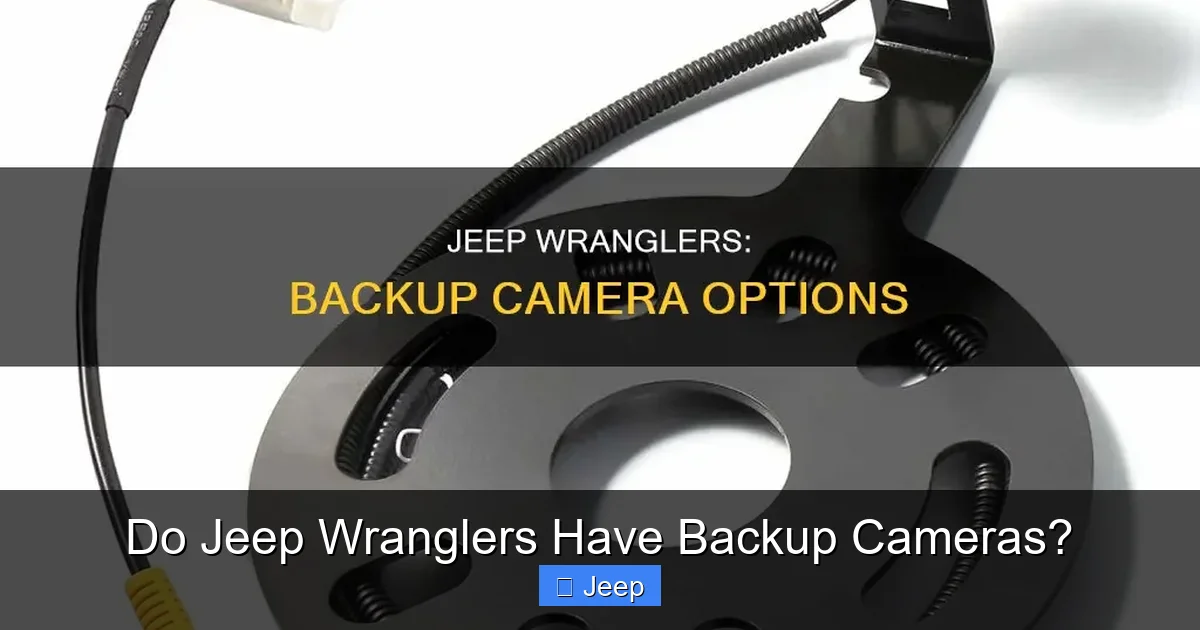
These are the most popular entry points. They consist of a small, waterproof camera and a long wire that powers it from your reverse light circuit. The camera mounts either to your license plate bracket or, for TJs and JKs with a rear spare tire, to the spare tire carrier.
- Pros: Very low cost ($30-$100). Easy DIY installation (usually just connecting two wires and mounting). Keeps your factory stereo.
- Cons: Requires a separate, small monitor that you suction-cup to your windshield or dash. This adds clutter. The camera angle is fixed and may not be optimal for all situations.
- Best for: Budget-conscious owners who just want a basic “see what’s directly behind me” aid and don’t mind a small extra screen.
2. The Integrated Experience: Aftermarket Stereos with Built-in Cameras
This is the gold standard for a clean, factory-like upgrade. You replace your old radio with a new aftermarket head unit (from brands like Pioneer, Alpine, Kenwood) that has a built-in touchscreen and a dedicated video input for a backup camera. When you shift into reverse, the screen automatically switches to the camera view.
- Pros: Clean, seamless integration. Large, bright screen. Often adds modern features like Apple CarPlay/Android Auto, Bluetooth, and better audio. No extra monitor clutter. You can often run the camera wire through the vehicle’s interior for a very professional look.
- Cons: More expensive ($400-$1000+ for a good unit with camera). Installation is more involved—you need a dash kit, wiring harness adapter, and often an antenna bypass. Best left to professionals unless you’re very handy.
- Best for: Owners who want a major tech upgrade and a polished, integrated look. If you’re already thinking about a new stereo, this is the perfect combo. You can explore some of the top Pioneer models that include camera compatibility.
3. The Wireless Revolution
Wireless backup camera kits have become incredibly reliable and popular. They consist of a camera that transmits a signal (usually 2.4GHz) to a small monitor. The camera gets power from the reverse light, but there’s no video cable running through the car.
- Pros: Incredibly easy installation—no need to run a long video cable from the back to the front. Perfect for DIY on a TJ or JK. Monitor can be placed anywhere and is often removable.
- Cons: Can be susceptible to interference from other wireless devices (though modern models are better). Signal latency (delay) can be a fraction of a second—usually fine for backing up but noticeable. The separate monitor still adds clutter.
- Best for: TJ owners, JK owners who want the easiest possible install, and anyone renting a vehicle where they don’t want to run wires.
4. The Smartphone Solution
Some newer cameras, especially those designed for RVs and trailers, connect via Wi-Fi to your smartphone or tablet. You run an app on your device, which becomes your monitor.
- Pros: Uses your existing large, high-quality phone screen. No extra monitor to buy or mount. Often includes extra features like multiple camera inputs for trailer views.
- Cons: Requires you to have your phone mounted securely and powered. Can be a drain on battery. The app experience can be clunky. Not ideal for daily driving if you use your phone for navigation.
- Best for: Occasional use, trailer towing, or as a secondary system.
Installation Considerations: What You Need to Know
Before you buy, think about installation. The difficulty ranges from trivial to complex.
Visual guide about Do Jeep Wranglers Have Backup Cameras?
Image source: offroaderx.com
Power: The Reverse Light Circuit
This is the universal standard. The camera should only turn on when the vehicle is in reverse. You achieve this by tapping into the reverse light’s power wire. On a Wrangler, this wire is found in the tail light harness. For a JK/JLU, it’s accessible behind the tail light assembly. For a TJ, it’s in the rear light cluster. You’ll need a test light or multimeter to identify it. This is the one critical wiring step for almost all systems.
Routing the Video Cable (For Wired Systems)
This is the most daunting part for a JK/JKU owner. You need to run the camera’s video cable from the tailgate, through the body, and up to the front of the vehicle. The best path is usually: tailgate -> inside the tub (under the plastic trim) -> up through the firewall (often behind the glove box or under the dash) -> to the radio. This involves removing interior panels. It’s doable for a confident DIYer with the right tools and patience, but many opt for professional installation to avoid rattles or pinched wires.
Mounting Location: Form vs. Function
The factory JL mounts in the tailgate handle—a perfect, clean spot. For aftermarket, you have choices:
- License Plate: Simple, but the plate can block part of the view, and it’s right at the bumper.
- Spare Tire Carrier: The classic Jeep look for TJs/JKs. Provides a great high-angle view. Requires a sturdy mount that can handle the weight of the tire and off-road impacts.
- Tailgate Handle: Some aftermarket kits offer a replacement handle with an integrated camera for a near-factory look on JKs.
- Bumper: Can be mounted on a hitch receiver or bumper. Offers a very wide view but is more exposed to damage.
Durability is non-negotiable. Look for cameras with an IP67 or IP68 waterproof rating. They must withstand high-pressure car washes and mud. Metal housings are preferred over plastic for impact resistance on the trail.
Benefits Beyond Just Backing Up: Why a Wrangler Owner Really Needs One
Let’s be real: backing up a short-wheelbase Wrangler isn’t the hardest thing in the world. So why is this upgrade so popular? Because the utility extends far beyond the parking lot.
The Off-Road Navigator
This is the killer app. When you’re on the trail, you’re often looking back to spot obstacles: large rocks, deep ruts, or a precarious drop-off. Craning your neck to look out the tiny rear window is unsafe and ineffective. A backup camera gives you a live, clear view of what’s directly behind your rear tires. You can see exactly where that rock is relative to your bumper. It’s like having a spotter who never gets tired. For anyone who does serious rock crawling or navigates tight forest trails, this is a game-changer for safety and confidence.
The Trailer King/Queen
Wranglers are famously used to tow small trailers, jet skis, and off-road toys. Hitching up is a classic pain. Aligning the ball mount to the trailer coupler is a game of inches and often requires a helper. A backup camera with a clear view of the hitch ball makes solo hitching not just possible, but easy. You can see exactly when the coupler is over the ball. For those who tow regularly, this benefit alone justifies the cost and installation effort.
Urban Survival
Yes, many Wranglers are daily drivers. In a crowded city or tight parking garage, the Wrangler’s boxy shape and poor rearward visibility (especially with a rear spare tire and high roll cage) become a liability. A camera helps you see pedestrians, low curbs, and other cars you might otherwise miss. It turns a stressful maneuver into a simple one.
Addressing Common Concerns and Myths
We hear these questions all the time from Wrangler owners. Let’s set the record straight.
“Won’t a camera be useless off-road because it’ll get caked in mud?”
A valid concern! But a non-issue with a good setup. The key is placement and cleaning. A camera mounted high on the spare tire carrier is less likely to get totally obscured than one on the bumper. Furthermore, the simple act of driving forward a few feet often clears the lens. Many serious off-roaders keep a small bottle of water and a microfiber cloth in their door panel for a quick wipe-down. The benefit of seeing obstacles far outweighs the minor hassle of an occasional lens clean.
“Is the factory JL camera any good?”
It’s perfectly adequate for its primary purpose: meeting the legal requirement and providing a basic view for backing up in a parking lot. The resolution is standard definition, and the wide-angle lens has noticeable distortion. It’s not a high-detail, off-road-ready system. For serious trail use, many JL owners still upgrade to an aftermarket camera with a higher resolution and better dynamic range, often integrated into their aftermarket stereo. The factory system’s main advantage is its clean, seamless integration and reliability.
“What about night vision?”
Most basic cameras have poor night vision. They rely on the reverse lights for illumination, which is often insufficient. If you frequently back up in dark driveways or unlit areas, look for a camera with built-in infrared (IR) LEDs. These provide their own light source, giving you a much clearer black-and-white image in total darkness. This is a feature worth seeking if night use is common.
“Can I keep my factory stereo?”
Absolutely. As discussed, the simplest systems (license plate camera + separate monitor) work with any vehicle, regardless of the stereo. You just need a 12V power source (the reverse light) and a ground. This is the path of least resistance and lowest cost for a JK/JU owner who loves their factory radio.
Making Your Decision: A Simple Flowchart
Still unsure? Let’s simplify:
- What is your Wrangler’s model year?
- 2021+ JL: You have one. It’s standard. Consider if you want to upgrade the factory unit for better quality/screen size.
- 2018-2020 JL: Check your window sticker or shift into reverse. If you don’t have it, you have two choices: add an aftermarket stereo with camera (best integration) or add a simple add-on camera with a separate monitor (easiest).
- 2007-2018 JK/JKU or earlier TJ: You need an aftermarket system. Decide on your budget and desired screen integration.
- What is your primary goal?
- Basic backing-up safety & legal compliance: A simple wired or wireless license plate camera with a small monitor is perfect.
- Major tech upgrade & clean look: Invest in an aftermarket double-DIN stereo with a built-in screen and camera.
- Serious off-roading & trail spotting: Prioritize a high-quality, high-resolution camera with IR night vision and a durable, well-positioned mount (spare tire carrier is popular). Look for models with wide dynamic range to handle bright sun and deep shadows.
- What’s your DIY comfort level?
- Beginner: Wireless camera kit or a simple wired kit with a suction-cup monitor. No interior panel removal needed.
- Intermediate: Wired camera kit where you can route the cable through the rear hatch area and under a rear seat, but not necessarily to the front (if using a small monitor placed on the dash).
- Advanced/Professional: Full stereo replacement with integrated camera, requiring full interior trim removal and wire routing.
Remember, for any Wrangler, the path to having a backup camera is clear and well-trodden. The aftermarket has you completely covered. The only question is which path suits your needs, your budget, and your specific Jeep.
Conclusion: Seeing Clearly is No Longer a Luxury
The journey of the backup camera in the Jeep Wrangler mirrors the vehicle’s own evolution. From a pure, analog off-road tool that shunned modern tech to a comfortable, tech-laden family adventure vehicle, the Wrangler has changed. The backup camera is a symbol of that change—a safety feature now deemed essential by the government and demanded by consumers.
For the new JL owner, that camera is a standard tool, a quiet partner every time you shift into reverse. For the vast army of JK, JKU, and TJ owners, the story is one of empowerment. You are not stuck in the past. A world of affordable, durable, and effective aftermarket solutions awaits. Whether you choose a $50 wireless clip-on or a $1000 integrated stereo system, you are adding a critical layer of safety, convenience, and off-road capability to your iconic machine.
So, do Jeep Wranglers have backup cameras? Today, the answer is a resounding yes—either from the factory or through the vibrant ecosystem that has grown to serve them. The real question for every Wrangler owner is: which one is right for your adventure? Take a look at your specific needs, consider your budget, and take that step. The view from the other side of the windshield has never been clearer, and it will make every drive, on-road and off, a little bit safer and a little bit easier.
Frequently Asked Questions
Do all 2021 and newer Jeep Wranglers have a backup camera?
Yes. For the 2021 model year and beyond, Jeep made a rearview camera standard equipment on every Wrangler and Gladiator trim level, regardless of price or package. It is integrated into the tailgate handle and displays on the factory Uconnect screen.
Can I install a backup camera on my 2015 Jeep Wrangler JK?
Absolutely. A 2015 JK has no factory camera, but it is one of the most common vehicles for aftermarket backup camera installations. You can choose from simple, wireless license plate mounts to full stereo replacements. Installation difficulty varies, but many options are DIY-friendly.
Is the factory backup camera on a JL Wrangler good for off-roading?
The factory camera is designed primarily for on-road reversing and meets legal requirements. Its resolution and low-light performance are average. For serious off-road use where you need to spot rocks and obstacles, many JL owners upgrade to a higher-resolution aftermarket camera with better night vision and dynamic range.
What’s the easiest backup camera to install on a Jeep Wrangler?
The easiest systems are wireless kits that mount on the license plate or spare tire. They require only connecting two wires to your reverse light for power and pairing the camera with a small suction-cup monitor. No running video cables through the vehicle’s interior is necessary, making them ideal for a quick, DIY install on any Wrangler model.
Will a backup camera work if I remove my rear spare tire?
It depends on the mount. If your camera is mounted on the spare tire carrier, removing the tire will also remove the camera. If you use a license plate mount, a hitch receiver mount, or a tailgate handle mount, removing the spare tire will not affect the camera. Choose your mounting location based on your typical setup.
How much does it typically cost to add a backup camera to a Jeep Wrangler?
The cost varies widely. A basic wireless camera kit with a small monitor can cost $50-$150. A high-quality wired system with a dedicated monitor might be $150-$300. A full integration with a new touchscreen stereo (including the stereo itself) typically starts around $500-$800 for parts, plus installation if you hire it out.