
Desert Climate Car Cover Issues: Heat, Dust, UV, and Wind

Quick Answer
The biggest desert climate car cover issues are UV degradation, trapped heat, wind movement, fine dust under the fabric, and rapid material aging. A fitted outdoor cover can still protect a vehicle, but it needs strong UV resistance, secure fastening, a paint-safe inner surface, and enough breathability to release heat and moisture. Current car cover testing also shows why fit, material construction, and weather resistance matter.
Desert Problems to Watch
- UV breakdown: Constant sunlight can fade, weaken, and eventually make cover material brittle.
- Dust abrasion: Fine sand or grit between the cover and paint can create scratches when the fabric moves.
- Wind movement: Loose fabric can flap repeatedly across corners, mirrors, bumpers, and body lines.
- Heat buildup: Dark or poorly ventilated materials can become extremely hot in direct desert sun.
- Fast aging: Sun, wind, heat, and dust can shorten the useful life of an outdoor cover.
Best First Step
- Use a clean, fitted, UV-resistant outdoor cover and secure it before windy conditions arrive.
Desert parking looks simple until you see what sun, dust, and wind can do to a car cover. I’ve learned that a cover that works well in a mild garage can behave completely differently outside in hot, dry weather.
In this guide, I’ll break down the desert climate car cover issues I would watch first. I’ll also explain how to choose, use, clean, and inspect a cover without turning it into another source of paint damage.
In This Guide
- What Problems Do Car Covers Have in Desert Climates?
- Can Desert Heat and UV Damage a Car Cover?
- Can Desert Dust Under a Car Cover Scratch Paint?
- How Does Desert Wind Affect a Car Cover?
- What Type of Car Cover Works Best in a Desert?
- How Do You Prevent Desert Car Cover Problems?
- Frequently Asked Questions
What Problems Do Car Covers Have in Desert Climates?
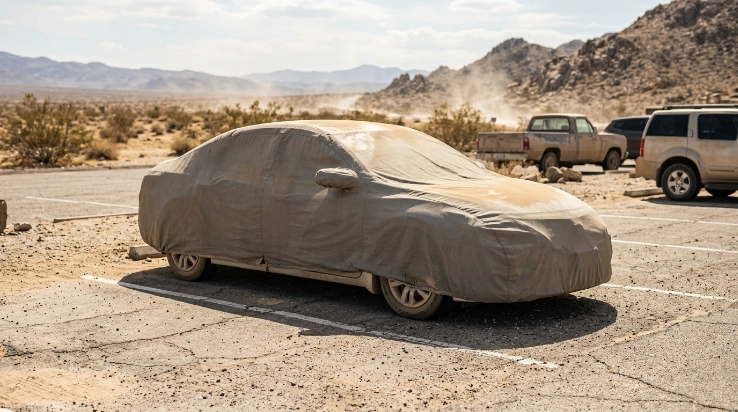
Desert conditions challenge a car cover through sunlight, heat, airborne grit, wind, and large temperature swings. Those forces can attack both the cover and the vehicle underneath.
A car cover is a removable protective barrier placed over a parked vehicle. Outdoor versions are designed to reduce exposure to sunlight, dust, debris, precipitation, and other environmental contamination.
Desert conditions create several problems at once
I wouldn’t judge a desert cover by waterproofing alone. Rain may be rare, while UV exposure and abrasive dust occur much more often.
- Strong sunlight: UV exposure can fade and weaken fabric over time.
- High heat: The cover and body panels can become extremely hot in direct sun.
- Fine dust: Sand and grit can work underneath loose edges.
- Wind: Fabric can flap or shift across contaminated paint.
- Dry conditions: Elastic, coatings, straps, and some fabrics may age faster outdoors.
- Cool nights: Temperature changes can still create occasional condensation beneath a cover.
The cover therefore has two jobs. It must block environmental exposure while avoiding unnecessary contact damage.
Common symptoms and likely causes
| What You Notice | Likely Desert Cause | What to Check First |
|---|---|---|
| Fine scratches or haze | Dust plus cover movement | Inside fabric and paint cleanliness |
| Faded or brittle fabric | Long-term UV exposure | Roof and hood areas |
| Loose cover after wind | Poor fit or weak fastening | Hems, straps, and anchor points |
| Hot, clammy air underneath | Heat buildup or poor breathability | Cover material and ventilation |
| Small tears around corners | Wind stress and fabric aging | Mirrors, bumpers, and sharp body lines |
I pay special attention to the roof, hood, mirror pockets, and bumper corners. Those areas usually see strong sunlight or repeated fabric tension.
Can Desert Heat and UV Damage a Car Cover?
Yes. Long-term exposure to intense sunlight can fade, weaken, dry, and eventually degrade outdoor cover materials.
Heat makes the situation tougher because the cover spends hours sitting directly above hot body panels. On a desert afternoon approaching 100°F outside, I treat the entire cover and vehicle surface as potentially too hot for comfortable handling.
UV resistance matters more than color alone
A light-colored cover may absorb less solar heat than a dark one, but color doesn’t tell you everything. Material quality and UV stabilization matter too.
I look for a manufacturer that specifically rates the cover for outdoor sun exposure. Vague labels such as “all-weather” tell me less than clear information about outdoor use and UV resistance.
- Look for material designed for prolonged outdoor exposure.
- Inspect whether the outer layer has faded unevenly.
- Check for powdery, stiff, or brittle fabric.
- Examine stitching exposed on the roof and hood.
- Replace failing straps before they snap in wind.
Can a car cover trap heat?
It can. A cover sitting in direct sunlight will warm up, and some materials release that heat better than others.
Breathability helps air and water vapor move through the cover. It does not mean the space underneath stays cool like a garage.
I also avoid installing a cover immediately after a hard drive when the hood, exhaust area, and surrounding panels remain hot. I let the vehicle cool before covering it.
For broader automotive sun-protection considerations, Kelley Blue Book’s vehicle-care guidance also emphasizes reducing prolonged direct-sun exposure when protecting exterior materials.
Section Takeaway: In a desert, choose a cover for UV durability first, then inspect it regularly for brittleness, fading, seam weakness, and heat-related aging.
Can Desert Dust Under a Car Cover Scratch Paint?
Yes. Fine desert dust can become abrasive when it gets trapped between the cover and paint and the fabric moves repeatedly.
The cover material doesn’t need to feel rough for this to happen. Grit between two otherwise smooth surfaces can create the problem.
Dust plus movement is the dangerous combination
I think of desert dust like extremely fine road grime. If I wouldn’t wipe a dusty hood with a dry towel, I don’t want a cover rubbing across it either.
Dust commonly reaches the paint through loose hems, wheel openings, mirror areas, vents, or during cover installation. Wind can push even more contamination underneath.
- Hood and roof: Large flat surfaces collect airborne dust quickly.
- Fenders: Loose fabric may move across curved paint.
- Mirrors: Fabric tension often concentrates here.
- Bumpers: Loose lower edges may move more in wind.
- Rear surfaces: Dust can collect around trunks, spoilers, and hatch edges.
Should you cover a dusty car?
I avoid it when visible grit is sitting on the paint. Installing a cover can drag contamination across the surface before the wind even starts.
Wash the car when practical. If you just drove through blowing sand or heavy dust, cleaning becomes more important before long-term covering.
The inside of the cover needs the same attention. A spotless car gains little protection from fabric containing old sand and dirt.
What about ceramic coatings or wax?
Wax, sealants, and ceramic coatings can help protect a vehicle’s finish, but none makes paint immune to abrasion. Physical grit can still create visible marring.
I treat protected paint with the same contact-care rules as uncoated paint. Clean surface, clean cover, minimal movement.
Section Takeaway: Desert dust becomes most damaging when a loose cover moves over it. Keeping both surfaces clean is one of the strongest ways to prevent cover-related scratches.
How Does Desert Wind Affect a Car Cover?
Wind can turn a slightly loose car cover into a constantly moving abrasive surface. It can also stretch seams, loosen elastic, damage straps, and expose parts of the vehicle.
This is why fit matters so much outdoors. Current 2026 testing by Car and Driver also evaluates fit, fastening, durability, and weather performance when assessing outdoor covers.
A loose cover can act like a sail
Once air gets underneath, the fabric may lift away from the vehicle. It then drops back onto the paint repeatedly.
That movement becomes more concerning when desert dust is already present. The wind supplies movement while the dust supplies abrasion.
- Use a vehicle-specific or correctly sized cover.
- Secure the front and rear hems completely.
- Use supplied straps according to the manufacturer’s instructions.
- Make sure mirror pockets sit correctly.
- Stop using stretched or damaged elastic.
- Inspect fastening points before forecast high winds.
Can straps damage the vehicle?
They can if installed badly. A loose buckle or strap should not bang repeatedly against painted panels.
I also avoid improvised metal hooks or hard objects against the body. Use the fastening system the cover manufacturer intended.
When should you remove the cover?
If severe wind is expected and the cover cannot stay securely fitted, removing it can be safer than allowing uncontrolled flapping. The right choice depends on where the vehicle is parked and what hazards surround it.
A cover that repeatedly pulls loose has already failed an important desert-use test. I would correct the fit or replace it rather than tightening random cords around the car.
What Type of Car Cover Works Best in a Desert?
For outdoor desert parking, I prefer a UV-resistant, breathable, securely fitted cover with a smooth paint-safe inner surface. It should also have fastening designed for wind.
There is no universal best material for every vehicle. Parking duration, wind exposure, dust levels, and frequency of use all change the answer.
Desert car cover comparison
| Cover Type | Desert Suitability | Main Advantage | Main Concern |
|---|---|---|---|
| Fitted outdoor UV-resistant cover | Best general choice | Sun, dust, and weather protection | Needs regular cleaning |
| Loose universal outdoor cover | Conditional | Lower cost and easy availability | More wind movement |
| Light indoor dust cover | Poor outdoors | Soft and lightweight | Not designed for outdoor wind or UV |
| Plastic tarp or sheet | Usually poor | Cheap temporary barrier | Fit, rubbing, and ventilation problems |
Custom-fit versus universal covers
A custom-fit cover usually gives me more confidence outdoors because excess material is reduced. Less loose fabric generally means fewer opportunities for wind-driven movement.
A well-sized universal cover can still work. The important question is whether it remains stable over your particular vehicle.
Breathable versus fully sealed
I prefer breathability for normal outdoor storage. Desert climates are dry overall, but temperature changes, washing, unexpected rain, and overnight condensation can still introduce moisture.
A breathable material gives that moisture a better chance to escape. It also reduces the chance of creating a sealed pocket beneath the fabric.
For general vehicle research and ownership information, I also use Edmunds as a reference when evaluating everyday automotive care decisions.
Section Takeaway: A desert cover should prioritize UV resistance, secure fit, clean paint contact, and breathability rather than focusing on thickness or waterproof marketing alone.
How Do You Prevent Desert Car Cover Problems?
The best prevention routine is simple: keep the vehicle clean, keep the cover clean, secure it correctly, and inspect both more often than you would indoors.
Desert exposure rewards maintenance. Ignoring the cover for months gives UV damage, grit, and loosened fasteners time to build up.
Before putting the cover on
- Check the paint: Remove visible sand, dust, and abrasive contamination.
- Let the vehicle cool: Avoid covering extremely hot panels immediately after driving.
- Confirm it is dry: Dry the body, mirrors, trim gaps, and seams after washing.
- Inspect the cover: Check the inner surface for dirt or trapped grit.
- Fit it carefully: Lift and place the material instead of dragging it across paint.
- Secure it: Use the intended hems and fastening system.
Inspect it after windy weather
After a dusty or windy day, I check whether the cover shifted. I also look underneath around the front bumper, rear bumper, mirrors, and wheel arches.
If dust has worked underneath, I don’t keep rubbing the cover against it. I remove the cover carefully and clean both surfaces as needed.
Watch for UV aging
Don’t judge condition only by tears. A desert cover may become stiff, faded, thin, powdery, or weak before a large hole appears.
- Check the roof panel for fading.
- Flex older material gently and look for cracking.
- Inspect seam stitching.
- Test whether elastic still grips properly.
- Replace broken or stretched fastening hardware.
Store the cover clean and dry
Never throw a dusty cover directly onto the garage floor and then reinstall it against polished paint. That transfers contamination exactly where you don’t want it.
Follow the manufacturer’s washing instructions because materials vary. Let the cover dry completely before folding or storing it.
For safety-related vehicle information and recall checks beyond normal cover maintenance, use the National Highway Traffic Safety Administration rather than relying on unverified automotive claims.
Section Takeaway: Desert car cover care is mostly contamination control, fit control, and frequent inspection. A good cover can only protect the vehicle while the cover itself remains clean, secure, and structurally sound.
Frequently Asked Questions
Are car covers good for desert climates?
Yes. A suitable outdoor cover can reduce direct exposure to sunlight, dust, bird droppings, and airborne debris. Choose one with good UV resistance, secure fit, breathable construction, and a paint-safe inner surface.
Can a car cover make a vehicle hotter in the desert?
A cover can become hot in direct sunlight, and heat may build beneath some materials. Breathability helps release heat and moisture, but no outdoor cover should be expected to keep the vehicle as cool as shaded or enclosed parking.
Will desert sand scratch paint underneath a car cover?
It can. Fine sand becomes more dangerous when it sits between the paint and a moving cover. Keep both surfaces clean and prevent wind-driven fabric movement to reduce abrasion risk.
What color car cover is best for extreme heat?
Lighter colors can absorb less solar energy than darker colors, but color should not be the only factor. UV-resistant material, correct outdoor construction, fit, breathability, and durability matter more when choosing a desert cover.
Should I cover my car during a desert windstorm?
Only if the cover can remain securely fitted. A loose cover may flap, allow dust underneath, or detach completely. If your cover repeatedly shifts in strong wind, correct the fit or remove it before severe conditions.
How often should I clean a car cover in a dusty climate?
There is no universal cleaning interval because dust exposure varies. Inspect the inside frequently and clean it whenever visible grit, dirt, stains, or contamination could contact the paint. Always follow the cover manufacturer’s care instructions.
How do I know when a desert car cover needs replacing?
Replace it when the fabric becomes brittle, badly faded, torn, stretched, rough inside, poorly fitting, or difficult to secure. Damaged seams and failing elastic are also strong signs that the cover can no longer provide reliable outdoor protection.
My final rule is simple: a desert car cover should reduce risk, not create new contact damage. Keep the car clean, keep the cover clean, secure it against wind, and replace the cover when UV exposure begins compromising its fit or fabric.
That routine gives an everyday daily driver a much better chance of handling desert sun, dust, heat, and wind without turning the protective cover into part of the problem.
“`
